
Full text loading...





From Prison to Print, Page 1 of 1
< Previous page | Next page > /docserver/preview/fulltext/10.1484/M.BIB-EB.5.117228/M.BIB-EB.5.117239-1.gif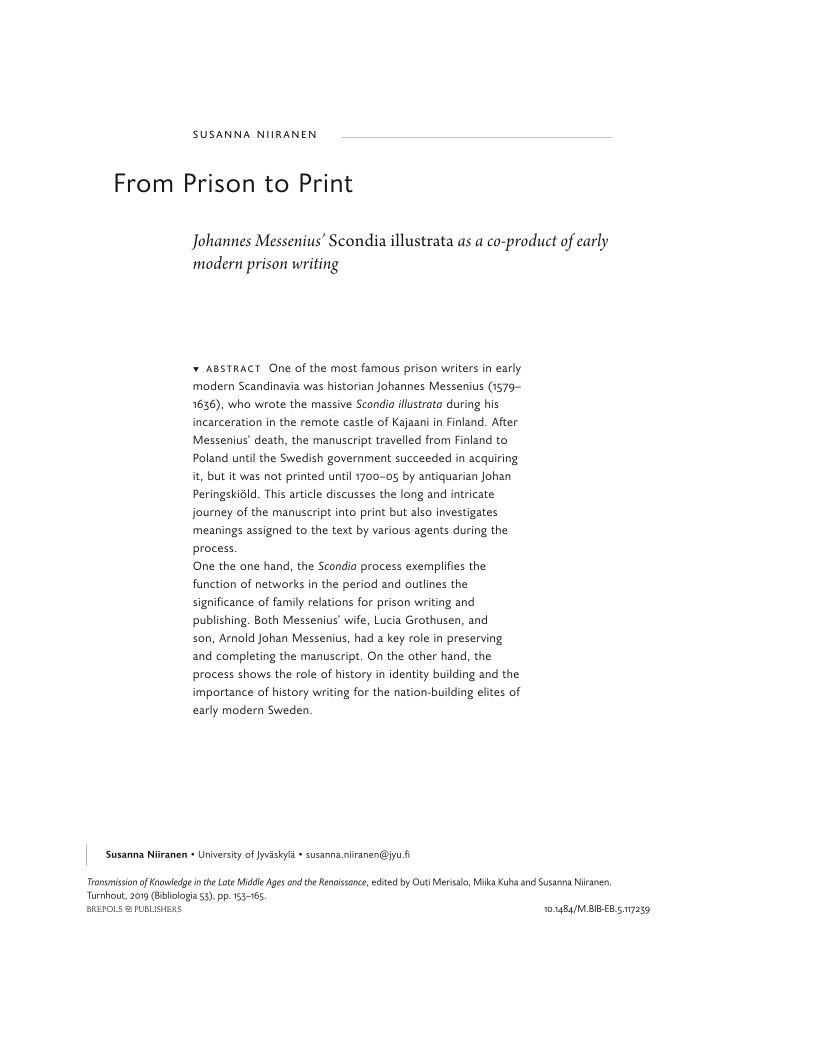
One of the most famous prison writers in early modern Scandinavia was historian Johannes Messenius (1579- 1636), who wrote the massive Scondia illustrata during his incarceration in the remote castle of Kajaani in Finland. After Messenius’ death, the manuscript travelled from Finland to Poland until the Swedish government succeeded in acquiring it, but it was not printed until 1700-05 by antiquarian Johan Peringskiöld. This article discusses the long and intricate journey of the manuscript into print but also investigates meanings assigned to the text by various agents during the process. One the one hand, the Scondia process exemplifies the function of networks in the period and outlines the significance of family relations for prison writing and publishing. Both Messenius’ wife, Lucia Grothusen, and son, Arnold Johan Messenius, had a key role in preserving and completing the manuscript. On the other hand, the process shows the role of history in identity building and the importance of history writing for the nation-building elites of early modern Sweden.
Full text loading...