


What Nature Does Not Teach
Didactic Literature in the Medieval and Early-Modern Periods
Abstract
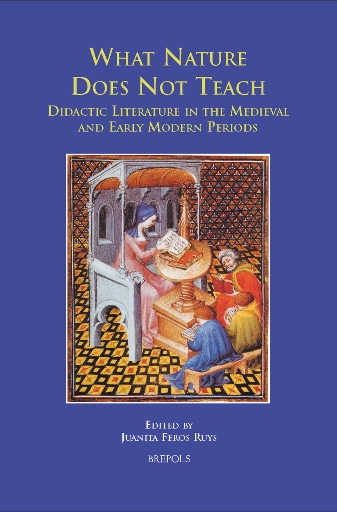
This interdisciplinary study takes as its subject the multi-faceted genre of didactic literature (the literature of instruction) which constituted the cornerstone of literary enterprise and social control in medieval and early-modern Europe. Following an introduction that raises questions of didactic meaning, intent, audience, and social effect, nineteen chapters deal with the construction of the individual didactic voice and persona in the premodern period, didactic literature for children, women as the creators, objects, and consumers of didactic literature, the influence of advice literature on adult literacy, piety, and heresy, and the revision of classical didactic forms and motifs in the early-modern period. Attention is paid throughout to the continuities of didactic literature across the medieval and early-modern periods — its intertextuality, reliance on tradition, and self-renewal — and to questions of gender, authority, control, and the socially constructed nature of advice. Contributors particularly explore the intersection of advice literature with real lives, considering the social impact of both individual texts and the didactic genre as a whole. The volume deals with a wide variety of texts from the early Middle Ages to the eighteenth century, written in languages from Latin through the European vernaculars to Byzantine Greek and Russian, offering a comprehensive overview of this pervasive and influential genre.
