


oa Les aléas du répertoire scénique de Voltaire sous la Révolution. Jouer, bannir ou guillotiner ?

- By: Tomasz Wysłobocki1
-
View Affiliations Hide Affiliations1 Université de Wrocław, Faculté des langues, littératures et [email protected] ORCID 0000-0001-5452-0675
- Publication: Les (r)évolutions dans le théâtre européen (xvii e-xviii e siècles) , pp 127-147
- Publisher: Brepols
- Publication Date: January 2025
- DOI: https://doi.org/10.1484/M.ECCS-EB.5.149922


Les aléas du répertoire scénique de Voltaire sous la Révolution. Jouer, bannir ou guillotiner ?, Page 1 of 1
< Previous page | Next page > /docserver/preview/fulltext/10.1484/M.ECCS-EB.5.138015/M.ECCS-EB.5.149922-1.gif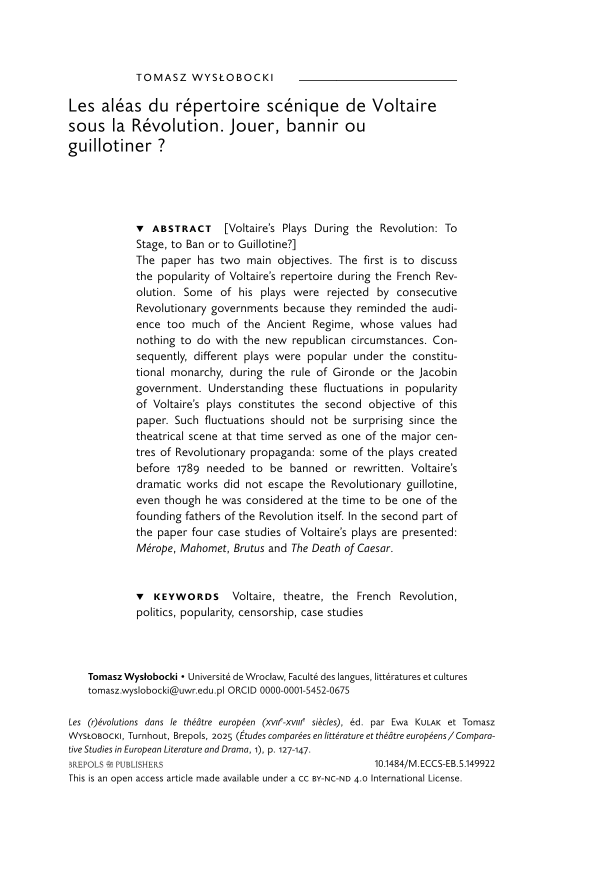
[Voltaire’s Plays During the Revolution: To Stage, to Ban or to Guillotine?]
The paper has two main objectives. The first is to discuss the popularity of Voltaire’s repertoire during the French Revolution. Some of his plays were rejected by consecutive Revolutionary governments because they reminded the audience too much of the Ancient Regime, whose values had nothing to do with the new republican circumstances. Consequently, different plays were popular under the constitutional monarchy, during the rule of Gironde or the Jacobin government. Understanding these fluctuations in popularity of Voltaire’s plays constitutes the second objective of this paper. Such fluctuations should not be surprising since the theatrical scene at that time served as one of the major centres of Revolutionary propaganda: some of the plays created before 1789 needed to be banned or rewritten. Voltaire’s dramatic works did not escape the Revolutionary guillotine, even though he was considered at the time to be one of the founding fathers of the Revolution itself. In the second part of the paper four case studies of Voltaire’s plays are presented: Mérope, Mahomet, Brutus and The Death of Caesar.

Full text loading...
Tables
Nombre de représentations des pièces de Voltaire les plus populaires depuis le début de la Révolution jusqu’à l’instauration du Directoire.
Nombre de représentations des trois tragédies de Voltaire les plus populaires entre le 5 mai 1789 et le 25 octobre 1795, sous quatre régimes révolutionnaires consécutifs.
-
From This Site
/content/books/10.1484/M.ECCS-EB.5.149922dcterms_title,dcterms_subject,pub_serialIdent,pub_author,pub_keyword-contentType:Contributor -contentType:Concept -contentType:Institution105