


oa Alea iacta est. Insights from corpus semantics into the diachrony of the Latin passive
- By: Simon Aerts
- Publication: Varietate delectamur: Multifarious Approaches to Synchronic and Diachronic Variation in Latin , pp 311-325
- Publisher: Brepols
- Publication Date: January 2025
- DOI: https://doi.org/10.1484/M.LVLT-EB.5.143308


Alea iacta est. Insights from corpus semantics into the diachrony of the Latin passive, Page 1 of 1
< Previous page | Next page > /docserver/preview/fulltext/10.1484/M.LVLT-EB.5.142508/M.LVLT-EB.5.143308-1.gif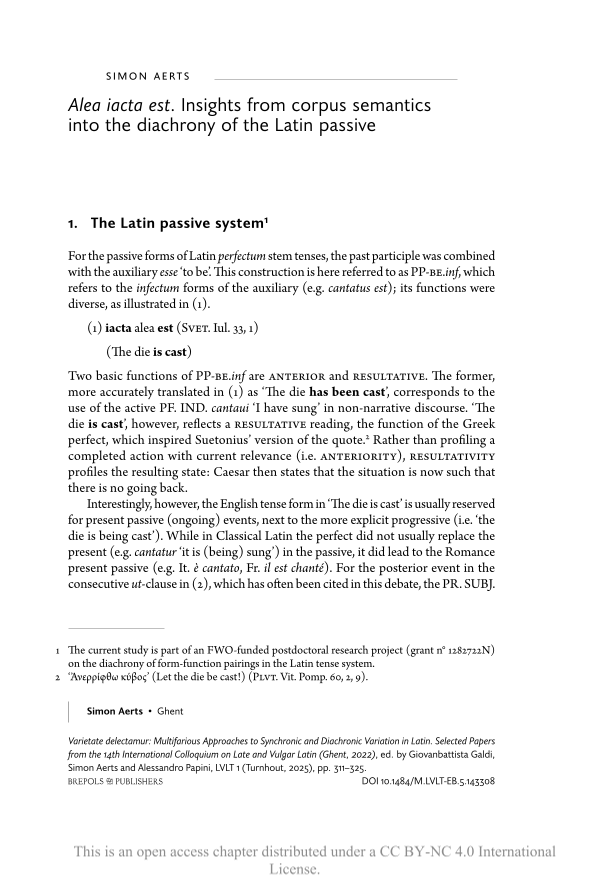
The current study aims to shed more light on the dynamics involved in the changing form-function pairings in the Latin passive system. On the one hand, the ‘old’ construction for perfectum stem passives (e.g. cantatus est) experiences competition from an innovation (e.g. cantatus fuit) which specializes in the function of anteriority and survived as a past perfective in Romance (e.g. il fut chanté). On the other hand, cantatus est gave rise to the Romance present passive (e.g. il est chanté). This study focusses on two key aspects of this development. First, both constructions should be found increasingly more often with head-initial order, which is fixed in Romance. Second, the semantics of cantatus est (pro praesente instead of anterior/past or resultative) should be correlated to head-initiality (i.e. est cantatus). Quantitative data presented in recent studies is (a) supported by additional quantitative results on a broader scale (more time periods and text types), and (b) complemented with crucial qualitative, semantic evidence from a close-reading analysis.

Full text loading...
-
From This Site
/content/books/10.1484/M.LVLT-EB.5.143308dcterms_title,dcterms_subject,pub_serialIdent,pub_author,pub_keyword-contentType:Contributor -contentType:Concept -contentType:Institution105