


Social Relations: Property and Power
Abstract
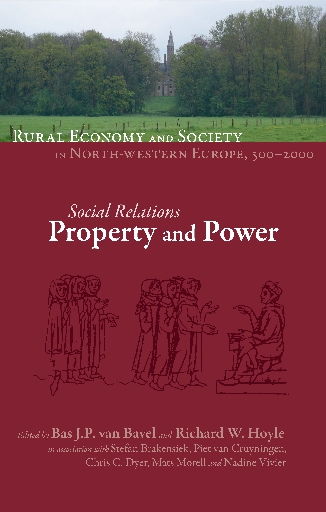
The organization of society formed a crucial element in the remarkable development of the countryside in the North Sea area in the last 1500 years. Vital questions are: who owned the land? Who gained the profits from its exploitation? How was the use of rural resources controlled and changed? These questions have no simple answers, because the land has been subjected to competing claims, varying from region to region. In early times peasants mostly possessed and worked their holdings, but lords took much of the produce, and had the ultimate control over the land. In more recent times the occupiers and cultivators gained stronger rights over their farms. Neither lords nor peasants were free agents because communities governed the use of common lands. In the highly urbanized North Sea region towns and townspeople had considerable and increasing influence over the countryside. Change came from within society, for example from the tension and negotiation between lords and peasants, and the growing importance of the state and its policies. This volume also looks at the interaction between society and external changes, such as the rise and fall of the market, trends in population, and European integration.
Bas J.P. van Bavel is professor of Economic and Social History of the Middle Ages at Utrecht University, the Netherlands
Richard W. Hoyle is professor of Rural History at the University of Reading, United Kingdom
