


The Voices of the People in Late Medieval Europe
Communication and Popular Politics
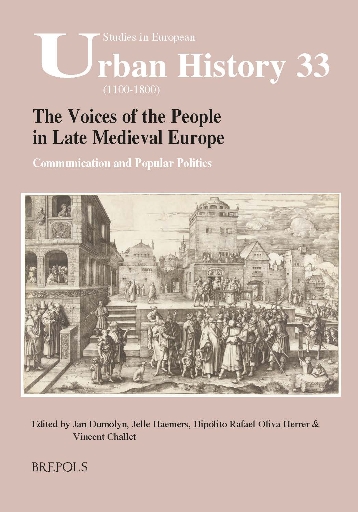
Abstract
Throughout the medieval period, the popular classes were always reckoned as a potential force in society even though it was usually dangerous for them to articulate divergent social, political and religious opinions. Sources on medieval political and social life seem to show us a world of order, acquiescence and consent. Otherwise, they reveal a picture of bloodshed and violent strife. During times of intense conflict, however, the human tongue was always the most frequently used weapon, much more so than the sword or the dagger. The vox populi, though often difficultly retrievable in the sources, was a ubiquitous one within the realm of later medieval politics. The essays collected in this volume deal with such speech acts of political rebels, with political languages of the ‘popular classes’ in medieval society but also with the subversive twists to speech situations such as preaching, mockery and insults.
Jan Dumolyn is a senior lecturer in medieval history at Ghent University. He publishes on the socio-economic, political and cultural history of the urban world of the medieval Low Countries.
Jelle Haemers lectures medieval history at the University of Leuven. He has published widely on the social history of medieval politics and the urban history of the Low Countries.
Hipólito Rafael Oliva Herrer is professor of Medieval History in the University of Sevilla. He has published both on medieval peasantry and popular political culture, including the making of popular ideologies and forms of popular protest.
Vincent Challet is a senior lecturer at the University of Montpellier-III, and works on the political conscience of communities. He is also the scientific coordinator of the ANR “Thalamus” project which aims to produce a scientific edition of the chronicle and urban statutes of Montpellier in the Middle Ages.
