


oa The Epistemology of Models in the Era of Pandemic
- By: Federico Laudisa
- Publication: Epidemics and Pandemics , pp 297-308
- Publisher: Brepols
- Publication Date: January 2024
- DOI: https://doi.org/10.1484/M.STPH-EB.5.136416


The Epistemology of Models in the Era of Pandemic, Page 1 of 1
< Previous page | Next page > /docserver/preview/fulltext/10.1484/M.STPH-EB.5.127756/M.STPH-EB.5.136416-1.gif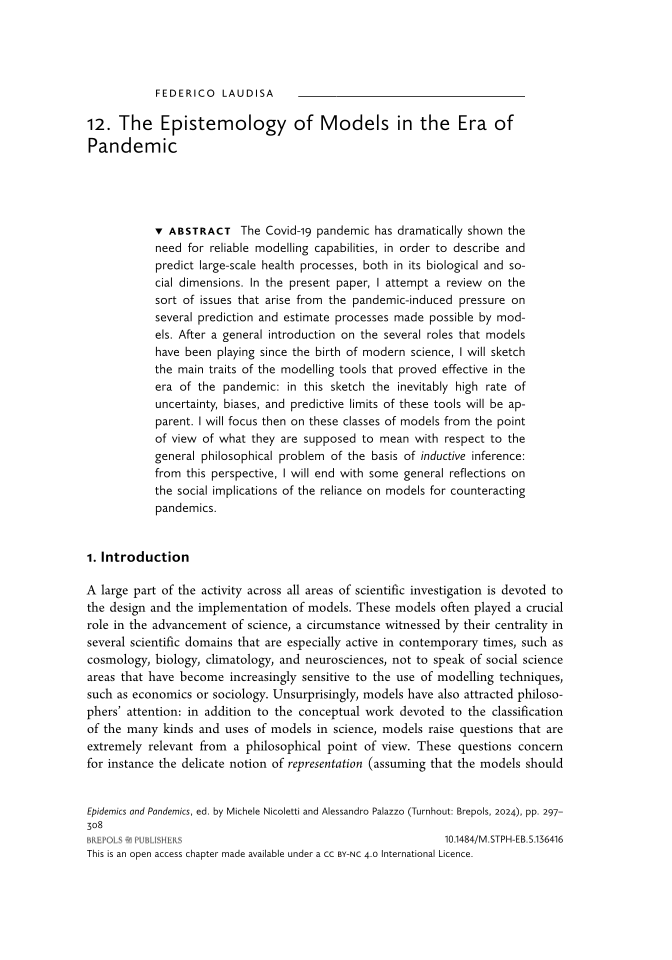
Abstract
The Covid-19 pandemic has dramatically shown the need for reliable modelling capabilities, in order to describe and predict large-scale health processes, both in its biological and social dimensions. In the present paper, I attempt a review on the sort of issues that arise from the pandemic-induced pressure on several prediction and estimate processes made possible by models. After a general introduction on the several roles that models have been playing since the birth of modern science, I will sketch the main traits of the modelling tools that proved effective in the era of the pandemic: in this sketch the inevitably high rate of uncertainty, biases, and predictive limits of these tools will be apparent. I will focus then on these classes of models from the point of view of what they are supposed to mean with respect to the general philosophical problem of the basis of inductive inference: from this perspective, I will end with some general reflections on the social implications of the reliance on models for counteracting pandemics.

Full text loading...
References
-
Adam, David, ‘Special report: the simulations driving the world’s response to COVID-19’, Nature, 580 (2020), pp. 316–18.
-
Anderson, Chris, ‘The End of Theory: The Data Deluge Makes the Scientific Method Obsolete’, Wired, 23.06.2008, https://www.wired.com/2008/06/pb-theory/
-
Boyd, Danah, and Kate Crawford, ‘Critical questions for big data’, Information, Communication and Society, 15 (2012), pp. 662–79.
-
Caniglia, Guido, and others et al., ‘COVID‑19 heralds a new epistemology of science for the public good’, History and Philosophy of the Life Sciences, 43 (2021), pp. 1–6.
-
Castiglione, Filippo, ‘Agent based modelling’, Scholarpedia, 1 (2006), p. 1562.
-
Cepelewicz, Jordana, ‘The hard lessons of modeling the coronavirus pandemic’, Quanta Magazine (2021), https://www.quantamagazine.org/the-hard-lessons-of-modeling-the-coronavirus-pandemic-20210128/
-
Douven, Igor, ‘Covid-19, Induction and Social Epistemology’, (2021), https://www.thebsps.org/short-reads/douven-socialepistemology/
-
Frigg, Roman, and Stephan Hartmann, ‘Models in science’, The Stanford Encyclopedia of Philosophy, 2020, https://plato.stanford.edu/archives/spr2020/entries/models-science/
-
Gelfert, Axel, How to Do Science with Models: A Philosophical Primer (Cham: Springer International Publishing, 2016).
-
Goldstein, Joshua R., and Serge Atherwood, ‘Improved measurement of racial/ethnic disparities in COVID-19 mortality in the United States’, medRxiv (2020) pp. 1–13, https://www.medrxiv.org/content/10.1101/2020.05.21.20109116v2.full-text
-
Hesse, Mary B., Models and Analogies in Science (London: Sheed and Ward, 1963).
-
Jewell, Nicholas P., and others et al., ‘Predictive mathematical models of the COVID-19 pandemic: underlying principles and value of projections’, Journal of the American Medical Association, 323(19) (2020), pp. 1893–94.
-
Jones, Martin R., ‘Idealization and Abstraction: A Framework’, in Idealization XII: Correcting the Model, ed. by Martin R. Jones and Nancy Cartwright (Poznań Studies in the Philosophy of the Sciences and the Humanities 86) (Amsterdam–New York: Rodopi, 2005), pp. 173–217.
-
Kitchin, Rob, ‘Big Data, new epistemologies and paradigm shifts’, Big Data & Society, (2014), pp. 1–12.
-
Lash, Timothy L., and others et al., ‘Good practices for quantitative bias analysis’, International Journal of Epidemiology, 43 (2014), pp. 1969–85.
-
Luczak, Joshua, ‘Talk about Toy Models’, Studies in History and Philosophy of Science Part B: Studies in History and Philosophy of Modern Physics, 57 (2017), pp. 1–7.
-
Luo, J., ‘Predictive monitoring of COVID-19, Data-Driven Innovation Lab’, (2020), https://www.newsbeast.gr/files/1/2020/05/COVID19PredictionPaper.pdf
-
McMullin, Ernan, ‘Galilean Idealization’, Studies in History and Philosophy of Science Part A, 16 (1985), pp. 247–73.
-
Potochnik, Angela, Idealization and the Aims of Science (Chicago: University of Chicago Press, 2017).
-
Reutlinger, Alexander, and others et al., ‘Understanding (with) Toy Models’, The British Journal for the Philosophy of Science, 69 (2018), pp. 1069–99.
-
Schurz, Gerhard, Hume’s Problem Solved: The Optimality of Meta-induction (Cambridge, Mass.: MIT Press, 2019
References
-
Adam, David, ‘Special report: the simulations driving the world’s response to COVID-19’, Nature, 580 (2020), pp. 316–18.
-
Anderson, Chris, ‘The End of Theory: The Data Deluge Makes the Scientific Method Obsolete’, Wired, 23.06.2008, https://www.wired.com/2008/06/pb-theory/
-
Boyd, Danah, and Kate Crawford, ‘Critical questions for big data’, Information, Communication and Society, 15 (2012), pp. 662–79.
-
Caniglia, Guido, and others et al., ‘COVID‑19 heralds a new epistemology of science for the public good’, History and Philosophy of the Life Sciences, 43 (2021), pp. 1–6.
-
Castiglione, Filippo, ‘Agent based modelling’, Scholarpedia, 1 (2006), p. 1562.
-
Cepelewicz, Jordana, ‘The hard lessons of modeling the coronavirus pandemic’, Quanta Magazine (2021), https://www.quantamagazine.org/the-hard-lessons-of-modeling-the-coronavirus-pandemic-20210128/
-
Douven, Igor, ‘Covid-19, Induction and Social Epistemology’, (2021), https://www.thebsps.org/short-reads/douven-socialepistemology/
-
Frigg, Roman, and Stephan Hartmann, ‘Models in science’, The Stanford Encyclopedia of Philosophy, 2020, https://plato.stanford.edu/archives/spr2020/entries/models-science/
-
Gelfert, Axel, How to Do Science with Models: A Philosophical Primer (Cham: Springer International Publishing, 2016).
-
Goldstein, Joshua R., and Serge Atherwood, ‘Improved measurement of racial/ethnic disparities in COVID-19 mortality in the United States’, medRxiv (2020) pp. 1–13, https://www.medrxiv.org/content/10.1101/2020.05.21.20109116v2.full-text
-
Hesse, Mary B., Models and Analogies in Science (London: Sheed and Ward, 1963).
-
Jewell, Nicholas P., and others et al., ‘Predictive mathematical models of the COVID-19 pandemic: underlying principles and value of projections’, Journal of the American Medical Association, 323(19) (2020), pp. 1893–94.
-
Jones, Martin R., ‘Idealization and Abstraction: A Framework’, in Idealization XII: Correcting the Model, ed. by Martin R. Jones and Nancy Cartwright (Poznań Studies in the Philosophy of the Sciences and the Humanities 86) (Amsterdam–New York: Rodopi, 2005), pp. 173–217.
-
Kitchin, Rob, ‘Big Data, new epistemologies and paradigm shifts’, Big Data & Society, (2014), pp. 1–12.
-
Lash, Timothy L., and others et al., ‘Good practices for quantitative bias analysis’, International Journal of Epidemiology, 43 (2014), pp. 1969–85.
-
Luczak, Joshua, ‘Talk about Toy Models’, Studies in History and Philosophy of Science Part B: Studies in History and Philosophy of Modern Physics, 57 (2017), pp. 1–7.
-
Luo, J., ‘Predictive monitoring of COVID-19, Data-Driven Innovation Lab’, (2020), https://www.newsbeast.gr/files/1/2020/05/COVID19PredictionPaper.pdf
-
McMullin, Ernan, ‘Galilean Idealization’, Studies in History and Philosophy of Science Part A, 16 (1985), pp. 247–73.
-
Potochnik, Angela, Idealization and the Aims of Science (Chicago: University of Chicago Press, 2017).
-
Reutlinger, Alexander, and others et al., ‘Understanding (with) Toy Models’, The British Journal for the Philosophy of Science, 69 (2018), pp. 1069–99.
-
Schurz, Gerhard, Hume’s Problem Solved: The Optimality of Meta-induction (Cambridge, Mass.: MIT Press, 2019
-
From This Site
/content/books/10.1484/M.STPH-EB.5.136416dcterms_title,dcterms_subject,pub_serialIdent,pub_author,pub_keyword-contentType:Contributor -contentType:Concept -contentType:Institution105