


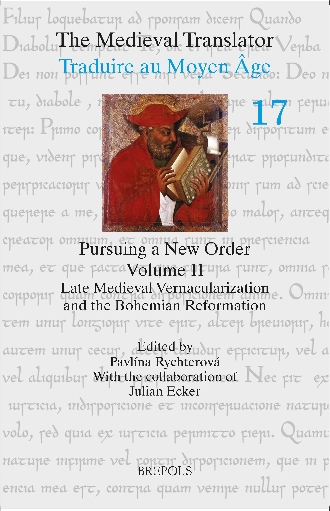
Pursuing a New Order II.
Late Medieval Vernacularization and the Bohemian Reformation
Abstract
In the first two decades of the fifteenth century, the Hussite religious reform movement emerged in Bohemia; it used one of the realm's vernacular languages, Czech, both to disseminate its reform ideas, and to establish strong foundations for the reform. The vernacular became a significant strategy for identification, capable of binding together disconnected religious, ethnic, political and regional identities and generating a very potent aggregate of identifications. This volume considers material from the second half of the fourteenth century to the first half of the sixteenth, beginning with the so-called Hussite ‘forerunners’ and ending with the early German reformation. Individual essays discuss the various functions of the vernaculars in different text types, social situations and religious and political contexts. Together, they correct former assumptions about the topic and provide a basis for further study of Hussite vernacular theology and contribute to the transformation of scholarly narratives about the Hussite movement by including works of vernacular religious education among the most important source material. It offers a basis for the comparative research on the role of the vernaculars in late medieval European religious reform movements.
