


Brepols
Brepols is an international academic publisher of works in the humanities, with a particular focus in history, archaeology, history of the arts, language and literature, and critical editions of source works.2801 - 2820 of 3194 results
-
-
The Manuscripts of Leo the Great’s Letters
The Transmission and Reception of Papal Documents in Late Antiquity and the Middle Ages
show More to view fulltext, buy and share links for:The Manuscripts of Leo the Great’s Letters show Less to hide fulltext, buy and share links for: The Manuscripts of Leo the Great’s LettersThis book explores the transmission of the letters of Leo the Great (pope, 440-461). After setting out the contours of Leo’s papacy and the factors contributing to the sending and subsequent transmission of his letters to posterity, it deals in detail with around sixty collections of Leo’s letters and over 300 manuscripts ranging in date from the sixth up to the sixteenth century. Each period of the Middle Ages is introduced as the context for collecting and copying the letters, and the relationships between the letter collections themselves are traced. The result is a survey of the impact of Leo the Great upon Latin Christendom, an impact that was felt in theology and canon law, especially from the age of the Emperor Justinian to the Council of Ferrara-Florence, and moving through the major monasteries of Europe from Corbie to Clairvaux. At every cultural Renaissance, Leo was a presence, being copied, rearranged, interpreted, and eventually printed. This book is a testament to the legacy of one of the midfifth century’s most influential figures.
-
-
-
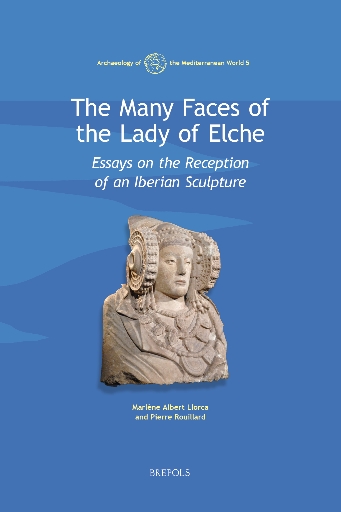
The Many Faces of the Lady of Elche
Essays on the Reception of an Iberian Sculpture
show More to view fulltext, buy and share links for:The Many Faces of the Lady of Elche show Less to hide fulltext, buy and share links for: The Many Faces of the Lady of ElcheOn 4 August 1897, farm workers in Elche — the site of ancient Ilici — discovered an Iberian sculpture of a woman that dated from the fifth– fourth centuries BCE. French archaeologist Pierre Paris dubbed this figure ‘the Lady of Elche’, and promptly purchased the sculpture on behalf of the Louvre Museum. There, she drew the attention of European scholars who were intrigued by her stylistic features, finally concluding that she bore witness to the existence of a specifically Iberian art. Since her discovery, the Lady of Elche has been a source of fascination not only for scholars, but also for artists, and she has become an icon of regional and national identity across Spain. This volume, co-written by an archaeologist and an anthropologist and translated here into English for the first time, seeks to explore the importance of the Lady of Elche, both for students of the past, and for the peoples of Iberia. The authors here explore not only what we know — and still do not know — about her creation, but also engage with key questions about what she represents for the men and women of our time who have questioned, manipulated, admired, loved, and often reinvented the singular beauty of this iconic figure.
-
-
-
The Many Lives of Jesus
Scholarship, Religion, and the Nineteenth Century Imagination
show More to view fulltext, buy and share links for:The Many Lives of Jesus show Less to hide fulltext, buy and share links for: The Many Lives of JesusThis collection of essays aims to offer a multi-disciplinary approach to nineteenth and early twentieth century scholarship on Jesus and early Christianity, which illustrates the width and depth of the questions that critical reflections on the historical Jesus raised in and beyond the field of liberal theology. More precisely, it focuses on Jesus scholarship as practiced in various disciplines and fields that engaged with the academic study of religion. On the other hand, this volume aims for a comprehensive, multi-perspectivist historicization of this scholarship, considering the full range of religious, cultural, racial, political, and national dynamics that hosted the many controversies over the historical Jesus.Divided into five sections, the eleven essays in this book are organized according to guiding themes and a loose chronological structure. The first section revisits the roots of the Forschung in Liberal-Protestant Germany, and especially focuses on the maturation of historical-critical consciousness in the work of Reimarus (and his predecessors), Schleiermacher and Strauss. The second section is concerned with the rise of the “oriental Jesus” against the background of the making of the academic, non-theological study of religion as a scientific discipline. The third section explores how themes related to the historical Jesus and the rise of Christianity were treated among different academic disciplines from the early second half of the nineteenth century onwards. The fourth section explores how the historical Jesus was at the same time further explored by the biblical scholars and theologians who integrated new comparative methods in their research. The fifth section, finally, highlights the cultural-political appropriations that were made of scholarly writings on Jesus, which not rarely constituted the bricks with which radical political movements built their houses.
-
-
-
The Materiality of Medieval Administration in Northern England
show More to view fulltext, buy and share links for:The Materiality of Medieval Administration in Northern England show Less to hide fulltext, buy and share links for: The Materiality of Medieval Administration in Northern EnglandIn the late Middle Ages, the Percy earls of Northumberland and the bishops of Durham were two of the largest landholders in the North East of England. This book is a study of their estate administrations based on the extant manorial accounts from the fourteenth through sixteenth centuries. Examining the documents holistically, it investigates the shapes of the records and the materials they were written upon, as well as how they were used and stored to provide new insights into late medieval lordly administration. Such a material-focussed approach explores the concurrent use of rolls, booklets, paper, and parchment for different types of manorial accounts and at different steps of the multistage production and audit process. It also examines the hands drafting, editing, and auditing the accounts, in addition to the layout and presentation of the contents of the records to further our understanding of the written burden of proof required in the management and audit of large estates in late medieval England. Studying the financial accounts of the earls of Northumberland and the bishops of Durham from a material perspective reveals two highly sophisticated administrative systems and structures of accountability.
-
-
-

The Materiality of Sound in Chant Manuscripts in the East
show More to view fulltext, buy and share links for:The Materiality of Sound in Chant Manuscripts in the East show Less to hide fulltext, buy and share links for: The Materiality of Sound in Chant Manuscripts in the EastThe two books of Scriptor, Cantor & Notator present an innovative multi-author project dealing with the complex interconnections between learning, writing and performing chant in the Middle Ages. A number of different methodological approaches have been employed, with the aim of beginning to understand the phenomenon of chant transmission over a large geographical area, linking and contrasting modern definitions of East and West. Thus, in spite of this wide geographical spread, and the consequent variety of rites, languages and musical styles involved, the common thread of parallels and similarities between various chant repertoires arising from the need to fix oral repertories in a written form, and the challenges involved in so doing, are what bring this wide variety of repertoires and approaches together. This multi-centric multi-disciplinary approach will encourage scholars working in these areas to consider their work as part of a much larger geographical and historical picture, and thus reveal to reader and listener more, and far richer, patterns of connections and developments than might otherwise have been suspected. The Materiality of Sound in Chant Manuscripts in the East brings together articles on ancient Greek, Byzantine, Coptic and Armenian music scripts in the East. Together with the collection of essays published in The Materiality of Sound in Chant Manuscripts in the West, these books discuss local scribal peculiarities and idiosyncrasies beyond the cultural and geographical contexts of production and uses of their manuscript sources.
-
-
-
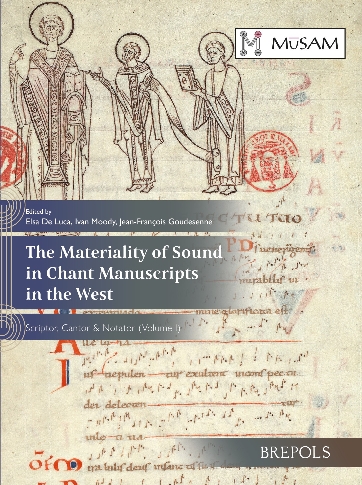
The Materiality of Sound in Chant Manuscripts in the West
show More to view fulltext, buy and share links for:The Materiality of Sound in Chant Manuscripts in the West show Less to hide fulltext, buy and share links for: The Materiality of Sound in Chant Manuscripts in the WestScriptor, Cantor & Notator is an innovative multi-author project dealing with the complex interconnections between learning, writing and performing chant in the Middle Ages. A number of different methodological approaches have been employed, with the aim of beginning to understand the phenomenon of chant transmission over a large geographical area, linking and contrasting modern definitions of East and West. Thus, in spite of this wide geographical spread, and the consequent variety of rites, languages and musical styles involved, the common thread of parallels and similarities between various chant repertoires arising from the need to fix oral repertories in a written form, and the challenges involved in so doing, are what bring this wide variety of repertoires and approaches together. This multi-centric multi-disciplinary approach will encourage scholars working in these areas to consider their work as part of a much larger geographical and historical picture, and thus reveal to reader and listener more, and far richer, patterns of connections and developments than might otherwise have been suspected.
Scriptor, Cantor & Notator is published in two books. The first, The Materiality of Sound in Chant Manuscripts in the West, brings together articles on several different families of early music scripts in the Latin West and provides a vividly diverse picture of some of the best current scholarship on the various types of ancient and medieval musical notation.
-
-
-
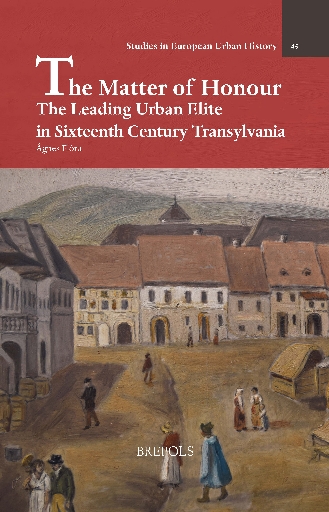
The Matter of Honour
The Leading Urban Elite in Sixteenth Century Transylvania
show More to view fulltext, buy and share links for:The Matter of Honour show Less to hide fulltext, buy and share links for: The Matter of HonourThis monograph entails a comparative study of two early modern urban centers in Transylvania: Cluj (Kolozsvár, Klausenburg) and Sibiu (Nagyszeben, Hermannstadt). It develops a new perspective on urban history in Transylvania, by filling the recent historiographical lacuna on early modern urban elites. This book attempts to combine traditional and modern research methods, by analyzing and comparing a large volume of unpublished data along three research lines. First, the historical background within which of the town elites in Cluj and Sibiu monopolized power are analyzed, including the development of town autonomy and governmental systems, the legal background of urban leadership, its continuity and the conditions under which the political urban elite acted in each town. Secondly, a thorough archontological and prosopographical research, with a special focus on marriage strategies and professional competence leads to a socio-political characterisation of the elites of Cluj and Sibiu. Finally, an attempt is made to provide insight into the representation and self-fashioning of these elites.
-
-
-
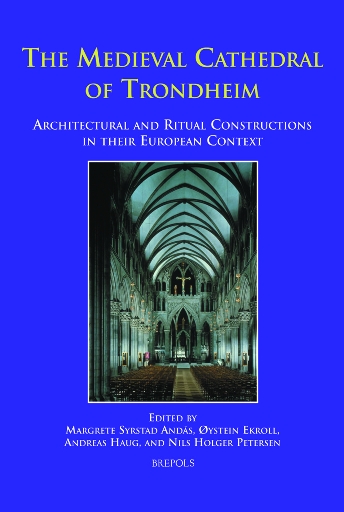
The Medieval Cathedral of Trondheim
Architectural and Ritual Constructions in their European Context
show More to view fulltext, buy and share links for:The Medieval Cathedral of Trondheim show Less to hide fulltext, buy and share links for: The Medieval Cathedral of TrondheimMedieval cathedrals and the various practices connected to them form an important and complex part of the European cultural heritage. The buildings themselves and their reception into the modern arts ensure their presence within today’s cultural memories and sensibilities. In the mid-twelfth century, a new archbishop’s seat was erected in the Norwegian city of Trondheim (or Nidaros) in the far north of Europe. This interdisciplinary volume, written by scholars of history, architecture, and liturgy, explores the medieval cathedral of Trondheim as a local construction in a European context. As a see of the Western Church, it was set in an international Latinate culture. At the same time, the construction of the building itself and the ritual practices in and around it were influenced by local political, religious, and cultural conditions. The relationship between the physical construction of a cathedral and its function in medieval liturgical and other ritual practices is a topic of wide relevance for architectural and liturgical scholarship. The so-called Ordo Nidrosiensis, the thirteenth-century ordinal of the province of Nidaros, is an immense help in interpreting the architectural construction and sacred space of Nidaros Cathedral and the Ordo is dealt with in many of the articles. In accordance with general medieval practice, both the Nidaros ordinal and this volume may be described as international in content but edited with regard to local considerations.
-
-
-
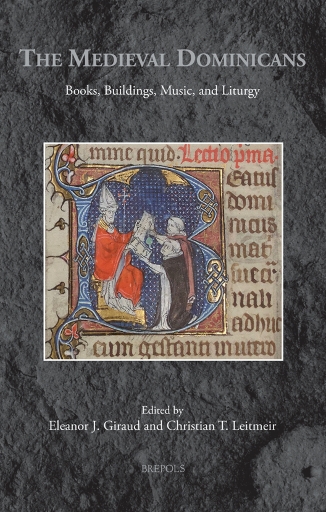
The Medieval Dominicans
Books, Buildings, Music, and Liturgy
show More to view fulltext, buy and share links for:The Medieval Dominicans show Less to hide fulltext, buy and share links for: The Medieval DominicansThe Order of Preachers has famously bred some of the leading intellectual lights of the Middle Ages. While Dominican achievements in theology, philosophy, languages, law, and sciences have attracted much scholarly interest, their significant engagement with liturgy, the visual arts, and music remains relatively unexplored. These aspects and their manifold interconnections form the focal point of this interdisciplinary volume.
The different chapters examine how early Dominicans positioned themselves and interacted with their local communities, where they drew their influences from, and what impact the new Order had on various aspects of medieval life. The contributors to this volume address issues as diverse as the making and illustrating of books, services for a king, the disposition of liturgical space, the creation of new liturgies, and a Dominican-made music treatise. In doing so, they seek to shed light on the actions and interactions of medieval Dominicans in the first centuries of the Order’s existence.
-
-
-
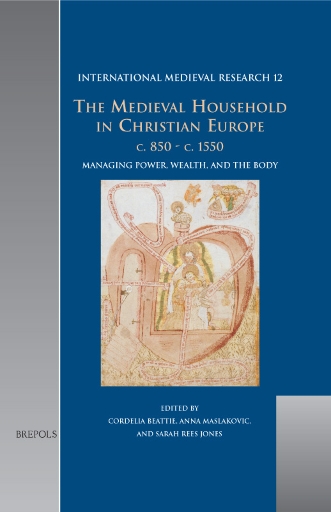
The Medieval Household in Christian Europe, c. 850-c. 1550
Managing Power, Wealth, and the Body
show More to view fulltext, buy and share links for:The Medieval Household in Christian Europe, c. 850-c. 1550 show Less to hide fulltext, buy and share links for: The Medieval Household in Christian Europe, c. 850-c. 1550This volume asks whether there was a common structure, ideology, and image of the household in the medieval Christian West. In the period under examination, noble households often exercised great power in their own right, while even quite humble households were defined as agents of government in the administration of local communities. Many of the papers therefore address the public functions and perceptions of the household, and argue that the formulation of domestic (or family) values was of essential importance in the growth and development of the medieval Christian state.
Contributors to this volume of collected essays write from a number of disciplinary perspectives (archaeological, art-historical, historical and literary). They examine socially diverse households (from peasants to kings) and use case studies from different regions across Europe in different periods within the medieval epoch from c. 850 to c. 1550. The volume both includes studies from archives and collections not often covered in English-language publications, and offers new approaches to more familiar material. It is divided into thematic sections exploring the role of households in the exercise of power, in controlling the body, in the distribution of wealth and within a wider economy of possessions.
-
-
-
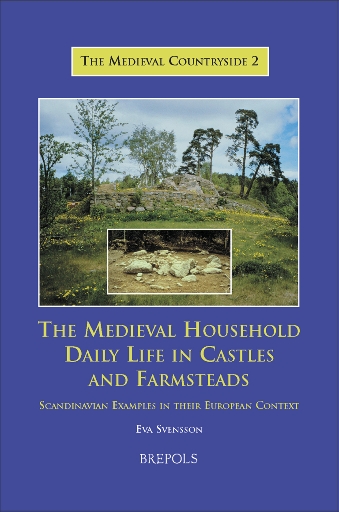
The Medieval Household: Daily Life in Castles and Farmsteads
Scandinavian Examples in their European Context
show More to view fulltext, buy and share links for:The Medieval Household: Daily Life in Castles and Farmsteads show Less to hide fulltext, buy and share links for: The Medieval Household: Daily Life in Castles and FarmsteadsRecent archaeological excavations in Scandinavia provide us with a fascinating insight into the household and its function as a social focus for people of different medieval social estates. This book investigates four excavated Swedish sites - the castles of Saxholmen and Edsholm, and the rural settlements of Skramle and Skinnerud - in order to juxtapose the daily life of nobles and peasants. The author argues that the practices of everyday life revealed by these sites offer new insights into social traditions, mentalities, and cultural patterns. In particular, she asserts that notwithstanding the huge social gulf between the peasantry and the nobility in medieval Scandinavia, the two social groups shared some fundamental experiences which point to a common cultural milieu. In turn, the author uses daily life as a prism for addressing the formation of common European cultural traits during the medieval period by comparing these excavations with material from comparable sites in Central and Western Europe. By means of this comparison, the author questions the degree to which we may talk about a process of ‘Europeanization’ taking place in this era.
-
-
-
The Medieval Paradigm
Religious Thought and Philosophy
show More to view fulltext, buy and share links for:The Medieval Paradigm show Less to hide fulltext, buy and share links for: The Medieval ParadigmMedieval culture is marked by a general acceptance of the mental attitude which both recognized and accepted the truths of the dominant religion. This is, then, the ‘general paradigm’ that programmatically directs the paths and results of intellectual activity in the Middle Ages. In the various fields of scientific research, in the different epochs and in the manifold social and institutional situations, there are also produced - based on the ‘general paradigm’ - many ‘particular paradigms’, which carry out some specified and graduated effects of the general one.
The idea pursued during the Congress is an attempt to determine, describe and evaluate the general and particular results the ‘paradigm’ had on the maturation of medieval philosophical and scientific thought with regard to the relationship - that was a dynamic and reciprocal one, and was not necessarily reduced to a theological understanding -between rational inquiry and religious belief.
List of Contributors: G. Alliney, M. Bartoli, A. Bisogno, A. Cacciotti, S. Carletto, C. Casagrande, A. Conti, G. d’Onofrio, P.F. De Feo, C. Erismann, G. Fioravanti, F. Fiorentino, A. Galonnier, R. Gatti, J. Gavin, M. Geoffroy, A. Guidi, M. Laffranchi, R. Lambertini, M. Lenzi, E. Mainoldi, C. Martello, C. Mews, A. Morelli, P. Müller, F. Paparella, M. Parodi, G. Perillo, I. Peta, A. Petagine, P. Porro, F. Seller, K. Tachau, Ch. Trottmann, S. Vecchio, M. Vittorini, J. Ziegler
-
-
-
The Medieval South Caucasus. Artistic Cultures of Albania, Armenia and Georgia
show More to view fulltext, buy and share links for:The Medieval South Caucasus. Artistic Cultures of Albania, Armenia and Georgia show Less to hide fulltext, buy and share links for: The Medieval South Caucasus. Artistic Cultures of Albania, Armenia and GeorgiaThe volume serves as an introduction to what its editors have chosen to call the “artistic cultures” prevalent during the Middle Ages in the region of the South Caucasus. Although far from comprehensive in terms of material, chronology and geography, the volume intends to raise awareness of a region whose artistic wealth and cultural diversity has remained relatively unknown to most medievalists. Stretching from Eastern Anatolia and the Black Sea in the West to the Caspian Sea in the East, and from the snow-capped Great Caucasus mountain range in the north to the Armenian highlands in the south, medieval southern Caucasia was originally divided into the kingdom of Caucasian Albania, Greater and Lesser Armenia, and western and eastern Georgia, that is, the kingdoms of Lazica (Egrisi) and Iberia (Kartli) respectively. Together, these entities made the South Caucasus a true frontier region between Europe and Asia and a place of transcultural exchange. Its official Christianization began as early as in the fourth century, even before Constantine the Great founded Constantinople or had himself been converted to Christianity. During the subsequent centuries, the region became a well-connected and strategic buffer zone for its neighboring and occupant Byzantine, Persian, Islamic, Seljuk and Mongol powers. And although subject to constantly shifting borders, the medieval kingdoms of the South Caucasus remained an internally diverse yet shared and distinct geographical and historical unity. Far from being isolated, these cultures were part of a much wider medieval universe. Because of the transcultural nature and elevated artistic quality of their objects and monuments, they have much to offer the field of art history, which has recently been challenged to think more globally in terms of transculturation, movement and appropriation among medieval cultures.
-
-
-
The Medieval Translator. Traduire au Moyen Age
show More to view fulltext, buy and share links for:The Medieval Translator. Traduire au Moyen Age show Less to hide fulltext, buy and share links for: The Medieval Translator. Traduire au Moyen AgeLe premier volume de cette collection chez Brepols est le cinquième d'une série du même nom, éditée par Roger Ellis, et publiée précédemment chez d'autres éditeurs. Comme ses prédécesseurs, il présente les communications faites lors de colloques internationaux et traitant de la théorie et de la pratique de la traduction au moyen âge. Les articles figurant au sommaire de ce volume ont été présentés lors du colloque de Conques, les 26-29 juillet 1993. Les articles sont rédigés dans une des langues internationales et sont accompagnés de résumés en anglais. Le fil conducteur est le phénomène de la traduction au moyen âge, et la série contient tant les études spécialisées que les approches plus générales. L'article phare du volume 5 (K. Ashley & P. Sheingorn, The translations of Sainte Foy: bodies, textes and places), par exemple, traite de l'interaction entre la transmission littéraire et la translation de reliques, en partant du cas de sainte Foy. D'autre part, la question des traductions post-médiévales ou contemporaines de textes mediévaux est également abordée.
-
-
-
The Medieval Translator. Traduire au Moyen Age
Proceedings of the International Conference of Göttingen (22-25 July 1996). Actes du Colloque international de Göttingen (22-25 juillet 1996)
show More to view fulltext, buy and share links for:The Medieval Translator. Traduire au Moyen Age show Less to hide fulltext, buy and share links for: The Medieval Translator. Traduire au Moyen AgeMost of the papers in this volume consider translation in medieval England (in both Old and Middle English and Anglo-Norman), though translations into other medieval vernaculars are also represented (Icelandic, Dutch, German), as is translation of classical Greek into Latin. Most of the translations are anonymous, though major translators are also included: Cicero, King Alfred, Robert Grosseteste, Jean de Meun, Chaucer. Several papers consider the troubled times during the late fourteenth and early fifteenth centuries in England, when a number of major translation projects were undertaken; others explore the place of translation in daily life (pro forma letters, gynaecological treatises, forged documents in support of a local shrine, texts rewritten so as to update legal references in them); another considers the importance of paper for the rapid dissemination of translated texts. Also featured prominently is the translation of different sorts of religious texts, originally variously in monastic, eremitical and mendicant milieux, and including the 'translations' for their readers of divine messages received by female visionaries. The more generous understanding of the term indicated by the use of quotation marks for these latter is also reflected in a paper considering representations of heaven and hell in visual arts. All the contributions share an awareness of translation as culturally specific - as originating in and addressing specific contexts: of; for example; nationality, politics, class and gender. Above all, translation as a new thing; with a life of its own, may provide a fuller, as well as a different, realisation of what was only partly present in its original.
-
-
-
The Medieval Translator. Traduire au Moyen Age
show More to view fulltext, buy and share links for:The Medieval Translator. Traduire au Moyen Age show Less to hide fulltext, buy and share links for: The Medieval Translator. Traduire au Moyen Age[Fundamental to all translation work, the concept of “displacement” allows one to take into account the multiple successive states inhering in a single text, and to interpret these variations. Translation is, in effect, a form of transfer; more specifically, it involves a movement from one context to another, be it national, social, political, historical, linguistic or religious. The texts examined here illustrate, each in their unique way, the relationship between contextual change and audience. They are also the product of subtle interactions between a variety of elements, the result of which is a “reinvention” of their respective roles and uses over time. For example, a text intending to entertain may also have educational outcomes; a book of local miracles may attract pilgrims and contribute to the economic life of a monastery; a text and its translations may at some point be appropriated for polemical purposes, while a library of translated texts founded on humanist principals may also serve political ends.
Furthermore, each successive adaptation and its accompanying annotations impacts upon the tonality of a text. While this diversity of meanings may inspire some (such as the medieval poet Marie de France), it moreover raises a number of important and difficult questions for the modern translator. How, for example, does one translate the “harmonics” underlying a series of mystical puns? The “solution” usually involves a compromise that both enhances and undermines the translated text.
This volume presents a selection of twenty-eight papers delivered at the Seventh International Conference dedicated to The Theory and Practice of Translation in the Middle Ages, which took place at the University of Paris III — Nouvelle Sorbonne in July 2004. The period covered by the texts and their translations extends from antiquity to the present day. The literary and critical breadth of these papers, as well as the rigorous interrogation of the modern translation theory, illustrates the remarkable vitality and diversity of current scholarship in this field.
,Au cœur de toute activité de traduction, le concept de déplacement permet de rendre compte des multiples états successifs d’un même texte et d’en interpréter les variations. Toute traduction est en effet une translation, c’est-à-dire un changement d’environnement, que ce dernier soit national, social, politique, historique, linguistique ou ecclésial. Les textes examinés ici témoignent chacun à sa manière des transformations qu’ils ont subies lorsque, changeant de langue, de style ou d’époque, ils ont changé de destinataires. La dynamique qui les traverse se nourrit de subtils côtoiements: un désir légitime de divertir peut fort bien s’accommoder d’une intention didactique; un recueil de miracles locaux peut attirer des pèlerins, contribuant ainsi à la vie économique d’un monastère; un texte et ses traductions peuvent devenir l’objet d’utilisations polémiques; se constituer en humaniste une bibliothèque de traductions peut aussi servir un dessein politique.
Par ailleurs les transpositions successives et leurs gloses, comme en musique, entraînent des changements de tonalité. Ce ‘surplus’ de sens qu’encourage Marie de France pourra cependant se heurter à des résistances: comment par exemple préserver d’une langue à l’autre toutes les harmoniques que libère un enchaînement de jeux de mots mystiques? Ainsi l’inévitable compromis qui s’imposera au traducteur sera souvent le choix d’un enrichissement doublé d’une déperdition.
Ce volume présente une sélection des communications entendues lors du septième colloque international consacré à la théorie et la pratique de la traduction des textes au Moyen Age qui s’est tenu à l’Université de Paris III — Sorbonne Nouvelle en juillet 2004. La période couverte par ces textes et leurs traductions s’étend de l’Antiquité jusqu’à nos jours. Ce sont au total vingt-huit études qui sont ici proposées. La richesse des domaines abordés, la haute technicité des analyses, de même que la place faite aux questionnements de la traductologie moderne illustrent la remarquable vitalité des études actuelles relatives aux multiples aspects de la traduction des textes médiévaux.
]
-
-
-
The Medieval Translator. Traduire au Moyen Age
In principio fuit interpres
show More to view fulltext, buy and share links for:The Medieval Translator. Traduire au Moyen Age show Less to hide fulltext, buy and share links for: The Medieval Translator. Traduire au Moyen AgeTranslation studies centering on medieval texts have prompted new ways to look at the texts themselves, but also at the exchange and transmission of culture in the European Middle Ages, inside and outside Europe. The present volume reflects, in the range and scope of its essays, the itinerant nature of the Medieval Translator Conference, at the same time inviting readers to reflect on the geography of medieval translation. By dividing the essays presented here into four groups, the volume highlights lines of communication and shifts in areas of interest, connecting the migrating nature of the translated texts to the cultural, political and linguistic factors underlying the translation process. Translation was, in each case under discussion, the result or the by-product of a transnational movement that prompted the circulation of ideas and texts within religious and/or political discussion and exchange.
Thus the volume opens with a group of contributions discussing the cultural exchange between Western Europe and the Middle East, identifying the pivotal role of Church councils, aristocratic courts, and monasteries in the production of translation. The following section concentrates on the literary exchanges between three close geographical and cultural areas, today identifiable with France, Italy and England, allowing us to re-think traditional hypotheses on sites of literary production, and to reflect on the triangulation of language and manuscript exchange. From this triangulation the book moves into a closer discussion of translations produced in England, showing in the variety and chronological span covered by the contributions the development of a rich cultural tradition in constant dialogue with Latin as well as contemporary vernaculars. The final essays offer a liminal view, considering texts translated into non-literary forms, or the role played by the onset of printing in the dissemination of translation, thus highlighting the continuity and closeness of medieval translation with the Renaissance.
Alessandra Petrina is Associate Professor of English Literature at the Università degli Studi di Padova, Italy. She has published extensively on late-medieval and Renaissance literature and intellectual history, as well as on modern children’s literature, and edited a number of volumes on early modern English culture.
-
-
-
The Memory and Motivation of Jan Hus, Medieval Priest and Martyr
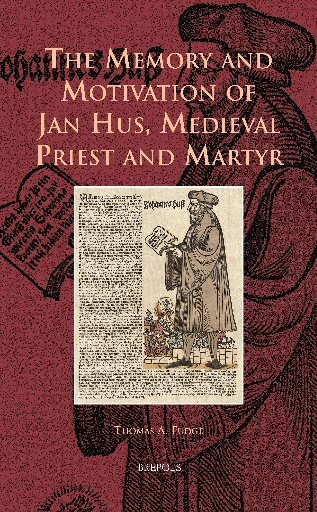
show More to view fulltext, buy and share links for:The Memory and Motivation of Jan Hus, Medieval Priest and Martyr show Less to hide fulltext, buy and share links for: The Memory and Motivation of Jan Hus, Medieval Priest and MartyrJan Hus (1371-1415) gave his name to a social and religious revolution which captured the attention of Europe. The central figure in a late medieval reform movement, he died a condemned heretic. Martyrdom made him famous but his essential identity has remained a point of controversy. Who was Jan Hus?
This work explores the driving forces in the life and work of this medieval priest as he moved from obscurity to the vulnerability of a publicly accused heretic and the disgraceful prelude to martyrdom. It also focuses on the construction and facilitation of the memory of Jan Hus. Historical “facts” are often compelling but these postulations cannot be approached apart from the manner and process in which those events are remembered.This book illuminates the life and work of the medieval priest and martyr who rose from humble origins to national hero and popular saint on the platform of a unique and renewed practice of the Christian faith. So profound were his challenges to the church and so bellicose were the reactions to his untimely demise, that the name Jan Hus was destined never to fade into oblivion.
-
-
-
The Mercurio
A Brig of the Regno Italico Sunk During the Battle of Grado (1812)
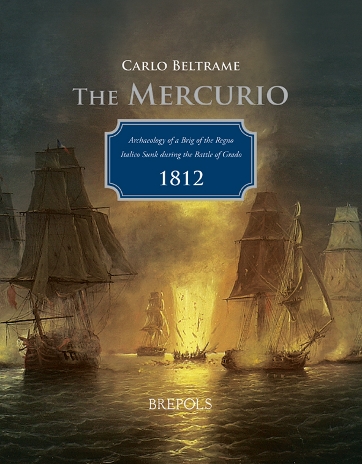
show More to view fulltext, buy and share links for:The Mercurio show Less to hide fulltext, buy and share links for: The MercurioThe Italian brig Mercurio was escorting the French 80-gun vessel Rivoli from Venice on its very first expedition, in 1812, when it was sunk by an English ship during the Battle of Grado. Since the wreck was identified, the Mercurio has been the site of several underwater excavations, beginning in 2001 and continuing from 2004 to 2011 by a team from the Università Ca’ Foscari of Venice, together with the local Soprintendenza. Their work revealed a number of extraordinary finds and provided a unique insight into life - and death - on a brig during the period of the Napoleonic wars.
This volume offers a discussion and catalogue of the finds yielded by the Mercurio, including photogrammetry-plans of the bow and stern, together with an analysis of ship-building technique, detail of the equipment and arms used, and, uniquely, close detail of finds connected to the crew themselves. This is one of the few sites from the Mediterranean where human remains have been preserved, and through the work of anthropologists, it has even been possible to try and identify one of the men named on the crew list. Discovery of buttons, footwear, precious items, and even foodstuffs also serve to shed light on the daily life of the crew. This volume thus draws together a wealth of archaeological and historical information to tell the hitherto untold story of the Mercurio.
-
-
-

The Middle English Life of Christ
Academic Discourse, Translation, and Vernacular Theology
show More to view fulltext, buy and share links for:The Middle English Life of Christ show Less to hide fulltext, buy and share links for: The Middle English Life of ChristHow much did Latin academic theoretical discourse inform mainstream late medieval English literature? Rather than asking this question of secular poetic fiction (Chaucer, Gower), this book investigates a more central genre, lives of Christ. Any adequate understanding of vernacular textuality, in an age when most literature was translation of some sort, cannot escape the question of the influence of theory on transactions and ideology of mainstream literary culture in negotiating authority. Where better to test this than the life of Christ?
Derived from the Gospels, this genre provided the set text for human existence. Too often, however, it has been regarded by modern scholarship as an infantilizing clerical sop to a laity deprived of Scripture and intellectual or contemplative ambition. Inquiry into the translating and the spirituality of Middle English lives of Christ yields, however, eloquent examples not of antagonism and rupture between Latin and vernacular but of productive compatibility. This challenges the common modern supposition that vernacular texts and vernacular theology are at odds with Latinate clerical culture, and restores the genre’s historic value. Like their dissenting counterparts, lives of Christ, as well as being of interest in their own right, invested in learned literary and theological norms in their textual transactions. Such reliance demands modern (re)consideration.
-