Brepols
Brepols is an international academic publisher of works in the humanities, with a particular focus in history, archaeology, history of the arts, language and literature, and critical editions of source works.1151 - 1200 of 3194 results
-
-
Inventio meditativa
The Rhetoric and Hermeneutics of Meditation in Hugh of Saint-Victor, Guigo II, and Bonaventure of Bagnoregio
show More to view fulltext, buy and share links for:Inventio meditativa show Less to hide fulltext, buy and share links for: Inventio meditativaThe present volume develops a new conceptual perspective on late-medieval meditation, particularly in Hugh of Saint-Victor, Guigo II, and Bonaventure of Bagnoregio. For the most part, modern commentaries on the subject have relegated rhetoric to the margins of attention, if not to complete silence. In contrast, this book contends that these writers arrived at their distinctive conceptions of meditation by drawing from the Ciceronian rhetorical tradition. They did so by deepening earlier rhetorical treatments of inventio while adapting them to the Christian life. The examination of this topic is divided into three principal and related aspects. First, meditation is studied as a rhetorical notion for a specific kind of mnemonic, rational, and affective exercise. Second, that notion is used to shed light on meditation as a compositional textual practice whose outcomes bear striking analogy to what Umberto Eco called the ‘open works’ of the Western avant-garde. Finally, meditation emerges as a form of literary reception required for approaching and construing certain works. In exploring each of these aspects, the study shows that rhetoric radically informs, not only Hugh’s, Guigo’s, and Bonaventure’s engagement with meditation, but also their views on salvation history, monastic life, divine revelation, scientific learning, and biblical hermeneutics. Thus, despite the omission or relative insignificance of the ars bene dicendi in most modern investigations, it is argued that rhetoric lies at the core of these authors’ entire religious outlook. In this way, the present volume aims to contribute to a better understanding of these medieval figures by filling an important gap in the scholarly literature.
-
-
-
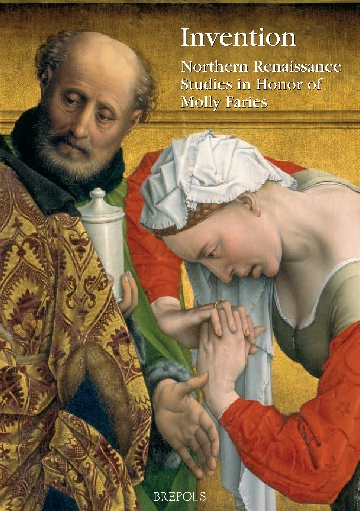
Invention
Northern Renaissance Studies in Honor of Molly Faries
show More to view fulltext, buy and share links for:Invention show Less to hide fulltext, buy and share links for: InventionElucidating the steps that led to a finished work of art has been one of Molly Faries’ principal concerns in nearly forty years of research and teaching. A pioneer in infrared reflectography, she has demonstrated like no other scholar the importance of technical studies to art history, in the way that they provide insight into an artist’s technique and development, into collaboration within a workshop, and into master-pupil relationships. Molly Faries has taught generations of students and colleagues to view paintings not as static objects but as the results of successive choices.
The volume’s title, Invention: Northern Renaissance Studies in Honor of Molly Faries, evokes Molly’s passion for understanding an artist’s creative process. The term “invention” is here understood in the widest possible sense: How did a work of art come into being? How did an artist react to new stimuli or adapt to a new culture? Was innovation valued above adherence to a local tradition? To what degree could artists shape their patrons’ taste? How did artists transform their own inventions over time and adopt those of others? Was there a concept of invention specific to the Northern Renaissance and how did it differ from ours?
The authors who tackle these and other questions include university professors, curators, conservators, and conservation scientists, all recognized specialists in northern European art of the fifteenth and sixteenth centuries. The artists they discuss are among the greatest painters, manuscript illuminators, printmakers, and sculptors: Johan Maelwael, the Limbourg brothers, Jan van Eyck, Rogier van der Weyden, Hans Memling, Lieven van Lathem, Juan de Flandes, Jean Hey, Albrecht Dürer, Hieronymus Bosch, Master H.L., Jacques Du Broeucq, and Jan Brueghel the Elder.
This book, one of the few devoted specifically to the concept of invention in Northern Renaissance art, is richly illustrated with 32 color plates and 179 black-and-white reproductions; it includes an index.
-
-
-
Inwardness, Individualization, and Religious Agency in the Late Medieval Low Countries
Studies in The 'Devotio Moderna' and its Contexts
show More to view fulltext, buy and share links for:Inwardness, Individualization, and Religious Agency in the Late Medieval Low Countries show Less to hide fulltext, buy and share links for: Inwardness, Individualization, and Religious Agency in the Late Medieval Low CountriesRecent scholarship on the Middle Ages has highlighted the importance of individualistic tendencies in devotion in both the lay world and religious communities. This interaction between individualization and religious agency has been scrutinized in numerous studies, focusing on the beginnings during the so-called ‘Twelfth- Century Renaissance’, and further development in the later medieval and early modern periods.
However, there has hitherto been relatively little scholarship on the phenomenon in the Devotio Moderna: the flourishing of more personalized forms of devotion in north-western Europe during the later Middle Ages. The essays in this volume redress this gap by exploring the processes of inwardness and the emergent individualization of religious practices in the late medieval Low Countries. The essays explore issues including the early impact of the printing press on devotion; meditational aids such as identification with Christ, prayer cycles, practices of remembrance, and devout songs; and the tension between inner devotion and the ideal of communal piety in male and female religious communities. They also discuss some leading individuals of the Devotio movement.
-
-
-
Ipnosi turca
Un medico viaggiatore in terra ottomana (1681-1717)
show More to view fulltext, buy and share links for:Ipnosi turca show Less to hide fulltext, buy and share links for: Ipnosi turcaLe lettere del medico fiorentino Alessandro Pini (1653-1717) e il suo trattato De moribus Turcarum fanno emergere un’immagine avvincente del popolo egiziano e della cultura ottomana. Ciò che Pini ha osservato in Egitto e nel mondo ottomano rivela una straordinaria dimensione mediterranea di commistione culturale, fatta di scambi e di incontri scaturiti dalle necessità lavorative e anche dalla semplice quotidianità. Oltre alla missione scientifica ufficiale egli doveva svolgere un’intrigante attività spionistica per Cosimo III, Granduca di Toscana, in cui si rivelò poi fallimentare. Amareggiato e osteggiato per l’insuccesso, passò poi alle dipendenze della Repubblica di Venezia e dimorò per vari anni a Istanbul e in Morea, dove senza pregiudizi e con ampiezza di vedute osservò le tradizioni e i costumi dei popoli che incontrava. Decise dunque consapevolmente di scrivere l’esaltazione di un mondo che l’Occidente vedeva come il suo alter ego negativo. Sebbene fosse stato imprigionato nella sua società di adozione, Pini rimase affascinato, forse anche ipnotizzato, da quello stesso mondo che lo aveva variamente premiato e frustrato sia nel suo lavoro ufficiale che nel suo incarico segreto.
-
-
-
Irénée de Lyon et les débuts de la Bible chrétienne
Actes de la Journée du 1.VII.2014 à Lyon
show More to view fulltext, buy and share links for:Irénée de Lyon et les débuts de la Bible chrétienne show Less to hide fulltext, buy and share links for: Irénée de Lyon et les débuts de la Bible chrétienneCet ouvrage est issu d’une rencontre scientifique, qui a eu lieu à Lyon en juillet 2014. Des biblistes et des théologiens ont cherché à interroger l’œuvre d’Irénée, particulièrement l’Adversus Haereses, sous l’angle de son rapport à une Bible juive et à une Bible chrétienne en voie de formation. Après quelques considérations générales sur l’herméneutique d’Irénée et l’autorité qu’il attribue aux documents de l’Église, particulièrement aux évangiles, les chercheurs ont examiné sa relation à certains livres privilégiés (évangiles, épîtres). Sur le fond d’une recherche statistique très complète due à L. Mellerin, la part la plus importante de l’ouvrage consiste ensuite en études de la réception de quelques lieux stratégiques, vétéro- ou néotestamentaires, chez Irénée. Le recueil est complété par des indices.
-
-
-
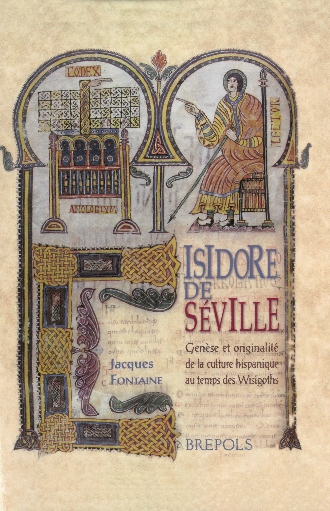
Isidore de Séville. Genèse et originalité de la culture hispanique au temps des Wisigoths
show More to view fulltext, buy and share links for:Isidore de Séville. Genèse et originalité de la culture hispanique au temps des Wisigoths show Less to hide fulltext, buy and share links for: Isidore de Séville. Genèse et originalité de la culture hispanique au temps des WisigothsEntre les invasions germaniques du Ve siècle, et arabes du VIIIe, la péninsule ibérique a su créer au VIIe siècle une brillante civilisation "hispano-wisigothique". Celle-ci s'est exprimée dans une littérature et un art singuliers, encore antiques et déjà médiévaux, adaptés aux besoins d'une société hispanique nouvelle. Le représentant le plus éminent de cette culture est Isidore, archevêque de Séville (560 ?-636), dont le rayonnement s'est prolongé sur tout l'Occident du haut Moyen Age.
Le présent livre trace d'abord les coordonnées d'espace et de temps des civilisations de l'Espagne méridionale (la "Bétique" des Romains) des origines au VIe siècle. Puis il reconstitue la biographie d'Isidore -qui n'a guère de sources directes-. Il dégage ensuite l'originalité de ses différentes oeuvres, regroupées par thèmes. Il analyse enfin les catégories et les valeurs d'une pensée plus cohérente et plus personnelle qu'on ne l'avait trop longtemps cru. On trouvera ici la synthèse d'un demi-siècle de recherches, dans le premier ouvrage d'ensemble, en langue française, sur Isidore de Séville et son temps.
-
-
-

Islam: identité et altérité
Hommage à Guy Monnot, O.P.
show More to view fulltext, buy and share links for:Islam: identité et altérité show Less to hide fulltext, buy and share links for: Islam: identité et altéritéDétenteur de la chaire d’Exégèse coranique, de 1980 à 1994, à la Section des sciences religieuses de l’École pratique des hautes études à la Sorbonne, le Père Guy Monnot a renouvelé cette discipline majeure de l’islamologie classique en la considérant à juste titre comme le centre de gravité de plusieurs autres champs d’investigation scientifique : la pensée théologique, la spiritualité, la littérature, l’hérésiologie ou encore l’histoire comparée des religions. C’est la raison pour laquelle un certain nombre parmi ses amis, collègues, anciens élèves et étudiants se sont réunis ici afin de lui rendre hommage ainsi qu’à son œuvre par des contributions portant sur ses principaux domaines de recherche : étude du Coran et exégèse coranique, relations entre l’islam et les autres religions, Shahrastānī et ismaélisme, religions iraniennes et littératures persane et indo-persane. Les auteurs ont ainsi voulu témoigner leur amitié à l’égard de Guy Monnot ainsi que leur admiration pour la richesse, le rayonnement et la fécondité de son œuvre.
-
-
-

Islands in the West
Classical Myth and the Medieval Norse and Irish Geographical Imagination
show More to view fulltext, buy and share links for:Islands in the West show Less to hide fulltext, buy and share links for: Islands in the WestThis monograph traces the history of one of the most prominent types of geographical myths of the North-West Atlantic Ocean: transmarine otherworlds of blessedness and immortality. Taking the mythologization of the Viking Age discovery of North America in the earliest extant account of Vínland (‘Wine-Land’) and the Norse transmarine otherworlds of Hvítramannaland (‘The Land of White Men’) and the Ódáinsakr/Glæsisvellir (‘Field of the Not-Dead’/‘Shining Fields’) as its starting point, the book explores the historical entanglements of these imaginative places in a wider European context. It follows how these Norse otherworld myths adopt, adapt, and transform concepts from early Irish vernacular tradition and Medieval Latin geographical literature, and pursues their connection to the geographical mythology of classical antiquity. In doing so, it shows how myths as far distant in time and space as Homer’s Elysian Plain and the transmarine otherworlds of the Norse are connected by a continuous history of creative processes of adaptation and reinterpretation. Furthermore, viewing this material as a whole, the question arises as to whether the Norse mythologization of the North Atlantic might not only have accompanied the Norse westward expansion that led to the discovery of North America, but might even have been among the factors that induced it.
-
-
-
Italy, 888-962: a turning point. Italia, 888-962: una svolta
IV Seminario Internazionale, Cassero di Poggio Imperiale a Poggibonsi (SI) 4-6 dicembre 2009
show More to view fulltext, buy and share links for:Italy, 888-962: a turning point. Italia, 888-962: una svolta show Less to hide fulltext, buy and share links for: Italy, 888-962: a turning point. Italia, 888-962: una svoltaThe years 888-962 are a period in which the Kingdom of Italy was not ruled by kings from across the Alps, the only such period from the end of the eighth century to the end of the eleventh. They were for a long time accepted as a period of major political breakdown and failure, and, in north-central (not southern) Italy, the start of the long run in to the early city communes and Italy’s future history as a radically disunited peninsula. In the light of not only recent historical reanalyses but also the emergence of a large quantity of archaeological data, this image can be tested, and in this book is, by both historians and archaeologists. A far more subtle and nuanced picture emerges from the interdisciplinary work in this volume. This book will be an essential starting-point for all future work on Italy in this period.
-
-
-
Itinéraires de la raison
Etudes de philosophie médiévale offertes à Maria Cândida Pacheco
show More to view fulltext, buy and share links for:Itinéraires de la raison show Less to hide fulltext, buy and share links for: Itinéraires de la raisonProfesseur aux remarquables qualités pédagogiques, Maria Cândida Pacheco possède la remarquable capacité des stimuler ses étudiants dans l' approfondissement des différentes matières qu' elle a enseignées. C'est dans le domaine de la Philosophie Médiévale que son activité s'avère la plus intense, bien qu'elle ait consacré ses premières études à la patristique grecque. Tant dans son enseignement que dans les études qu'elle a publiées se manifeste une attention particulière aux formes et au dynamisme de la rationalité, à la relation entre la philosophie, les institutions et les contextes de transmission du savoir (écoles, université, cour), à la place et aux répercussions des sources grecques, patristiques, arabes et hébraïques chez les penseurs latins, à l'émergence de la théologie en tant que science, à l'encyclopédisme et aux classifications des sciences, au thème de l'homme microcosme, aux translationes studiorum qui ponctuent le Moyen Age.
Maria Cândida Pacheco célèbre le 16 juillet 2005 son soixante-dixième anniversaire. Ce jour est le point culminant d'une longue et intense carrière universitaire de quarante-trois années d' enseignement et de recherche à la Faculté des Lettres de l' Université de Porto. A cette occasion ses disciples et collègues tiennent à lui rendre hommage à travers la publication de cet ouvrage. Les études figurant ici, qui chronologiquement s'étendent de l'aube de la patristique jusqu'à la seconde scolastique, abordent dans leur diversité quelques auteurs et thèmes qui ont suscité son plus vif intérêt.
Ce volume contient des contributions de: J. Cerqueira Gonçalves (Lisboa), J. Hamesse (Louvain-la-Neuve), O. Weijers (Den Haag), C.A.R. Nascimento (São Paulo), J.M. da Cruz Pontes (Coimbra), R. Ramón Guerrero (Madrid), J. Puig Montada (Madrid), M.L. Xavier (Lisboa), P. Bourgain (Paris), Ch. Burnett (London) - D. Luscombe (Sheffield), J. Meirinhos (Porto), G. Dahan (Paris), A. Poppi (Padova), B. Faes de Mottoni (Milano-Roma), M. Toste (Porto - Fribourg), J.A.C.R. de Souza (Goiás), L.A. De Boni (Porto Alegre), A. Maierù (Roma), F. Bertelloni (Buenos Aires), M.S. de Carvalho (Coimbra), P. Parcerias (Porto).
-
-
-
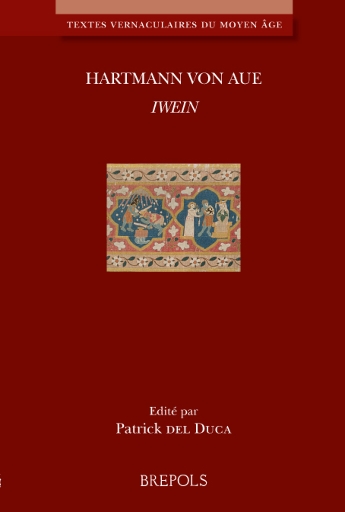
Iwein
Texte établi, traduit et annoté
show More to view fulltext, buy and share links for:Iwein show Less to hide fulltext, buy and share links for: IweinA la fin du XIIe siècle, Hartmann von Aue, un clerc allemand originaire de Souabe, adapte Yvain ou le Chevalier au Lion de Chrétien de Troyes. Iwein constitue sans nul doute l’œuvre la plus aboutie et la plus fascinante de Hartmann. L’adaptateur y reprend les aventures autour desquelles s’organise le roman français : la fontaine merveilleuse, la conquête d’une reine et d’un pays, la folie d’Iwein, l’aide apportée aux chevaliers prisonniers du géant Harpin ou aux trois cents captives d’un château, le combat contre Gawein. Toutefois, Hartmann ne se contente pas d’adapter le roman de Chrétien à la langue allemande, il réinterprète sa source et transforme en profondeur les motivations des personnages et le sens des aventures. Ce qui prime chez Hartmann n’est plus le rapport entre fin’ amor et prouesse mais le rôle de la chevalerie et l’idéal du miles christianus. Pour la première fois, ce roman allemand est traduit en français moderne.
Patrick del Duca est Maître de Conférences et enseigne la langue et la littérature allemandes du Moyen Âge à l’Université Blaise Pascal de Clermont-Ferrand.
-
-
-
Jacques de Vitry (1175/1180-1240)
Entre l'Orient et l'Occident : l'évêque aux trois visages
show More to view fulltext, buy and share links for:Jacques de Vitry (1175/1180-1240) show Less to hide fulltext, buy and share links for: Jacques de Vitry (1175/1180-1240)Jacques de Vitry, né dans le troisième quart du XII e siècle et mort à Rome en 1240, est issu de la génération qui, au tournant du siècle, fut acteur et témoin des transformations intervenues en Occident chrétien et dans l'Église en particulier.
Homme de savoir et d'action, Jacques nous a laissé dans des écrits variés et nombreux le témoignage de ses expériences : l'étudiant parisien, le chanoine régulier du prieuré d'Oignies, le prédicateur de la croisade contre les Albigeois et les Sarrasins, l'évêque d'Acre acteur de la cinquième croisade, le cardinal de l'Église romaine.
On découvre ainsi une personnalité complexe et attachante chez laquelle trois traits de caractère ne cessent de se répondre : la passion de l'étude associée à l'acuité du regard ; l'ambition de servir ; la recherche d'une voie spirituelle patiemment explorée au fil de l'expérience et de l'âge.
-
-
-

Jalousie des dieux, jalousie des hommes
Actes du colloque international organisé à Paris les 28-29 novembre 2008
show More to view fulltext, buy and share links for:Jalousie des dieux, jalousie des hommes show Less to hide fulltext, buy and share links for: Jalousie des dieux, jalousie des hommesLe phénomène de la jalousie a fait l’objet d’études de moralistes, de psychologues et de psychanalystes. Il a également été abordé par les théologiens sous l’angle de « la jalousie divine » telle qu’elle apparaît dans la Bible hébraïque. Le projet du présent ouvrage, délibérément original, consiste à mettre en regard et en échos les multiples manifestations de ce mécanisme universel, dans le temps et dans l’espace. Il en résulte un faisceau d’approches scientifiques, sorte d’arc-en-ciel déployant la riche palette des divers aspects de la jalousie humaine et de ses reflets dans les mythes et les légendes, depuis l’Égypte pharaonique et la Mésopotamie ancienne jusqu’à l’opéra italien, aux romans de Dostoïevski et au théâtre de Claudel, en passant bien sûr par les moments essentiels que constituent la Grèce antique, avec ses philosophes et ses mythes, les études bibliques, qoumraniennes et rabbiniques, la patristique grecque, latine et syriaque face à leurs reflets négatifs, les hérésies, et l’islam, sous ses formes normative (le Coran) et mystiques.
Le regard apporté par la psychologie des profondeurs (psychanalytique et pédopsychiatrique) vient conforter les éclairages multiples présentés par l’histoire, l’exégèse et la philosophie. C’est finalement la philologie qui a le dernier mot, puisque nos termes modernes « jalousie », « gelosia » en italien, proviennent du grec zèlos, via le latin zelus. De cette approche kaléidoscopique se dégage la double face de la jalousie, aux connotations tantôt négatives, voire mortifères, tantôt fertiles et constructives.
Ce volume, fruit des travaux de chercheurs et d’universitaires, émane du colloque éponyme organisé sous l’égide du Centre National de la Recherche Scientifique, de l’École Pratique des Hautes Études, de l’Université Paris-Est, et de la Région Île-de-France.
-
-
-
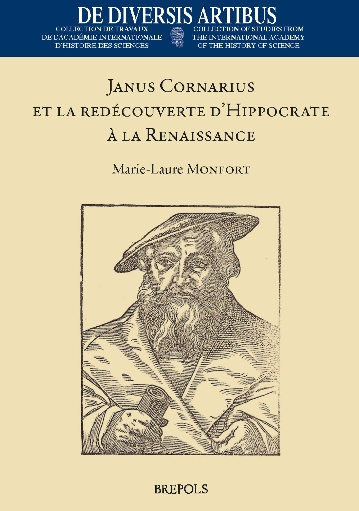
Janus Cornarius et la redécouverte d'Hippocrate à la Renaissance
show More to view fulltext, buy and share links for:Janus Cornarius et la redécouverte d'Hippocrate à la Renaissance show Less to hide fulltext, buy and share links for: Janus Cornarius et la redécouverte d'Hippocrate à la RenaissanceJohann Haynpol de Zwickau, dit Janus Cornarius (ca.1500-1558), a publié près d’une cinquantaine d’ouvrages qui sont pour l’essentiel des traductions latines des grands auteurs médicaux grecs, Hippocrate, Galien, Aetius d’Amida, Paul d’Egine, Dioscoride entre autres, ainsi que des Pères grecs comme Basile de Césarée ou Epiphane et même des Platonis opera omnia posthumes, tous d’une telle qualité philologique que les éditeurs scientifiques actuels tâchent désormais d’intégrer ses leçons à leurs travaux. Sa traduction latine de l’œuvre intégrale d’Hippocrate parue en 1546 était cependant l’activité à laquelle il attachait le plus de prix, et représente en effet sa principale contribution au progrès médical de la Renaissance, d’abord parce qu’elle est la première édition moderne des écrits mis sous le nom du médecin de Cos, ensuite parce qu’elle répond à une stratégie scientifique typique de l’Humanisme, qui demande ici aux sources grecques les outils d’un dépassement du galénisme tardif transmis à l’Europe occidentale par l’intermédiaire d’Avicenne, et enfin parce qu’elle soutient une réorganisation originale de la matière médicale autour de la question des fièvres pestilentielles, dénommées plus tard maladies infectieuses.
L’étude de son apport à l’édition d’Hippocrate a permis d’accéder à d’autres textes de Janus Cornarius longtemps passés inaperçus, dévoilant le rôle de cet érudit médecin, discret mais de tout premier rang, au sein de la rénovation scientifique que symbolise à présent le nom de Copernic. Etudiant à Wittenberg proche des milieux ayant suscité la publication du De revolutionibus orbium cœlestium en 1543, Janus Cornarius est probablement le ‘fou’ (der Narr) dénoncé par Luther pour être à l’origine de cet événement, et correspond sans doute aussi au modèle historique du personnage de Panurge créé par Rabelais en 1532. L’ouvrage présente les premières données textuelles conduisant à ces deux découvertes significatives pour l’histoire intellectuelle et scientifique de la Renaissance européenne, et les situe dans la perspective de l’histoire médicale, alors à peine dégagée de la polémique astrologique. Il offre en outre la première bibliographie exhaustive des éditions cornariennes et la traduction des principaux écrits de Janus Cornarius ayant trait à Hippocrate.
-
-
-
Japeta. Édition et traduction.
show More to view fulltext, buy and share links for:Japeta. Édition et traduction. show Less to hide fulltext, buy and share links for: Japeta. Édition et traduction.Après l’édition d’Europe, comédie héroïque, de Richelieu et Desmaretstz de Saint-Sorlin (1642), la parution de son équivalent germanique, Japeta, fera date. Les « belles infidèles » ne sont pas réservées aux auteurs français : Harsdörfer traduisit la pièce de théâtre imaginée par Richelieu dès 1643, en pleine guerre de Trente Ans, premier conflit paneuropéen dont sortira l'ordre westphalien qui dominera les relations internationales jusqu'à la Révolution française. La simple existence de cette traduction, où l’on retrouve les mêmes personnages, dont les noms sont cependant changés, mérite qu’on s’y arrête, et la version qu’il propose à son lecteur est plus fascinante encore. Les glissements de sens et de projet, de philosophie politique, de rapport à la morale et à la religion, de rapport aux Anciens, sont constants, même si le fond de l’affaire reste le même : nous avons donc Japeta, reine libre et vierge, majestueuse, qui tente d'imposer la paix à ses deux belliqueux soupirants : l'orgueilleux Iberich, mollement soutenu par son parent, le très moral Adelman, et le chevaleresque Liliwert. Italmund est là aussi, otage tantôt de l'un, tantôt de l'autre, et Austerwig court à sa perte, amoureuse de cet Iberich qui se sert d’elle, comme arme dans ce conflit qui le conduit vers sa ruine. Liliwert l’emporte, lui qui fait sienne l'ambition de Japeta d’être « libre » et non point « possédée ». La pièce figure une arène de combat, politique certes, mais aussi et peut-être surtout moral. Si la pièce de Harsdorfer est, comme celle du cardinal, une manifestation d'un sentiment européen, elle scelle peut-être encore davantage l’union entre Liliwert, la France, et Adelman, l’Allemagne. Pour autant, cette traduction, qui ne se présente jamais comme telle, si elle illustre les affirmations de Harsdörfer, selon lequel la littérature allemande doit s’enrichir aux sources étrangères, sans compter sur son seul sol, infléchit le gallocentrisme de la pièce de Richelieu, et surtout déplace son centre d’intérêt de la politique vers la morale et la dimension littéraire.
Nous voulons, avec cette édition, qui comporte le texte allemand et la première traduction française, ainsi que des notes et une introduction, contribuer à ouvrir une brèche pour les études de départements qui trop souvent s’ignorent, la littérature française, et la littérature allemande. Les chercheurs se sont par le passé trop rarement penchés sur l’influence de la France sur la littérature allemande du début de l’âge baroque, dont Harsdörfer est une figure centrale. Japeta mérite cependant l’attention non seulement parce qu’elle s’écrit à un moment où les rapports de puissance se sont transformés, en Europe, mais aussi parce qu’elle émane d’un auteur protestant adaptant la pièce d’un cardinal ministre de la France, fille aînée de l’Église, et enfin parce qu’elle est le document le plus important, dans le domaine du théâtre, de l’influence, trop longtemps négligée par la germanistique et les études littéraires françaises, du classicisme français sur la littérature allemande.
-
-
-
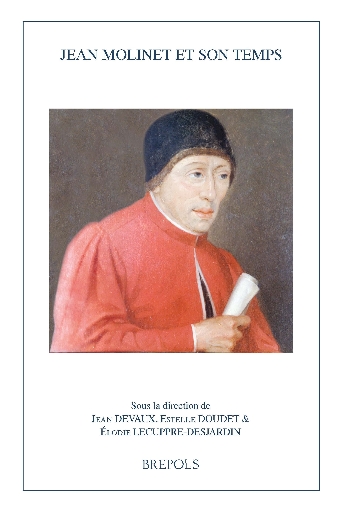
Jean Molinet et son temps
Actes des rencontres internationales de Dunkerque, Lille et Gand (8-10 novembre 2007)
show More to view fulltext, buy and share links for:Jean Molinet et son temps show Less to hide fulltext, buy and share links for: Jean Molinet et son tempsReprésentant majeur de la littérature bourguignonne, poète et chroniqueur, proche des milieux artistiques et notamment musicaux de son époque, Jean Molinet (1435-1507) apparaît comme un auteur fédérateur des études portant sur l’histoire politique et littéraire au tournant des XVe et XVIe siècles. Organisé du 8 au 10 novembre 2007, à l’occasion du cinquième centenaire de la mort de l’écrivain, le colloque dont les actes paraissent aujourd’hui a été le fruit d’une collaboration régionale et transfrontalière entre l’Université de Gand, l’Université Charles-de-Gaulle - Lille 3 et l’Université du Littoral - Côte d’Opale (Dunkerque). Par le croisement des disciplines et des approches, il a contribué de manière décisive à mettre en lumière toute la richesse de cette œuvre foisonnante et sa situation au croisement des espaces et des cultures, reflet de la réalité complexe des principautés bourguignonnes à l’époque où le Moyen Âge s’apprête à épouser la Renaissance.
Jean Devaux est professeur à l’Université du Littoral - Côte d’Opale (Dunkerque et Boulogne-sur-Mer HLLI), où il enseigne la langue et la littérature françaises du Moyen Âge. Spécialiste de littérature bourguignonne, il s’intéresse plus particulièrement à l’historiographie du Bas Moyen Âge français.
Estelle Doudet est maître de conférences en littérature médiévale à l’Université de Lille Nord de France (UDL3- IRHiS). Elle est spécialiste des Grands Rhétoriqueurs et travaille actuellement sur les moralités politiques de la fin du Moyen Âge et de la première modernité.
Élodie Lecuppre-Desjardin est maître de conférences à l’Université de Lille Nord de France (UDL3- IRHiS). Spécialiste d’histoire urbaine et des Pays-Bas bourguignons, elle y enseigne l’histoire médiévale.
-
-
-
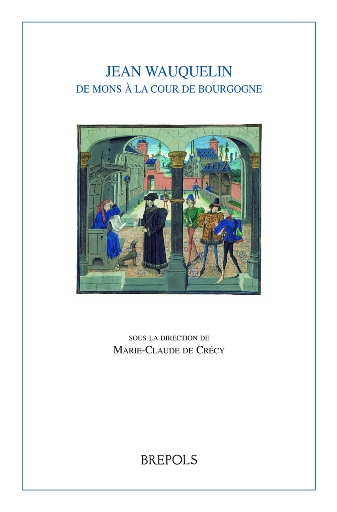
Jean Wauquelin
De Mons à la cour de Bourgogne
show More to view fulltext, buy and share links for:Jean Wauquelin show Less to hide fulltext, buy and share links for: Jean WauquelinWauquelin, «escripvaing» de ce grand mécène que fut le duc de Bourgogne, est longtemps resté dans l’ombre de son jeune confrère, David Aubert. Son œuvre embrasse cependant des champs variés, qui accueillent aussi bien des traductions que des compilations et des mises en prose. Les éditions récentes de certains de ses textes, et les études auxquelles elles ont donné lieu, permettent de mieux connaître cet auteur aujourd’hui. Répondant parfaitement aux désirs de ses différents commanditaires, son œuvre s’inscrit dans les courants de pensée et les idéologies de l’époque.
Mais Wauquelin ne fut pas seulement un auteur. Il participa lui-même aux étapes de l’élaboration matérielle des manuscrits dont son atelier assurait la transcription et la reliure, tandis que l’illustration était confiée à des artistes réputés, résidant notamment à Bruges.
Le colloque interdisciplinaire qui lui fut consacré à Tours, en septembre 2004, avait pour ambition d’éclairer toutes les facettes de son activité et de la situer dans les pratiques d’écriture mais aussi «éditoriales» de son temps. Les articles qu’il a inspirés sont accompagnés ici d’une bibliographie exhaustive.
Cette présentation en un volume de l’ensemble des connaissances que l’on peut considérer comme acquises sur Wauquelin, dans des domaines aussi divers que la philologie, la linguistique, la littérature, la codicologie ou l’histoire de l’art, voudrait susciter des interrogations et ouvrir la voie à de nouvelles recherches.
-
-
-
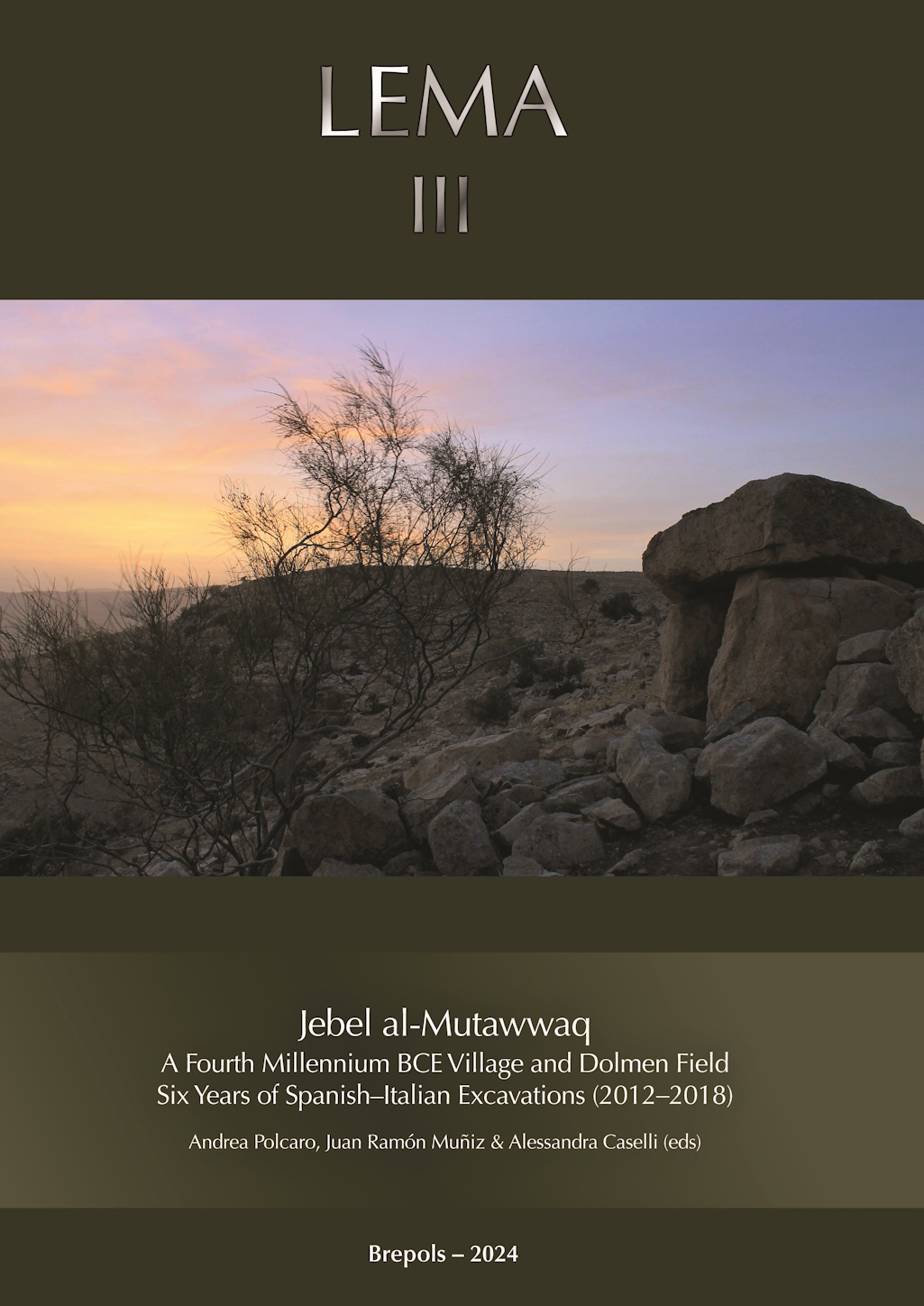
Jebel al-Mutawwaq
A Fourth Millennium bce Village and Dolmen Field. Six Years of Spanish-Italian Excavations (2012–2018)
show More to view fulltext, buy and share links for:Jebel al-Mutawwaq show Less to hide fulltext, buy and share links for: Jebel al-MutawwaqThe Early Bronze Age site of Jebel al-Mutawwaq, located on a hill overlooking the Zarqa River in Jordan, was a thriving centre of population from the second half of the fourth millennium into the third millennium bce. During this time, the settlement developed both in population and social complexity, undergoing the beginnings of an urbanization process that fundamentally changed the relationship between this community of the Transjordanian Highlands with the surrounding landscape, until it was completely abandoned around 2900 bce. This volume offers a new assessment of the site by combining data from the first surveys of the site, under a Spanish team led by J. A. Fernandez-Tresguerres, with the new results from six seasons of excavations led by teams from Perugia in Italy, and San Esteban in Spain. In doing so, this work sheds new light on this walled settlement and its huge megalithic necropolises, and offers a fresh understanding of the site.
-
-
-
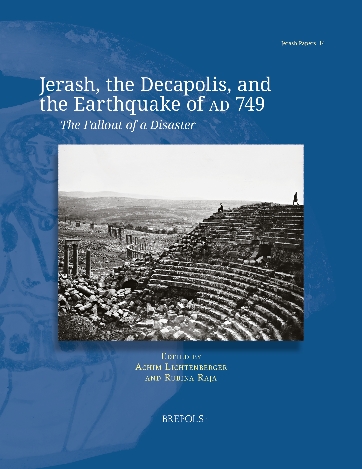
Jerash, the Decapolis, and the Earthquake of ad 749
The Fallout of a Disaster
show More to view fulltext, buy and share links for:Jerash, the Decapolis, and the Earthquake of ad 749 show Less to hide fulltext, buy and share links for: Jerash, the Decapolis, and the Earthquake of ad 749Gerasa/Jerash and the Decapolis are located along the seismically active area of the Dead Sea Rift, a point where four tectonic plates meet to create the 110 km-long fault known as the Dead Sea Transform. It was activity along this fault that led, in ad 749, to a famously devastating earthquake in the region. Measuring at least 7.0 on the Richter scale, this quake not only had a profound physical impact on the Decapolis, Galilee, Caesarea, and Jerusalem, causing widespread destruction and reshaping urban landscapes, but also led to a clear shift in socio-economic dynamics through a combination of economic decline and population displacement. It thus stands as a clear watershed moment in Late Antiquity. In its aftermath, some cities struggled to regain prominence, while others declined and were abandoned. Taking the ad 749 earthquake as its starting point, this volume aims to provide a nuanced understanding of the quake’s effects, questioning its role as a sole watershed moment and exploring the various other factors at play that influenced urban change. The contributions gathered here, which clearly recognize earthquakes as non-human actors in this process, clearly highlight the diverse impacts that this seismic event had on the city life in the southern Levant, and the fallout in the decades that followed.
-
-
-
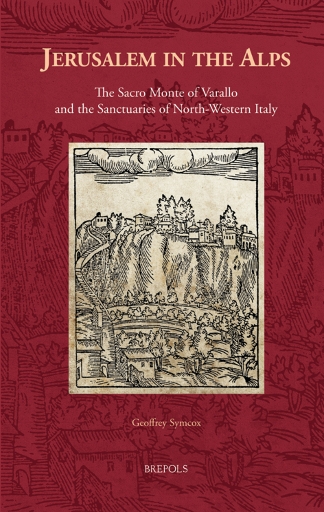
Jerusalem in the Alps
The Sacro Monte of Varallo and the Sanctuaries of North-Western Italy
show More to view fulltext, buy and share links for:Jerusalem in the Alps show Less to hide fulltext, buy and share links for: Jerusalem in the AlpsThe Sacro Monte (Holy Mountain) at Varallo is a sanctuary in the Italian Alps west of Milan. It was founded in the late fifteenth century by a Franciscan friar, with the support of the town’s leading families. He designed it as a schematic replica of Jerusalem, to enable the faithful to make a virtual pilgrimage to the Holy City if they could not undertake the perilous journey to visit it physically. The Sacro Monte consists of a sequence of chapels containing tableaux of life-size painted terra-cotta figures with fresco backgrounds recounting the life and Passion of Christ. A century later, in the era of the Counter-Reformation, a ‘second wave’ of Sacri Monti was constructed in the north-western Alps, modelled on Varallo, but dedicated to other devotional themes, like the Rosary or the life of St Francis. All these sanctuaries, like Varallo, were the result of local initiatives, initiated by the clergy and the leaders of the communities where they were situated. Like Varallo, they were the work of artists and craftsmen from the alpine valleys, or from nearby Lombardy. Long dismissed as folk art unworthy of serious critical attention, the Sacri Monti are now recognised as monuments of unique artistic significance. In 2003 UNESCO listed nine of them in its register of World Heritage Sites. This book studies their development as the products of the religious sensibilities and the social, economic, and political conditions of the mountain communities that created them.
-
-
-
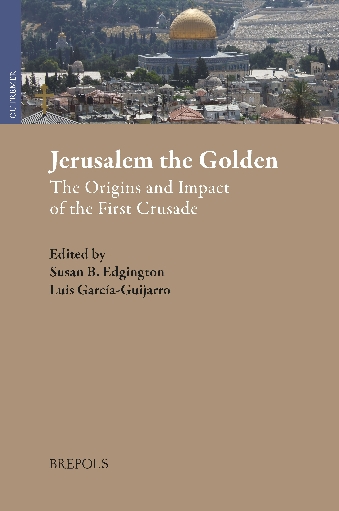
Jerusalem the Golden
The Origins and Impact of the First Crusade
show More to view fulltext, buy and share links for:Jerusalem the Golden show Less to hide fulltext, buy and share links for: Jerusalem the GoldenThis collection brings together new work by an international cast of distinguished scholars, who explore areas as diverse as the military and ecclesiastical aspects of the First Crusade; its representation in contemporary sculpture; and the way it has been portrayed in modern fiction and film. Further contributions analyse and compare primary sources and historiography, and yet others consider the crusade in its Mediterranean context, which is sometimes overlooked. These definitive studies of established areas of research are augmented by the ground-breaking work of a number of early-career academics who are working in relatively new areas: the ‘emotional language’ used in the narrative sources; the memorialization of the crusades; and the use of literary sources for crusade studies: notably there are complementary papers on the heroes and villains depicted in the Old French poetic accounts of the First Crusade. In these twenty-one essays every historian and interested reader of medieval history will find illumination and food for thought.
Susan B. Edgington is a teaching and research fellow at Queen Mary University of London. She is an authority on the sources for the First Crusade and the early history of the kingdom of Jerusalem.
Luis García-Guijarro is reader in Medieval History at the University of Zaragoza. His many books and articles deal with crusades, military orders, church history, socio-economic history, and Iberia in the central Middle Ages.
-
-
-
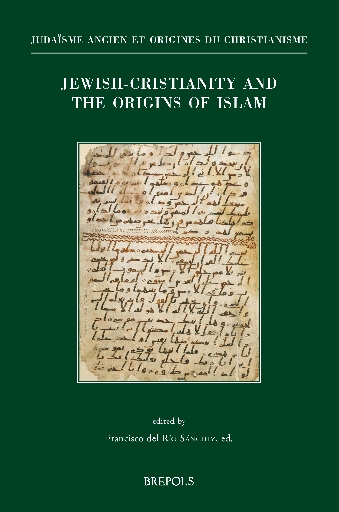
Jewish Christianity and the Origins of Islam
Papers presented at the Colloquium held in Washington DC, October 29-31, 2015 (8th ASMEA Conference)
show More to view fulltext, buy and share links for:Jewish Christianity and the Origins of Islam show Less to hide fulltext, buy and share links for: Jewish Christianity and the Origins of IslamAmong all the different theories that currently explore the religious milieu of Late Antiquity to elucidate the origins of the Islamic religion, there is a group of scholars supporting that Jewish Christianity must have played a role in its formation, reviving the question of a potential link between Early Islam and the beliefs and practices of those followers of Jesus that maintained or adopted certain Jewish beliefs and practices, either Jews that believed in the messianism and/or the prophecy of Jesus, groups whose existence and nature is still a matter of debate. In any case, the question is still subject of passionate debate among specialists. This volume collects the papers of a two-day colloquium held in Washington DC in October 2015 about the question of Jewish Christianity and Early Islam and highlights the vitality of this field of studies. The contributions included here cover a broad range of topics, and they offer new ideas, interpretations and understandings of the question.
-
-
-

Jews and Christians in Medieval Europe
The historiographical legacy of Bernhard Blumenkranz
show More to view fulltext, buy and share links for:Jews and Christians in Medieval Europe show Less to hide fulltext, buy and share links for: Jews and Christians in Medieval EuropeThe name of Bernhard Blumenkranz is well known to all those who study the history of European Jews in the Middle Ages and in particular the history of Jewish-Christian relations. Blumenkranz was born in Vienna in 1913; he left for Switzerland during the war and obtained a doctorate at the University of Basel on the portrayal of Jews in the works of Augustine. He subsequently moved to France where his numerous publications revived and renovated the field of Jewish studies. The international group of scholars who wrote the fifteen essays in this volume, beyond paying homage to Blumenkranz’s work, trace the trajectories of various lines of inquiry that he initiated: Christian theology of Judaism, problems of conversion and proselytism, geography and topography of Medieval Jewish communities, the representation of Jews in Christian art. These essays provide both an assessment of Blumenkranz’s intellectual legacy and a snapshot of the evolution of the field over the last sixty years.
-
-
-

Jews and Muslims under the Fourth Lateran Council
Papers Commemorating the Octocentenary of the Fourth Lateran Council (1215)
show More to view fulltext, buy and share links for:Jews and Muslims under the Fourth Lateran Council show Less to hide fulltext, buy and share links for: Jews and Muslims under the Fourth Lateran CouncilThe Fourth Lateran Council (1215) was groundbreaking for having introduced to medieval Europe a series of canons that sought to regulate encounters between Christians and Jews and Muslims. Its canon 68 demanded that Jews and Muslims wear distinguishing dress, in order to prevent Christians from entering into illicit sexual relations with them, restricted the movement of Jews in public spaces during Holy Week, and exhorted secular authorities to punish Jews who in any way “insult” or blaspheme against Christ himself. Other canons sought to exercise greater control over moneylending, to provide relief to Christian borrowers, to extract tithes from Jews who held Christian properties as pledges, and prohibited Jews from exercising power as public officials over Christians. The canons condemned converts who preserved elements from their former religion, promoted a fifth Crusade to the East, exempted Crusaders from taxes and from interest payments to Jewish moneylenders, restricted trade with Muslims or Saracens, and condemned Christians who provided arms or assistance to Saracens. The Council’s canons affected the missionary efforts of the late medieval Church and its attempts to convert Jewish and Muslim minorities, and established essential guidance on minority relations not to be surpassed until Vatican II in the 1960s.
-
-
-
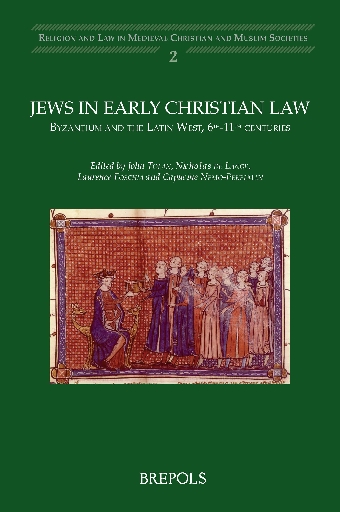
Jews in Early Christian Law
Byzantium and the Latin West, 6th-11th centuries
show More to view fulltext, buy and share links for:Jews in Early Christian Law show Less to hide fulltext, buy and share links for: Jews in Early Christian LawThe sixth to eleventh centuries are a crucial formative period for Jewish communities in Byzantium and Latin Europe: this is also a period for which sources are scarce and about which historians have often had to speculate on the basis of scant evidence. The legal sources studied in this volume provide a relative wealth of textual material concerning Jews, and for certain areas and periods are the principal sources. While this makes them particularly valuable, it also makes their interpretation difficult, given the lack of corroborative sources.
The scholars whose work has been brought together in this volume shed light on this key period of the history of Jews and of Jewish-Christian relations, focusing on key sources of the period: Byzantine imperial law, the canons of church councils, papal bulls, royal legislation from the Visigoths or Carolingians, inscriptions, and narrative sources in Hebrew, Greek and Latin. The picture that emerges from these studies is variegated. Some scholars, following Bernhard Blumenkranz, have depicted this period as one of relative tolerance towards Jews and Judaism; others have stressed the intolerance shown at key intervals by ecclesiastical authors, church councils and monarchs.
Yet perhaps more than revealing general tendencies towards “tolerance” or “intolerance”, these studies bring to light the ways in which law in medieval societies serves a variety of purposes: from providing a theologically-based rationale for social tolerance, to attempting to regulate and restrict inter-religious contact, to using anti-Jewish rhetoric to assert the authority or legitimacy of one party of the Christian elite over and against another. This volume makes an important contribution not only to the history of medieval Jewish-Christian relations, but also to research on the uses and functions of law in medieval societies.
-
-
-
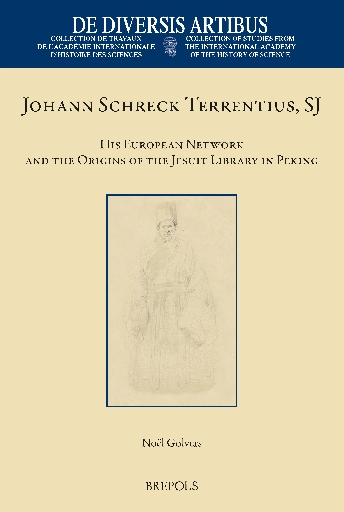
Johann Schreck Terrentius, SJ
His European Network and the Origins of the Jesuit Library in Peking
show More to view fulltext, buy and share links for:Johann Schreck Terrentius, SJ show Less to hide fulltext, buy and share links for: Johann Schreck Terrentius, SJA thorough analysis of the sinuous ‘peregrinatio academica’ of Johann Terrentius Schreck (1576-1630) between 1600-1618 through (South-, Central- and NW-) European universities, academies and courts (at Freiburg /Br.; Paris; Rome; Basel; Padua; Strasbourg, Prague, Kassel, etc.) and his rich correspondence displays a widespread network of contacts, covering a broad range of domains, from medicine to alchemy, pharmacy, botany, and through engineering to (pure and applied) mathematics, and calendar making. In all these domains of the contemporary ‘Republic of Letters’, this former student of François Viète (Paris), Galileo (Padua) and ex-Lincean, adept of Copernicus and Paracelsus showed himself to be a passionate scholar with multi-faceted and versatile talents. After 1611, with this very rich experience he entered the Society of Jesus, and shortly afterward he was appointed as companion of Nicolas Trigault, who was touring through
Europe (1615-1618) as procurator on behalf of the fledgling Jesuit Mission in China, seeking funds, men, books and scientific instruments. This second phase of intensive travelling through European centers of scholarship, patronage, and printing (including Rome; Venice; Basel; Frankfurt; Cologne, Antwerp, etc.) resulted in an enormous collection of books and instruments, which were dispatched to Lisbon from various points in 1617/1618. Shipped to China, these materials arrived in Macau in 1619, and in Peking in 1625, becoming the core of the Jesuit libraries, mainly in Peking, and the basis for the scholarly activities of the Jesuits over the following decades in the domains of mathematics, calendar making, medicine, etc.
-
-
-
Johannes Buridanus, Quaestiones topicorum
show More to view fulltext, buy and share links for:Johannes Buridanus, Quaestiones topicorum show Less to hide fulltext, buy and share links for: Johannes Buridanus, Quaestiones topicorumThis critical edition is the first edition of John Buridan’s commentary on Aristotle’s Topics. The work is preserved in one complete manuscript of good quality and in four abbreviated versions. Buridan composed the work at the University of Paris in the first half of the fourteenth century, and the work illustrates very well how the commentators of this period took a freer attitude to Aristotle than previously and were selective about the passages which they commented upon. In book II Buridan discussed a number of sophisms which are not found in his collection of sophisms. The commentary was quite influential in the fifteenth century, particularly on the teaching in the universities of Central and Eastern Europe.
-
-
-
Johannes Buridanus: Summulae: De locis dialecticis
show More to view fulltext, buy and share links for:Johannes Buridanus: Summulae: De locis dialecticis show Less to hide fulltext, buy and share links for: Johannes Buridanus: Summulae: De locis dialecticisDe locis dialecticis is the sixth treatise of John Buridan’s Summulae dialecticae, a textbook he wrote for his logic course in the Faculty of Arts at the University of Paris. De locis dialecticis immediately builds upon Peter of Spain, but Buridan shows his awareness that the doctrine of the loci took its origin in Boethius’ De differentiis topicis, and he frequently quotes from that work. Though not introducing any basically new ideas Buridan contributes a large number of precisions to the standard descriptions of the several loci, and he shows that the list of the loci and the traditional division of it into three sections is not something given by nature, but was established by earlier logicians, as they found convenient. Accordingly such things can be changed if something better is found. Buridan has here given us perhaps the most precise and most interesting exposition of the doctrine of the loci in the medieval logical literature.
-
-
-
Johannes Buridanus: Summulae: De practica sophismatum
show More to view fulltext, buy and share links for:Johannes Buridanus: Summulae: De practica sophismatum show Less to hide fulltext, buy and share links for: Johannes Buridanus: Summulae: De practica sophismatumThe present volume presents a new critical edition of Buridan’s Sophismata based on a collection of six manuscripts and an incunabulum. It forms part of an international project to edit the whole of John Buridan’s Summulae dialecticae, the most extensive version of which consists of nine treatises (tractatus). The treatise on sophisms is the ninth treatise of the Summulae dialecticae and deals with most of the major subjects discussed by the fourteenth century logicians (signification, supposition, appellation, truth-conditions, insolubles, etc.). Although it illustrates how some of the theorems of the preceding treatises may be put to use, it can not be considered a systematic practical companion to the preceding collection of theorems. It is nevertheless one of the most important pieces among Buridan’s works.
-
-
-
Johannes Buridanus: Summulae: De propositionibus
show More to view fulltext, buy and share links for:Johannes Buridanus: Summulae: De propositionibus show Less to hide fulltext, buy and share links for: Johannes Buridanus: Summulae: De propositionibusJohn Buridan (ca. 1300-1361) was one of the most influential philosophers of his time. During his long career at the Faculty of Arts at the University of Paris, he taught many logic courses, for which he wrote a textbook, entitled Summulae dialecticae. This work consists of nine treatises; the present volume contains the first critical edition of the Preface and the first treatise of the Summulae: De propositionibus. As the bearers of truth and falsity, propositions are the primary concern of logic, the art that serves as a general tool for reaching truth and avoiding falsity in any field of knowledge, whether in contemplative or practical contexts. Most important is Buridan’s commitment to the semantic primacy of mental language and the treatment of written and spoken propositions as conventional signs, which designate the primary bearers truth and falsity, namely mental propositions. In De propositionibus Buridan develops his nominalist conception of the relations between mind, language, and reality, which he goes on to employ in the subsequent treatises of the Summulae.
-
-
-
Johannes Buridanus: Summulae: De syllogismis
show More to view fulltext, buy and share links for:Johannes Buridanus: Summulae: De syllogismis show Less to hide fulltext, buy and share links for: Johannes Buridanus: Summulae: De syllogismisDe syllogismis is the fifth treatise of John Buridan’s Summulae dialecticae, a textbook he wrote for his logic course in the Faculty of Arts at the University of Paris. De syllogismis contains material related to Aristotle’s Analytica Priora and Boethius’s De hypotheticis syllogismis. The textbook discusses inferences involving not only propositions de inesse, but also propositions featuring oblique, reduplicative and infinite terms. Buridan displays a keen interest in modal inferences and inferences involving propositional attitudes. Buridan’s De syllogismis continues along the lines of his nominalist conception of the relations between mind, language and reality.
-
-
-
John Buridan's Tractatus de infinito. Quaestiones super libros Physicorum secundum ultimam lecturam, Liber III, Quaestiones 14-19
An edition with an introduction and indexes
-
-
-
John Buridan: A Master of Arts: Some Aspects of is Philosophy
Acts of the Second Symposium organized y the Dutch Society for Medieval Philosophy 'Medium Aevum' on the Occasion of its 15th Anniversary, Leiden-Amsterdam (Vrije Universiteit), 20-21 June, 1991
-
-
-
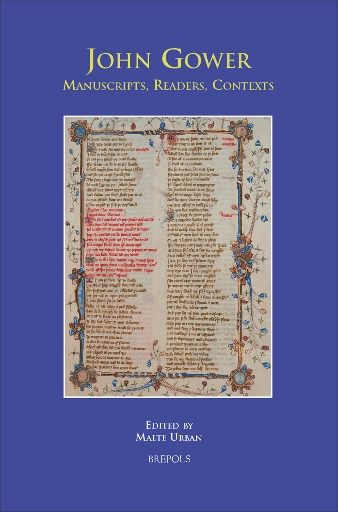
John Gower
Manuscripts, Readers, Contexts
show More to view fulltext, buy and share links for:John Gower show Less to hide fulltext, buy and share links for: John GowerThe essays collected here represent the current state of research into the works of John Gower, poet, philosopher, and contemporary of Geoffrey Chaucer. They assess Gower’s literary output within the context of manuscript production and readership/ownership in late medieval England and the triangle of Latin, French, and English as literary and official languages in Ricardian England. Sections of the volume focus on manuscripts and the circulation of Gower’s works in languages other than English. In addition, the literary and philosophical contexts that inform Gower’s poetics and politics are considered here, resulting in readings of the poet’s rhetorical and ethical agenda as well as his texts’ intervention in and reaction to social outsiders in his contemporary London. A wide variety of critical discourses inform the readings presented here, including medieval English, French, and Latin literary studies, art history, manuscript production and reception, postmodern ethics, and historical studies.
-
-
-
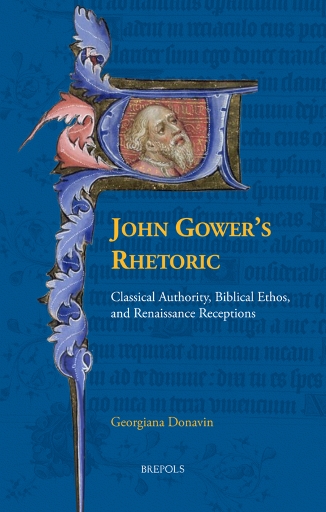
John Gower’s Rhetoric
Classical Authority, Biblical Ethos, and Renaissance Receptions
show More to view fulltext, buy and share links for:John Gower’s Rhetoric show Less to hide fulltext, buy and share links for: John Gower’s RhetoricThis is the first book-length study in decades to offer in-depth readings of a variety of late medieval poems across Gower’s trilingual corpus. Identifying Gower’s rhetorical cornerstones in Aristotelian pathos, the theology of the Word, and the execution of a plain style, it provides fresh interpretations of poems in Latin, French, and Middle English that arise from an enhanced understanding of Gower’s literary methods. It explores the classical and medieval rhetorical traditions that informed Gower’s craft, the biblical personae through which the poet achieved his rhetorical aims, and the Renaissance publishers and authors who valued and imitated his strategies for composition. Gower adapted his rhetorical theory from the principles of Aristotelian texts, Augustinian theology, exemplars of Ciceronian style, and the dictates of various artes poetriae; from the latter, John of Garland’s Parisiana Poetria is especially important for outlining practices of Marian rhetoric. Modelling virtuous female speakers on the Virgin and prophetic narrators on John the Baptist and John the Evangelist, Gower gave extra-scriptural voice to members of the extended Holy Family and in so doing, achieved unimpeachable expressions inside classically informed structures of discourse. The epistolary structure, proceeding from Ciceronian rhetoric and the artes dictaminis, is one among Gower’s favoured rhetorical forms for projecting singular voices. His straightforward, reiterative style in Middle English and his virginal speakers compelled Renaissance publisher Thomas Berthelette and celebrated authors Ben Jonson and William Shakespeare to praise Gower’s rhetoric in prefaces and imitate it on the stage.
-
-
-
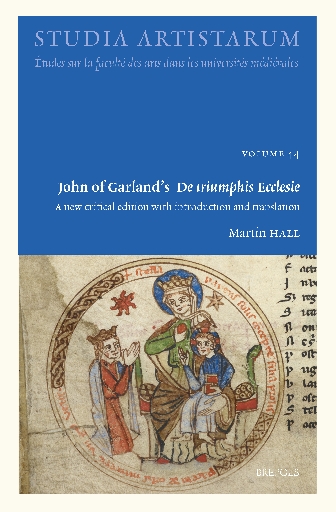
John of Garland’s De triumphis Ecclesie
A new critical edition with introduction and translation
show More to view fulltext, buy and share links for:John of Garland’s De triumphis Ecclesie show Less to hide fulltext, buy and share links for: John of Garland’s De triumphis EcclesieThis is the first translation in any language of John of Garland’s poem about the historical events of his lifetime (c. 1195- c. 1258), together with revised Latin text, introduction and notes. This work gives a vivid picture of Anglo-French relations, of studies in Toulouse after the Albigensian Crusade, and of the need for faith following Louis’ catastrophic defeat in the Seventh Crusade. John gives us insights into his own life, and a stream of stories, holy and profane. The translation and notes bring to life for a wide range of medievalists this eye-witness account by an Englishman in France of major events of the age, especially 1242-52. They make clear John’s debts to classical authors and to contemporaries, especially Alan of Lille and Matthew Paris. Through re-ordering the lines, this edition now generates clarity from the single manuscript. It also offers fresh insights and a new perspective on John of Garland himself.
-
-
-
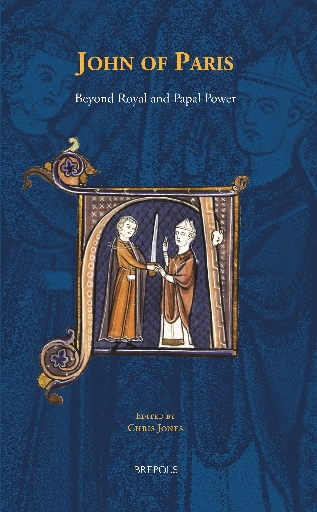
John of Paris
Beyond Royal and Papal Power
show More to view fulltext, buy and share links for:John of Paris show Less to hide fulltext, buy and share links for: John of ParisThe Dominican scholar John of Paris was one of the most controversial members of the University of Paris in the later Middle Ages. The author of over twenty works, he is best known today for On Royal and Papal Power, a tract traditionally linked to the explosive confrontation that took place between the French king Philip IV and Pope Boniface VIII in the early years of the fourteenth century. Although his role as a royal apologist has been questioned in recent years, John’s tract is often considered the first great defence of the independence of nation-states in the face of the claims to universal authority made by popes and emperors.
Bringing together a team of international scholars with a wide range of expertise, this volume offers the first collection of essays in any language to be dedicated to an exploration of John’s thought. It re-examines his view of the relationship between Church and state, and his conception of political organization. It considers the role played by John’s background as a member of the Dominican order in shaping his ideas and breaks new ground in exploring the relationship between his various works, the origins of his thought, its development, and its legacy.
-
-
-
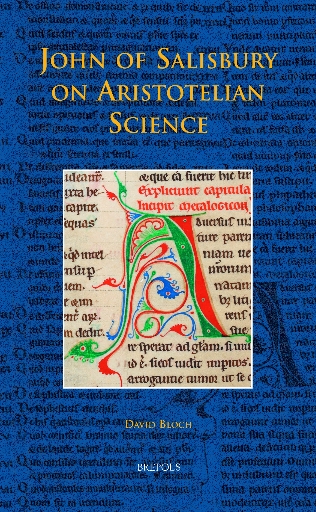
John of Salisbury on Aristotelian Science
show More to view fulltext, buy and share links for:John of Salisbury on Aristotelian Science show Less to hide fulltext, buy and share links for: John of Salisbury on Aristotelian ScienceThis is the first substantial treatment of John of Salisbury’s views on Aristotelian science. In his great work on logic and education, John of Salisbury proposes an Aristotelian foundation for education, research, and science. Theories and methods of science and scholarship were central topics in twelfth-century discourse, and John is apparently the first to propose use of the entire Organon, the texts of which were to become very influential and important in the thirteenth century. However, his precise knowledge and understanding of Aristotle has never been thoroughly examined. The present book challenges the view that John read, understood, and used the entire Organon. It pays particular attention to the Metalogicon, but it draws upon a variety of other sources as well in arguing that John did not in fact study the Ars nova with any care, and that he probably never read the most important text, the Posterior Analytics, in its entirety. The conclusions of the book have important consequences not only for our conception of John of Salisbury, but also for our views and understanding of twelfth-century Aristotelianism and science in general.
-
-
-

Journal for the History of Environment and Society
show More to view fulltext, buy and share links for:Journal for the History of Environment and Society show Less to hide fulltext, buy and share links for: Journal for the History of Environment and SocietyThe Journal for the History of Environment and Society (JHES) aims to be a leading online and Open Access periodical that covers all aspects of environmental history in its broadest sense. The journal encourages high-quality scholarship focusing on the interaction between environmental changes and social-historical context. Interregional and international comparative articles receive special attention. Given the interdisciplinary nature of the discipline of environmental history, papers should be accessible for scholars from all disciplines in the field, which will also ensure their accessibility to a wider audience. Geographically, JHES focuses primarily – but not exclusively – on Northwest Europe (including areas that had historical relations with that broad region). Articles with a more general geographic scope are also welcome.
More information about this journal on Brepols.net
-
-
-

Journal of Inner Asian Art and Archaeology
show More to view fulltext, buy and share links for:Journal of Inner Asian Art and Archaeology show Less to hide fulltext, buy and share links for: Journal of Inner Asian Art and ArchaeologyThe Journal of Inner Asian Art and Archaeology, launched by the Circle of Inner Asian Art, covers the vast regions flanking the ancient Silk Roads, from the Iranian world to Western China and from the Russian steppes to Northwest India. The journal mainly focuses on the pre-Islamic period of art and archaeology of Inner Asia, but also features related scholarly articles on language and history.
More information about this journal on Brepols.net
-
-
-
The Journal of Medieval Latin
show More to view fulltext, buy and share links for:The Journal of Medieval Latin show Less to hide fulltext, buy and share links for: The Journal of Medieval LatinThe Journal of Medieval Latin was established in the autumn of 1991 by a group of Canadian scholars to encourage new and original research in the field of medieval Latin language and literature. The editors welcome a broad range of articles dealing with every aspect of “medieval Latin studies”, a term that is perhaps better expressed by the German “die lateinische Philologie des Mittelalters.”
More information about this journal on Brepols.net
-