


Brepols
Brepols is an international academic publisher of works in the humanities, with a particular focus in history, archaeology, history of the arts, language and literature, and critical editions of source works.61 - 80 of 3194 results
-
-
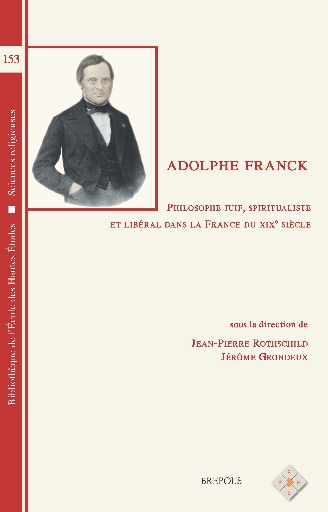
Adolphe Franck, philosophe juif, spiritualiste et libéral dans la France du XIXe siècle
Actes du colloque tenu à l'Institut de France le 31 mai 2010
show More to view fulltext, buy and share links for:Adolphe Franck, philosophe juif, spiritualiste et libéral dans la France du XIXe siècle show Less to hide fulltext, buy and share links for: Adolphe Franck, philosophe juif, spiritualiste et libéral dans la France du XIXe siècleAdolphe Franck (1810-1893) est une figure importante et jusqu’ici négligée de la philosophie spiritualiste, du libéralisme politique et du judaïsme français. Né dans un village de Lorraine, il fut le premier israélite agrégé de philosophie, entra à l’Académie des sciences morales et politiques à trente-trois ans - par la volonté de Victor Cousin mais non sans titres personnels - enseigna le droit au Collège de France, fut membre du Conseil supérieur de l’Instruction publique, collabora au Journal des débats, appartint aux dirigeants du Consistoire israélite comme aux familiers de l’impératrice Eugénie. Dans une oeuvre bien diverse, il fut durablement à l’origine (non sans méprises) de l’étude scientifique de la Kabbale ; il devint le maître d’oeuvre du grand Dictionnaire des sciences philosophiques, monument du zèle des savants, des illusions généreuses de la pensée libérale et des présupposés philosophiques et méthodologiques de son temps ; il se singularisa par un intérêt pour la question spiritualiste poussé jusqu’à son terme logique, la prise au sérieux des écrits et des théories ésotériques du passé et du présent.
Une introduction et onze contributions, procédant d’un colloque tenu à l’Institut de France en 2010, considèrent Adolphe Franck sous quatre aspects : en tant que juif, en tant que philosophe, dans son rapport au religieux et dans son rapport au politique.
Jean-Pierre Rothschild, directeur de recherches au CNRS et directeur d’études à l’École pratique des hautes études, est spécialiste d’histoire des textes et des doctrines du moyen âge.
Jérôme Grondeux, maître de conférences à l’université Paris IV et à l’Institut d’études politiques de Paris, est spécialiste d’histoire de la pensée politique et religieuse dans la France du XIXe siècle.
-
-
-
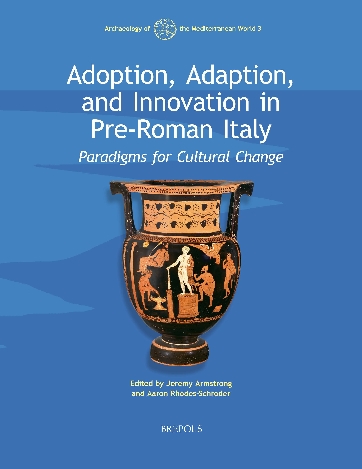
Adoption, Adaption, and Innovation in Pre-Roman Italy
Paradigms for Cultural Change
show More to view fulltext, buy and share links for:Adoption, Adaption, and Innovation in Pre-Roman Italy show Less to hide fulltext, buy and share links for: Adoption, Adaption, and Innovation in Pre-Roman ItalyThe ancient Mediterranean basin was once thought to be populated by large, monolithic, cultural-political entities. In this conception, ‘the Greeks’, ‘the Romans’, and other stable and homogenous cultures interacted and vied for supremacy like early modern states or empires. Today, however, thanks largely to an ever-increasing archaeological record, critical and sensitive approaches to the literary evidence, and the impact and application of new theoretical approaches, the ancient Mediterranean region is instead argued to be full of dynamic microcultures organized in a fl uid set of overlapping networks. While this atomization of culture has resulted in more interesting and accurate micro-histories, it has also challenged how we understand cultural interaction and change.
This volume draws on this new understanding of cultural identity and contact to address the themes of adoption, adaption, and innovation in Pre-Roman Italy from the 9th-3rd centuries BCE. The contributors to this volume build upon recent paradigm shifts in research that challenge traditional Hellenocentric models and work to establish a new set of frameworks for approaching the tangled question of how ‘indigenous’ and ’foreign’ features relate to one another in the material record. Using focused case-studies, ranging from the role played by mobile populations in transferring ideas and technologies to the different ways in which ‘foreign’ artistic elements were used by Italian peoples, the volume explores what the - now commonly accepted - connectedness of a wider Mediterranean world meant for the people of Italy in practical terms, and offers new models for how concepts and ideas were transmitted, reinterpreted, repurposed, and re-appropriated in early Italy to fit within their local context.
-
-
-
Adorare caelestia, gubernare terrena. Atti del Colloquio Internazionale in onore di Paolo Lucentini (Napoli, 6-7 Novembre 2007), Arfé, Caiazzo, Sannino
show More to view fulltext, buy and share links for:Adorare caelestia, gubernare terrena. Atti del Colloquio Internazionale in onore di Paolo Lucentini (Napoli, 6-7 Novembre 2007), Arfé, Caiazzo, Sannino show Less to hide fulltext, buy and share links for: Adorare caelestia, gubernare terrena. Atti del Colloquio Internazionale in onore di Paolo Lucentini (Napoli, 6-7 Novembre 2007), Arfé, Caiazzo, SanninoAdorare caelestia, gubernare terrena indica una pericope dell’Asclepius che declina la natura essenziale e corporea dell’uomo in relazione alla duplice funzione del suo essere: «ammirare e adorare le realtà celesti, custodire e governare le realtà terrene» (Ascl. 8). Sotto questa epigrafe sono raccolti i contributi di venticinque studiosi che hanno inteso rendere omaggio a Paolo Lucentini (1937-2011), medievista di rilievo internazionale, fondatore e direttore di Hermes Latinus, il programma di ricerca per lo studio e per l’edizione dei testi ermetici, pubblicato nella collana del Corpus Christianorum. Continuatio Mediaeualis (Brepols, Turnhout). I saggi contenuti nel volume coprono un ampio arco cronologico, dalla tarda antichità all’epoca moderna, e sostanzialmente afferiscono ai tre filoni tematici perseguiti da Lucentini nella sua carriera scientifica: platonismo, ermetismo e eresia. Di filosofie dissidenti si sono occupate Alessandra Beccarisi e Antonella Straface. Allo studio della tradizione ermetica si sono dedicati Charles Burnett, Stefano Caroti, Chiara Crisciani, Peter Dronke, Michele Fatica, Françoise Hudry, Ilaria Parri e Pinella Travaglia; alle filosofie e alle tradizioni scientifiche medievali: Paul Kunitzsch, Fabrizio Lelli, Alfonso Maierù, Vittoria Perrone Compagni, Gregorio Piaia, Antonella Sannino, Valeria Sorge; agli influssi del platonismo: Pasquale Arfé, Carmela Baffioni, Irene Caiazzo, Luigi Catalani, Giulio d’Onofrio, Mark Delp, Michela Pereira e Pasquale Porro.
-
-
-
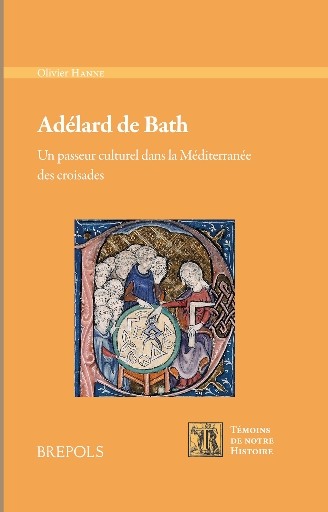
Adélard de Bath
Un passeur culturel dans la Méditerranée des croisades
show More to view fulltext, buy and share links for:Adélard de Bath show Less to hide fulltext, buy and share links for: Adélard de BathNé dans le dernier quart du XIe siècle, Adélard de Bath est de ces lettrés anglais formés aux arts libéraux en France. Dans ses premiers textes de philosophie naturelle et de cosmologie, il remet en cause le legs de ses maîtres, puis décide de poursuivre sa formation en Italie du Sud. Grâce aux réseaux des rois normands d’Angleterre, il part soudainement pour la Syrie peu après la première croisade et s’initie plusieurs années sur place à la langue arabe. À son retour, il traduit des sources venues du monde musulman d’une grande complexité, à la fois en astronomie et en mathématique, il en domine les enjeux scientifiques, et va jusqu’à se passionner pour l’astrologie et la magie. Il devient ainsi l’un des initiateurs du grand mouvement de traduction des textes scientifiques depuis l’arabe vers le latin, se faisant le défenseur d’une méthode de critique comparée entre univers culturels, tandis que d’autres choisissent l’affrontement armé.
-
-
-
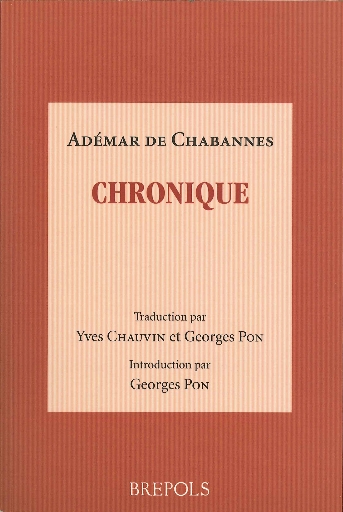
Adémar de Chabannes, Chronique
show More to view fulltext, buy and share links for:Adémar de Chabannes, Chronique show Less to hide fulltext, buy and share links for: Adémar de Chabannes, ChroniqueAdémar de Chabannes, un des historiens les plus connus du XIe siècle, a laissé à Saint-Martial de Limoges, avant de partir pour Jérusalem où il est mort en 1034, un remarquable dossier de textes divers. Ils permettent de reconstituer sa formation, sa carrière monastique à Saint-Cybard d'Angoulême, et ses ncroyables efforts pour promouvoir saint Martial au rang des apôtres qui l'ont conduit à produire une extraordinaire collection de faux. La Chronique, composée entre 1025 et 1028, n'est-elle qu'une œuvre de faussaire? Ses deux premiers livres y rassemblent des ouvrages historiques antérieurs, des origines troyennes des Francs à Charlemagne, "compilation" sans doute mais dont le grand mérite est de nous faire pénétrer dans le scriptorium d'un historien de l'an Mil et de nous permettre d'appréhender l'état des connaissances historiques à cette époque. La partie "originale" de la Chronique (Livre III, 16-70) s'appuie sur des annales locales, sur la mémoire cléricale et monastique et surtout sur l'inlassable curiosité d'un moine à l'écoute des bruits qui lui viennent non seulement de son pays - le Limousin, l'Angoumois, le duché d'Aquitaine - au temps de Guillaume le Grand, des conciles de paix et des guerres châtelaines, mais encore de toute la Chrétienté et des terres d'Islam. Aux yeux d'un historien critique, Adémar commet bien trop d'erreurs et d'inventions. Il n'en reste pas moins qu'il a su parfaitement nous transmettre les violences, les craintes et les espoirs de son temps.
-
-
-
Aelius Aristide et la rhétorique de l'hymne en prose
show More to view fulltext, buy and share links for:Aelius Aristide et la rhétorique de l'hymne en prose show Less to hide fulltext, buy and share links for: Aelius Aristide et la rhétorique de l'hymne en proseThis book focuses on Aelius Aristides’ prose hymns (or. XXXVII-XLVI). These texts constitute the richest corpus of rhetorical eulogies of gods which we possess. The special status that these discourses had in the orator’s life and career are being analyzed for the very first time, along with the poetics they put to work, the ways in which they are deeply anchored in Greco-Roman society and the religiosity they display. Presented with a translation, each text is preceded by a note that relates the circumstances of its composition and pronunciation, comments on its structure, general spirit and main features. These notes also help clarify the historical, institutional and civic context of the oratory performance. Based on the 1898 Keil’s Berlin edition, the Greek text has been revised and freed from irrelevant conjectures.
Johann Goeken, specialist of Greek language and literature, is associate professor at the University of Strasbourg.
-
-
-
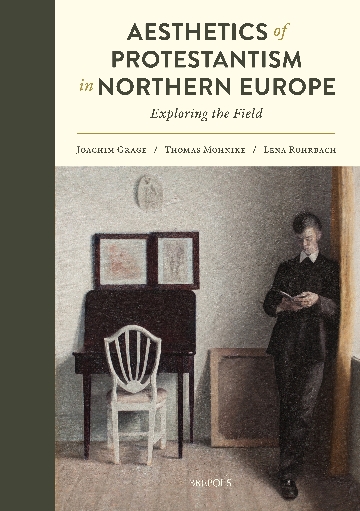
Aesthetics of Protestantism in Northern Europe
Exploring the field
show More to view fulltext, buy and share links for:Aesthetics of Protestantism in Northern Europe show Less to hide fulltext, buy and share links for: Aesthetics of Protestantism in Northern EuropeThis book explores the aesthetic consequences of Protestantism in Scandinavia. Fourteen case studies from the sixteenth to the twenty-first century discuss five abstract and trans-historical principles that characterize Scandinavian aesthetics and that arguably derive from Protestant thinking and practice, namely: simplicity, logocentrism, tension between pronounced individualism and collectivism, relatedness to the world, and ethics. The contributions address the peculiar aesthetics of Scandinavian print, literature, architecture, film, and opera and reflect on the influence of Protestant traditions on the establishment of genres and writing practices. This volume is the first in a new series that will focus on the aesthetics of Protestantism in Scandinavia, both theoretically and through exemplary individual analyses.
-
-
-
Aevum inter utrumque
Mélanges offerts à Gabriel Sanders, professeur émérite à l'Université de Gand
-
-
-
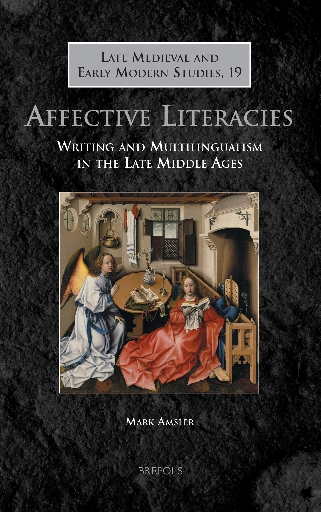
Affective Literacies
Writing and Multilingualism in the Late Middle Ages
show More to view fulltext, buy and share links for:Affective Literacies show Less to hide fulltext, buy and share links for: Affective LiteraciesNew Literacy Studies, close reading, and historical sociolinguistics inform Amsler's analyses of late medieval writing and textual cultures. Amsler argues that medieval reading and writing make sense not as individual expressions with discrete texts but as multilingual, sociocultural, and intertextual practices that 'make people up' and that sustain or challenge dominant ideologies and reading formations. Rather than a single Literacy, we find socially situated literacies within manuscript matrices. Bringing new historical dimensions to literacy studies, Amsler explores the intertextualities, affective relations, and social contests in these multilingual formations. Individual chapters examine literacies as cultural practice in schooling and in elite and popular texts by Chaucer, Christine de Pizan, Dante, Margery Kempe, devotional writers, Erasmus, and the Jewish convert Hermann von Sheda, along with grammatical writing, mythography, charms, drama, and educational texts. This volume illustrates the diversity of late medieval multilingual writings,textual performances, and embodied readings.
-
-
-
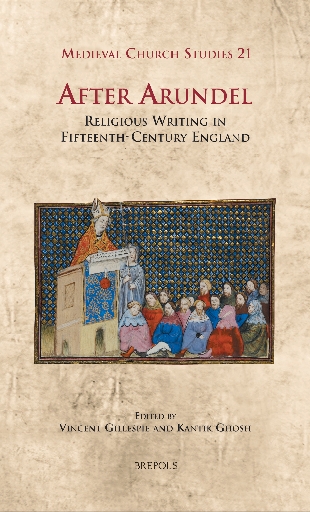
After Arundel
Religious Writing in Fifteenth-Century England
show More to view fulltext, buy and share links for:After Arundel show Less to hide fulltext, buy and share links for: After ArundelEngland’s religious life in the fifteenth century is worthy of sustained, nuanced, and meticulous analysis. This book offers a portrait of late medieval English religious theory and praxis that complicates any attempt to present the period as either quivering in the post-traumatic stress of Lollardy, or basking in the autumn sunshine of an uncritical and self-satisfied hierarchy’s failure to engage with undoubted European and domestic crises in ecclesiology, pastoral theology, anti-clericalism, and lay spiritual emancipation. After Arundel means not just because of or despite Archbishop Arundel (and the repressive legislation associated with him), for it also asks what models and taxonomies will be needed to move beyond Arundel as a fixed star in the firmament of (especially literary) scholarship in the period. It aims to supply the next phase of scholarly exploration of this still often dark continent of religious attitudes and writing with new tools and technical vocabularies, as well as to suggest new directions of travel.
-
-
-
After Ovid
Aspects of the Reception of Ovid in Literature and Iconography
show More to view fulltext, buy and share links for:After Ovid show Less to hide fulltext, buy and share links for: After OvidThe 2000th anniversary of Ovid’s death, in 2017-2018, led to an upsurge in conferences and publications dedicated to the author’s work and afterlife. One of these is the present volume, resulting from the conference Dopo Ovidio. Aspetti della ricezione ovidiana fra letteratura e iconografia, which was held on 7-8 May 2019 at the Department of Human Sciences (DSU) of the University of L’Aquila, and which looked at various aspects of Ovid’s fortune, from a diachronic and interdisciplinary perspective. The contributions cover a period of about fourteen centuries, from late antiquity until the end of the eighteenth century, and range from late Latin to medieval literature, from humanistic production to modern English and Italian literature, and from linguistics to the figurative arts. All these studies contribute to a collective appraisal of the multifarious impact of Ovid’s works, and especially of the Metamorphoses, the latter’s treatment of myth having been a starting point for integrations, developments, (re)interpretations and representations, in isolation or included in an iconographic program.
-
-
-
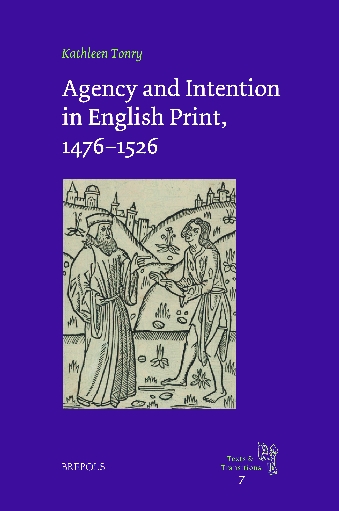
Agency and Intention in English Print, 1476–1526
show More to view fulltext, buy and share links for:Agency and Intention in English Print, 1476–1526 show Less to hide fulltext, buy and share links for: Agency and Intention in English Print, 1476–1526This volume offers a new intellectual framework for early print that bridges divisions between the study of print and the study of literature, between manuscripts and printed books, and between pre- and post-1500 textual cultures. Through an extensive focus on medieval texts and ideas, it is demonstrated here that in the half-century before the Reformation, English print was part of a highly energetic tradition of late medieval textual production. Central to this tradition was the expression of ethical agency, or moral ‘entente’, through the creation of texts and books. This insight reveals how the first English printed books expressed the deliberate moral and cultural commitments of individual printers.
By following early print across a range of genres (history writing, religious instruction, hagiography, law books, and translation), this study also sheds light on the contexts within which the agencies of early printers mattered, including mercantile politics, civic and statute law, and theological economics.
The volume, which treats the pre-Reformation press as a whole, is based in particular on the bibliographical evidence provided in editions by William Caxton, Wynkyn de Worde, Richard Pynson, John Rastell, and Thomas Berthelet, as well as on close readings of texts and contextual materials. The questions raised here, however, are about more than old books and early printers: ultimately, this study argues that the history of the material book is an intellectual history of agency and textual production.
-
-
-
Agents in Liturgy, Charity and Communication
The Tasks of Female Deacons in The Apostolic Constitutions
show More to view fulltext, buy and share links for:Agents in Liturgy, Charity and Communication show Less to hide fulltext, buy and share links for: Agents in Liturgy, Charity and CommunicationWhat did women deacons do in the early church? This study is a contribution to resolving this topical question through evaluating the tasks of female deacons in the Apostolic Constitutions. This fourth-century document is the largest among the so-called ancient church orders. Pylvänäinen divides the tasks of female deacons into three categories: liturgical, charitable and communicative. She analyses the individual concepts and verses within their contexts, paying special attention to the context of the document as a whole within the sphere of Jewish Christian interaction and from the viewpoint of the sources the compiler has used in remoulding the document.
-
-
-

Agir en commun durant le haut Moyen Âge
show More to view fulltext, buy and share links for:Agir en commun durant le haut Moyen Âge show Less to hide fulltext, buy and share links for: Agir en commun durant le haut Moyen ÂgeAu-delà des communautés stables et durables qu'on peut saisir autour des lieux ou dans un cadre institutionne, les petites communautés locales du haut Moyen Âge n’avaient habituellement pas de statut formalisé : en l’absence de cadres institutionnels, nous ne pouvons souvent saisir leurs caractères qu’à travers les récits de leurs actions, ou à travers d’autres traces, laissées par leurs actes dans la documentation, écrite ou archéologique. Mais encore faut-il se poser la question de savoir comment agissaient les communautés au haut Moyen Âge, dans quels contextes et dans quels buts ? L'action commune, surtout si elle est récurrente, fortifie-t-telle ou forme-t-elle la communauté ? Le présent ouvrage vise à décrypter les différentes manières "d'agir en commun" dans les sociétés du haut Moyen Âge, en posant les questions de l'initiative de l'action, des différents modes d'action et de leur influence sur la structure de la communauté, des types et des formes d'action communautaire.
-
-
-
Agire da donna
Modelli e pratiche di rappresentazione (secoli VI-X). Atti del convegno (Padova, 18-19 febbraio 2005)
show More to view fulltext, buy and share links for:Agire da donna show Less to hide fulltext, buy and share links for: Agire da donnaL’evidenza scritta e materiale sulle donne dell’alto medioevo presenta una importante caratteristica di fondo: la descrizione delle azioni femminili non è normalmente il prodotto della percezione delle donne, né appare organizzata e prodotta per fornire una rappresentazione diretta dell’operato, delle capacità e delle caratteristiche femminili in termini reali. Piuttosto, sia sotto il profilo materiale, sia sotto il profilo scritto, le donne sono utilizzate - dal loro gruppo parentale, dagli avversari oppure dai sostenitori dei loro congiunti - come paradigmi simbolicamente efficaci per far apprezzare le possibilità economiche e di prestigio dei gruppi famigliari, i meriti e gli errori dei loro uomini, il clima politico di un regno. Si rafforza quindi, nella società altomedievale, il tema retorico dell’ “influenza femminile” per spiegare, in modo diretto e persuasivo, la consonanza o la dissonanza con il clima politico complessivo. Come tali, dunque, i modelli di rappresentazione femminile, di volta in volta utilizzati, non sono semplici ripetizioni. Essi variano nel corso del tempo, precisamente in rapporto con la trasformazione dei valori condivisi dalle società altomedievali, e con le reali possibilità femminili che sono progressivamente accettate oppure disapprovate, misconosciute oppure valorizzate. Le immagini della regina buona che converte il proprio marito al cristianesimo e della regina perfida che lo tradisce, così come i ricchi corredi funerari e le iscrizioni femminili rappresentano lo specchio attraverso cui la società altomedievale valutava sé stessa, le proprie tensioni e le proprie certezze.
-
-
-
Agrarian Change and Imperfect Property
Emphyteusis in Europe (16th to 19th centuries)
show More to view fulltext, buy and share links for:Agrarian Change and Imperfect Property show Less to hide fulltext, buy and share links for: Agrarian Change and Imperfect PropertyThis book is situated at the crossroads of two recurring themes in rural history: agrarian contracts and property rights. Emphyteusis is at the heart of agrarian history in that it brings together agricultural history and the nature of social relations in traditional societies. Despite this, many such contracts have been blithely ignored, or unjustly dismissed, either because they are hard to identify, given the many variants that existed, or because, as a form of divided property, they are generally perceived in a negative light.
Nevertheless, emphyteusis is to be found everywhere, even in regions which deny its existence, and it is far from being obsolete. Rather, it is flourishing, prospering and long-lived, particularly in urban areas. Emphyteusis has a long history and has played a central role, sometimes misleading, but always crucial, in the process of agricultural development. It has held sway as a substitute when access to property has been impossible, and as a source of conflicts has often revealed the nature of power relations between property owners on the one hand, whether seigneurial or not, and cultivators, short-term and long-term tenants on the other. The different chapters in this volume illuminate these multiple facets and forms of this type of contract and imperfect property rights. Though the focus is on Mediterranean societies, the questions raised have relevance far beyond this specific area.
-
-
-
Agrarian Technology in the Medieval Landscape
Agrartechnik in mittelalterlichen Landschaften. Technologie agraire dans le paysage médiéval. 9th - 15th September 2013 Smolenice, Slovakia
show More to view fulltext, buy and share links for:Agrarian Technology in the Medieval Landscape show Less to hide fulltext, buy and share links for: Agrarian Technology in the Medieval LandscapeRuralia X includes 27 papers dealing with agrarian technologies in the medieval landscape as seen in different European countries. The subject areas include cultivation, livestock husbandry, gardening, viticulture and woodland management – interpreting the concept of agrarian production in a broad sense – studied mainly on the basis of archaeology, but also using iconography, documentary evidence and archaeo-environmental approaches.
Ruralia X, marks an important step on the way towards interpreting innovation, as well as understanding the varieties of agrarian activity from a Europe-wide perspective.
Authors from 14 countries provide a broad overview of the current issues, complemented by extensive bibliographies. Ruralia X represents one of the current fields of European archaeological research and offers a solid foundation for further comparative studies.
-
