


Brepols
Brepols is an international academic publisher of works in the humanities, with a particular focus in history, archaeology, history of the arts, language and literature, and critical editions of source works.81 - 100 of 3194 results
-
-
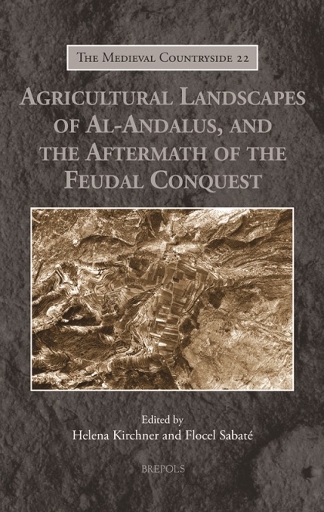
Agricultural Landscapes of Al-Andalus, and the Aftermath of the Feudal Conquest
show More to view fulltext, buy and share links for:Agricultural Landscapes of Al-Andalus, and the Aftermath of the Feudal Conquest show Less to hide fulltext, buy and share links for: Agricultural Landscapes of Al-Andalus, and the Aftermath of the Feudal ConquestThis volume presents recent archaeological research on the agriculture and society of al-Andalus during the Middle Ages, especially from the perspective of ‘hydraulic archaeology’ - an avenue of research developed by Spanish researchers which focuses on the analysis of irrigation systems created by Islamic colonists from the eighth century onwards. More recently, this research perspective has incorporated the analysis of other agricultural systems, such as dryland agriculture and pasturelands. All of these agricultural regimes are complementary in peasant-led subsistence agricultural systems. From a methodological perspective, this archaeological approach is highly innovative, and uses a wide range of techniques (aerial photography, cartographical analysis, field survey, archival research, and archaeological excavation) in order to outline the size and boundaries of cultivation and grazing areas, to define specific plots of land and the related road networks, and to identify other associated facilities, such as watermills.
In connection with these topics, several issues are discussed: the earmarking of rural or urban farming areas for irrigation, draining, or dryland agriculture; the process of construction and the subsequent evolution of these farming areas; the transformations undergone by these areas after the feudal conquest; and, finally, the identification of pasturelands and the analysis of the evidence concerning their management.
-
-
-
Agricultural specialisation and rural patterns of development
show More to view fulltext, buy and share links for:Agricultural specialisation and rural patterns of development show Less to hide fulltext, buy and share links for: Agricultural specialisation and rural patterns of developmentIn agricultural history, specialisation is usually considered as progress, turning peasants into market-orientated farmers and allowing them to escape from self-sufficiency. Recent developments in the field of productivist agriculture and the recent rise of alternative agriculture cast doubt on this conventional concept of agricultural specialisation. Several questions arise: Did specialisation necessarily mean that farms concentrated on a single product? Was it always a great step forward? Did it occur in the same form in earlier centuries as in contemporary economies?
The chapters of this book draw attention to several factors relevant to processes of specialisation, such as markets, transport, and the natural environment. The contributions deal with regions in 10 countries of Europe, from Sweden to Spain and from England to Bulgaria, and with periods between the seventeenth and the twentieth centuries. They suggest several conclusions. Specialisation can take place in various forms, ranging from focussing on a single major cash crop to giving preference to a combination of products. This is true both at the level of an individual farm as at a regional level. Specialisation did not always improve the farmers’ standard of living. And it was neither a linear nor an irreversible process. This can be observed in periods of war, but also in recent developments in post-communist countries.
Annie Antoine, professor of modern history at Rennes 2 University (Brittany, France), specialises in the history of rural societies and farming practices. Her latest book is a history of the rural landscape in Western France.
-
-
-
Agriculture in the Age of Fascism
Authoritarian Technocracy and rural modernization, 1922-1945
show More to view fulltext, buy and share links for:Agriculture in the Age of Fascism show Less to hide fulltext, buy and share links for: Agriculture in the Age of FascismThe agrarian policies of fascism have never before been studied from a comparative perspective. This volume offers an up-to-date overview, as well as new insights drawn from eight case-studies on Italy, Portugal, Hungary, Germany, Austria, Spain, Japan and Vichy France. The consensus that emerges from them is that the agricultural and rural policies of fascist regimes tended towards modernization and that many of them resembled initiatives pursued in the post-war decades and the Green Revolution, When viewed in this perspective, the fascist era appears less as an aberration and more as an integral part in the global process of agrarian “modernization”, a process whose merits are now being called into question.
-
-
-

Agrosystems and Labour Relations in European Rural Societies
(Middle Ages-Twentieth Century)
show More to view fulltext, buy and share links for:Agrosystems and Labour Relations in European Rural Societies show Less to hide fulltext, buy and share links for: Agrosystems and Labour Relations in European Rural SocietiesIt goes without saying that agriculture is a form of colonisation of nature by society. In the course of history the articulation of natural and societal features gave rise to a wide variety of agrosystems within the boundaries of Europe which were embedded in supra-regional political and economic contexts at least from the High Middle Ages onwards. By following an integrative approach, this volume defines agrosystems as production systems based on the ecological and socioeconomic relations involved in the reproduction of rural societies at multiple levels. The authors explore the articulation of natural and societal factors through the prism of labour relations. The structural and practical organization of labour is seen as the crucial link between rural production and reproduction. Accordingly, the contributions focus on the rural household as the basic unit of production and reproduction in different temporal and spatial contexts. Therefore, the question arises if the changes in ecosystems and social systems have so fundamentally altered European agriculture up to now that peasant family farming will disappear (if it is no longer sustained by state intervention).
-
-
-
Agôn. La compétition, Ve-XIIe siècle
show More to view fulltext, buy and share links for:Agôn. La compétition, Ve-XIIe siècle show Less to hide fulltext, buy and share links for: Agôn. La compétition, Ve-XIIe siècleAlors que le monde antique vit au rythme de la compétition individuelle et collective, celle-ci paraît perdre beaucoup de son importance dans l’Occident du haut Moyen Âge. Entre les dernières manifestations des jeux du cirque dans l’Occident latin au VIe siècle et la naissance des tournois chevaleresques à la fi n du XIe siècle, la dimension compétitive s’y efface, sauf exception comme l’Irlande, alors qu’elle garde une importance notable dans le monde byzantin et dans l’Islam. Les concours étaient depuis longtemps en butte aux critiques des penseurs chrétiens, en ce qu’ils ressortissent de la catégorie honnie des spectacles. À partir du milieu du Ve siècle, le coût économique de telles entreprises devint diffi cilement supportable, à un moment où la dépense somptuaire prenait d’autres cibles et où les systèmes de valeurs des royaumes barbares se détournaient des jeux au profi t de l’émulation entre pairs et de l’entraînement. Cependant, la compétition reste largement présente dans d’autres domaines. Les jeux de société intègrent cette dimension. La tradition de la joute oratoire se poursuit, d’Ennode aux tensos et aux jeux partis en passant par les rivalités poétiques de la cour carolingienne. Le vocabulaire de l’agôn est réinvesti par les auteurs chrétiens, sur la base de l’héritage patristique, spécialement à l’époque carolingienne ; avec des hauts et des bas, il s’adapte au martyre et plus généralement au combat de la vie chrétienne. La recherche des femmes, la quête de la gloire aux frontières peuvent aussi être lues au filtre de la compétition. Ces divers aspects sont traités dans le présent volume, qui inaugure une série dédiée à « la compétition dans les sociétés du haut Moyen Âge ».
-
-
-
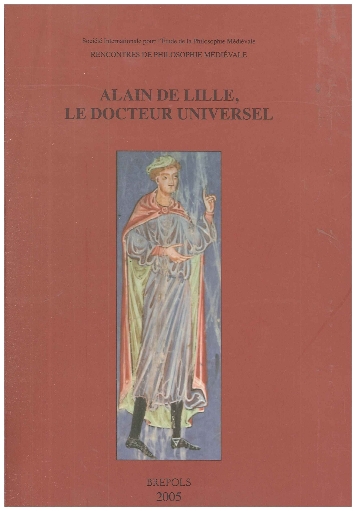
Alain de Lille, le docteur universel
Philosophie, théologie et littérature au XIIe siècle
show More to view fulltext, buy and share links for:Alain de Lille, le docteur universel show Less to hide fulltext, buy and share links for: Alain de Lille, le docteur universelNé aux alentours de 1120, surnommé le «Docteur universel», Alain de Lille doit ce titre à ses talents de philosophe, de théologien, de prédicateur et de poète, ainsi qu’à l’étendue de ses connaissances. Celui dont l’épitaphe dit qu’«il a su tout ce que l’homme pouvait savoir» est à lui seul un résumé des intérêts multiples de son temps. Sa pensée est le point de rencontre des grands courants philosophico-théologiques du XIIe siècle; au fait des dernières avancées techniques dans les arts libéraux, il demeure en même temps un parfait témoin de l’humanisme littéraire. A l’occasion du huitième centenaire de sa mort, il était nécessaire de réexplorer la synthèse qu’a opérée Alain des savoirs de cette époque charnière, et de rappeler les pistes et les problématiques qu’il a ouvertes, peu avant le grand essor universitaire du XIIIe siècle.
-
-
-
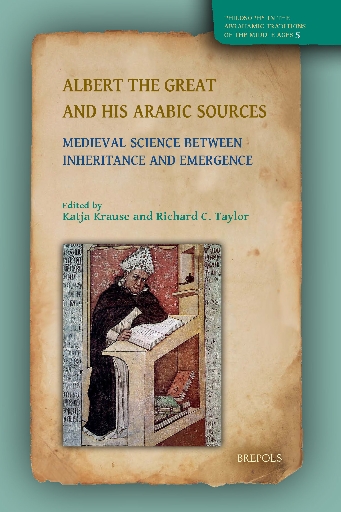
Albert the Great and his Arabic Sources
Medieval Science between Inheritance and Emergence
show More to view fulltext, buy and share links for:Albert the Great and his Arabic Sources show Less to hide fulltext, buy and share links for: Albert the Great and his Arabic SourcesAlbert the Great created a new programme of science in the thirteenth-century Latin world by extensively commenting upon Aristotle’s philosophical corpus and supplementing that corpus with works of his own wherever he saw gaps. What were the preconditions for the emergence of such a comprehensively new scientific agenda and its centuries of success at the University of Paris and Dominican study houses across Europe? One answer is found in the rich Arabic sources that Albert had at his disposal in Latin translation, including Alfarabi, Avicenna, and Averroes, as well as Isaac Israeli, Maimonides, and more.
Never before in the history of Albert scholarship has there been a collected volume that examines this inheritance from the Arabic-speaking lands in its role as a major condition for the emergence of Albert’s scientific programme. In the present volume, twelve leading scholars in the field offer studies that range from Albert’s early theological works to his late philosophical writings. The volume focuses on the teachings that Albert actively inherited from the Arabic sources, the ways in which he creatively implemented those teachings into his scientific corpus, and the effects that these implementations had on his own programmatic take on scientia.
-
-
-
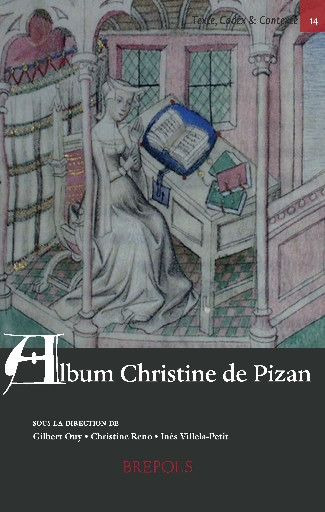
Album Christine de Pizan
show More to view fulltext, buy and share links for:Album Christine de Pizan show Less to hide fulltext, buy and share links for: Album Christine de PizanDe tous les écrivains du Moyen Âge, Christine de Pizan est celui dont le plus grand nombre de manuscrits originaux sont conservés, certains autographes, les autres réalisés sous sa direction. Ces cinquante-deux manuscrits forment donc un ensemble inestimable et représentent un objet d’étude d’une exceptionnelle richesse d’enseignements, tant pour les historiens du livre et les codicologues que pour les historiens de l’art ou de la littérature.
-
-
-
Alchemy, Chemistry and Pharmacy
Proceedings of the XXth International Congress of History of Science (Liège, 20-26 July 1997) Vol. XVIII
show More to view fulltext, buy and share links for:Alchemy, Chemistry and Pharmacy show Less to hide fulltext, buy and share links for: Alchemy, Chemistry and PharmacyThis volume consists of two parts. The first deals with alchemy and prelavoisian chemistry with papers on Democritus, Christine of Pizan, van Helmont, de Clave, Matte La Faveur, Marie Meurdrac and Galvani. The second part includes papers on chemistry in the 20th century in its political, academic and industrial context.
-
-
-

Alchemy, Medicine, and Commercial Book Production
A Codicological and Linguistic Study of the Voigts-Sloane Manuscript Group
show More to view fulltext, buy and share links for:Alchemy, Medicine, and Commercial Book Production show Less to hide fulltext, buy and share links for: Alchemy, Medicine, and Commercial Book ProductionThe Voigts-Sloane group of Middle English manuscripts, first described by Professor Emerita Linda Voigts in 1990, has attracted much curiosity and scholarly attention. The manuscripts exhibit a degree of uniformity that may originate from systematic copying of medical and alchemical manuscripts (possibly for speculative sale) in London or its metropolitan area in 1450s and 1460s — only decades before William Caxton established his printing press in Westminster. Some of the manuscripts share a strikingly similar mise-en-page, others present a standard anthology of medical treatises in a standard order.
This book provides a thorough re-examination of these manuscripts through a combination of codicological and linguistic methodologies. It examines different procedures which may have facilitated the production of the manuscripts, including speculative production and copying of separate booklets. The study also addresses the dialect of the manuscripts, and code-switching between Latin and Middle English. By showing that the manuscripts sharing a similar layout are also written in the same dialect, the book thus provides important new information on the dialects of medical writing, and shows that dialect is a further defining feature for this manuscript group. The book also highlights late medieval concerns over alchemy and medicine, explaining the apparent contradiction of the inclusion of alchemy (which was illegal) in commercially copied manuscripts.
This study thus provides both a comprehensive new description of these manuscripts, and sheds new light on the commercial and cultural contexts of book production in late medieval England.
-
-
-
Aldhelm of Malmesbury and the Ending of Late Antiquity
show More to view fulltext, buy and share links for:Aldhelm of Malmesbury and the Ending of Late Antiquity show Less to hide fulltext, buy and share links for: Aldhelm of Malmesbury and the Ending of Late AntiquityThis book is a study of Aldhelm (c.639-709) and his complementary roles as a spiritual theorist in a nascent Christian society and as an ecclesiastical administrator. In both, he is shown as innovative and purposeful. His own theology responded to an experiential knowledge of the realities of power in his society. Born into West Saxon royal kin, he spoke directly to the concerns and needs of his aristocratic society, transforming the patristic norms of Christian behavior into the heroic concepts intuitively meaningful to his Germanic society. For Aldhelm, the dedicated virgin was as heroic as a warrior serving his lord.
Despite the extensive work on the long-neglected Aldhelm by this last generation of Anglo-Saxonists, which has succeeded in restoring him as a major subject of Anglo-Saxon studies, there has not been a book-length treatment of Aldhelm’s career as a whole in over a century. Thus, the present book seeks to move beyond the somewhat parochial concerns of Anglo-Saxon history to bring Aldhelm into the mainstream of Late Antique studies, a figure as fully at home with the cultural trappings of Rome as he is with Christian patristic literature. Aldhelm was unique, among his fellow Anglo-Saxon notables of his period, in being a high ecclesiastic also engaged in innovative scholarship, though, in this, he stood very much in the mainstream of the great figures of Christian Late Antiquity, East and West, uniformly bishops and scholarly theologians. In many ways, Aldhelm was the last significant figure of Late Antiquity in the West.
George Dempsey is a Research Associate at the University of California at Davis. He has studied Aldhelm for some four decades, publishing many specialized articles. This book represents his summation of that effort to understand Aldhelm and his innovative adaptation of the theological certitudes of Christianity to the concerns and values of his society and, thus, Aldhelm’s place in Western intellectual history.
-
-
-
Alexander of Aphrodisias in the Middle Ages and the Renaissance
show More to view fulltext, buy and share links for:Alexander of Aphrodisias in the Middle Ages and the Renaissance show Less to hide fulltext, buy and share links for: Alexander of Aphrodisias in the Middle Ages and the RenaissanceThe greatest ancient interpreter of Aristotle, Alexander of Aphrodisias (fl. 200 AD) exerted a profound and enduring influence upon philosophy from Boethius until the modern era. Alexander’s interpretations laid the foundation for multiple philosophical views which were promoted as quintessentially Aristotelian by both Islamic and Latin thinkers throughout the Middle Ages. In the Renaissance, the University of Padua, a leading center of philosophical education and thought, established a scholarly tradition named “Alexandrinism” after him.
Paolo Accattino (1950-2015), a distinguished scholar of Alexander, made many noteworthy advancements to the field. With the aim of honoring Accattino’s memory, lifelong colleagues and associates P. Donini and L. Bertelli discuss his contributions. They are joined by a cohort of scholars (A. Bertolacci, M. Di Giovanni, J. Biard, A. Corbini, E. Rubino, L. Silvano, B. Bartocci, P.D. Omodeo, F. Iurlaro) who explore various key elements of Alexander’s legacy from Ibn Sīnā to Hugo de Groot. The volume presents new understandings concerning the reception of Alexander, offers new lines of inquiry, and opens potential avenues of research regarding his medieval and Renaissance afterlife.
-
-
-
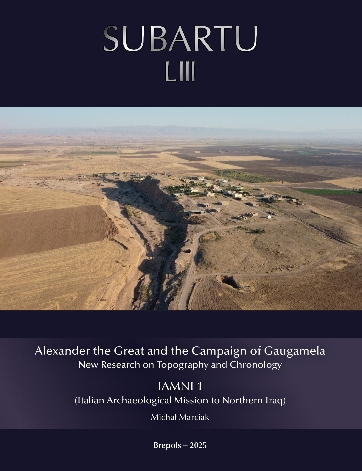
Alexander the Great and the Campaign of Gaugamela
New Research on Topography and Chronology IAMNI 1 (Italian Archaeological Mission to Northern Iraq)
show More to view fulltext, buy and share links for:Alexander the Great and the Campaign of Gaugamela show Less to hide fulltext, buy and share links for: Alexander the Great and the Campaign of GaugamelaThe Battle of Gaugamela, in which Alexander the Great’s army faced the Persian army of King Darius III in 331 bce, remains a famous date in history, the last battle that led to Alexander’s conquest of the Achaemenid Empire. However, the topography and chronology of the campaign have, up to now, remained little studied. Taking these two elements as its starting point, this volume draws both on the latest archaeological research in the region and on recent advances in science (in particular GIS) to offer a completely new reconstruction of the Gaugamela campaign, arguing for a much shorter campaign than has hitherto been understood. By turning the spotlight for the first time onto the geographical and topographical context of the campaign, the author here also provides a new understanding of both the scale of Alexander’s military achievement and the long-term effects of the military reforms introduced by his father, Philip II.
-
-
-
Alfonsine Astronomy
The Written Record
show More to view fulltext, buy and share links for:Alfonsine Astronomy show Less to hide fulltext, buy and share links for: Alfonsine AstronomyCompiled between 1262 and 1272 in Toledo under the patronage of Alfonso X, the Castilian Alfonsine Tables were recast in Paris in the 1320s, resulting in what we now call the Parisian Alfonsine Tables. These materials circulated widely and fostered astronomical activities throughout Europe. This resulted in a significant number of new works, of which there are a few hundred, extant in more than 600 manuscript codices and dozens of printed editions. These manuscripts and imprints, broadly contemporary to the works they witness, comprise the written record of Alfonsine astronomy and provide the focus of this volume.
A first series of essays examines individual manuscripts containing Alfonsine works. The authors seek to reconstruct, from the manuscript evidence, the cultural, astronomical and mathematical worlds in which the manuscripts were initially copied, compiled, used and collected. A second series of essays turns from the particular codex to the individual work or author. These contributions ask how particular works have been transmitted in surviving manuscript witnesses and how broader manuscript cultures shaped the diffusion, over two centuries, of Alfonsine astronomy across Europe. A final essay reflects on the challenges and opportunities offered by digital humanities approaches in such collective studies of a large manuscript corpus.
-
-
-
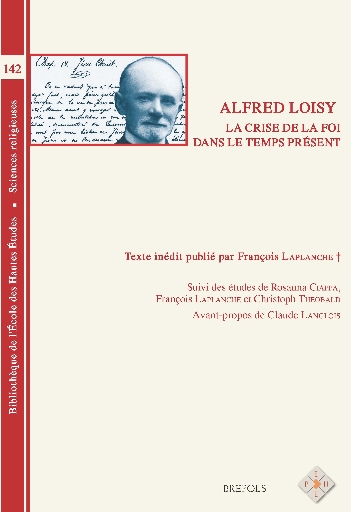
Alfred Loisy. La crise de la foi dans le temps présent
(Essais d'histoire et de philosophie religieuses)
show More to view fulltext, buy and share links for:Alfred Loisy. La crise de la foi dans le temps présent show Less to hide fulltext, buy and share links for: Alfred Loisy. La crise de la foi dans le temps présentLa crise de la foi dans le temps présent : étrange manuscrit, sitôt écrit, sitôt mis de côté par son auteur, Alfred Loisy, qui l’utilise pourtant rapidement afi n d'y puiser la matière des chapitres centraux de L’Evangile et l’Eglise (1902), par quoi commence véritablement la crise moderniste. Manuscrit qu’il envisage, après l’orage, tout à la fois d’éditer et de détruire et qu’il lègue avec ses papiers à la Bibliothèque nationale de France… et à la postérité.
Un grand siècle plus tard, le temps est enfin venu de le lire dans son intégralité. Document impressionnant par sa dimension (il occupe presque les deux tiers de cet ouvrage) et par l’ampleur de ses vues (il embrasse une histoire croyante qu’il fait commencer avec l’Ancien Testament et qu’il amène jusqu’à l’actualité la plus brûlante), cet essai fut écrit en deux temps : une esquisse, au second semestre 1897, puis un texte définitif, rédigé sur une année pleine à partir de juillet 1898. Il porte un double titre, La crise de la foi dans le temps présent. Essais d’histoire et de philosophie religieuses, parce qu’il vise un double but, selon Loisy, commentateur de lui-même : faire « l’apologie du christianisme catholique » et proposer une « réforme du régime intellectuel dans le catholicisme romain ». Alfred Loisy, né en 1857, a 40 ans en 1897. Ecarté de l’Institut catholique en 1893 pour avoir voulu faire sérieusement le dangereux métier d’exégète, il exerce à Neuilly la fonction d’aumônier d’un pensionnat pour jeunes filles, où il prend à coeur sa modeste tâche tout en continuant ses publications savantes et en nouant des amitiés fécondes. Le premier exégète catholique de grand renom, depuis Richard Simon, écrit ici les réflexions d’un prêtre qui tente de déployer l’histoire du Salut en des termes qu’il veut à la fois exacts (rigueur exégétique) et actuels (relecture des dogmes).
L’entreprise collective qui a permis cette édition a vu le jour à l’initiative de François Laplanche, qui présente le texte de Loisy et en assure l’édition, et qui rappelle le contexte intellectuel et surtout exégétique des décennies précédentes. Deux autres spécialistes du Modernisme se sont mis, avec lui, au service de ce grand texte. Rosanna Ciappa scrute le temps d’une écriture d’immédiat réemploi et met en évidence la radicalisation des perspectives exégétiques de Loisy. Christoph Theobald restitue sa visée apologétique dans un xixe siècle fécond, de l’école de Tübingen à Newman, et dans un xxe siècle ponctué par le Concile de Vatican II. Claude Langlois esquisse, dans son avant-propos, les enjeux de la fin d’un siècle dont Loisy voulait aussi, à sa manière, être le contemporain.
François Laplanche✝, ancien directeur de recherches au CNRS, grand spécialiste de l’histoire de la Bible.
Rosanna Ciappa, professeur d’histoire du christianisme et de l’Eglise à l’Université Frédéric II de Naples.
Christoph Theobald, professeur de théologie fondamentale et dogmatique aux Facultés jésuites de Paris (Centre Sèvres), rédacteur en chef des Recherches de science religieuse.
Claude Langlois, directeur d’Etudes émérite à l’EPHE, ancien président de la Section des Sciences religieuses.
-
-
-
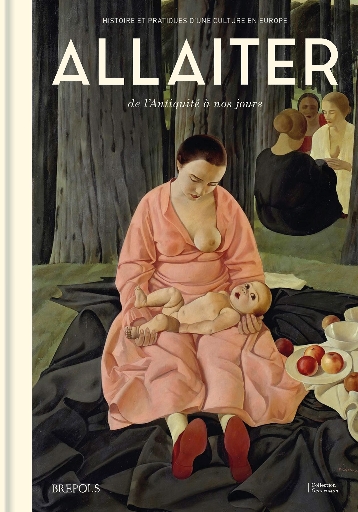
Allaiter de l’Antiquité à nos jours
Histoire et pratiques d’une culture en Europe
show More to view fulltext, buy and share links for:Allaiter de l’Antiquité à nos jours show Less to hide fulltext, buy and share links for: Allaiter de l’Antiquité à nos joursAujourd’hui, l’allaitement est au centre des préoccupations des organismes internationaux, en ce qui concerne les soins destinés aux nouveau-nés et la santé des femmes. Ces questions occupent une place importante dans les débats autour de la maternité et du travail féminin. Mais les pratiques et les représentations de l’allaitement sont traversées par des tensions politiques, économiques et religieuses. Pouvons-nous éclairer les controverses par une mise en perspective historique large de leurs enjeux socio-culturels ? Faire l’histoire de l’allaitement en Europe est une manière de contribuer à une approche globale de la question de la reproduction. Emboîtant le pas aux recherches récentes sur la maternité, les quatre sections de cet ouvrage proposent les résultats d’une vaste enquête collective pluridisciplinaire et ouvrent des pistes pour une réflexion critique sur les enjeux actuels de la parentalité et de la reproduction. Les chapitres de ce volume associent les investigations historiques, anthropologiques et archéologiques à l’histoire de l’art et aux études littéraires. L’ouvrage présente également une riche documentation visuelle et des focus conçus comme outils pour la recherche, la divulgation scientifique et la didactique.
-
-
-
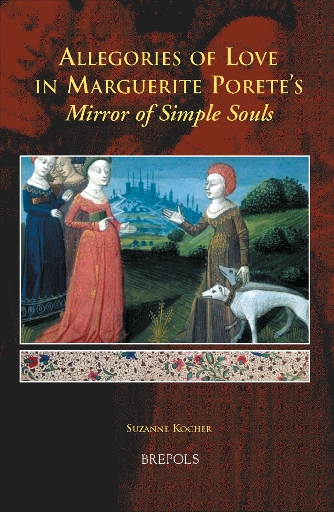
Allegories of Love in Marguerite Porete's 'Mirror of Simple Souls'
show More to view fulltext, buy and share links for:Allegories of Love in Marguerite Porete's 'Mirror of Simple Souls' show Less to hide fulltext, buy and share links for: Allegories of Love in Marguerite Porete's 'Mirror of Simple Souls'Marguerite Porete’s Mirror of Simple Souls, dating probably to the 1290s, is the oldest known mystical work written in French, and the only surviving medieval text by a woman writer executed as a heretic. This volume analyses its use of interconnected allegories that describe the soul’s approach toward God in terms of human social relationships. These include romantic love between lovers in same-sex and mixed-sex pairs, relations among people of differing social rank such as servants and nobles, and rich and poor engaged in economic transactions such as taxation and gift-giving. Gender, rank, and exchange serve as remarkably versatile allegories for spiritual states. Porete uses comparison as an organizing principle that underlies her supple and creative use of allegory, personification, parables, metaphors, similes, proverbs, and glosses. The theologian invites her audience to cross boundaries among literal and figurative registers of meaning, in ways that are emblematic of the soul’s ultimate leap toward the divine. Porete’s social allegories, the author contends, can provide us with valuable evidence of a medieval thinker’s conceptions of God, gender, language, and human capacity for change.
-
