


Brepols
Brepols is an international academic publisher of works in the humanities, with a particular focus in history, archaeology, history of the arts, language and literature, and critical editions of source works.2851 - 2900 of 3194 results
-
-

The Power of Words in Late Medieval Devotional and Mystical Writing
Essays in Honour of Denis Renevey
show More to view fulltext, buy and share links for:The Power of Words in Late Medieval Devotional and Mystical Writing show Less to hide fulltext, buy and share links for: The Power of Words in Late Medieval Devotional and Mystical WritingThis volume honours Denis Renevey's contribution to late medieval devotional and mystical studies via a series of essays focusing on a topic that has been of central relevance to Denis's research: the power of words. Contributors address the centrality of language to devotional and mystical experience as well as the attitudes towards language fostered by devotional and mystical practices. The essays are arranged in four sections: 'Other Words: Figures and Metaphors: treating the application of the languages of romantic love, medicine, and travel to descriptions of devotional and mystical experience; 'Iconic Words: Images and the Name of Jesus; considering the deployment of words and the Word (Jesus) as powerful images in devotional practice; 'Testing Words: Syntax and Semantics; exploring the ways in which medieval writers stretch the conventions of language to achieve fresh perspectives on devotional and mystical experiences; and 'Beyond Words: The Apophatic and The Senses; offering novel perspectives on a group of texts that address the difficulty of expressing God and visionary experience with words.
The volume's global purpose is to demonstrate the attractions of an explicitly philological approach for scholars studying the Christian tradition.
-
-
-
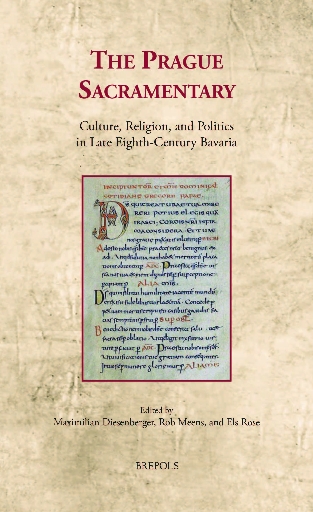
The Prague Sacramentary
Culture, Religion, and Politics in Late Eighth-Century Bavaria
show More to view fulltext, buy and share links for:The Prague Sacramentary show Less to hide fulltext, buy and share links for: The Prague SacramentaryThe Prague Sacramentary is a unique liturgical manuscript which can be very precisely located in a specific social and historical context. It was written in the turbulent period when Charlemagne crossed Bavaria to fight the Avars and when his son Pippin rebelled against him, seeking support among the Bavarian nobility. The manuscript can be linked to specific groups of Bavarian elites that had to come to terms with this explosive political situation. It also elucidates the ways in which Christian culture was expressed and experienced in Bavaria at the end of the eighth century. Although Bavaria may be regarded as a periphery from a Frankish perspective, it was certainly no cultural backwater. Because of its geographical position at the crossroads of Italian, Bavarian, and Frankish culture, Bavaria produced unique and intriguing texts and artefacts.
One such object is analysed here by a team of experts, shedding renewed light on the earthly and heavenly concerns of an early medieval community in a specific region. It includes a discussion of the topics of the formal invocation of saints, vernacular understandings of Latin texts, marriage, politics, and concerns for ritual purity as well as the well-being of the conflict-ridden Carolingian family.
-
-
-
The Pre-Christian Religions of the North: History and Structures
show More to view fulltext, buy and share links for:The Pre-Christian Religions of the North: History and Structures show Less to hide fulltext, buy and share links for: The Pre-Christian Religions of the North: History and StructuresThe product of an international interdisciplinary team, the History and Structures strand of the Pre-Christian Religion of the North series aims to approach the subject by giving equal weight to archaeological and textual sources, taking into consideration recent theories on religion within all the disciplines that are needed in order to gain a comprehensive view of the religious history and world view of pre-Christian Scandinavia from the perspective of the beginning of the twenty-first century. Volume I presents the basic premises of the study and a consideration of the sources: memory and oral tradition, written sources, religious vocabulary, place names and personal names, archaeology, and images. Volume II treats the social, geographical, and historical contexts in which the religion was practiced and through which it can be understood. This volume also includes communication between worlds, primarily through various ritual structures. Volume III explores conceptual frameworks: the cosmos and collective supernatural beings (notions regarding the cosmos and regarding such collective supernatural beings as the norns, valkyries, giants, and dwarfs) and also gods and goddesses (including Þórr, Óðinn, Freyr, Freyja, and many others). Volume IV describes the process of Christianization in the Nordic region and also includes a bibliography and indices for the entire four-volume work.
-
-
-
The Pre-Christian Religions of the North: Research and Reception, Volume I: From the Middle Ages to c. 1850
show More to view fulltext, buy and share links for:The Pre-Christian Religions of the North: Research and Reception, Volume I: From the Middle Ages to c. 1850 show Less to hide fulltext, buy and share links for: The Pre-Christian Religions of the North: Research and Reception, Volume I: From the Middle Ages to c. 1850Over more than a thousand years since pre-Christian religions were actively practised, European - and later contemporary - society has developed a fascination with the beliefs of northern Europe before the arrival of Christianity, which have been the subject of a huge range of popular and scholarly theories, interpretations, and uses. Indeed, the pre-Christian religions of the North have exerted a phenomenal influence on modern culture, appearing in everything from the names of days of the week to Hollywood blockbusters. Scholarly treatments have been hardly less varied. Theories - from the Middle Ages until today - have depicted these pre-Christian religious systems as dangerous illusions, the works of Satan, representatives of a lost proto-Indo-European religious culture, a form of ‘natural’ religion, and even as a system non-indigenous in origin, derived from cultures outside Europe.
The Research and Reception strand of the Pre-Christian Religions of the North project establishes a definitive survey of the current and historical uses and interpretations of pre-Christian mythology and religious culture, tracing the many ways in which people both within and outside Scandinavia have understood and been influenced by these religions, from the Christian Middle Ages to contemporary media of all kinds. The present volume (I) traces the reception down to the early nineteenth century, while Volume II takes up the story from c. 1830 down to the present day and the burgeoning of interest across a diversity of new as well as old media.
-
-
-
The Pre-Christian Religions of the North: Research and Reception, Volume II: From c. 1830 to the Present
show More to view fulltext, buy and share links for:The Pre-Christian Religions of the North: Research and Reception, Volume II: From c. 1830 to the Present show Less to hide fulltext, buy and share links for: The Pre-Christian Religions of the North: Research and Reception, Volume II: From c. 1830 to the PresentOver more than a thousand years since pre-Christian religions were actively practised, European – and later contemporary – society has developed a fascination with the beliefs of northern Europe before the arrival of Christianity, which have been the subject of a huge range of popular and scholarly theories, interpretations, and uses. Indeed, the pre-Christian religions of the North have exerted a phenomenal influence on modern culture, appearing in everything from the names of days of the week to Hollywood blockbusters. Scholarly treatments have been hardly less varied. Theories – from the Middle Ages until today – have depicted these pre-Christian religious systems as dangerous illusions, the works of Satan, representatives of a lost proto-Indo-European religious culture, a form of 'natural' religion, and even as a system non-indigenous in origin, derived from cultures outside Europe.
The Research and Reception strand of the Pre-Christian Religions of the North project establishes a definitive survey of the current and historical uses and interpretations of pre-Christian mythology and religious culture, tracing the many ways in which people both within and outside Scandinavia have understood and been influenced by these religions, from the Christian Middle Ages to contemporary media of all kinds. The previous volume (i) traced the reception down to the early nineteenth century, while the present volume (ii) takes up the story from c. 1830 down to the present day and the burgeoning of interest across a diversity of new as well as old media.
-
-
-
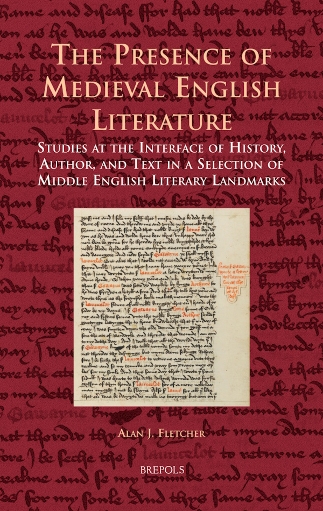
The Presence of Medieval English Literature
Studies at the Interface of History, Author, and Text in a Selection of Middle English Literary Landmarks
show More to view fulltext, buy and share links for:The Presence of Medieval English Literature show Less to hide fulltext, buy and share links for: The Presence of Medieval English LiteratureThe modern period has read its own contingent values into Middle English literature, and a modern canon of vernacular medieval literary texts has evolved as a result. While this book works with a selection of texts that have achieved such canonical status, it brings to light some of the ways in which they nevertheless resist the flattening domestications and expectations of modern taste. It illustrates how they formerly existed as constituents of a past world richer, stranger, and less familiar than much modern opinion has supposed. Thus the book aims to recuperate lost senses in which the age in which these texts were conceived and written was present within them, as well as ways in which they may have been present to their age. This twin idea of ‘presence’ is the thread that binds a series of chapters on English verse and prose written between the thirteenth and fifteenth centuries together. While they may be read as discrete studies of individual literary land- marks, the chapters also entail an implicit and ramifying demonstration of the short- comings of some modern views of what makes certain currently prized Middle English texts worth reading, and of how the vernacular literature of medieval England is retrospectively to be defined and periodized.
-
-
-
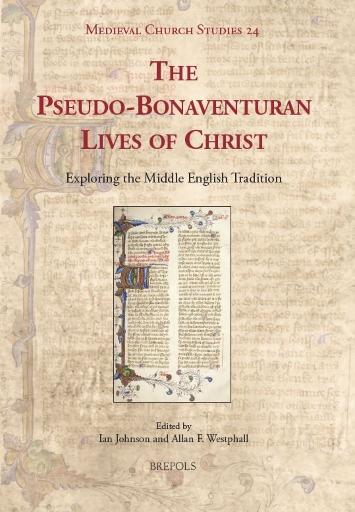
The Pseudo-Bonaventuran Lives of Christ
Exploring the Middle English Tradition
show More to view fulltext, buy and share links for:The Pseudo-Bonaventuran Lives of Christ show Less to hide fulltext, buy and share links for: The Pseudo-Bonaventuran Lives of ChristThis is a collection of pioneering studies by a distinguished transatlantic team of scholars on a neglected yet canonical tradition of medieval English literature. From the fourteenth to the sixteenth centuries and beyond, the remarkable ‘pseudo-Bonaventuran’ tradition, flowing from the Latin Meditationes vitae Christi (and thought, wrongly, to have been composed by St Bonaventure), gave Europe orthodox models for how to represent, know, and follow Jesus Christ. The Meditationes, in a huge variety of Latin and vernacular versions, invite their readers and listeners to imagine themselves present within the Gospel narrative. How to live, what to believe, how to feel, and how to be saved: this eloquent mainstream tradition had an impact on the public and private lives of English people more profound and lasting than any text save the Bible itself. For many, it even did the Bible’s work. The tradition of the Meditationes provides us with a gauge of lived religious sensibility without equal in the English later Middle Ages.
Deriving from the Queen’s Belfast-St Andrews AHRC-funded research project, Geographies of Orthodoxy: Mapping the English Pseudo-Bonaventuran Lives of Christ, c. 1350-1550, this volume questions and revises previous descriptions of the devotional, cultural, and political contexts in which pseudo-Bonaventuran Lives of Christ were produced, circulated, read, and understood. The period spanning the rise and repression of Lollardy, the ostensibly ‘orthodox’ fifeenth century, and the Tudor Reformations will never look quite the same again.
-
-
-
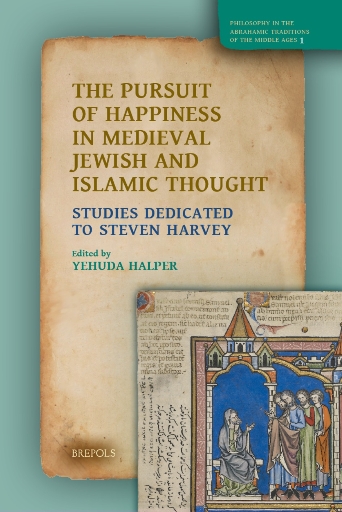
The Pursuit of Happiness in Medieval Jewish and Islamic Thought
Studies Dedicated to Steven Harvey
show More to view fulltext, buy and share links for:The Pursuit of Happiness in Medieval Jewish and Islamic Thought show Less to hide fulltext, buy and share links for: The Pursuit of Happiness in Medieval Jewish and Islamic ThoughtThe articles in this volume explore the teachings on happiness by a range of thinkers from antiquity through Spinoza, most of whom held human happiness to comprise intellectual knowledge of that which is Good in itself, namely God. These thinkers were from Greek pagan, Muslim, Jewish, and Christian backgrounds and wrote their works in Greek, Arabic, Hebrew, and Latin. Still, they shared similar philosophical views of what constitutes the Highest Good, and of the intellectual activities to be undertaken in pursuit of that Good. Yet, they differed, often greatly, in the role they assigned to deeds and practical activities in the pursuit of this happiness. These differences were, at times, not only along religious lines, but also along political and ethical lines. Other differences treated the relationship between the body and intellectual happiness and the various ways in which bodily health and well-being can contribute to intellectual health and true happiness.
-
-
-
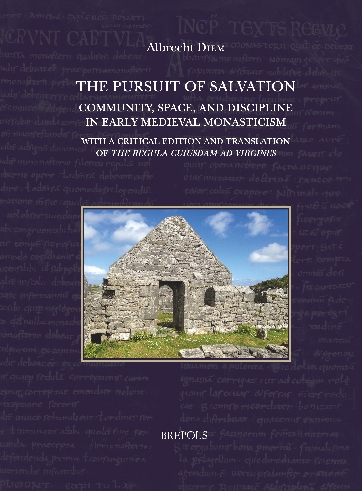
The Pursuit of Salvation. Community, Space, and Discipline in Early Medieval Monasticism
with a Critical Edition and Translation of the Regula cuiusdam ad uirgines
show More to view fulltext, buy and share links for:The Pursuit of Salvation. Community, Space, and Discipline in Early Medieval Monasticism show Less to hide fulltext, buy and share links for: The Pursuit of Salvation. Community, Space, and Discipline in Early Medieval MonasticismThe seventh-century Regula cuiusdam ad uirgines (Someone’s Rule for Virgins), which was most likely written by Jonas of Bobbio, the hagiographer of the Irish monk Columbanus, forms an ideal point of departure for writing a new history of the emergence of Western monasticism understood as a history of the individual and collective attempt to pursue eternal salvation.
The book provides a critical edition and translation of the Regula cuiusdam ad uirgines and a roadmap for such a new history revolving around various aspects of monastic discipline, such as the agency of the community, the role of enclosure, authority and obedience, space and boundaries, confession and penance, sleep and silence, excommunication and expulsion.
-
-
-
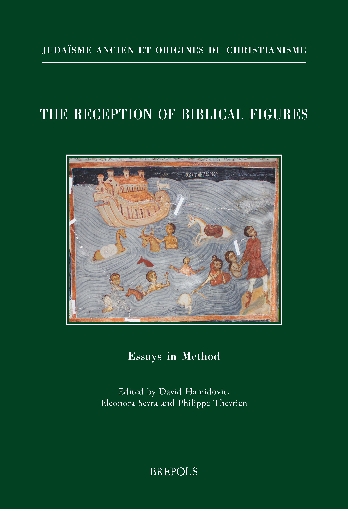
The Reception of Biblical Figures
Essays in Method
show More to view fulltext, buy and share links for:The Reception of Biblical Figures show Less to hide fulltext, buy and share links for: The Reception of Biblical FiguresThis volume explores the reception of biblical figures in Judaism, Christianity and Islam, with a particular focus on Antiquity and incursions in the Middle Ages and modernity. The contributions included here offer a glimpse of the complexity of the mechanics of transmission to which these figures were subjected in extra-biblical texts, either concentrating on one author or corpus in particular, or broadening the scope across time and cultural contexts. The volume intends to shed light on how these biblical figures and their legacies appear as channels of collective memory and identity; how they became tools for authors to achieve specific goals; how they gained new and powerful authority for communities; and how they transcend traditions and cultural boundaries. As a result, the vitality and fluidity of the developments of traditions become clear and prompt caution when using modern categories.
-
-
-
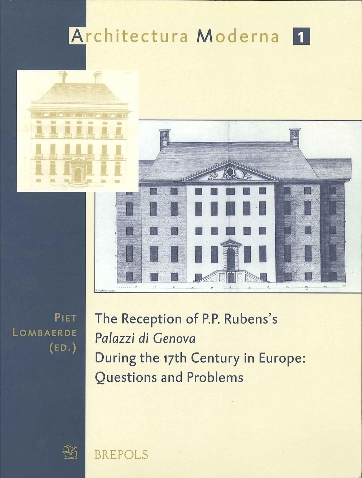
The Reception of P.P. Rubens's 'Palazzi di Genova' during the 17th Century in Europe: Questions and Problems
show More to view fulltext, buy and share links for:The Reception of P.P. Rubens's 'Palazzi di Genova' during the 17th Century in Europe: Questions and Problems show Less to hide fulltext, buy and share links for: The Reception of P.P. Rubens's 'Palazzi di Genova' during the 17th Century in Europe: Questions and ProblemsRubens' book 'Palazzi di Genova' was well diffused in European countries as England, the Netherlands, France, Germany and Italy thanks to the numerous contacts the famous painter and diplomat maintained in humanistic, artistic and political circles. From 1622 on this book, containing two volumes, was edited at several times during the 17th and 18th Century. But the direct influences of the numerous façades, plans, cross-sections, staircases and building details on modern architecture look rather limited, especially in his own country. In this study, several scholars in architectural history analyse how the examples of Genoese palazzi and churches as presented by Rubens were accepted in different European countries. Much attention is given to the question if these examples inspired a new architectural typology, in which the inner court of the houses was substituted by a 'salone in mezzo'. An attempt is made to situate Rubens' book among the late 16th and early 17th Century treatises and model books. The way in which Rubens presented the new Genoese architecture of villa's, palaces and churches and the introduction he wrote as a 'painter-architect' to this book were so modern at that time, that the reception of this prestigious edition in folio had more to do with changes in considering architectural theory and practice as with the propagation of a late renaissance style influenced by Antique examples.
-
-
-
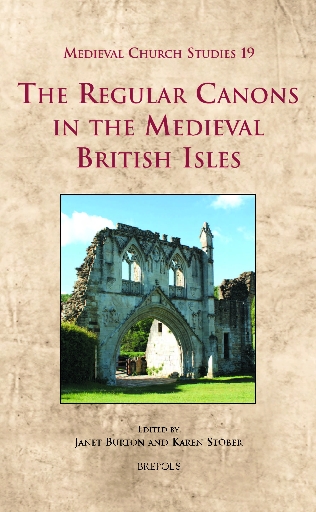
The Regular Canons in the Medieval British Isles
show More to view fulltext, buy and share links for:The Regular Canons in the Medieval British Isles show Less to hide fulltext, buy and share links for: The Regular Canons in the Medieval British IslesOf all the new monastic and religious groups to settle in the British Isles in the course of the twelfth century the regular canons were the most prolific. At the heart of their existence was the vita apostolica, but even more than other such groups the regular canons became involved in active spiritual care of their communities. Perhaps as a result of this feature they also enjoyed sustained support from founders, patrons, and benefactors, and new foundations continued to be made long after the main force of the expansion of the monastic orders had declined. This interdisciplinary volume brings together scholars from Scotland, Ireland, Wales, and England who work on aspects of the history, culture, art history, and archaeology of the regular canons in the medieval British Isles. Between them, the chapters of this book consider the regular canons in their wider historical and historiographical context, assessing their role in the religious, social, cultural, economic, and political world of the medieval British Isles, and introducing new and recent research on this important religious group.
Medieval Church Studies is a series of monographs and, sometimes, collections devoted to the history of the Western Church from, approximately, the Carolingian reform to the Council of Trent. It builds on Brepols’ longstanding interest in editions of texts and primary sources, and presents studies that are founded on a traditional close analysis of primary sources but which confront current research issues and adopt contemporary methodological approaches.
-
-
-
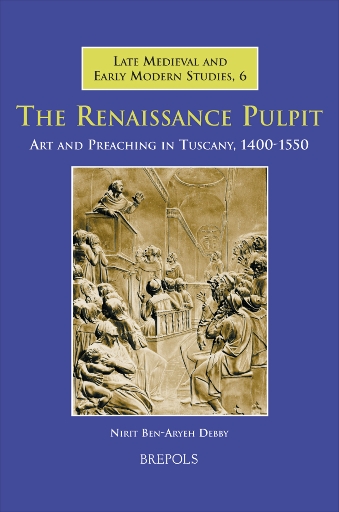
The Renaissance Pulpit
Art and Preaching in Tuscany, 1400-1550
show More to view fulltext, buy and share links for:The Renaissance Pulpit show Less to hide fulltext, buy and share links for: The Renaissance PulpitThis volume examines the relationship between preaching and art, addressing with particular detail the use of works of art in preaching and the importance of the pulpit itself. A challenging issue in the field of sermon studies is the relationship between preaching and art, in particular the manner in which preachers used works of art in their preaching and described specific pictures in their sermons; and the pulpit itself.
The thesis of the book is that pulpits should be viewed in the context of the world of preaching in Renaissance Florence and in connection with sacred oratory. Indeed, like preached sermons, pulpits used rhetorical strategies to deliver religious messages. The author adopts an interdisciplinary approach to the topic by combining art history, historical analysis, and sermon studies; and she examines the pulpit's patronage, location, and function as well as its chronological development. This book combines a general survey of pulpits in Tuscany, with close analysis of five specific pulpits. Designed and executed by important artists located in Florence and Prato, these five pulpits are the most exquisite and impressive monuments of their type, and each has a complex and rich iconographic programme. The author reveals that the period between the fifteenth and early sixteenth centuries constitutes a distinct phase in the development of pulpits, different from the earlier tradition, and from pulpits constructed after the Council of Trent and during the Catholic Reformation.
-
-
-
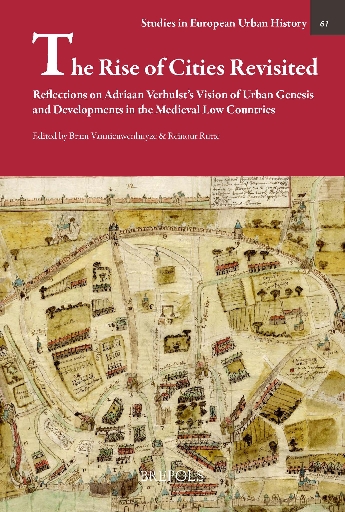
The Rise of Cities Revisited
Reflections on Adriaan Verhulst's Vision of Urban Genesis and Developments in the Medieval Low Countries
show More to view fulltext, buy and share links for:The Rise of Cities Revisited show Less to hide fulltext, buy and share links for: The Rise of Cities RevisitedAdriaan Verhulst's The Rise of Cities in North-West Europe (1999) is the last comprehensive work written by a single author on the urban genesis and spatial developments of cities in the medieval Low Countries. Since then, monographs, specialised studies and articles have been published on various cities and towns, while urban archaeologists have carried out numerous excavations. Much new knowledge has been gained, yet many gaps and the need for comparative overviews remain.Twenty-five years after Verhulst’s synthesis, The Rise of Cities Revisited takes a fresh look at the origins and developments of cities and towns in the Low Countries between the tenth and the sixteenth centuries, critically assesses progress made in scholarship and outlines future directions for research. The chapters of the book are written by senior and junior specialists from various fields, including medieval history, historical geography, economic history, archaeology and building history. The Rise of Cities Revisited presents a state of the art and provides scholars with tools to study this complex subject in future.
-
-
-
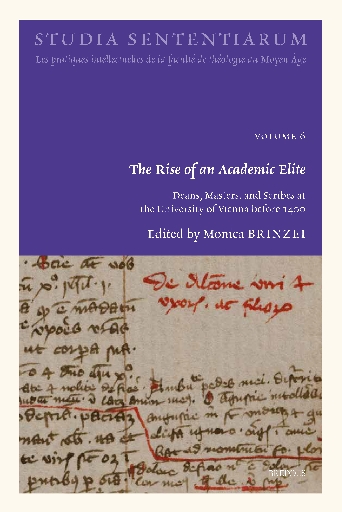
The Rise of an Academic Elite : Deans, Masters, and Scribes at the University of Vienna before 1400
show More to view fulltext, buy and share links for:The Rise of an Academic Elite : Deans, Masters, and Scribes at the University of Vienna before 1400 show Less to hide fulltext, buy and share links for: The Rise of an Academic Elite : Deans, Masters, and Scribes at the University of Vienna before 1400Henry of Rheinfelden, a Dominican from Basel, spent the last decade of the fourteenth century at the University of Vienna studying theology. During this time he took notes on the academic activities of the first rectors of the university and deans of the Faculties of Arts and Theology. This volume explores Rheinfelden’s contribution to our understanding of the doctrinal, curricular, administrative, and prosopographical history of the early University of Vienna. Deciphering Rheinfelden’s surviving notebooks in the Universitätsbibliothek Basel sheds new light on the rise of an academic elite in Vienna. His manuscripts reveal a network of scholars sharing a passion for knowledge and supply a gallery of intellectual profiles, starting with the mentors of the group, Henry of Langenstein and Henry Totting of Oyta, and continuing with the lesser-known figures Stephen of Enzersdorf, Gerhard Vischpekch of Osnabrück, Paul (Fabri) of Geldern, Andreas of Langenstein, Rutger Dole of Roermond, Nicholas of Hönhartzkirchen, Nicholas of Dinkelsbühl, John Berwart of Villingen, John Stadel of Russbach, Peter de Treysa, Michael Suchenschatz of Hausleiten, Peter Schad of Walse, Thomas of Cleves, and Leonhard of Dorffen. The papers gathered in this volume highlight the intricate relationship between a commitment to administrative duty and an appetite for the creation of a doctrinal tradition via debating, forging arguments, defending and attacking positions, commenting on authorities, and adopting and adapting academic practices imported from Paris, since the majority of the authors in our gallery were educated in Paris and built their careers in Vienna. Through Rheinfelden’s notebooks, this volume provides access to unique and previously unknown texts that together offer a new image of the medieval University of Vienna.
-
-
-
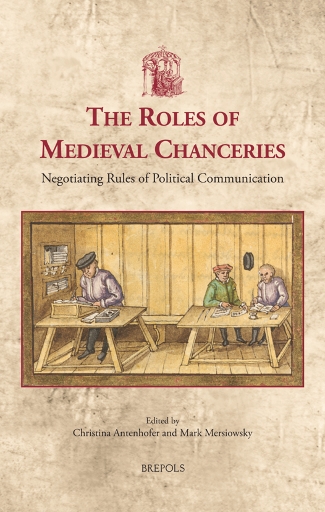
The Roles of Medieval Chanceries
Negotiating Rules of Political Communication
show More to view fulltext, buy and share links for:The Roles of Medieval Chanceries show Less to hide fulltext, buy and share links for: The Roles of Medieval ChanceriesMedieval communication followed rules that were defined, negotiated, and altered in processes of exchange. Conflicts resulting from different communication practices, as well as forms of innovation, revolve around rules that are not self-evident. Political actors such as princes and cities, chanceries, secretaries, ambassadors, and councillors formed rules of political participation, which became visible in written documentation. These rules were both formed and negotiated via processes of communication. Medieval chanceries can thus be understood as a vast field of experimentation where different solutions were tested, passed on, or discarded.
This book explores communication practices in German, French, Italian, Tyrolian, and Gorizian chanceries, as well as at diets from the tenth to the sixteenth century. Its chapters examine royal, monastic, princely, and communal chanceries. For the early and high Middle Ages, a close analysis of documents will reconstruct negotiation and communication from within the documents themselves. For the later Middle Ages, focus will turn to the chancery, with the appearance of chancery orders and chancery annotations that provide explicit insight in communication between the chancellors, secretaries, and political authorities. The growing amount and variety of documents issued in the late Middle Ages allows us to retrace conflicts resulting from differing chancery practices as well as attempts to reorganise the chancery into a political instrument for the prince. The processes of political communication will be followed in three parts. Part I focuses on the rules within documents. Part II looks at administrative processes within specific chanceries, while Part III explores forms of exchange between the chancery and other political actors.
-
-
-
The Roman Senate as arbiter during the Second Century bc
Two Exemplary Case Studies: the Cippus Abellanus and the Polcevera Tablet
show More to view fulltext, buy and share links for:The Roman Senate as arbiter during the Second Century bc show Less to hide fulltext, buy and share links for: The Roman Senate as arbiter during the Second Century bcIn the wider context of the border conflicts that involve Rome as a third authority super partes, for which there is evidence already in the second century BC, two epigraphic documents stand out for the peculiarities distinguishing them from all others: the so-called Polcevera Tablet (concerning a dispute between Genuates and Viturii Langenses) and the Cippus Abellanus (related to a border dispute between Nolani and Abellani and written in Oscan). They make us aware of the political and municipal dynamics underlying the complex principle of Roman arbitration, often required to resolve territorial disputes, which were gradually evolving as Rome opened up to the East. What role did the Roman Senate play in such disputes? What exactly was the function of the referees sent by the City to settle the disputes with a super partes judgment? What was the importance of the agrarian reform of the Gracchi and the realisation of road axes in the acuity of such antagonisms? These are the questions to which this study tries to provide an answer.
-
-
-
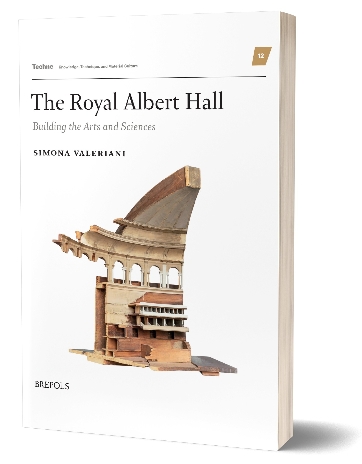
The Royal Albert Hall
Building the Arts and Sciences
show More to view fulltext, buy and share links for:The Royal Albert Hall show Less to hide fulltext, buy and share links for: The Royal Albert HallThis groundbreaking study takes one of London’s most iconic buildings and deconstructs it to offer new insights into the society that produced it. As part of the new cultural quarter built in South Kensington on the proceeds from The Great Exhibition of 1851, the Royal Albert Hall was originally intended to be a ‘Central Hall of Arts and Sciences’. Prince Albert’s overarching vision was to promote technological and industrial progress to a wider audience, and in so doing increase its cultural and economic reach.Placing materiality at its core, this volume provides an intellectual history of Victorian ideas about technology, progress, and prosperity. The narrative is underpinned by a wealth of new sources – from architectural models and archival materials to 19th century newspapers. Each chapter focuses on a particular element of the Royal Albert Hall’s construction, chronicling the previously overlooked work of a host of contributors from all walks of life, including female mosaic-makers and the Royal Engineers.Lighting, ventilation, fireproofing, ‘ascending rooms’, cements, acoustics, the organ, the record-breaking iron dome, and the organisation of internal spaces were all attempts to attain progress - and subject to intense public scrutiny. From iron structures to terracotta, from the education of women to the abolition of slavery, in the making of the Royal Albert Hall scientific knowledge and socio-cultural reform were intertwined.This book shows, for the first time, how the Royal Albert Hall’s building was itself a crucible for innovation. Illustrious techniques from antiquity were reimagined for the new mechanical age, placing the building at the heart of a process of collecting, describing, and systematising arts and practices. At the same time, the Royal Albert Hall was conceived as a ‘manifesto’ of what the Victorians thought Britain ought to be, at a crucial moment of its socio-economic history: a symbolic cultural hub for the Empire’s metropole.This is the Royal Albert Hall: a central piece of the puzzle in Britain’s march towards modernity.
-
-
-
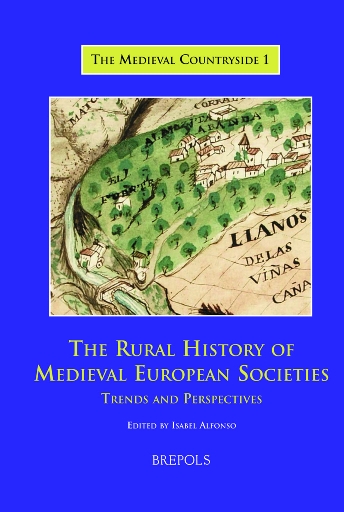
The Rural History of Medieval European Societies
Trends and Perspectives
show More to view fulltext, buy and share links for:The Rural History of Medieval European Societies show Less to hide fulltext, buy and share links for: The Rural History of Medieval European SocietiesThis collection gathers together a range of scholars who reflect on recent historiographical developments in medieval rural history within their respective countries. Each contribution provides a survey of a recent area of research, as well as documenting its significant results, and offering perspectives for future investigations. This international approach not only provides a deeper insight into how medieval rural studies relates to current debates in the social sciences, but it also highlights the connections between specific national historical traditions and present-day research issues in their historical contexts. By comparing different European regions it is possible to see more clearly the similarities and the differences which lie between them; this volume therefore constitutes a truer means of constructing syntheses and for identifying fruitful lines of future research.
-
-
-
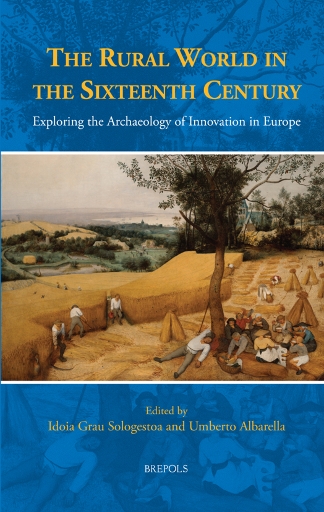
The Rural World in the Sixteenth Century
Exploring the Archaeology of Innovation in Europe
show More to view fulltext, buy and share links for:The Rural World in the Sixteenth Century show Less to hide fulltext, buy and share links for: The Rural World in the Sixteenth CenturyThe sixteenth century in Europe was a time of profound change, the threshold between the ‘medieval’ and the ‘modern’, as new technologies were introduced, distant lands explored, oceanic trade routes opened, and innovative ideas pursued in fields as varied as politics, science, philosophy, law, and religion. But sweeping transformations also occurred in the rural world, profoundly altering the countryside in both appearance and practices. Crucially for historians, there is abundant documentary evidence for these changes but, while they are less well-documented, their impact can also be traced archaeologically.
This cutting-edge volume is the first to explore the archaeology of the rural world across the ‘long’ sixteenth century and to investigate the changing innovations that were seen in landscape, technology, agriculture, and husbandry during this period. Drawing together contributions from across Europe, and from a range of archaeological disciplines, including zooarchaeology, archaeobotany, landscape archaeology, material culture studies, and technology, this collection of essays sheds new light on a key period of innovation that was a significant precursor to modern economies and societies.
-
-
-

The Sanctuary of Parthenos at Ancient Neapolis (Kavala), Volume i
Incised and Painted Ceramic Inscriptions from the Sanctuary and in Aegean Thrace
show More to view fulltext, buy and share links for:The Sanctuary of Parthenos at Ancient Neapolis (Kavala), Volume i show Less to hide fulltext, buy and share links for: The Sanctuary of Parthenos at Ancient Neapolis (Kavala), Volume iThe ancient city of Neapolis (modern Kavala, Greece) was founded by Thasos in the seventh century bce at a strategic location where the Thracian hinterlands meet the Aegean Sea. The patron deity of this North Aegean polis was Parthenos (the Maiden), known to us through epigraphic and archaeological evidence. Her sanctuary came to light in the twentieth century during rescue excavations, and yielded numerous finds, most of which date from the Archaic period.
This monograph provides a discussion of the history of excavations at this sanctuary, as well as a contextual examination of the material, leading to a new interpretation of Parthenos’ identity. Among the wealth of finds from the site, the corpus of incised and painted ceramic inscriptions stands out, as it offers a unique glimpse into the history of the cosmopolitan temenos and the dedicatory practices and rituals that took place there. The inscribed vessels carry dedications, numerical and other graffiti, and dipinti, as well as the initials of the goddess, which designate them as sacred equipment. When considered in the context of the ceramic inscriptions from sanctuaries across Aegean Thrace, they further underscore the important role of Neapolis and the Sanctuary of Parthenos in the commercial networks and cultural dynamics of the Aegean, both in the early stages of Greek colonization, and in the centuries that followed.
-
-
-
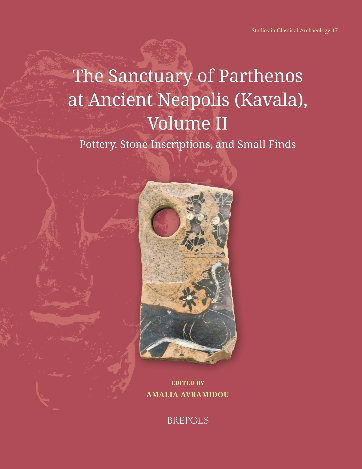
The Sanctuary of Parthenos at Ancient Neapolis (Kavala), Volume ii
Pottery, Stone Inscriptions, and Small Finds
show More to view fulltext, buy and share links for:The Sanctuary of Parthenos at Ancient Neapolis (Kavala), Volume ii show Less to hide fulltext, buy and share links for: The Sanctuary of Parthenos at Ancient Neapolis (Kavala), Volume iiThe ancient city of Neapolis (modern Kavala, Greece) was founded by Thasos in the seventh century BCE at a strategic location where the Thracian hinterlands meet the Aegean Sea. The patron deity of this North Aegean polis was Parthenos (the Maiden), a goddess often associated with Artemis and known to us through epigraphic and archaeological evidence. Her sanctuary came to light in the twentieth century, during rescue excavations, and yielded numerous finds, most of which date from the Archaic period.
This edited volume draws together the material evidence from the Sanctuary of Parthenos, with a particular focus on the ceramic wares, stone inscriptions, and small finds from the site. Published as a counterpart to an earlier publication in this series, Amalia Avramidou’s monograph, The Sanctuary of Parthenos at Ancient Neapolis (Kavala): Incised and Painted Ceramic Inscriptions from the Sanctuary and in Aegean Thrace, the essays gathered here nonetheless form a stand-alone volume that sheds light on both the importance of the site as a place of cult, and more broadly the role that it played within the commercial networks and cultural dynamics of the Aegean.
-
-
-
The Scriptures and Early Medieval Ireland
Proceedings of the 1993 Conference of the Society for Hiberno-Latin Studies on Early Irish Exegesis and Homiletics
-
-
-
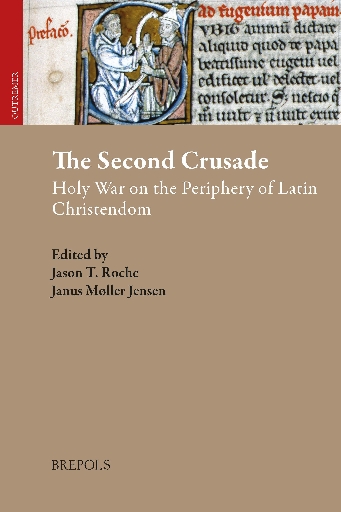
The Second Crusade
Holy War on the Periphery of Latin Christendom
show More to view fulltext, buy and share links for:The Second Crusade show Less to hide fulltext, buy and share links for: The Second CrusadeA seminal article published by Giles Constable in 1953 focused on the genesis and expansion in scope of the Second Crusade with particular attention to what has become known as the Syrian campaign. His central thesis maintained that by the spring of 1147 the Church “viewed and planned” the Second Crusade as a general Christian offensive against and the Muslims of Syria and the Iberian Peninsula and the pagan Wends of the southern Baltic lands. Constable's work remains extremely influential and provides the framework for the recent major works published on this extraordinary twelfth-century phenomenon. This volume aims to readdress scholarly predilections for concentrating on the venture in the Near East and for narrowly focusing on the accepted targets of the crusade. It aims instead to place established, contentious, and new events and concepts associated with the enterprise in a wider ideological, chronological, geopolitical, and geographical context.
Jason T. Roche is a Lecturer in Medieval History at Manchester Metropolitan University. His research interests cover the history of the crusades and the Latin East and the topography of medieval Anatolia and the Near East.
Janus Møller Jensen is head of department at Nyborg Castle, Museums of Eastern Funen, Denmark. His main research interests cover the history and historiography of the Crusades and Scandinavian medieval history.
-
-
-
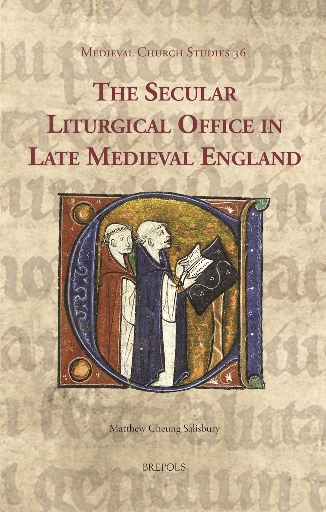
The Secular Liturgical Office in Late Medieval England
show More to view fulltext, buy and share links for:The Secular Liturgical Office in Late Medieval England show Less to hide fulltext, buy and share links for: The Secular Liturgical Office in Late Medieval EnglandUntil recently, research on the late medieval English Office liturgy has suggested that all manuscripts of the same liturgical Use, including those of the celebrated and widespread Uses of Sarum and York, are in large part interchangeable and uniform. This study demonstrates, through detailed analyses of the manuscript breviaries and antiphonals of each secular liturgical Use of medieval England, that such books do share a common textual core. But this is in large part restricted to a single genre of text - the responsory. Other features, even within manuscripts of the same Use, are subject to striking and significant variation, influenced by local customs and hagiographical and textual priorities, and also by varying reception to liturgical prescriptions from ecclesiastical authorities. The identification of the characteristic features of each Use and the differentiation of regional patterns have resulted from treating each manuscript as a unique witness, a practice which is not common in liturgical studies, but one which gives the manuscripts greater value as historical sources. The term ‘Use’, often employed as a descriptor of orthodoxy, may itself imply a greater uniformity than ever existed, for the ways that the ‘Use of Sarum’, a liturgical pattern originally designed for enactment in a single cathedral, was realised in countless other venues for worship were dependent on the times, places, and contexts in which the rites were celebrated.
-
-
-
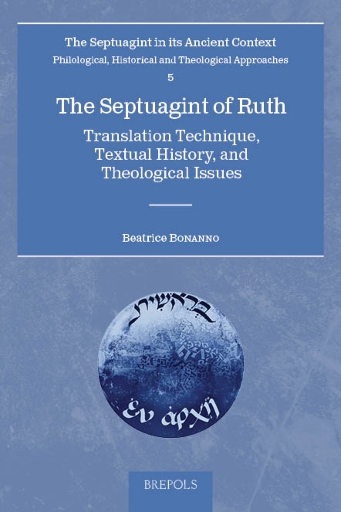
The Septuagint of Ruth
Translation Technique, Textual History, and Theological Issues
show More to view fulltext, buy and share links for:The Septuagint of Ruth show Less to hide fulltext, buy and share links for: The Septuagint of RuthFor many years, the Septuagint of Ruth (LXX-Ruth) has been considered a literal translation. Several authors have emphasized the similarities between the Greek text and the Masoretic Text, while others have also noted the divergences. In the wake of this second stream, this book seeks to answer the crucial question: How can we nuance the definition of “literalism” for LXX-Ruth, and which innovations and specifics can be detected in this text? A fresh analysis of the Greek rendering of the Hebrew proper names, toponyms, hapax legomena as well as legal aspects makes it possible to develop new perspectives on the translation technique of LXX-Ruth and to highlight several characteristics of this text. This volume, moreover, extends the discussion by including the analysis of the theological accents of LXX-Ruth and an up-to-date presentation of its textual history including the fragments of the book in the Dead Sea Scrolls. Overall, this volume enhances our understanding of the linguistic and literary background of the LXX, as well as its specific features.
-
-
-
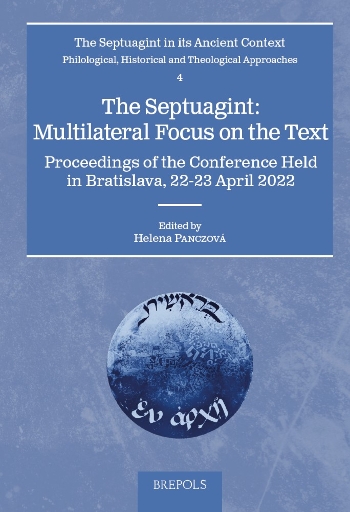
The Septuagint: Multilateral Focus on the Text
Proceedings of the Conference Held in Bratislava, 22–23 April 2022
show More to view fulltext, buy and share links for:The Septuagint: Multilateral Focus on the Text show Less to hide fulltext, buy and share links for: The Septuagint: Multilateral Focus on the TextThe phenomenon of the Septuagint is a matter of interest for several areas of research – not only for Old Testament scholars, but also for researchers of Hellenistic Judaism, patristic exegesis, translation theory and practice, and others. What they all have in common is the text of the Septuagint. Unfortunately, the research is often so compartmentalized that scholars do not know about each other’s work and cannot profit from it. The aim of the conference “The Septuagint: Multilateral Focus on the Text” was to bring together scholars studying the text of the Septuagint in its various aspects: its reconstruction, peculiarities of language, and lexical semantics in their relationship with the Semitic background and within the Greek-speaking world, whether Jewish or Christian. These different approaches to the same matter are bound to lead to mutual enrichment.
-
-
-
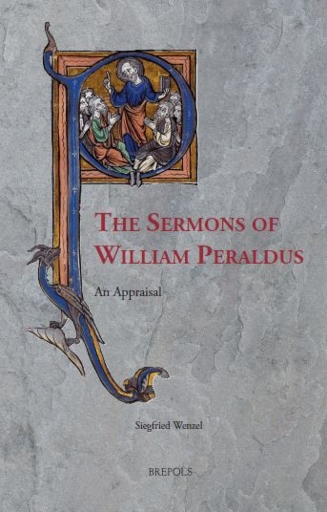
The Sermons of William Peraldus
An Appraisal
show More to view fulltext, buy and share links for:The Sermons of William Peraldus show Less to hide fulltext, buy and share links for: The Sermons of William PeraldusThe French Dominican William Peraldus or Guillaume Peyraut (died c. 1275), well known for his long summae on the vices and virtues, also produced several cycles of sermons, of which two deal with the Epistle and the Gospel readings for the Sundays of the Church year. This study analyzes the latter in some detail and argues that, rather than collecting sermons he had preached earlier, Peraldus wrote these sermons systematically for the use of other preachers. The Epistle sermons for the first Sunday in Advent and the Gospel sermons for the third Sunday in Advent are presented in their original Latin text together with an English translation in order to demonstrate how Peraldus dealt with the biblical text as well as his moral concerns and his literary style. The selected texts are then compared with several other major cycles produced in France in Peraldus’s time. Like his summae on the vices and the virtues, Peraldus’s sermons became very popular in medieval Europe, as is witnessed by selective copying and citations that can be seen in a number of instances primarily from the sermon literature of later medieval England. One aspect of this popularity is the adaptation of his material into a genuine sermon, as it can be found in the sermons attributed to Repingdon, of which one is here examined in detail.
-
-
-
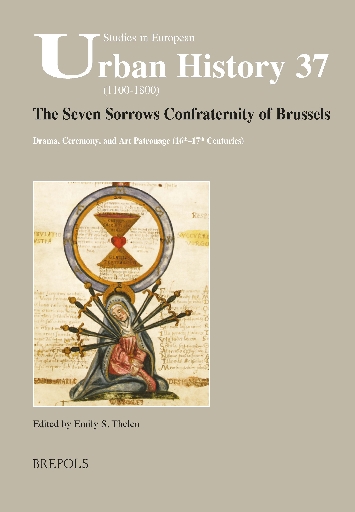
The Seven Sorrows Confraternity of Brussels
Drama, Ceremony, and Art Patronage (16th-17th Centuries)
show More to view fulltext, buy and share links for:The Seven Sorrows Confraternity of Brussels show Less to hide fulltext, buy and share links for: The Seven Sorrows Confraternity of BrusselsDevotion to the Virgin of Seven Sorrows flourished in the Low Countries in the late fifteenth and early sixteenth centuries under the auspices of the court of Philip the Fair. Quickly becoming a widespread phenomenon, the Seven Sorrows devotion generated dramatic plays, artistic works, music, and numerous miracles. Underlying the popularity of the devotion was the network of confraternity chapters dedicated to the Virgin of Sorrows. Of these chapters, the Seven Sorrows confraternity of Brussels was singled out, receiving the special patronage of Philip the Fair, Maximilian I, and Margaret of Austria. Taking the confraternity of Brussels as a focal point, this volume examines the Seven Sorrows devotion in its urban context. The essays of this collection explore the artistic, musical, and dramatic products of the Seven Sorrows devotion as created in and by the civic networks and artistic channels of Brussels. The structure of the confraternity and its historical importance for the city are also demonstrated. As an important counterpoint to work in Italian confraternity studies, this volume is the first interdisciplinary study of a confraternity in the Low Countries in English.
Emily S. Thelen is a musicologist specialising in music and liturgy of the fifteenth and sixteenth centuries in the Low Countries. She received her PhD from Princeton University and most recently has held a post-doctoral fellowship at KU Leuven.
-
-
-
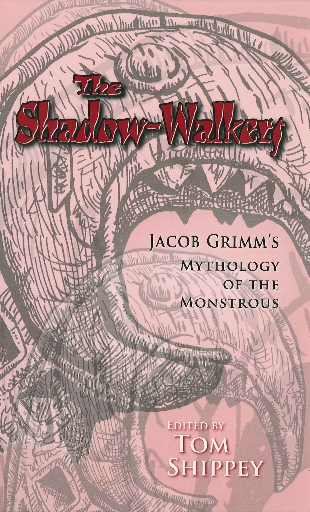
The Shadow-Walkers
Jacob Grimm's Mythology of the Monstrous
show More to view fulltext, buy and share links for:The Shadow-Walkers show Less to hide fulltext, buy and share links for: The Shadow-WalkersElves and dwarves, trolls and giants, talking dragons, valkyries and werewolves: all these are familiar in modern movies and commercial fantasy. But where did the concepts come from? Who invented them? Almost two centuries ago, Jacob Grimm assembled what was known about such creatures in his work on 'Teutonic Mythology', which brought together ancient texts such as Beowulf and the Elder Edda with the material found in Grimm's own famous collection of fairy-tales. This collection of essays now updates Grimm, adding much material not known in his time, and also challenges his monolithic interpretations, pointing out the diversity of cultural traditions as well as the continuity of ancient myth.
-
-
-

The Sisterbook of Master Geert’s House, Deventer
The Lives and Spirituality of the Sisters, c. 1390‑c. 1460
show More to view fulltext, buy and share links for:The Sisterbook of Master Geert’s House, Deventer show Less to hide fulltext, buy and share links for: The Sisterbook of Master Geert’s House, DeventerThe Sisterbook of Master Geert’s House contains the lives of sixty-four Sisters of the Common Life who died between 1398 and 1456. Founded as an alms-house for destitute women in 1374, by the end of the fourteenth century Master Geert’s House had become a home for women desiring to live a life of humility and penitence, as well as in community of goods without vows. The Sisterbook was likely written sometime between 1460 and 1470, at a time when the religious fervour that had characterized the earlier Sisters had begun to wane. It was to incite the readers and hearers of the Sisterbook, which would have been read in the refectory during mealtimes, to imitate the earlier Sisters who are portrayed as outstanding examples of godliness and Sisters of the Common Life. The opening sentence of the Sisterbook succinctly sums up the author’s reason for writing it: ‘Here begin some edifying points about our earlier Sisters whose lives it behoves us to have before our eyes at all times, for in their ways they were truly like a candle on a candlestick’, and who, by implication, could still illumine the way for her own generation of Sisters. The first foundation of Sisters of the Common Life, Master Geert’s House became the ‘mother’ house of numerous other houses in the Low Countries and Germany directly as well as indirectly and served as an inspiration for others.
This book provides a study of the Sisterbook and its significance in the Devotio Moderna and late medieval female religiosity, while the accompanying translation introduces this important source to an English audience.
-
-
-
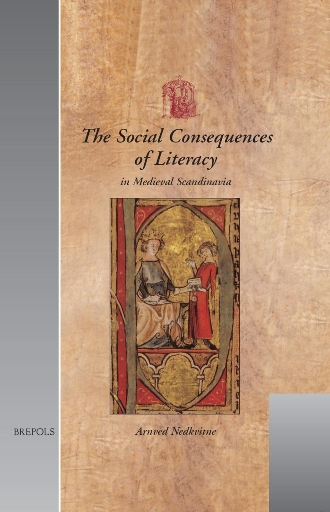
The Social Consequences of Literacy in Medieval Scandinavia
show More to view fulltext, buy and share links for:The Social Consequences of Literacy in Medieval Scandinavia show Less to hide fulltext, buy and share links for: The Social Consequences of Literacy in Medieval ScandinaviaBetween 1000 and 1536 Scandinavia was transformed from a conglomerate of largely pre-state societies to societies with state governments. The state increasingly monopolised ‘legitimate’ violence. Church and state used literacy to strengthen social control in central and important areas: jurisdiction, religion and accounting. Written laws made social norms more precise and easier to change, a necessity in an increasingly complex society. The basic social transformations of the period cannot be attributed to increasing literacy alone, but the written word rendered them more peaceful and gradual, and strengthened social conformity and cohesion. Writing in Roman letters was introduced late to Scandinavia (ca. 1000 ad); consequently the transition from orality to literacy is better documented than in many other European societies. The rich saga literature from the twelfth and thirteenth centuries emerged at the time that administrative literacy was introduced. Until the fourteenth century, literacy was mainly promoted by church and state in their efforts to pacify and control society. Then the literate elites grew, encompassing ever larger groups of officials, clerks, merchants and artisans, many of whom were now educated in town schools. The resulting elite culture prepared the ground for the development of a proto-national identity.
-
-
-
The Son is Truly Son
The Trinitarian and Christological Theology of Eusebius of Caesarea
show More to view fulltext, buy and share links for:The Son is Truly Son show Less to hide fulltext, buy and share links for: The Son is Truly SonTheology in the early fourth century was engrossed with questions about the nature of the Son of God in relation to the Father. How was he ‘from the essence’ of the Father? Was there a time when he was not? While generally treated as a minor footnote in the development of trinitarian and christological theology by most modern scholars, Eusebius of Caesarea provides a rich and original contribution to these debates about the trinity and theology in the midst of the Arian controversy. This project explores the theological framework of Eusebius, focusing specifically on his understanding of the Son of God. Therein, it proposes and employs an underutilized lens to view the bishop - according to his exegetical strategies and his explicitly theological works. In doing so, Eusebius’ primary understanding of the nature and role of the second person of the Trinity comes to the fore: the Son is truly Son. By focusing on his theology of the Son in multiple facets - trinitarianism, cosmology, soteriology, and Christology - his unique theological contribution to the church becomes clear. Eusebius is an important transmitter of Origenian theology and a foundational thinker for the later fourth and early fifth century.
-
-
-
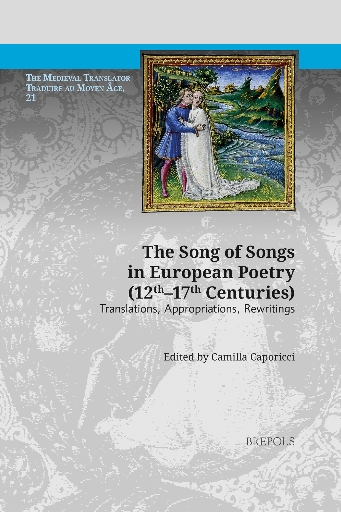
The Song of Songs in European Poetry
(Twelfth to Seventeenth Centuries)Translations, Appropriations, Rewritings
show More to view fulltext, buy and share links for:The Song of Songs in European Poetry
(Twelfth to Seventeenth Centuries) show Less to hide fulltext, buy and share links for: The Song of Songs in European Poetry
(Twelfth to Seventeenth Centuries)Traditionally attributed to King Solomon and defined by Rabbi Aqiva as the Holy of Holies among the sacred Scriptures, the Song of Songs is one of the most fascinating and controversial biblical books. Celebrated as a key to the supreme mystery of the union between God and the faithful, this ambivalent book, which combined a sensual celebration of love with a well-established tradition of allegorical interpretation, was a text crucial to both the Middle Ages and the Renaissance, and held a particular appeal for poets. Indeed, the Song of Songs played a significant role in the development of European poetry from its very beginning, creating an exceptional convergence of sacred and secular languages and horizons of meaning.
Written by a group of distinguished international scholars, this volume explores the complex and multifaceted processes through which the Song of Songs entered, influenced, and interacted with medieval and Renaissance European poetry (twelfth to seventeenth centuries). Focusing on both individual authors – including Peter Riga, Dante Alighieri, Richard Rolle, and George Herbert – and particularly relevant poetic traditions – including Hebrew liturgical poetry and the Tristan and Ysolt tradition, Middle English and Petrarchan lyric, Renaissance verse versions and seventeenth-century musical compositions, dissident and prophetic texts – the volume unveils the relevant role played by the biblical book in the development of European poetry, thought and spirituality, highlighting its ability to contribute to different poetic genres and give voice to a variety of religious, political, philosophical, and artistic intentions.
-
-
-
The Spirit, the World and the Trinity
Origen’s and Augustine’s Understanding of the Gospel of John
show More to view fulltext, buy and share links for:The Spirit, the World and the Trinity show Less to hide fulltext, buy and share links for: The Spirit, the World and the TrinityIn a renowned and controversial passage Origen writes: “Of the subsistence of the Holy Spirit, no-one could have even a suspicion, except those who profess a belief in Christ” (De Principiis, 1,3). But how come that ancient Christian authors elaborated a theology of the Holy Spirit? This innovative study tackles this question by analysing how the exegesis of the Gospel of John shaped the trinitarian and soteriological agency of the Holy Spirit in the theologies of two of the most important Christian authors of all times: Origen and Augustine. In particular, the Johannine Father-Son-Spirit relation and the dichotomy between God and the world represent the foundation on which Origen and Augustine built their pneumatologies. At a closer look, one even realises that they both conceived the God-human relationship through a Johannine lens.
The heuristic comparison proposed in this book is focused on the three large themes, towards which Origen and Augustine represent opposite approaches: the understanding of the immanent Trinity, the dualism between God and the world and the proper role of the Holy Spirit. On the one hand, Origen put forward a paradigm of participation to explain the oneness and threeness of God. On the other, Augustine understands God’s self-relation through a paradigm of identity. These two trinitarian constructions are shaped by a different understanding of the Gospel of John: while Origen’s theology mostly smooths the gospel’s dualism by interpreting God’s salvific act as a gradual spiritualisation of the world, Augustine tends to accentuate the Gospel’s dichotomies by radicalising the Johannine dualism. This study will therefore clarify the two specific paradigms in the two authors’ theologies: participation/transformation in Origen and identity/separation in Augustine, showing also how these paradigms are patterned after their different understanding of the fourth Gospel.
-
-
-
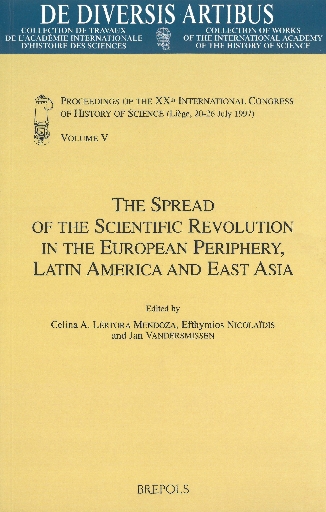
The Spread of the Scientific Revolution in the European Periphery, Latin America and East Asia
Proceedings of the XXth International Congress of History of Science (Liège, 20-26 July 1997) Vol. V
show More to view fulltext, buy and share links for:The Spread of the Scientific Revolution in the European Periphery, Latin America and East Asia show Less to hide fulltext, buy and share links for: The Spread of the Scientific Revolution in the European Periphery, Latin America and East AsiaThis volume includes papers presented during a symposium on the spreading of the scientific revolution outside Western European countries, which was held during the XXth International Congress of History of Science in Liège in 1997.
The contributions aim to answer some recent historiographical questions such as the modalities of the spreading of science in different countries, the reception of the new science by different cultures, the kind of changes this reception set in motion, the periodisation in adopting the new scientific knowledge, the structures set up for this adoption.
Three geographical areas are presented here: the European countries in the border of the "scientific center", Latin America countries and East Asian regions.
The volume constitutes the first attempt at making a synthesis at an international level on the important question of the spreading of the "new science" throughout the world.
-
-
-
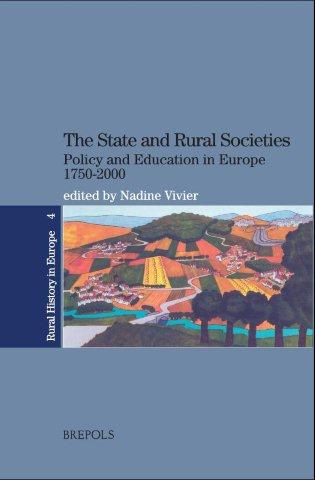
The State and Rural Societies
Policy and Education in Europe. 1750-2000
show More to view fulltext, buy and share links for:The State and Rural Societies show Less to hide fulltext, buy and share links for: The State and Rural SocietiesRural societies are conventionally thought to be bound by tradition and resistant to change. But from the 18th century onwards many countries began to see the countryside as the basis of national prosperity, with a healthy and increasing population, and rising agricultural output fostering general economic growth. It became an objective of the State to encourage the trend, but also to exert social control on this major part of the population in order to civilize the rude peasantry and acquire their electoral support.
This book deals with the various aspects of rural life in which the State intervened: economic matters, such as property rights and market regulations; social questions, from moral concerns to demographic policy; and the key issue of rural education.
From Sweden to the Iberian Peninsula, the United Kingdom to Hungary, and from the eighteenth century to the twentieth, using both broad surveys and in-depth studies, with an extensive introduction written from a comparative perspective, an international group of historians (brought together by the COST network A35) for the first time examine the rural concerns of the state, both economic and social, in a comparative European context.
Nadine Vivier is professor of social and economic history at the University of Maine (France). She has worked extensively on rural societies from 1750 to 2000 in France and in Europe.
-
-
-
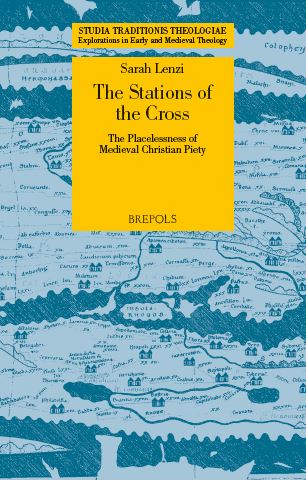
The Stations of the Cross
The Placelessness of Medieval Christian Piety
show More to view fulltext, buy and share links for:The Stations of the Cross show Less to hide fulltext, buy and share links for: The Stations of the CrossThe Christian practice of the Stations of the Cross has historically largely been the purview of devotional authors. In this academic study, the Reverend Doctor Sarah Lenzi revisits the evidence-based history of the western European development of the Stations as it was laid out at the turn of the twentieth century. She begins with a discussion of how this history is often neglected in favor of a mythic history that places the development in Jerusalem at the time of the Crusades and she then reestablishes the western origins. While the early twentieth-century authors who worked on the Stations are invaluable for the history they uncovered, there were gaps in the analyses they offered based on that history. In the chapters that follow, Rev. Dr. Lenzi works to debunk those interpretations and to offer a new understanding of the development of the Stations of the Cross. A close examination of pilgrimage texts as well as medieval meditation manuals puts this particular practice in the broader context of Medieval Christian history and ritual, and works to place it appropriately on the spectrum of pietistic behavior. With a new understanding of the development of the Stations of the Cross, Rev. Dr. Lenzi helps to explore notions of time, place, and space in Medieval Christianity, arguing for an understanding of placelessness in Christian piety that is enabled through intentional ritualized use of imagination, narrative, body, and word.
-
-
-
The Strange Death of Pagan Rome
Reflections on a Historiographical Controversy
show More to view fulltext, buy and share links for:The Strange Death of Pagan Rome show Less to hide fulltext, buy and share links for: The Strange Death of Pagan RomeThe end of paganism in antique Rome strongly involves the nature of the relations between pagans and Christians in the fourth century AD. The historical paradigm of conflict has been disseminated by scholars as the Hungarian András Alföldi, who in 1934 presented a Christian Constantine in irreconcilable conflict with a pagan Rome, and by Herbert Bloch. The latter, most notably in 1958, in a seminar conference at the Warburg Institute, consolidated the idea of a conflictual model in which the aristocracy of Rome, faced with a tightening of measures against traditional cults, realized a real ‘pagan revival’ and led against Theodosius I «the last pagan army of the ancient world». This model was subjected to a massive critique by Alan Cameron in his The Last Pagans of Rome, Oxford 2011, but in the course of less than two years Cameron’s publication has aroused a strong response, especially on the part of European scholars, and the debate has gained new, effervescent relevance.
This volume, edited by Rita Lizzi Testa, collects the reflections of some Italian scholars - Guido Clemente, R. Lizzi Testa, Giorgio Bonamente, Silvia Orlandi, Giovanni Alberto Cecconi, Lellia Cracco Ruggini, Franca Ela Consolino, Isabella Gualandri, Gianfranco Agosti, Gianluca Grassigli, Alessandra Bravi - and of the illustrious professor François Paschoud from Geneva, on the theme of the last pagans of Rome. It is not only A. Alföldi’s and H. Bloch’s model that provides the dialectic reference for their discussions, but rather, the more insidious in its paradoxical nature, Alan Cameron’s. For the English scholar the concept of conflict is a pure historiographical construction because no real pagans remained in Rome when Theodosius issued laws against paganism. They were not pagan but classical élites, people totally soaked in classical culture, who accepted Christianity when it became compatible with classical culture and the imperial institutions. In his monumental book (more than 800 pages), he argues his position through learned demonstrations and the review of a vast amount of literary, archaeological, epigraphic and even artistic documentation. Nevertheless, much of this evidence can be read again from very different perspectives, and this is what the contributors of the volume try to do.
The volume continues a collection of monographic and miscellaneous studies, now taken over by Brepols Publishers: Giornale Italiano di Filologia. BILIOTHECA (GIFBIB). This series collects studies that are intended to discuss topics on literature, exegesis and textual criticism. The publication rhythm is of one volume per year. The series is a supplement to the scholarly journal Giornale Italiano di Filologia (GIF).
-
-
-
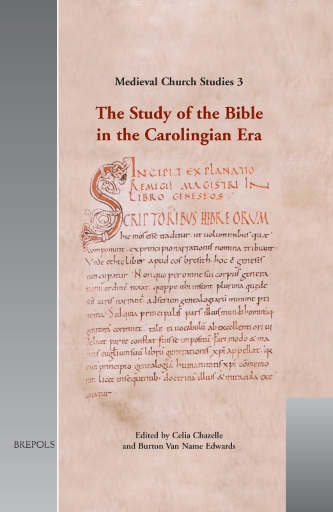
The Study of the Bible in the Carolingian Era
show More to view fulltext, buy and share links for:The Study of the Bible in the Carolingian Era show Less to hide fulltext, buy and share links for: The Study of the Bible in the Carolingian EraFrom the last quarter of the eighth until the beginning of the tenth century, Carolingian monasteries, cathedrals, and courts were the sites of a vigorous scholarship grounded in the study of sacred Scripture. The significance of Bible studies in this epoch is evident from the many extant Carolingian commentaries on virtually every book of the Old and New Testaments. More works of this kind survive from the period, often in multiple copies, than is true for any other genre of literature. Although scholars used to dismiss the Carolingian Bible commentaries as uncreative compilations of material borrowed from the Church Fathers, in recent years appreciation of these tracts’ essential creativity has grown significantly. In addition, there is now increased recognition of the degree to which the ‘exegetical’ culture nurtured within the Carolingian schools fertilized other aspects of contemporary intellectual and cultural endeavour.
The essays in this collection offer a fresh look at the range of biblical studies and their impact on diverse domains of Carolingian culture and learning. The bibliography provides a record of critical editions of Carolingian-era Bible commentaries and secondary scholarship in the field published within the last twelve years.
-
-
-
The Syriac Pseudo-Clementines
An Early Version of the First Christian Novel
show More to view fulltext, buy and share links for:The Syriac Pseudo-Clementines show Less to hide fulltext, buy and share links for: The Syriac Pseudo-ClementinesOf imperial family and eventually Peter’s heir as bishop of Rome, Clement relates here how he happened to become a Christian and how Peter instructed his companions as he refutes the arch-heretic Simon Magus in a series of debates. Clement also recounts the astonishing recovery of his long-lost family. All these events occur in the year of Christ’s death.
The Pseudo-Clementines were popular reading throughout the Middle Ages in a Latin translation and reemerged in early modern times via vernacular versions and especially the Faust-legend. Often considered the first and only ancient Christian novel, the Pseudo-Clementines originated in Syrian Jewish-Christianity in the early third century. Two ancient Syriac translations from the fourth century reflect Greek texts no longer preserved; they contain the essence of Clement’s biographical account and of Peter’s teachings and debates with Simon. Of particular interest is Peter’s detailed review of the origins of Christianity, which apparently seeks to rebut the canonical Acts of the Apostles and lays the blame for the unbelief of the Jews squarely at the feet of Paul.
This volume presents the first complete translation of the Syriac into any modern language and thereby opens the door for a new stage of historical research and literary appreciation.
-
-
-

The Tables of 1322 by John of Lignères
An Edition with Commentary
show More to view fulltext, buy and share links for:The Tables of 1322 by John of Lignères show Less to hide fulltext, buy and share links for: The Tables of 1322 by John of LignèresMedieval astronomers used tables to solve most of the problems they faced. These tables were generally assembled in sets, which constituted genuine tool-boxes aimed at facilitating the task of practitioners of astronomy. In the early fourteenth century, the set of tables compiled by the astronomers at the service of King Alfonso X of Castile and León (d. 1284), reached Paris, where several scholars linked to the university recast them and generated new tables. John of Lignères, one of the earliest Alfonsine astronomers, assembled his own set of astronomical tables, mainly building on the work of previous Muslim and Jewish astronomers in the Iberian Peninsula, especially in Toledo. Two major sets had been compiled in this town: one in Arabic, the Toledan Tables, during the second half of the eleventh century, and the Castilian Alfonsine Tables, under the patronage of King Alfonso.
This monograph provides for the first time an edition of the Tables of 1322 by John of Lignères. It is the earliest major set of astronomical tables to be compiled in Latin astronomy. It was widely distributed and is found in about fifty manuscripts. A great number of the tables were borrowed directly from the work of the Toledan astronomers, while others were adapted to the meridian of Paris, and many were later transferred to the standard version of the Parisian Alfonsine Tables. Therefore, John of Lignères’ set can be considered as an intermediary work between the Toledan Tables and the Parisian Alfonsine Tables.
-
-
-

The Teaching and Impact of the 'Doctrinale' of Thomas Netter of Walden (c. 1374-1430)
show More to view fulltext, buy and share links for:The Teaching and Impact of the 'Doctrinale' of Thomas Netter of Walden (c. 1374-1430) show Less to hide fulltext, buy and share links for: The Teaching and Impact of the 'Doctrinale' of Thomas Netter of Walden (c. 1374-1430)Thomas Netter of Walden (c. 1374-1430) was a Carmelite friar, royal confessor, diplomat, religious superior, and theologian. His only extant theological work, the Doctrinale antiquitatum fidei catholicae ecclesiae contra Wiclevistas et Hussitas, was written with the purpose of combating the errors of Wyclif and his followers. For this reason, Netter’s name and work are familiar mainly to those engaged in the study of Lollardy. Outside this field, Netter is almost unknown today, yet in his lifetime he was a highly regarded churchman who, it was said, could have had the pick of any diocese in England. From his death in 1430 until the middle of the eighteenth century Netter was a much-quoted and copied author whose exposition of Catholic teaching on subjects such as the Church, religious life, and the sacraments proved useful to many Counter-Reformation polemicists and apologists. This book is the first survey of the whole of the Doctrinale and it argues that there is more to Netter than anti-Lollard polemic. The author examines the principal topics in Netter’s work - God, humanity, Christ, the Church, religious life, prayer, the sacraments - and he makes the case that there is a definite plan which links the various parts of the Doctrinale into a whole giving it a certain theological unity.
The Very Rev. Kevin J. Alban, O. Carm. is Bursar General of the Carmelite Order. He read history at Balliol College, Oxford; he also holds degrees in philosophy and theology from the Pontifical Gregorian University and Catholic University Leuven, and a doctorate in church history from the University of London.
-
-
-
The Territories of Philosophy in Modern Historiography
show More to view fulltext, buy and share links for:The Territories of Philosophy in Modern Historiography show Less to hide fulltext, buy and share links for: The Territories of Philosophy in Modern HistoriographyIn the recent past, critical discussions concerning notions such as ‘cultural area’ and ‘area studies’ - as well as their relativization by means of conceptions that avoid splitting clearly identified areas (inter alia, ‘third space’, ‘hybridity’, ‘diaspora’, or ‘cosmopolitanism’) - have drawn attention to the long history of cultural territorialization. This book attempts to open the history of philosophy to reflexive and globalizing tendencies elaborated in the field of ‘world history’. From the seventeenth century onward, in both modern Europe and North America, historical sciences - notably philosophical historiography and cultural history - colonized both the past (or national pasts) and the ‘rest’ of the world. The contributions gathered in this volume address both phenomena to the extent that they have been linked with modern historicization of philosophy, sciences, and culture.
-
-
-
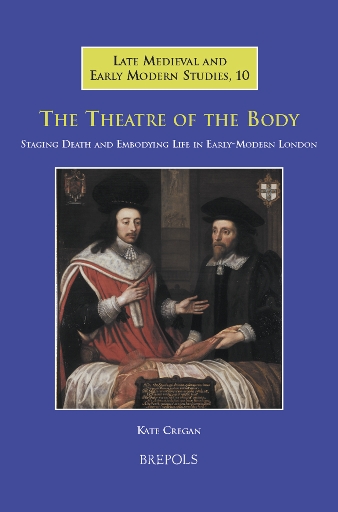
The Theatre of the Body
Staging Death and Embodying Life in Early-Modern London
show More to view fulltext, buy and share links for:The Theatre of the Body show Less to hide fulltext, buy and share links for: The Theatre of the BodyThis study is a threefold investigation of understandings of embodiment - as displayed in the playhouses, courthouses, and anatomy theatres of London between 1540 and 1696. These dates mark the waxing and waning of the Worshipful Company of Barber-Surgeons’ domination of the practice of dissection in London. In 1540 Henry VIII gave them his approval and encouragement but by 1696 Edward Ravenscroft’s The Anatomist: Or the Sham Doctor staged their loss of power. This loss of power, the book contends, is symptomatic of a major shift in the concept of embodiment. The book explains the changing understanding of the human body throughout this period by analysis of the interplay between the texts used in and the material practices of three specific public sites: the public playhouses, the Sessions House, and the Anatomy Theatre of the Worshipful Company of Barber-Surgeons of London. Using an approach which combines the socially textured understandings of fields of practice found in Bourdieu with the interpretations of progression across time found in Elias and Foucault, The Theatre of the Body demonstrates how the three fields of drama, law, and medicine are intimately inter-connected in that process.
In presenting this analysis, the author argues that the quality of embodiment begins to shift during this period from the mid-sixteenth century and throughout the course of the seventeenth century. In this shift one can observe how the earlier, ‘traditional’ interpretation of embodiment is intensified and resolidified into the beginnings of the medicalized ‘modern’ body.
-
-
-
The Theory and Practice of Translation in the Middle Ages
show More to view fulltext, buy and share links for:The Theory and Practice of Translation in the Middle Ages show Less to hide fulltext, buy and share links for: The Theory and Practice of Translation in the Middle Ages[El interés que los autores de estos trabajos demuestran por las complejidades y consecuencias de la traducción en la Edad Media, o de la traducción de textos medievales en el período moderno, ha dado como resultado un volumen diverso y estimulante intelectualmente. Los trabajos del presente volumen, escritos en inglés, francés y español, se centran en el tema de la traducción desde muchas perspectivas, ofreciendo una amplia gama de interpretaciones del concepto de traducción. El volumen contiene trabajos que abarcan en el tiempo desde el período Anglo-Sajón hasta el presente, y en temática desde libros de recetas medievales hasta argumentos a favor de que las mujeres administren la Eucaristía. Las lenguas que se estudian incluyen no sólo lenguas no europeas sino también el Latín y numerosas vernáculas europeas, ya sean como lengua origen o lengua meta. Como cualquier traductor o estudioso de la traducción puede rápidamente constatar, es imposible separar lengua de cultura. Todos los autores de este volumen han analizado en profundidad las complejidades de la traducción como hecho cultural, aún cuando el foco de atención pareciera ser específicamente lingüístico. Son estas complejidades las que dotan al estudio de la teoría y práctica de la traducción en la Edad Media de su perdurable fascinación.
,The interest of the writers of these essays in the intricacies and implications of translation in the Middle Ages, or of the translation of medieval texts in the modern period, has resulted in a diverse and intellectually stimulating volume. The papers in this volume, written in either English, French, or Spanish, approach translation from a wide variety of perspectives and offer a range of interpretations of the concept of translation. The volume contains essays ranging in time from the Anglo Saxon period to the present, and in topic from medieval recipe books to arguments in favour of women administering the sacrament. Languages studied include non-European languages as well as Latin and numerous European vernaculars as both source and target languages. As any translator or student of translation quickly becomes aware, it is impossible to divorce language from culture. All the contributors to this volume struggle with the complexities of translation as a cultural act, even when the focus would seem to be specifically linguistic. It is these complexities which lend the study of the theory and practice of translation in the Middle Ages its enduring fascination.
,Complexité et fascination: deux mots qui reviennent souvent à l’esprit au contact des textes médiévaux, au point qu’ils pourraient servir à caractériser la nature des rapports qui unissent ces textes à leurs traducteurs. Dans leur diversité, les communications entendues à Saint-Jacques-de-Compostelle illustrent, chacune à sa manière, de nombreux aspects de cette complexité, qu’il s’agisse des sujets traités ou des problèmes techniques soulevés. Le rapport au temps qu’impose le texte médiéval se double d’un rapport à la distance, car la différence culturelle se présente au traducteur comme un éloignement, ce qui, dans le travail de rapprochement que constitue alors la traduction, introduit la notion d’interprétation. A son tour cette interprétation, avec ses degrés, est étroitement dépendante des objectifs pédagogiques, culturels, politiques ou religieux que s’est fixés le traducteur, comme cela apparaîtra clairement à la lecture d’un certain nombre de ces communications. Plusieurs études de ce recueil confirment également que la traduction, loin d’être un travail de solitaire, est avant tout un acte social, une activité de mise en relations. C’est cette patiente recherche d’adaptation à des publics différents, en fonction d’époques et de goûts différents, accompagnée de choix tour à tour réjouissants et frustrants, qui constitue le travail de tout traducteur, qu’il appartienne au Moyen Âge ou au monde moderne. C’est aussi cette richesse, venue du passé mais toujours actuelle, et cette recherche sans cesse reprise d’un équilibre toujours instable, qui font que la traduction, dans sa pratique comme dans sa théorie, exerce sur tant d’esprits une réelle fascination.
]
-
-
-
The Translation of the Works of St Birgitta of Sweden into the Medieval European Vernacular
show More to view fulltext, buy and share links for:The Translation of the Works of St Birgitta of Sweden into the Medieval European Vernacular show Less to hide fulltext, buy and share links for: The Translation of the Works of St Birgitta of Sweden into the Medieval European VernacularThis volume of papers, from an international Conference held in Beverley in 1997 on the translation into the medieval European vernaculars of the works of St Birgitta of Sweden, forms volume 7 in the series The Medieval Translator. Previous volumes in the series have been based on papers heard at the Cardiff Conferences on the Theory and Practice of Translation in the Middle Ages (1987- ). While future volumes in the series will continue to provide a record of the Cardiff Conference (the next is planned for Compostella in 2001), the present volume provides a welcome development for the series, and paves the way for scholarly monographs on individual works and writers — including editions of medieval translations — and other publications more narrowly angled at the different questions raised by the study of medieval translation.
-
-
-
The Tree
Symbol, Allegory, and Mnemonic Device in Medieval Art and Thought
show More to view fulltext, buy and share links for:The Tree show Less to hide fulltext, buy and share links for: The TreeWith its vital character - growing, flowering, extending its roots into the ground, and its branches and leaves to the sky - the tree is a polyvalent metaphor, a suggestive symbol, and an allegorical subject. During the Middle Ages, a number of iconographic schemata were based on the image and structure of the tree, including the Tree of Jesse and the Tree of Virtues and Vices. From the late eleventh century onwards such formulae were increasingly used as devices for organizing knowledge and representing theoretical concepts. Despite the abstraction inherent in these schemata, however, the semantic qualities of trees persist in their usage.
The analysis of different manifestations of trees in the Middle Ages is highly instructive for visual, intellectual, and cultural history. Essays in this volume concentrate on the formative period for arboreal imagery in the medieval West, that is, the eleventh to fifteenth centuries. Using a range of methodological strategies and examining material from different media, ranging from illuminated manuscripts to wall painting, stained glass windows, and monumental sculpture, the articles in this volume show how different arboreal structures were conceived, employed, and appropriated by their specific contexts, how they functioned in their original framework, and how they were perceived by their audience.
-
-
-
The Tribunal of Zaragoza and Crypto-Judaism
1484-1515
show More to view fulltext, buy and share links for:The Tribunal of Zaragoza and Crypto-Judaism show Less to hide fulltext, buy and share links for: The Tribunal of Zaragoza and Crypto-JudaismSince the opening of the Inquisition's archives in Spain in the nineteenth century, historians and anthropologists alike have seized upon the institution and its remarkable archival legacy, and have scrutinized it from a multitude of political, socio-economic, and cultural angles. Perhaps one of the most contentious hypotheses to have recently emerged from the field has been Benzion Netanyahu's proposal that the inquisitors fabricated charges of Judaizing against the Spanish New Christians (Christians of Jewish descent). This book questions Netanyahu's hypothesis by turning to the extant trial records from Aragon's tribunal of Zaragoza, and employing them as a case study. This range of documents provides ample evidence of a true survival of Jewish ritual life and culture among the Aragonese conversos who were living and working in Zaragoza at the end of the fifteenth century. When the Inquisition was established in Zaragoza in 1484, members of the converso communities across Aragón, although denominationally Christian, were secretly observing the rituals of Judaism. Whether a continuing observance of the Sabbath, Yom Kippur, or Passover, enduring Jewish dietary practices or a deeply rooted prayer life, the picture of converso daily life which emerges from the trial records is essentially a Jewish one.
-
-
-
The Use of Pragmatic Documents in Medieval Wallachia and Moldavia (Fourteenth to Sixteenth Centuries)
show More to view fulltext, buy and share links for:The Use of Pragmatic Documents in Medieval Wallachia and Moldavia (Fourteenth to Sixteenth Centuries) show Less to hide fulltext, buy and share links for: The Use of Pragmatic Documents in Medieval Wallachia and Moldavia (Fourteenth to Sixteenth Centuries)In the region that was to become Moldavia and Wallachia, there are almost no traces of the use of writing for the millennium after the Roman Empire withdrew from Dacia. Written culture surfaces only by the second half of the fourteenth century, after the foundation of state institutions. This book surveys the earliest extant documents, their issuers, and the motives that triggered the development of documentary culture in Moldavia and Wallachia. By the fifteenth century, Moldavians were already accustomed to the use of charters. In Wallachia, noblemen also appealed to written records, but at that stage mainly in extraordinary circumstances. Women could not inherit land, and noblemen requested princely charters confirming a legal fiction that turned their daughters into sons. After the mid-sixteenth century, Wallachia experiences a steep growth in the number of charters issued. In this period of economic and social upheaval, charters proved an extraordinary means for the protection of landed property. Yet neither principality held secular archives - the storage of documents for later use in private hands suggests an early stage in the development of documentary culture.
By covering the ‘birth’ and spread of pragmatic literacy in medieval Moldavia and Wallachia, this book thus fills an important lacuna in what is known about the development of literacy in the later Middle Ages.
-