Brepols
Brepols is an international academic publisher of works in the humanities, with a particular focus in history, archaeology, history of the arts, language and literature, and critical editions of source works.2901 - 2950 of 3194 results
-
-
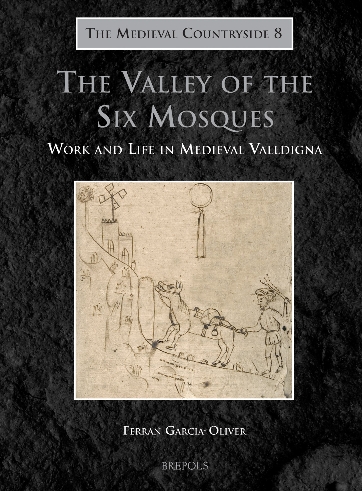
The Valley of the Six Mosques
Work and Life in Medieval Valldigna
show More to view fulltext, buy and share links for:The Valley of the Six Mosques show Less to hide fulltext, buy and share links for: The Valley of the Six MosquesThis is a detailed and fascinating account of a Muslim valley in Christian-ruled Spain at the end of the Middle Ages. Valldigna is located south of the city of Valencia and was part of a region conquered by the king of Aragon-Catalonia in the thirteenth century. Unlike much of Spain where the Muslim inhabitants were expelled or eventually departed after the Christian conquests, the Valencia countryside remained predominantly Muslim in the fourteenth and fifteenth centuries, the period on which this book is focused.
A bestseller in its Catalan edition, The Valley of the Six Mosques recreates in vivid and memorable terms the lives of the villagers, describing both what held them together (families, the agricultural economy) and what divided them (crime, violence). Garcia-Oliver shows the often tense relations between the peasants and their landlord (the monastery of Valldigna), but he is especially concerned to show the autonomy and inner life of the communities - the extent to which women held power within families, what the rhythms of everyday life were like, and how money, land, and labour inflected the struggle for survival. The result is a tour de force that evokes a particular place and time, but one that tells us about the complicated formation of modern European and Mediterranean cultures and societies.
-
-
-
The Viking Age as a Period of Religious Transformation
The Christianization of Norway from AD 560 to 1150/1200
show More to view fulltext, buy and share links for:The Viking Age as a Period of Religious Transformation show Less to hide fulltext, buy and share links for: The Viking Age as a Period of Religious TransformationThis volume is the first to delve into Norway’s history of Christianization since 1973 when Fridtjov Birkeli published his book on the topic. For the first time in over thirty years, Dr Nordeide illuminates the change from non-Christian to Christian rituals by analysing archaeological resources from c. AD 560 to c. 1150/1200. This book both asserts and challenges previous hypotheses of the chronology of Christianization, as well as offering fascinating new versions of the Norway’s eventual conversion. As well as asserting that local history leads Norway along chronological lines typical of its peripheral location, the author argues that in some ways, Norway’s history of Christianity is best located within the history of central European regions even more than has ever been suggested before.
-
-
-
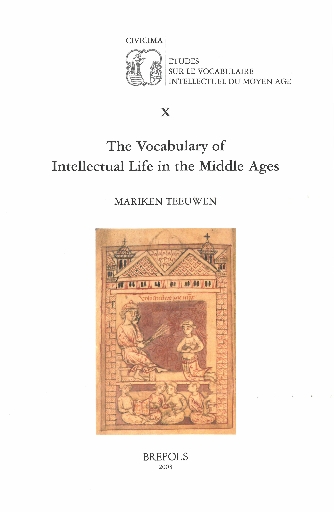
The Vocabulary of Intellectual Life in the Middle Ages
show More to view fulltext, buy and share links for:The Vocabulary of Intellectual Life in the Middle Ages show Less to hide fulltext, buy and share links for: The Vocabulary of Intellectual Life in the Middle AgesThe Latin vocabulary of intellectual life in the Middle Ages has been the focus of the CIVICIMA-series: nine volumes of conference-proceedings, monographs and collective works. The series has proved convincingly that analyses of the verbal expressions of medieval intellectual life and their precise meanings is a worthwhile and rewarding task, which sharpens and deepens our understanding of education and learning in the medieval world.
With this tenth volume the series has been brought to a conclusion. It serves as a handbook, a practical tool for finding information and material about a considerable number of key terms, which have been classified in four categories of “technical vocabulary” - terms that developed specialized meanings in the context of medieval education and learning. The first category consists of the vocabulary of schools and universities (for instance, schola, magister, universitas, etc.); the second the vocabulary of the book and book production (for instance, armarium, pecia, scriptorium, etc.); the third treats the vocabulary of teaching-methods, instruments and products of intellectual life (for instance, concordantia, disputatio, glossa, etc.); the fourth the names of the disciplines, their teachers and students (for instance, artes liberales, canonista, decretista, theologia, etc.).
Terms from these four categories are treated, either individually or in groups coherent with respect to content, in short and uniform articles. Their medieval meanings are described, together with their origins, their classical meanings, their semantic development, and the historical or regional differences in meaning.
-
-
-
The Vocation of Service to God and Neighbour
Essays on the Interests, Involvements and Problems of Religious Communities and their Members in Medieval Society
show More to view fulltext, buy and share links for:The Vocation of Service to God and Neighbour show Less to hide fulltext, buy and share links for: The Vocation of Service to God and NeighbourThe impingement of monastery on marketplace provides the unifying theme for this collection of nine research papers. Separation from the world, for most members of religious orders in the Middle Ages, did not imply isolation from the rest of society but, rather, a new spirituality orientated relationship which took different forms in different times and circumstances. Three of the contributors are concerned with particular aspects of the intellectual activities of the religious orders in both university and cloister. Two others examine the traumatic effects of the enforced return to secular life of thousands of men and women religious in England when monastic life was brought to an abrupt end in 1540. An individual monk's pastoral role among the laity is explored and evaluated in one paper, while another reveals the extent to which a rural English nunnery was both rooted in the local community and dependent on foreign supervision. Problems encountered by the friars are discussed by two other contributors who, on the basis of their recent research, conclude that the hostility between Franciscans and Benedictines has been overstated and that some German Dominicans risked their reputations in their involvement with contemporary heterodox movements among the laity.
-
-
-
The Voice of Silence
Women’s Literacy in a Men’s Church
show More to view fulltext, buy and share links for:The Voice of Silence show Less to hide fulltext, buy and share links for: The Voice of SilenceThis book aims to collect and present the results of research done within the context of the project ‘The voice of silence / La voz del silencio: An interdisciplinary research project about literate women and women authors in the West-European late Middle Ages from a gender perspective (11th to 15th centuries)’. The project was a bilateral research project, with participants of the University of Chile in Santiago on the one hand and the Universities of Gent and Antwerpen on the other. Medieval scholars, literary historians and literary theorists joined forces. The angle from which the material was being studied, however, was always the same: gender being the central issue. The project focused on women as participants in late medieval society and culture of the Rhineland and the Low Countries. Indeed, all the researchers involved acquired their expertise in this field and/or the field of women’s literacy.
Several members of this Flemish-Chilean project have contributed an essay to this book, but supplemented by guest authors. The guests are internationally renowned scholars reflecting an expertise in gender studies or in an aspect not covered by the team members of the project. Their contributions complete the research results of the project.
The story told in this book is focused on literate women and gender. In the course of the twelfth and thirteenth centuries, the voices of women authors, many of them religious and mystics, resounded in a literate society dominated by clerics. Hildegard of Bingen and Hadewijch, two of the most famous representatives of this ‘female voice’ are highlighted in Part I. These women were the forerunners of a new reading culture among (semi-)religious and even lay women in which the use of the vernacular was a decisive factor (Part II). Yet, from the thirteenth century onwards, and with increasing intensity towards the end of the Middle Ages, men once more tried to get a grip on women’s reading and writing. Aspects of these attemps are illustrated in part III.
-
-
-
The Voices of the People in Late Medieval Europe
Communication and Popular Politics
show More to view fulltext, buy and share links for:The Voices of the People in Late Medieval Europe show Less to hide fulltext, buy and share links for: The Voices of the People in Late Medieval EuropeThroughout the medieval period, the popular classes were always reckoned as a potential force in society even though it was usually dangerous for them to articulate divergent social, political and religious opinions. Sources on medieval political and social life seem to show us a world of order, acquiescence and consent. Otherwise, they reveal a picture of bloodshed and violent strife. During times of intense conflict, however, the human tongue was always the most frequently used weapon, much more so than the sword or the dagger. The vox populi, though often difficultly retrievable in the sources, was a ubiquitous one within the realm of later medieval politics. The essays collected in this volume deal with such speech acts of political rebels, with political languages of the ‘popular classes’ in medieval society but also with the subversive twists to speech situations such as preaching, mockery and insults.
Jan Dumolyn is a senior lecturer in medieval history at Ghent University. He publishes on the socio-economic, political and cultural history of the urban world of the medieval Low Countries.
Jelle Haemers lectures medieval history at the University of Leuven. He has published widely on the social history of medieval politics and the urban history of the Low Countries.
Hipólito Rafael Oliva Herrer is professor of Medieval History in the University of Sevilla. He has published both on medieval peasantry and popular political culture, including the making of popular ideologies and forms of popular protest.
Vincent Challet is a senior lecturer at the University of Montpellier-III, and works on the political conscience of communities. He is also the scientific coordinator of the ANR “Thalamus” project which aims to produce a scientific edition of the chronicle and urban statutes of Montpellier in the Middle Ages.
-
-
-
The Ways of Jewish Martyrdom
show More to view fulltext, buy and share links for:The Ways of Jewish Martyrdom show Less to hide fulltext, buy and share links for: The Ways of Jewish MartyrdomJewish martyrdom in the Middle Ages is a most intriguing social, cultural, and religious phenomenon. It was stimulated by ancient Jewish myths, and at the same time it was influenced by the Christian environment in which the Jews lived and operated. The result was a unique and unprecedented event in which the Jews did not simply refuse to convert to Christianity; they were ready to kill themselves and their children so they would not be forced to convert. The Ways of Jewish Martyrdom discusses the phenomenon of Jewish Martyrdom in medieval Germany, northern France, and England from the time of the First Crusade (1096) until the mid-fourteenth century (that is, the time of the ‘Black Death’), in light of modern research and with ample use of hitherto-neglected primary sources. In order to understand the unique phenomenon of Jewish martyrdom, the various Jewish and Christian antecedents that might have influenced the notion of Jewish martyrdom in the Middle Ages need analysis. The texts on which the analysis is based are various, ranging from chronicles through memorial books to liturgical materials and Piyyut. The last part of the book reviews the development of this phenomenon after the fourteenth century and delineates the essential changes and transformations therein at the dawn of the early modern period and beyond.
-
-
-
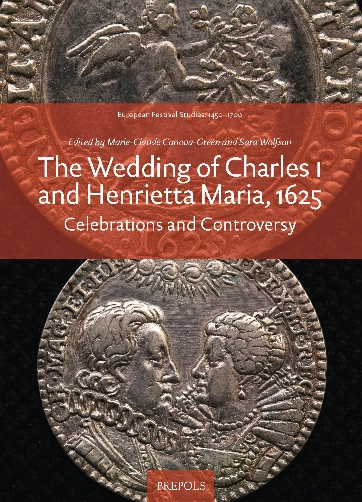
The Wedding of Charles I and Henrietta Maria, 1625
Celebrations and Controversy
show More to view fulltext, buy and share links for:The Wedding of Charles I and Henrietta Maria, 1625 show Less to hide fulltext, buy and share links for: The Wedding of Charles I and Henrietta Maria, 1625On 11 May 1625 Charles I married Henrietta Maria, the youngest sister of Louis XIII of France. The match signalled Britain’s firm alignment with France against Habsburg Spain and promised well for future relations between the two countries. However, the union between a Protestant king and a Catholic princess was controversial from the start and the marriage celebrations were fraught with tensions. They were further disrupted by the sudden death of James I and an outbreak of the plague, which prevented large-scale public celebrations in London. The British weather also played its part. In fact, unlike other state occasions, the celebrations exposed weaknesses in the display of royal grandeur and national superiority. To a large extent they also failed to hide the tensions in the Stuart-Bourbon alliance. Instead they revealed the conflicting expectations of the two countries, each convinced of its own superiority and intent on furthering its own national interests. Less than two years later Britain was effectively in a state of war against France.
In this volume, leading scholars from a variety of disciplines explore for the first time the marriage celebrations of 1625, with a view to uncovering the differences and misunderstandings beneath the outward celebration of union and concord. By taking into account the ceremonial, political, religious and international dimensions of the event, the collection paints a rounded portrait of a union that would become personally successful, but complicated by the various tensions played out in the marriage celebrations and discussed here.
Contributors: R. Malcolm Smuts, Lucinda H. S. Dean, J. R. (Ronnie) Mulryne, Karen Britland, Marie-Claude Canova-Green, Erin Griffey, Margaret Shewring, Sara J. Wolfson, Sara Trevisan, Kevin Laam, Sydney Anglo, Margaret M. McGowan, John Peacock, Gordon Higgott, Ella Hawkins .
-
-
-
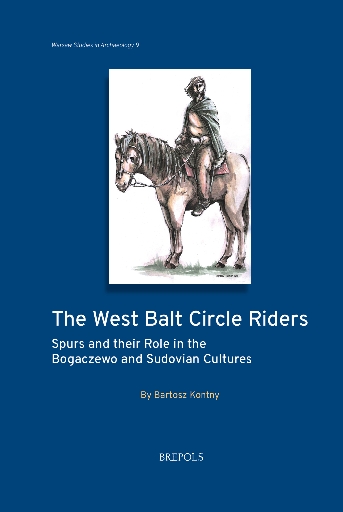
The West Balt Circle Riders
Spurs and their Role in the Bogaczewo and Sudovian Cultures
show More to view fulltext, buy and share links for:The West Balt Circle Riders show Less to hide fulltext, buy and share links for: The West Balt Circle RidersThe spurs of horse riders have long been acknowledged as an important item of grave furniture in the Late Roman and Migration period burials of Poland, a reflection of the high social position held by the deceased. Yet while spurs have been studied at a general level, and typo-chronological studies have been conducted on spurs found in southern and central Poland, no such research has so far been conducted on finds from the West Balt Circle, in north-eastern Poland. This volume is an attempt to rectify the situation by offering a thorough examination of finds attributed to the Bogaczewo and Sudovian Cultures. The author here offers a comprehensive assessment of surviving materials from the period, many of which are scattered through museums across Europe, together with an in-depth analysis of archival sources (included among them the private inventories of archaeologists working in the pre-war period) in order to reconstruct our understanding of the furnishings and data relating to spurs. This detailed research, carefully contextualized against our wider understanding of Barbarian Europe, offers an important new reference for our understanding both of the West Balt Circle and its inter-cultural relations with surrounding regions, as well as of the symbolic meaning of spurs and their significance in burial rites.
-
-
-
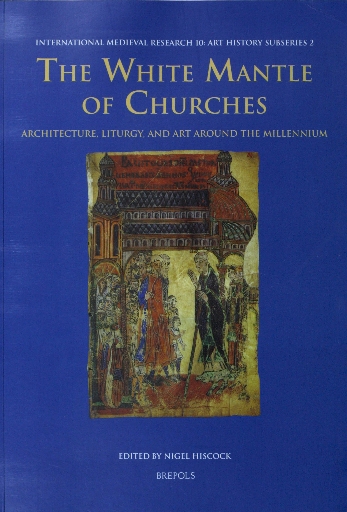
The White Mantle of Churches
show More to view fulltext, buy and share links for:The White Mantle of Churches show Less to hide fulltext, buy and share links for: The White Mantle of ChurchesWhen a monk living at the beginning of the last millennium described Europe ‘cladding itself everywhere in a white mantle of churches’, he precipitated several questions for historians to answer. Was there a surge in church-building at the time? If so, what were the causes of this, and what were the purposes? Does it help to explain our understanding of Romanesque architecture and art? Was there a connection between the ‘white mantle of churches’ and the millennium? Did people believe the world was coming to an end?
The supposition of apocalyptic expectations at the time was until recently dismissed as romantic myth, but the arrival of our new millennium has brought a revival in interest in the dawn of the second millennium, and new evidence of millennial fears. Yet millennial studies and architectural history largely continue to follow separate, parallel paths. This book therefore aims to add the architectural evidence to the millennial debate, and to examine this formative period in relation to the evolution of Romanesque architecture and art. As our own millennium gets under way with continuing hesitancy between European aspiration and national identity, it is also of interest to compare our time with the Europe of a thousand years ago.
-
-
-
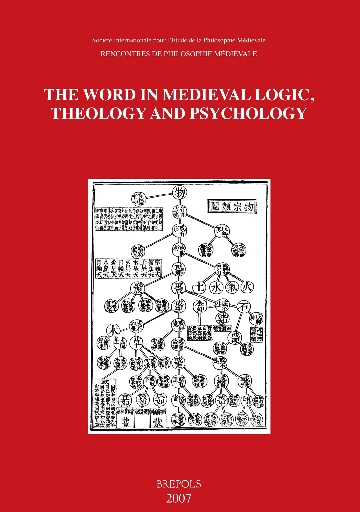
The Word in Medieval Logic, Theology and Psychology
Acts of the XIIIth International Colloquium of the Société Internationale pour l’Étude de la Philosophie Médiévale, Kyoto, 27 September-1 October 2005
show More to view fulltext, buy and share links for:The Word in Medieval Logic, Theology and Psychology show Less to hide fulltext, buy and share links for: The Word in Medieval Logic, Theology and PsychologyThe holding of the 2005 annual colloquium of the SIEPM in Kyoto, Japan, presented the opportunity to explore the very foundations of communication: the word in all its aspects. Whether mental concepts, as Aristotle had claimed, were the same for all people, whether from the East or the West; how these mental concepts were transformed into words; how words affected the concepts (e.g. in regard to the colour spectrum); how angels communicated with one another, and whether any words were appropriate for talking about God; whether words for things arise merely from convention, or have an essential relationship to what they describe; what exactly do the words for individuals, species and genera describe; why words can have powerful effects; what is the relationship between the inner word and the spoken word. The essays in this volume explore these questions largely from the texts of medieval Western philosophers and theologians from Boethius to Meister Eckhart, but some Hebrew and Arabic texts are also taken into consideration. The contexts range from the lively debates in the Parisian schools of the early twelfth century, through the subtle arguments of thirteenth and fourteenth century scholars, to mystical writings of the fifteenth century. Running as a thread through the essays are the translations and commentaries of Boethius on the Vetus logica of Aristotle, and the divine word of the Bible. The combination of contributions of Japanese scholars with both younger and more established scholars from the Western tradition ensures a rich and varied approach to this subject.
-
-
-
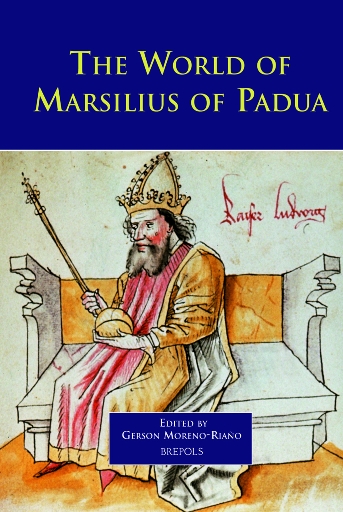
The World of Marsilius of Padua
show More to view fulltext, buy and share links for:The World of Marsilius of Padua show Less to hide fulltext, buy and share links for: The World of Marsilius of PaduaPerhaps no author of the Latin Middle Ages has been the subject of so much controversy and even vitriol than Marsilius of Padua (c. 1275-1342/43). As author of the notorious heretical tract, the Defensor Pacis, Marsilius became an infamous figure throughout the intellectual and political centres of Europe during his own lifetime. His magnum opus, a sharply pointed dissection of the damage done to earthly political life by the incursions of the papacy and a plea for conciliar ecclesiology, was repeatedly condemned during the fourteenth century and in later years. Yet the treatise continued to be disseminated and received translation into several vernacular languages. During the Reformation, Marsilius and his Defensor Pacis enjoyed another round of acclamation and denunciation, depending upon one’s confession. In July 2003, a group comprising many of the world’s most renowned scholars of medieval political thought gathered for a ‘Marsilius of Padua World Congress’. The contents of the present volume represent a compendium of innovative scholarly contributions to the understanding of Marsilius, his life and times, and his lasting impact on Western thought. Included are chapters that reflect a range of recent, ground-breaking research by both senior scholars and the future leaders in the field. After a general survey of the current state of scholarship on Marsilius, the volume divides into three thematically organized sections, covering a variety of historical, textual, methodological, theological, and theoretical questions. In all of the essays, readers will discover the wealth and complexity of Marsilius’s thought as well as the startling range of approaches and methods of interpretation taken in the study of his work. The volume’s selection of authors is international in scope and represents the first interdisciplinary scholarly collaboration in the field of Marsilian studies to occur in the twenty-first century.
-
-
-
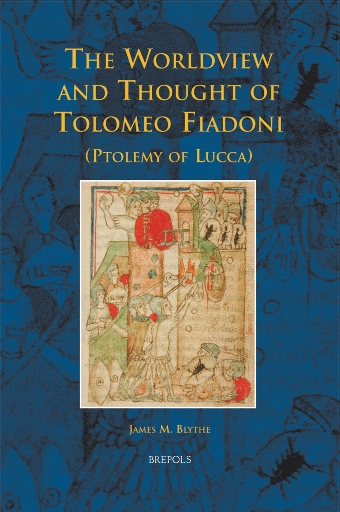
The Worldview and Thought of Tolomeo Fiadoni (Ptolemy of Lucca)
show More to view fulltext, buy and share links for:The Worldview and Thought of Tolomeo Fiadoni (Ptolemy of Lucca) show Less to hide fulltext, buy and share links for: The Worldview and Thought of Tolomeo Fiadoni (Ptolemy of Lucca)Tolomeo Fiadoni (1236-1327) was one of the most important political theorists and historians of the Middle Ages. He was central to developing a theory for the practices of Northern Italian republicanism and was hostile to kingship, portraying it as despotic and inappropriate for virtuous and freedom-loving people. He was the first writer to compare Aristotle’s examples of Greek mixed constitutions - Sparta, Crete, and Carthage - with the Roman Republic, the ancient Hebrew polity, the Church, and medieval communes, yet he remained a staunch defender of the absolute secular and spiritual monarchy of the pope.
Blythe explores various tensions in Tolomeo’s work that are often overlooked in scholarly treatments of him, and which derive from cultural preconceptions and the diverse influences on him: Aristotle, Augustine, apologists for papal power, his life in the Dominican Order, his educational experience with Thomas Aquinas, and his social position as a member of Northern Italy’s ruling class. These factors exerted contradictory influences on Tolomeo and led him to a sometimes unsuccessful intellectual struggle for consistency. This book is the first full-length study of Tolomeo’s thought and it gives full consideration not only to the political writings for which he is most known, but also to his historical and exegetical works. It is the companion to The Life and Works of Tolomeo Fiadoni (Ptolemy of Lucca).
-
-
-
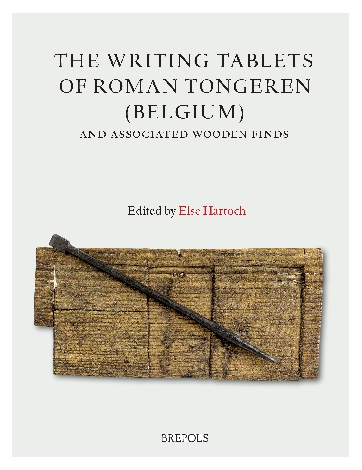
The Writing Tablets of Roman Tongeren (Belgium)
And Associated Wooden Finds
show More to view fulltext, buy and share links for:The Writing Tablets of Roman Tongeren (Belgium) show Less to hide fulltext, buy and share links for: The Writing Tablets of Roman Tongeren (Belgium)Roman wooden writing tablets, known in Latin as tabulae ceratae, have been found by archaeologists in various locations around the former capital of the civitas/municipium Tungrorum or Roman Tongeren (now the Belgian city of Tongeren-Borgloon). These rare and delicate finds are remarkable not only due to the excellent state of their preservation, but also because they are inscribed with the remnants of texts, once etched into an overlying wax layer, that can, to the discerning eye, still be deciphered. The tablets not only provide concrete information about religious, judicial and administrative practices, but they also enhance our understanding of the complex processes of Romanisation and Latinisation in the northwestern civitates and municipia of the Roman Empire.
Unearthed in the first half of the twentieth century, with a second group discovered in 2013, the Roman tablets housed in the Gallo-Roman Museum of Tongeren-Borgloon and in the city’s municipal heritage depository, became the object of an in-depth study by an international team of specialists piloted by the Gallo-Roman Museum. It is the results of this project that are presented here in this volume for the first time. The painstaking process of deciphering and interpreting the script marks and text fragments is explored via analysis of palaeography, philology and onomastics, along with key scientific techniques such as wax analysis, wood species identification, and script visualisation by Multi-Light Reflectance Imaging. Rich detail is also provided about other associated wooden finds that shed light on how and where the tablets were produced.
The result is a beautifully illustrated and insightful volume that introduces the lost world of Roman Tongeren and its writing tablets to professionals and the general public alike.
-
-
-
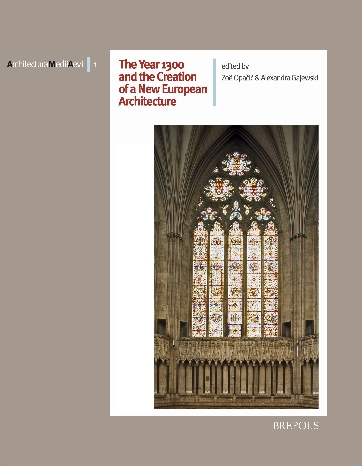
The Year 1300 and the Creation of a new European Architecture
show More to view fulltext, buy and share links for:The Year 1300 and the Creation of a new European Architecture show Less to hide fulltext, buy and share links for: The Year 1300 and the Creation of a new European ArchitectureThe theme of the book is the origin of Late Gothic architecture in Europe around the year 1300. It was then that Gothic ecclesiastical architecture graduated from a largely French into a wholly European phenomenon with new centres of art production (Cologne, Florence, York, Prague, Kraków) and newly-empowered institutions: kings, the higher nobility, towns and friars. Profound changes in spiritual and devotional life had a lasting effect on the relationship between architecture and liturgy. In short, architecture around 1300 became at once more cosmopolitan and more heterogeneous.
The book addresses these radical changes on their own terms-as an international phenomenon. By bringing together specialists in art, architecture and liturgy from many parts of Europe and from the USA it aims to employ their separate expertise, and to integrate each into a broader European perspective.
Dr Zoë Opačić is lecturer in the history and theory of architecture at Birkbeck College, University of London. She specialises in the field of late medieval architecture and art, particularly in Central Europe.
Dr Alexandra Gajewski is a Visiting Assistant Professor at the University of Michigan, Ann Arbor and a Fellow of the Society of Antiquaries, London. She works on Burgundian Gothic architecture and on Cistercian art in medieval France and the Empire.
-
-
-
The Yuezhi. Origin, Migration and the Conquest of Northern Bactria
show More to view fulltext, buy and share links for:The Yuezhi. Origin, Migration and the Conquest of Northern Bactria show Less to hide fulltext, buy and share links for: The Yuezhi. Origin, Migration and the Conquest of Northern BactriaThis book provides a detailed narrative history of the dynasty and confederation of the Yuezhi, whose migration from western China to the northern border of present-day Afghanistan resulted ultimately in the creation of the Kushan Empire. Although the Yuezhi have long been recognised as the probable ancestors of the Kushans, they have generally only been considered as a prelude to the principal subject of Kushan history, rather than as a significant and influential people in their own right. The evidence seemed limited and ambiguous, but is actually surprisingly extensive and detailed and certainly sufficient to compile a comprehensive chronological political history of the Yuezhi during the first millennium BCE. The book analyses textual, numismatic and archaeological evidence in an attempt to explain the probable origin of the Yuezhi, their relationship with several Chinese dynasties, their eventual military defeat and expulsion from the Gansu by the Xiongnu, their migration through the Ili Valley, Ferghana and Sogdia to northern Bactria, and their role in the conquest of the former Greco-Bactria state. All of these events were bound up with broader cultural and political developments in ancient Central Asia and show the extraordinary interconnectedness of the Eurasian historical processes. The domino-effect of the migration of the Yuezhi led to significant changes in the broader Eurasian polity.
-
-
-
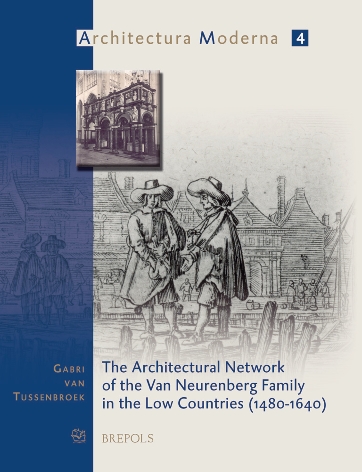
The architectural network of the Van Neurenberg family in the Low Countries (1480-1640)
show More to view fulltext, buy and share links for:The architectural network of the Van Neurenberg family in the Low Countries (1480-1640) show Less to hide fulltext, buy and share links for: The architectural network of the Van Neurenberg family in the Low Countries (1480-1640)Stone traders initially based in the Meuse valley, the Van Neurenberg family expanded northwards to Nijmegen and Dordrecht from 1530 on, becoming an international trading company in the process. Their subsequent activities reflect the huge changes the Dutch building sector underwent during the 17th century. They cooperated with the most famous artists of their time, such as Hendrick de Keyser in Amsterdam, and were involved in the most modern building projects of the Dutch Golden Age, such as Frederik Hendrik of Orange's Honselaarsdijk Palace. This study offers new insights into a relatively neglected aspect of Netherlandish building history in the 16th and 17th century.
-
-
-
The development of leasehold in northwestern Europe, c. 1200 – 1600
show More to view fulltext, buy and share links for:The development of leasehold in northwestern Europe, c. 1200 – 1600 show Less to hide fulltext, buy and share links for: The development of leasehold in northwestern Europe, c. 1200 – 1600In the twelfth to sixteenth centuries, the exploitation of landownership underwent drastic changes in various parts of Northwestern Europe. In these changes, the emergence of the lease plays a pivotal role. At the end of the Middle Ages, in a number of areas within the North Sea area, the greater part of available land was held at lease for relatively short terms. The competitive and contractual nature of such leasing has caused many to associate it with the emergence of capitalism in the countryside, seeing its rise as a key element in the transformation of the rural economy and society in the last millennium. In view of this, it is surprising that the emergence of leasing has received little systematic attention, particularly where its roots, its early development, its exact arrangements and the social and economic context of its emergence are concerned, let alone the regional and chronological differences in these elements. This volume aims to make a first step in exploring these issues.
-
-
-
The legal status of ḏimmī-s in the Islamic West (second/eighth-ninth/fifteenth centuries)
show More to view fulltext, buy and share links for:The legal status of ḏimmī-s in the Islamic West (second/eighth-ninth/fifteenth centuries) show Less to hide fulltext, buy and share links for: The legal status of ḏimmī-s in the Islamic West (second/eighth-ninth/fifteenth centuries)The studies brought together in this volume provide an important contribution to the history of ḏimmī-s in the medieval dār al-islām, and more generally to the legal history of religious minorities in medieval societies. The central question addressed is the legal status accorded to ḏimmī-s (Jews and Christians) in the Muslim law in the medieval Muslim west (the Maghreb and Muslim Spain). The scholars whose work is brought together in these pages have dealt with a rich and complex variety of legal sources. Many of the texts are from the Mālikī legal tradition; they include fiqh, fatwā-s, ḥisba manuals. These texts function as the building blocks of the legal framework in which jurists and rulers of Maghrebi and Peninsular societies worked. The very richness and complexity of these texts, as well as the variety of responses that they solicited, refute the textbook idea of a monolithic ḏimmī system, supposedly based on the Pact of ‘Umar, applied throughout the Muslim world. In fact when one looks closely at the early legal texts or chronicles from both the Mashreq and the Maghreb, there is little evidence for a standard, uniform ḏimmī system, but rather a wide variety of local adaptations. The articles in this volume provide numerous examples of the richness and complexity of interreligious relations in Medieval Islam and the reactions of jurists to those relations.
-
-
-
The management of common land in north west Europe, c. 1500-1850
show More to view fulltext, buy and share links for:The management of common land in north west Europe, c. 1500-1850 show Less to hide fulltext, buy and share links for: The management of common land in north west Europe, c. 1500-1850Until the 19th century very large areas of Western Europe were subject to some degree to common rights, where individual users collectively managed resources such as pasture and wood which were central to the agrarian economy. Much scholarship has focused on the dissolution of these rights and the effects of the enclosure of common land on society and agricultural productivity. In contrast, this volume seeks to assess in a comparative framework the long-term management of the common lands and the relative success of strategies in providing the resources sought by the rural population. Chapters covering northern and southern England, France, the Netherlands, Flanders, Sweden and northern and southern Germany examine the institutional and legal framework of commoning, the resources available and their value, the sustainability of practices, and policies of inclusion and exclusion among the group of commoners. Building on the theoretical insights of recent works on commonly managed resources, this volume, the result of an international collaboration in the CORN network, provides a series of detailed historical studies and is the first major work to address this central aspect of the agrarian economy in a comparative European context.
-
-
-
The ‘Universal Prayer’ in the Ancient Latin Liturgies
Patristic Evidence and Liturgical Texts
show More to view fulltext, buy and share links for:The ‘Universal Prayer’ in the Ancient Latin Liturgies show Less to hide fulltext, buy and share links for: The ‘Universal Prayer’ in the Ancient Latin LiturgiesThe reinstatement of the Universal Prayer into the Roman liturgy following the Second Vatican Council prompted Paul De Clerck to research its origins and development, taking as his primary model the ancient Roman Orationes sollemnes of Good Friday. The result has been a marvellous gift to liturgical scholars, as his meticulous study of texts from both East and West brings to light direct and indirect relationships and provides significant insight into the way in which Western liturgical families developed their intercessory formularies.
The first part of his study is devoted to analysis of allusions to the Oratio fidelium found in the writings of the Fathers and ecclesiastical writers of the first five centuries, with the aim of discovering the prehistory of the ‘prayer of the faithful’ particularly with regard to its content, form and placement within the liturgy. The second part of the study analyses and compares the oldest preserved texts that shed light on the prayer. Chief among these are the Deprecatio Gelasii in its various iterations, the Orationes sollemnes of Rome (and parallels in other Churches) and the Gallic and Hispanic Orationes paschales, together with relevant texts from Celtic and Gallican sources.
The translation of the French text will provide English-speaking scholars across the globe access to this excellent work and encourage similar in-depth research into liturgical sources that will continue to enhance the celebration of the Church’s liturgy and the full and conscious participation of the entire faithful.
-
-
-

Theatres of Belief: Music and Conversion in the Early Modern City
show More to view fulltext, buy and share links for:Theatres of Belief: Music and Conversion in the Early Modern City show Less to hide fulltext, buy and share links for: Theatres of Belief: Music and Conversion in the Early Modern CityThese eleven essays, all centrally concerned with the intimate relationship between sound, religion, and society in the early modern world, present a sequence of test cases located in a wide variety of urban environments in Europe and the Americas. Written by an international cast of acclaimed historians and musicologists, they explore in depth the interrelated notions of conversion and confessionalisation in the shared belief that the early modern city was neither socially static nor religiously uniform. With its examples drawn from the Holy Roman Empire and the Southern Netherlands, the pluri-religious Mediterranean, and the colonial Americas both North and South, this book takes discussion of the urban soundscape, so often discussed in purely traditional terms of European institutional histories, to a new level of engagement with the concept of a totally immersive acoustic environment as conceptualised by R. Murray Schafer. From the Protestants of Douai, a bastion of the Catholic Reformation, to the bi-confessional city of Augsburg and seventeenth-century Farmington in Connecticut, where the indigenous Indian population fashioned a separate Christian entity, the intertwined religious, musical, and emotional lives of specifically grounded communities of early modern men and women are here vividly brought to life.
-
-
-
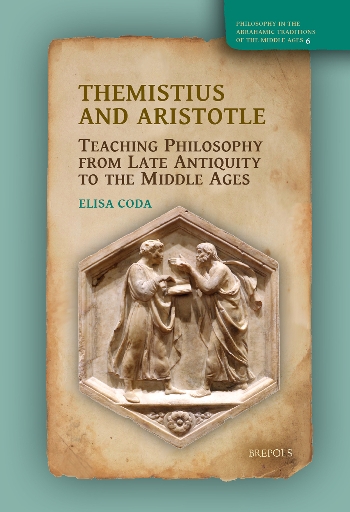
Themistius and Aristotle
Teaching Philosophy from Late Antiquity to the Middle Ages
show More to view fulltext, buy and share links for:Themistius and Aristotle show Less to hide fulltext, buy and share links for: Themistius and AristotleThis is the first book length examining closely Themistius’ philosophical thought and his understanding of Aristotelian philosophy. Themistius, well known as an eloquent orator and political personality of Constantinople during the fourth century ad, is an influential commentator on works of Aristotle. By assessing both of these aspects of Themistius’ intellectual accomplishments, the present work explores and contextualizes his thought in both his paraphrases of the works of Aristotle and in his orations. Themistius’ interpretation of Aristotelian thought, deeply influential in both the Arab and Latin worlds, and his strategy for teaching Aristotle, even outside the professional schools of philosophy, are major foci of this study.
In particular, this work explicates Themistius’ understanding of the nature and causality of the First Principle, of the cosmic order, and of the human soul and intellect. It argues that Themistius’ approach reflects not only the systematization imparted by Alexander of Aphrodisias to the doctrines of Aristotle, but also the increasing, though oftentimes silent, influence of Plotinus. This is evident in the consideration of the three philosophical issues of God, cosmos, and soul analysed in Themistius, which reveal the preponderance of Plotinus’ philosophy reflected in the Themistian orations. Concomitantly, it explores how Themistius’ teachings proved decisive in the medieval understanding of Aristotle both among Arabic and Hebrew readers, as well as in the universities of Latin Europe. As such, this study challenges our understanding of philosophy in fourth-century Constantinople.
-
-
-
Theologica Minora
The Minor Genres of Byzantine Theological Literature
show More to view fulltext, buy and share links for:Theologica Minora show Less to hide fulltext, buy and share links for: Theologica MinoraThe title of this volume, “Theologica Minora”, may wrongly suggest that the essays contained herein purport an antiquarian interest in some minor theological quibbles within the vast ocean that is Byzantine theological literature. On the contrary, this volume illuminates texts and theological genres which have so far remained unexplored or underinvestigated by the vast majority of scholars. Whilst unlocking the as yet unknown troves of florilegia, religious poetry, and monastic kephalaia, this volume investigates the cultural background of these different endeavors and provides an image of Byzantine theological literature which repudiates the rigid narratives proposed to date.
Antonio Rigo is Professor of Byzantine Philology and Christianity at the University of Venice Ca’ Foscari. His research focuses on religious life in Byzantium, with special emphasis on ascetical and mystical literature, heresiology, and theology during the Paleologan period.
-
-
-
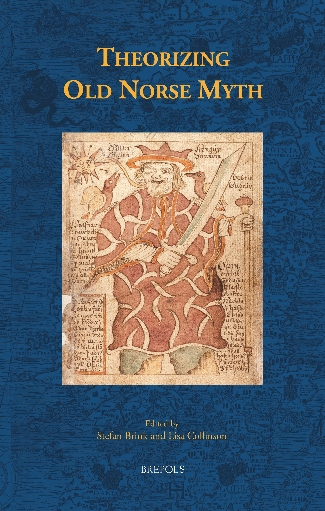
Theorizing Old Norse Myth
show More to view fulltext, buy and share links for:Theorizing Old Norse Myth show Less to hide fulltext, buy and share links for: Theorizing Old Norse MythThis collection explores the theoretical and methodological foundations through which we understand Old Norse myths and the mythological world, and the medieval sources in which we find expressions of these. Some contributions take a broad, comparative perspective; some address specific details of Old Norse myths and mythology; and some devote their attention to questions concerning either individual gods and deities, or more topographical and spatial matters (such as conceptions of pagan cult sites). The elements discussed provide an introductory and general overview of scholarly enquiry into myth and ritual, as well as an attempt to define myth and theory for Old Norse scholarship. The articles also offer a rehabilitation of the comparative method alongside a discussion of the concept of ‘cultural memory’ and of the cognitive functions that myths may have performed in early Scandinavian society. Particular subjects of interest include analyses of the enigmatic god Heimdallr, as well as the more well-known Óðinn, the deities, the female ásynjur, and the ‘elves’ or álfar. Text-based discussions are set alongside recent archaeological discoveries of cult buildings and cult sites in Scandinavia, together with a discussion of the most enigmatic site of all: Uppsala in Sweden. The key themes discussed throughout this volume are brought together in the concluding chapter, in a comprehensive summary that sheds new light on current scholarly perspectives.
-
-
-
Thinking Through Excerpts: Studies on Stobaeus
show More to view fulltext, buy and share links for:Thinking Through Excerpts: Studies on Stobaeus show Less to hide fulltext, buy and share links for: Thinking Through Excerpts: Studies on StobaeusThis collection of essays represents the most comprehensive study to date on the anthology compiled by Stobaeus (5th c. AD). It covers topics such as excerpting as a cultural practice, issues pertaining to the ms. tradition, Stobaeus' use of his sources, his evidence on specific figures (Heraclitus, Theognis, Plato, the Cynics, Aristo of Chios, and Eudorus of Alexandria), as well as thematic treatments. The contributors to the volume are, in the order of the Table of Contents: David Konstan, Denis Michael Searby, Michele Curnis, Anna Lucia Di Lello-Finuoli, Jean-Baptiste Gourinat, Elena Gritti, Serge Mouraviev, Luigi Ferreri, Graziano Ranocchia, Pedro Pablo Fuentes González, Mauro Bonazzi, Sophie Van der Meeren, Sophie Aubert, Ilaria Ramelli, Emmanuele Vimercati, and Julie Giovacchini.
-
-
-
Thomas Becket in the Medieval Latin Preaching Tradition
An Inventory of Sermons about St. Thomas Becket, c. 1170-1400
-
-
-
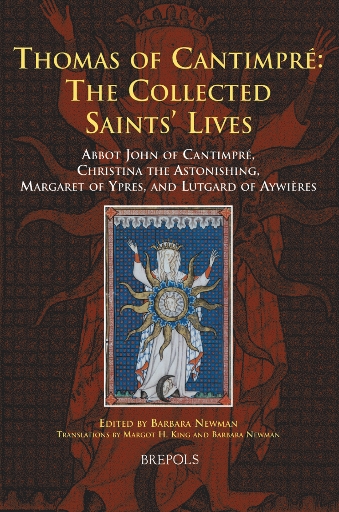
Thomas of Cantimpré: The Collected Saints' Lives
Abbot John of Cantimpré, Christina the Astonishing, Margaret of Ypres, and Lutgard of Aywières
show More to view fulltext, buy and share links for:Thomas of Cantimpré: The Collected Saints' Lives show Less to hide fulltext, buy and share links for: Thomas of Cantimpré: The Collected Saints' LivesThe Dominican Thomas of Cantimpré (c. 1200-c. 1270) was a key figure in the 'evangelical awakening' of the thirteenth century. A prolific hagiographer, he lauded such diverse subjects as the abbot and apostolic preacher John of Cantimpré; the teenaged ascetic Margaret of Ypres, an urban recluse who died at twenty; Lutgard of Aywières, a Cistercian nun and mystic; and the theatrical, mentally troubled Christina 'the Astonishing' of Sint-Truiden. Thomas had few peers in portraying the ritual theatre of penance. He gives us such memorable scenes as a naked moneylender led out of a pit by a rope, a formerly rapacious prince kissing his peasants’ feet as he restores their stolen goods, St Christina leaping into fires and boiling cauldrons to save souls in purgatory, and the deceased Pope Innocent III in agony, begging St Lutgard for her prayers. In this volume readers will find all four lively and eventful lives between the same covers for the first time. The Life of Abbot John of Cantimpré has been newly translated by Barbara Newman, who has also supplied a new introduction. The other three Lives are revised reprints from Margot H. King's Peregrina Translations Series.
-
-
-

Three Pilgrimages to the Holy Land
show More to view fulltext, buy and share links for:Three Pilgrimages to the Holy Land show Less to hide fulltext, buy and share links for: Three Pilgrimages to the Holy LandThis edition presents English translations of the accounts of three important twelfth-century travellers to the Holy Land, the Anglo-Saxon Saewulf and the Germans John of Würzburg and Theoderic, based on the edition of the Latin texts. Saewulf travelled to the Holy Land soon after its capture by the First Crusade in 1099. His travelogue, framed by accounts of his outward sea journeys from southern Italy to Jaffa and back to Constantinople, describes the buildings and holy sites of Jerusalem and its surrounding countryside as they appeared in the early years of the Frankish kingdom, before the major building works that characterized the short century of Christian rule over the city were fully under way. In contrast, the two German descriptions give more detailed accounts of the transformation that the city and surrounding landscape had undergone and of the new churches and monasteries and their artistic programmes that had been created by the 1160s and 1170s. The translated texts are preceded by an introduction placing the texts in their historical context and are accompanied by brief explanatory notes with bibliographical indications for further information.
The source texts of this volume appeared in Corpus Christianorum. Continuatio Mediaeualis as Peregrinationes tres (CC CM, 139), edited by R.B.C. Huygens. References to the corresponding pages of the Corpus Christianorum edition are provided in the margins of this translation.
-
-
-
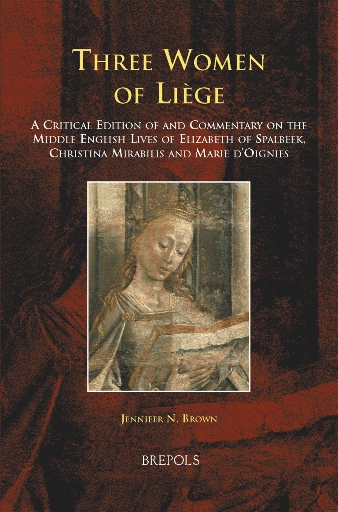
Three Women of Liège
A Critical Edition of and Commentary on the Middle English Lives of Elizabeth of Spalbeek, Christina Mirabilis, and Marie d'Oignies
show More to view fulltext, buy and share links for:Three Women of Liège show Less to hide fulltext, buy and share links for: Three Women of LiègeElizabeth of Spalbeek, Christina Mirabilis, and Marie d'Oignies were three of the famous late twelfth-/early thirteenth-century 'holy women' from the region of Brabant and Liège: their life stories (written in Latin by Philip of Clairvaux, Thomas of Cantimpré, and Jacques of Vitry) were read throughout later medieval Europe, and Margery Kempe modelled her Book, and her life, upon Marie’s. The Latin lives of these beguine saints were not well known in England, but they were translated into English in the fifteenth century, and survive in a single manuscript together in Oxford, Bodleian Library, Douce 114.
Three Women of Liège is the first critical edition of these Lives, which represent some of the only evidence of English interest in continental female mysticism. This edition includes an introduction that discusses the role of the manuscript in England and three essays that analyze the roles of these beguines in their Low Countries home of Liège along with the English reception of their lives. The edition itself is also extensively annotated and glossed, making it accessible to any scholar of English medieval literature.
-
-
-
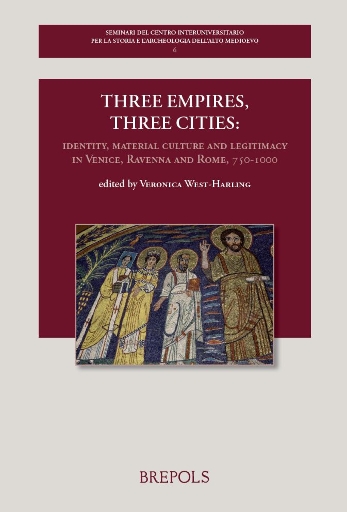
Three empires, three cities
Identity, material culture and legitimacy in Venice, Ravenna and Rome, 750-1000
show More to view fulltext, buy and share links for:Three empires, three cities show Less to hide fulltext, buy and share links for: Three empires, three citiesThis book focuses on three Italian cities in the early middle ages, Rome, Ravenna and Venice, and looks at them in a new light. The unifying element linking them was their common Byzantine past, since they remained in the sphere of imperial power after the creation of the Lombard kingdom in the late 6th century, up to 750. What happened to them when their links with the Byzantine Empire were almost entirely severed in the 8th century? Did they remain socially and culturally heirs of Byzantium in the 9th and 10th centuries in their political structures, social organisation, material culture, ideological frame of reference and representation of identity? Or did they become part of the next imperial powers of Italy, the Carolingian and the Ottonian empires? A workshop in Oxford in 2014 brought together an international group of specialists to discuss these questions in a comparative context; the excitement of their debates is captured in the discussion sections linking the papers in this volume. Early medieval Italy can be seen in a new way as a result.
-
-
-

Through Words, Not Wounds
History and Theology in the Chronicle of Henry of Livonia
show More to view fulltext, buy and share links for:Through Words, Not Wounds show Less to hide fulltext, buy and share links for: Through Words, Not WoundsThe chronicle of Henry of Livonia has long been recognized as the single most important source on the early history of Livonia and Estonia in the late twelfth and early thirteenth centuries.
The chronicler describes in great detail how the people of the region were subjected to intense campaigns of crusading and mission from the 1180s until the 1220s, primarily at the hands of ecclesiastical and secular powers of Northern Germany (Saxony), Denmark and Sweden. The chronicler himself, a German cleric named Henry (Henricus), was not only active in recording the events that happened around him. He also took a very active role as a missionary and interpreter among the indigenous population as well as joining the armies of crusaders on campaign, making this chronicle both a first-hand account and a very intriguing narrative. Papal missionary politics and theological ideas are intermingled in the chronicle with detailed descriptions of military campaigns, raids and sieges, making the entire chronicle a fascinating read.
The aim of this book is to clarify the ways in which Henry construes the historical events that he describes, portraying them as the continuation of a form of sacred history that was initiated by God in biblical times and continued by clerics and crusaders among Henry’s own peers.
-
-
-
Through the Bone and Marrow
Re-examining Theological Encounters with Dance in Medieval Europe
show More to view fulltext, buy and share links for:Through the Bone and Marrow show Less to hide fulltext, buy and share links for: Through the Bone and MarrowThis book is a conversation starter. The author is re-imagining the theological landscape of historical practices of dance in order to open up a space where further explorations can be made. This is done in a two step manner. First, the book uncovers the restrictions of earlier research on the topic of dance in and around churches. In the second step, Hellsten suggests a practice for how historical sources can be imagined in a new frame. Opening up a new field of previously neglected and much needed historical studies on Dance in the Christian churches of the Latin West this study aims at questioning old paradigms and opening new vistas rather than reinterpreting concrete liturgical manuscripts or scrutinizing all the details of the historical sources presented.
The Donner Institute for Research in Religion and Culture in Turku, Finland has awarded its Nordic Research Prize 2021 to Dr. theol. Laura Hellsten for her creative research widening our understanding of sacral dance in general and of the role of dance in the Christian church in particular.
-
-
-
Théodulf d’Orléans (vers 760-821)
Histoire et mémoire d’un évêque carolingien
show More to view fulltext, buy and share links for:Théodulf d’Orléans (vers 760-821) show Less to hide fulltext, buy and share links for: Théodulf d’Orléans (vers 760-821)Parmi les lettrés entrés au service de Charlemagne à la fin du VIIIe siècle, Théodulf est une figure à la fois représentative et singulière. Par ses productions et ses fonctions de missus, d’évêque, d’abbé, il contribue à l’élaboration et à la mise en œuvre des réformes et fait partie des proches du souverain. Sa déposition en 818 jette cependant une ombre sur sa carrière et sur ce qu’il est possible d’en reconstituer. À partir de l’étude de son œuvre et des variations de son image dans les sources du premier Moyen Âge, y compris manuscrites, cet ouvrage examine les différentes facettes de son action et de son parcours, comme lettré et comme prélat, et met en lumière le jeu d’échelles qui caractérise les réformes carolingiennes. Grâce à l’analyse de son environnement relationnel, la participation de Théodulf à la révolte de Bernard d’Italie et sa disgrâce font l’objet de nouvelles hypothèses.
-
-
-
Théorie et pratiques des élites au Haut Moyen Âge. Conception, perception et réalisation sociale
Theorie und Praxis frühmittelalterlicher Eliten. Konzepte, Wahrnehmung und soziale Umsetzung
show More to view fulltext, buy and share links for:Théorie et pratiques des élites au Haut Moyen Âge. Conception, perception et réalisation sociale show Less to hide fulltext, buy and share links for: Théorie et pratiques des élites au Haut Moyen Âge. Conception, perception et réalisation socialeLe programme de recherche international sur «Les élites dans le haut Moyen Âge occidental. Formation, identité, reproduction» (2002-2009) s’est donné pour objectif d’examiner dans une perspective comparative, à l’échelle européenne, les catégories sociales dominantes aussi bien laïques qu’ecclésiastiques, celles de la cour autant que celles des régions. Le sixième et dernier volume issu de ce projet fournit d’abord un bilan et une synthèse des travaux. Il associe par ailleurs à ces premiers acquis une analyse des concepts, de la perception et de la façon dont les élites se concevaient elles-mêmes. Il tente enfin de vérifier, sur la base de dossiers régionaux ou d’enquêtes sur des catégories particulières, dans quelle mesure la perception médiévale était en conformité avec les pratiques.L’étude du vocabulaire et des concepts relatifs aux élites du haut Moyen Âge s’est orientée autour du questionnement suivant: qu’est-ce qui, du point de vue moderne, relève des élites? Qui, du point de vue des contemporains, appartenait à ce(s) groupe(s) dominant(s)? Selon quels critères lexicaux et conceptuels définissait-on les élites? Par quels moyens se démarquaient-elles dans la perspective des contemporains et à leurs propres yeux? Établissait-on une hiérarchie entre les critères de distinction? Selon quels modèles théoriques étaient-ils distingués (et quel contenu donnait-on à ces modèles)? Dans quelle mesure les concepts actuels d’élites sont-ils applicables au haut Moyen Âge? Au registre des pratiques sociales, plusieurs études de cas permettent de saisir ce qui démarquait concrètement les élites par rapport au reste de la population, tout en se demandant dans quelle mesure cette réalité sociale correspondait aux représentations mentales des élites et si les concepts s’adaptaient à une réalité changeante, ou l’inverse. Plusieurs types d’élites sont envisagés, avec leurs particularités, leurs hiérarchies internes et leurs évolutions, enfin l’imbrication des groupes dominants entre eux.
-
-
-
Théories et pratiques de la prière à la fin de l’antiquité
show More to view fulltext, buy and share links for:Théories et pratiques de la prière à la fin de l’antiquité show Less to hide fulltext, buy and share links for: Théories et pratiques de la prière à la fin de l’antiquitéLa prière est, à la fin de l’Antiquité, non seulement un élément essentiel de la pratique religieuse, publique et privée, mais aussi un objet éminent de réflexion philosophique et théologique, aussi bien au sein de la religion gréco-romaine que dans le christianisme. Les différents modes de rapport entre les théories et les pratiques de la prière forment ainsi la matière de ce livre, qui réunit quatorze contributions (suivies d'un épilogue) consacrées aux diverses facettes d’une interaction multiforme qui rend nécessaire la collaboration des spécialistes de différentes disciplines : histoire religieuse des mondes grec et romain, philosophie religieuse tardo-antique et littérature patristique. Cette collaboration se reflète dans un ensemble de questions qui traversent les contributions réunies dans ce volume : le lexique de la prière ; la tension entre ses dimensions personnelle et publique ; le contexte rituel des prières ; la géographie de la prière, donnant lieu à une tension entre les prières liées à un espace précis et les prières à caractère universel ; le lien entre prière et affectivité, celle des dieux, mais aussi celle des orants ; la polarité entre la prière vocale et la prière silencieuse, à la fois dans les milieux chrétiens et païens.
-
-
-
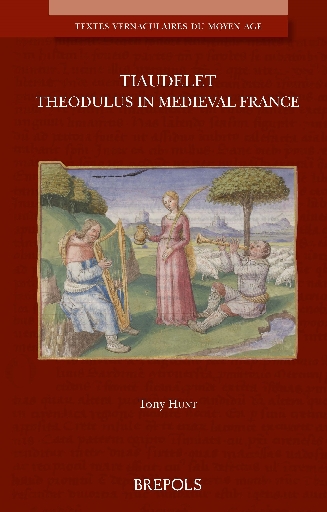
Tiaudelet
Theodulus in Medieval France
show More to view fulltext, buy and share links for:Tiaudelet show Less to hide fulltext, buy and share links for: TiaudeletThe Medieval French text (9400 lines) known as Tiaudelet is here edited for the first time. It is a lively debate poem which translates Theodulus’s Ecloga and adds a lengthy commentary to each stanza. It was last investigated in 1915 when A. Parducci published five modest extracts. It is found in a manuscript which represents a sort of vernacular ‘Liber Catonianus’, offering classical texts which formed the basis of the educational curriculum in the arts in French translation. It debates the value of two traditions: the classical and biblical, with the educational aim of increasing knowledge of classical and Scriptural narratives. As an appendix to the edition is provided the text of the only other French translation of Theodulus, by Jean Le Fèvre, as represented by the unique copy in the National Library of Scotland, of the early print by Jan Brulelou of Bruges.
-
-
-
Time and Eternity
The Medieval Discourse
show More to view fulltext, buy and share links for:Time and Eternity show Less to hide fulltext, buy and share links for: Time and EternityThis volume is composed of selected papers from the main strand ‘Time and Eternity’ at the seventh International Medieval Congress held in July 2000. It attests to the fact that the medieval experience of time and eternity was rich and complex, and that its investigation is open to various approaches and methods. Time and (the possibility or impossibility of) its beginning and its end were frontiers to be explored and to be understood.
To make the reader more familiar with the field of study, the volume begins with Wesley Stevens’s plenary address ‘A Present Sense of Things Past: Quid est enim tempus?’, a stimulating introduction not only with regard to some of the basic problems in conceptualizing the nature of time but also to the dating of historical events and the use of calendars for that purpose.
Following Stevens’s essay, the volume is organised into seven broader themes covering a variety of questions and trying to offer new insights into the medieval perception and constructions of time. They deal with the computation of time and the use of calendars; Jewish concepts of time and redemption; Christian philosophies of eternity and time; monastic and clerical conceptions; literary representations; time and art; and apocalyptic expectations. The volume’s selection of authors is international in scope and represents some of the leading current scholarship in the field. It proves that we still ‘thirst to know the power and the nature of time’ (St Augustine).
-
-
-
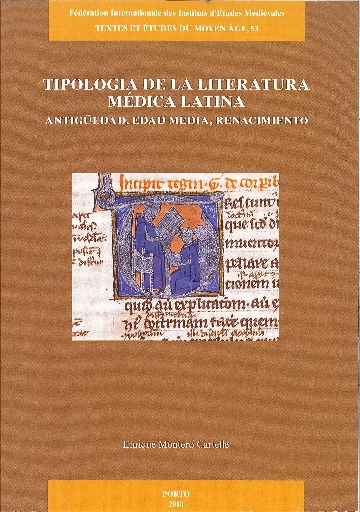
Tipologia de la literatura médica latina. Antigüedad, edad media, renacimiento
show More to view fulltext, buy and share links for:Tipologia de la literatura médica latina. Antigüedad, edad media, renacimiento show Less to hide fulltext, buy and share links for: Tipologia de la literatura médica latina. Antigüedad, edad media, renacimientoEl interés por las formas literarias de la literatura médica ha ido creciendo progresivamente ya que atiende cada vez más a las formas de la literatura médica características de las distintas épocas, compartidas en su mayoría con otras ramas de la ciencia como la filosofía, la teología o el derecho. Pero faltaba una visión de conjunto de estos textos médicos desde el punto de vista literario. La tipología de esos tratados es un indicio revelador de su origen, finalidad, cultura del autor y demanda social. Este estudio pretende mostrar un panorama general de las formas literarias de los estudios médicos y sus medios de expresión. El estudio del comportamiento de los escritores médicos ante el hecho de escribir proporciona una dimensión, como complemento, de gran relieve para los estudios estrictamente doctrinales. El escritor es un hombre de su tiempo y, como tal, refleja sus usos y modos.
Enraízados en la tradición de la Antigüedad y siguiendo una distribución armónica de la medicina diaetetica, pharmaceutica y chirurgia, los géneros literarios de la literatura médica medieval, por influjo de la filosofía y teología escolásticas, conocieron una riqueza asombrosa de formas literarias, como summae, specula, compendia, practica, concordantiae, synonyma, disputationes, problemata, accessus, tacuina, secreta, consilia, etc., que afectaron también a la tipología de su lengua. El Renacimiento fue otra época de renovación en la que continúan algunos géneros de corte tradicional, otros decaen o se transforman, mientras que toman cuerpo otras actividades más filológicas a veces que doctrinales, como las ediciones o los comentarios críticos. Cada época revela los problemas con los que se enfrentaron los escritores médicos al intentar forjar unas formas literarias y una terminología basadas en unos conocimientos médicos -en muchos casos expresados originariamente en otra lengua- y darles la forma literaria que consideraban más apropiada para publicar sus logros.
Un estudio como éste puede ser útil para todos aquellos que desde el campo de la Filología, la Historia en general o de la Historia de la Ciencia y de la Medicina o de la cultura en particular, deseen adentrarse en la literatura médica.
-
-
-
To See into the Life of Things: The Contemplation of Nature in Maximus the Confessor and his Predecessors
show More to view fulltext, buy and share links for:To See into the Life of Things: The Contemplation of Nature in Maximus the Confessor and his Predecessors show Less to hide fulltext, buy and share links for: To See into the Life of Things: The Contemplation of Nature in Maximus the Confessor and his PredecessorsMaximus the Confessor (580-662) is one of the great minds of the Christian tradition and his Ambigua to John are a collection of texts uniquely expressive of the speculative contours of his thought. They have not, however, received a synthetic treatment until now. This work provides such a synthetic treatment and argues that Maximus’ central concern in the Ambigua to John is to articulate the nature of philosophy and, more precisely, the scope of the contemplation of nature (θεωρία φυσική) within the philosophical life, where "philosophy," the love of wisdom, is nothing less than the love of the Divine. Part I of this study provides a thorough background in Greek philosophical and patristic philosophies of nature, showing how Maximus’ predecessors understood knowledge of the world in relation to philosophical life, discourse, and praxis. Part II studies the contemplation of nature in the Ambigua and analyzes Maximus’ account of human affectivity in the world, his account of the coherence of philosophical life (praxis and contemplation) as a response to this affectivity, his understanding of the relation between God and the world, and his reconciliation of these various aspects of philosophy in the Christian economy of salvation, which he understands as the renewal of nature and its contemplation.
-
-
-
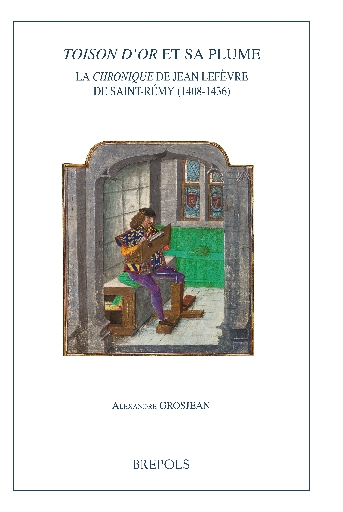
Toison d'or et sa plume, la "chronique" de Jean Lefèvre de Saint-Rémy (1408-1436)
show More to view fulltext, buy and share links for:Toison d'or et sa plume, la "chronique" de Jean Lefèvre de Saint-Rémy (1408-1436) show Less to hide fulltext, buy and share links for: Toison d'or et sa plume, la "chronique" de Jean Lefèvre de Saint-Rémy (1408-1436)Jean Lefèvre de Saint-Rémy (1396-1468) fut poursuivant d’armes dans les rangs anglais à la bataille d’Azincourt, héraut Charolais puis roi d’armes de l’ordre de la Toison d’or fondé par Philippe le Bon en 1430. L’œuvre historiographique qu’il rédige à la fin de sa vie s’inspire de la prestigieuse chronique d’Enguerrand de Monstrelet et mêle souvenirs personnels et interpolations de sources diverses, brossant un tableau voulu idéal de la cour de Bourgogne entre 1408 et 1436 et particulièrement du principat de Philippe le Bon, maître auquel ce serviteur doit tout. Les particularités de son récit posent le problème du héraut d’armes écrivant l’histoire, phénomène exceptionnel qui fut favorisé par l’émulation existante à la cour des ducs de Bourgogne, reconnue comme l’un des foyers les plus prolifiques en la matière au XV e siècle.
-
-
-
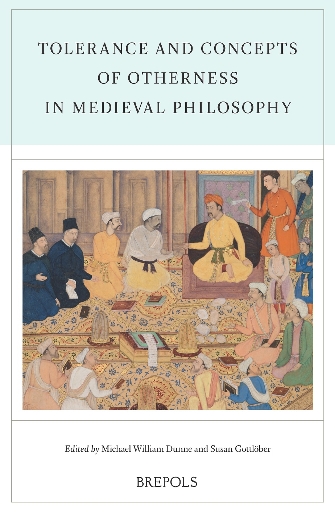
Tolerance and Concepts of Otherness in Medieval Philosophy
Acts of the XXI Annual Colloquium of the Société Internationale pour l’Étude de la Philosophie Médiévale, Maynooth, 9–12 September 2015
show More to view fulltext, buy and share links for:Tolerance and Concepts of Otherness in Medieval Philosophy show Less to hide fulltext, buy and share links for: Tolerance and Concepts of Otherness in Medieval PhilosophyThe proceedings of the S.I.E.P.M. Colloquium at Maynooth published in this volume shed new light on the development of the perception of the other within the different philosophical, religious, and cultural traditions in the late Middle Ages as well as the early modern era in both Christian and Islamic thought. The contributions consider not only the theological background but also the philosophical presuppositions of the concepts which were used to develop various apologetic writings and theological treatises that dealt with questions of cultural and religious difference. The rich and diverse medieval and early modern tradition of engaging with the other and the arguments for or against toleration on topics that are equally diverse are discussed with reference to both the Western and Eastern Christian tradition, to the contributions of Islamic Thinkers on the topic, and to the flourishing tradition of a constructed interreligious dialogue such as that between Christians and Jews. Finally, this book includes a number of important investigations exploring the relationship between toleration and rights not only within Europe but also in the lands of the so-called new world and its indigenous peoples where arguments of exclusion were grounded intheories such as grace-based dominium.
-
-
-
Tolerancia: teoría y práctica en la Edad Media
Actas del Coloquio de Mendoza (15-18 de junio de 2011)
show More to view fulltext, buy and share links for:Tolerancia: teoría y práctica en la Edad Media show Less to hide fulltext, buy and share links for: Tolerancia: teoría y práctica en la Edad MediaEl concepto de tolerancia no es simple y admite una multiplicidad de comprensiones y matices que se han ido desarrollando y perfeccionando a lo largo de los siglos. No se trata, por eso mismo, de un término totalmente unívoco que haya mantenido la integridad de sus notas esenciales de un modo inalterado a través del tiempo sino que ha sido justamente el tiempo, el pensamiento y la práctica de las sociedades humanas los que han modelado un valor que, en la actualidad, es indiscutido. Es precisamente por este motivo que cada época histórica ha conocido diversas conceptualizaciones y prácticas de la tolerancia.
El Coloquio Anual de la FIDEM 2011, realizado en la Universidad Nacional de Cuyo (Mendoza) discutió acerca de la teoría y la práctica de la tolerancia durante la Edad Media, y son sus resultados los que se exponen en este volumen. Esta temática puede ser abordada desde dos ángulos diversos. Por un lado, la teoría del concepto, y es por eso que varios capítulos del libro se aplican a analizarla desde el punto de vista filosófico a través de las obras de una serie de importantes autores que abarcan varios siglos de pensamiento, desde la Patrística hasta la Edad Media tardía, incluyendo también a los representantes de la denominada “escolástica colonial”. Por otro lado, la práctica de la tolerancia durante el largo periodo medieval es también tenida en cuenta a través de diversas disciplinas interesadas en el medioevo, tales como la historia y la literatura.
-
-
-

Touring Belgium
A Nation’s Patrimony in Print (1830–1920)
show More to view fulltext, buy and share links for:Touring Belgium show Less to hide fulltext, buy and share links for: Touring BelgiumTouring Belgium presents a wide range of printed media – from travel guides and collected letters to albums, from picture postcards to bibliographies and war-time propaganda – to explore how the print culture developing in the wake of travel and tourism helped to establish a national architectural heritage. Covering material from the period of Belgian independence through the aftermath of World War I, eight historians of art and architecture each situate one main publication against a dazzling background of nineteenth and early twentieth-century cultural discourses, revolutions in image reproduction, and emerging heritage management.
Reproductions in the middle part of the book present the core publications as material objects. These printed artifacts bring into view a nascent heritage that ranges from gothic town halls and dead cities to modern factories and railroad infrastructure; often there is little distinction between what threatens or enshrines the national patrimony. Writers like Schnaase and Hugo, museum conservators like Schayes and Kervyn de Lettenhove, symbolist painters like Hannotiau, innovative lithographers like Simonau, and publishers like Géruzet or the Touring-club de Belgique all bring their concerns to bear on what they see as Belgian heritage. Their preoccupations with patrimony help to craft Belgium as a nation with a history at the crossroads of Europe – historic architecture becomes a reality embedded in the territory as much as an imagery fabricated in print.
-
-
-
Toward a Historical Sociolinguistic Poetics of Medieval Greek
show More to view fulltext, buy and share links for:Toward a Historical Sociolinguistic Poetics of Medieval Greek show Less to hide fulltext, buy and share links for: Toward a Historical Sociolinguistic Poetics of Medieval GreekHow can historical sociolinguistic analyses of Medieval Greek aid in the interpretation of Medieval Greek texts? This is the main question addressed by the papers collected in this volume. Historical sociolinguistics (HSL) is a discipline that combines linguistic, social, historical, and philological sciences, and suggests that a language cannot be studied apart from its social dimension. Similarly, the study of a language in its social dimension is nothing else than the study of communication between members of a given speech community by the means of written texts, the shared “signs” used by authors to communicate with their audiences.
This volume is divided into two parts. In the first, Cuomo’s and Bentein’s papers aim to offer an overview of the discipline and examples of applied HSL. Valente’s, Bianconi’s, and Pérez-Martín’s papers show how the context of production and reception of Byzantine texts should be studied. These are followed by Horrocks’ study on some features of Atticized Medieval Greek. In the second part, the contributions by Telelis, Odorico, and Manolova focus on the context of reception of texts by Georgios Pachymeres, Theodoros Pediasimos, and Nikephoros Gregoras respectively.
-
-
-
Towards the Authority of Vesalius
Studies on Medicine and the Human Body from Antiquity to the Renaissance and beyond
show More to view fulltext, buy and share links for:Towards the Authority of Vesalius show Less to hide fulltext, buy and share links for: Towards the Authority of VesaliusThe authority of Andreas Vesalius (1514-1564) in reviving human anatomy is without any doubt a landmark in the history of science. Yet his breakthrough was inconceivable without his predecessors’ works. Moreover, later on, his own legacy would not remain untouched or undisputed. The question of scientific authority is not new; however it has hardly been tackled in a multidisciplinary and diachronic way. This volume brings together contributions from international scholars working in the field of theology, art history, philosophy, history of science and historical linguistics. Its goal is to contextualize and analyse the complex interaction between dogma and authority on the one hand and empirical progress on the other, both in the development of anatomy and the views on the human body, mainly before Vesalius’s time. Indeed, it is not the volume’s aim to focus exclusively on the role of Vesalius nor to assess the concept of medical and anatomical authority in a comprehensive way. Avoiding to repeat insights from the history of science as such, it intends to put old views to the test, and to bring up new questions and answers from diverse perspectives concerning the work of Vesalius and his predecessors and successors, by presenting different case studies from Antiquity to the Early Modern Times.
-
-
-
Town and Country in Medieval North Western Europe
Dynamic Interactions
show More to view fulltext, buy and share links for:Town and Country in Medieval North Western Europe show Less to hide fulltext, buy and share links for: Town and Country in Medieval North Western EuropeThis volume explores the relationships and interactions between medieval urban populations and their rural counterparts across north western Europe from the seventh to sixteenth centuries. This theme has become increasingly fragmented in recent decades, resulting in scholars being largely unaware of developments outside their own areas. The present volume brings together historians and archaeologists in order to highlight the varied ways in which town–country interactions can be considered, from perspectives that include economy, politics, natural environment, material culture, and settlement hierarchy. As a whole, the papers offer innovative interdisciplinary perspectives on the topic that create a new platform from which to understand more fully the complex, bilateral relationships in which both urban and rural spheres were able to influence and challenge each other. Contributions are wide-ranging, from the activities of elite, aristocratic groups in and around individual towns, to large-scale surveys covering wide areas. With coverage from the North Sea to the western Baltic, the book will be relevant to a range of disciplines including archaeology, history, and geography, and is aimed towards both advanced students and established scholars.
-
-
-
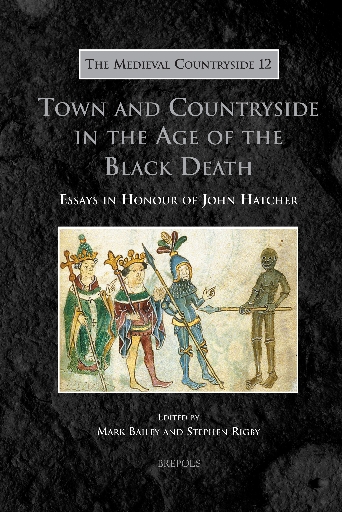
Town and Countryside in the Age of the Black Death
Essays in Honour of John Hatcher
show More to view fulltext, buy and share links for:Town and Countryside in the Age of the Black Death show Less to hide fulltext, buy and share links for: Town and Countryside in the Age of the Black DeathThe arrival of the Black Death in England, which killed around a half of the national population, marks the beginning of one of the most fascinating, controversial and important periods of English social and economic history. This collection of essays on English society and economy in the later Middle Ages provides a worthy tribute to the pioneering work of John Hatcher in this field. With contributions from many of the most eminent historians of the English economy in the later Middle Ages, the volume includes discussions of population, agriculture, the manor, village society, trade, and industry. The book’s chapters offer original reassessments of key topics such as the impact of the Black Death on population and its effects on agricultural productivity and estate management. A number of its studies open up new areas of research, including the demography of coastal communities and the role of fairs in the late medieval economy, whilst others explore the problems of evidence for mortality rates or for change within the village community. Bringing together broad surveys of change and local case studies based on detailed archival research, the chapters offer an assessment of previous work in the field and suggest a number of new directions for scholarship in this area.
-
-
-
Tractatio Scripturarum. Philological, Exegetical, Rhetorical, and Theological Studies on Augustine's Sermons
Ministerium Sermonis II
show More to view fulltext, buy and share links for:Tractatio Scripturarum. Philological, Exegetical, Rhetorical, and Theological Studies on Augustine's Sermons show Less to hide fulltext, buy and share links for: Tractatio Scripturarum. Philological, Exegetical, Rhetorical, and Theological Studies on Augustine's SermonsThe contributions collected in this volume of Instrumenta Patristica et Mediaevalia share a common focus on Saint Augustine's sermons on the New Testament and address a wide range of topics within this extended field of research. Several contributions deal with the transmission of these homilies, while others tackle questions concerning exegesis, rhetoric and theology. The foundation for this compilation was laid during the conference 'Ministerium sermonis. An International Colloquium on Saint Augustine's Sermons on the New Testament and their Reception' (September 15-17, 2011), hosted by the Academia Belgica in Rome (Italy).
The present volume may be considered a sequel to the book Ministerium sermonis. Philological, Historical and Theological Studies on Augustine's Sermones ad populum, which was published in 2009 as volume 53 of the series Instrumenta Patristica et Mediaevalia and bundled the contributions to the first Ministerium sermonis colloquium of May 2008 (Leuven - Turnhout).
List of contributors: Andrea Bizzozero, Isabelle Bochet, Pierre-Maurice Bogaert, Shari Boodts, François Dolbeau, Hubertus R. Drobner, Anthony Dupont, Alicia Eelen, Wim François, Uta Heil, Pierre-Marie Hombert, Paul Mattei, Gert Partoens, Stanley P. Rosenberg, Paul van Geest, Joost van Neer, Clemens Weidmann, Jonathan Yates
-