Brepols
Brepols is an international academic publisher of works in the humanities, with a particular focus in history, archaeology, history of the arts, language and literature, and critical editions of source works.121 - 140 of 3194 results
-
-
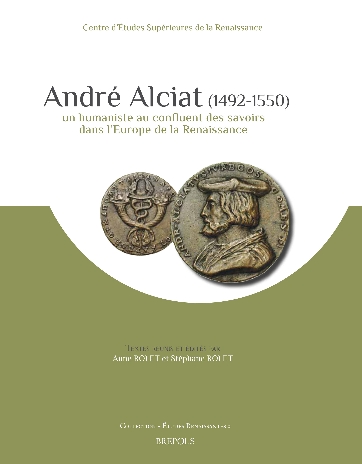
André Alciat (1492-1550) : un humaniste au confluent des savoirs dans l'Europe de la Renaissance
show More to view fulltext, buy and share links for:André Alciat (1492-1550) : un humaniste au confluent des savoirs dans l'Europe de la Renaissance show Less to hide fulltext, buy and share links for: André Alciat (1492-1550) : un humaniste au confluent des savoirs dans l'Europe de la RenaissanceQuelle place occupe l’humaniste André Alciat dans le panorama de la Renaissance européenne ? Comment rendre compte à la fois de la diversité et de l’unité des ouvrages qui composent le corpus alciatique, dont on ne voit souvent que le recueil d’Emblemata, en oubliant la masse des écrits juridiques ?
Pour comprendre les forces qui nourrissent et stimulent cette oeuvre protéiforme, il convenait de replacer dans leur contexte historique et culturel les étapes biographiques et les activités scientifiques multiples du grand juriste milanais, tour à tour « archéologue » précoce et historien, avocat et professeur de droit, mais aussi poète à ses heures. Alciat entretient en effet des relations mouvementées tant avec les princes qu’avec les institutions académiques. Il noue des liens avec les humanistes de toute l’Europe, tels Érasme ou Budé, et sa carrière universitaire témoigne en particulier de la dynamique des échanges entre France et Italie. Dans la genèse et la diffusion de ses travaux, il traite avec les éditeurs comme un stratège en campagne. Son oeuvre enfin remet clairement en question le statut des disciplines constituées et manifeste une authentique sensibilité aux mutations intellectuelles et religieuses de son temps. Les enjeux de la production alciatique dépassent pourtant de beaucoup ces constats. On soulignera tout spécialement l’importance accordée par Alciat au langage symbolique et à l’eikôn, deux voies privilégiées pour assimiler et interpréter l’héritage gréco-latin. On doit également mettre en avant le rôle joué par la réception contemporaine et postérieure - imitateurs, commentateurs, traducteurs et émules - qui, en réinventant, voire en trahissant parfois l’héritage intellectuel d’Alciat, en a fait fructifier les promesses.
Les contributions proposées ici mettent en évidence l’étendue des domaines d’investigation embrassés par Alciat, les multiples facettes de ses compétences, la cohérence de son travail historique, juridique et philologique, les rapports complexes qu’il entretient avec l’Antiquité gréco-romaine et les relations contrastées qu’il développe avec ses contemporains. Des chercheurs venus d’horizons très divers retracent les étapes connues et moins connues d’une existence riche en péripéties, repèrent les fils conducteurs qui assurent la cohésion d’une oeuvre profuse, soulignent le rôle de ses modèles et s’interrogent sur les modalités d’élaboration d’une méthode nouvelle où se fondent les savoirs.
-
-
-
Anglo-Latin and its Heritage
Essays in Honour of A.G. Rigg on his 64th Birthday
show More to view fulltext, buy and share links for:Anglo-Latin and its Heritage show Less to hide fulltext, buy and share links for: Anglo-Latin and its HeritageFor some 40 years, A.G. Rigg has been defining the field of later Anglo-Latin literary scholarship, a task culminating in his History of Anglo-Latin Literature 1066-1422. Anglo-Latin and its Heritage is a collection of thirteen essays by his colleagues and students, past and present, which pays tribute to him both by exploring the field he has defined, and by making forays into its antecedents and descendants. The first section, “Roots and Debts,” includes essays on the migration of classical and late antique motifs and patterns of thought into early medieval Latin, and concludes with an essay which shows how a 12th-century writer reached back into that earlier period for stylistic models. The central section of the book, “Anglo-Latin Literature 1066-1422,” concentrates on Anglo-Latin writers of the period most studied by Rigg himself, and the seven essays in this section include analyses of poetic style and borrowing; discussions of patterns of reading; and essays which read Anglo-Latin works through their specific historical and cultural contexts. Two of the essays are elegant translations of significant Anglo-Latin poetic works. The final section of the book, “Influence and Survival,” offers three essays which consider Anglo-Latin literature in the late medieval and post-medieval world, from an edition of a Latin source for a late Middle English saint’s life; through an account of the migration of Latin texts into the royal libraries of Henry VIII; to the concluding essay, which explores a “mechanical” means of producing perfect Latin hexameter. A complete bibliography of Rigg’s works closes the volume. The chronological and methodological range of the essays in this collection is offered as a fitting tribute to one of Anglo-Latin’s most learned and indefatigable scholars.
-
-
-

Anglo-Saxons in a Frankish World, 690-900
show More to view fulltext, buy and share links for:Anglo-Saxons in a Frankish World, 690-900 show Less to hide fulltext, buy and share links for: Anglo-Saxons in a Frankish World, 690-900The Anglo-Saxon mission to early medieval Germany and the Netherlands has long been seen as a major contribution to the foundation of Christian Europe. Encouraged by the activities of prominent Anglo-Saxons such as St Willibrord (d. 739) and St Boniface (d. 754), pious men and women left their homes in England to reform and reinvigorate the culture and politics of the Church in Northern Europe, while greatly expanding the frontiers of Christendom. Anglo-Saxons in a Frankish World, 690-900 provides the first major reassessment of the Anglo-Saxons' influence on the Frankish world for fifty years. It argues that, because figures like Boniface were so important to the cult of saints east of the Rhine, stories about them became central to the ways in which different groups responded to the rapidly changing landscape of Carolingian culture and politics. The study draws on letters, charters, and other evidence to recontextualize the numerous hagiographies written about the Anglo-Saxons on the European mainland, while providing fresh perspectives on attitudes to mission, monasticism, authority, and the secular world in East Frankish society.
-
-
-

Anima mea. Prières privées et textes de dévotion du Moyen Age latin
Autour des 'Prières ou Méditations' attribuées à saint Anselme de Cantorbéry (XIe-XIIe siècle)
show More to view fulltext, buy and share links for:Anima mea. Prières privées et textes de dévotion du Moyen Age latin show Less to hide fulltext, buy and share links for: Anima mea. Prières privées et textes de dévotion du Moyen Age latinSt. Anselm of Canterbury's († 1109) Orationes siue Meditationes offers a most instructive testimony of the change that occurred in the late eleventh century in Western spirituality. Thanks to the beauty of its language and the freshness of its approach, Anselm's volume truly touched the minds of contemporaries and aroused so great a passion that the book was copied, imitated, and incorporatedinto apocryphal collections. These new books illustrate by their variety, originality, and even commonplace aspects the profuse resources of a literary genre that is too often unrecognized although most deserving of interest. After exposing the political and religious background of the Anglo-Norman world, as well as treating the rhetorical tradition of private prayers, the present work offers the first critical edition, with a French translation, of the Anselmian collections of the 12th century.
-
-
-
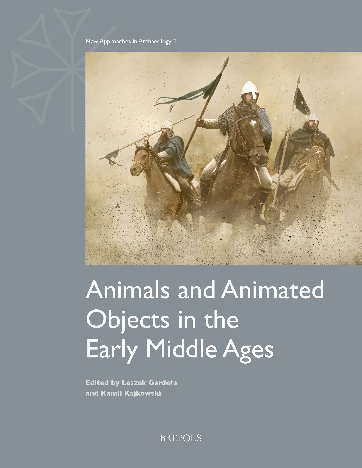
Animals and Animated Objects in the Early Middle Ages
show More to view fulltext, buy and share links for:Animals and Animated Objects in the Early Middle Ages show Less to hide fulltext, buy and share links for: Animals and Animated Objects in the Early Middle AgesSince time immemorial, animals have played crucial roles in people’s lives. In Continental and Northern Europe, especially in the Migration Period and the Early Middle Ages, animals were both feared and revered. Varying and often ambivalent perceptions of fauna were expressed through everyday practices, religious beliefs, and the zoomorphic ornamentation of a wide plethora of objects that ranged from jewellery, weapons, and equestrian equipment to wagons and ships. This timely volume critically investigates the multivalence of animals in medieval archaeology, literature, and art in order to present human attitudes to creatures such as bears, horses, dogs, and birds in a novel and interdisciplinary way.
The chapters gathered together here explore the prominence of animals, animal parts, and their various visual representations in domestic spaces and the wider public arena, on the battlefield, and in an array of ritual practices, but also examine the importance of zoomorphic art for emerging elites at a time of social and political tensions across Scandinavia and the oft-overlooked Western Slavic and Baltic societies. This innovative book draws together scholars from across Europe in order to pave the way for a nuanced international and interdisciplinary dialogue that has the capacity to substantially increase our perception of human and animal worlds of the Early Middle Ages.
-
-
-
Annali di Scienze Religiose
International Journal of Religious Scholarship with an Annotated Bibliography of Ambrosian Studies
show More to view fulltext, buy and share links for:Annali di Scienze Religiose show Less to hide fulltext, buy and share links for: Annali di Scienze ReligioseAnnali di Scienze Religiose is a periodical stemming from the research activities of the Department of Religious Science at the Università Cattolica di Milano (Catholic University of the Sacred Heart in Milan), which apply a multidisciplinary approach to religious phenomena and particularly focus on the three monotheistic religions and religions of the ancient Mediterranean world. The journal features contributions from Italian and foreign scholars writing in the main European languages and Arabic. Each issue is divided into a monographic section, which gives its name to the subtitle of the issue, a section on conferences featuring texts that apply a scientific approach to a wide range of historical and comparative topics, and a final section presenting studies that offer timely contributions on specific themes. Every issue ends with the Ambrosian Bibliography, an annual survey of publications regarding the person and works of Ambrose of Milan.
More information about this journal on Brepols.net
-
-
-
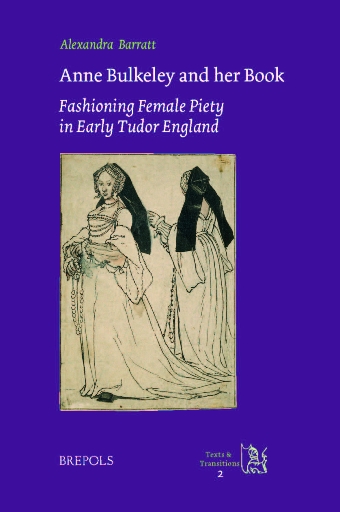
Anne Bulkeley and her Book
Fashioning Female Piety in Early Tudor England
show More to view fulltext, buy and share links for:Anne Bulkeley and her Book show Less to hide fulltext, buy and share links for: Anne Bulkeley and her BookThis study is focused on bl ms Harley 494, a small manuscript book which can be dated between 1532 and 1535 and which has many of the features of a preces privatae volume, or private prayer book. It contains prayers in English and Latin but also a number of brief devotional treatises in English. ms Harley 494 possesses two more features of interest: it belonged to a Hampshire widow, Anne Bulkeley (and possibly later to her daughter Anne, a nun at Amesbury Priory); and it emerged from a Birgittine textual community. Barratt edits and annotates the complete manuscript to provide an accessible and informative edition of this little known manuscript. However, Anne Bulkeley and her Book is not a conventional edition of a late Middle English text. Rather, Barratt carefully contextualizes the manuscript within its historical background just before the Dissolution of the Monasteries, and meticulously investigates the varied, and often unusual, sources of many of the individual items in the book. In addition, the discussion encompasses several related manuscripts (principally Lambeth Palace ms 3600 and the so-called Burnet Psalter (Aberdeen University Library ms 25)). This broad focus enables the volume to examine not only the evolution of the manuscript as a whole, but also to answer wider questions of its owner’s identity, her family connections, and her (and her book’s) place in literary, cultural, and religious history.
-
-
-

Anonymi Artium Magistri Questiones super Librum Ethicorum Aristotelis (Paris, BnF, lat. 14698)
show More to view fulltext, buy and share links for:Anonymi Artium Magistri Questiones super Librum Ethicorum Aristotelis (Paris, BnF, lat. 14698) show Less to hide fulltext, buy and share links for: Anonymi Artium Magistri Questiones super Librum Ethicorum Aristotelis (Paris, BnF, lat. 14698)Les années qui précédèrent et suivirent la condamnation du 7 mars 1277 furent parmi les plus difficiles dans l’histoire de l’Université de Paris. Parmi les témoins des événements qui ont bouleversé à cette époque la Faculté des Arts, une place privilégiée doit être accordée à un fragment d’une reportatio anonyme d’un cours sur l’Éthique à Nicomaque, contenu dans le manuscrit Paris, BnF, lat. 14698. L’auteur de ce texte - un maître de philosophie écrivant très probablement au début des années 1280 - recherche un difficile équilibre entre le devoir d’expliquer la philosophie d’Aristote et la contrainte de ne pas contredire les dogmes de la foi chrétienne. Ce volume offre une édition intégrale du texte, précédée d’une introduction où sont abordés à la fois les problèmes que pose l’édition scientifique d’une reportatio (sa structure, son rapport avec le déroulement du cours oral, les critères spécifiques requis pour l’établissement du texte d’une reportatio) et les enjeux historiques liés à ce texte (sa datation et son rapport avec la condamnation de mars 1277, l’utilisation de la Summa theologiae de Thomas d’Aquin, et l’hypothèse de l’identification de l’auteur avec le maître parisien Jacques de Douai).
-
-
-
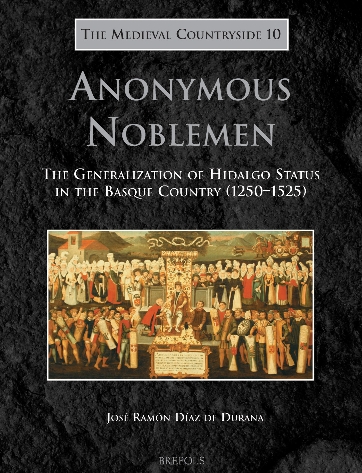
Anonymous Noblemen
The Generalization of Hidalgo Status in the Basque Country (1250-1525)
show More to view fulltext, buy and share links for:Anonymous Noblemen show Less to hide fulltext, buy and share links for: Anonymous NoblemenTowards the end of the Middle Ages one of Europe’s most important concentrations of nobility was to be found on the Spanish Atlantic coast between Asturias and Guipúzcoa. Many of these nobles were hidalgos, proud but impoverished nobles common in sixteenth-century picaresque novels a full four hundred years before historians turned their attention to them. This book (which is linked to over a decade of research by a team of specialists into the social, economic, political, and ideological transformations that the Basque Country underwent between the fourteenth and sixteenth centuries) analyses the group in the Basque Country, with particular emphasis on the question of how and why hidalgo status became universal in the coastal areas but not in the interior. In part one the author reviews the historiography both of this group and of the lesser nobility elsewhere in Europe. The group is then characterized and placed in its historical context: the social conflicts that racked the fourteenth and fifteenth centuries. Finally, in a series of case studies of the hidalgos of Álava and their commoner neighbours, with whom they frequently struggled for control of village life, the author studies their reactions to the political transformations which took place at the time, as well as their relationship with the landed aristocracy, in whose client networks they inevitably became involved.
-
-
-

Anselm of Canterbury (1033-1109). Philosophical Theology and Ethics
Proceedings of the Third International Conference of Medieval Philosophy, held at the Pontifical Catholic University of Rio Grande do Sul (PUCRS), Porto Alegre / Brazil (02-04 September 2009)
show More to view fulltext, buy and share links for:Anselm of Canterbury (1033-1109). Philosophical Theology and Ethics show Less to hide fulltext, buy and share links for: Anselm of Canterbury (1033-1109). Philosophical Theology and EthicsThis volume collects several studies on Anselm of Canterbury’s philosophical theology and ethics originally presented at the Third International Conference of Medieval Philosophy at the Pontifical Catholic University of Rio Grande do Sul (PUCRS), Porto Alegre / Brazil, 02-04 September 2009. In commemoration of the 900th anniversary of Anselm’s death, the conference facilitated a unique exchange of ideas among Latin American, North American and European scholars on current issues in Anselmian scholarship. The papers included in the volume concern diverse areas of interest: Anselm’s method in different phases of his career and his attitude towards philosophy; Anselm’s contribution to logic and semantics in De grammatico; the continuing challenge of interpreting his “proof” in Proslogion (revisited with an eye into contemporary accounts of his unum argumentum); the topic of guilt and punishment in Anselm’s works, as well as the understanding of his moral-theological project, in dialogue with contemporary discussions of deontology; the fundamental aspects of his view on human being; the reception of Anselm’s theory of perfections in Duns Scotus’s metaphysics; and the place of Anselm’s thought in Karl Barth’s understanding of theology. These contributions, through their engagement with Anselm’s works, seek to shed light on philosophical and theological issues of perennial interest.
The volume contain the contributions of R.H. Pich (Porto Alegre), C. Viola (Paris), S. Magnavacca (Buenos Aires) , J. Müller (Bochum), Th. S. Leite (Porto Alegre), G. Wyllie (Rio de Janeiro), J. M .C. Macedo (Porto), A. Culleton (São Leopoldo), M. Tracey (Lisle - IL), L.A. De Boni (Porto Alegre), G. K. Hasselhoff (Bochum).
-
-
-
Anselmo d’Aosta e il pensiero monastico medievale
show More to view fulltext, buy and share links for:Anselmo d’Aosta e il pensiero monastico medievale show Less to hide fulltext, buy and share links for: Anselmo d’Aosta e il pensiero monastico medievaleQuesto volume raccoglie le relazioni discusse da oltre venti studiosi italiani e tedeschi al XVIII Convegno della Società Italiana per lo Studio del Pensiero Medievale (SISPM), dedicato al pensiero e all’influenza di Anselmo d’Aosta (1033-1109), una delle figure chiave della filosofia e della teologia medievali. I saggi presentano i principali aspetti della speculazione di Anselmo, con particolare attenzione alle posizioni teologiche da lui sostenute, alla sua metodologia per la costruzione di un pensiero sistematico e razionale, e ai suoi orientamenti in materia di pedagogia, politica, logica, nonché alla sua concezione della vita monastica. Molti studi sono inoltre dedicati alla diffusione e all’influsso del suo pensiero: tracce della sua speculazione sono facilmente riconoscibili nei maggiori pensatori del secolo xii (a partire da Abelardo e Ugo di San Vittore) e giungono fino a Duns Scoto e Nicolò Cusano.
Per la varietà degli approcci d’indagine, e la profondità e l’attenzione delle analisi filosofiche e teologiche dei singoli contributi, il volume si propone di offrire una completa panoramica sullo stato degli studi su Anselmo e la cultura monastica del suo tempo.
-
-
-
Anthropologie de l’Antiquité. Anciens objets, nouvelles approches
show More to view fulltext, buy and share links for:Anthropologie de l’Antiquité. Anciens objets, nouvelles approches show Less to hide fulltext, buy and share links for: Anthropologie de l’Antiquité. Anciens objets, nouvelles approchesLes contributions réunies dans ce livre sont nées d’une collaboration et d’une proximité intellectuelle entre deux institutions de recherche : l’équipe PLH-ERASME qui travaille, à Toulouse, dans les domaines de la réception de l’Antiquité et de l’anthropologie historique, et le centre ANHIMA (Anthropologie et Histoire des mondes antiques), qui réunit, à Paris, des chercheurs engagés dans tous les domaines et toutes les périodes de l’Antiquité. Ce rapprochement s’est traduit par l’organisation de deux journées d’étude internationales à Toulouse, en mars 2010, et par la création d’une nouvelle collection : « Antiquité et sciences humaines. La traversée des frontières », accueillie par les éditions Brepols.
Ces initiatives témoignent de la vitalité et du renouvellement des perspectives anthropologiques : redéfi nir les concepts les mieux connus (comme le don, le commerce), s’attacher à un champ d’études laissé à l’écart (l’archéologie gallo-romaine), prendre en compte des déplacements de catégories entre hommes et femmes, masculin et féminin dans les études de genre, explorer des domaines nouveaux (les émotions, la perception des couleurs).
La prise en compte des différences qui nous sépare nt des hommes de l’Antiquité, l’attention portée aux spécifi cités qui marquent l’ensemble de leurs représentations et de leurs comportements dans tous les champs de la vie sociale, politique, religieuse, culturelle, la conscience des mutations qui se sont opérées sur la longue durée, c’est ce que chacun des auteurs de ce volume, dans le domaine qui lui est propre, a tenté de mettre en oeuvre.
Liste des contributeurs : Vincent Azoulay, Maurizio Bettini, Corinne Bonnet, Violaine Sebillotte-Cuchet, Ton Derks, Adeline Grand-Clément, Pascal Payen, Nicholas Purcell, Évelyne Scheid-Tissinier, Pauline Schmitt Pantel, Emmanuelle Valette, Andreas Wittenburg.
-
-
-
Anthropology of Roman Housing
show More to view fulltext, buy and share links for:Anthropology of Roman Housing show Less to hide fulltext, buy and share links for: Anthropology of Roman HousingAt a time when we reflect intensively on the issue of social cohesion, on the influence of architecture in lifestyles, and on relationships between neighbourhoods within large modern cities, this book aims to approach the study of "inhabiting modes" in Roman urban dwellings. Drawing on concepts common to historical anthropology and incorporating evidence from multiple lines of research (archaeological, iconographic, textual, and others), this volume aims to contribute to the invigoration of a social history of ancient housing through new research projects, publications, and digital tools from both individual and collaborative efforts. This field of study is currently undergoing a period of disciplinary revitalization and this volume is an opportunity to present the most recent work and to conduct a dialogue in an interdisciplinary perspective.
-
-
-
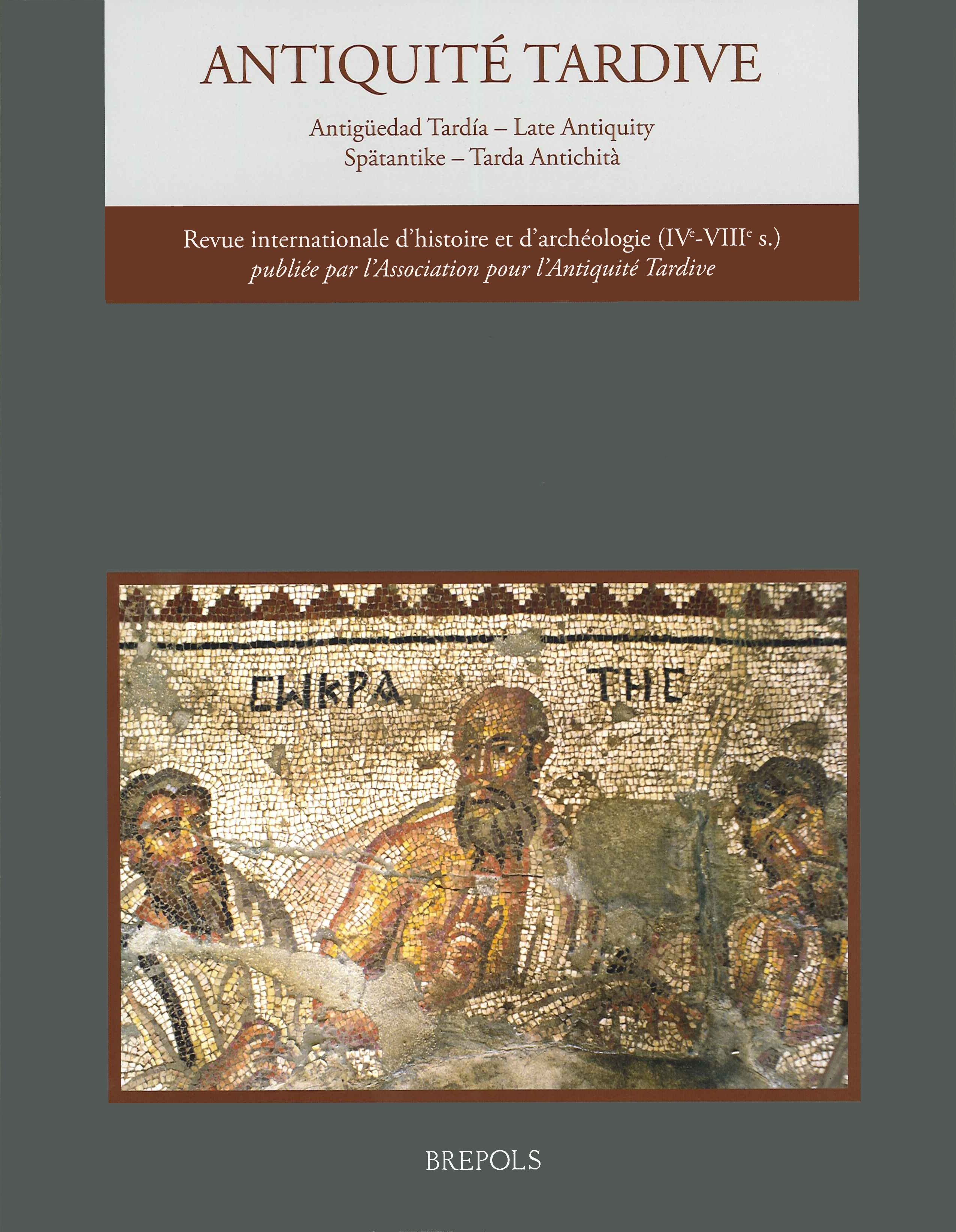
Antiquité Tardive - Late Antiquity - Spätantike - Tarda Antichità
Revue Internationale d'Histoire et d'Archéologie (IVe-VIIIe siècle)
show More to view fulltext, buy and share links for:Antiquité Tardive - Late Antiquity - Spätantike - Tarda Antichità show Less to hide fulltext, buy and share links for: Antiquité Tardive - Late Antiquity - Spätantike - Tarda AntichitàThis international journal is published by the Association pour l’Antiquité Tardive, which was founded in Lyon to prepare for the International Congress of Christian Archaeology held there in 1986. The Association’s journal aims at enriching the study of written texts from the fourth to the eighth century by placing them into a wider context using a multidisciplinary approach covering history, archaeology, epigraphy, law and philology.
More information about this journal on Brepols.net
-