


BOB2020MOOT

Collection Contents
19 results
-
-
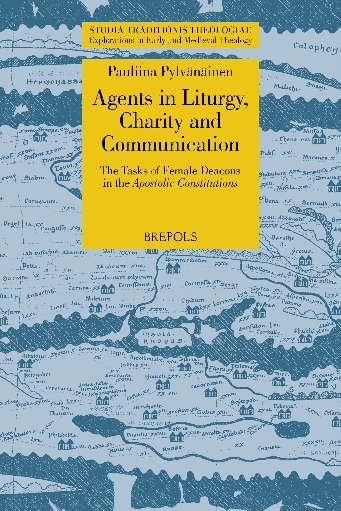
Agents in Liturgy, Charity and Communication
show More to view fulltext, buy and share links for:Agents in Liturgy, Charity and Communication show Less to hide fulltext, buy and share links for: Agents in Liturgy, Charity and CommunicationWhat did women deacons do in the early church? This study is a contribution to resolving this topical question through evaluating the tasks of female deacons in the Apostolic Constitutions. This fourth-century document is the largest among the so-called ancient church orders. Pylvänäinen divides the tasks of female deacons into three categories: liturgical, charitable and communicative. She analyses the individual concepts and verses within their contexts, paying special attention to the context of the document as a whole within the sphere of Jewish Christian interaction and from the viewpoint of the sources the compiler has used in remoulding the document.
-
-
-
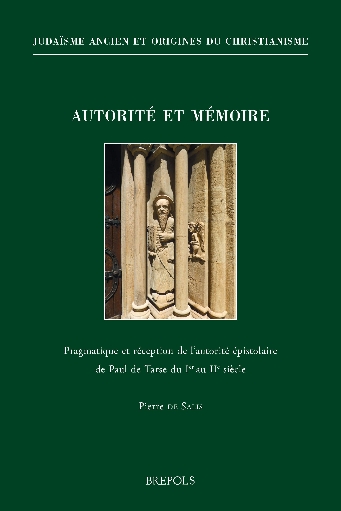
Autorité et mémoire
show More to view fulltext, buy and share links for:Autorité et mémoire show Less to hide fulltext, buy and share links for: Autorité et mémoireCette étude analyse les lettres de Paul de Tarse dans le contexte des pratiques épistolaires antiques, principalement judéennes. Le questionnement porte, d'une part, sur le potentiel documentaire offert par les sources de type épistolaire et, d'autre part, sur les ressources spécifiques de la communication à distance pour induire des changements. Les lettres de Paul ont été écrites non pour consigner des réalités ou des vérités d'autrefois en tant que telles, mais d'abord pour agir efficacement auprès de leurs destinataires. Cette double interrogation est déployée en amont, parmi les pratiques susceptibles d'avoir servi de modèle de communication à distance. Un intérêt particulier est porté à la lettre aux exilés à Babylone, insérée narrativement dans le Livre de Jérémie. Pendant plusieurs siècles au sein de la Diaspora judéenne, on y a fait référence. Est ensuite interrogée la pratique épistolaire de Paul lui-même, en particulier celle déployée dans sa 2e Lettre aux Corinthiens, aux chapitres 10 à 13. Cette séquence, écrite au moment d'une radicale remise en question de son autorité, signale bien le potentiel pragmatique que son auteur reconnaissait au médium épistolalire, ceci en convoquant notamment l'autorité de Jérémie. Enfin, en aval, l'enquête porte sur les débuts de l'histoire de la réception de l'autorité d'épistolier de Paul. Les prémisses de sa mémoire signalent comment on a reconnu très tôt à ce dernier une autorité d'épistolier, à l'instar des prophètes écrivains de l'ancien Israël.
-
-
-

Court Festivals of the Holy Roman Empire, 1555–1619
show More to view fulltext, buy and share links for:Court Festivals of the Holy Roman Empire, 1555–1619 show Less to hide fulltext, buy and share links for: Court Festivals of the Holy Roman Empire, 1555–1619This study represents a new approach to the analysis of early modern court festivals, setting the question of identity at its heart. It explores identity as it was portrayed, constructed, and upheld through court festivals within the Holy Roman Empire of the German Nation in the period between the Peace of Augsburg in 1555 and the coronation of Friedrich V, Elector Palatine, as King of Bohemia in 1619. Structured thematically, this detailed analysis touches on core themes of early modern European history including state formation, princely courts, gender, religion, science and the natural world, and cultural encounters. In doing so, it draws on, and speaks to, scholarly literature not only from different historical sub-disciplines but also from sociology and anthropology. Ultimately, Morris argues that these court festivals provided a flexible, albeit contested, rhetoric of identity, grounded in the performance of humanist virtue. Through the performed, material, and literary rhetoric of court festivals, the concept of nobility through virtue was reworked, refined, and given a new vocabulary within the German context. This was inextricably linked with politics in light of the reforms made to the Holy Roman Empire at the end of the fifteenth century, the confessional divisions of the sixteenth century, and the mounting tensions of the early seventeenth century which were to culminate in the Thirty Years War.
-
-
-
Das Buch Warum
show More to view fulltext, buy and share links for:Das Buch Warum show Less to hide fulltext, buy and share links for: Das Buch Warum„Der Liber Quare ist ein Traktat über Fragen der Liturgie in Katechismus-Form“, so charakterisiert Pater Götz, der Herausgeber der kritischen Edition, das Buch, geschrieben von einem anonymen Autor im 11. Jahrhundert. In 253 Fragesätzen und Antworten werden für Geistliche die Gründe für die Gestaltung des Offiziums und des Kirchenjahres behandelt. Die Gliederung ist locker: Die Zeit von Septuagesima bis Pfingsten (Fragen 1-118). Das Quatemberfasten und die Weihen der Kleriker (Fragen 119-139). Vom Advent bis Lichtmess (Fragen 140-154). Das Offizium bei Tage (Fragen 155-186) und bei Nacht (Fragen 187-217). Die Hierarchie der Kleriker (Fragen 218-241). Die liturgischen Gewänder (Fragen 242-253).
Der Ausgabe und Übersetzung des Liber Quare wurden auch Texte beigefügt, die in den Handschriften thematisch den einzelnen Fragen zugehörig sind. Sie ergänzen den knappen Test und entsprachen offenbar den Interessen der damaligen Schreiber. In den „Einfügungen“ (12./13. - 15. Jh.) stechen die Erläuterungen zum Vaterunser und die Aufnahme des bekannten Hymnus O Redemptor heraus. Bei den „Zusätzen“ im Anschluss an das Buch, ebenfalls aus dem 12./13. bis 15. Jh., werden manche Themen in den verschiedenen Handschriften ähnlich oder gegenteilig dargestellt: Stundengebet, Advents- und Weihnachtszeit, Fasten- und Osterzeit, liturgisches Brauchtum, allegorisch-aszetische Betrachtungen, Messfeier, Totengedächtnis, Weiheordines, liturgische Kleidung.
Die drei Teile des Bandes - Liber Quare, Einfügungen und Zusätze - ermöglichen einen kulturhistorischen Blick auf die Deutung der Liturgie in Antike und Mittelalter.
Der zugrundeliegende Text dieses Bandes erschien 1983 in der Reihe Corpus Christianorum. Continuatio Mediaeualis als Liturgica. Liber Quare (CC CM, vol. 60), herausgegeben von Georg Polykarp Götz OFMConv. Die Ziffern am Seitenrand verweisen auf die entsprechenden Seiten der Edition.
-
-
-
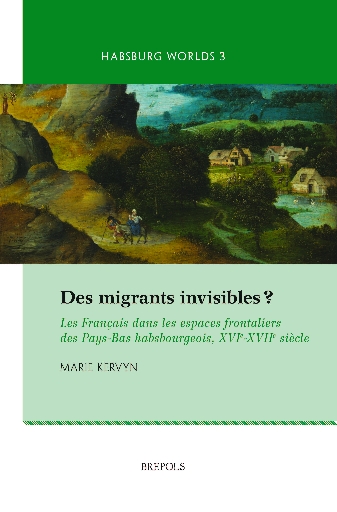
Des migrants invisibles ?
show More to view fulltext, buy and share links for:Des migrants invisibles ? show Less to hide fulltext, buy and share links for: Des migrants invisibles ?During the Modern Period, the condition of the French migrant is fragile. He comes from a suspicious community that does not exist in substance, that of the "French", and is a part of an evolving category, the one of people without "rights". His foreign origin can also be an advantage and he can make it work in his favour. He cannot be defined as being from a State, yet his condition is inseparable from the international conjuncture and the construction of evolving modern States. Actually, to question the stakes in the reception of the French migrants is an open window to a better understanding of the social and political culture of the Spanish Low Countries. Indeed, this work probes the mechanisms of self-definition in border provinces within a catholic global empire, the Spanish Monarchy, in front of France. The exercise of power and the capacity for action appear there as the result of an equilibrium in which all social actors are negotiating their position. Most of all, it is the result of a dialogue fueled by the protagonists of History themselves.
-
-
-
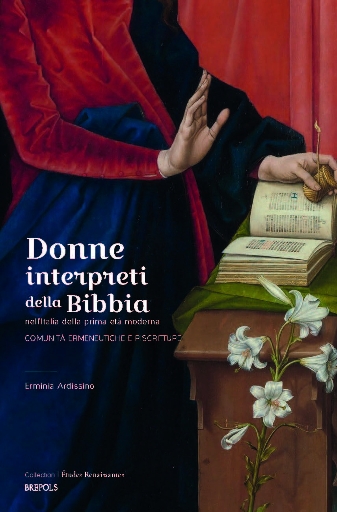
Donne interpreti della Bibbia nell’Italia della prima età moderna
show More to view fulltext, buy and share links for:Donne interpreti della Bibbia nell’Italia della prima età moderna show Less to hide fulltext, buy and share links for: Donne interpreti della Bibbia nell’Italia della prima età modernaLa Bibbia ha rappresentato il libro più familiare per le donne nella prima età moderna e proprio in ambito religioso le donne italiane hanno maggiormente fatto sentire la loro voce. Tuttavia non solo le testimonianze sono scarse, ma anche gli studi hanno trascurato questo interessantissimo campo. Il volume studia le modalità con cui le donne in Italia hanno preso parte al vivissimo dibattito rinascimentale sull’interpretazione e la conoscenza delle Sacre Scritture, da cui hanno anche attinto per sviluppare originali interventi. Sulla base delle riscritture bibliche che ci hanno lasciato, sono individuabili vere e proprie comunità ermeneutiche femminili. Venezia, Firenze, il Centro Italia sono le coordinate geografiche dei circoli qui individuati. A Firenze le scrittrici che lavorano con e sulla Bibbia prediligono il rapporto con la comunità politica, suggerendo modelli comportamentali che possono istruire le donne per il loro inserimento nella società civile. A Venezia la Bibbia ispira argomenti a difesa della dignità femminile e della parità dei generi, infatti sull’episodio edenico sono state fondate coraggiose letture che incisero significativamente nella cosiddetta querelle des femmes europea. Nell’Italia centrale l’interesse femminile si focalizza su una dimensione più devozionale e spirituale, sul problema della salvezza per il beneficio di Cristo, sulla versificazione e sul commento dei Salmi. Con questo studio si intende portare in giusta luce il contributo delle donne italiane al dibattito culturale e religioso nell’età delle Riforme e mostrare la modernità e vivacità delle loro posizioni oltre che recuperarne il valore letterario e intellettuale.
-
-
-
La Renaissance italienne dans les rues du Ghetto
show More to view fulltext, buy and share links for:La Renaissance italienne dans les rues du Ghetto show Less to hide fulltext, buy and share links for: La Renaissance italienne dans les rues du GhettoCet ouvrage constitue la première étude d’ensemble de l’œuvre poétique yiddish d’Élia Lévita (1469-1549) et cherche à définir sa place dans la littérature de la Renaissance en analysant les transferts esthétiques et culturels ayant présidé à sa production. Il situe l’œuvre vernaculaire de ce savant hébraïste, proche des humanistes chrétiens, dans les traditions poétiques juives hébraïques et yiddish et dans la logique d’une affirmation du rôle de l’écrivain séculier et de la langue vernaculaire dans la société juive. Il analyse également la portée des modèles extérieurs, chrétiens, en insistant sur l’inscription des romans de chevalerie de Lévita dans l’évolution générale du genre chevaleresque en Italie. L’Arioste, et en particulier son Roland furieux, ont joué un rôle majeur dans le raffinement progressif du projet esthétique du poète yiddish. Par son ampleur et par sa variété, l’œuvre vernaculaire d’Élia Lévita constitue non seulement la première œuvre moderne de la littérature yiddish mais aussi un cas particulièrement évocateur de diffusion des modèles esthétiques de la Renaissance dans des catégories ethniques (les Juifs) et sociales (les classes populaires) que l’on aurait pu croire éloignées de ces mutations culturelles.
-
-
-
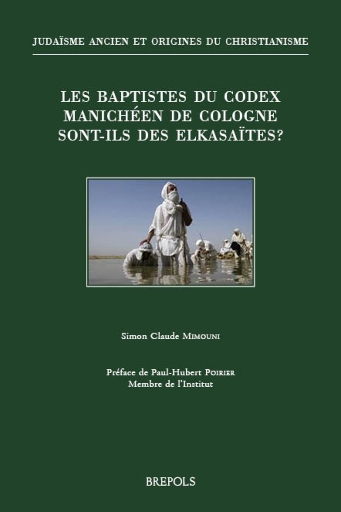
Les baptistes du Codex manichéen de Cologne sont-ils des elkasaïtes ?
show More to view fulltext, buy and share links for:Les baptistes du Codex manichéen de Cologne sont-ils des elkasaïtes ? show Less to hide fulltext, buy and share links for: Les baptistes du Codex manichéen de Cologne sont-ils des elkasaïtes ?L’importance et l’originalité de cette monographie résident dans l’analyse d’un document manichéen de première main, Sur la naissance de son corps (Codex manichéen de Cologne), qui raconte, en adoptant le registre du merveilleux, l’enfance et l’adolescence de Mani (216/7-276/7) dans une communauté baptiste de la basse Mésopotamie. Il est question ici de la partie centrale de ce texte (79, 13-107, 23), conservé dans un codex grec « de poche », datant probablement du IVe siècle : les exposés, mis sous l’autorité de trois traditionnistes manichéens (Baraïes, Zachéas et Timothée), des divergences et des conflits entre les responsables de la communauté et le jeune Mani, qui ont abouti à la tenue d’un synode où a été décidée sa mise au ban. Abandonnant ce groupe, Mani débute la diffusion de sa nouvelle « religion ». Cet ouvrage ajoute une pièce importante et novatrice à l’étude de l’elkasaïsme, du manichéisme et du mandéisme, mettant en lumière des connections et des relations entre ces mouvements. Il montre que l’origine elkasaïte et donc judéenne de Mani est fondée.
-
-
-
Ludwig Senfl (c.1490–1543). A Catalogue Raisonné of the Works and Sources
show More to view fulltext, buy and share links for:Ludwig Senfl (c.1490–1543). A Catalogue Raisonné of the Works and Sources show Less to hide fulltext, buy and share links for: Ludwig Senfl (c.1490–1543). A Catalogue Raisonné of the Works and SourcesUntil now, scholars have had an inadequate picture of the scope and transmission of the œuvre of Ludwig Senfl (c.1490-1543), one of the most important Renaissance composers of the German-speaking lands. The current publication presents an extraordinary and exceptionally comprehensive catalogue raisonné for this Renaissance composer.
The Senfl Catalogue serves as an encyclopaedic research tool for further scholarly investigation: it not only presents a lively and coherent picture of Senfl’s œuvre, but also helps to explore the broader musical culture of his time. At the same time, the in-depth presentation and analysis of Senfl’s music provides Early Music performers with new information on repertory that adds to the soundscape of the Renaissance.
-
-
-
On the Body and the Blood of the Lord, with the Letter to Fredugard
show More to view fulltext, buy and share links for:On the Body and the Blood of the Lord, with the Letter to Fredugard show Less to hide fulltext, buy and share links for: On the Body and the Blood of the Lord, with the Letter to FredugardThe De corpore et sanguine Domini by Paschasius Radbertus was the first monograph ever written solely on the Eucharist. This English translation of the De corpore, along with its companion piece the Letter to Fredugard, make an important contribution to our understanding of the development of Eucharistic theology in the Carolingian era and after. Because of their place in history and the nature of their doctrine, these works give an important witness to the received tradition on the Eucharist, as well as demonstrate an early substantial change theory that contributed to the development of the doctrine of transubstantiation. The translation, along with its extensive commentary and notes, makes this volume in the Corpus Christianorum in Translation series an important resource for the study of Eucharistic theology. The source text of this volume appeared in Corpus Christianorum Continuatio Mediaeualis as Pascasius Radbertus - De corpore et sanguine Domini, cum appendice Epistola ad Fredugardum (CCCM, 16). References to the corresponding pages of the Corpus Christianorum edition are provided in the margins of this translation.
-
-
-
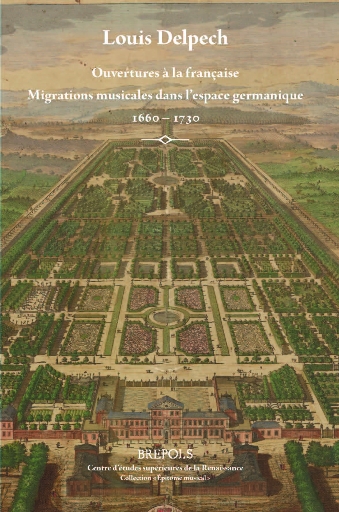
Ouvertures à la française: migrations musicales dans l’espace germanique 1660 – 1730
show More to view fulltext, buy and share links for:Ouvertures à la française: migrations musicales dans l’espace germanique 1660 – 1730 show Less to hide fulltext, buy and share links for: Ouvertures à la française: migrations musicales dans l’espace germanique 1660 – 1730"Une musique indéchiffrable pour toute autre nation." Depuis Rousseau, la musique française d’Ancien Régime est vue comme une étrange exception culturelle dans une Europe baroque toute acquise à la musique italienne. Cependant, les nombreux exemples d’acclimatation du style français dans l’espace germanique entre 1660 et 1730, de Georg Muffat à Johann Sebastian Bach en passant par Johann Sigismund Kusser et Georg Philipp Telemann, nous invitent à ouvrir les yeux sur un phénomène trop longtemps méconnu. La migration de nombreux musiciens français dans l’Empire, leur engagement dans de prestigieuses chapelles ducales et princières, la circulation de sources musicales manuscrites et imprimées, sont autant de phénomènes essentiels que ce livre aborde pour la première fois de façon conjointe et systématique. À la croisée de l’histoire des migrations, de l’anthropologie historique et de la musicologie, il déploie les routes empruntées par la musique et les musiciens français dans l’espace germanique, parcourt leur destin et reconstruit leur vie quotidienne dans ce nouvel environnement. L’ouvrage s’organise en cinq grands chapitres consacrés à l’Europe galante comme marché du travail, à l’administration de la musique française, aux carrières et aux mobilités des musiciens, à la circulation des sources musicales, et à l’invention allemande du style français.
-
-
-
Penser l’individu. Genèse stoïcienne de la subjectivité
show More to view fulltext, buy and share links for:Penser l’individu. Genèse stoïcienne de la subjectivité show Less to hide fulltext, buy and share links for: Penser l’individu. Genèse stoïcienne de la subjectivitéPar quel prodige une philosophie matérialiste et naturaliste qui posait tout à la fois l’unité du continuum cosmique et l’existence du destin a-t-elle pu donner naissance à une conception forte de l’individu, et de cet individu singulier qu’est le sujet humain? Tel est le paradoxe que nous cherchons ici à éclairer. Sur près de cinq siècles, le stoïcisme construit en effet une conception unifiée de l’individu, depuis sa forme commune à tous les vivants jusqu’à la spécificité radicale de l’individuation humaine, celle de la subjectivité. C’est cette genèse dans laquelle le passage du stoïcisme à Rome a joué un rôle décisif que nous nous attachons à reconstruire.
-
-
-
The Cambridge Gloss on the Apocalypse
show More to view fulltext, buy and share links for:The Cambridge Gloss on the Apocalypse show Less to hide fulltext, buy and share links for: The Cambridge Gloss on the ApocalypseThe Glossa in Apocalypsin (Cambridge Gloss on the Apocalypse) is a recently-discovered anonymous Hiberno-Latin (that is, authored by an Irish cleric writing in Latin) commentary on the Apocalypse of John found in a tenth-century manuscript at Cambridge University Library. This gloss is written in a similar style to other Irish-authored exegetical texts of the same period. That is, the author proceeds verse by verse through the entire Apocalypse, citing short phrases or even single words of the biblical text, followed by brief explanations that serve to clarify meaning and are often moral or allegorical in nature, as well as offering alternative interpretations of a given passage. The text has a marked dependence on the hermeneutical method of the fourth-century Donatist Tyconius as laid out in his Liber Regularum (Book of Rules), and applied in his Exposition on the Apocalypse. The Cambridge Gloss promotes an ecclesiological and spiritual interpretation of the Apocalypse, muting speculation about an imminent endtime scenario. The gloss contains numerous references to heretics, emphasises the hierarchy and the privileged role of teachers within the church, and likely dates from the eighth century, the ‘Northumbrian Golden Age’, exemplified by the works of Bede the Venerable and Alcuin of York. This English translation (accompanied by numerous notes) is intended to give readers an insight into understanding the viewpoint that medieval exegetes held in explaining the Apocalypse of John.
The source text of this volume appeared in Corpus Christianorum Series Latina as Glossa in Apocalypsin e codice Bibliothecae Vniuersitatis Cantabrigiensis Dd.X.16 (CCSL 108G). References to the corresponding pages of the Corpus Christianorum edition are provided in the margins of this translation.
-
-
-
The Cultural Parameters of the Graeco-Roman War Discourse
show More to view fulltext, buy and share links for:The Cultural Parameters of the Graeco-Roman War Discourse show Less to hide fulltext, buy and share links for: The Cultural Parameters of the Graeco-Roman War DiscourseWhat were the ideas that the ancient Greeks and Romans held about warfare? What do contemporary sources tell us about this? Is it possible to trace a development in the way of thinking about war in antiquity? These are the questions that are discussed (and answered) in this study. It combines a close reading of all the sources that we have - mostly written, like literary and historiographical, but also non-written, like art, monuments and coinage. The analysis of the discourse is accompanied by and contrasted with arguments raised by today’s specialists in the field of warfare and culture of ancient Greece and Rome.
The study treats recurrent cultural themes like courage, fatherland, or victory within a chronological framework, for discourse features cannot be isolated from the context of their time. For each specific period - Greek, Hellenistic and the six parts of the long and diverse Roman time - conclusions are drawn. The remarkable developments in time that can be observed, especially in Rome, are brought together in the final chapter.
-
-
-
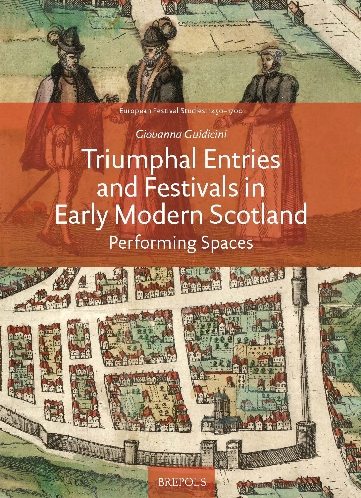
Triumphal Entries and Festivals in Early Modern Scotland
show More to view fulltext, buy and share links for:Triumphal Entries and Festivals in Early Modern Scotland show Less to hide fulltext, buy and share links for: Triumphal Entries and Festivals in Early Modern ScotlandThis book offers unprecedented insights into the richness of Scottish culture in the early modern period, studying triumphal entries — that is, processional civic welcomes offered to royal guests — staged in Edinburgh in the period between 1500 and the Wars of the Three Kingdoms. Based on a comprehensive and imaginative analysis of the written and archival sources available for these events, it also brings renewed attention to the country’s artistic, architectural, and literary traditions. The analysis of comparable events staged in England and continental Europe — in France, the Italian peninsula, and the Low Countries — helps frame Scotland’s distinctiveness within a network of international connections. The book explores how the urban space of early modern Edinburgh was employed with changing fortunes to address potentially explosive power dynamics, expressed by civic and royal, secular and religious (pre and post Reformation), Scottish and post-1603 pan-British worldviews. Scottish triumphal culture is presented as profoundly embedded in the urban context within which it is set, rich in politicised rituals of negotiation and mutual acknowledgement, and visually vibrant through temporary structures, decorations, pageants, and costumed performers. This book offers a well-rounded answer to the still relevant question of Scottish identity, and how identity and power — individual, communal, national, royal — can be performed through active engagement with civic space.
-
-
-
When Judaism Lost the Temple
show More to view fulltext, buy and share links for:When Judaism Lost the Temple show Less to hide fulltext, buy and share links for: When Judaism Lost the TempleThis book presents a study of religious thought in two Jewish apocalypses, 4 Ezra and 2 Baruch, written as a response to the destruction of the Jerusalem Temple by the Romans in 70 CE. The true nature of the crisis is the perceived loss of covenantal relationship between God and Israel, and the Jewish identity that is under threat. Discussions of various aspects of thought, including those conventionally termed theodicy, particularism and universalism, anthropology and soteriology, are subordinated under and contextualized within the larger issue of how the ancient authors propose to mend the traditional Deuteronomic covenantal theology now under crisis.Both 4 Ezra and 2 Baruch advocate a two-pronged solution of Torah and eschatology at the centre of their scheme to restore that covenant relationship in the absence of the Temple. Both maintain the Mosaic tradition as the bulwark for Israel’s future survival and revival. Whereas 4 Ezra aims to implant its eschatology into the Sinaitic tradition and make it part of the Mosaic Law, 2 Baruch extends the Deuteronomic scheme of reward and retribution into an eschatological context, making the rewards of the end-time a solution to the cycle of sins and punishments of this age. Considerable emphases are also placed on the significance of the portrayals of the pseudonymous protagonists, Ezra and Baruch, the use of symbolism in the two texts as scriptural exegesis, as well as their relationship with each other and links with the Hebrew Bible and other Jewish and Christian writings.
-
-
-
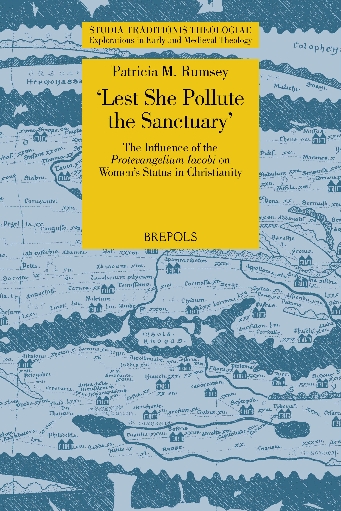
‘Lest She Pollute the Sanctuary’
show More to view fulltext, buy and share links for:‘Lest She Pollute the Sanctuary’ show Less to hide fulltext, buy and share links for: ‘Lest She Pollute the Sanctuary’This work explores a second-century text, the Protevangelium Iacobi, and, by examining current scholarship on the subject, assesses the way it has influenced the Christian perception of women and the ordering of their lives through the centuries down to the present day. It demonstrates how Mary, as she is presented in this text with extreme and unreal emphasis on her purity, has been held up as an unattainable model for all Christian women and takes as a case study the lives of contemplative women in the Roman Catholic church, showing how the image of Mary impossibly secluded in the temple has been partly responsible for their enclosure. By exploring the way female biological processes have been allowed to intrude on the sacred, tracing this influence from the Old Testament, through this text and its connection with Mary to the present day, it argues that this has been a significant factor in the denial of presbyteral ordination to women in some Christian churches. One of the original features of this work is the tracing of art work depicting scenes from the text across the Christian world, thus demonstrating the breadth of its influence, right down to New Age writings today.
-
-
-
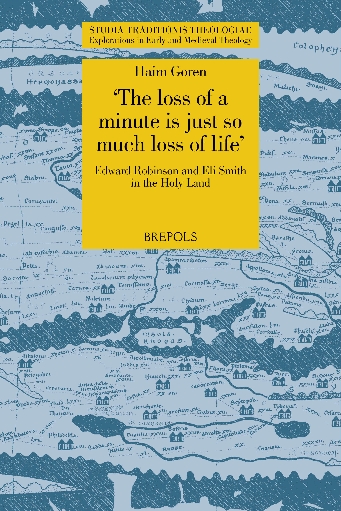
‘The loss of a minute, is just so much loss of life’
show More to view fulltext, buy and share links for:‘The loss of a minute, is just so much loss of life’ show Less to hide fulltext, buy and share links for: ‘The loss of a minute, is just so much loss of life’Perhaps no other Palestine / Holy Land explorer has received as much attention as Edward Robinson, the American philologist, theologian, and historical geographer responsible for laying the foundations for modern historic-geographical study of the Holy Land. Surprisingly, to date, almost no one has delved into Robinson’s archive to illuminate his Holy Land expeditions, the writing of his monumental Biblical Researches, and the compilation of his fine maps. Similarly, no one has conducted a detailed study of the archive of Eli Smith, American Board of Commissioners of Foreign Missions Beirut missionary and Robinson’s travel companion, for the same purposes. Fluent in Arabic and highly familiar with the region and its inhabitants, Smith’s contribution to the expedition and to the Biblical Researches was considerable as his archive reveals.
Investigating documents in both Robinson’s and Smith’s archives, the author of the present book became quickly convinced that much of the accepted narrative concerning Robinson's Holy Land studies should be re-evaluated and, consequently, rewritten. Several issues, for lack of relevant sources, have not yet been addressed by scholars. The story of Robinson and Smith’s expedition and writing of the Biblical Researches that emerges from their extensive correspondence underscores the difficulties they overcame, and the accuracy and magnitude of their scholarship in an age bereft of modern technology.
-
-
-

Analogical Identities: The Creation of the Christian Self
show More to view fulltext, buy and share links for:Analogical Identities: The Creation of the Christian Self show Less to hide fulltext, buy and share links for: Analogical Identities: The Creation of the Christian SelfIs it possible for nihilism and an ontology of personhood as will to power to be incubated in the womb of Christian Mysticism? Is it possible that the modern ontology of power, which constitutes the core of the Greek-Western metaphysics, has a theological grounding? Has Nietszche reversed Plato or, more likely, Augustine and Origen, re-fashioning in a secular framework the very essence of their ontology? Do we have any alternative Patristic anthropological sources of the Greek-Western Self, beyond what has been traditionally called "Spirituality" or "Mysticism"? Patristic theology seems to ultimately provide us with a different understanding of selfhood, beyond any Ancient or modern, Platonic or not, Transcendentalism. This book strives to decipher, retrieve, and re-embody the underlying mature Patristic concept of selfhood, beyond the dichotomies of mind and body, essence and existence, transcendence and immanence, inner and outer, conscious and unconscious, person and nature, freedom and necessity: the Analogical Identityof this Self needs to be explored.
-