


BOB2021MOOT

Collection Contents
4 results
-
-
Acta Martyrum Scillitanorum
show More to view fulltext, buy and share links for:Acta Martyrum Scillitanorum show Less to hide fulltext, buy and share links for: Acta Martyrum ScillitanorumThe Acta Martyrum Scillitanorum is the first martyr text in Latin, and one of the earliest documents in Christian Latin. This short text presents a group of young Christians facing trial in Carthage before a Roman judge on July 17th, 180 A.D. This is the first full commentary on this important text in English. It studies the fiery altercation between the defendants and the Roman proconsul, highlighting the rhetorical and narrative aspects of the original Latin (and the Greek translation from late antiquity). Throughout the book, much attention is paid to the communication, or miscommunication, between antagonists. For this dramatic and narrative approach to the text, the Acta Martyrum Scillitanorum may be taken as it is: a coherent body of text, describing an altercation that either took place exactly like that, or was deemed by the author to be probable and natural, that is, a plausible and convincing dialogue between contrasting characters in a Roman judicial context.
-
-
-

Aurélien de Réome, Musica disciplina
show More to view fulltext, buy and share links for:Aurélien de Réome, Musica disciplina show Less to hide fulltext, buy and share links for: Aurélien de Réome, Musica disciplinaLa Musica disciplina d’Aurélien de Réome est le plus ancien traité de musique de l’Occident médiéval. Sa rédaction, vers 849/850, survient au cours des années qui suivent le partage de l’Empire carolingien entre les fils de Louis le Pieux et s’inscrit dans un temps de consolidation de la réforme de la liturgie et du chant romano-franc. Le traité a pour objet principal la description des catégories tonales du chant liturgique de la messe et de l’office, des principes de la psalmodie et surtout de l’articulation des tons, en particulier ceux des versets des répons. Il témoigne enfin d’une réception précoce de la Musique de Boèce. Si le traité semble avoir connu une certaine fortune au cours du dernier tiers du ix e siècle, comme en témoigne le manuscrit de Valenciennes (Valenciennes, Bibl. Mun., Ms. 148), l’évolution de la théorie musicale et des modes de représentation graphique des mélodies autour de 900 par les auteurs de l’Alia musica, de la Musica Enchiriadis, ou par Hucbald de Saint-Amand, enfin l’essor des notations musicales ont progressivement plongé le traité d’Aurélien et ses diverses recensions dans l’oubli.
Édition du texte d’après l’ensemble de la tradition manuscrite (Shin Nishimagi). Traduction en français. Introduction et notes critiques et explicatives (Christian Meyer). Index des chants cités.
-
-
-
The Abel Distinctions
show More to view fulltext, buy and share links for:The Abel Distinctions show Less to hide fulltext, buy and share links for: The Abel DistinctionsPeter the Chanter was a master at Notre-Dame cathedral in Paris in the late 12th century. Among his many works is The Abel Distinctions, an alphabetized collection that treats key words by ‘distinguishing’ their various symbolic meanings in accordance with the traditions of biblical exegesis. The work was innovative in form and deeply conservative in content. Of special use to preachers who would shape a sermon around such sets of distinctions, it also appealed in general to clerics and laity interested in biblical meaning and allegory. The Abel Distinctions may have been the first collection of its kind; it spawned dozens of imitators through the next two centuries and more. Its immense popularity and influence is indicated by its nearly ninety extant manuscripts.
The source text of this volume appeared in Corpus Christianorum. Continuatio Mediaeualis as Petrus Cantor, Distinctiones Abel (CCCM, 288-288A). References to the corresponding pages of the Corpus Christianorum edition are provided in the margins of this translation.
-
-
-
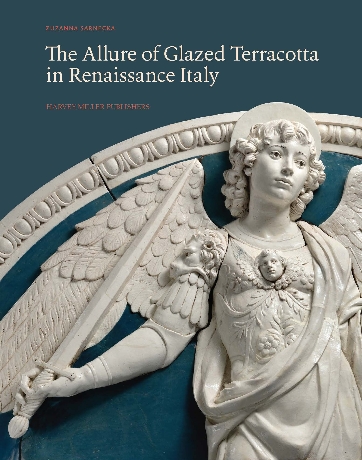
The Allure of Glazed Terracotta in Renaissance Italy
show More to view fulltext, buy and share links for:The Allure of Glazed Terracotta in Renaissance Italy show Less to hide fulltext, buy and share links for: The Allure of Glazed Terracotta in Renaissance ItalyThis book explores the role of glazed terracotta sculpture in Renaissance Italy, from c. 1450 to the mid-1530s. In its brightness and intense colour glazed terracotta strongly attracted the viewer’s gaze. Its pure and radiant surfaces also had the power to raise the mind and soul of the faithful to contemplation of the divine. The quasi-magical process of firing earthenware coated with tin-based paste, promoted initially by imports from the East, was seized upon by Luca della Robbia, who realised that glazed terracotta was the ideal vehicle for the numinous. He began to create sculptures in the medium in the 1430s, and continued to produce them for the rest of his life. After Luca’s death, his nephew, Andrea della Robbia, inherited his workshop in Florence and continued to develop the medium, together with his sons. The book considers some of the large-scale altarpieces created by the Della Robbia family in parallel with a number of small-scale figures in glazed terracotta, mostly made by unidentified sculptors. The captivating illustrations integrate these two categories of glazed terracotta sculpture into the history of Italian Renaissance art. By focusing on a specific artistic medium which stimulated piety in both ecclesiastical and domestic contexts, this book offers new ways of thinking about the religious art of the Italian Renaissance. The links it establishes between lay devotion and the creation of religious images in glazed terracotta invite reassessment of habitual distinctions between private and public art.
-