


BOB2021MOOT

Collection Contents
3 results
-
-
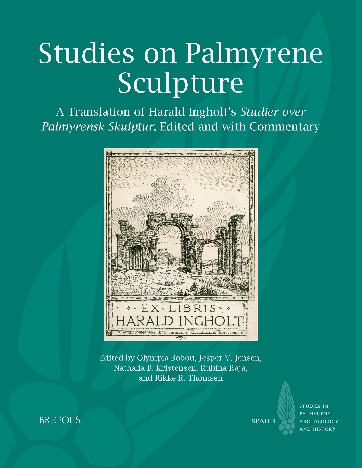
Studies on Palmyrene Sculpture
show More to view fulltext, buy and share links for:Studies on Palmyrene Sculpture show Less to hide fulltext, buy and share links for: Studies on Palmyrene SculptureThis volume presents the first English translation of Harald Ingholt’s seminal work Studier over Palmyrensk Skulptur, together with a number of studies that contextualize this important volume in the light of current research. Almost a century after its publication in 1928, Ingholt’s ground-breaking Danish-language monograph remains essential reading for all scholars of Palmyrene archaeology and iconography, setting out observations on the typology and style of securely dated Palmyrene portraits, and establishing a stylistic and chronological sequence that remains in use today. Included alongside the translation of Ingholt’s writings are contributions by leading scholars in the field who seek to introduce Harald Ingholt and explore the impact of his work in Palmyra, as well as presenting a survey of all the portraits from Palmyra that can be securely dated by inscription. The translation and commentary have been realized as part of the Palmyra Portrait Project, directed by Prof. Rubina Raja.
-
-
-
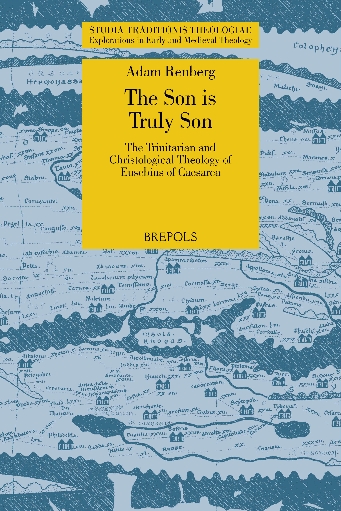
The Son is Truly Son
show More to view fulltext, buy and share links for:The Son is Truly Son show Less to hide fulltext, buy and share links for: The Son is Truly SonTheology in the early fourth century was engrossed with questions about the nature of the Son of God in relation to the Father. How was he ‘from the essence’ of the Father? Was there a time when he was not? While generally treated as a minor footnote in the development of trinitarian and christological theology by most modern scholars, Eusebius of Caesarea provides a rich and original contribution to these debates about the trinity and theology in the midst of the Arian controversy. This project explores the theological framework of Eusebius, focusing specifically on his understanding of the Son of God. Therein, it proposes and employs an underutilized lens to view the bishop - according to his exegetical strategies and his explicitly theological works. In doing so, Eusebius’ primary understanding of the nature and role of the second person of the Trinity comes to the fore: the Son is truly Son. By focusing on his theology of the Son in multiple facets - trinitarianism, cosmology, soteriology, and Christology - his unique theological contribution to the church becomes clear. Eusebius is an important transmitter of Origenian theology and a foundational thinker for the later fourth and early fifth century.
-
-
-
Sur le culte divin et la musique
show More to view fulltext, buy and share links for:Sur le culte divin et la musique show Less to hide fulltext, buy and share links for: Sur le culte divin et la musiqueCet ouvrage rassemble des écrits épars, souvent peu connus des milieux universitaires et pour beaucoup d’entre eux difficiles à trouver. Au-delà de leur regroupement en six parties aux intitulés en apparence académiques, le lecteur ne manquera pas de découvrir la diversité de la nature des textes ici rassemblés autour de la notion de Culte, considérée en particulier dans le lien étroit et complexe qu’elle entretient avec la Musique tout au long de l’histoire du christianisme. Articles de fond incontournables pour tout chercheur intéressé par les questions de culte, de cérémonial et de musique ecclésiastique, se mêlent ainsi à des textes à visée plus large, transcriptions de conférences ou d’interviews, ou textes de présentation de disques.
L’implication personnelle de l’auteur durant sa vie professionnelle et intellectuelle, étendue sur plus d’un demi-siècle, favorise la dimension de témoignage qu’ont acquis plusieurs de ces textes face aux évolutions historiques récentes des pratiques cultuelles, toujours interrogées, sous des angles variés ressortant de l’histoire, de l’anthropologie, de la musicologie, voire de la théologie.
Toutefois, par le regard distancié qu’il a toujours réussi à maintenir sur son propre engagement, ils contribuent aussi, au même titre que les articles d’approche historiques ou méthodologiques, à reposer les questions essentielles qui permettent de mieux saisir et d’interroger les axes fondamentaux qui gouvernent la diversité des pratiques au sein du culte chrétien en Occident à travers son histoire.
-