


BOB2021MOOT

Collection Contents
1 - 20 of 29 results
-
-
Acta Martyrum Scillitanorum
show More to view fulltext, buy and share links for:Acta Martyrum Scillitanorum show Less to hide fulltext, buy and share links for: Acta Martyrum ScillitanorumThe Acta Martyrum Scillitanorum is the first martyr text in Latin, and one of the earliest documents in Christian Latin. This short text presents a group of young Christians facing trial in Carthage before a Roman judge on July 17th, 180 A.D. This is the first full commentary on this important text in English. It studies the fiery altercation between the defendants and the Roman proconsul, highlighting the rhetorical and narrative aspects of the original Latin (and the Greek translation from late antiquity). Throughout the book, much attention is paid to the communication, or miscommunication, between antagonists. For this dramatic and narrative approach to the text, the Acta Martyrum Scillitanorum may be taken as it is: a coherent body of text, describing an altercation that either took place exactly like that, or was deemed by the author to be probable and natural, that is, a plausible and convincing dialogue between contrasting characters in a Roman judicial context.
-
-
-

Aurélien de Réome, Musica disciplina
show More to view fulltext, buy and share links for:Aurélien de Réome, Musica disciplina show Less to hide fulltext, buy and share links for: Aurélien de Réome, Musica disciplinaLa Musica disciplina d’Aurélien de Réome est le plus ancien traité de musique de l’Occident médiéval. Sa rédaction, vers 849/850, survient au cours des années qui suivent le partage de l’Empire carolingien entre les fils de Louis le Pieux et s’inscrit dans un temps de consolidation de la réforme de la liturgie et du chant romano-franc. Le traité a pour objet principal la description des catégories tonales du chant liturgique de la messe et de l’office, des principes de la psalmodie et surtout de l’articulation des tons, en particulier ceux des versets des répons. Il témoigne enfin d’une réception précoce de la Musique de Boèce. Si le traité semble avoir connu une certaine fortune au cours du dernier tiers du ix e siècle, comme en témoigne le manuscrit de Valenciennes (Valenciennes, Bibl. Mun., Ms. 148), l’évolution de la théorie musicale et des modes de représentation graphique des mélodies autour de 900 par les auteurs de l’Alia musica, de la Musica Enchiriadis, ou par Hucbald de Saint-Amand, enfin l’essor des notations musicales ont progressivement plongé le traité d’Aurélien et ses diverses recensions dans l’oubli.
Édition du texte d’après l’ensemble de la tradition manuscrite (Shin Nishimagi). Traduction en français. Introduction et notes critiques et explicatives (Christian Meyer). Index des chants cités.
-
-
-

Belgique, Congo, Rwanda et Burundi : Guide des sources de l’histoire de la colonisation (19e-20e siècle)
show More to view fulltext, buy and share links for:Belgique, Congo, Rwanda et Burundi : Guide des sources de l’histoire de la colonisation (19e-20e siècle) show Less to hide fulltext, buy and share links for: Belgique, Congo, Rwanda et Burundi : Guide des sources de l’histoire de la colonisation (19e-20e siècle)Vaste question que celle des sources relatives à la colonisation belge en Afrique ! Alors que chercheurs et société civile réclament un (meilleur) accès aux « archives coloniales », il n’existait jusqu’ici aucun outil permettant d’identifier et de localiser toutes les sources disponibles en Belgique. Pourtant, ce sont près de 20 kilomètres linéaires d’archives relatives à la colonisation qui reposent dans plus de 80 institutions de conservation en Belgique. La rédaction du « Guide des sources de l’histoire de la colonisation (belge) » constitue donc une avancée cruciale dans l’identification et la description des archives relatives à l’État indépendant du Congo (1885-1908), au Congo belge (1908-1960) et au Ruanda-Urundi ([1916] 1923-1962) : archives produites par les souverains et les différents gouvernements, par les hommes et femmes politiques, par l’administration coloniale, par les entreprises, les missions religieuses, les universités, les fondations, le monde associatif et culturel et tous les autres acteurs de cette histoire dont les Africains bien évidemment.
Sorte de GPS des archives coloniales, ce guide permet pour la première fois au citoyen et au chercheur, peu importe le continent sur lequel il vit, de savoir précisément qui conserve quoi sur le territoire belge. Il répond à une triple nécessité : scientifique, sociétale et mémorielle.
Riche de plus de 1500 notices pour près de 2300 pages, cette publication propose une description sommaire et une remise en contexte de tous les fonds et collections d’archives coloniales conservés en Belgique, leur intérêt pour la recherche, leurs liens avec d’autres fonds et collections, etc. Une large et indispensable introduction replace les archives relatives à la colonisation belge dans le débat international et pose les questions très sensibles du partage de patrimoine, du retour des archives en Afrique et de la construction de la mémoire. Le guide est également accompagné d’un bilan historiographique fouillé, de pistes permettant de repérer les sources relatives à la colonisation belge conservées à l’étranger ou encore d’un cahier de plusieurs centaines d’illustrations qui souligne l’intérêt et la nécessité d’élargir les champs de la recherche aux sources iconographiques.
-
-
-
Du créateur biblique au démiurge gnostique
show More to view fulltext, buy and share links for:Du créateur biblique au démiurge gnostique show Less to hide fulltext, buy and share links for: Du créateur biblique au démiurge gnostiqueL’auteur de ce livre propose la comparaison critique de toutes les utilisations attestées du motif gnostique du blasphème de l’Archonte et l’étude de la transformation de la citation du texte d’Isaïe dans les textes gnostiques en examinant les particularités de chaque attestation. Cette approche permet, entre autres, de bien distinguer les différentes versions du blasphème de l’Archonte et de retracer, autant que possible, les différentes étapes de sa diffusion dans la littérature gnostique. Toutes ces variantes sont précieuses, car elles permettent de préciser les destinataires visés par les différentes œuvres et les contextes socioreligieux spécifiques à chacune de celles-ci. L’Archonte apparaît tantôt comme un modèle de conversion à imiter, tantôt comme un anti-modèle à rejeter, comme le type de l’impiété religieuse. Ces présentations impliquent des destinataires et des situations communautaires différents, si bien que les origines du motif du blasphème de l’Archonte sont diverses, mais doivent être situées à l’intérieur du cadre de la construction du discours interreligieux. Le blasphème de l’Archonte apparaît alors comme un des volets de la crise identitaire du christianisme au ii ème siècle, qui s’est cristallisée, entre autres, autour de la question de la véritable connaissance de Dieu.
-
-
-
Eight Logismoi in the Writings of Evagrius Ponticus
show More to view fulltext, buy and share links for:Eight Logismoi in the Writings of Evagrius Ponticus show Less to hide fulltext, buy and share links for: Eight Logismoi in the Writings of Evagrius PonticusThis book presents the teaching of Evagrius of Pontus (345-399) about eight passionate thoughts (logismoi), i.e. gluttony, impurity, avarice (greed), sadness, anger (wrath), acedia, vanity and pride. The study first reconstructs cosmology, eschatology, anthropology and spiritual teaching of the monk of Pontus in order to show the nature, dynamics and ways of combating against the eight passionate thoughts as proposed by Evagrius. His teaching in this regard became the basis for later Christian teaching on the Seven Deadly Sins and an inspiration in the future for some currents of modern psychology.
-
-
-
Excavating Palmyra
show More to view fulltext, buy and share links for:Excavating Palmyra show Less to hide fulltext, buy and share links for: Excavating PalmyraWhen the Danish archaeologist Harald Ingholt conducted his ground-breaking excavations of Palmyra in the 1920s and 1930s, during which time he investigated several grave monuments and carried out the first observations of Palmyra’s famous funerary portraits, he kept detailed diaries of his work. For a long time, these have been stored at the Ny Carlsberg Glyptotek in Copenhagen together with the extensive Ingholt Archive, while further photographs and notes on Palmyrene sculpture have been kept with Ingholt’s family in the United States. Now this material and Ingholt’s diaries, written primarily in Danish, have for the first time been transcribed and translated into English with a full commentary written by Professor Rubina Raja, Dr Julia Steding, and Dr Jean-Baptiste Yon, in order to make these unique texts available to a wider public. The diaries contain a wealth of information on Palmyrene sculpture, grave complexes, and inscriptions from the city, as well as offering previously unpublished details into Ingholt’s excavations, and his time in the field that will provide essential new insights for scholars working on Palmyra.
-
-
-
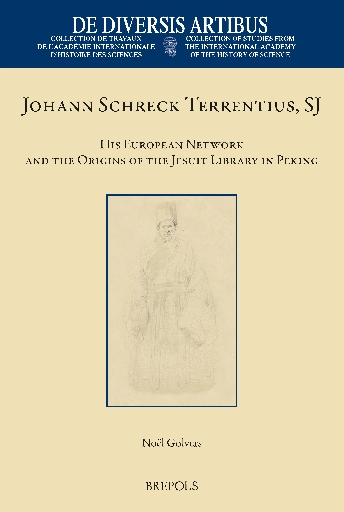
Johann Schreck Terrentius, SJ
show More to view fulltext, buy and share links for:Johann Schreck Terrentius, SJ show Less to hide fulltext, buy and share links for: Johann Schreck Terrentius, SJA thorough analysis of the sinuous ‘peregrinatio academica’ of Johann Terrentius Schreck (1576-1630) between 1600-1618 through (South-, Central- and NW-) European universities, academies and courts (at Freiburg /Br.; Paris; Rome; Basel; Padua; Strasbourg, Prague, Kassel, etc.) and his rich correspondence displays a widespread network of contacts, covering a broad range of domains, from medicine to alchemy, pharmacy, botany, and through engineering to (pure and applied) mathematics, and calendar making. In all these domains of the contemporary ‘Republic of Letters’, this former student of François Viète (Paris), Galileo (Padua) and ex-Lincean, adept of Copernicus and Paracelsus showed himself to be a passionate scholar with multi-faceted and versatile talents. After 1611, with this very rich experience he entered the Society of Jesus, and shortly afterward he was appointed as companion of Nicolas Trigault, who was touring through
Europe (1615-1618) as procurator on behalf of the fledgling Jesuit Mission in China, seeking funds, men, books and scientific instruments. This second phase of intensive travelling through European centers of scholarship, patronage, and printing (including Rome; Venice; Basel; Frankfurt; Cologne, Antwerp, etc.) resulted in an enormous collection of books and instruments, which were dispatched to Lisbon from various points in 1617/1618. Shipped to China, these materials arrived in Macau in 1619, and in Peking in 1625, becoming the core of the Jesuit libraries, mainly in Peking, and the basis for the scholarly activities of the Jesuits over the following decades in the domains of mathematics, calendar making, medicine, etc.
-
-
-
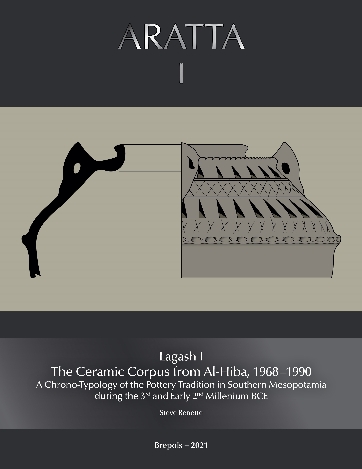
Lagash I — The Ceramic Corpus from al-Hiba, 1968–1990
show More to view fulltext, buy and share links for:Lagash I — The Ceramic Corpus from al-Hiba, 1968–1990 show Less to hide fulltext, buy and share links for: Lagash I — The Ceramic Corpus from al-Hiba, 1968–1990Between 1968 and 1990, Donald P. Hansen and Vaughn E. Crawford directed six seasons of excavations at al-Hiba, the ancient Sumerian city-state Lagash. Overseen by Edward L. Ochsenschlager, the team documented one of the largest ceramic datasets from a southern Mesopotamian site spanning the entire third and the early second millennium bce. With the availability of digital tools and relational database technology, the Al-Hiba Publication Project, led by Holly Pittman at the Penn Museum, can now analyze these results in preparation of final publication. As a case-study in the difficulties of working with legacy data, the publication project also assesses how the original recording methodology structures and limits the interpretation of these datasets. This first volume of the Lagash publications presents the ceramic corpus organized in a chrono-typology that traces the development of the pottery tradition through the Early Dynastic, Akkadian, Ur III, and Isin-Larsa periods. Often confirming well-established trends in general Mesopotamian ceramic development, this dataset from the south-eastern part of the Mesopotamian alluvium also introduces an underappreciated degree of regional variation.
-
-
-
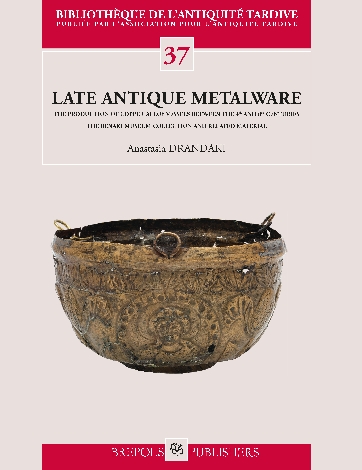
Late Antique Metalware. The Production of Copper-Alloy Vessels between the 4th and 8th Centuries
show More to view fulltext, buy and share links for:Late Antique Metalware. The Production of Copper-Alloy Vessels between the 4th and 8th Centuries show Less to hide fulltext, buy and share links for: Late Antique Metalware. The Production of Copper-Alloy Vessels between the 4th and 8th CenturiesThe book examines the fourth- to eighth-century copper alloy wares in the Benaki Museum, using them as the basis on which a wider debate about the production, circulation and use of copper vessels in Late Antiquity can be built. It is an attempt at a holistic approach to this rich but as yet little studied material. Apart from the necessary typology and dating, the study also includes systematic discussion of questions regarding the alloys used in the manufacture of the copperwares and the techniques employed in their production and decoration. The study of primary sources provided evidence about the late Roman and Medieval Greek terminology associated with each group of objects, as well as interesting information about the distribution of various types of vessels, the context in which they were used and the value their owners placed on them, while also containing useful references to the coppersmiths themselves.
Most of the Benaki copperwares were acquired on the Egyptian market and can be connected with the rich local production in the Late Roman and Early Islamic period. Yet the study of these artefacts showed that they have striking similarities with a wide range of archaeological material discovered over an extremely large geographical area, from the Eastern Mediterranean to Italy, Germany, Spain and the UK. The geographical spread of copper alloy wares that follow a parallel development in different parts of the empire and also appear almost contemporaneously in Western European burials reignites the debate on the production centres and subsequent modes of distribution of these artefacts. In turn these issues touch on the long-standing debate on the so-called ‘Coptic bronzes’ and the actual role of Egypt in the overall production of and trade in these articles in Late Antiquity.
-
-
-
Le grec et la philosophie dans la correspondance de Cicéron
show More to view fulltext, buy and share links for:Le grec et la philosophie dans la correspondance de Cicéron show Less to hide fulltext, buy and share links for: Le grec et la philosophie dans la correspondance de CicéronSituée au carrefour de la linguistique, de la littérature antique, de la philosophie grecque et romaine ainsi que de l’histoire des idées à Rome à la fin de la République, cette étude cherche à examiner comment le «code-switching» (ou basculement d’une langue à l’autre) révèle les origines, l’élaboration et l’évolution de la pensée philosophique de Cicéron dans un genre marginal, semi-privé et informel - la correspondance - qui entretiens d’étroites affinités tant avec le bilinguisme qu’avec avec la philosophie. Après une définition puis une triple analyse, formelle, culturelle et prosopographique, du corpus retenu, ce livre s’attache aux sources philosophiques du grec figurant dans les lettres cicéroniennes en quatre étapes successives, incarnées respectivement par Platon, les Socratiques (Xénophon et Antisthène) et les Académiciens (Arcésilas, Carnéade, Philon), par Aristote et les Péripatéticiens (Théophraste et Dicéarque), par Épicure et les Épicuriens (Philodème de Gadara) et par les Stoïciens. Elle révèle la récurrence, la précision, la subtilité des emprunts de Cicéron à la philosophie classique et hellénistique, mais aussi la variété de leurs emplois et de leurs fonctions. La correspondance constitue souvent un laboratoire de la pensée où la genèse de celle-ci est plus perceptible que dans les dialogues ou les traités et une analyse systématique du bilinguisme qui s’y manifeste constitue un angle d’approche inédit et fécond pour approfondir notre connaissance de la philosophie cicéronienne et hellénistique.
-
-
-
L’Hymne de la Perle des Actes de Thomas
show More to view fulltext, buy and share links for:L’Hymne de la Perle des Actes de Thomas show Less to hide fulltext, buy and share links for: L’Hymne de la Perle des Actes de ThomasLes Actes apocryphes de Thomas, qui racontent l’activité missionnaire et le martyre de l’apôtre en Inde, figurent au nombre des cinq grands Actes apostoliques anciens, avec ceux de Jean, de Pierre, d’André et de Paul. Connus par une version syriaque et une version grecque, ainsi que par des formes dérivées en latin et dans plusieurs langues orientales, les Actes de Thomas sont les seuls à nous être parvenus en entier. Même s’ils appartiennent au genre du récit romanesque et se rapprochent à ce titre des romans de l’Antiquité gréco-latine, les Actes de Thomas intègrent des éléments que l’on ne retrouve guère dans cette littérature : des prières, des épiclèses ou invocations baptismales et eucharistiques, des discours où l’apôtre propose un message caractérisé par un idéal de renoncement sexuel, des descriptions de rites baptismaux et eucharistiques, et des hymnes, dont le plus fameux est sans contredit l’«Hymne de Judas Thomas l’apôtre, quand il était au pays des Indiens », mieux connu sous le titre d’«Hymne de la Perle» ou d’«Hymne de l’âme». Transmis en syriaque et en grec, par un seul manuscrit dans chacun des cas, et par une paraphrase byzantine, l’Hymne de la Perle se présente sous la forme d’un récit qui raconte l’épopée d’un jeune prince oriental envoyé en Égypte pour en rapporter une perle, précieuse et unique, gardée par un serpent. On a volontiers vu dans ce poème, dont la composition est antérieure à celle des Actes de Thomas, une évocation de la destinée de l’âme, d’origine céleste, en exil dans le corps et la matière. Une lecture plus attentive de l’hymne permet cependant de le situer dans un contexte historique et doctrinal précis, celui de la réappropriation des Actes de Thomas par les manichéens, qui ont vu dans l’hymne une évocation poétique saisissante de la vocation et de la destinée de Mani. Cet ouvrage propose une édition, une traduction française et une synopse des trois versions de l’Hymne de la Perle, précédées d’une introduction et suivies d’un commentaire.
Paul-Hubert Poirier, professeur émérite de l’Université Laval (Québec), est membre de l’Institut de France (Académie des Inscriptions et Belles-Lettres) et de la Société royale du Canada. Ses recherches et ses publications portent sur les littératures gnostique, manichéenne et apocryphe, notamment les traditions relatives à l’apôtre Thomas, les Actes de Thomas et l’Évangile selon Thomas. Avec Jean-Pierre Mahé, il a codirigé la publication des Écrits gnostiques. La bibliothèque de Nag Hammadi dans la «Bibliothèque de la Pléiade» (Paris, Gallimard, 2007).
-
-
-
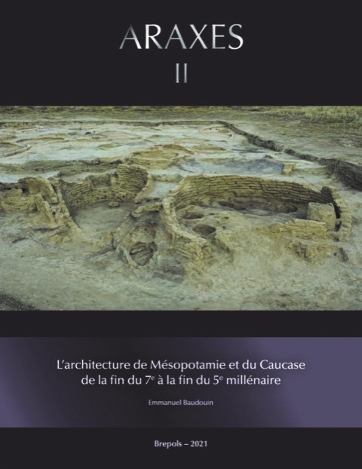
L’architecture de Mésopotamie et du Caucase de la fin du 7e à la fin du 5e millénaire
show More to view fulltext, buy and share links for:L’architecture de Mésopotamie et du Caucase de la fin du 7e à la fin du 5e millénaire show Less to hide fulltext, buy and share links for: L’architecture de Mésopotamie et du Caucase de la fin du 7e à la fin du 5e millénaireCet ouvrage invite à retracer l’histoire des relations culturelles entre les communautés de Mésopotamie et du Caucase durant le Néolithique et le Chalcolithique par une étude des mécanismes d’innovation et de transmission des connaissances en architecture. Le premier objectif est de caractériser ces échanges techniques pour déterminer si les communautés du Caucase se sont installées de manière autonome ou si elles ont profité de l’expérience de celles de Mésopotamie. Le second objectif est de comprendre l’évolution de l’architecture "complexe" au Samarra et à l’Obeid et de mesurer l’impact social de l’expansion obeidienne. Ces recherches montrent que le milieu du sixième millénaire marque un tournant dans les échanges techniques et les relations culturelles entre ces deux régions. Auparavant, ces échanges apparaissent diffus dans les régions situées au nord de la Mésopotamie centrale. Ensuite, l’expansion obeidienne entraîne une homogénéisation progressive des techniques dans l’ensemble du bassin syro-mésopotamien, à laquelle se sont greffés emprunts techniques et adaptations régionales.
-
-
-
L’invention du protomartyr Étienne
show More to view fulltext, buy and share links for:L’invention du protomartyr Étienne show Less to hide fulltext, buy and share links for: L’invention du protomartyr ÉtienneCette étude s’efforce de comprendre de quelles manières la figure biblique d’Étienne (Actes 6-8) s’est transmise et a été reçue dans le christianisme des six premiers siècles de notre ère. Du texte des Actes des apôtres à la translation de ses reliques à Rome en 589, cette enquête tente de saisir les mécanismes conduisant à la construction d’Étienne comme un saint dont le culte fut central dans l’histoire du christianisme. Une attention particulière a été accordée à l’étude des diverses formes que son culte a revêtues après la découverte de ses reliques, en Palestine au ve siècle, et de sa rapide diffusion en Méditerranée orientale et occidentale. À cette fin, l’ensemble des pièces du dossier hagiographique d’Étienne ont été scrutées à la lumière des recherches les plus récentes sur le culte des saints, l’hagiographie et l’histoire de la Palestine dans l’Antiquité tardive. Au terme de cette étude, nous espérons surtout exposer les motivations idéologiques de l’usage des reliques du saint dans un contexte où s’entrecroisent controverses doctrinales, topographie sacrée, antijudaïsme et construction de la mémoire chrétienne.
-
-
-
My God, my God why have you abandoned me?
show More to view fulltext, buy and share links for:My God, my God why have you abandoned me? show Less to hide fulltext, buy and share links for: My God, my God why have you abandoned me?The motif of God's turning away his face still matters in theology as a direct aftermath of the horrors that the world experienced during WWII and also in the wake of the promotion of an excessive reading of theology, called kenotic. It even appears in unexpected places with no discernible association to the historical development of the Christian doctrine (Caputo, Žižek and C.S.Lewis). This book provides a historical supplement to current approaches and explores the way that late antique theology laid out the theoretical substratum on which modern approaches could anchor themselves. It presents the nuanced ways in which the motif of divine abandonment developed in late antiquity, displays the various threads of thought that theology pursued in different contexts (exegesis, Christology and ascetic desert literature), and raises three points:
- the extent to which parallel lines were drawn in late antique theology between the experiences of the bride in the Song of Songs, Jesus on the cross and the early ascetics;
- the normativeness of divine abandonment in early Christian thought and its association to sinfulness;
- the possibility that late antique theology had introduced a Jesus-like ‘kind’ of abandonment.
-
-
-
Revealing Women
show More to view fulltext, buy and share links for:Revealing Women show Less to hide fulltext, buy and share links for: Revealing WomenRevealing Women offers a detailed and textually oriented investigation of the roles and functions of female characters in Gnostic Christian mythologies. It answers questions such as: to what end did Gnostic Christian theologians employ feminine imagery in their theology? What did they want to convey through it?
This book shows that feminine imagery was a genuine concern for Gnostic theologians, and it enquires about how it was employed to describe the divine through a contextual reading of Gnostic Christian texts presenting Ophite, Sethian, Barbeloite and Valentinian mythologoumena and theologoumena. Overall, it argues that feminine imagery ought to be acknowledged as an important theological framework to investigate and contextualize Gnostic works by showing that these theologians used feminine imagery to exemplify those aspects of the Godhead which they considered paradoxical and, yet, essential. The claims made in the first chapters are later substantiated by an in-depth investigation of understudied Gnostic texts, such as the so-called Simonian Gnostic works, the Book of Baruch of the Gnostic teacher Justin and the Nag Hammadi treatise known as Exegesis of the Soul.
-
-
-
Ritorno alla Flat Tax
show More to view fulltext, buy and share links for:Ritorno alla Flat Tax show Less to hide fulltext, buy and share links for: Ritorno alla Flat TaxProporzionale o progressiva? Un problema di imposta oggi come in Atene antica. La ricerca muove da un’ipotesi di interpretazione di un lemma di Polluce relativo all’imposizione fiscale, non sempre oggetto di adeguato interesse; essa procede in funzione della verifica dell’ipotesi, sia attraverso una accurata lettura dei testi, particolarmente attenta ai valori lessicali e ai problemi di natura critica-testuale, sia attraverso il confronto con vari dati forniti dalla tradizione o desumibili da essa, attinenti soprattutto all’ambito demografico e fiscale. In relazione a tale ordine di temi, che costituiscono la linea dominante dell’indagine, assume un interesse di notevole rilievo il carattere specifico delle cifre che sono elemento essenziale della discussione, soprattutto le ‘cifre tonde’, e un ruolo determinante acquisiscono le coincidenze che emergono fra i dati attestati e quelli che risultano dalle premesse ipotetiche (coincidenze esatte, o, a volte, non esatte, ma con differenze generalmente irrilevanti). Di conseguenza non appaiono trascurabili gli indizi che potesse esistere un disegno preordinato allo sviluppo della città nelle sue diverse componenti: un disegno di cui le cifre sembrano conservare il riflesso.
-
-
-
Studies on Palmyrene Sculpture
show More to view fulltext, buy and share links for:Studies on Palmyrene Sculpture show Less to hide fulltext, buy and share links for: Studies on Palmyrene SculptureThis volume presents the first English translation of Harald Ingholt’s seminal work Studier over Palmyrensk Skulptur, together with a number of studies that contextualize this important volume in the light of current research. Almost a century after its publication in 1928, Ingholt’s ground-breaking Danish-language monograph remains essential reading for all scholars of Palmyrene archaeology and iconography, setting out observations on the typology and style of securely dated Palmyrene portraits, and establishing a stylistic and chronological sequence that remains in use today. Included alongside the translation of Ingholt’s writings are contributions by leading scholars in the field who seek to introduce Harald Ingholt and explore the impact of his work in Palmyra, as well as presenting a survey of all the portraits from Palmyra that can be securely dated by inscription. The translation and commentary have been realized as part of the Palmyra Portrait Project, directed by Prof. Rubina Raja.
-
-
-
The 'Alawī Religion: An Anthology
show More to view fulltext, buy and share links for:The 'Alawī Religion: An Anthology show Less to hide fulltext, buy and share links for: The 'Alawī Religion: An AnthologyThe ‘Alawī religion, known for most of its history by the name Nuṣayriyya, emerged in Iraq over a millennium ago. An esoteric, syncretistic religion with a close affinity to Shī‘ī Islam, its origins are shrouded in obscurity. Over time, beliefs and rituals deriving from paganism, Zoroastrianism and Christianity were grafted to the radical Shī‘ī substrate, giving the religion its distinctive character. Throughout their history the ‘Alawites were a persecuted religious minority, but in the 1970s they came to power in Syria and retained absolute rule until recently. There is also a significant population in Hatai Province in southern Turkey.
Arising from the authors’ long-standing interest in the ‘Alawī religion, this anthology offers for the first time a selection from the distinctive literature of the mysterious religion. The book opens with a detailed introduction setting the background for the themes it will cover: the mystery of the divinity in the ‘Alawī faith; rituals and ceremonies; calendar and festivals; the doctrine of reincarnation; initiation into the divine mysteries and the esoteric circle; and finally, the identity and self-definition of the religion’s followers vis-à-vis Islam and other religions.
-
-
-
The Abel Distinctions
show More to view fulltext, buy and share links for:The Abel Distinctions show Less to hide fulltext, buy and share links for: The Abel DistinctionsPeter the Chanter was a master at Notre-Dame cathedral in Paris in the late 12th century. Among his many works is The Abel Distinctions, an alphabetized collection that treats key words by ‘distinguishing’ their various symbolic meanings in accordance with the traditions of biblical exegesis. The work was innovative in form and deeply conservative in content. Of special use to preachers who would shape a sermon around such sets of distinctions, it also appealed in general to clerics and laity interested in biblical meaning and allegory. The Abel Distinctions may have been the first collection of its kind; it spawned dozens of imitators through the next two centuries and more. Its immense popularity and influence is indicated by its nearly ninety extant manuscripts.
The source text of this volume appeared in Corpus Christianorum. Continuatio Mediaeualis as Petrus Cantor, Distinctiones Abel (CCCM, 288-288A). References to the corresponding pages of the Corpus Christianorum edition are provided in the margins of this translation.
-
-
-
The Allure of Glazed Terracotta in Renaissance Italy
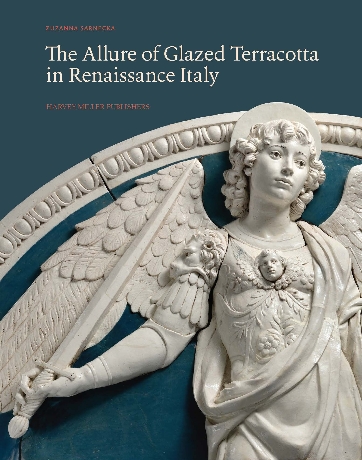
show More to view fulltext, buy and share links for:The Allure of Glazed Terracotta in Renaissance Italy show Less to hide fulltext, buy and share links for: The Allure of Glazed Terracotta in Renaissance ItalyThis book explores the role of glazed terracotta sculpture in Renaissance Italy, from c. 1450 to the mid-1530s. In its brightness and intense colour glazed terracotta strongly attracted the viewer’s gaze. Its pure and radiant surfaces also had the power to raise the mind and soul of the faithful to contemplation of the divine. The quasi-magical process of firing earthenware coated with tin-based paste, promoted initially by imports from the East, was seized upon by Luca della Robbia, who realised that glazed terracotta was the ideal vehicle for the numinous. He began to create sculptures in the medium in the 1430s, and continued to produce them for the rest of his life. After Luca’s death, his nephew, Andrea della Robbia, inherited his workshop in Florence and continued to develop the medium, together with his sons. The book considers some of the large-scale altarpieces created by the Della Robbia family in parallel with a number of small-scale figures in glazed terracotta, mostly made by unidentified sculptors. The captivating illustrations integrate these two categories of glazed terracotta sculpture into the history of Italian Renaissance art. By focusing on a specific artistic medium which stimulated piety in both ecclesiastical and domestic contexts, this book offers new ways of thinking about the religious art of the Italian Renaissance. The links it establishes between lay devotion and the creation of religious images in glazed terracotta invite reassessment of habitual distinctions between private and public art.
-