


EMISCS13

Collection Contents
2 results
-
-
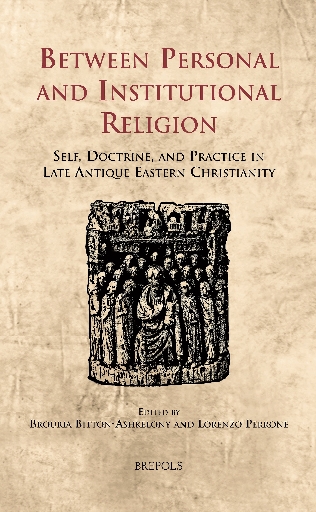
Between Personal and Institutional Religion
show More to view fulltext, buy and share links for:Between Personal and Institutional Religion show Less to hide fulltext, buy and share links for: Between Personal and Institutional ReligionThis book addresses change and continuity in late antique Eastern Christianity, as perceived through the lens of the categories of institutional religion and personal religion. The interaction between personal devotion and public identity reveals the creative aspects of a vibrant religious culture that altered the experience of Christians on both a spiritual and an institutional level. A close look at the interrelations between the personal and the institutional expressions of religion in this period attests to an ongoing revision of both the patristic literature and the monastic tradition. By approaching the period in terms of ‘revision’, the contributors discuss the mechanism of transformation in Eastern Christianity from a new perspective, discerning social and religious changes while navigating between the dynamics of personal and institutional religion.
Recognizing the creative aspects inherent to the process of ‘revision’, this volume re-examines several aspects of personal and institutional religion, revealing dogmatic, ascetic, liturgical, and historiographical transformations. Attention is paid to the expression of the self, the role of history and memory in the construction of identity, and the modification of the theological discourse in late antique culture. The book also explores several avenues of Jewish-Christian interaction in the institutional and public sphere.
-
-
-
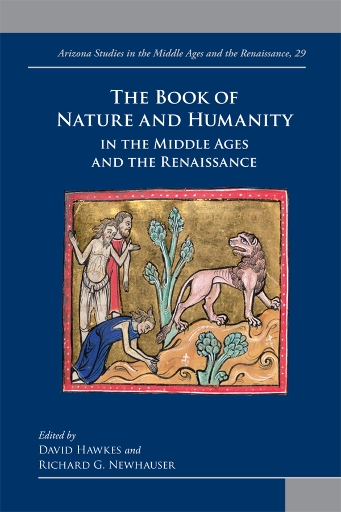
The Book of Nature and Humanity in the Middle Ages and the Renaissance
show More to view fulltext, buy and share links for:The Book of Nature and Humanity in the Middle Ages and the Renaissance show Less to hide fulltext, buy and share links for: The Book of Nature and Humanity in the Middle Ages and the RenaissanceSome modern commentators welcome the alleged approach of the “post-human” era as a liberation from the constraints of essentialist identity. Others lament it as a harbinger of the death of the soul. But both groups will find it instructive to consider that the nature of humanity has always been a contested topic. The chapters collected here suggest that the emergence of the modern idea of the human was at least as fraught a process as its putative demise.
David Hawkes and Richard G. Newhauser have selected a wide array of contributions for this volume. Renowned scholars from several disciplines have produced a series of fascinating essays, which concentrate on the relation between humanity and nature as it was understood in the Middle Ages and the Renaissance. The issues they examine range from poaching to flatulence, from Aztec animal symbolism to Jesus’s grandmother, from tulips to the Trinity.
Some chapters examine a wide variety of popular texts, from the bloody legend of Robert the Devil to the sinister magic of the Anglo-Saxon “wen charm”, from Lutheran Books of Nature to Emperor Maximillian’s wedding. The result is a book that raises intriguing implications for the modern struggle over the meaning of mankind.
-