


EMISCS13

Collection Contents
3 results
-
-
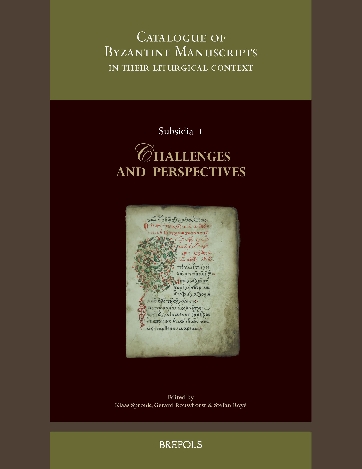
A Catalogue of Byzantine Manuscripts in their Liturgical Context: Challenges and Perspectives
show More to view fulltext, buy and share links for:A Catalogue of Byzantine Manuscripts in their Liturgical Context: Challenges and Perspectives show Less to hide fulltext, buy and share links for: A Catalogue of Byzantine Manuscripts in their Liturgical Context: Challenges and PerspectivesThe world of Byzantine manuscripts is fascinating but also confusing. Although they play an important part in modern studies on the history of Christian liturgy and on the textual history of the Bible, a clear overview of the vast amount of these manuscripts in their many different forms is lacking. A new approach in their cataloguing is called for. The present volume brings together a number of specialists in the field of Byzantine, liturgical and Biblical studies with the aim to develop a new methodology for codicological research of the Byzantine manuscripts, taking seriously the original environment of the integral codices in the monasteries and the churches in which they were manufactured and functioned.
Prof. dr. Klaas Spronk is Head of the Research Department Sources of the Protestant Theological University (PThU), location Amsterdam, and chairman of the CBM Academic Board.
Prof. dr. Gerard Rouwhorst is Professor of Liturgical History at the Tilburg School of Catholic Theology and member of the Department of Biblical Sciences and Church History of that institution. He is member of the CBM Academic Board.
Dr. Stefan Royé is member of the Research Department Sources of the Protestant Theological University (PThU), location Amsterdam, and CBM programme coordinator and secretary of the Academic Board.
-
-
-
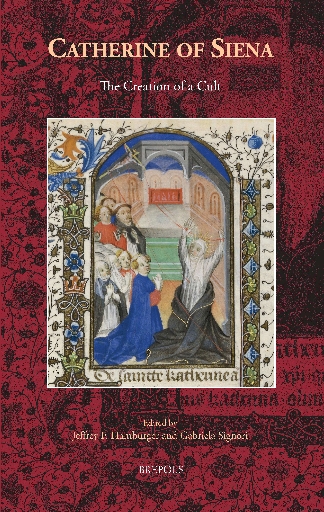
Catherine of Siena
show More to view fulltext, buy and share links for:Catherine of Siena show Less to hide fulltext, buy and share links for: Catherine of SienaHow does one construct a saint and promote a cult beyond the immediate community in which he or she lived? Italian mendicants had accumulated a good deal of experience in dealing with this politically explosive question. The posthumous description of the life of Francis of Assisi (d. 1226) written by the Master General of the order, Bonaventure (d. 1274), could be regarded as paradigmatic in this regard. A similarly massive intervention in the production and diffusion of a cult can be observed in the case of the Dominican tertiary, Catherine of Siena (d. 1380), who in many respects (e.g. the imitation of Christ and her stigmatization) ‘competed’ with Francis of Assisi. Raymund of Capua (d. 1399), the Master General of the order, established the foundation for the dissemination of the cult by writing the authoritative life, but it was only the following generation that succeeded in establishing and disseminating the cult on a broad basis by means of copies, adaptations, and translations. The question of how to make a cult, which stands at the centre of this volume, thus presents itself in terms of the challenge of rewriting a legend for different audiences. The various contributions consider the role, not only of texts in many dfferent vernaculars (Czech, English, French, German, and Italian), but also of images, whether separately or in connection with one another.
-
-
-
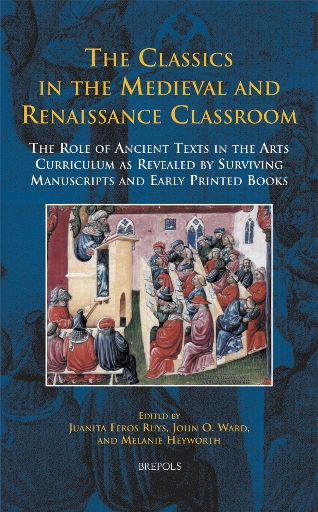
The Classics in the Medieval and Renaissance Classroom
show More to view fulltext, buy and share links for:The Classics in the Medieval and Renaissance Classroom show Less to hide fulltext, buy and share links for: The Classics in the Medieval and Renaissance ClassroomMedievalists and Renaissance specialists contribute to this compelling volume examining how and why the classics of Greek and Latin culture were taught in various Western European curricula (including in England, Scotland, France,Germany, and Italy) from the tenth to the sixteenth centuries. By analysing some of the commentaries, glosses, and paraphrases of these classics that were deployed in medieval and Renaissance classrooms, and by offering greater insight into premodern pedagogic practice, the chapters here emphasize the ‘pragmatic’ aspects of humanist study. The volume proposes that the classics continued to be studied in the medieval and Renaissance periods not simply for their cultural or ‘ornamental’ value, but also for utilitarian reasons, for ‘life lessons’. Because the volume goes beyond analysing the educational manuals surviving from the premodern period and attempts to elucidate the teaching methodology of the premodern period, it provides a nuanced insight into the formation of the premodern individual. The volume will therefore be of great interest to scholars and students interested in medieval and Renaissance history in general, as well as those interested in the history of educational theory and practice, or in the premodern reception of classical literature.
-