


EMISCS13

Collection Contents
4 results
-
-
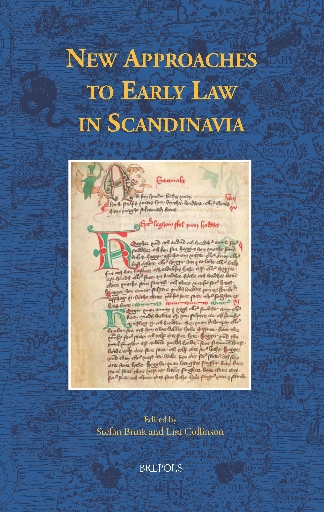
New Approaches to Early Law in Scandinavia
show More to view fulltext, buy and share links for:New Approaches to Early Law in Scandinavia show Less to hide fulltext, buy and share links for: New Approaches to Early Law in ScandinaviaDuring recent years, there has been a revival of interest in the early laws of Scandinavia. In this volume several aspects of this field are presented and discussed. The collection begins by exploring the introduction and development of the næfnd in medieval Denmark, a kind of ‘jury’ which replaced the ordeal. The focus then moves to Sweden and Norway, with an analysis of the Hälsingelagen, and a comparison of the kristindómsbálkr (‘Ecclesiastical Law Section’) of the town law of Trondheim (Niðaróss Bjarkeyjarréttr) with the provincial law of medieval Trøndelag, Frostuþingslög. A further article explores how violence and homicide involving laymen and clerics was handled in late medieval Norway, drawing on the recent discovery of register protocols of the Penitentiary at the Papal Curia. The documentary aspects of law are examined through an analysis of the Äldre and Yngre Västgötalagen from existing manuscripts, in an attempt to discover the source of the initiative to write the laws down. A further study explores several words for ‘outlawry’ in Old Scandinavian languages.
This volume also provides a general theory of legal culture to show how the introduction of three new elements into Norwegian legal culture (norm-producing, large-scale lawmaking; conflict-resolving juries; equity as idea of justice) led to a major change in legal culture in medieval Norway. Finally, the book looks at the development of penal law in Denmark in the Middle Ages, attempting to explain that development in the light of both domestic conditions and foreign influence, especially from Sweden and Germany.
-
-
-
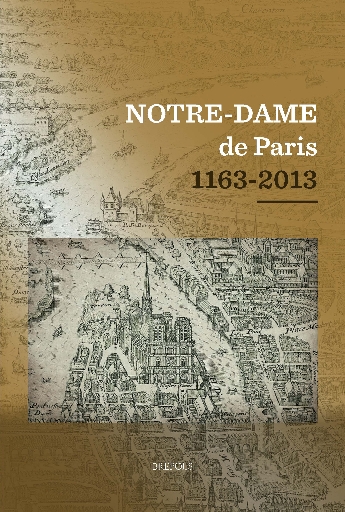
Notre-Dame de Paris 1163-2013
show More to view fulltext, buy and share links for:Notre-Dame de Paris 1163-2013 show Less to hide fulltext, buy and share links for: Notre-Dame de Paris 1163-2013En 1163, débute le chantier de l’actuelle cathédrale Notre-Dame de Paris. Construit en un siècle environ, le nouvel édifice devient vite un des monuments les plus fameux de France, symbolisant jusqu’à aujourd’hui l’évêque, l’Église et la ville de Paris. Huit siècles et demi après le début de la construction, un congrès scientifique a réuni du 12 au 15 décembre 2012 des spécialistes d’histoire religieuse, sociale, liturgique, artistique, intellectuelle et institutionnelle. Le livre issu de ce colloque présente un ensemble d'études faisant le point sur l’église cathédrale jusqu’à aujourd’hui et sa fonction médiatrice revendiquée entre Dieu et les hommes : du contrôle sur l’Université aux conférences de Carême, en passant par l’action méconnue du chapitre cathédral, les relations avec la Couronne, le renouvellement du chant sacré, la célébration des grands événements de la nation, l’impact sur l’esthétique néo-gothique.
L’objectif est de mieux comprendre les façons diverses dont Notre-Dame de Paris et les hommes qui prient, travaillent et vivent sous son ombre - évêques, chantres, maîtres, chanoines, chapelains, prédicateurs, hospitaliers, etc. - ont durablement marqué le territoire d’une Cité, la vie d’une capitale et la mémoire d’une nation.
Cédric Giraud, ancien élève de l’École nationale des chartes et agrégé d’histoire, est maître de conférences à l’université de Lorraine et membre junior de l’Institut universitaire de France. Ses recherches portent sur l’histoire culturelle du Moyen Âge central et la philologie médiolatine.
-
-
-
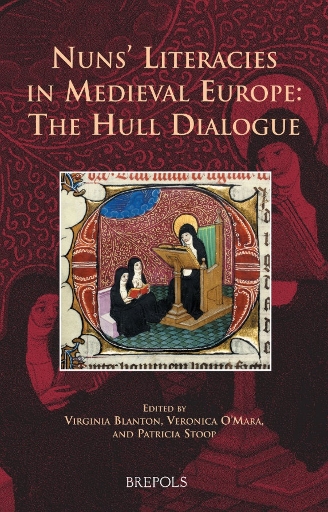
Nuns’ Literacies in Medieval Europe: The Hull Dialogue
show More to view fulltext, buy and share links for:Nuns’ Literacies in Medieval Europe: The Hull Dialogue show Less to hide fulltext, buy and share links for: Nuns’ Literacies in Medieval Europe: The Hull DialogueThis collection of essays, focused on the literacies of nuns in medieval Europe, brings together specialists working on diverse geographical areas to create a dialogue about the Latin and vernacular texts nuns read, wrote, and exchanged, primarily in northern Europe from the eighth to the mid-sixteenth centuries. To date, there has been some significant research in this field but little in the way of cross-cultural study. Drawing especially on the rich body of scholarship that currently exists about nuns and books in England, Germany, the Low Countries, and Sweden, these essays investigate the meaning of nuns’ literacies in terms of reading and writing, Latin and the vernaculars.
Contributors to this volume investigate the topic of literacy primarily from palaeographical and textual evidence and by discussing information about book ownership and book production in convents. In this first concentrated study that examines the literacy of nuns in a comparative fashion the essays pay close attention to the individual textual and cultural complexities of nuns’ literacies in the European Middle Ages.
-
-
-
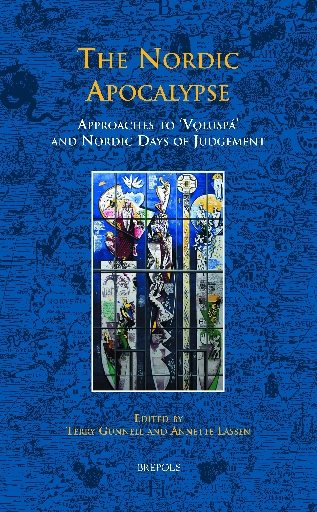
The Nordic Apocalypse
show More to view fulltext, buy and share links for:The Nordic Apocalypse show Less to hide fulltext, buy and share links for: The Nordic ApocalypseThis book, with roots in a conference held in Iceland in May 2008, contains a series of articles reflecting modern approaches to the text, context, and performance of the Old Norse poem Vǫluspá, perhaps the best known and most discussed of all the Eddic poems. Rather than attempting to cover Eddic or Skaldic poetry as a genre, the main aim of this book is to present an overview of the ‘state of the art’ with regard to one particular Eddic poem. It focuses especially on the poem’s possible context within the apocalyptic tradition of Northern Europe in the early medieval period. The approaches of the articles range from placing the poem within the pre-Christian oral tradition to placing it within the written and liturgical context of Christianity. Two other chapters offer a possible context for the poem by examining the nature and background of the early medieval image of the Apocalypse known to have been on display in the Cathedral of Hólar in northern Iceland. While the approaches are focused on one specific poem, they are nonetheless applicable to many other Eddic works.
-