


EMISCS13

Collection Contents
5 results
-
-
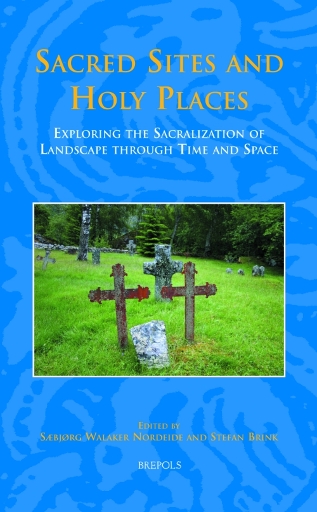
Sacred Sites and Holy Places
show More to view fulltext, buy and share links for:Sacred Sites and Holy Places show Less to hide fulltext, buy and share links for: Sacred Sites and Holy PlacesIn this volume two important veins of interdisciplinary research into the medieval period in Scandinavia and the Baltic region are merged, namely the Christianization process and landscape studies. The volume authors approach the common theme of sacrality in landscape from such various viewpoints as archaeology, philology, history of religion, theology, history, classical studies, and art history. A common theme in all articles is a theoretical approach, complemented by illustrative case studies from the Scandinavian, Baltic, or Classical worlds. Aspects of pagan religion, as well as Christianity and the establishment of the early Church, are considered within both geographical setting and social landscape, while the study of maps, place names, and settlement patterns introduces new methodologies and perspectives to expose and define the sacral landscape of these regions. The contributions are put into perspective by a comparison with research into the sacral landscapes of Central Europe and the Classical world.
New interdisciplinary research methods and new models have been developed by the contributors to present new vistas of sacrality in the Scandinavian and the Baltic landscape. To open up these case studies, a selection of over sixty images and maps accompanies this cutting-edge research, allowing the reader to explore sacralization and the Christianization process within its medieval setting.
-
-
-
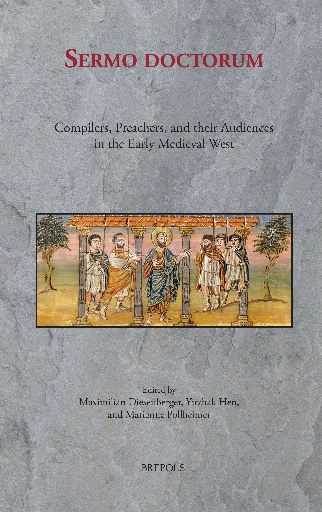
Sermo doctorum
show More to view fulltext, buy and share links for:Sermo doctorum show Less to hide fulltext, buy and share links for: Sermo doctorumDespite their large number and their potential significance for our understanding of the genesis of Christian thought and practice, early medieval sermons have been conspicuously neglected by modern scholarship. Taking their lead from recent studies that transformed our understanding of the post-Roman world, the various contributors to this collection of essays explore a wide range of topics related to the composition, transmission, and dissemination of sermons and homiliaries in the early medieval West. Some papers focus on individual sermons in an attempt to identify their authors and aims; others examine the manuscript evidence for the compilation and transmission of composite homiliaries; and a few question our concept of early medieval sermons as a peculiar genre that merits special attention. By bringing early medieval sermons into the centre of discussion this volume, which is the first book dedicated to early medieval sermons and homiliaries, makes an important contribution to our understanding of the religious culture of the early medieval West. This multi-lingual collection of papers examines a plethora of texts which, in the past, were pushed to the margins of historical research, and offers a fresh look at these works in their own cultural, religious, and social context.
-
-
-
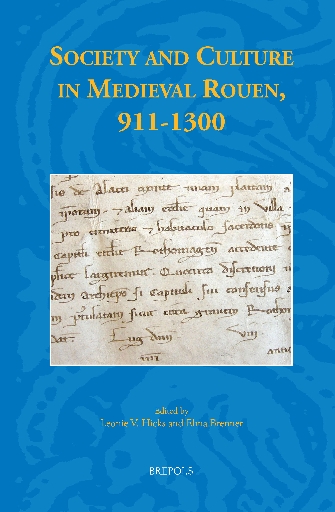
Society and Culture in Medieval Rouen, 911-1300
show More to view fulltext, buy and share links for:Society and Culture in Medieval Rouen, 911-1300 show Less to hide fulltext, buy and share links for: Society and Culture in Medieval Rouen, 911-1300Rouen, one of the leading cities of medieval Western Europe, has long awaited detailed consideration in English by modern scholars. This book presents exciting new research on the society and culture of medieval Rouen by British and Continental historians. Divided into three sections, addressing space and representation, religious culture, and social networks, the volume is both wide-ranging and tightly focused. The key themes include Rouen’s relationship with its environs, image and identity, social and political relationships, and Rouen’s status as the ‘capital’ of Normandy. The essays discuss topics ranging from urban development and charity, the city’s aristocratic and ecclesiastical elites, the Jewish community, and the relationship of the Angevin kings with Rouen. Comparisons and contextualization, as well as detailed maps, make the book valuable not only to readers interested in Rouen and Normandy, but also to those who wish to learn more about medieval cities, culture, and society.
-
-
-
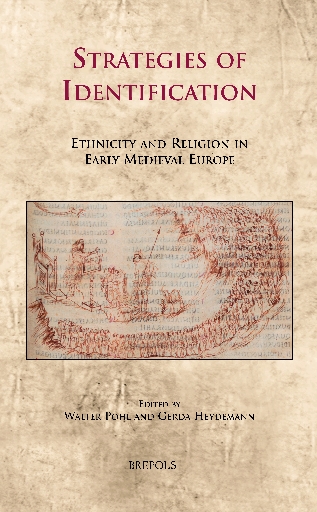
Strategies of Identification
show More to view fulltext, buy and share links for:Strategies of Identification show Less to hide fulltext, buy and share links for: Strategies of IdentificationHow were identities created in the early Middle Ages and when did they matter? This book explores different types of sources to understand the ways in which they contributed to making ethnic and religious communities meaningful: historiography and hagiography, biblical exegesis and works of theology, sermons and letters. Thus, it sets out to widen the horizon of current debates on ethnicity and identity. The Christianization and dissolution of the Roman Empire had provoked a crisis of traditional identities and opened new spaces for identification. What were the textual resources on which new communities could rely, however precariously? Biblical models and Christian discourses could be used for a variety of aims and identifications, and the volume provides some exemplary analyses of these distinct voices. Barbarian polities developed in a rich and varied framework of textual ‘strategies of identification’. The contributions reconstruct some of this discursive matrix and its development from the age of Augustine to the Carolingians. In the course of this process, ethnicity and religion were amalgamated in a new way that became fundamental for European history, and acquired an important political role in the post-Roman kingdoms. The extensive introduction not only draws together the individual studies, but also addresses fundamental issues of the definition of ethnicity, and of the relationship between discourses and practices of identity. It offers a methodological basis that is valid for studies of identity in general.
-
-
-
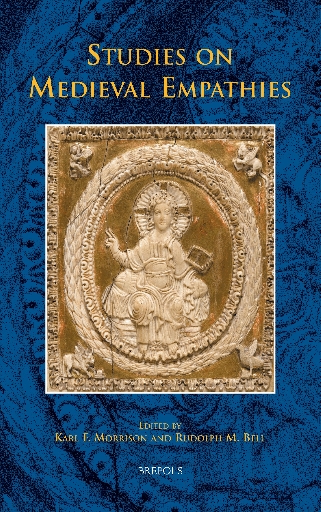
Studies on Medieval Empathies
show More to view fulltext, buy and share links for:Studies on Medieval Empathies show Less to hide fulltext, buy and share links for: Studies on Medieval EmpathiesEmpathy is a deep feeling or intuition for kinship transcending self-preoccupied individuality. This book is about empathy in the Middle Ages, before it had a name.The authors begin by tracing the origins of empathy in pre-Christian Antiquity and early Christianity, especially in mysteries of divine justice, by which the good often suffered and the wicked prospered and, as with surgical healing, compassion was manifested by inflicting pain. The authors also explore many facets of empathy’s development in the Latin West, criss-crossing the artificial borders of academic departments to reveal interlocking connections that give emotional power to images, whether verbal, pictorial, or performative. In a powerful multi-disciplinary collaboration, they identify conditions and limits of empathy, and areas in which the dynamic between insiders and outsiders forced subversive explorations of what it meant to be human.
The doctrine of Christ as mediator of divine love dominated medieval thought about empathy as a human instinct. Taken together, like magnetic poles, two pictures in this book represent that mediation in action. The cover illustration, a mid-ninth-century ivory plaque from Carolingian Gaul, depicts Christ, the Divine Word, Love incarnate, glorified, enthroned, and adored by angels as creator, judge, and teacher. The second, Plate 1, from the same period and region, represents the act that sealed the mediation of divine love to humanity: Christ the man, tortured and dying for love.
-