


The Medieval Low Countries
History, Archaeology, Art, and Literature
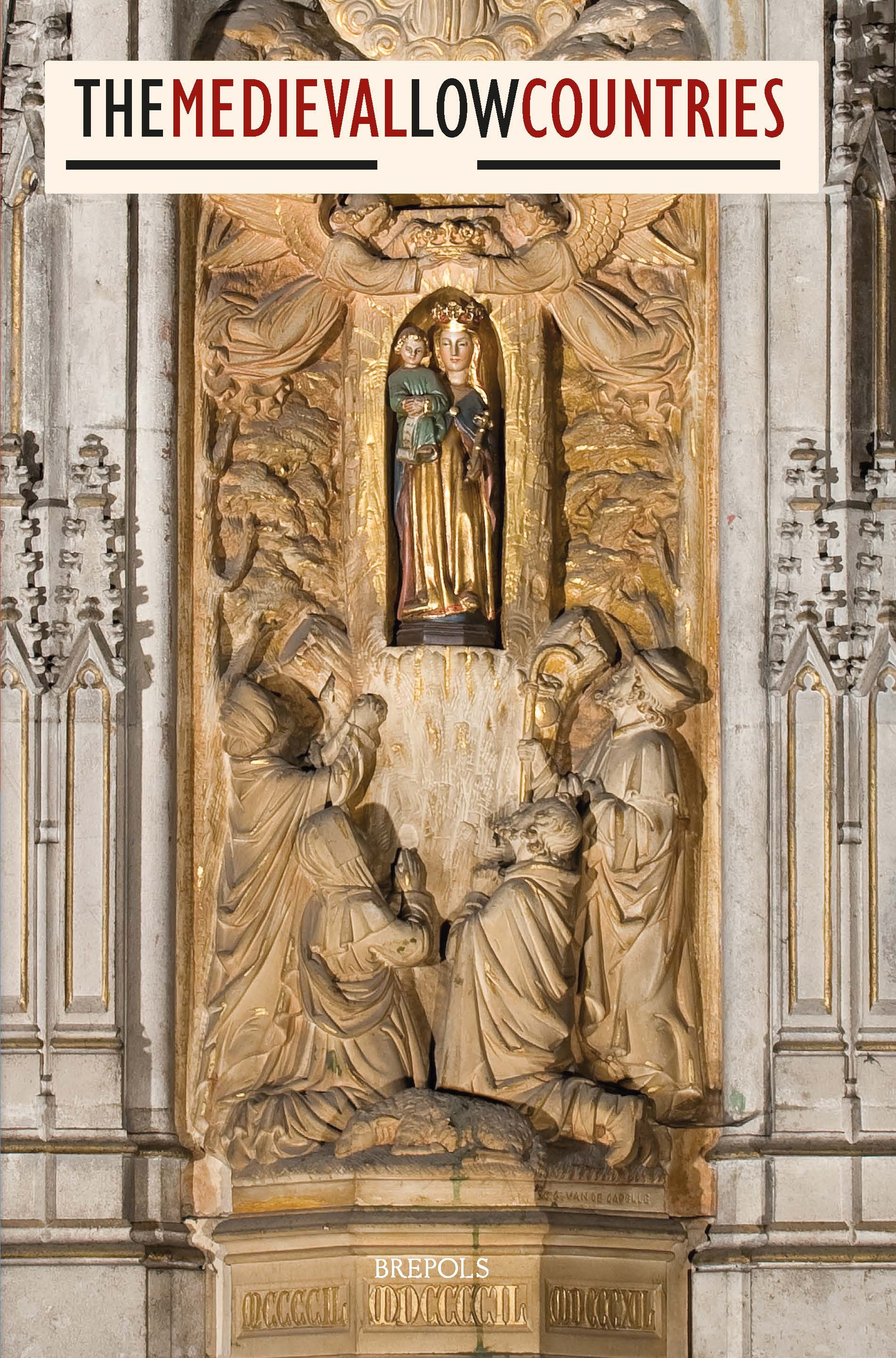
Volume 1, Issue 1, 2014
-
-
Front Matter ("Editorial Board", "Title Page", "Copyright Page", "Table of Contents")
show More to view fulltext, buy and share links for:Front Matter ("Editorial Board", "Title Page", "Copyright Page", "Table of Contents") show Less to hide fulltext, buy and share links for: Front Matter ("Editorial Board", "Title Page", "Copyright Page", "Table of Contents")
-
-
-
Diplôme princier, matrice de faux, acte modèle. Le règlement d’avouerie du comte Baudouin V pour Saint‑Bertin (1042) et ses réappropriations sous l’abbatiat réformateur de Lambert (1095‒1123)
show More to view fulltext, buy and share links for:Diplôme princier, matrice de faux, acte modèle. Le règlement d’avouerie du comte Baudouin V pour Saint‑Bertin (1042) et ses réappropriations sous l’abbatiat réformateur de Lambert (1095‒1123) show Less to hide fulltext, buy and share links for: Diplôme princier, matrice de faux, acte modèle. Le règlement d’avouerie du comte Baudouin V pour Saint‑Bertin (1042) et ses réappropriations sous l’abbatiat réformateur de Lambert (1095‒1123)Authors: Jean-François Nieus and Steven VanderputtenAbstractL’article propose un examen critique du plus ancien règlement d’avouerie conservé pour le comté de Flandre, ainsi qu’une étude de ses réutilisations dans les milieux de la réforme bénédictine au début du xiie siècle. Cet acte de Baudouin V pour l’abbaye de Saint-Bertin est conservé dans cinq versions différentes datées de 1042 ou 1056, toutes tronquées ou interpolées, et toutes considérées comme falsifiées dans la littérature. Après une analyse approfondie de la tradition extrêmement complexe du document, les auteurs démontrent l’authenticité de son état originel de 1042 et proposent une reconstruction de son texte, qui est édité en annexe avec les principales versions falsifiées. Ils étudient ensuite sa « réception » sous l’abbé réformateur Lambert. Recopié dans les Gesta abbatum du moine Simon autour de 1100, l’acte a ensuite été interpolé deux fois, vers 1105 et vers 1119, dans le but de renforcer la mainmise du monastère sur son environnement immédiat. Enfin, communiqué aux abbayes soeurs de Saint-Amand et Marchiennes, il a aidé à ces dernières dans la composition d’autres actes tournés contre les avoués laïques.
-
-
-
The Wars of the Lord of Bronkhorst. Territory, Lordship, and the Proliferation of Violence in Fourteenth-Century Guelders
show More to view fulltext, buy and share links for:The Wars of the Lord of Bronkhorst. Territory, Lordship, and the Proliferation of Violence in Fourteenth-Century Guelders show Less to hide fulltext, buy and share links for: The Wars of the Lord of Bronkhorst. Territory, Lordship, and the Proliferation of Violence in Fourteenth-Century GueldersBy: Aart NoordzijAbstractThis article discusses the interplay of lordship, noble warfare and state formation in the late medieval duchy of Guelders and its surrounding areas. In Guelders, the emergence of a political public sphere was, paradoxically, accompanied by the multiplication of local lordships, the proliferation of noble warfare, and the continuation of personal government. Newly created public offices were pawned and appropriated by powerful noblemen. Consequently, these noblemen became the embodiment of the nascent public sphere as counsellors, stewards and bailiffs. However, they also continued to compete for castles, estates and local lordships. The so-called Guelders War (1350-1361) shows that the intermingling of private and public power produced a political setting in which noble warfare could easily increase in scale and disrupt large areas and entire territories.
-
-
-
Leydis, Pauli, and Berchen Revisited. Collective History Writing in the Low Countries in the Late Fifteenth Century
show More to view fulltext, buy and share links for:Leydis, Pauli, and Berchen Revisited. Collective History Writing in the Low Countries in the Late Fifteenth Century show Less to hide fulltext, buy and share links for: Leydis, Pauli, and Berchen Revisited. Collective History Writing in the Low Countries in the Late Fifteenth CenturyAuthors: Rombert Stapel and Jenine de VriesAbstractThis article focuses on a generation of chroniclers from the Low Countries operating at the intersection of urban and clerical environments and how they worked together to produce new historiographical texts. At the heart are the writings of three of the most productive and well-known historiographers of this generation: Johannes a Leydis, Theodericus Pauli and Willem van Berchen. The interdependency of a specific part of their body of work, namely their Chronicles of Holland, will be studied closely. This will lead to a new proposal for the complex relationship between these and other related contemporary texts. From this the contours emerge of a community of writers, reaching much further than these three alone, which shared a common interest in historiography and exchanged texts, ideas and manuscripts. In each of their texts, the influence of this exchange is tangible, exhibiting the collaborative nature of their historical writings, rarely detected in the Middle Ages.
-
-
-
Acquiring Religious Perfection Outside a Vow. The Carthusian Institution of the Donati in Late Medieval Reformist Communities and the Modern Devotion
show More to view fulltext, buy and share links for:Acquiring Religious Perfection Outside a Vow. The Carthusian Institution of the Donati in Late Medieval Reformist Communities and the Modern Devotion show Less to hide fulltext, buy and share links for: Acquiring Religious Perfection Outside a Vow. The Carthusian Institution of the Donati in Late Medieval Reformist Communities and the Modern DevotionBy: Tom GaensAbstractThis essay shows that the late medieval Carthusian innovation of the monastic ‘donates’ (or donati) was adopted by most of the reformist religious orders and congregations in Germany and the Low Countries in the fifteenth century. Furthermore, it is argued that the earliest communities of Modern Devout, the so-called Brethren of the Common Life, constituted donates ‘in the private’, outside of the walls of cloisters. To understand this institutional choice of the early Modern Devout, it is useful to look at the literary output of Henry of Coesfeld, prior of the charterhouse of Monnikhuizen near Arnhem. The initiator of the Modern Devotion, Geert Grote, had stayed at Monnikhuizen during Henry’s priorate. It allows one to place Henry of Coesfeld’s ideas on reform as well as the success of the ‘donate’ institution within a larger context of religious perfection, moral decline within the ‘traditional’ orders, and ‘modern-day’ excesses of lay piety.
-
-
-
Patricians, Knights, or Nobles? Historiography and Social Status in Late Medieval Antwerp
show More to view fulltext, buy and share links for:Patricians, Knights, or Nobles? Historiography and Social Status in Late Medieval Antwerp show Less to hide fulltext, buy and share links for: Patricians, Knights, or Nobles? Historiography and Social Status in Late Medieval AntwerpBy: Mario DamenAbstractThis article explores the significance of writing history for a late medieval Antwerp patrician family: Van Halmale. In recent historiography, families like the Van Halmales have not received the attention they deserve, in part because their social status is difficult to pin down. Although the Van Halmales had knightly titles and performed deeds of arms on the battlefield and during tournaments, their noble status was not undisputed. Both a chronicle and a tournament diary written by different members of the Van Halmale family reflect the aspirations of a dominant social category in the late medieval towns of Brabant, Flanders, and Holland. Their writings reflect how the Van Halmales perceived themselves and how they wanted their contemporaries and peers to perceive them. In that sense the writing of history was indeed a means for nobles (and would-be-nobles) to justify (or to claim) their privileged position. Their works helped them to express their identity as powerful aldermen, firmly rooted in an urban environment but with open minds for the world of princes and (inter)national politics.
-
-
-
The Cistercian model? The Application of the Grange System by the Various Religious Orders in the Frisian Coastal Area, 1150–1400
show More to view fulltext, buy and share links for:The Cistercian model? The Application of the Grange System by the Various Religious Orders in the Frisian Coastal Area, 1150–1400 show Less to hide fulltext, buy and share links for: The Cistercian model? The Application of the Grange System by the Various Religious Orders in the Frisian Coastal Area, 1150–1400By: Johannes A. MolAbstractThe economic success of the reform orders in high medieval Europe is often linked with the application of the so-called grange-system. Monasteries would have financed their expansion with the surplus production of large farms operated by lay brothers. This paper tests the assumption that the Cistercians provided the model, by comparing data on the location, size and chronology of c. 173 granges in the Frisian coastal area, belonging to monasteries of various orders. It is shown that the Benedictines of the Affligem-filiation were responsible for the introduction of the system here. They developed medium-sized granges, some of which were attached to parish churches. The Cistercians were only interested in creating large outlying units, with building complexes surrounded by moats. Some monasteries of other orders did build up such large granges as well. Their usage of the ‘Cistercian’ term grangia suggests that they might have copied the Cistercian template in doing so.
-
-
-
Book reviews
show More to view fulltext, buy and share links for:Book reviews show Less to hide fulltext, buy and share links for: Book reviewsAbstractG. Krutzler, Kult und Tabu. Wahrnehmungen der Germania bei Bonifatius (Rob Meens), 229 - Steven Vanderputten, Monastic Reform as Process: Realities and Representations in Medieval Flanders, 900‒1100 (Guy Geltner), 231 - E.H.P. Cordfunke, Willem II, graaf van Holland en Roomskoning. Een zoektocht naar het koningsgraf in Middelburg (Jan W.J. Burgers), 234 -S.J. Molvarec and T. Gaens (eds), A Fish out of Water? From Contemplative Solitude to Carthusian Involvement in Pastoral Care and Reform Activity (Jose J. van Aelst), 238 - Joost van Driel, Meesters van het woord. Middelnederlandse schrijvers en hun kunst (Dirk Schoenaers), 243 - Werner Paravicini (ed.), La cour de Bourgogne et l’Europe. Le rayonnement et les limites d’un modèle culturel (Robert Stein), 246 - Frits van Oostrom, Wereld in woorden. Geschiedenis van de Nederlandse literatuur 1300‒1400 (David F. Johnson), 251 - Huib J. Zuidervaart, Ridders, priesters en predikanten in Schelluinen. De geschiedenis van een commanderij van de ridderlijke Duitsche orde, Balije van Utrecht (Xavier Baecke), 257 - Robert Stein, De hertog en zijn Staten. De eenwording van de Bourgondische Nederlanden, c. 1380‒1480 (Jonas Braekevelt), 261 - Rudolph Ladan, Gezondheidszorg in Leiden in de late middeleeuwen (Bram van den Hoven van Genderen), 264 - Patricia Stoop, Schrijven in commissie. De zusters uit het Brusselse klooster Jericho en de preken van hun biechtvaders (c. 1456‒1510) (Krijn Pansters), 268 - Church History and Religious Culture 93:2 (special issue Challenging the Paradigms: Holy Writ and Lay Readers in Late Medieval Europe, ed. Sabrina Corbellini) (Tjamke Snijders), 271 - Judith Kesler, Princesse der rederijkers. Het oeuvre van Anna Bijns: argumentatieanalyse -structuuranalyse - beeldvorming (Arjan van Dixhoorn), 275 - Erik Thoen, Guus J. Borger, Adriaan M. J. de Kraker, Tim Soens, Dries Tys, Lies Vervaet and Henk J. T. Weerts, (eds), Landscapes or Seascapes? The History of the Coastal Environment in the North Sea Area Reconsidered (Daniel Curtis), 280 -Peter Bitter, Viera Bonenkampova, Koen Goudriaan, (eds), Graven spreken. Perspectieven op grafcultuur in de middeleeuwse en vroegmoderne Nederlanden (Harry Tummers), 284.
-
Most Read This Month
