


The Medieval Low Countries
History, Archaeology, Art, and Literature
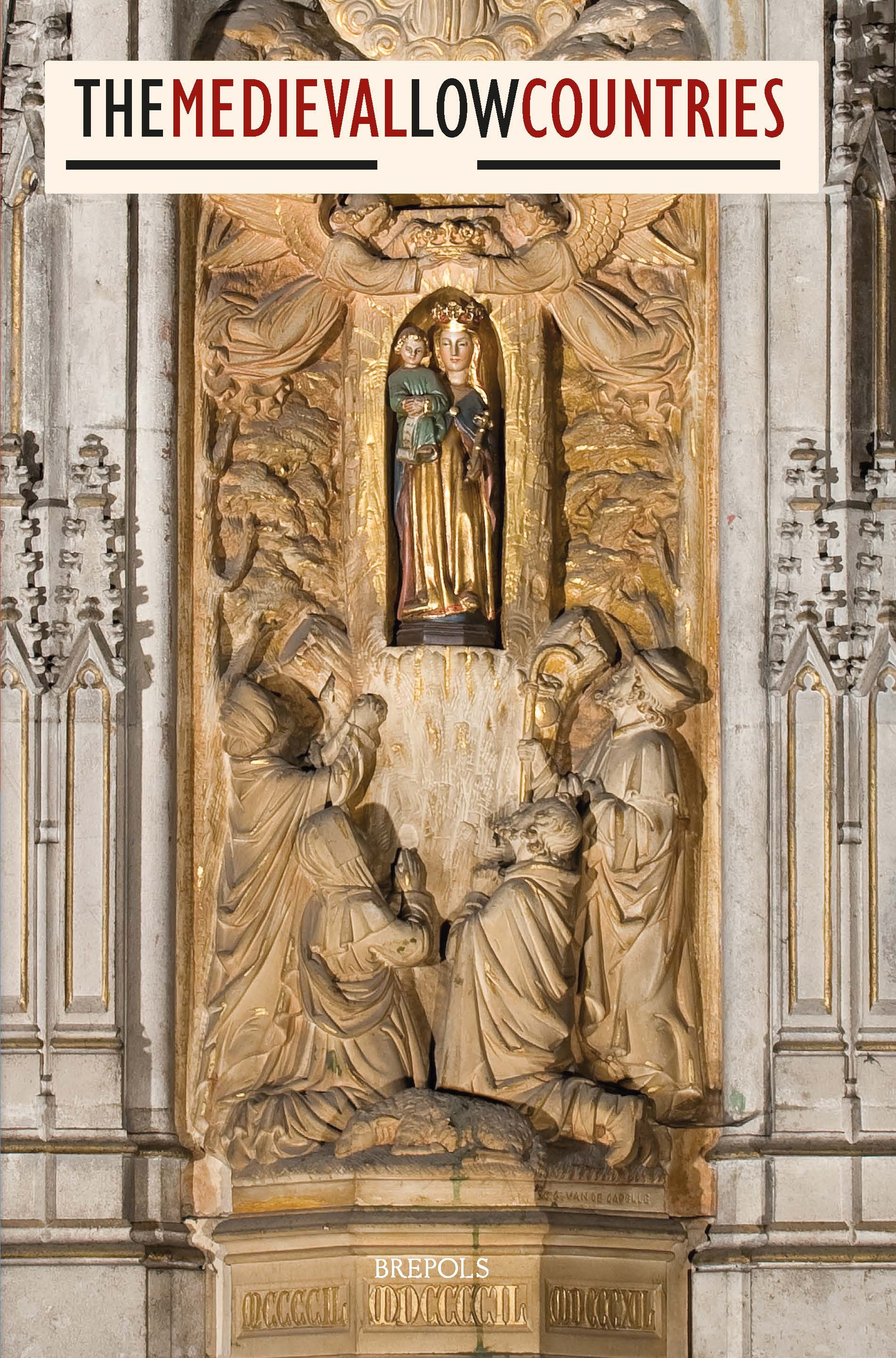
Volume 2, Issue 1, 2015
-
-
Manuscript and Memory in Religious Communities in the Medieval Low Countries. An Introduction
show More to view fulltext, buy and share links for:Manuscript and Memory in Religious Communities in the Medieval Low Countries. An Introduction show Less to hide fulltext, buy and share links for: Manuscript and Memory in Religious Communities in the Medieval Low Countries. An IntroductionAuthors: Jeroen Deploige and Renée NipAbstractThe special issue ‘Manuscript and Memory in Religious Communities in the Medieval Low Countries’ aims at critically questioning how memorial practices, developed through and shaped by the medieval manuscript culture, contributed to strengthening religious communal life between the tenth and the early sixteenth centuries. The introductory article briefly examines the research traditions that have informed this collection of essays. On the one hand there is the tradition of memory studies, which since the late 1980s has become increasingly important in many humanities disciplines, particularly in medieval studies with its significant interest in the impact of the religiously-inspired memoria culture on medieval society. On the other hand, since the 1990s the same field of medieval studies has also been marked by the rise of material philology, which has not only fuelled many theoretical debates about the way in which our textual heritage should be understood and edited, but has also resulted in a renewed appreciation of the study of manuscripts themselves as meaningful bearers of medieval textual traditions. The introductory article subsequently explains how combining these two research traditions compels us to reconsider the role of manuscripts (cartularies, miscellanies, collections of sermons, etc.) and the deployment of genres (annals, charters, lives, necrologia, treatises, etc.) in the study of the culture of memoria in medieval religious communities.
-
-
-
What Do We Want To Remember? Memories in the Manuscripts of Two Dutch Monasteries: The Benedictine Abbey of Egmond and the Utrecht Charterhouse
show More to view fulltext, buy and share links for:What Do We Want To Remember? Memories in the Manuscripts of Two Dutch Monasteries: The Benedictine Abbey of Egmond and the Utrecht Charterhouse show Less to hide fulltext, buy and share links for: What Do We Want To Remember? Memories in the Manuscripts of Two Dutch Monasteries: The Benedictine Abbey of Egmond and the Utrecht CharterhouseBy: J. P. GumbertAbstractThe earliest sources relating to the Benedictine Abbey of Egmond (founded in the late tenth century) seem to be concerned only with the nobility of donors, the richness of their gifts, and with miracles (as well as, in the twelfth century, with the squandering of that wealth and the subsequent restoration of it). It was also from the twelfth century onwards that a series of historical works was produced in the monastery, texts that offered occasional glimpses of the abbey itself and its inhabitants. It is, however, doubtful whether these random glimpses, most of them practically inaccessible, contributed much to communal memory.
In the sources from the Utrecht Charterhouse (founded 1392) miracles are never mentioned. The noble and wealthy donors were not forgotten, but the more modest donors were also carefully listed and now and then there is a comment showing us something of these people as real human beings who are mentioned not only with gratitude but also with kindness and sympathy. This mindset, which was not in evidence in Egmond, was perhaps more conducive to communal memory.
-
-
-
Monastic Cartularies, Institutional Memory and the Canonization of the Past. The Two Libri Traditionum of St Peter’s Abbey, Ghent
show More to view fulltext, buy and share links for:Monastic Cartularies, Institutional Memory and the Canonization of the Past. The Two Libri Traditionum of St Peter’s Abbey, Ghent show Less to hide fulltext, buy and share links for: Monastic Cartularies, Institutional Memory and the Canonization of the Past. The Two Libri Traditionum of St Peter’s Abbey, GhentBy: Georges DeclercqAbstractFor medieval monasteries, composing a cartulary was a strategy of memory. In this paper I argue that in the case of historical or commemorative cartularies - i.e. cartularies in which copies of charters were prefaced by, or interwoven with, a narrative about the origins of the institution or the deeds of its abbots - it even amounts to a canonization of the past. To illustrate this, two cartularies belonging to this category are examined in some detail, namely the two libri traditionum of St Peter’s Abbey in Ghent. The first, known as the Liber Traditionum Antiquus (LTA), was composed between 944 and 946, shortly after the so-called restoration of the monastery by Count Arnulf I of Flanders; the second Liber Traditionum (LT) was compiled in 1042 or immediately thereafter, in the wake of the reform of Richard of St Vanne. An analysis of their structure and contents shows how the authors of both copybooks interpreted and adapted their monastery’s past to suit the needs of their own time. More particularly, the two libri traditionum retain what the Benedictine monks of that period wanted to be remembered. Composing such a cartulary was therefore both a codification and a canonization of the past: a codification because it fixes the interpretation of the archival memory and in this way organizes and stabilizes the past in a coherent and usable form; a canonization because it is based on a process of selection and exclusion. Following the conceptual framework developed by Aleida and Jan Assmann, ‘the canonization of the past’ is defined as the elevation of the past - or rather of a particular interpretation of that past - to the status of norm or point of reference. As historical or commemorative cartularies such as the two libri traditionum of the St Peter’s Abbey in Ghent store all the information that is considered vital for the existence and continuation of the monastic community in a coherent and usable form, they enshrine a past that is elevated to a normative and hence canonized status.
-
-
-
Practices of Remembrance in Flemish Houses of Regular Canons. The Troubled Memoria of Prior Odfried, Founder of Watten (d. 1086)
show More to view fulltext, buy and share links for:Practices of Remembrance in Flemish Houses of Regular Canons. The Troubled Memoria of Prior Odfried, Founder of Watten (d. 1086) show Less to hide fulltext, buy and share links for: Practices of Remembrance in Flemish Houses of Regular Canons. The Troubled Memoria of Prior Odfried, Founder of Watten (d. 1086)By: Brigitte MeijnsAbstractA religious community’s foundation was a unique moment in the building of institutional remembrance and the identity of the founder(s) was of primary importance to the identity and cohesion of the religious group. However, as few foundation stories have emerged from communities of regular canons in Flanders, the tale of the Watten priory, the earliest community of regular canons in Flanders, is all the more illustrative. The existence of different genres in which Odfried, the founder, is remembered reflects the search for a fitting memoria for the man who unleashed a controversial debate between advocates and opponents of Church reform. The fact that he also continued to stir emotions after his death is shown by the Watten Exordium and two miracle stories, one written at Watten, the other at Saint-Riquier Abbey in Picardy. Odfried was remembered as someone who undeniably had great qualities, merits that even partook of saintliness, though in the long run they were not to result in his lasting veneration as a saint. The unique case of Watten can therefore shed light not only on the difficulties with which a novel form of religious community faced, but also on the discursive strategies which that community deployed to confront those challenges.
-
-
-
The Devotio Moderna and Commemoration. The Case of St Margaret’s Convent in Gouda
show More to view fulltext, buy and share links for:The Devotio Moderna and Commemoration. The Case of St Margaret’s Convent in Gouda show Less to hide fulltext, buy and share links for: The Devotio Moderna and Commemoration. The Case of St Margaret’s Convent in GoudaBy: Koen GoudriaanAbstractThis article focuses on the way St Margaret’s Convent of regular canonesses in Gouda organized its memoria culture, treating it as a window onto the wider field of liturgical commemoration in the early Devotio Moderna. It is now becoming clear that the religious houses originating in this movement soon took the path towards full monastic status. The speedy maturation of liturgical facilities was concomitant with this development. St Margaret’s has been singled out because of its relatively ample documentation and also because it represents the Chapter of Sion, a small chapter rivalling the Chapter of Windesheim. After an initial beginning shortly before 1400, a restoration of monastic life took place around 1450, which ended a period of crisis. As part of this restoration, the convent’s memory was put in order. This is documented by two manuscripts: Gouda Kloosters inv. 95, containing both a chronicle and a cartulary, and London MS 2939, in which a necrology has been preserved. The chronicle and cartulary were devised together, with the cartulary organized not as an aid in the administration of the convent’s possessions but as a prop to the remembrance of its benefactors. The necrology has an independent origin. Together they enable us to analyse the way the convent (re-)construed its memory, thereby underlining its identity and perpetuating the fruits of the restoration.
-
-
-
Memoria für die Zukunft. Zur Gestaltung von Erinnerung in den Schwesternbüchern der Devotio moderna
show More to view fulltext, buy and share links for:Memoria für die Zukunft. Zur Gestaltung von Erinnerung in den Schwesternbüchern der Devotio moderna show Less to hide fulltext, buy and share links for: Memoria für die Zukunft. Zur Gestaltung von Erinnerung in den Schwesternbüchern der Devotio modernaBy: Anne BollmannAbstractThis article discusses the sister-books of the Modern Devotion from the viewpoint of the practices of collective memory. Initially recollections of the lives of deceased sisters were exchanged orally while later they were written down. Such accounts included details of the lives and devotional practices of individual sisters and nuns and they result in a cumulative picture of the spiritual and social life of each house across several generations. It was deemed essential to achieve an ideal balance between the spiritual life of the community, with all its rules and rituals, and the charitable services to the wider community in which the sisters ‘found’ their fellow sisters, even while they found God and attained inner peace. Particular attention is paid to the ‘Schreibschwester’ [writing sister], who would have been directly responsible for assembling the collection of vitae and therefore, indirectly, for maintaining memorial identity while also shaping the future of the respective communities.
-
-
-
Memory and Reward. Dutch Collections of Sermons and their Functions in the Memoria Tradition in the Female Convent of Jericho in Brussels (c. 1450-1650)
show More to view fulltext, buy and share links for:Memory and Reward. Dutch Collections of Sermons and their Functions in the Memoria Tradition in the Female Convent of Jericho in Brussels (c. 1450-1650) show Less to hide fulltext, buy and share links for: Memory and Reward. Dutch Collections of Sermons and their Functions in the Memoria Tradition in the Female Convent of Jericho in Brussels (c. 1450-1650)Authors: Patricia Stoop and Thom MertensAbstractThis article deals with commemorative aspects of the late-medieval prologues to the sermon collections preserved from the Brussels convent of Jericho. By composing these collections, Augustinian Canonesses Maria van Pee, Barbara Cuyermans and Janne Colijns, and the other anonymous sisters involved in the process, collectively made books that could not only be used to edify the convent but could also serve to recall, in an act of memoria, the priests who were responsible for their spiritual care, as well as the women who initially redacted the sermons (this last being due to information added posthumously). This culture of remembrance via sermon collections was maintained until long after the Middle Ages, as is shown by the prologue to the seventeenth-century collection of sermons written by Canoness Maria A. de Folije. Finally, the article connects these prologues and the sermon manuscripts to the broader literary, visual and liturgical memoria culture in the convent.
-
-
-
Memory and Manuscript in Personal Practice and Written Lives. The Case of the Modern-Day Devout
show More to view fulltext, buy and share links for:Memory and Manuscript in Personal Practice and Written Lives. The Case of the Modern-Day Devout show Less to hide fulltext, buy and share links for: Memory and Manuscript in Personal Practice and Written Lives. The Case of the Modern-Day DevoutBy: John Van EngenAbstractThis article encompasses three different approaches to the relationship between manuscripts and memory in the Devotio Moderna, more particularly in the milieu of Brothers of the Common Life. The first part deals with the way in which the manuals of the founding fathers of the movement dealt with the faculty of memoria. In Gerard Zerbolt’s thought memoria often meant something approximating what we nowadays call human consciousness. In the process of spiritual formation this memoria needed a fundamental refocusing of the mind to rid it of distractions. The emphasis of Devout meditation fell less on recalling than on actively producing a certain affect or state of mind, for example by occupying or preoccupying the memoria with the mystery of the Passion. The second part of the article shows how other types of written memories that were initially personal aids turned into important elements in the cultivation of collective memory and hence the strengthening of communal ideals. Thirdly, the article expands on the role of memory and manuscripts in the writing of exemplary biographical accounts as practised among the Modern-Day Devout. The development of this highly particular literature and the changing functions of memory that it entailed is illustrated by a detailed analysis of the genesis of the four books of Thomas of Kempen’s Dialogus noviciorum.
-
-
-
Book Reviews
show More to view fulltext, buy and share links for:Book Reviews show Less to hide fulltext, buy and share links for: Book ReviewsAbstractAnnemarieke Willemsen, Gouden Middeleeuwen. Nederland in de Merovingische wereld, 400-700 na Chr. (Marco Mostert), 251 - Gislebertus Trudonensis, Rodulfus Trudonensis, Gesta abbatum Trudonensium VIII-XIII. Liber IX opus intextum Rodulfi Trudonensis (Ewoud Waerniers), 254 - The Complete Ruusbroec. English Translation with the Original Middle Dutch Text (Krijn Pansters), 257 - Hendrik Callewier, De papen van Brugge. De seculiere clerus in een middeleeuwse wereldstad, 1411-1477 ( Jan Kuys), 259 - Otto Derk Jan Roemeling, Heiligen en heren. Studies over het parochiewezen in het Noorden van Nederland voor 1600 (Hendrik Callewier), 263 - Gelebte Normen im urbanen Raum? Zur sozial- und kulturgeschichtlichen Analyse rechtlicher Quellen in Städten des Hanseraums (13. bis 16. Jahrhundert), ed. by Hanno Brand, Sven Rabeler and Harm von Seggern (Carsten Jahnke), 266 - Anne-Marie J. van Egmond, Claudine A. Chavannes-Mazel (eds), Medieval Art in the Northern Netherlands before Van Eyck. New Facts and Features (Katrien Lichtert), 269 - Daantje Meuwissen, Jacob Cornelisz van Oostsanen (ca. 1475-1533). De Renaissance in Amsterdam en Alkmaar; Het vroegste Amsterdamse schetsboek: een zestiende-eeuws zakboekje uit het atelier van Jacob Cornelisz van Oostsanen (Victor M. Schmidt), 273 - Het liederenhandschrift Berlijn 190. Hs. Staatsbibliothek zu Berlin - Preuβischer Kulturbesitz germ. oct. 190 (Marcel Zijlstra), 278 - Rudolf van Dijk, Twaalf kapittels over ontstaan, bloei en doorwerking van de Moderne Devotie (Bas Diemel), 282 - Charles Caspers, Een bovenaardse vrouw. Zes eeuwen verering van Liduina van Schiedam [&] Thomas van Kempen, Het leven van de heilige Maagd Liduina, (Ludo Jongen), 286 - Anna Dlabačová, Literatuur en observantie. De Spieghel der volcomenheit van Hendrik Herp en de dynamiek van laatmiddeleeuwse tekstverspreiding. (Krijn Pansters), 291 - Chris de Bont, Amsterdamse boeren. Een historische geografie van het gebied tussen de duinen en het Gooi in de middeleeuwen. (Dennis Worst), 294 - Michael Pye, The Edge of the World: How the North Sea Made Us Who We Are (Marco Mostert), 297
-
Most Read This Month
