


Peritia
Journal of the Medieval Academy of Ireland
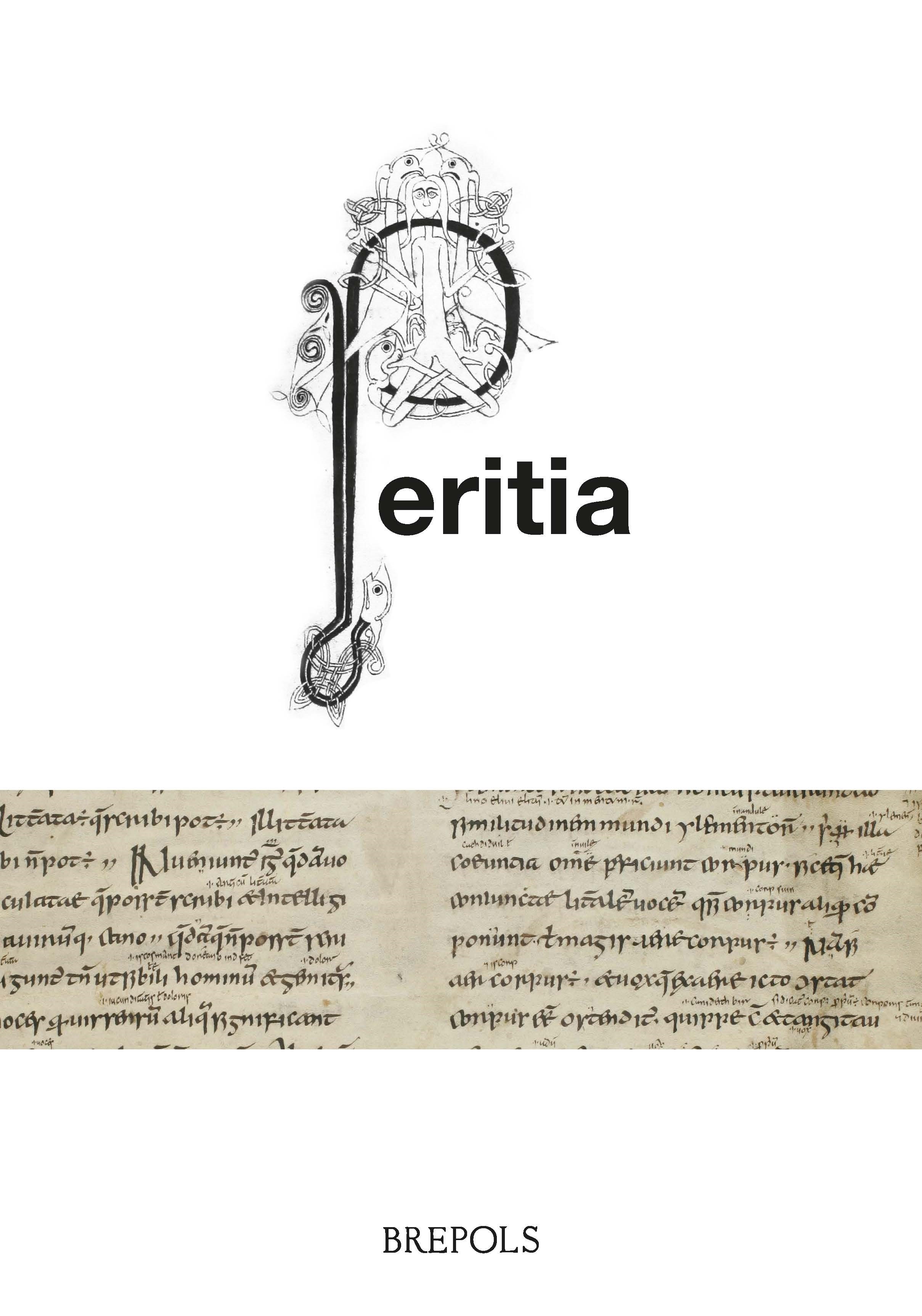
Volume 28, Issue 1, 2017
-
-
The Newly-Discovered Irish and Breton Computistica in Città del Vaticano, BAV, MS Reg. Lat. 123
show More to view fulltext, buy and share links for:The Newly-Discovered Irish and Breton Computistica in Città del Vaticano, BAV, MS Reg. Lat. 123 show Less to hide fulltext, buy and share links for: The Newly-Discovered Irish and Breton Computistica in Città del Vaticano, BAV, MS Reg. Lat. 123By: Jacopo BisagniAbstractThe Vatican MS, BAV, Reg. lat. 123 (saec. xi, Ripoll), a computistical anthology, contains numerous excerpta of ultimate Irish provenance. Some of these materials may have reached Ripoll through a route of transmission that brought them first to Brittany, and from there to the scriptoria of Fleury-sur-Loire and Ripoll itself.
-
-
-
Brigit and Patrick in Vita Prima Sanctae Brigitae: Veneration and Jurisdiction
show More to view fulltext, buy and share links for:Brigit and Patrick in Vita Prima Sanctae Brigitae: Veneration and Jurisdiction show Less to hide fulltext, buy and share links for: Brigit and Patrick in Vita Prima Sanctae Brigitae: Veneration and JurisdictionBy: Elizabeth DawsonAbstractThe early medieval cults of the saints Patrick and Brigit are most often associated with their churches at Armagh and Kildare, and the rivalry for preeminence that existed between the two federations. This paper considers the depiction of the saints in the Vita Prima Sanctae Brigitae and explores how these portrayals represent the wider cults of both.
-
-
-
The ‘Rebaptism’ of Suibhne
show More to view fulltext, buy and share links for:The ‘Rebaptism’ of Suibhne show Less to hide fulltext, buy and share links for: The ‘Rebaptism’ of SuibhneBy: Brian FrykenbergAbstract‘Anecdota’ poems of Suibhne Geilt (‘Mad Sweeney’) and St Mo Ling in Brussels MS 5100-04 focus upon sacred waters at the saint’s primary foundation, Tech Mo Ling (present-day St Mullins, Co. Carlow) in a manner that emphasizes pilgrimage, penance and monastic ‘rebaptism’ as the primary concerns of this twelfth-century cycle, which relates the death, burial and resurrection of the geilt in the company of his confessor.
-
-
-
Grounds for Divorce? Applying Nau Kynywedi Teithiauc to Math uab Mathonwy
show More to view fulltext, buy and share links for:Grounds for Divorce? Applying Nau Kynywedi Teithiauc to Math uab Mathonwy show Less to hide fulltext, buy and share links for: Grounds for Divorce? Applying Nau Kynywedi Teithiauc to Math uab MathonwyAbstractNau Kynywedi Teithiauc is a Middle Welsh legal tract that depicts the nine types of sexual union a couple may enter into in medieval Wales. Thomas Charles-Edwards has suggested that this tract has been arranged in ‘declining legal status’, a view supported by the fact that the last two unions depicted constitute rape. This paper will demonstrate that the Middle Welsh tale, Math uab Mathonwy, may be viewed as an exploration of some of these dishonourable unions.
-
-
-
Kildare and the Kingdom of God: A New Reading of Cogitosus’ Vita Sanctae Brigitae
show More to view fulltext, buy and share links for:Kildare and the Kingdom of God: A New Reading of Cogitosus’ Vita Sanctae Brigitae show Less to hide fulltext, buy and share links for: Kildare and the Kingdom of God: A New Reading of Cogitosus’ Vita Sanctae BrigitaeAbstractThe Vita Brigitae is examined for biblical allusions and chiastic structural patterning. Biblical references occur in clusters centred on geographical and spiritual locations: the Garden of Eden, Cities of Refuge, and the Peaceable Kingdom. Strong thematic and structural patterning indicates a correlation between Kildare and the New Jerusalem of Revelation.
-
-
-
Orosius, Ireland, and Christianity
show More to view fulltext, buy and share links for:Orosius, Ireland, and Christianity show Less to hide fulltext, buy and share links for: Orosius, Ireland, and ChristianityAbstractOrosius, author of Historiarum Adversum Paganos Libri vii, was a Briton, born at latest c. ad 375. Taken by Irish raiders, he spent years (c.ad 400) as a captive, held by traders, on the south shore of the Shannon estuary. He escaped and probably reached Galicia before ad 405. Ordained priest, he served at Bracara (now Braga in Portugal). He corresponded with St Augustine and moved to Hippo in ad 414. Sent to the East by Augustine, he played an undistinguished role at the councils of Jerusalem and Diospolis (ad 415). He settled at Carthage, where he wrote his main work, originally at the instigation of Augustine. He disappears after a voyage to the Balearic Islands. His is the first textual witness to Christianity in Ireland, observed c.ad 400, written up in ad 416-17.
-
-
-
The Adoption of the Dionysian Easter in the Frankish Kingdoms (c. 670-c. 800)
show More to view fulltext, buy and share links for:The Adoption of the Dionysian Easter in the Frankish Kingdoms (c. 670-c. 800) show Less to hide fulltext, buy and share links for: The Adoption of the Dionysian Easter in the Frankish Kingdoms (c. 670-c. 800)By: James T. PalmerAbstractThis paper argues that the transition from the Merovingian to the Carolingian world involved important changes in the way that Frankish communities reckoned and coordinated calendars. It analyses evidence for the spread of Easter tables, treatises, annals and other sources to demonstrate that the paschal work of Dionysius Exiguus spread from Insular-influenced centres in the north of the Frankish kingdoms rather than from the south. It finds that the process was neither as chaotic nor as politically coordinated as recently argued by Borst. Instead, it highlights the organic spread of texts and tables in the context of the foundation of new monastic centres.
-
-
-
‘Whence is the Origin of the Gaels?’: Remembering the Past in Irish Pseudohistorical Poems
show More to view fulltext, buy and share links for:‘Whence is the Origin of the Gaels?’: Remembering the Past in Irish Pseudohistorical Poems show Less to hide fulltext, buy and share links for: ‘Whence is the Origin of the Gaels?’: Remembering the Past in Irish Pseudohistorical PoemsBy: Katja RitariAbstractThis article explores the construction of Irish identity in the pseudohistorical poems of two authors, Máel Muru Othna and Gilla Cóemáin. In their poems, the memory of the past - real or imagined - is used to establish a continuity for the Irish as a clearly delineated people from the dawn of time to the authors’ medieval present.
-
-
-
‘Hwǣr is wuldor ϸīn?’: Traditional Poetic Diction and the Alien Text in the Old English Andreas
show More to view fulltext, buy and share links for:‘Hwǣr is wuldor ϸīn?’: Traditional Poetic Diction and the Alien Text in the Old English Andreas show Less to hide fulltext, buy and share links for: ‘Hwǣr is wuldor ϸīn?’: Traditional Poetic Diction and the Alien Text in the Old English AndreasAbstractThe Old English poem Andreas has traditionally been considered inferior to other texts such as Beowulf, owing to its apparent borrowing of phraseology. This paper argues that verbal parallels are part of the poet’s assimilative composition technique and re-evaluates the place of Andreas in the corpus of Old English poetry.
-
-
-
Albums of Science in Twelfth-Century England
show More to view fulltext, buy and share links for:Albums of Science in Twelfth-Century England show Less to hide fulltext, buy and share links for: Albums of Science in Twelfth-Century EnglandBy: Faith WallisAbstractAn ‘album of science’ is a manuscript containing materials on computus and at least one subject associated with computus, for example, astronomy or medicine. Its characteristic format is a mosaic of texts and tables. This article explains the logic behind the choice of materials and proposes a method for unlocking the compilers’ intentions.
-
- Review Article
-
-
-
The Earliest Irish and English Books: Time for a Reappraisal?
show More to view fulltext, buy and share links for:The Earliest Irish and English Books: Time for a Reappraisal? show Less to hide fulltext, buy and share links for: The Earliest Irish and English Books: Time for a Reappraisal?By: Dáibhí Ó CróinínAbstractThe Schaffhausen codex of Adomnán of Iona’s Vita Sancti Columbae, and the manuscript now known as St Cuthbert’s Gospel, are two of the most iconic manuscripts in the Insular tradition of book-production. The recent publication of a facsimile of the Schaffhausen MS., and of a collection of essays on the Cuthbert codex, offers an opportunity to reassess the opinions and views expressed by scholars on the subject in the last fifty years.
-
-
- Reviews
-
-
-
Kate Cooper & Conrad Leyser (eds), Making early medieval societies: conflict and belonging in the Latin West, 300-1200
show More to view fulltext, buy and share links for:Kate Cooper & Conrad Leyser (eds), Making early medieval societies: conflict and belonging in the Latin West, 300-1200 show Less to hide fulltext, buy and share links for: Kate Cooper & Conrad Leyser (eds), Making early medieval societies: conflict and belonging in the Latin West, 300-1200By: James T. Palmer
-
-
-
-
E. T. Dailey, Queens, consorts, concubines: Gregory of Tours and women of the Merovingian elite
show More to view fulltext, buy and share links for:E. T. Dailey, Queens, consorts, concubines: Gregory of Tours and women of the Merovingian elite show Less to hide fulltext, buy and share links for: E. T. Dailey, Queens, consorts, concubines: Gregory of Tours and women of the Merovingian eliteBy: Carine van Rhijn
-
-
-
Seán Duffy (ed), Medieval Dublin xv, Proceedings of the Friends of Medieval Dublin Symposium 2013
show More to view fulltext, buy and share links for:Seán Duffy (ed), Medieval Dublin xv, Proceedings of the Friends of Medieval Dublin Symposium 2013 show Less to hide fulltext, buy and share links for: Seán Duffy (ed), Medieval Dublin xv, Proceedings of the Friends of Medieval Dublin Symposium 2013By: Caren Mulcahy
-
-
-
Roy Flechner & Máire Ní Mhaonaigh (eds), The Introduction of Christianity into the early medieval Insular world: Converting the Isles I
show More to view fulltext, buy and share links for:Roy Flechner & Máire Ní Mhaonaigh (eds), The Introduction of Christianity into the early medieval Insular world: Converting the Isles I show Less to hide fulltext, buy and share links for: Roy Flechner & Máire Ní Mhaonaigh (eds), The Introduction of Christianity into the early medieval Insular world: Converting the Isles IBy: Katja Ritari
-
-
-
Áine Foley, The royal manors of medieval Co. Dublin: crown and community
show More to view fulltext, buy and share links for:Áine Foley, The royal manors of medieval Co. Dublin: crown and community show Less to hide fulltext, buy and share links for: Áine Foley, The royal manors of medieval Co. Dublin: crown and communityBy: Steven G. Ellis
-
-
-
Tom Garvin, The lives of Daniel Binchy, Irish scholar, diplomat, public intellectual
show More to view fulltext, buy and share links for:Tom Garvin, The lives of Daniel Binchy, Irish scholar, diplomat, public intellectual show Less to hide fulltext, buy and share links for: Tom Garvin, The lives of Daniel Binchy, Irish scholar, diplomat, public intellectualBy: Dáibhí Ó Cróinín
-
-
-
Christopher Grocock & I. N. Wood (eds & trans), Abbots of Wearmouth and Jarrow
show More to view fulltext, buy and share links for:Christopher Grocock & I. N. Wood (eds & trans), Abbots of Wearmouth and Jarrow show Less to hide fulltext, buy and share links for: Christopher Grocock & I. N. Wood (eds & trans), Abbots of Wearmouth and JarrowBy: Clare Stancliffe
-
-
-
N. J. Higham, Ecgfrith: King of the Northumbrians, High-King of Britain
show More to view fulltext, buy and share links for:N. J. Higham, Ecgfrith: King of the Northumbrians, High-King of Britain show Less to hide fulltext, buy and share links for: N. J. Higham, Ecgfrith: King of the Northumbrians, High-King of BritainBy: Colin Ireland
-
Volumes & issues
-
Volume 35 (2024)
-
Volume 34 (2023)
-
Volume 33 (2022)
-
Volume 32 (2021)
-
Volume 31 (2020)
-
Volume 30 (2019)
-
Volume 29 (2018)
-
Volume 28 (2017)
-
Volume 27 (2016)
-
Volume 26 (2015)
-
Volume 24-25 (2014)
-
Volume 22-23 (2011)
-
Volume 21 (2010)
-
Volume 20 (2008)
-
Volume 19 (2005)
-
Volume 17-18 (2003)
-
Volume 16 (2002)
-
Volume 15 (2001)
-
Volume 14 (2000)
-
Volume 13 (1999)
-
Volume 12 (1998)
-
Volume 11 (1997)
-
Volume 10 (1996)
-
Volume 9 (1995)
-
Volume 8 (1994)
-
Volume 6-7 (1987)
-
Volume 5 (1986)
-
Volume 4 (1985)
-
Volume 3 (1984)
-
Volume 2 (1983)
-
Volume 1 (1982)
Most Read This Month
