


Techne
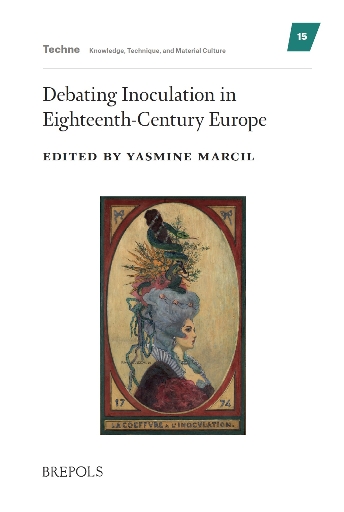
Debating Inoculation in Eighteenth-Century Europe
Smallpox (known as "variole" or "petite vérole" in French) spread relentlessly across Europe during the eighteenth century gaining an unprecedented and deadly momentum. While there was no cure for this highly infectious and often fatal disease those that recovered from it were immune to future infections. This phenomenon was the origin of a practice of inoculation whereby infectious material was introduced into the body to induce immunity. In Europe this practice was initially experimented with in England and it was subsequently adopted across the continent during the eighteenth century. Inoculation was however not without controversy—not least because the practice originated outside of Europe—and it became the subject of intense debate. This debate this volume argues extended beyond medical circles to include intellectuals and the broader public—a phenomenon driven by a growing periodical press. As books scientific treatises and plays crossed regional and national boundaries debates on inoculation must this volume shows be examined within a European transnational perspective thereby considering how ideas were shaped by adaptation translations and citation. Doing so this volume not only sheds new light on the history inoculation as a practice but also illustrates how cultural history can enrich history of medicine
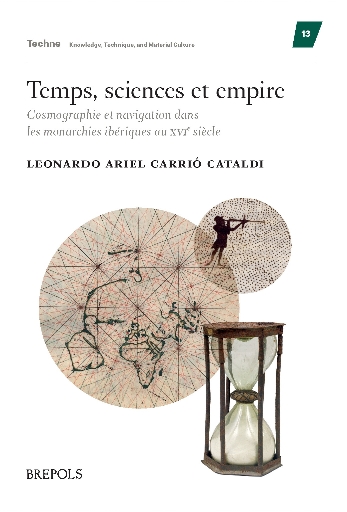
Temps, sciences et empire
Cosmographie et navigation dans les monarchies ibériques au xvi e siècle
Dès la fin du xve siècle les monarchies portugaise et espagnole se lancent au grand large dans un élan de construction impériale qui saisit le globe. Une diversité d’acteurs et de savoirs dont la cosmographie et la navigation sont porteurs de ce processus. Ce dernier transforme à jamais l’image et le concept de la Terre comme espace de l’habitat humain retravaillant les liens entre espace et temps. Pilotes et cosmographes contribuent alors à une reconceptualisation des temporalités et des temps de la Terre. Quels textes ont-ils rédigés et lus quels instruments ont-ils manipulés à cette fin ?
En explorant ces dynamiques à partir d’une pluralité de matériaux le livre embarque le lecteur sur des bateaux naviguant vers les Indes l’invite dans des Casas et des entrepôts portuaires ou dans des universités où résonnent les échos d’une mer transformatrice des connaissances. La création de la chaire de cosmographie à la Casa de la contratación (Séville 1552) et la trajectoire de son premier détenteur Jerónimo de Chaves (1523-1574) servent de « laboratoire » privilégié d’où observer ces problématiques.
Le livre élargit ainsi la manière de comprendre la cosmographie au xvie siècle souvent réduite à son rapport à la cartographie à l’intersection de plusieurs pratiques et savoirs (histoire naturelle théologie astrologie astronomie navigation) et au-delà du clivage « Anciens-Modernes ». En embrassant d’un regard les monarchies ibériques l’ouvrage ancre dans l’Europe méridionale la question plus large de la production des techniques et des sciences à l’époque moderne inscrivant l’espace ibérique dans une première globalisation.
Global History of Techniques
(Nineteenth to Twenty-First Centuries)
It is impossible to understand societies without looking at their technological underpinnings. Technology constitutes the very fabric of societies' political economic cultural and everyday realities. Building on recent historiography this book offers the first overview of the global history of contemporary technology.
Gathering more than fifty specialists of the history of technology the collection of essays presents an overview of technological evolutions on a global scale. The book challenges both teleological approaches on progress and eurocentric perspectives. It explores the complex socio-economic implications of ‘techniques’ (and not simply technology) as well as the systems of representation and power structures that led to the emergence of today’s world.
The purpose of the collected essays is to offer a new history of technology. In this perspective a central question concerns the very category of the history of technology i.e. the term ‘technology’ itself. Refusing both the limitations of ‘technology’ and of ‘useful knowledge’ the book stresses the necessity to study technology as embodying human activity as a whole. In that sense history of technology envisioned as techniques rather than purely technologies is intrinsically linked to anthropology and ethnology.
This book is divided into three sections. The first section opens with a world tour of techniques restoring the complexity of regional historiographies and of the meanings given to technological activities in different societies. The second part focuses on sectors of activity processes and products with a strong emphasis on means of production and communication the exploitation of natural resources major technological systems infrastructures and networks. The final section provides access to major cross-related issues. It pays particular attention to the role played by technology/techniques in the process of globalization particularly through colonization imperialism and the development of large technological systems.
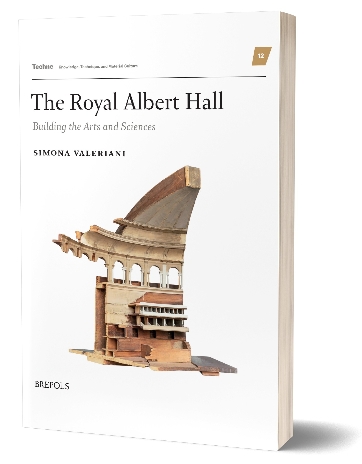
The Royal Albert Hall
Building the Arts and Sciences
This groundbreaking study takes one of London’s most iconic buildings and deconstructs it to offer new insights into the society that produced it. As part of the new cultural quarter built in South Kensington on the proceeds from The Great Exhibition of 1851 the Royal Albert Hall was originally intended to be a ‘Central Hall of Arts and Sciences’. Prince Albert’s overarching vision was to promote technological and industrial progress to a wider audience and in so doing increase its cultural and economic reach.Placing materiality at its core this volume provides an intellectual history of Victorian ideas about technology progress and prosperity. The narrative is underpinned by a wealth of new sources – from architectural models and archival materials to 19th century newspapers. Each chapter focuses on a particular element of the Royal Albert Hall’s construction chronicling the previously overlooked work of a host of contributors from all walks of life including female mosaic-makers and the Royal Engineers.Lighting ventilation fireproofing ‘ascending rooms’ cements acoustics the organ the record-breaking iron dome and the organisation of internal spaces were all attempts to attain progress - and subject to intense public scrutiny. From iron structures to terracotta from the education of women to the abolition of slavery in the making of the Royal Albert Hall scientific knowledge and socio-cultural reform were intertwined.This book shows for the first time how the Royal Albert Hall’s building was itself a crucible for innovation. Illustrious techniques from antiquity were reimagined for the new mechanical age placing the building at the heart of a process of collecting describing and systematising arts and practices. At the same time the Royal Albert Hall was conceived as a ‘manifesto’ of what the Victorians thought Britain ought to be at a crucial moment of its socio-economic history: a symbolic cultural hub for the Empire’s metropole.This is the Royal Albert Hall: a central piece of the puzzle in Britain’s march towards modernity.
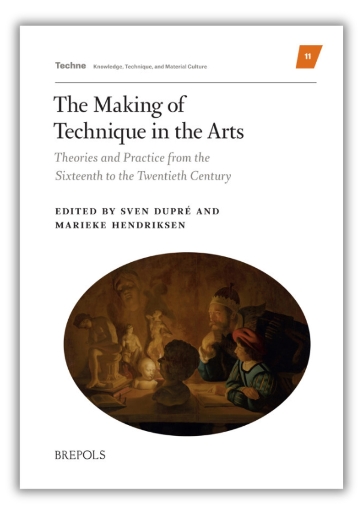
The Making of Technique in the Arts
Theories and Practice from the Sixteenth to the Twentieth Century
What is technique in the arts? Now widely used to refer to the practical aspects of art making ‘technique’ was a neologism in the vernacular and started to appear in treatises on arts and sciences from around 1750. Rooted in the Greek technè which was translated routinely as ‘art’ until the mid-eighteenth century technique referred to processes of making or doing and their products. Described previously as ‘art’ ‘methods’ ‘manners’ or ‘mechanics’ techniques were recorded in text with the intention of documenting or transmitting practical skills and knowledge. This book bridges the gap between the changing concept of technique and the practices currently described by it. It explores the linguistic philosophical and pedagogic history of technique in the arts answering the question why the term ‘technique’ first emerged around 1750 and exploring how its meaning to artists art theorists and natural philosophers changed until the twentieth century
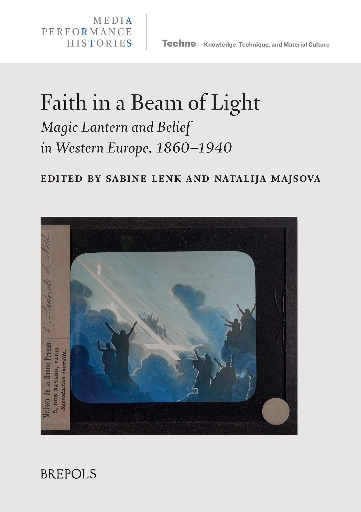
Faith in a Beam of Light
Magic Lantern and Belief in Western Europe, 1860-1940
An early visual mass medium the magic lantern was omnipresent in most Western societies between 1880 and 1930. The Christian Church especially the Catholics spiritual associations such as the Freemasons political interest groups and teaching institutions all made use of lectures enriched by projected images to disseminate information convictions and doctrines. Moreover the lantern often featured as a concealed aid in stage spectacles. Nineteen authors analyse the effects of "the beam of light in the dark" in the context of religion faith and belief. Attention is paid to the wide spectrum of locations where projections took place as well as to the lantern's impressive versatility. The lavishly illustrated chapters collected in this volume range from analyses of religious propaganda to fundraising lectures for missionary work in China from the fight against alcoholism to the secularisation of society and from the lantern's application in spiritualist sessions to its use in science and teaching.
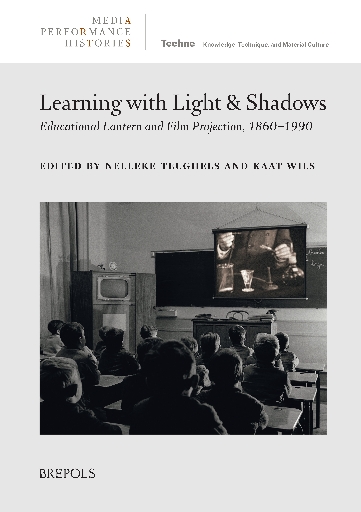
Learning with Light and Shadows
Educational Lantern and Film Projection, 1860–1990
Since the early nineteenth century European pedagogical theory has stimulated a didactic turn towards the visual as an alternative to textual mediations of knowledge through books and lectures. Pedagogues and policymakers who strove for a more child-centred approach to teaching were soon joined by media producers and marketers in their aim to transform the classroom into a multimodal space for learning. From the turn of the twentieth century onwards teachers were increasingly pressured to incorporate high-profile media technologies such as stereoscopes lantern and film projectors into their lessons.
This collection of essays focuses on European educational light projection from its first appearance at the end of the nineteenth century through the 1990s when digital image projection started to gradually replace analogue film slide and overhead projectors. It explores the classroom use of these technologies. In doing so it challenges top-down approaches to the introduction of new visual technology and questions discourses that characterize the relation of visual media technology to teachers as one of consumption. The studies in this volume demonstrate how everyday demands and preferences transformed the 'ideal' instructional culture as put forward by policymakers producers and pedagogues into distinctive didactic practices that worked around or went beyond the pre-imposed ways of usage of visual media products. The volume moves beyond the view of instructional technology as a one-way route to modernization and teaching efficiency. By laying bare the power relations interests and ideologies at play the contributions also lend insight into the intertwinement between politics media material culture and classroom practices.
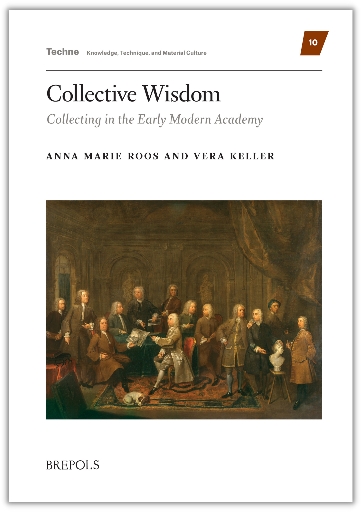
Collective Wisdom
Collecting in the Early Modern Academy
This volume analyses how and why members of scholarly societies such as the Royal Society the Society of Antiquaries of London and the Leopoldina collected specimens of the natural world art and archaeology in the seventeenth and eighteenth centuries. These scholarly societies founded before knowledge became subspecialised had many common members. We focus upon how their exploration of natural philosophy antiquarianism and medicine were reflected in collecting practice the organisation of specimens and how knowledge was classified and disseminated. The overall shift from curiosity cabinets with objects playfully crossing the domains of art and nature to their well-ordered Enlightenment museums is well known. Collective Wisdom analyses the process through which this transformation occurred and the role of members of these academies in developing new techniques of classifying and organising objects and new uses of these objects for experimental and pedagogical purposes.
Giovanni Poleni (1683-1761) et l’essor de la technologie maritime au siècle des Lumières
Cet ouvrage présente les traductions des trois traités de navigation écrits en latin (et restés à ce jour inédits) par Giovanni Poleni professeur de mathématiques physique astronomie philosophie mécanique expérimentale navigation et construction navale à l'université de Padoue : La meilleure manière de mesurer sur mer le chemin d'un vaisseau indépendamment des observations astronomiques (1733) Dissertations latines sur les ancres portant sur la figure optimale selon laquelle les ancres peuvent être formées la technique la plus performante pour forger les ancres la manière d'éprouver la force des ancres soit leur résistance (1737) le troisième traité concerne l'amélioration de l'usage du cabestan : De Ergatae Navalis praestabiliore facilioreque Usu Dissertatio (1741). Ces trois traités furent primés par l'Académie Royale des Sciences de Paris (prix Rouillé de Meslay). Un corpus traduit de la correspondance latine de Poleni avec les savants européens la traduction des programmes latins de ses cours de navigation ainsi qu'une enquête in situ à Venise Vérone ou à Padoue furent nécessaires pour contextualiser les traités. La reconstitution grandeur nature de deux machines de navigation de Poleni : le cabestan et la machine pour mesurer la force du vent réalisée par des étudiants de BTS Développement Réalisation Bois et des élèves de CAP Serrurerie Métallerie furent testées en mer. Cet ouvrage propose une biographie de Giovanni Poleni les « appels à projets » de l'Académie Royale des Sciences de Paris (1733-1741) les traductions commentées des trois traités de Poleni ainsi que la reconstitution de ses machines.
La vie chromatique des objets
Une anthropologie de la couleur de l’art contemporain
Quelles relations observe-t-on entre les techniques de production des couleurs et les pratiques artistiques modernes ? Entretiennent-elles des rapports de configuration réciproque ? Doit-on considérer la dimension matérielle de la couleur pour illuminer son caractère proprement social ? Voici quelques questions qui sont débattues dans ce livre qui a pour ambition d’offrir un voyage au cœur de la production des couleurs du monde occidental contemporain à travers l’exemple de la fabrication d’objets de l’art contemporain. Dans ce travail Arnaud Dubois déploie une nouvelle proposition analytique pour l’étude de la couleur en recourant à la notion « d’actes de couleur » - avec celles de « processus d’agglutination » et « d’actions sur la matière chromatique » - comme un nouvel outil théorique et méthodologique pour étudier les procédés de coloration. Penser la couleur comme un acte consiste à s’intéresser aux pratiques de colorisation et à décrire les situations de travail dans lesquelles sont effectués ces actes de couleur. Analyser les actes de couleur c’est donc en premier lieu s’intéresser aux moyens d’actions mis en œuvre par des acteurs multiples dans la coloration d’artefacts et repérer s’il existe des logiques d’actions chromatiques. Les 17 objets de couleurs qui sont étudiés dans cet ouvrage et les acteurs multiples liés de façon hétérogène à ces artefacts déploient alors un spectre large de pratiques et d’usages de la couleur fort utile pour comprendre à partir d’un travail historique et ethnographique la construction sociale de la couleur en Europe.
Perspective as Practice
Renaissance Cultures of Optics
This book is about the development of optics and perspective between the fifteenth and seventeenth centuries. The point of departure of this book is the recognition of the polysemy of perspective that is the plurality of meanings of perspective. To bring forward the polysemy of perspective this book explores the history of perspectiva in terms of practices a conglomerate of material social literary and reproductive practices through which knowledge claims in perspective were produced promoted legitimated and circulated in and through a variety of sites and institutions. The ways optical knowledge was used by different groups in different places (such as the university classroom the anatomist's dissection table the goldsmith's workshop and the astronomer's observatory) defined the meanings of Renaissance perspective. As this period was characterized by widespread 'optical literacy' perspective was defined in different ways in different places and sites by various groups of practitioners. Most interestingly sites such as the theatre the instrument maker's workshop and the courtly garden were home to practices of perspective which have remained on the margin or even completely invisible in the historiographies of optics and perspective. The book also brings out the differences between codifications of perspectiva and practice. There were a variety of non-Albertian constructions to create the illusion of space and other types of optical knowledge were as important to artists as the geometry of perspective.