


Brepols
Brepols is an international academic publisher of works in the humanities, with a particular focus in history, archaeology, history of the arts, language and literature, and critical editions of source works.3081 - 3100 of 3194 results
-
-
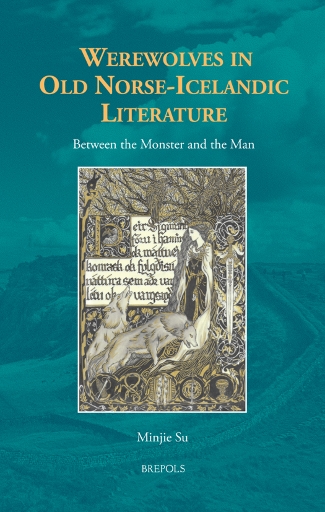
Werewolves in Old Norse-Icelandic Literature
Between the Monster and the Man
show More to view fulltext, buy and share links for:Werewolves in Old Norse-Icelandic Literature show Less to hide fulltext, buy and share links for: Werewolves in Old Norse-Icelandic LiteratureAt the heart of any story of metamorphosis lies the issue of identity, and the tales of the werwulf (lit. ‘man-wolf’) are just as much about the wolf as about the man. What are the constituents of the human in general? What symbolic significance do they hold? How do they differ for different types of human? How would it affect the individual if one or more of these elements were to be subtracted?
Focusing on a group of Old Norse-Icelandic werewolf narratives, many of which have hitherto been little studied, this insightful book sets out to answer these questions by exploring how these texts understood and conceptualized what it means to be human. At the heart of this investigation are five factors key to the werewolf existence - skin, clothing, food, landscape, and purpose - and these are innovatively examined through a cross-disciplinary approach that carefully teases apart the interaction between two polarizations: the external and social, and the interior and psychological. Through this approach, the volume presents a comprehensive new look at the werewolf not only as a supernatural creature and a literary motif, but also as a metaphor that bears on the relationship between human and non-human, between Self and Other, and that is able to situate the Old-Norse texts into a broader intellectual discourse that extends beyond medieval Iceland and Norway.
-
-
-
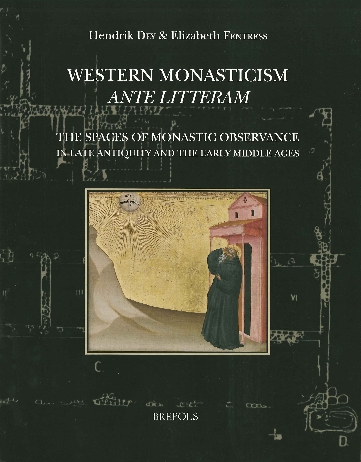
Western Monasticism ante litteram
The Spaces of Monastic Observance in Late Antiquity and the Early Middle Ages
show More to view fulltext, buy and share links for:Western Monasticism ante litteram show Less to hide fulltext, buy and share links for: Western Monasticism ante litteramSpace has always played a crucial part in defining the place that monks and nuns occupy in the world. Even during the first centuries of the monastic phenomenon, when the possible varieties of monastic practice were nearly infinite, there was a common thread in the need to differentiate the monk from the rest: whatever else they were supposed to be, monks were beings apart, unique, in some sense separate from the mainstream. The physical contours of monastic topographies, natural and constructed, are thus fundamental to an understanding of how early monks went about defining the parameters of their everyday lives, their modes of religious observance, and their interactions with the larger world around them. The group of eminent historians and archaeologists present at the American Academy in Rome in March, 2007 for the conference ‘Western monasticism ante litteram. The spaces of early monastic observance’, whose contributions comprise the bulk of this volume, have sought to reconsider the theory, the practice and above all the spaces of early monasticism in the West, in the hope of creating a more complete picture of that seminal period, from the fourth century until the ninth, when notions of what it meant to be a monk were as numerous as they were varied and (often) conflicting.
-
-
-
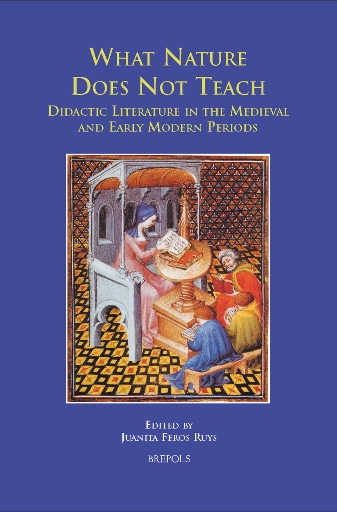
What Nature Does Not Teach
Didactic Literature in the Medieval and Early-Modern Periods
show More to view fulltext, buy and share links for:What Nature Does Not Teach show Less to hide fulltext, buy and share links for: What Nature Does Not TeachThis interdisciplinary study takes as its subject the multi-faceted genre of didactic literature (the literature of instruction) which constituted the cornerstone of literary enterprise and social control in medieval and early-modern Europe. Following an introduction that raises questions of didactic meaning, intent, audience, and social effect, nineteen chapters deal with the construction of the individual didactic voice and persona in the premodern period, didactic literature for children, women as the creators, objects, and consumers of didactic literature, the influence of advice literature on adult literacy, piety, and heresy, and the revision of classical didactic forms and motifs in the early-modern period. Attention is paid throughout to the continuities of didactic literature across the medieval and early-modern periods — its intertextuality, reliance on tradition, and self-renewal — and to questions of gender, authority, control, and the socially constructed nature of advice. Contributors particularly explore the intersection of advice literature with real lives, considering the social impact of both individual texts and the didactic genre as a whole. The volume deals with a wide variety of texts from the early Middle Ages to the eighteenth century, written in languages from Latin through the European vernaculars to Byzantine Greek and Russian, offering a comprehensive overview of this pervasive and influential genre.
-
-
-
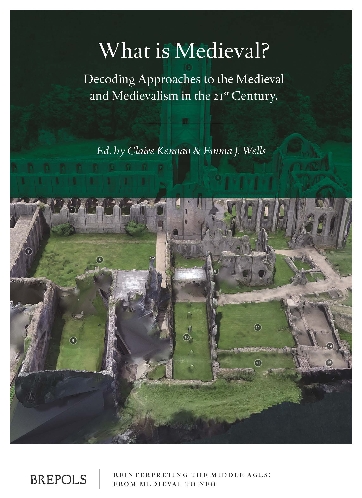
What is Medieval?
Decoding Approaches to the Medieval and Medievalism in the 21st Century
show More to view fulltext, buy and share links for:What is Medieval? show Less to hide fulltext, buy and share links for: What is Medieval?The Middle Ages and Medievalism have been used and abused throughout history–and this continues. This narrative deserves a reassessment. But, what is Medieval? This is the central question that unifies the contributions in this volume.
‘Medievalism’, or the study of the Middle Ages in its broadest sense, refers to the perception, conceptualisation and movement towards the era post the fifteenth century. Its study is therefore not about the period otherwise referred to as the ‘Middle Ages’, but rather the myriad ways it has since been conceived. And the field of medievalism is still in its relative infancy which has led to the emergence of various existential questions about its scope, remit, theoretico-methodological and pedagogical underpinnings, interpretation, periodization, and its relationship to established disciplines and more emerging subdisciplines and specialised fields—both within and without the academy.
In turn, neomedievalism has allowed insight into and a response to the medieval often dominated by the modern. This has provoked debate over the nature of neomedievalism as a discipline, subdiscipline, genre, field or offshoot in direct or contrasting relation to the more traditional medievalism.
Featuring interdisciplinary contributions from academics, educational practitioners as well as museum, digital and heritage professionals, this volume provides a fresh reflection on past methods to emerging pedagogies as well as new avenues of enquiry into the ways we think about the medieval. It is by reconciling these seemingly disparate forms that we can better understand the continual, interconnected, and often politicised, reinvention of the Middle Ages throughout cultures and study.
-
-
-
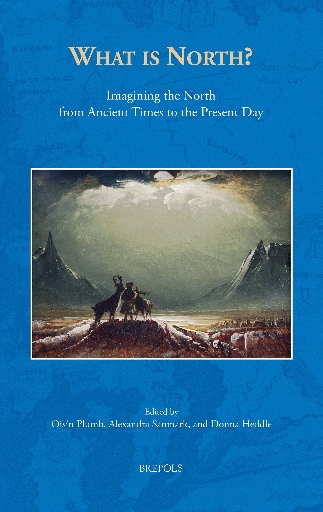
What is North?
Imagining the North from Ancient Times to the Present Day
show More to view fulltext, buy and share links for:What is North? show Less to hide fulltext, buy and share links for: What is North?The British Isles, Scandinavia, Iceland, Greenland, and Eastern Canada, alongside many small islands, form a broken bridge across the northern extremities of the Atlantic Ocean. This ‘North Atlantic World’ is a heterogeneous but culturally intertwined area, ideally suited to the fostering of an interest in all things northern by its people. For the storytellers and writers of the past, each more northerly land was far enough away that it could seem fabulous and even otherworldly, while still being just close enough for myths and travellers’ tales to accrue. This book charts attitudes to the North in the North Atlantic World from the time of the earliest extant sources until the present day. The varied papers within consider a number of key questions which have arisen repeatedly over the centuries: ‘where is the North located?’, ‘what are its characteristics?’, and ‘who, or what lives there?’. They do so from many angles, considering numerous locations and an immense span of time. All are united by their engagement with the North Atlantic World’s relationship with the North.
-
-
-
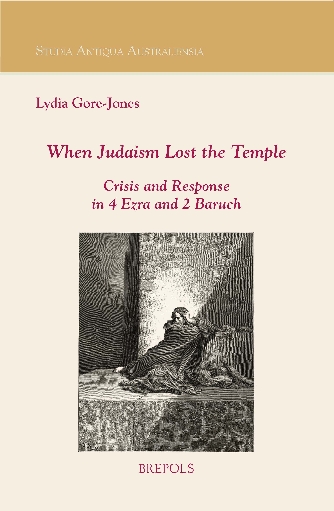
When Judaism Lost the Temple
Crisis and Reponse in 4 Ezra and 2 Baruch
show More to view fulltext, buy and share links for:When Judaism Lost the Temple show Less to hide fulltext, buy and share links for: When Judaism Lost the TempleThis book presents a study of religious thought in two Jewish apocalypses, 4 Ezra and 2 Baruch, written as a response to the destruction of the Jerusalem Temple by the Romans in 70 CE. The true nature of the crisis is the perceived loss of covenantal relationship between God and Israel, and the Jewish identity that is under threat. Discussions of various aspects of thought, including those conventionally termed theodicy, particularism and universalism, anthropology and soteriology, are subordinated under and contextualized within the larger issue of how the ancient authors propose to mend the traditional Deuteronomic covenantal theology now under crisis.Both 4 Ezra and 2 Baruch advocate a two-pronged solution of Torah and eschatology at the centre of their scheme to restore that covenant relationship in the absence of the Temple. Both maintain the Mosaic tradition as the bulwark for Israel’s future survival and revival. Whereas 4 Ezra aims to implant its eschatology into the Sinaitic tradition and make it part of the Mosaic Law, 2 Baruch extends the Deuteronomic scheme of reward and retribution into an eschatological context, making the rewards of the end-time a solution to the cycle of sins and punishments of this age. Considerable emphases are also placed on the significance of the portrayals of the pseudonymous protagonists, Ezra and Baruch, the use of symbolism in the two texts as scriptural exegesis, as well as their relationship with each other and links with the Hebrew Bible and other Jewish and Christian writings.
-
-
-
When the Potato Failed. Causes and Effects of the Last European Subsistence Crisis, 1845-1850
show More to view fulltext, buy and share links for:When the Potato Failed. Causes and Effects of the Last European Subsistence Crisis, 1845-1850 show Less to hide fulltext, buy and share links for: When the Potato Failed. Causes and Effects of the Last European Subsistence Crisis, 1845-1850The decade that gave rise to the term ‘the Hungry Forties’ in Europe is often regarded, and rightly so, as one of deprivation, unrest, and revolution. Two events, the Great Irish Famine and the various political events of ‘1848’, stand out. This book is the first to discuss the subsistence crisis of the 1840s in a truly comparative way. This subsistence crisis may be divided into two rather distinct elements. On the one hand, the failure of the potato caused by the new, unfamiliar fungus, phytophthera infestans, which first struck Europe in mid-1845, resulted in a catastrophe in Ireland that killed about one million people, and radically transformed its landscape and economy. Poor potato crops in 1845 and in the following years also resulted in significant excess mortality elsewhere in Europe. On the other hand, this period, and 1846 in particular, was also one of poor wheat and rye harvests throughout much of Europe. Failure of the grain harvest alone rarely resulted in a subsistence crisis, but the combination of poor potato and grain harvests in a single place was a lethal one. Connections between the local and the global, between the economic and the political, and between the rural and the industrial, make the crisis of the late 1840s a multi-layered one.
This book offers a comparative perspective on the causes and the effects of what is sometimes considered as the ‘last’ European subsistence crisis. It begins with an extensive introduction that treats the topic in comparative perspective. The subsistence crisis had its most catastrophic impact in Ireland, and three chapters in the current volume are concerned mainly with that country. A fourth chapter uses price data to shed comparative perspective on the crisis, while the remaining nine chapters are case studies covering countries ranging from Sweden to Spain and from Scotland to Prussia. Throughout, the contributors focus on a range of common themes, such as the extent of harvest deficits, the functioning of food markets, fertility and mortality, and public action at local and national levels.
Cormac Ó Gráda is professor of economics at University College, Dublin. He has worked extensively on the history of famines in Ireland and worldwide.
Richard Paping teaches economic and social history and economics at University of Groningen. He has done extensive research on developments in standard-of-living, economy and demography in the Netherlands.
Eric Vanhaute is professor social and economic history and world history at Ghent University. He has mainly published on the history of the rural society and of labour markets in Flanders and outside.
Table of contents:
Eric Vanhaute, Richard Paping and Cormac Ó Gráda, The European Subsistence Crisis of 1845-1850: a Comparative Perspective
PART I - The Irish Famine in an International Perspective
Cormac Ó Gráda, Ireland’s Great Famine. An overview - Mary E. Daly, Something Old and Something New. Recent Research on the Great Irish Famine - Peter M. Solar, The Crisis of the Late 1840s. What Can Be Learned From Prices? - Peter Gray, The European Food Crisis and the Relief of Irish Famine, 1845-1850
PART II - A Potato Famine Outside Ireland?
Tom M. Devine, Why the Highlands Did Not Starve. Ireland and Highland Scotland During the Potato Famine - Eric Vanhaute, “So Worthy an Example to Ireland”. The Subsistence and Industrial Crisis of 1845-1850 in Flanders - Richard Paping and Vincent Tassenaar, The Consequences of the Potato Disease in the Netherlands 1845-1860: a Regional Approach - Hans H. Bass, The Crisis in Prussia - Gunter Mahlerwein, The Consequences of the Potato Blight in South Germany - Nadine Vivier, The Crisis in France. A Memorable Crisis But Not a Potato Crisis - Jean Michel Chevet and Cormac Ó Gráda, Crisis: What Crisis? Prices and Mortality in Mid-Nineteenth Century France - Pedro Díaz Marín, Subsistence Crisis and Popular Protest in Spain. The Motines of 1847- Ingrid Henriksen, A Disaster Seen From the Periphery. The Case of Denmark - Carl-Johan Gadd, On the Edge of a Crisis: Sweden in the 1840s
-
-
-
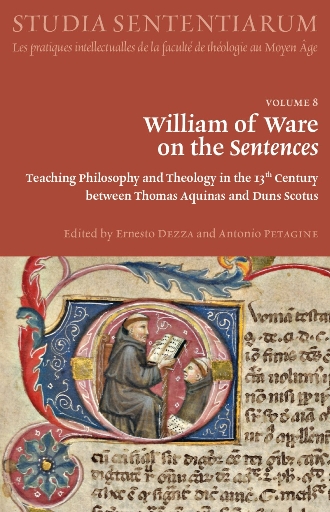
William of Ware on the Sentences
Teaching Philosophy and Theology in the 13th Century between Thomas Aquinas and Duns Scotus
show More to view fulltext, buy and share links for:William of Ware on the Sentences show Less to hide fulltext, buy and share links for: William of Ware on the SentencesThe Franciscan William of Ware – the Magister Scoti – flourished as a theologian at the end of the thirteenth century. Although he wielded significant influence on fourteenth-century theological and philosophical debates, his thought remains little known and even less studied than it deserves. A major cause for this situation lies in the difficulty of accessing the text of his Questions on the Four Books of the Sentences, which is largely unedited.
This volume is the first entirely devoted to William of Ware. It aims to promote a renewed knowledge of his texts and doctrines. The book includes updated information on studies and editions of Ware's texts, and specific studies on crucial aspects of his doctrines, such as theology, metaphysics, physics, epistemology, Christology, and anthropology. Additionally, the volume presents previously unpublished questions from his Commentary on the Sentences.
Overall, the volume serves as an essential reference for the thought and texts of William of Ware and provides a new and illuminating perspective on scholastic culture during the turn from the thirteenth to the fourteenth century.
-
-
-
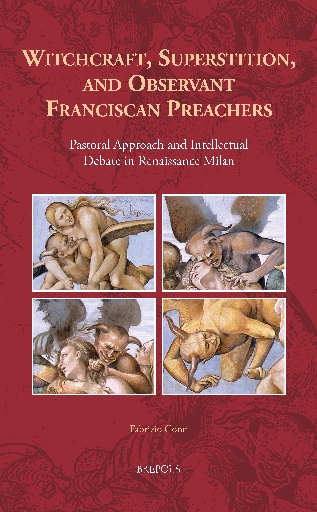
Witchcraft, Superstition, and Observant Franciscan Preachers
Pastoral Approach and Intellectual Debate in Renaissance Milan
show More to view fulltext, buy and share links for:Witchcraft, Superstition, and Observant Franciscan Preachers show Less to hide fulltext, buy and share links for: Witchcraft, Superstition, and Observant Franciscan PreachersThis book offers a new and innovative approach to the study of magic and witchcraft in Italy between the late Middle Ages and the early modern period. Unusually, this subject is explored not through inquisitorial trial records or demonological literature, but through the sermons and confession manuals produced by Observant Franciscan friars, focusing on the so-called ‘pastoral’ approach to folklore, superstition, and witchcraft - an approach that appears to have been notably less harsh than that taken by inquisitors and dedicated demonologists.
Central to this research are the writings of a number of friars active at the friary of St Angelo’s in Milan. Among them were preachers and confessors such as Bernardino Busti, who treated superstition as part of a model that categorized the beliefs and behaviours of the faithful, as well as dedicated intellectuals such as Samuele Cassini, who took scepticism towards elements of belief in witchcraft still further, ultimately leading to a clash with groups such as the Dominicans.
By considering the writings of these men in their wider literary and pastoral context, and in the light of the broader reforming aims of the Franciscans, this unique study not only offers new insights into the late medieval understanding of superstition and witchcraft, but also makes an important contribution to the history of pastoral care.
-
-
-
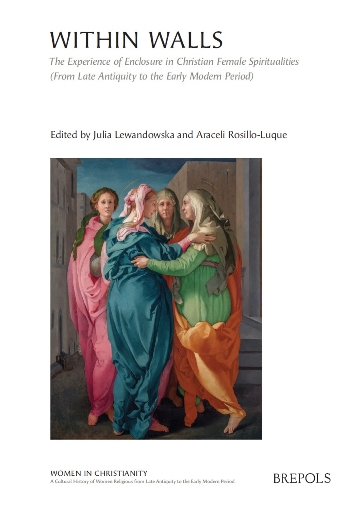
Within Walls
The Experience of Enclosure in Christian Female Spiritualities (From Late Antiquity to the Early Modern Period)
show More to view fulltext, buy and share links for:Within Walls show Less to hide fulltext, buy and share links for: Within WallsWhat different mechanisms did women religious use to interpret the communal and individual aspects of enclosure throughout history? To what extent was enclosure a pivotal feature of Christian spiritual, social and cultural life? How did social and political contexts shape the strategies of nuns and beatas in accepting or rejecting strict enclosure?
Within Walls explores the diverse experiences of enclosure within female Christian spiritualities, presenting it as a crucial concept for a deep understanding of the history of women religious. The volume primarily aims to show the different ways in which women religious lived, negotiated and redefined enclosure in its material and symbolic dimensions. Covering the period from the New Testament era to the late sixteenth century, and spanning regions from the Holy Land and Egypt to Western Europe and colonial Mexico, it explores the evolving meanings and uses of the confined life as experienced and shaped by women religious in Christianity.
The case studies presented in this volume—from the strategies of seclusion of early Christian anchoresses to the plethora of voices of Mediaeval and Early Modern female communities and the authority wielded by individual nuns, pilgrims, prioresses, reformers and mystics—argue that there was by no means a single form of enclosure in female Christian religious life. Instead, inspired by Philip Sheldrake’s interpretation of sacred spaces as polyphonic, this volume stresses the multivocality and multilocality of the term. Adopting an interdisciplinary approach that integrates microhistory, human geography, the cultural analysis of materiality, literary studies, feminist and gender studies, indigenous methodologies, art studies, postcolonial anthropology and the philosophy of religion and spirituality, Within Walls provides fresh perspectives on the most intricate dimension of religious life in history.
-
-
-
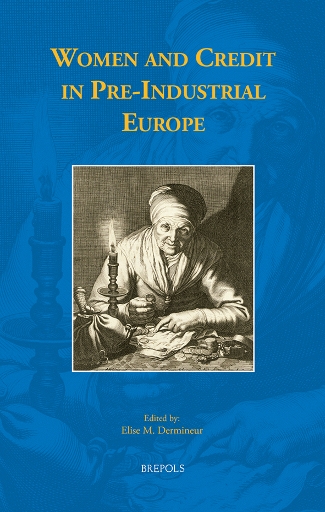
Women and Credit in Pre-Industrial Europe
show More to view fulltext, buy and share links for:Women and Credit in Pre-Industrial Europe show Less to hide fulltext, buy and share links for: Women and Credit in Pre-Industrial EuropeThis collection of essays compares and discusses women’s participation and experiences in credit markets in early modern Europe, and highlights the characteristics, common mechanisms, similarities, discrepancies, and differences across various regions in Europe in different time periods, and at all levels of society. The essays focus on the role of women as creditors and debtors (a topic largely ignored in traditional historiography), but also and above all on the development of their roles across time. Were women able to enter the credit market, and if so, how and in what proportion? What was then the meaning of their involvement in this market? What did their involvement mean for the community and for their household? Was credit a vector of female emancipation and empowerment? What were the changes that occurred for them in the transition to capitalism? These essays offer a variety of perspectives on women’s roles in the credit markets of early modern Europe in order to outline and answer these questions as well as analysing and exploring the nature of women, money, credit, and debt in a pre-industrial Europe.
-
-
-
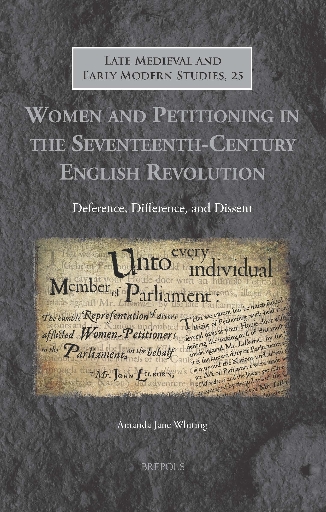
Women and Petitioning in the Seventeenth-Century English Revolution
Deference, Difference, and Dissent
show More to view fulltext, buy and share links for:Women and Petitioning in the Seventeenth-Century English Revolution show Less to hide fulltext, buy and share links for: Women and Petitioning in the Seventeenth-Century English RevolutionDuring the English Civil Wars and Revolution (1640-60), the affairs of Church and State came under a crucial new form of comment and critique, in the form of public petitions. Petitioning was a readily available mode of communication for women, and this study explores the ways in which petitioning in seventeenth-century England was adapted out of and differed from pre-Revolutionary modes, whilst also highlighting gendered conventions and innovations of petitioning in that period.
Male petitioning in the seventeenth century did not have to negotiate the cultural assumptions about intellectual inferiority and legal incapacity that constrained women. Yet just because women did not claim separate (and modern) women’s rights does not mean that they were passive, quiescent, or had no political agency. On the contrary, as this study shows, women in the Revolution could use petitioning as a powerful way to address those in power, precisely because it was done from an assumed position of weakness. The petition is not simply a text, authored by a single pen, but a series of social transactions, performed in multiple social and political settings, frequently involving people previously excluded from participation in political discussion or action. To the extent that women participated in collective petitioning, or turned their individual addresses into printed artefacts for public scrutiny, they also participated in the public sphere of political opinion and debate.
-
-
-
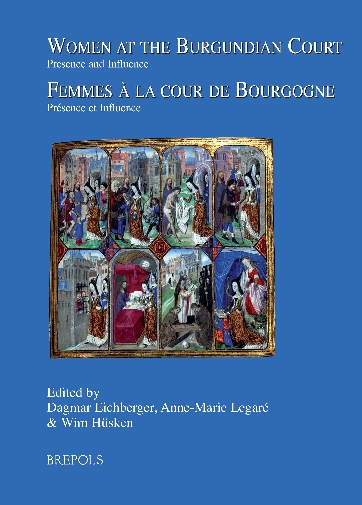
Women at the Burgundian Court: Presence and Influence
Femmes à la Cour de Bourgogne: Présence et Influence
show More to view fulltext, buy and share links for:Women at the Burgundian Court: Presence and Influence show Less to hide fulltext, buy and share links for: Women at the Burgundian Court: Presence and InfluenceThis collection of essays charts the role of women at the Burgundian court by analysing the ways in which medieval women, such as Isabella of Portugal, Margaret of York, Mary of Burgundy, Margaret of Austria made an impact through their physical, moral and spiritual presence at court. During the absence of the prince these well-educated and internationally experienced spouses, mothers and aunts were put in charge of the courtly household or were in some cases appointed regent of the Netherlandish territories for a limited period of time. The youngest generation of women represented by the sisters and consorts of Charles V and Ferdinand I — now forming part of the extended family network — continued this tradition and took it to Germany, Spain, France and Portugal. The court developed into a kind of ‘gender laboratory’, in which women actively negotiated their position of power, thus consolidating their influence in politics, diplomacy, education and art.
-
-
-
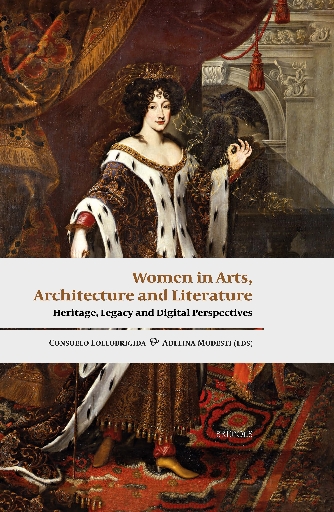
Women in Arts, Architecture and Literature: Heritage, Legacy and Digital Perspectives
Proceedings of the First Annual International Women in the Arts Conference
show More to view fulltext, buy and share links for:Women in Arts, Architecture and Literature: Heritage, Legacy and Digital Perspectives show Less to hide fulltext, buy and share links for: Women in Arts, Architecture and Literature: Heritage, Legacy and Digital Perspectives
Rome, 20–22 October 2021In the last few decades, the study of women in the arts has largely increased in terms of scholars involved in research and investigation, with the reception of the outcomes especially acknowledged by museums which are dedicating part of their mission to organizing exhibitions and/or acquiring the works of women. The Annual International Women in Arts Conference seeks to advance contemporary discussions on how female creativity has helped shape European culture in its heterogeneity since the Middle Ages. This volume collects the proceedings of the first conference organised in Rome, in October 2021. It focuses on the role of women in literature, art, and architecture. Throughout history, these domains were often seen as very masculine. Yet, there have been many women who have made their mark as writers, illuminators, artists and architects, or have played a decisive role as patrons and supporters in these arts. This collection of essays aims to bring these women to the fore and sheds a new light on the heritage and legacy of women in the creative arts and architecture from the Middle Ages until the 20th century.
-
-
-
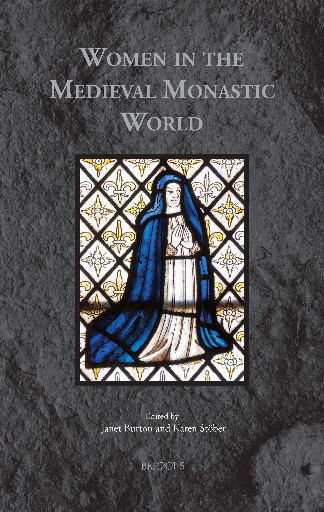
Women in the Medieval Monastic World
show More to view fulltext, buy and share links for:Women in the Medieval Monastic World show Less to hide fulltext, buy and share links for: Women in the Medieval Monastic WorldThere has long been a tendency among monastic historians to ignore or marginalize female participation in monastic life, but recent scholarship has begun to redress the balance, and the great contributions made by women to the religious life of the Middle Ages are now attracting increasing attention. This interdisciplinary volume draws together scholars from Spain, Italy, France, the Low Countries, Germany, Transylvania, Scandinavia, and the British Isles, and offers new insights into the history, art history, and material culture, and the religiosity and culture of medieval religious women.
The different chapters within this book take a comparative approach to the emergence and spread of female monastic communities across different geographical, political, and economic settings, comparing and contrasting houses that ranged from rich, powerful royal abbeys to small, subsistence priories on the margins of society, and exploring the artistic achievements, the interaction with neighbours and secular and ecclesiastical authorities, and the spiritual lives that were led by their inhabitants. The contributors to this volume address issues as diverse as patronage and relationships with the outside world, organizational structures, the nature of Cistercian observance and identity among female houses, and the role of male authority, and in doing so, they seek to shed light on the divergences and commonalities upon which the female religious life was based.
-
-
-
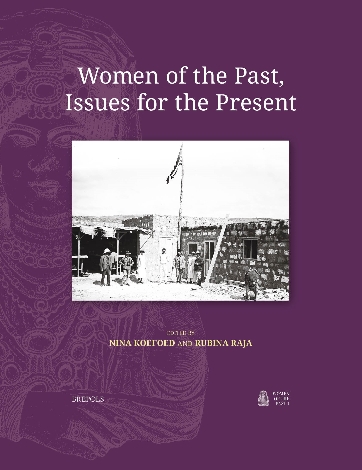
Women of the Past, Issues for the Present
show More to view fulltext, buy and share links for:Women of the Past, Issues for the Present show Less to hide fulltext, buy and share links for: Women of the Past, Issues for the PresentThe roles played by women in history, and even the very idea of what it is to be female, have always been in flux, changing over centuries, between cultures, and in response to diverse social and economic parameters. Even today, women’s roles and women’s rights continue to face changes and pressures. In establishing the series Women of the Past: Testimonies from Archaeology and History, the ambition is to build on the profound theoretical and empirical developments that have taken place over the last fifty years of gender-focused research and to explore them in a contemporary context.
The aim of this series is to shed light on not just the outstanding and extraordinary women who were trendsetters of their time, but also the not quite so outstanding women, often overshadowed by outstanding men, and the ordinary women, those who simply went about their everyday life and kept their world turning in their own quiet way. This edited volume, Women of the Past, Issues for the Present, is the inaugural volume of the series and shows the wide span of the series chronologically, geographically, and socially in terms of the research presented. From Roman slaves to Viking women, and from medieval wet-nurses to the nineteenth-century wives who supported their archaeologist husbands on excavation, this groundbreaking volume opens a new vista in our understanding of the past.
-
-
-
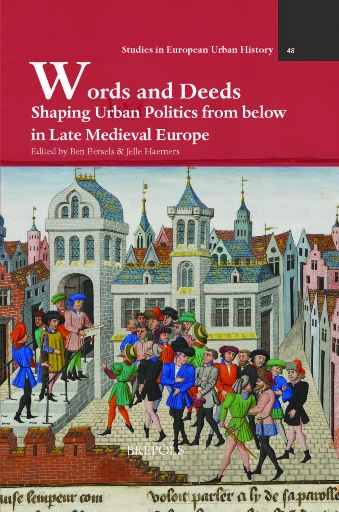
Words and Deeds
Shaping Urban Politics from below in Late Medieval Europe
show More to view fulltext, buy and share links for:Words and Deeds show Less to hide fulltext, buy and share links for: Words and DeedsThis book focuses on the city and urban politics, because historically towns have been an interesting laboratory for the creation and development of political ideas and practices, as they are also today. The contributions in this volume shed light on why, how and when citizens participated in the urban political process in late medieval Europe (c. 1300-1500). In other words, this book reconsiders the involvement of urban commoners in political matters by studying their claims and wishes, their methods of expression and their discursive and ideological strategies. It shows that, in order to garner support for and establish the parameters of the most important urban policies, medieval urban governments engaged regularly in dialogue with their citizens. While the degree of citizens’ active involvement differed from region to region and even from one town to the next, political participation never remained restricted to voting for representatives at set times. This book therefore demonstrates that the making of politics was not the sole prerogative of the government; it was always, to some extent, a bottom-up process as well.
-
