


Brepols
Brepols is an international academic publisher of works in the humanities, with a particular focus in history, archaeology, history of the arts, language and literature, and critical editions of source works.851 - 900 of 3194 results
-
-
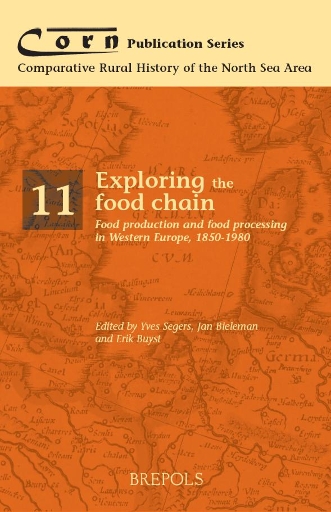
Exploring the food chain. Food production and food processing in Western Europe, 1850-1990
show More to view fulltext, buy and share links for:Exploring the food chain. Food production and food processing in Western Europe, 1850-1990 show Less to hide fulltext, buy and share links for: Exploring the food chain. Food production and food processing in Western Europe, 1850-1990Until the late 19th century the food industry was restricted to a few activities, usually based on small scale industries. The links between agriculture and food processing were very tight. Due to increased purchasing power, population growth and urbanisation, the demand for food grew substantially. This was not only the case for basis products as corn and potatoes, but also and especially for more expensive, quality products as meat, fish and dairy produce. These developments generated, together with the essential technological innovations, the creation and development of modern food processing in specialized shops and factories. In only a few decades these industries transformed from an important complement to the primary agricultural production on the farms to a much comprising industrial business. At the end of the 20th century food processing has evolved into a modern, high-tech industry, dominated by a few large enterprises, offering a wide range of products. This volume aims to turn the spotlight on this often neglected but important link in the food chain.
-
-
-
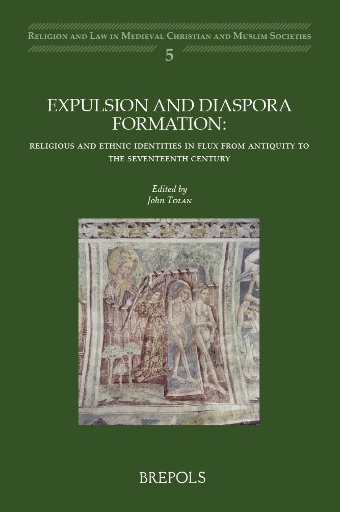
Expulsion and Diaspora Formation: Religious and Ethnic Identities in Flux from Antiquity to the Seventeenth Century
show More to view fulltext, buy and share links for:Expulsion and Diaspora Formation: Religious and Ethnic Identities in Flux from Antiquity to the Seventeenth Century show Less to hide fulltext, buy and share links for: Expulsion and Diaspora Formation: Religious and Ethnic Identities in Flux from Antiquity to the Seventeenth CenturyThe eleven essays brought together in this volume explore the relations between expulsion, diaspora, and exile between Late Antiquity and the seventeenth century. The essays range from Hellenistic Egypt to seventeenth-century Hungary and involve expulsion and migration of Jews, Muslims and Protestants. The common goal of these essays is to shed light on a certain number of issues: first, to try to understand the dynamics of expulsion, in particular its social and political causes; second, to examine how expelled communities integrate (or not) into their new host societies; and finally, to understand how the experiences of expulsion and exile are made into founding myths that establish (or attempt to establish) group identities.
John Tolan is professor of history at the University of Nantes (France) and member of the Academia Europæa. He is author of numerous articles and books in medieval history and cultural studies, including Petrus Alfonsi and his Medieval Readers (1993), Saracens: Islam in the Medieval European Imagination (2002), Sons of Ishmael: Muslims through European Eyes in the Middle Ages (2008), and Saint Francis and the Sultan: The Curious History of a Christian-Muslim Encounter (2009). He is director of a major project funded by the European Research Council, “RELMIN: The legal status of religious minorities in the Euro-Mediterranean world (5th-15th centuries)” (www.relmin.eu).
-
-
-

Exégèses de la « mécréance » et statut du non-musulman dans le Commentaire coranique d’al-Qurtubi (m.671/1273)
show More to view fulltext, buy and share links for:Exégèses de la « mécréance » et statut du non-musulman dans le Commentaire coranique d’al-Qurtubi (m.671/1273) show Less to hide fulltext, buy and share links for: Exégèses de la « mécréance » et statut du non-musulman dans le Commentaire coranique d’al-Qurtubi (m.671/1273)Al-Qurṭubī (m. 671/1273) est l'auteur d'un commentaire coranique qui constitue, depuis le XIIIe siècle jusqu’à nos jours, une référence incontournable dans la transmission du savoir islamique. Ce monumental commentaire offre un matériel pluridisciplinaire permettant d’accéder de manière inédite à une représentation à la fois globale et contextualisée du thème de la non-islamité dans les différentes branches de la pensée islamique. Dans ce texte, l’exégèse coranique renseigne le matériel juridique : elle a pour fonction de l’expliquer. Ainsi les notions coraniques sont réinterprétées, détachées de leur contexte d’origine, en vue de fonder le patrimoine juridique ainsi que les règles de droit dans le Coran considéré comme source de loi.
Cette recherche démontre que la notion de mécréance avait initialement un sens purement politique renvoyant à des actes d’insoumission, de déloyauté et d’iniquité. La notion s’élabore dans le contexte historico-mythique de paix brisées, guerres et conciliations évoquées dans le Coran. L’idée de filiation entre les religions monothéistes, tout particulièrement celle que l’islam provient des religions des « Gens du Livre » –Juifs et Chrétiens -, est dominante. La “mécréance” devient alors l’argument qui permet de réhabiliter la coexistence entre musulmans et non-musulmans. Puis on découvre que c’est d’avantage la non-islamité accompagnée de l’allégeance politique – plutôt que le critère de mécréance en tant que tel -, qui détermine l’octroi de la protection légale (dhimma) aux non-musulmans résidant en Terre d’Islam.
-
-
-
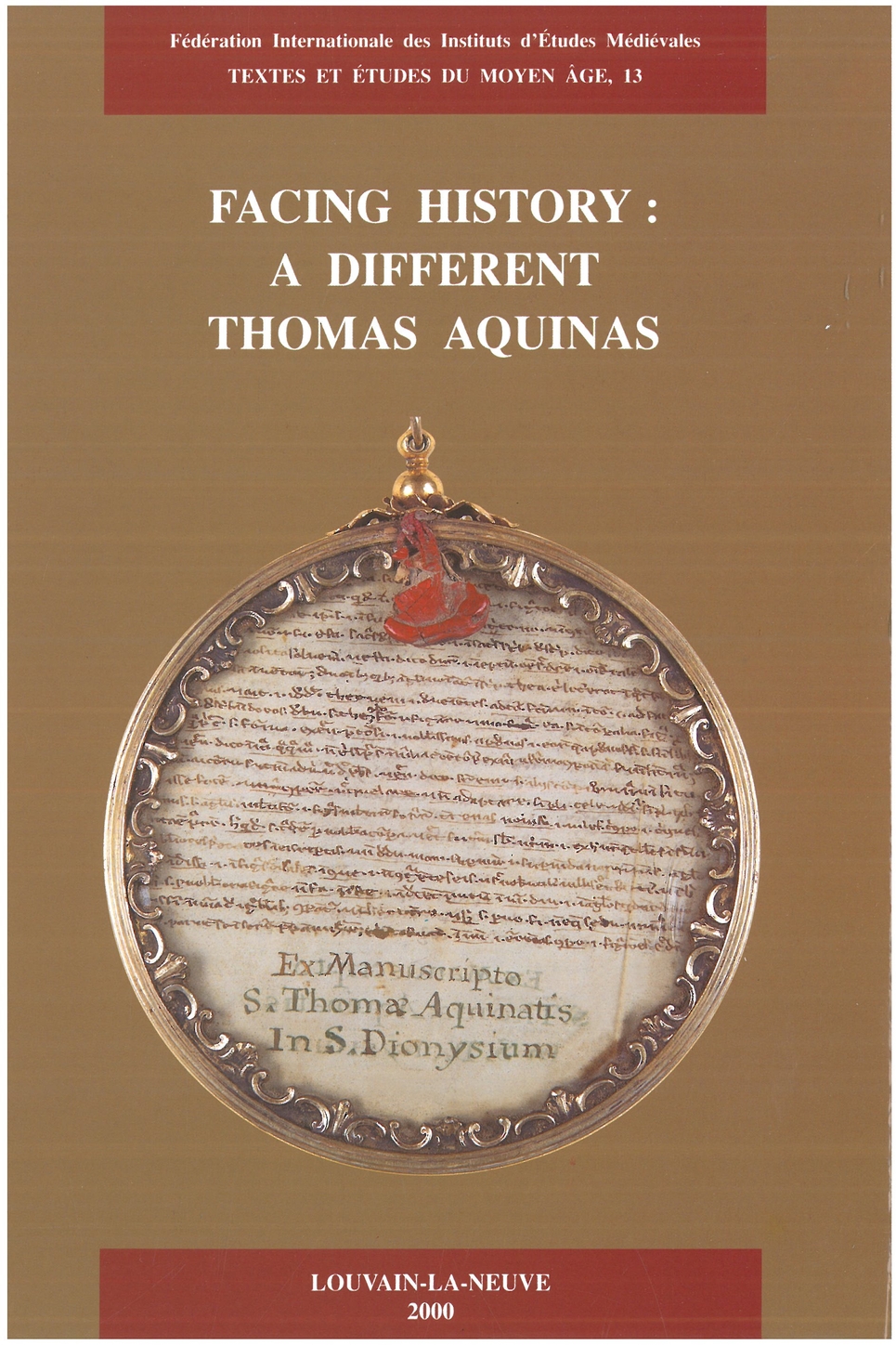
Facing History: A Different Thomas Aquinas
show More to view fulltext, buy and share links for:Facing History: A Different Thomas Aquinas show Less to hide fulltext, buy and share links for: Facing History: A Different Thomas AquinasCe volume rassemble les articles que le Père Boyle a publiés sur Thomas d'Aquin tout au long de sa carrière. Par le simple fait de replacer la moindre question dans son contexte le plus large, ce médiéviste averti avait l'art de la renouveler profondément. En relisant cet ensemble de travaux à quelques années de distance, on ne peut qu'être frappé de leur pertinence. Souvent livré, et à juste titre, aux philosophes et aux théologiens, Thomas d'Aquin n'a pas toujours été situé par eux dans le contexte historique nécessaire à sa bonne compréhension. C'est précisément ce qu'a fait Leonard Boyle.
Personne, certes, n'eut été mieux qualifié que lui pour dire l'intention qui le guidait; mais à défaut de pouvoir l'entendre lui-même, il n'est peut-être pas impossible de dégager l'originalité des études ici rassemblées. On ne semble pas jusqu'ici s'être particulièrement intéressé à ses travaux du point de vue de la théologie. De ce fait, ils n'ont peut-être pas encore trouvé tout le retentissement qu'il était en droit d'en attendre.
La maestria avec laquelle l'auteur met en oeuvre les différents aspects d'une méthode bien rôdée pour l'étude des textes médiévaux aurait suffi à elle seule à justifier leur reprise en un volume. Non seulement leur qualité les fait émerger très au-dessus de nombreux autres travaux, mais certaines d'entre elles touchent aux questions les plus graves quant au sens de l'oeuvre thomasienne, de la mission et de la spiritualité de l'ordre dominicain, et même quant à la vision d'ensemble du XIIIe siècle religieux tout entier.
Par la générosité de son travail le Père Boyle a sensiblement renouvelé les questions qu'il a touchées. Quiconque voudra bien porter à sa recherche l'attention qu'elle mérite devra reconnaître qu'il nous fait découvrir un saint Thomas "différent".
-
-
-
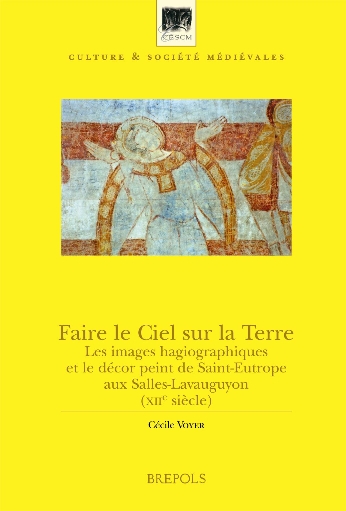
Faire le ciel sur la terre
Les images hagiographiques et le décor peint de Saint-Eutrope aux Salles-Lavauguyon (XIIe siècle)
show More to view fulltext, buy and share links for:Faire le ciel sur la terre show Less to hide fulltext, buy and share links for: Faire le ciel sur la terreFondée sur le décor peint remarquable et jusqu’ici méconnu de l’église Saint-Eutrope des Salles-Lavauguyon, la présente étude explore les fonctions des images hagiographiques monumentales des XI e-XII e siècles. L’élargissement du questionnement à d’autres édifices permet d’éclairer leur rôle et leur inscription dans l’espace culturel. Se concentrer sur un « lieu d’images » suppose de définir les cadres d’une réflexion méthodologique. Ce livre s’appuie sur une approche contextuelle des œuvres visuelles en changeant d’échelle au fur et à mesure de l’analyse. L’auteur met en lumière la singularité et l’inventivité des concepteurs de chaque image en la replaçant dans sa série, une série qui témoigne de la variété des occurrences du Haut Moyen Age au XII e siècle. Détailler chaque cycle narratif permet d’examiner la façon dont la matière hagiographique est traduite en images et d’observer la construction ou la reconstruction de la vita peinte, les rythmes et les temps du récit.
Chaque cycle hagiographique est étudié à l’aune des thèmes qui sous-tendent l’ensemble du décor. Se dessine ainsi l’acte de création qui a présidé à l’élaboration de celui du prieuré des Salles-Lavauguyon. Les intentions des commanditaires, des chanoines réguliers, se lisent entre les images qu’ils ont choisies et leur mise en œuvre. Une communauté canoniale qui se pense à travers son édifice et son décor et qui se positionne au sein de l’Eglise locale grâce aux images hagiographiques. Prendre pour objet ce prieuré et ses peintures invite à aborder la géographie canoniale du diocèse et son articulation avec les réseaux monastiques, la politique épiscopale, la réforme canoniale, l’instruction et la culture spirituelles mais aussi les enjeux de pouvoir, d’autorité et de territoire.
Le but de ce livre qui dépasse celui de la stricte monographie thématique est ainsi de contribuer à rendre compte de la richesse des mentalités médiévales.
Cécile Voyer a fait ses études au Centre d’Etudes Supérieures de Civilisation Médiévale de Poitiers. Elle est actuellement maître de conférences à l’Université Michel de Montaigne, Bordeaux 3.
-
-
-
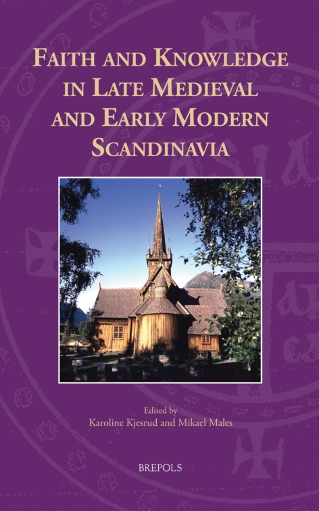
Faith and Knowledge in Late Medieval and Early Modern Scandinavia
show More to view fulltext, buy and share links for:Faith and Knowledge in Late Medieval and Early Modern Scandinavia show Less to hide fulltext, buy and share links for: Faith and Knowledge in Late Medieval and Early Modern ScandinaviaThis book investigates the interface between faith and knowledge in Scandinavia in the centuries before and after the Reformation, a period in which the line between belief and knowledge was often blurred, and local traditions remained influential. While Scandinavia was undoubtedly an integral part of Latin Christendom before the arrival of Lutheranism, the essays gathered together in this volume demonstrate that religious discourse still took a unique form in this region. Faith was influenced by magical practices centred on remnants of Nordic paganism, local wisdom literature, and metaphoric language about the divine that diverged considerably from that of the Judeo-Christian tradition. Texts, motifs, and practices that were common throughout Europe were also transformed and altered within this northern setting.
Covering the late medieval up to the early modern period, this volume offers new insights into intellectual culture in Scandinavia, and the remarkable longevity of local beliefs even into the early post-Reformation period.
-
-
-
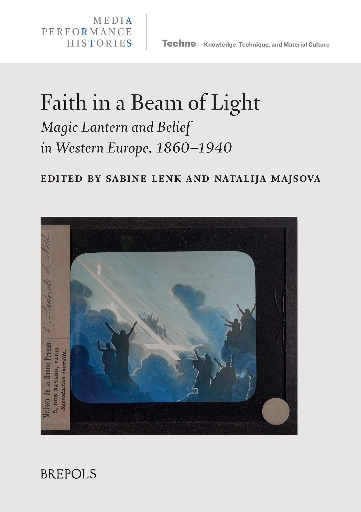
Faith in a Beam of Light
Magic Lantern and Belief in Western Europe, 1860-1940
show More to view fulltext, buy and share links for:Faith in a Beam of Light show Less to hide fulltext, buy and share links for: Faith in a Beam of LightAn early visual mass medium, the magic lantern was omnipresent in most Western societies between 1880 and 1930. The Christian Church, especially the Catholics, spiritual associations such as the Freemasons, political interest groups and teaching institutions all made use of lectures enriched by projected images to disseminate information, convictions and doctrines. Moreover, the lantern often featured as a concealed aid in stage spectacles. Nineteen authors analyse the effects of "the beam of light in the dark" in the context of religion, faith and belief. Attention is paid to the wide spectrum of locations where projections took place, as well as to the lantern's impressive versatility. The lavishly illustrated chapters collected in this volume range from analyses of religious propaganda to fundraising lectures for missionary work in China, from the fight against alcoholism to the secularisation of society, and from the lantern's application in spiritualist sessions to its use in science and teaching.
-
-
-
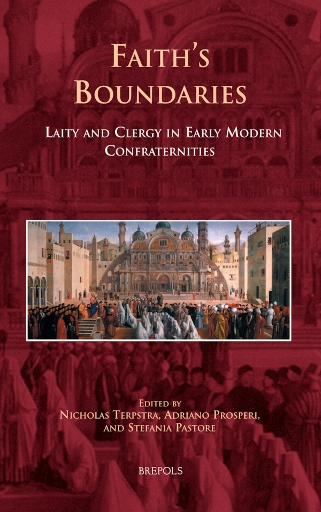
Faith’s Boundaries
Laity and Clergy in Early Modern Confraternities
show More to view fulltext, buy and share links for:Faith’s Boundaries show Less to hide fulltext, buy and share links for: Faith’s BoundariesWho owns the spaces of religion? Does the question matter, or even make sense? Modern distinctions between sacred and secular spheres tend to assume that clergy dominate the former, and lay people the latter. A man or woman living in the early modern period might not have been so sure. They would have thought more immediately of things of heaven and things of earth, and would have seen each as the concern of clergy and laity alike. Faith’s boundaries, while real, were very porous. This collection offers the first sustained comparative examination of lay-clerical relations in confraternities through the late medieval and early modern periods. It shows how laity and clergy debated, accommodated, resolved, or deflected the key issues of gender, race, politics, class, and power. The sixteen essays are organized into six sections that consider different aspects of the function of confraternities as social spaces where laity and clergy met, mediated, and sometimes competed and fought. They cover a period historically when kinship was a dominant metaphor in religious life and when kinship groups like confraternities were dominant models in religious institutions. They deal with Catholic, Jewish, and Islamic confraternities, and range geographically from Europe to the Middle East, Central and South Asia, and Latin America.
-
-
-
Fallacies in the Arabic, Byzantine, Hebrew and Latin Traditions
show More to view fulltext, buy and share links for:Fallacies in the Arabic, Byzantine, Hebrew and Latin Traditions show Less to hide fulltext, buy and share links for: Fallacies in the Arabic, Byzantine, Hebrew and Latin TraditionsFallacy studies are a well established and fast expanding field of argumentation theory. Without notable exception, however, the evergrowing literature on argumentative failure suffers from a conspicuous lack of interest in medieval fallacy theory - arguably the most creative stage in the whole history of argumentation theories. The standard story is that after Aristotle got off to a tentative start, the study of fallacies lay dormant until people at Port Royal and John Locke revived it in spectacular fashion. The volume will show that this picture is both inaccurate and misleading. By working its way from the inside out within each medieval world, Fallacies in the Arabic, Byzantine, Hebrew and Latin Traditions will provide ample and unambiguous record of the exegetical proficiency, technical expertise and argumentative savoir-faire typically displayed by medieval authors on issues about flawed arguments which are all too often our own.
-
-
-
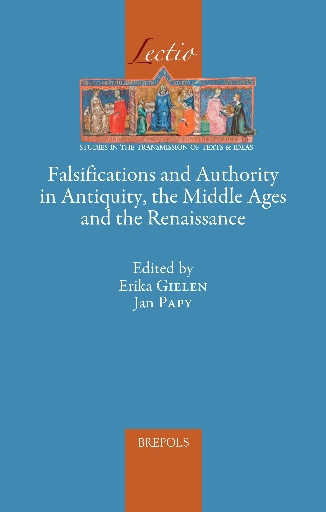
Falsifications and Authority in Antiquity, the Middle Ages and the Renaissance
show More to view fulltext, buy and share links for:Falsifications and Authority in Antiquity, the Middle Ages and the Renaissance show Less to hide fulltext, buy and share links for: Falsifications and Authority in Antiquity, the Middle Ages and the RenaissanceConfronted with the shifting idea of the authority of a text and its transmission and reception in a variety of genres, settings and contexts, this collective volume envisages to enlarge and deepen our understanding of these notions by tangling literary forgery and emulation. Authority and authoritative literary productions provoke all kinds of interest and emulation. Hermeneutical techniques, detailed exegesis and historical critique are invoked to put authority, and indeed also possible falsifications, to the test. Scholars from various disciplines working on texts, either authoritative or forged, and stemming from different periods of time, reflect on these topics on a methodological basis and from a hermeneutical entrance. In doing so, a threefold axis for questioning the phenomenon is proposed, namely the motif of falsification, the mechanism or technique applied, and the direct or indirect effect of this fraud.
-
-
-
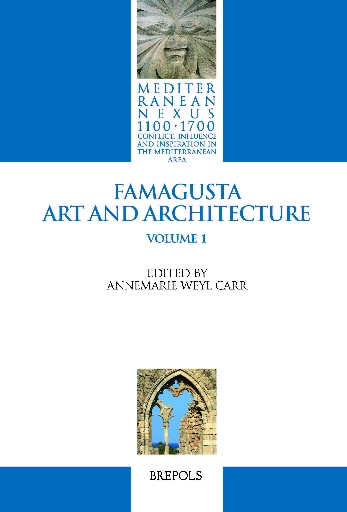
Famagusta
Art and Architecture
show More to view fulltext, buy and share links for:Famagusta show Less to hide fulltext, buy and share links for: FamagustaDuring the period of Latin rule on Cyprus (1191-1571), Famagusta went from being a small fishing village to a populous, cosmopolitan center of international trade by the early fourteenth century. After the fall of Acre in 1291 the Lusignan kings of Cyprus, now also kings of Jerusalem, made Famagusta a quasi capital-in-exile, with a new cathedral as the coronation church of the Kingdom of Jerusalem. The city began to stagnate with shifting trade patterns and the Black Death, was annexed by the Genoese after their invasion and partition of the island in 1374, and was only reunited with the Kingdom of Cyprus in 1464 with King James II “the Bastard’s” reconquest. With the Venetian takeover of the island in 1474, Famagusta experienced a demographic, economic, and artistic renaissance. In 1571, after an epic siege, the city fell to the Ottoman Turks, and from then on visitors described the ruins of the once great Gothic jewel of the Eastern Mediterranean with melancholic nostalgia.
In its heyday, Famagusta was home to Greeks, Franks, Armenians, Jews, Syrians of various religious backgrounds, and numerous merchants from the Italian trading cities, above all Genoa and Venice. Smaller groups completed the mix. With money pouring in from trade and the support of the crown, in the fourteenth century the town was encircled with impressive walls, still extant, and dozens of churches were constructed, adopting unique variations of the Gothic style, including large Latin, Greek, and Syrian cathedrals. Many of these are still intact, others consist of evocative ruins among the palm trees with the backdrop of the blue sea. This fascinating history and its heritage are dealt with within the present volume.
List of contributors: Annemarie Weyl Carr (editor), Justine M. Andrews, Michele Bacc i, Nicola Coldstream, Michalis Olympios, Tassos Papacostas, Maria Paschali
-
-
-
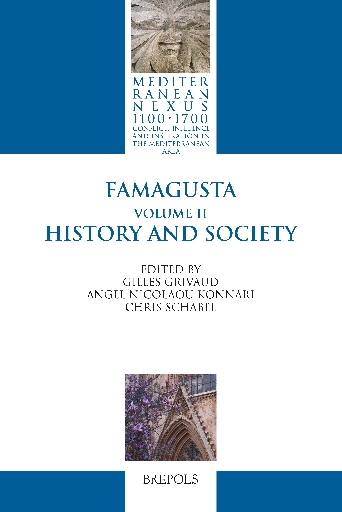
Famagusta
Vol. II: History and Society
show More to view fulltext, buy and share links for:Famagusta show Less to hide fulltext, buy and share links for: FamagustaThis is the second of two volumes on the history and archaeology of the port city of Famagusta in Cyprus from the beginning of the island’s Frankish rule in 1191 to the Ottoman conquest in 1571. The first volume, entitled Art and Architecture and edited by Annemarie Weyl Carr, was published in this series in 2014.
The volume provides a comprehensive survey of the four-century history of Famagusta under Frankish, Genoese, and Venetian rule down to the Ottoman siege and conquest, supplemented by an account of the image of the medieval and Renaissance city in retrospect. Based on original research and often using unpublished sources, fourteen acknowledged specialists study Famagusta’s political, social, economic, and ecclesiastical history from a multi- and interdisciplinary approach that involves aspects such as institutional continuities and discontinuities, military and spatial organisation, religious and cultural exchanges, gender roles, and the city’s image in travelogues, literature and art. Such an approach allows a better understanding of the evolution of the ethnically and religiously diverse Famagustian society from a rich commercial centre under the Lusignans to an enclave under the Genoese and a military outpost under the Venetians.
-
-
-
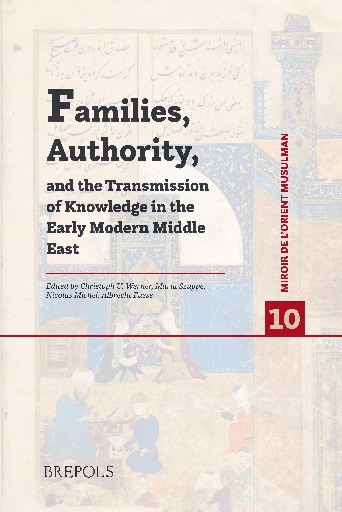
Families, Authority, and the Transmission of Knowledge in the Early Modern Middle East
show More to view fulltext, buy and share links for:Families, Authority, and the Transmission of Knowledge in the Early Modern Middle East show Less to hide fulltext, buy and share links for: Families, Authority, and the Transmission of Knowledge in the Early Modern Middle EastThis volume brings together innovative contributions on the history and nature of families in the early modern Middle East, covering Central Asia, Iran, Ottoman Turkey and the Arab World from the fifteenth to the seventeenth century and beyond. It argues the importance of connecting the key concept of family in its widest possible meaning, whether descent group, lineage, household or dynasty, with the notion of transmission of knowledge, authority, status and power, and develops this idea through a pluridisciplinary and cross-regional approach. Based on primary sources in Arabic, Persian, and Turkish as well as art and material culture, the individual articles detail processes and dynamics of transmission, thus initiating a comparative dialogue.
-
-
-
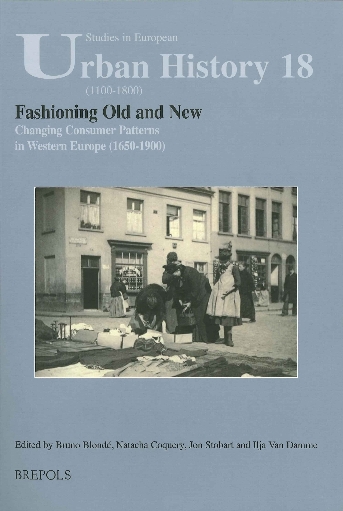
Fashioning Old and New. Changing Consumer Patterns in Europe (1650-1900)
show More to view fulltext, buy and share links for:Fashioning Old and New. Changing Consumer Patterns in Europe (1650-1900) show Less to hide fulltext, buy and share links for: Fashioning Old and New. Changing Consumer Patterns in Europe (1650-1900)A continuing ‘cry for the new’, it is said, drives present-day consumerism. People are producing and buying new goods in ever-larger quantities. However, in the past, consumer choices for new products were paralleled and even overlapped by structurally embedded practices such as re-use, recycling and resale. Unfortunately far too little is known about these important practices. The ‘birth of a consumer society’ was grounded not only in the appearance of new products and new industries; a similar drive manifested itself in the handling, buying and selling of ‘second-hand’.
In this book then the editors confront and integrate historical research on the world of the new and the old. Papers focus on the relationship between material culture and novelty, fashion and innovation on the one hand; and/or patina, second-hand and re-cycling on the other. Differences existed in the use of old and new products according to time, place, social and gender groups. By paying close attention to this historical diversity, this book explores the changing meanings and motivations of consumption. The geographical coverage will be an urban one. The studied time frame will be ‘the long eighteenth-century’ (from circa 1650 until 1900). It was only then that rapid fashion changes, new imports and spreading industrialization changed the existing material culture dramatically. However, comparisons crossing time and place do place sweeping ‘modern’ assumptions in perspective. After all: who can decipher how the concepts old and new are changing today, with the current popularity of more responsible (social and ecological) forms of consumption and recycling, and with vintage-clothing and antique furniture back en vogue?
Bruno Blondé is Research Professor at the Center for Urban History (University of Antwerp). His research interest includes urban networks, transport history and the history of consumption.
Natacha Coquery is appointed Professor at the University of Nantes. She has written extensively on the shopping and consumer habits of the French elites.
Jon Stobart is appointed professor at the University of Northampton. He has worked on urban networks and consumption in spatial perspective.
Ilja Van Damme is Postdoctoral Fellow of the Fund for Scientific Research. He has written a PhD on the interrelationships between consumer changes and retail evolutions.
-
-
-
Faustus of Riez, On Grace
show More to view fulltext, buy and share links for:Faustus of Riez, On Grace show Less to hide fulltext, buy and share links for: Faustus of Riez, On GraceFaustus was a Gallic representative of what has been referred to as 'semipelagianism'. In his De Gratia, he fiercely opposed the Augustinian view of Grace and Predestination that had been upheld by Lucidus, a presbyter who possibly misunderstood Augustine's thought. Faustus did not open new ground about these contested doctrines, but put significant roadblocks to their possible extreme trajectories.
-
-
-
Fear and its Representations
in the Middle Ages and Renaissance
show More to view fulltext, buy and share links for:Fear and its Representations show Less to hide fulltext, buy and share links for: Fear and its RepresentationsFear is a topic that appeals to a wide audience and is particularly of interest today. In the modern world, we fear war and terrorism, economic recession, and environmental degradation: these fears make up a great portion of the fabric of our daily lives. This is a volume of essays on fear and its representations in the Middle Ages and Renaissance. In it, the authors raise and try to answer questions about the ways in which individuals, families, and nations five-hundred, one-thousand, or even fifteen-hundred years ago approached the idea of fear.
The interdisciplinary nature of this volume and its editors (an historian of late antiquity and professor of literature of the Middle Ages) motivates an analysis of fear from a multitude of perspectives and within a host of secular and religious literature, historical treatises, scholastic works, art, and political accounts. The volume covers several main topics: Defining the Nature of Fear; Fear and Religion; Fear in Politics and Cultural Identity; Fear as a Literary and Dramatic Device; The Fears of Courtly Lovers, Knights, and Poets; Fear and the Mystic.
Through its breadth, depth, and interdisciplinary focus, the present volume makes a full contribution to the study of fear in medieval and Renaissance culture for historians, art historians, students of language and philosophy and anyone interested in how people in the past have experienced fear.
-
-
-
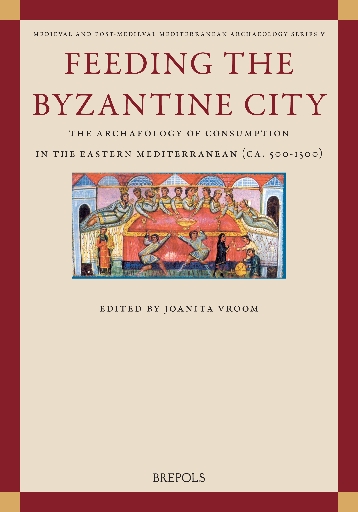
Feeding the Byzantine City
The Archaeology of Consumption in the Eastern Mediterranean (ca. 500-1500)
show More to view fulltext, buy and share links for:Feeding the Byzantine City show Less to hide fulltext, buy and share links for: Feeding the Byzantine CityThis book offers new and innovative perspectives on the archaeology of consumption in Byzantine cities and their hinterlands. Case-studies range from towns in eastern Macedonia, north-western and central Greece, and Crete to urban centres in Serbia, Bulgaria and western Turkey. The archaeological data and historical insights presented in this volume are always of great interest, often exciting, and more than once outright astonishing. The commodities discussed in the volume are dated between the 6th and the 16th century CE and include pottery (e.g., glazed table wares, amphorae, cooking pots, storage jars), textile fragments, metal objects, bronze and golden jewellery, marble carved slabs and columns.
Feeding the Byzantine City sheds compelling light on a world which was much more complex and interconnected than has often been assumed, which makes it essential reading for scholars and a larger audience alike.
-
-
-
Felici curiositate. Studies in Latin Literature and Textual Criticism from Antiquity to the Twentieth Century. In Honour of Rita Beyers
show More to view fulltext, buy and share links for:Felici curiositate. Studies in Latin Literature and Textual Criticism from Antiquity to the Twentieth Century. In Honour of Rita Beyers show Less to hide fulltext, buy and share links for: Felici curiositate. Studies in Latin Literature and Textual Criticism from Antiquity to the Twentieth Century. In Honour of Rita BeyersThe papers collected in this Festschrift in honour of Rita Beyers, Professor Emerita of Latin at the University of Antwerp and Director of the Corpus Christianorum, Series Latina and Continuatio Mediaevalis, focus on ancient (especially Christian) Latin literature and its influence in the Middle Ages and beyond.
In the first section, new light is shed on some important apocryphal texts from the second to the tenth century. The second part is devoted to literary and doctrinal aspects of works produced in the patristic era. The third part brings together a number of micro-historical studies on medieval (Latin, Byzantine, and vernacular) literature. The papers of the fourth section present some little-known Neo-Latin texts and offer a fresh analysis of the reception of ancient Christian texts in modern French and English literature. The volume, which contains several critical editions of previously unedited texts, concludes with two essays musing on the art of textual editing and the quintessence of philology.
-
-
-

Female Authorship, Patronage, and Translation in Late Medieval France
From Christine de Pizan to Louise Labé
show More to view fulltext, buy and share links for:Female Authorship, Patronage, and Translation in Late Medieval France show Less to hide fulltext, buy and share links for: Female Authorship, Patronage, and Translation in Late Medieval FranceUnder what conditions did women in late medieval France learn read and write? What models of female erudition and authorship were available to them in the fourteenth and fifteenth centuries? These questions, often difficult to answer in the extant historical record, are approached here via a number of perspectives, namely, the patronage and book ownership of women between the late medieval and early modern periods, and their involvement in the translation of works from Latin to French.
Through a close analysis of the female patronage and manuscript production leading up to the early modern period, this new study sheds important light on the development of female book ownership, reading practices, and patronage, and, ultimately, female authorship in the fourteenth, fifteenth, and sixteenth centuries. The monograph shows how female book owners in the fifteenth century in particular were provided visual and rhetorical models of female erudition and savoir - models which further encouraged these practices in the generations to follow. In particular, a focus on translations from Latin to French produced for and by women reveals the ways in which female patrons participated in the production of not only books they were able to read in French, but also individual manuscript exemplars that put forward new conceptual frameworks around women’s reading practices. Chapters examine adaptations and translations of Ovid’s Heroides and Boccacio’s De mulieribus claris; the libraries and patronage of Anne de Bretagne and Louise de Savoie; and works by Christine de Pizan, Anne de Graville, Marguerite de Navarre, and Louise Labé.
-
-
-
Feminized Counsel and the Literature of Advice in England, 1380-1500
show More to view fulltext, buy and share links for:Feminized Counsel and the Literature of Advice in England, 1380-1500 show Less to hide fulltext, buy and share links for: Feminized Counsel and the Literature of Advice in England, 1380-1500The term ‘feminized counsel’ denotes the advice associated with and spoken by women characters. This book demonstrates that rather than classify women’s voices as an opposite against which to define masculine authority, late medieval vernacular poets embraced the feminine as a representation of their subordination to kings, patrons, and authorities. The works studied include Gower’s Confessio Amantis, Chaucer’s Legend of Good Women and Melibee, and English translations of Christine de Pizan’s Epistre Othea. To advise readers, these texts draw on the politicized genre of mirrors for princes. Whereas Latin mirrors such as the Secretum secretorum and Giles of Rome’s De regimine principum represented women as inferior, weak, and detrimental to masculine authority, these vernacular texts break traditional expectations and portray women as essential and authoritative political counsellors.
By considering Latin and French sources, historical models of queens’ intercessions, and literary models of authoritative female personifications, this study explores the woman counsellor as a literary topos that enabled poets to criticize, advise, and influence powerful readers. Feminized Counsel elucidates the manner in which vernacular poets concerned with issues of counsel, mercy, and power identified with fictional women’s struggles to develop authority in the political sphere. These women counsellors become enabling models that paradoxically generate authority for poets who also lack access to traditionally recognized forms of intellectual or literary authority.
-
-
-
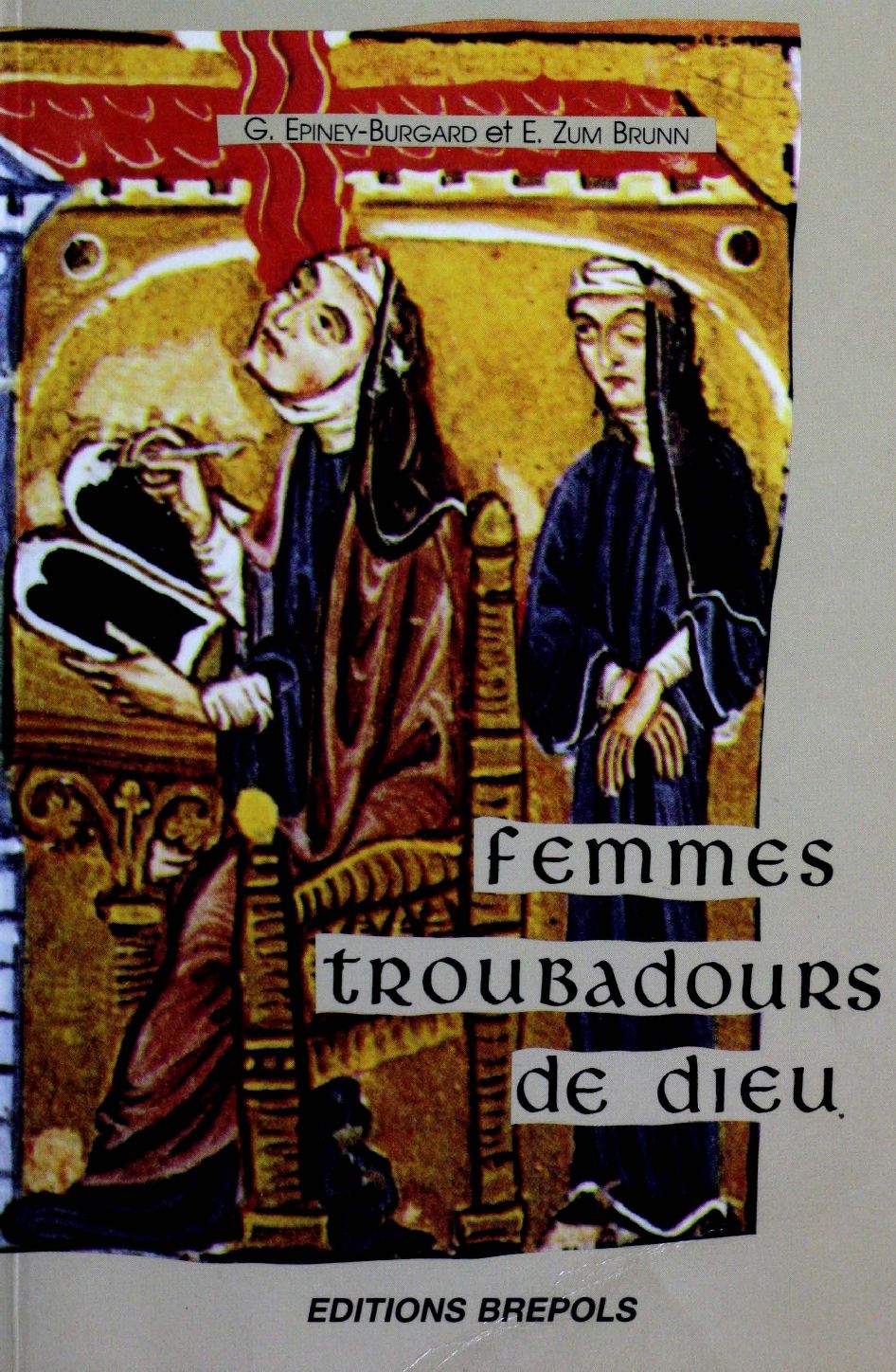
Femmes troubadours de Dieu
show More to view fulltext, buy and share links for:Femmes troubadours de Dieu show Less to hide fulltext, buy and share links for: Femmes troubadours de DieuComment montrer brièvement ce qui apparente l'abbesse bénédictine Hildegarde de Bingen, qui appartient encore au haut moyen âge et, moins d'un siècle plus tard, les béguines Hadewijch d'Anvers, Mechthilde de Magdebourg, Marguerite Porete, du Hainaut, ainsi que la prieure cistercienne Béatrice de Nazareth, élevée chez les béguines et partageant leur spiritualité? Ce qui fait leur parenté profonde est bien mis en évidence par certains textes de l'époque, tel ce témoignage de 1158 concernant Hildegarde et sa contemporaine, Elisabeth de Schönau, appartenant aussi à l'ordre bénédictin: "En ces jours-là, Dieu manifesta sa puissance par l'intermédiaire du sexe faible, en ces servantes qu'il emplit de l'esprit prophétique."
-
-
-
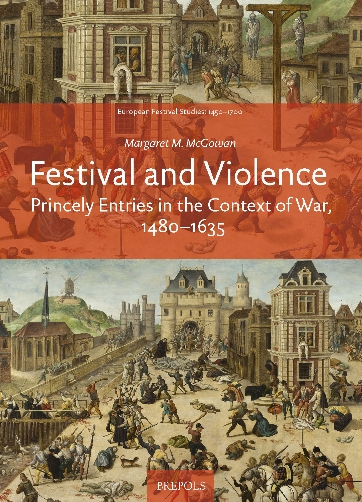
Festival and Violence
Princely Entries in the Context of War, 1480-1635
show More to view fulltext, buy and share links for:Festival and Violence show Less to hide fulltext, buy and share links for: Festival and ViolenceEuropean Renaissance Festivals are noted for their extravagance, for their inherited classical culture, and as evidence of how court and civic spectacles could express political, religious, social, and economic aspirations. In this new monograph, the accent is firmly on the violent context of Magnificence: it examines how war affected the minds and practice of both artists and princes, and shows how victims and their suffering were as prominent in festival as were conquerors and their projections of victory. What emerges here is the dark side represented in princely entries where imperial ambitions are built upon civic devastation and where myths elaborate and expose their ambiguous nature and message. Artists and poets collaborated in bringing victory and violence together: Mantegna and Dürer in triumphal processions; Frans Floris and Rubens on the canvases they created for triumphal arches, where mythology was put to work to arouse excitement for deeds of heroism and death, while engravers depicted scenes of war and destruction to accommodate contemporary taste.
-
-
-
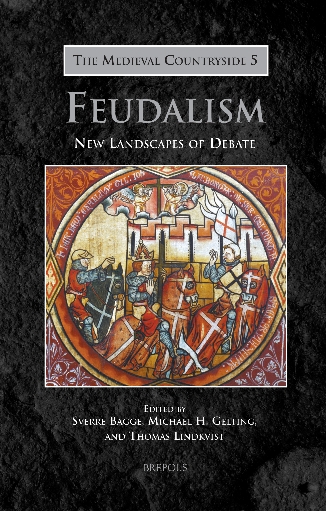
Feudalism
New Landscapes of Debate
show More to view fulltext, buy and share links for:Feudalism show Less to hide fulltext, buy and share links for: FeudalismThis up-to-date discussion takes as its starting point the challenge to the traditional notion of feudalism in the twenty-five years since the publication of Jean-Pierre Poly and Eric Bournazel’s work on the ‘mutation féodale’ and Susan Reynolds’s attack on the very idea of a feudal society in the Middle Ages. While these challenges have presented a new picture of Western Europe in the so-called feudal age, one more focused than the traditional model of feudalism was, no new scholarly consensus has yet emerged.
The volume has two objectives. Firstly, it discusses the present state of research, bringing together leading representatives of the various interpretations of feudalism. It examines the character of medieval society, including questions of landholding, government, and the relationship between king and aristocracy. Secondly, it provides a new geographic perspective on the subject by considering countries little discussed from a feudal perspective. In addition to discussing countries that have been prominent in previous studies of feudalism such as England and France, the book also includes contributions on Germany, Spain, Scandinavia, Hungary, and Romania, thus supplying a truly European perspective and a comparative view of social structure in different regions of Europe.
-
-
-
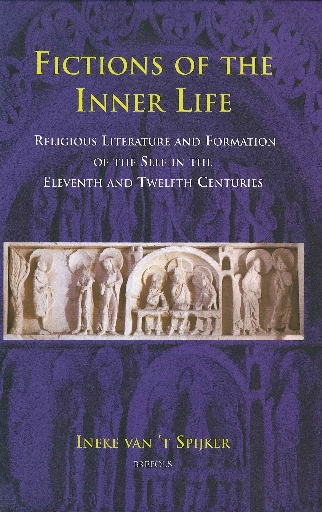
Fictions of the Inner Life
Religious Literature and Formation of the Self in the Eleventh and Twelfth Centuries
show More to view fulltext, buy and share links for:Fictions of the Inner Life show Less to hide fulltext, buy and share links for: Fictions of the Inner LifeInteriorization and a trend towards a consideration of the nature of personal experience have long been recognized as important elements in the changing landscape of the religious culture of the eleventh and twelfth centuries. The homo interior is at the centre of the religious writings of that time, and the 'inner man' is a pivotal concept for making sense of the literature of religious formation. Monastic writers try to provide their readers with a 'script' to enact in themselves, in order to form their inner self, as the way to ascend to the knowledge of God. Interiority, however, is not a straightforward aspect of human existence with an unchanging meaning. The notion as it is used by medieval monastic authors gives expression to a specific understanding of what a human being was thought to be, quite different from later self-perceptions. Because of this difference, when they write 'histories of the self' historians and philosophers often pass over the Middle Ages. On the other hand, in histories of mysticism the twelfth century is often read through the lens of later mysticism. This book explores the notion of interiority via four influential authors of the eleventh and twelfth centuries, and the way in which notions about interiority function in their pedagogy. The concepts governing how the homo interior is fashioned are developed within age-old monastic and theological traditions. Medieval ideas about man as imago Dei, monastic reading culture and biblical exegesis are only a few of the elements of these traditions. The choice of authors has been guided by the wish to encompass and highlight various aspects of the eleventh- and twelfth-century notions of 'inner life': monastic and eremitical tradition in Peter Damian, theological-anthropological concepts in Hugh of Saint-Victor, the importance of exegetical procedures in Richard of Saint-Victor, and the role of experience in William of Saint-Thierry. These authors illustrate what was then conceptually possible when it came to thinking about the inner life. Their notions of the inner self are an intriguing part of a continuing history of conceptions of the self and of how it may be fashioned.
-
-
-
Figures exemplaires de pouvoir sous l’Empire dans la littérature gréco-latine
show More to view fulltext, buy and share links for:Figures exemplaires de pouvoir sous l’Empire dans la littérature gréco-latine show Less to hide fulltext, buy and share links for: Figures exemplaires de pouvoir sous l’Empire dans la littérature gréco-latineThe exemplum held immense power in antiquity, especially in the political field. What role did historical or legendary figures from the Greco-Roman past play during the Empire in speeches intended to build, legitimise or question power? How were they selected? How did they work? These are the questions that the eighteen contributions in this volume seek to answer. This multifaceted approach crosses several literary genres, including poetry, historiography, and political or philosophical discourse, which are examined over six centuries. It considers different types of power or authority (imperial power, but also the authority of the magistrate in the Greek city during Roman domination, and the power of bishops). This highlights the plasticity of exempla that, depending on the context, could justify or question a vast diversity of ideologies and practices of power.
-
-
-
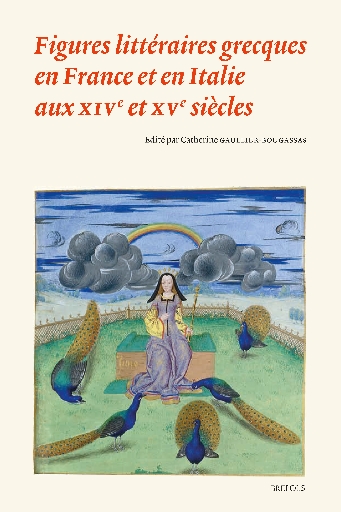
Figures littéraires grecques en France et en Italie aux xiv e et xv e siècles
show More to view fulltext, buy and share links for:Figures littéraires grecques en France et en Italie aux xiv e et xv e siècles show Less to hide fulltext, buy and share links for: Figures littéraires grecques en France et en Italie aux xiv e et xv e sièclesAux xiv e et xv e siècles, la Grèce suscite en Italie et en France un engouement nouveau, dans une tension entre admiration et méfiance face à l’altérité mal connue et mal perçue tant de son univers ancien que de son devenir byzantin. Se multiplient les œuvres en latin, en français et en italien qui évoquent le passé de la Grèce ancienne. Les héros et les héroïnes de la Grèce ancienne entrent dans des univers scripturaires nombreux qui manifestent des exploitations littéraires et esthétiques, mais aussi politiques, religieuses et éthiques très diverses. Ces appropriations ne cessent de s’élargir à des formes d’écriture nouvelles jusqu’à la fin du xv e siècle, entre réinterprétation, instrumentalisation, recréation poétique ou fidélité aux textes peu à peu redécouverts. Le présent ouvrage étudie la présence et l’exploitation des figures de la Grèce ancienne en France et en Italie aux xiv e et xv e siècles, et les nouvelles formes d’ « actualité » qu’elles prennent dans les textes, avec l’évolution du regard et de l’interprétation des auteurs, avec aussi les décalages qui existent entre l’Italie et la France.
-
-
-
Figures mythiques et discours religieux dans l’Empire gréco-romain
show More to view fulltext, buy and share links for:Figures mythiques et discours religieux dans l’Empire gréco-romain show Less to hide fulltext, buy and share links for: Figures mythiques et discours religieux dans l’Empire gréco-romainBoth in discourse about religions and in the religious discourse of the Greco-Roman Empire, the great figures of mythology and history functioned either as models or as foils, following their use in poetical, philosophical, historiographical, panegyrical or apologetical contexts. The approach’s interest lies in the parallel consideration of different sorts of texts, generally examined independently otherwise : Augustan poetry, polytheistic rhetoric and historiography and Christian literature. Indeed, Pagans and Christians had many common concerns, expressed through the conceptual tools they borrowed from each other. Specific case studies reveal underlying connections in the elaboration of the exemplary figures and thus in the beliefs of the Greco-Roman Empire. The contributions show notably how exemplary figures are constructed by the communities depending upon them, the mediating role they play between men and gods, their networking signification, each one being defined by the interactions with the others, their role as rhetorical and polemical devices due to their adaptability, and, in the change of paradigm brought about by Christianity, how pagan figures persist and become a fundamental substratum for new figures, elaborated from these mythical exempla.
-
-
-
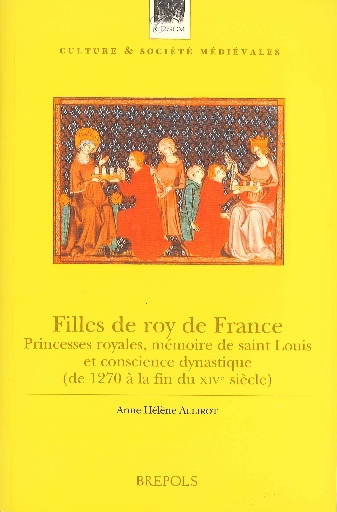
Filles de roy de France
Princesses royales, mémoire de saint Louis et conscience dynastique (de 1270 à la fin du XIVe siècle)
show More to view fulltext, buy and share links for:Filles de roy de France show Less to hide fulltext, buy and share links for: Filles de roy de FranceVoici une histoire du sang royal au féminin. De 1270 à la fin du XIV e siècle, le statut des princesses royales en France est en cours de normalisation. Les filles du roi sont progressivement exclues du trône, des apanages et de la pairie. Mais la canonisation de Louis IX et la valorisation du lignage royal renforcent leur prestige. Elles obtiennent, sinon un patrimoine, du moins un rang spécifique et la reconnaissance d’une qualité. Elles ont aussi un rôle important dans la construction de la mémoire de saint Louis et dans la diffusion de son culte. Au cours de cette période, la conscience dynastique passe par une célébration des rois défunts, mais aussi de leurs parents, hommes et femmes. C’est un domaine dans lequel la présence féminine est acceptée aux côtés de celle des princes, du fait des liens étroits entre les parentes du roi et le sacré.
-
-
-
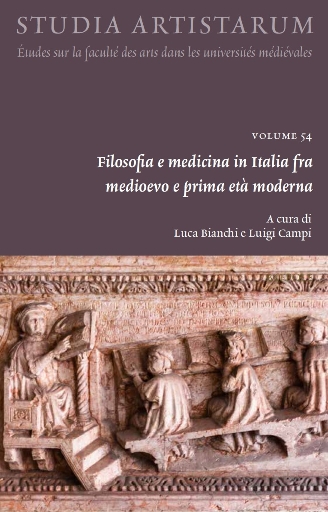
Filosofia e medicina in Italia fra medioevo e prima età moderna
show More to view fulltext, buy and share links for:Filosofia e medicina in Italia fra medioevo e prima età moderna show Less to hide fulltext, buy and share links for: Filosofia e medicina in Italia fra medioevo e prima età modernaIl volume raccoglie alcune delle relazioni presentate durante il 4° Colloquio Internazionale della Societas Artistarum. Svoltosi presso l’Università degli studi di Milano il 7-9 novembre 2019, esso si proponeva di approfondire da prospettive diverse come si sia configurato nell’Italia medievale e rinascimentale il rapporto fra medicina e filosofia. Alcuni contributi si soffermano sul contesto storico-istituzionale dell’insegnamento e della pratica della medicina, sull’uso di dottrine etiche e di strumenti logici e retorici da parte dei medici. Altri contributi, avvalendosi anche di documenti e testi inediti, analizzano invece temi interdisciplinari come le teorie della generazione e la natura delle acque fluviali oppure mettono a fuoco il pensiero e l’opera di medici-filosofi come Bartolomeo da Salerno, Taddeo Alderotti, Antonio da Parma, e Ludovico Boccadiferro.
-
-
-
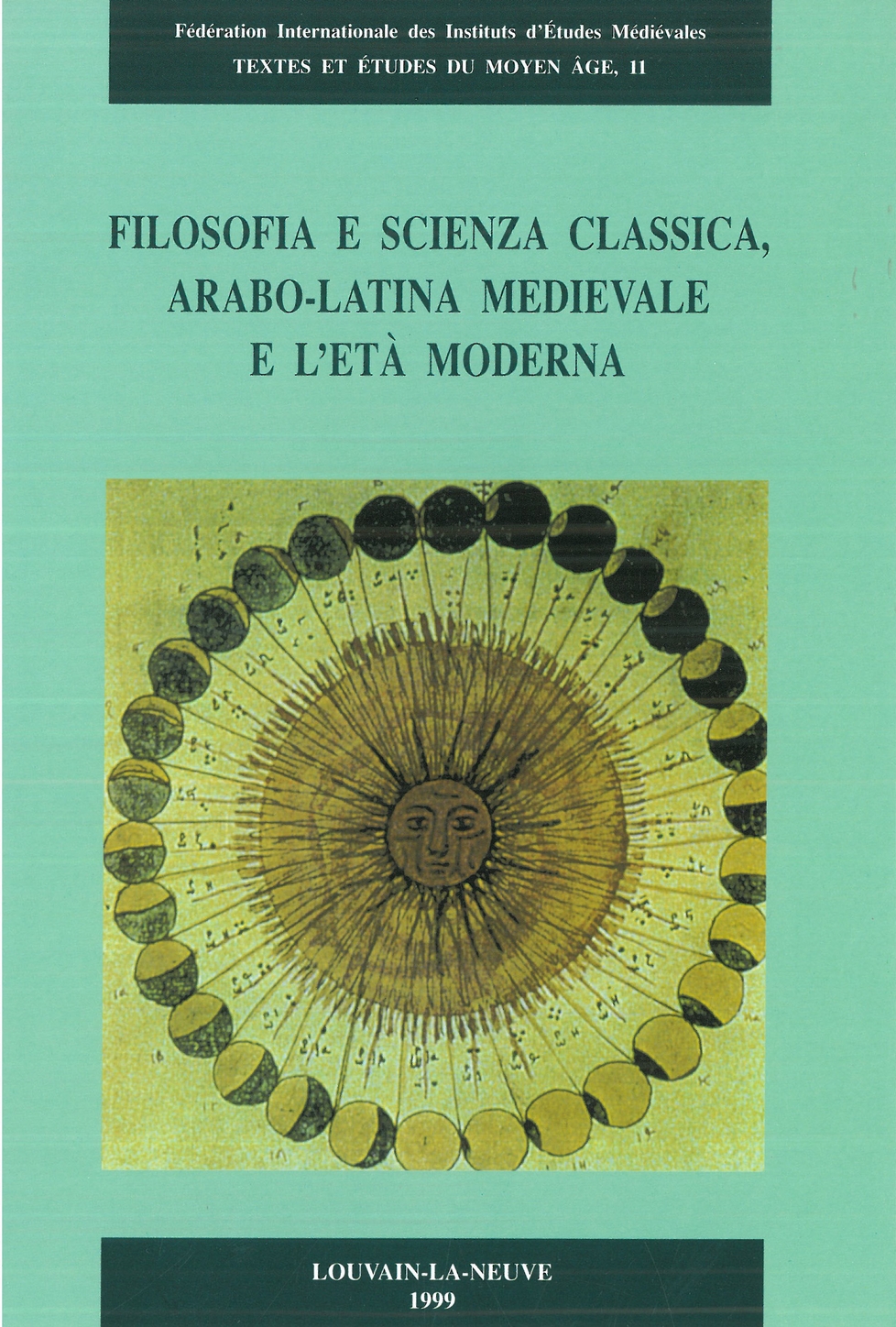
Filosofia e scienza classica, arabo-latina medievale e l'eta moderna
Ciclo di seminari internazionali (26-27 gennaio 1996)
show More to view fulltext, buy and share links for:Filosofia e scienza classica, arabo-latina medievale e l'eta moderna show Less to hide fulltext, buy and share links for: Filosofia e scienza classica, arabo-latina medievale e l'eta modernaCe volume rassemble les communications faites lors d'un cycle de Séminaires internationaux tenus au "Centro Studi Biagio Pelicani" de Parme. Depuis, ce Centre a été transféré a l'Université de Florence. Ces Séminaires visaient à poser des questions fondamentales qui n 'ont toujours pas trouvé de réponses définitives : malgré le syncrétisme inhérent à la philosophie et à la science du moyen âge, peut-on affirmer que ces dernières représentent une transmission pure et simple de la philosophie et de la science grecques? La dette contractée a l'égard d' Aristote, d'Euclide ou de Ptolémée a-t-elle inhibé la pensée des maîtres médievaux, ou bien, a-t-elle, au contraire, permis une originalité non seulement grâce à l 'influence des trois religions monothéistes, mais également par l 'intermédiaire des réflexions scientifiques de savants juifs et arabes qui vécurent pendant l'âge d'or, c'est à dire du 9e au 12e siècle?
Les recherches menées dans ce volume abordent des arguments très differents à première vue : philosophie de la nature, astronomie, optique, mathématique, physiognomie, iconologie, réthorique, dialectique. En fait, les thèmes ont un lien entre eux si on prend en considération le caractère global des connaissances pendant l' époque médievale. Comment se présente le savoir philosophique et scientifique à la fin du moyen âge et à l'aube de la Renaissance? Tel était le point central de ces rencontres. Les auteurs des divers articles ont tenté d'apporter une réponse à ces questions et de solutionner bien d'autres problèmes historiographiques. On trouve done dans ce livre une perspective nouvelle à propos d'une série de questions spécifiques qui font encore I' objet de discussions jusqu'à aujourd'hui.
Les articles sont dus à des spécialistes des divers domaines concernés : F. Barocelli (Parma), J. Biard (Paris), S. Caroti (Parma), P. Castelli (Ferrara), G. Federici Vescovini (Firenze), S. Feraboli (Genova), R. Fubini (Firenze), M. Mamiani (Udine), R. Morelon (Paris), P. Morpurgo (Parma), J. North (Groningen), R. Rashed, (Paris), V. Sorge (Napoli).
-
-
-
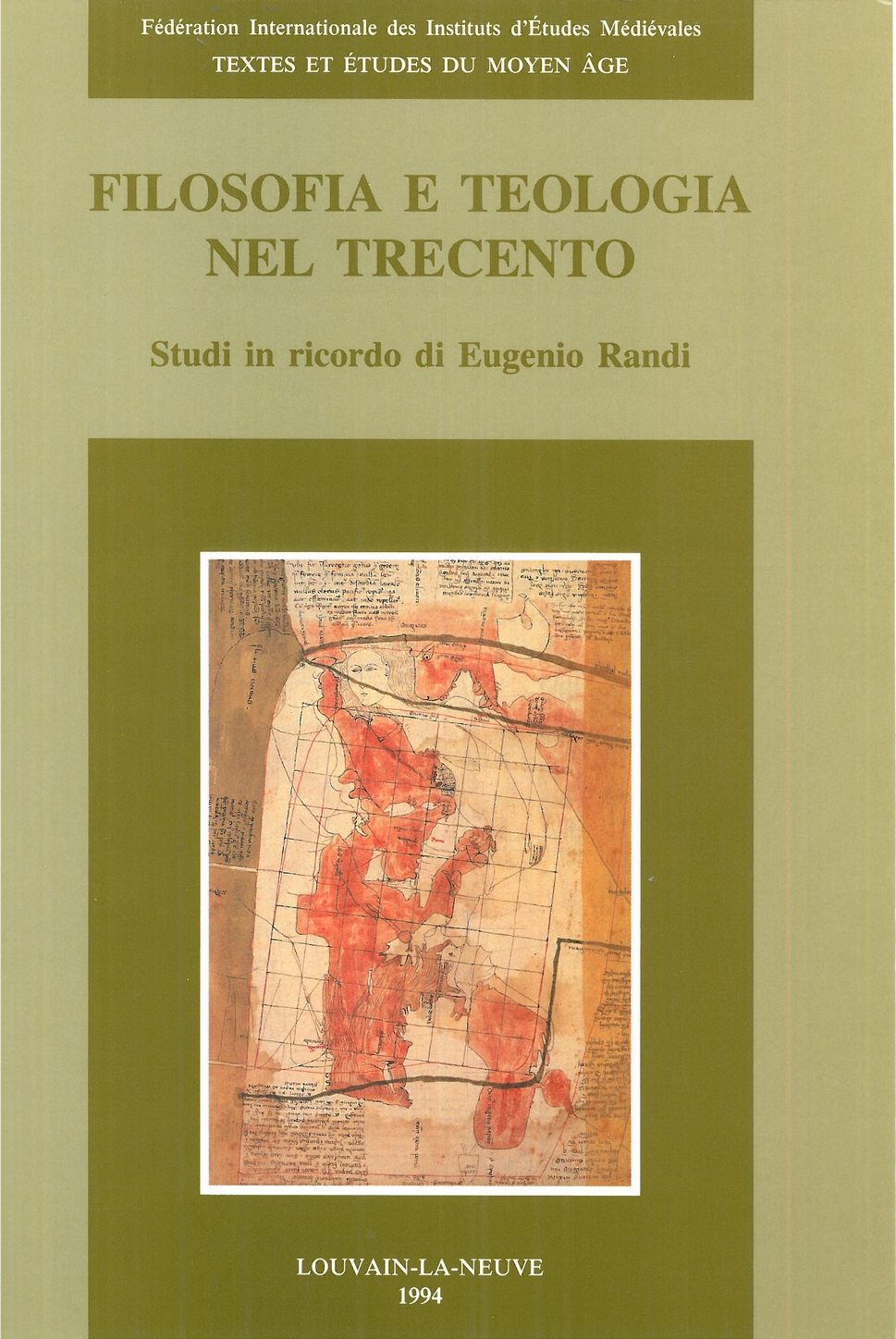
Filosofia e teologia nel trecento
Studi in ricordo di Eugenio Randi
show More to view fulltext, buy and share links for:Filosofia e teologia nel trecento show Less to hide fulltext, buy and share links for: Filosofia e teologia nel trecentoLa breve ma intensa attivita di ricerca di Eugenio Randi (Milano 1957- 1990) è stata guidata dall'esigenza di superare l'unilaterale immagine del secolo XIV come età di crisi, dissoluzione e decadenza intellettuale, per riconosceme il'pluralismo', Ia straordinaria creatività, il ruolo decisivo nel processo di formazione della cultura europea. Oltre a rappresentare una concreta testimonianza della vasta risonanza che il lavoro di questo giovane medievista ha avuto, non solo in Italia, la raccolta di studi con cui amici e colleghi hanno voluto ricordarlo mira proprio a mettere nel dovuto risalto come il profondo rinnovamento delle forme, dei metodi e dei contenuti del sapere scolastico realizzatosi nel Trecento abbia consentito di raggiungere fecondi risultati teorici in teologia, in logica, nella filosofia naturale, nelle dottrine etico-politiche. Attraverso una molteplicita di approcci e senza Ia pretesa di offrire una sintesi a tutt'oggi prematura, questo volume propone sia originali riletture di aleuni episodi (lo statuto parigino del 1340) ed autori (Eckhart, Ockham, Holcot, Buridano) che hanno segnato una vera svolta nel pensiero tardomedievale, sia nuove prospettive su figure, testi e temi meno noti ma altrettanto essenziali per comprendere la ricchezza di un secolo non ancora sufficientemente esplorato.
-
-
-
Filosofia in volgare nel medioevo
Atti del Convegno della Società Italiana per lo Studio del Pensiero Medievale (SISPM), Lecce, 27-29 settembre 2002
show More to view fulltext, buy and share links for:Filosofia in volgare nel medioevo show Less to hide fulltext, buy and share links for: Filosofia in volgare nel medioevoOn a essayé dès le Haut Moyen Age de traduire d’importants textes philosophiques dans les langues vulgaires de l’Europe germanique et romane. Aux XIIè-XIIIè siècles, les vulgarisations deviennent plus complexes et souvent, sous l’apparence de simples “traductions” de textes philosophiques, on trouve des réécritures contenant des ajouts et des commentaires qui peuvent être considérés à juste titre comme des travaux philosophiques autonomes. Dans le contexte de cette littérature prend finalement forme une série d’essais de “faire de la philosophie” en langue vulgaire, qui sont en général l’oeuvre de personnages dotés d’une vaste culture et qui exercent également leur activité en langue latine.
Ce genre de littérature pose de nombreuses questions intéressantes tant pour l’histoire de la philosophie que celle de la culture : existe-t-il une différence entre rédiger de la philosophie en latin ou en langue vulgaire ? Est-ce que le fait d’écrire en vernaculaire implique nécessairement une banalisation du contenu ? L’attitude des auteurs change-t-elle en fonction des différents destinataires ? Peut-on vraiment parler de divers types de public philosophique (clercs, laïcs) bien distincts ? Peut-on établir une typologie des textes philosophiques en vulgaire différente de celle qui existe en latin ?
Ces problèmes sont abordés à l’aide d’un grand choix d’auteurs, parmi lesquels Maître Eckhart, Conrad de Megenberg, le roi Alphonse le Sage, Marguerite Porète, Nicole Oresme, Christine de Pisan, Dante Alighieri, Michele Savonarola et de nombreux auteurs anonymes ou des traducteurs peu connus de questions naturelles ou d’écrits mystiques.
Les chercheurs qui ont collaboré à ce volume sont des spécialistes d’histoire de la philosophie médiévale, de philologie germanique et de philologie romane: A. Beccarisi (Lecce), P. Bertini Malgarini (Cagliari), L. Bianchi (Vercelli), N. Bray (Lecce), S. Caroti (Parma), L. Cifuentes (Barcelona), A. Coco (Lecce), C. Crisciani (Pavia), P. Falzone (Roma), G. Federici Vescovini (Firenze), B. Garì (Barcelona), F. Geymonat (Torino), A. Ghisalberti (Milano), D. Gottschall (Lecce), K. Grubmüller (Göttingen), R. Gualdo (Lecce), A. Musco (Palermo), M. L. Picascia (Pavia), T. Ricklin (Neuchâtel), A. Saccon (Torino), L. Sturlese (Lecce), U. Vignuzzi (Roma), S. J. Williams (Las Vegas).
-
-
-
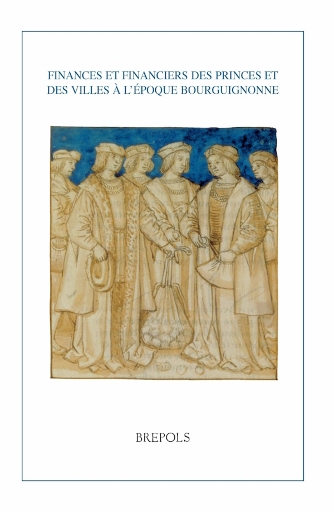
Finances et financiers des princes et des villes à l’époque bourguignonne
show More to view fulltext, buy and share links for:Finances et financiers des princes et des villes à l’époque bourguignonne show Less to hide fulltext, buy and share links for: Finances et financiers des princes et des villes à l’époque bourguignonneGérer les finances des princes et des villes est devenu à la fin du moyen âge l’affaire de professionnels de l’argent et de ses techniques. Ces hommes dont les employeurs requièrent compétence et loyauté appartiennent au monde en pleine ascension des officiers, des «fonctionnaires». Les nécessités de la guerre et de la paix, les coûts des armées et de la diplomatie, l’entretien et le fonctionnement des rouages du gouvernement et de l’administration, les aléas et les pressions de la situation économique, tout cela donne un sens à leur travail et requiert leur vigilante attention.
Accroître des moyens matériels, par des expédients ou des réformes durables, rendre plus performants des outils de gestion, voilà des objectifs qui peuplent ces pages, à travers plus d’un siècle et demi du passé des anciens Pays-Bas. Les études publiées regorgent ainsi d’apports nouveaux pour l’histoire de l’impôt, de l’emprunt, des rentes, du crédit et du commerce de l’argent. Elles éclairent aussi une face essentielle des relations entre gouvernants et gouvernés, dictées par des recettes et dépenses mais en même temps orientées par ceux qui y pourvoient et en font carrière.
-
-
-
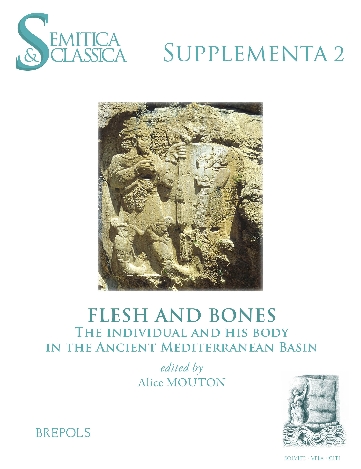
Flesh and Bones
The Individual and His Body in the Ancient Mediterranean Basin
show More to view fulltext, buy and share links for:Flesh and Bones show Less to hide fulltext, buy and share links for: Flesh and BonesThis volume gathers the papers presented during an interdisciplinary research seminar entitled “The individual and his body in the Ancient Mediterranean Basin.” This seminar was at the crossroads of history of religions and social anthropology, creating a dialogue between philologists, archaeologists, historians of religions and anthropologists. Its main aim consisted in studying self-perceptions of the body in the Ancient Near East, with incursions in other parts of the Mediterranean Basin in a comparatist perspective. In this volume, various themes are examined, such as: 1) the relationship between the body and language; 2) the body, perceptions and society, including a study of the senses as they are described in the texts; 3) the body as a symbol of social belonging; 4) the body as a medium for religious experience.
-
-
-
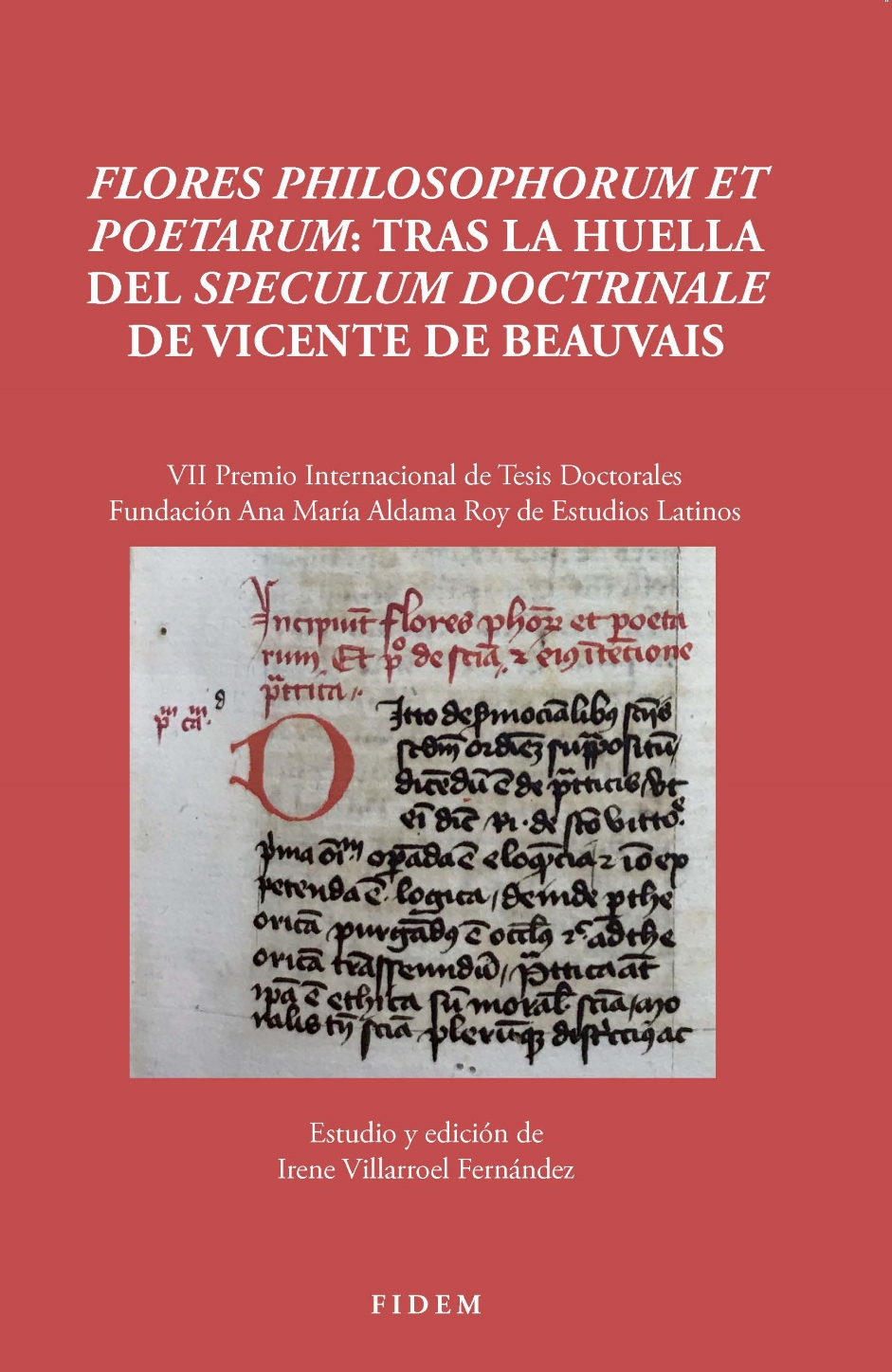
Flores philosophorum et poetarum: tras la huella del Speculum doctrinale de Vicente de Beauvais
show More to view fulltext, buy and share links for:Flores philosophorum et poetarum: tras la huella del Speculum doctrinale de Vicente de Beauvais show Less to hide fulltext, buy and share links for: Flores philosophorum et poetarum: tras la huella del Speculum doctrinale de Vicente de BeauvaisLa transmisión manuscrita de una obra depara, en ocasiones, sorpresas y sucesos inesperados. Este es el caso de los libros V y VI del Speculum doctrinale de Vicente de Beauvais, dedicados a la ethica monastica, que muy pronto se independizaron de la obra completa, creando una tradición propia, de la que incluso surgió, tras diversas transformaciones, una obra nueva, los Flores philosophorum et poetarum.
En el presente volumen, se aborda, en primer lugar, el estudio de los libros V y VI del Speculum doctrinale, sus características y su transmisión manuscrita, y, posteriormente, las modificaciones sufridas por estos dos libros, tanto en su estructura como en su contenido, que dan origen a los Flores philosophorum et poetarum y que implican una nueva fase en su transmisión con una evolución de enciclopedia a florilegio. Finalmente se presentan los testimonios manuscritos del florilegio y su filiación con la obra enciclopédica de Vicente de Beauvais.
La edición crítica de los Flores philosophorum et poetarum, que ocupa la segunda parte del libro, tiene en cuenta la doble condición de esta obra, original y a la vez subordinada a los libros V y VI del Speculum doctrinale de Vicente de Beauvais, por lo que se presenta con tres aparatos (de fuentes, crítico e intertextual), con la intención de reflejar su transición entre la enciclopedia y el florilegio.
-
-
-
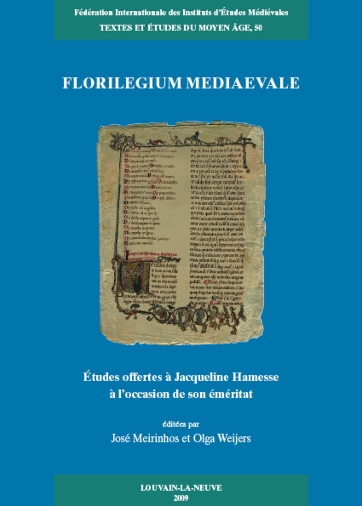
Florilegium mediaevale
Études offertes à Jaqueline Hamesse à l'occasion de son éméritat
show More to view fulltext, buy and share links for:Florilegium mediaevale show Less to hide fulltext, buy and share links for: Florilegium mediaevaleEn décembre 2007, Jacqueline Hamesse a fêté son 65ème anniversaire, puis a accédé à l’éméritat en 2008. Nombreux sont les collègues et amis qui ont souhaité marquer ces dates en rendant hommage à son dévouement aux études médiévales, que ce soit dans l’enseignement et la recherche ou pour la création et le développement d’institutions internationales dans ce domaine, sans oublier les efforts déployés pour l’édition de nombreux ouvrages collectifs et l’organisation de diverses rencontres scientifiques. Nous avons donc décidé de lui dédier ce volume d’études intitulé «Florilegium mediaevale. Études offertes à Jacqueline Hamesse à l 'occasion de son éméritat ».
L’ouvrage comprend vingt-neuf études concernant l’un des quatre thèmes suivants: les textes philosophiques dans leur contexte et leur support matériel, les instruments travail ainsi que le vocabulaire des textes philosophiques. En effet, ce sont des domaines qui ont surtout retenu son attention depuis de nombreuses années et dans lesquels elle a apporté des contributions significatives à la recherche.
Le volume comprend des contributions de: L-J. Bataillon (†) et O. Weijers (Paris / Den Haag), F. Bertelloni (Buenos Aires), Ch. Burnett (London), J. Casteigt (Toulouse), J. Celeyrette et J-L. Solère (Lille / Boston), W. Courtenay (Wisconsin-Madison), G. Dahan (Paris), G. Dinkova-Bruun (Toronto), K. Emery Jr. (Notre Dame), Ch. Erismann (Cambridge), B. Faes de Mottoni (Milano), G. Federici Vescovini (Firenze), B. Fernández de la Cuesta (Madrid), R. Friedman et Ch. Schabel (Leuven / Nicosia), D. Gottschall (Lecce), S. Harvey (Jerusalem), I. Heullant-Donat (Reims), R. Hissette (Köln), M. Hoenen (Freiburg i.B.), J. Meirinhos (Porto), O. Merisalo (Jyväskylä), M. Mulchahey (Toronto), M. J. Muñoz Jiménez (Madrid), M. C. Pacheco (Porto), G. Piaia (Padova), R. H. Pich (Porto Alegre), J. Puig Montada (Madrid), R. Ramón Guerrero (Madrid), C. Sirat et M. Geoffroy (Paris), G. Spinosa (Roma), I. Ventura (Louvain-la-Neuve).
-
-
-
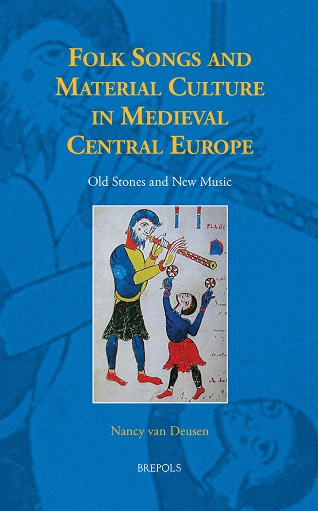
Folk Songs and Material Culture in Medieval Central Europe
Old Stones and New Music
show More to view fulltext, buy and share links for:Folk Songs and Material Culture in Medieval Central Europe show Less to hide fulltext, buy and share links for: Folk Songs and Material Culture in Medieval Central EuropeThis book takes a unique approach to the study of folk music in Central Europe. Through an analysis of this cultural tradition, and of how words and ideas that were first introduced in Latin Antiquity became increasingly cultivated, refined, and established in the centuries that followed, the volume also questions present-day studies of sound and its organization into the field of so-called ‘folk music’. In so doing, it breaks down boundaries that separate historical studies from ethnomusicology, and sheds light on what music continues to mean in daily life.
While the focus is primarily on Central European folk music, and in particular on material found in the Hungarian archives, the approach taken here also points to a fruitful comparative methodology that could be employed on a larger scale, enabling scholars to consider broader chronological and geographical contexts.
-
-
-

Food & History
show More to view fulltext, buy and share links for:Food & History show Less to hide fulltext, buy and share links for: Food & HistoryFood & History is published by the European Institute for the History and Cultures of Food (IEHCA). It is the leading specialized journal in Europe in the field of food and drink history. Food & History aims at presenting, promoting and diffusing research that focuses on food from a historical perspective. The journal studies food and drink history from different points of view. It embraces aspects of social, economic, religious, political and cultural history, and deals with questions of consumption, production, provisioning and distribution, medical aspects, culinary practices, gastronomy and restaurants.
More information about this journal on Brepols.net
-
-
-
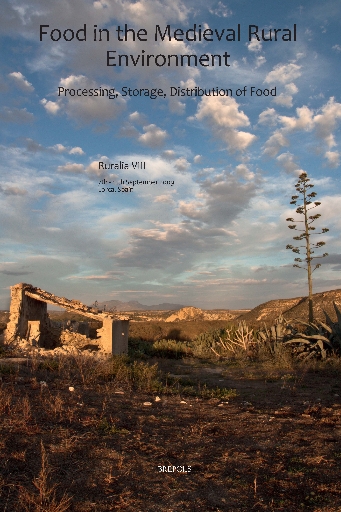
Food in the Medieval Rural Environment
Processing, Storage, Distribution of Food
-
-
-

Food supply, demand and trade
Aspects of the economic relationship between town and countryside (Middle Ages – 19th century)
show More to view fulltext, buy and share links for:Food supply, demand and trade show Less to hide fulltext, buy and share links for: Food supply, demand and tradeThis book is a collection of articles studying various aspects of the relationship between town and countryside during the period from the Middle Ages to the nineteenth century. The focus is on how towns were supplied with basic foodstuffs, and especial attention is paid to England and the Low Countries.
Among the articles, several deal with the food-provisioning strategies of some of the major cities within that area - Antwerp, Ghent and London - and show among other things that large cities were unable to meet their requirements from local supplies and had consequently to access markets further afield. Important matters given substantial elucidation are transport costs and market integration.
In historiography, a great deal of attention has been paid to the influence of towns on the countryside and agriculture, and particularly to the relationship between the rise of urban markets and the emergence of commercial agriculture, but there is still no clarity about how town-countryside relationships influenced economic growth. One of the merits of this book is that it opens up new avenues to an understanding of the complex relationship between urban markets and commercial agriculture. The approach differs from article to article, some scholars homing in on the individual strategies of farms, others working more in the macroeconomic tradition. In sum, the book is a valuable contribution to both rural and urban historiography, and can provide a fresh stimulus to the study of economic relationships between town and countryside.
Piet van Cruyningen is senior researcher at the Wageningen University.
Erik Thoen is professor at the University of Ghent.
-
-
-
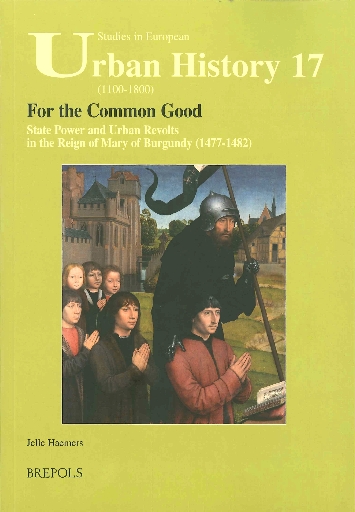
For the Common Good
State Power and Urban Revolts in the Reign of Mary of Burgundy, 1477-1482
show More to view fulltext, buy and share links for:For the Common Good show Less to hide fulltext, buy and share links for: For the Common GoodIn 1477, the Low Countries were in chaos. On 5 January Charles the Bold, Duke of Burgundy, was killed in the battle of Nancy. His political adversaries used this fortuitous opportunity to reverse his much-hated policies. The late duke’s confidents were executed, as nobles fled from court. The French king declared war on Charles’ heir, Mary of Burgundy, and the cities rose in rebellion against the duchy. United in their opposition to the ducal court, the Estates-General instituted a new state structure which severely reduced the power of the central state. The duchess’ new husband, Maximilian of Austria, was never able to dictate war policy nor appease the discontent of the populace, because his first priority was to strengthen the power of the Habsburg dynasty. In 1482, when Mary of Burgundy died after a tragic fall from her horse, revolt again spread across the county of Flanders. In this dramatic crisis that would last for a decade, central authority was again challenged by a political alternative, the Flemish regency council.
This book examines the people behind the revolt. From a murky background of conflicting loyalties, it identifies the principal allies of the Habsburg dynasty and key political adversaries of Maximilian in the Flemish cities. An in-depth analysis of their lives and their socio-economic and cultural backgrounds on the eve of the Flemish Revolt elucidates their reasons for rebelling or remaining loyal to court. By focusing on disloyal nobles at court and urban dissenters in the county of Flanders, this book goes beyond previous studies of the revolt and offers new insights into the social history of medieval politics. In the end, readers will discover whether the court, the nobility, and the urban rebels were really striving for the goal they claimed, the common good.
Jelle Haemers is a post-doctoral research fellow at Ghent University (IAP-project ‘City and Society in the Low Countries, 1100-1800’). His research interests focus mainly on urban history of the Late Middle Ages.
-
-
-
Foreign Influences: The Circulation of Knowledge in Antiquity
show More to view fulltext, buy and share links for:Foreign Influences: The Circulation of Knowledge in Antiquity show Less to hide fulltext, buy and share links for: Foreign Influences: The Circulation of Knowledge in AntiquityThe Greeks had a rich and varied relationship with foreign lands and people, which made possible a real circulation of knowledge throughout the Archaic, Classical, and Hellenistic times. The essays collected in this volume aim at exploring the hypothesis that the most adventurous intellectuals saw foreign lands and foreigners as repositories of knowledge that the Greeks σοφοί had to engage with, in the hope of bringing back home valuables in the form of new ideas. Each of the articles included in this collective work explores one aspect of the “stranger” as a potential source, with contributions mostly focused on Plato, Xenophon, Democritus, Aristotle, Diogenes, Cicero, and Galen.
-
-
-

Forgotten Roots of the Nordic Welfare State in Protestant Cultures
show More to view fulltext, buy and share links for:Forgotten Roots of the Nordic Welfare State in Protestant Cultures show Less to hide fulltext, buy and share links for: Forgotten Roots of the Nordic Welfare State in Protestant CulturesThe Nordic welfare state of the 20th century has been hailed around the world as a model of how to build democratic and egalitarian societies. It has often been described as a project of social democracy, often following a narrative of secularization and rationalization of society. However, some of the most important actors and ideas of the "Scandinavian Sonderweg" had their roots in Protestant, often Pietist and revivalist milieus that dreamed of creating an egalitarian community. The present volume explores these often forgotten roots in several case studies of phenomena from the seventeenth to the twenty-first century, focusing primarily on questioning the function of aesthetics in the creation of the welfare state model. We argue that aesthetics and what Friedrich Schiller called aesthetic education played an important, unifying role for Nordic societies. These aesthetics were shaped by Protestant ideas and practices. Through references to the then widespread circulation of educational texts based on Luther's catechism, the later pietistic catechism of Erik Pontoppidan, Nordic hymnbooks, and practices such as communal singing and preaching in church, church coffee, reading circles, and conventicle meetings, a common aesthetic language emerged that unified different social groups and their competing goals and claims. Civic actors and movements learned specific ways to engage in society, to develop practices of internalizing responsibility, (self)critique, and accountability, and to communicate and develop a more democratic modern civic sphere. We therefore propose to look at this history from the perspective of a historically changing aesthetic as an integrating principle for understanding the political, social, cultural, economic and many other aspects of the Nordic welfare state.
-
-
-
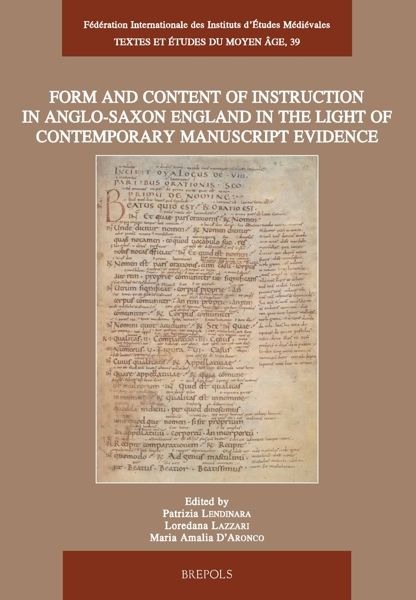
Form and content of instruction in Anglo-Saxon England in the light of contemporary manuscript evidence
Papers presented at the International Conference, Udine, 6-8 April 2006
show More to view fulltext, buy and share links for:Form and content of instruction in Anglo-Saxon England in the light of contemporary manuscript evidence show Less to hide fulltext, buy and share links for: Form and content of instruction in Anglo-Saxon England in the light of contemporary manuscript evidenceThe essays collected in this volume focus on a prominent aspect of Anglo-Saxon culture: educational texts and the Insular manuscripts which have preserved them.
The English imported manuscripts and texts from the Continent, whilst a series of foreign masters, from Theodore of Tarsus to Abbo of Fleury, brought with them knowledge of works which were being studied in Continental schools. Although monastic education played a leading role for the entire Anglo-Saxon period, it was in the second half of the tenth and early eleventh centuries that it reached its zenith, with its renewed importance and the presence of energetic masters such as Æthelwold and Ælfric. The indebtedness to Continental programs of study is evident at each step, beginning with the Disticha Catonis. Nevertheless, a number of texts initially designed for a Latin-speaking milieu appear to have been abandoned (for instance in the field of grammar) in favour of new teaching tools.
Beside texts which were part of the standard curriculum, Anglo-Saxon manuscripts provide abundant evidence of other learning and teaching instruments, in particular those for a specialized class of laymen, the Old English læce, the healer or physician. Medicine occupies a relevant place in the book production of late Anglo-Saxon England and, in this field too, knowledge from very far afield was preserved and reshaped.
All these essays, many by leading scholars in the various fields, explore these issues by analysing the actual manuscripts, their layout and contents. They show how miscellaneous collections of treatises in medieval codices had an internal logic, and highlight how crucial manuscripts are to the study of medieval culture.
-
-
-
Formal Approaches and Natural Language in Medieval Logic
Proceedings of the XIXth European Symposium of Medieval Logic and Semantics, Geneva, 12-16 June 2012
show More to view fulltext, buy and share links for:Formal Approaches and Natural Language in Medieval Logic show Less to hide fulltext, buy and share links for: Formal Approaches and Natural Language in Medieval LogicThe late medieval period is widely acknowledged as one of the most salient moments of the history of logic and semantics. It not only considered logic as a sine qua non condition for scientific knowledge, it also begot highly sophisticated theories about both argumentation and language. The last fifty years of increasingly intense research have brought about an ever more detailed knowledge of these theories. And yet, the questions as to what kind of logic is medieval logic, whether and to what extent it corresponds to our conception of logic, and, even, what the nature of its object was, remain challenging. That it has a formal character is widely accepted; and its semantic components display remarkable affinities with contemporary ones. But is it formal in the way modern logic is - or believes it is? Medieval logic does not really make recourse to symbolisms, after all, and the fact that the idea of formal validity might have been born in the twelfth century does not mean that developing formal approaches was an aim of medieval logicians. And what is its semantics a semantics of? Medieval logicians use Latin to deal with Latin constructions, but do these constructions belong to natural language or are they regimented to the point of forming some sort of ideal language?
The twenty-five papers gathered in this volume deal with these issues, thus allowing to reassess the broader questions of the formal character and formalising ambitions of medieval logic, as well as that of the natural character of the language in (and on) which it operated: in other words, they address the question of the nature, object and purpose of medieval logic.
-
-
-
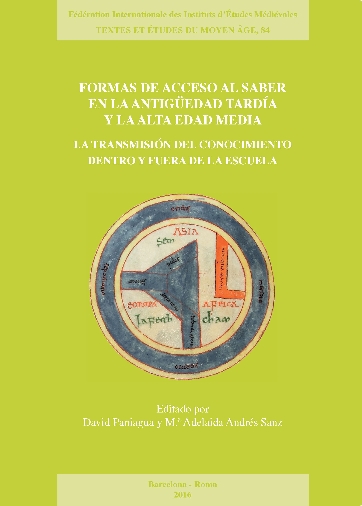
Formas de acceso al saber en la Antigüedad Tardía y en la Alta Edad Media
La transmisi'on del conocimiento dentro y fuera de la escuela
show More to view fulltext, buy and share links for:Formas de acceso al saber en la Antigüedad Tardía y en la Alta Edad Media show Less to hide fulltext, buy and share links for: Formas de acceso al saber en la Antigüedad Tardía y en la Alta Edad MediaEl presente volumen tiene su origen en el Coloquio Internacional Formas de acceso al saber de la Antigüedad Tardía a la Alta Edad Media (V), celebrado en la Universidad de Salamanca en octubre de 2014, bajo la dirección de D. Paniagua, en el marco de actuación del Proyecto de Investigación «La evolución de los saberes y su transmisión en la Antigüedad Tardía y la Alta Edad Media latinas II» (Investigadora Principal: M.a A. Andrés Sanz). El coloquio, al igual que el proyecto en el que se enmarcó, tuvo como objetivo profundizar en el conocimiento de las formas de evolución y de utilización de los textos latinos tardoantiguos y altomedievales ligados a la transmisión de conocimientos. Este conjunto de estudios, variados en sus diferentes aproximaciones filológicas, tiene como común denominador el interés por explorar las múltiples y ricas implicaciones culturales de estos textos, atendiendo no solamente al corpus escrito conservado -incluido el estudio de sus fuentes y de su posteridad literaria- sino también a su transmisión material concreta, generalmente en forma de códices, y a los entornos (escolares o no) en los que ésta tiene lugar.
-
-
-
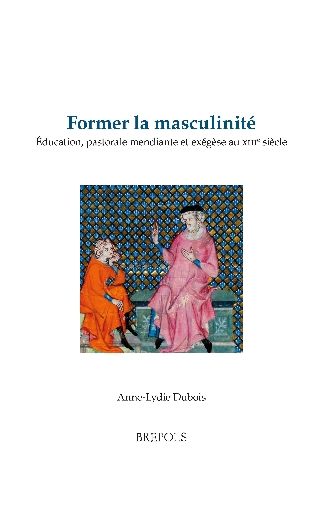
Former la masculinité
Éducation, pastorale mendiante et exégèse au xiii e siècle
show More to view fulltext, buy and share links for:Former la masculinité show Less to hide fulltext, buy and share links for: Former la masculinité« On ne naît pas homme, on le devient ». La formule de Simone de Beauvoir détournée par les historiennes et les historiens des masculinités peut également s’appliquer à la période médiévale à travers l’éducation. Au sein du discours clérical du xiii e siècle, la masculinité laïque, loin d’être innée, est en effet envisagée comme un apprentissage autant pour les garçons et les adolescents que pour les adultes - pères de famille et maris. Cette identité de genre constitue un statut qui s’acquiert au prix de nombreux efforts sur soi-même, par un long processus de transformation intérieure. Élaboré dans les commentaires bibliques, un idéal de masculinité incarné par Adam se dessine également et exerce une grande influence sur le comportement masculin prescrit dans les textes pédagogiques. Le discours normatif ainsi produit participe de la différenciation des sexes. Il constitue un moyen privilégié de forger l’identité sexuée et un terreau fertile d’exploration historique.
Dans une perspective d’histoire culturelle et sociale, cet ouvrage s’intéresse à la manière dont la masculinité est construite au sein d’un corpus de sources du xiii e siècle principalement composé par des frères mendiants. Il interroge un domaine de recherche au développement récent, en plein essor depuis les années 1990-2000, qui reste toutefois encore peu exploité pour la période médiévale, en particulier dans le milieu francophone. Ayant rendu les hommes visibles en tant qu’êtres sexués, l’étude des masculinités s’avère pourtant complémentaire de l’histoire des femmes et indispensable pour appréhender les sociétés médiévales dans le dialogue entre les genres qui y prend place.
-
-
-
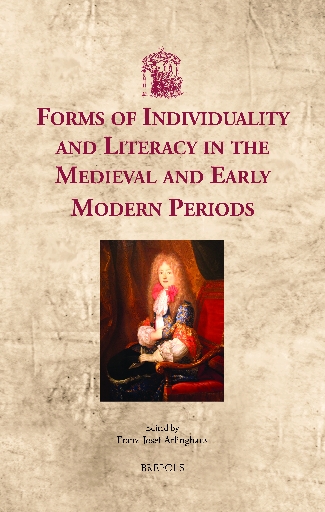
Forms of Individuality and Literacy in the Medieval and Early Modern Periods
show More to view fulltext, buy and share links for:Forms of Individuality and Literacy in the Medieval and Early Modern Periods show Less to hide fulltext, buy and share links for: Forms of Individuality and Literacy in the Medieval and Early Modern Periods‘Individuality’ is one of the central categories of modern society. Can the roots of modern individuality be found in pre-modern times? Or is our way of thinking about ourselves a very recent phenomenon? This book takes a theoretical approach to the problem, derived from Niklas Luhmann’s system theory, in which different forms of individuality are linked to different structures of society in modern and pre-modern times.
The papers in this volume approach this problem by discussing a broad variety of medieval and early modern sources, including charters and seals, letters, and naming practices in a late medieval town. Self-representation is also considered, in ‘housebooks’ and drawings. Textual studies include autobiography in German Humanism, and concepts of individuality and gender in late medieval literary texts.
-
-
-
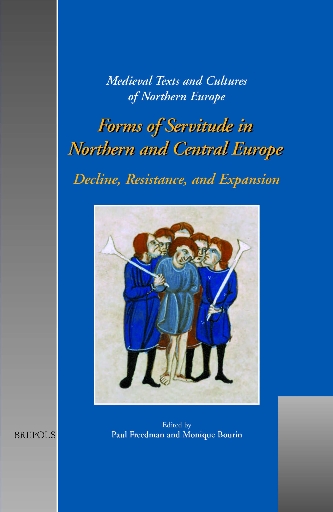
Forms of Servitude in Northern and Central Europe
Decline, Resistance, and Expansion
show More to view fulltext, buy and share links for:Forms of Servitude in Northern and Central Europe show Less to hide fulltext, buy and share links for: Forms of Servitude in Northern and Central EuropeIt was once assumed that nearly all agricultural labourers in medieval Europe were serfs. Serfdom was distinct from slavery in that serfs could contract legitimate marriages, hold personal property and could not be moved around at will. Historians more recently moved away from examining servile condition and its implications and focused on the seigneurial regime and village society with little regard for the influence of status.
In the Middle Ages and indeed in all pre-industrial societies, the vast majority of the population tilled the land. We are still not in a good position to evaluate how noble and ecclesiastical landlords received revenues from lands they were only indirectly engaged in farming, despite this being a basic factor that governed medieval society. What kind of agricultural system provided the impetus for economic growth that so dramatically increased the number of cities and volume of trade?
There is no modern, synthetic book on medieval serfdom that compares regions or draws general conclusions about it. This work attempts such a synthesis and also shows avenues of future research, but most importantly it is intended to reorient attention to the importance of serfdom in the structure of medieval society.
-
