Brepols
Brepols is an international academic publisher of works in the humanities, with a particular focus in history, archaeology, history of the arts, language and literature, and critical editions of source works.1101 - 1150 of 3194 results
-
-
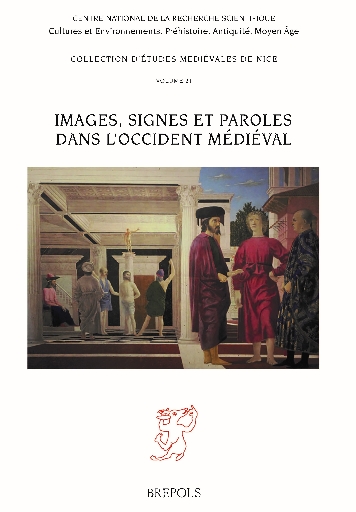
Images, signes et paroles dans l’Occident médiéval
show More to view fulltext, buy and share links for:Images, signes et paroles dans l’Occident médiéval show Less to hide fulltext, buy and share links for: Images, signes et paroles dans l’Occident médiévalCet ouvrage rassemble dix contributions qui proposent des perspectives originales pour l’analyse conjointe des modes d’expression figurée de l'Occident médiéval. Menées tant par des « historiens de l’art » que par des « historiens », elles abordent la question de l’image-objet, des signes alphabétiques et iconiques, du lieu peint, de la liturgie et de la prédication. Documents d’archives, exégèse biblique, sermons et récits hagiographiques sont exploités de manière fine et exhaustive pour rendre compte, au plus près, du contexte d’exécution des œuvres, qu’elles soient inconnues ou célèbres. Ce sont alors les angles d’approches adoptés, comme l’anthropologie des images ou les études transgenre, mais aussi les relations complexes entre art, architecture et rites, qui enrichissent ici l’exploration et d’objets de culte - les lipsanothèques catalanes, les linges de l’autel ou les ex-voto - et de panneaux peints - comme la Flagellation du Christ de Piero della Francesca - et des cycles de peintures décorant la Tour Ferrande à Pernes-les-Fontaines, San Pellegrino à Bominaco, et cinq chapelles de la Ligurie et du Piémont.
-
-
-
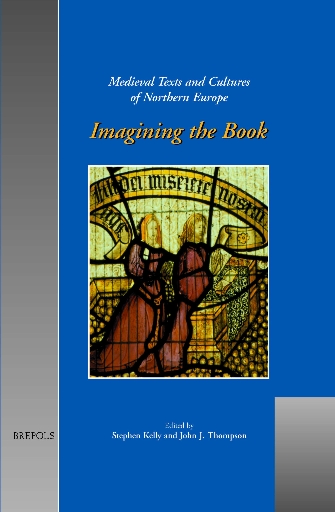
Imagining the Book
show More to view fulltext, buy and share links for:Imagining the Book show Less to hide fulltext, buy and share links for: Imagining the BookImagining the Book offers a snapshot of current research in English manuscript study in the pre-modern period on the inter-related topics of patrons and collectors, compilers, editors and readers, and identities beyond the book. This volume responds to the recent development and institutionalization of ‘History of the Book’ within the wider discipline. Scholars working in the pre-printing era with the material vestiges of a predominantly manuscript culture are currently establishing their own models of production and reception. Research in this area is now an accepted part of twenty-first century medieval studies. Within such a context, it is frequently observed that scribal culture found imaginative ways to deal with the technological watersheds represented by the transition from memory to written record, roll to codex, or script to print. In such an ‘eventful’ environment, texts and books not infrequently slip through the semi-permeable boundaries laboured over by previous generations of medievalists, boundaries that demarcate orality and literacy; ‘literary’ and ‘historical’; ‘religious’ and ‘secular’; pre- and post-Conquest compositions, or ‘medieval’ and ‘Renaissance’ attitudes and writings. Once texts are regarded as offering indices of community- or self-definition, or models of piety and good behaviour (and the codices holding them statements of prestige and influence), the book historian is left to contemplate the real or imagined importance and status of books and writing within the larger socio-political, often local, milieux in which they were once produced and read.
-
-
-
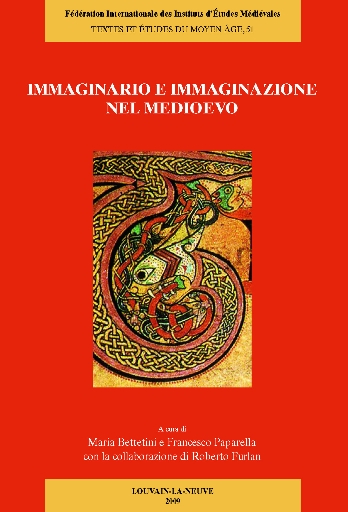
Immaginario e immaginazione nel Medioevo
Atti del convegno della Società Italiana per lo Studio del Pensiero Medievale (S.I.S.P.M.), Milano, 25-27 settembre 2008
show More to view fulltext, buy and share links for:Immaginario e immaginazione nel Medioevo show Less to hide fulltext, buy and share links for: Immaginario e immaginazione nel MedioevoIl nostro immaginario non è di grande aiuto quando cerchiamo di comprendere quello altrui, e insieme studiare i meccanismi dell’immaginazione che lo hanno elaborato. Se poi si tratta dell’Età di mezzo, lo sforzo per sgombrare la mente da pregiudizi e immagini storicamente false, ma molto di moda, dovrà essere ingente. Anche per questo nel 2008 la Società Italiana per lo Studio del Pensiero Medievale (Sispm) ha deciso di dedicare il suo convegno annuale al tema Immaginario e immaginazione nel Medioevo. Un titolo impegnativo, e anche a una prima lettura palesemente ambiguo: immaginario infatti può essere inteso come un aggettivo, ovvero il prodotto dell’immaginazione, e in senso lato è detto di qualcosa di fittizio, apparente, illusorio. Immaginario è però anche un sostantivo che indica l’insieme delle rappresentazioni del mondo e delle fantasie di un individuo o di un gruppo o di un’intera collettività. Il convegno ha preso l’avvio proprio da questa concezione di immmaginario, per proseguire sulla scia di altre possibili declinazioni: dalle immagini dell’impero ai casi dei monstra fino al ruolo della fisiognomica. Indubbiamente la deriva neoplatonica ha molto pesato sulla diffidenza almeno teoricamente espressa dagli autori medievali nei confronti dei prodotti della facoltà dell’immaginazione. Ma accanto al sospetto verso tutto ciò che proviene dalla sensibilità o ad essa riporta, si deve segnalare una forte attenzione per tutto ciò che attraverso i sensi possa aiutare l’intelletto, anche nei percorsi più arditamente teologici, e insieme un’apertura verso la realtà materiale - da un Dio buono creata e da lui così voluta -, che porta a non poter accettare in maniera totalizzante il rifiuto per una natura che si porge allo sguardo avvolta da misteriosa bellezza e che come tale viene ricostruita dalla phantasia o da una facoltà immaginativa, e poi dalle penne e dalle mani degli artisti.
Interventi di F. Amerini, M. Bettetini, G. Briguglia, F. Caldera, L. Cappelletti, M. Cristiani, G. d’Onofrio, G. Fioravanti, M. Gallarino, G. Gambale, R. Gatti, C. Motta, S. Nagel, A. Palazzo, F. Paparella, V. Perone Compagni, A. Robiglio, A. Rodolfi, J.-C. Schmitt, C. Selogna, P. Spallino, G. Zuccolin.
-
-
-
Imperium et sacerdotium
Droit et Pouvoir sous l’Empereur Manuel Ier Comnène (1143-1180)
show More to view fulltext, buy and share links for:Imperium et sacerdotium show Less to hide fulltext, buy and share links for: Imperium et sacerdotium«Manuel en Christ le Dieu fidèle basileus le porphyrogénète, empereur des romains, très pieux, vénérable à jamais, auguste.» Le règne de l’empereur Manuel Ier (1143-1180) est analysé à partir du principe de la pietas, terme à portée morale, canonique et juridique qui concerne la capacité du Basileus de légiférer de façon juste, au profit des intérêts de l’État. L’œuvre législative de Manuel Ier, que les juristes byzantins de l’époque considéraient comme une interprétation moderne de dispositions fondamentales du droit romain, eut comme objectif principal de renforcer l’image sacerdotale du Basileus qui avait été sécularisée durant la crise politique du xi e siècle. L’attachement de Manuel Ier aux lois civiles et à leur strict respect était lié à sa conception de la supériorité de l’État et du droit byzantin, expression de la volonté divine. L’insertion du droit canonique au droit public traduisait la nécessité de dépasser le dualisme étatique. L’intégration de l’Église dans ce programme valorisait ses responsabilités spirituelles vis-à-vis d’un Empereur qui concevait la gouvernance comme une responsabilité spirituelle. Besoins d’un État moderne et besoins spirituels de la société se conjuguent dans ce système harmonieux, spécifique à l’empire byzantin du xii e siècle.
-
-
-
In Defence of Faith, Against the Manichaeans
Critical Edition and Historical, Literary and Theological Study of the Treatise Aduersus Manichaeos, Attributed to Evodius of Uzalis
show More to view fulltext, buy and share links for:In Defence of Faith, Against the Manichaeans show Less to hide fulltext, buy and share links for: In Defence of Faith, Against the ManichaeansThe subject of this publication is the treatise Aduersus Manichaeos, attributed to Evodius of Uzalis. Evodius was a friend and contemporary of Augustine of Hippo. The treatise Aduersus Manichaeos is an important source on the North African Catholic church and its polemics against the Manichaeans. Although the treatise is strongly influenced by the anti-Manichaean writings of Augustine of Hippo, it also offers much original and likely authentic information on the Manichaean movement. Thus far, however, no systematic study had been conducted on this anti-Manichaean treatise attributed to Evodius. As a result, some of its historical circumstances have been shrouded in mystery.
The present volume reconstructs the circumstances in which Aduersus Manichaeos was written, and studies the treatise in relation to its fifth-century North African context. The study offers a literary, historical and theological analysis of Aduersus Manichaeos. The publication also complements the study of Aduersus Manichaeos with a new critical edition of the original Latin text, with a facing English translation.
-
-
-
In Hebreo
The Victorine Exegesis in the Light of Its Northern-French Jewish Sources
show More to view fulltext, buy and share links for:In Hebreo show Less to hide fulltext, buy and share links for: In HebreoIn the twentieth century a number of scholars pointed to parallels between the in hebreo or secundum hebreos interpretations in the commentaries of Hugh and Andrew of St Victor and comments in Latin sources and in twelfth-century Jewish writers of the Northern-French school (Rashi, Joseph Qara, Rashbam, and Beckhor Shor). The scholars suggested various hypotheses on the Victorines’ direct or indirect knowledge of the Hebrew text of the Bible and the identity of the Jews on whom the Victorines reportedly drew.
Montse Leyra’s book offers a systematic work of comparative analysis between the Victorines’ in hebreo interpretations and their parallels in the Latin and Jewish sources, and between these interpretations and parallel biblical readings in the textual traditions of the Vetus Latina, the Vulgate, and the Hebrew Masoretic Text.
In her analysis, Montse Leyra discusses parallels that have gone unnoticed by previous scholars, identifies which sources were a direct source for the Victorines and which were transmitted via later, intermediary sources, and determines whether the Victorines took up textual biblical variants coming from the Vetus Latina and the Septuagint as literal translations of the Hebrew Masoretic Text or they were transmitting the Masoretic text itself. Finally, by studying the parallels of content and exegetical method between the in hebreo interpretations of the Victorines and surviving interpretations of Rashi, Rashbam, Joseph Qarah, and Bekhor Shor, she ascertains whether we can actually identify and distinguish the exegetes of the Northern-French school whose works have been transmitted to us as direct sources of Hugh and Andrew from other Jewish exegetes of their time.
-
-
-
In Monte Artium
Journal of the Royal Library of Belgium
show More to view fulltext, buy and share links for:In Monte Artium show Less to hide fulltext, buy and share links for: In Monte ArtiumThe journal In Monte Artium offers papers which in one way or another relate to the ancient or modern book collections or to any other document kept in one of the heritage collections of the Royal Library of Belgium (manuscripts, prints & drawings, maps, coins & medals, etc.). The academic contributions deal with book history and book production as well as all aspects of technical innovations relating to the development of modern research libraries.
More information about this journal on Brepols.net
-
-
-
In Paciani episcopi Barcinonensis opera silva studiorum
show More to view fulltext, buy and share links for:In Paciani episcopi Barcinonensis opera silva studiorum show Less to hide fulltext, buy and share links for: In Paciani episcopi Barcinonensis opera silva studiorumThe study and the production of a critical edition of the works of Pacian, bishop of Barcelona (fourth century), have been the life’s work of Angel Anglada Anfruns. He has published many articles in miscellanies and high ranked journals since the 1960s, and also some in less-accessible periodicals. Updated versions of these contributions, most of which are written in Spanish, have now been gathered for the first time in a volume entitled Silva studiorum. They deal with the manuscript transmission and the history of the printed versions of Pacian’s opera, the syntactic structure (particularly the clausulae) and particular problematic passages in the bishop’s writings. The volume concludes with an index of the passages which have been discussed in detail. The articles offer a general view of the reception of Pacian’s works down the ages and list the author’s arguments behind specific editorial decisions. It is the perfect companion volume to the edition of Pacian’s complete works published in Corpus Christianorum, Series latina 69B (2012).
Angel Anglada Anfruns is professor of Latin Language and Literature at the Universidat de Valencia.
-
-
-
In Principio
Genesis and Theology in St Bonaventure
show More to view fulltext, buy and share links for:In Principio show Less to hide fulltext, buy and share links for: In PrincipioThis volume offers a fresh approach to the structure of Bonaventure’s thought. Ruben Martello argues that Bonaventure employs the Genesis creation account as an overarching framework and fecund source for understanding nature, theology, and even Scripture itself. Beginning with Bonaventure’s view of the literal meaning of Scripture, the reception of the hexaëmeron is traced chronologically in a number of major theological works. Bonaventure is interpreted in light of the hexameral commentarial tradition like Augustine’s De Genesi ad litteram, and filtered through Dionysian and Victorine inspired hermeneutics. It is proposed that reading Genesis in Bonaventure may clarify a number of contemporary disputed theological, exegetical and epistemological concerns. This study also unpacks the Bonaventurian understanding of the distinctive senses of the 'image' and 'likeness' of God, aiding in the articulation of a rich theological anthropology.
-
-
-
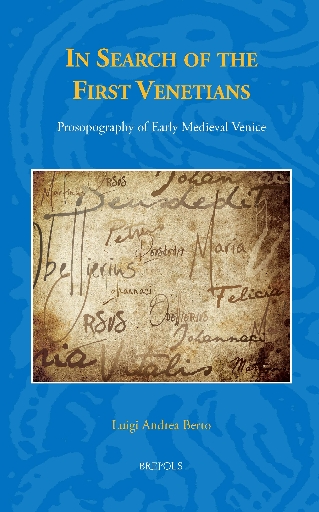
In Search of the First Venetians
Prosopography of Early Medieval Venice
show More to view fulltext, buy and share links for:In Search of the First Venetians show Less to hide fulltext, buy and share links for: In Search of the First VenetiansThis prosopographical study provides information about each Venetian living in the early Middle Ages, from the invasion of the Lombards in 569 - an action that forced part of northeast Italy’s population to seek refuge on the islands of the Venetian lagoon - to the rule of Duke Petrus Ursoylus II (991-1008). There is an entry for each individual listing all available information and quoting the full text of primary sources within the footnotes. The data are organized in categories such as families, first names, rulers, women, office holders, ecclesiastics, occupations, and places of residence (Venice was a duchy with different urban centres).
Venice is an extremely important place for this kind of analysis. It is the area in which family name use began for the first time in medieval Europe. Venice was never conquered by a ‘Germanic’ people, and therefore it is possible to study the evolution of a post-Roman/Byzantine society by analyzing the names of the Venetians. Moreover, scholars interested in later periods will be able to find the origins of all the most important Venetian families.
-
-
-
In Search of the Truth
A History of Disputation Techniques from Antiquity to Early Modern Times
show More to view fulltext, buy and share links for:In Search of the Truth show Less to hide fulltext, buy and share links for: In Search of the TruthDisputation and debate have accompanied human development from its beginnings. However, what we still call ‘disputation’, technically speaking, is a particular method of reasoning and analysing, involving either a debate between two people, or of one person with himself. It is this method which is the object of this study. The disputation was one of the main methods of teaching and research during the Middle Ages. Tracing its development shows how it influenced the way in which people examined abstract problems. Reasoning and arguing about contradictory positions remained a feature of intellectual life well into the nineteenth century, and the practice remains alive even today.
For a long time the disputation was the main tool for analysing problems in a range of fields, especially in philosophy and theology. The main features were the analysis of opposite positions and thorough discussion of the various arguments for both sides, the collective search for the truth in special public disputations, the recognition that the truth may differe from the conclusion reached and the willingness to accept better arguments if they brought one closer to the truth. All this is typical of an intellectual attitude, the key features of which are critical thinking and honest collaborative research, that still marks the Western world. The history of the disputation can tell us something about the way in which we learned to think.
-
-
-
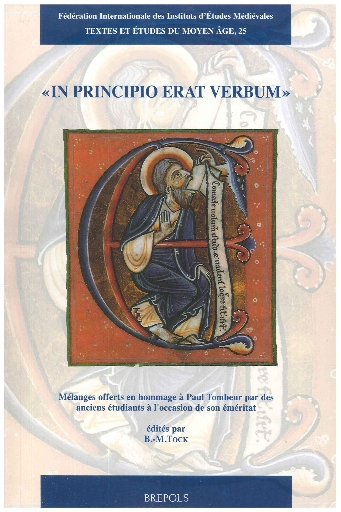
In principio erat verbum
Mélanges offerts en hommage à Paul Tombeur par des anciens étudiants à l’occasion de son éméritat
show More to view fulltext, buy and share links for:In principio erat verbum show Less to hide fulltext, buy and share links for: In principio erat verbumPaul Tombeur a, pendant les nombreuses années de son enseignement à l’Université Catholique de Louvain, à Louvain-la-Neuve, été un professeur extraordinaire, passionné, exigeant, stimulant, curieux…
Plusieurs des médiévistes qu’il a formés se sont réunis pour lui rendre hommage. De manière très diverse, mais toujours à partir de textes latins, puisque la diversité chronologique et thématique du latin est très chère à Paul Tombeur. Avec Augustin et Grégoire, Odon de Cluny, Hugues de Saint-Victor, Etienne Langton, Thomas d’Aquin…, mais aussi Gautier de Thérouanne, Honorius Augustodunensis, les commentaires liturgiques du XIIe s., les chartes françaises ou flamandes, c’est bien un latin très divers qui est ici mis à l’honneur. Et qui l’est de manière très diverse, puisque les contributions portent sur la théologie, la philosophie, l’hagiographie, la liturgie, la langue, le droit, la diplomatique…
Un autre point commun entre les auteurs de ces Mélanges est que, comme Paul Tombeur, ils ont mis au cœur de leur recherche et de leur réflexion le texte, et plus encore le mot, qu’ils étudient le plus souvent à l’aide des bases de données informatisées (Cetedoc Library of Christian Latin Texts, Thesaurus Formarum…), dont ils montrent à quel point elles peuvent renouveler les études médiévales.
-
-
-

In the Shadow of Death
Saint Boniface and the Conversion of Hessia, 721–54
show More to view fulltext, buy and share links for:In the Shadow of Death show Less to hide fulltext, buy and share links for: In the Shadow of DeathIn the year 721 the Anglo-Saxon missionary St Boniface came with his followers to Hessia, a small but turbulent province on the borders of the expanding Frankish kingdom. This book is the first dedicated interdisciplinary study of Boniface’s thirty-three-year mission among the Hessians. The author relates the historical sources to the rich archaeological heritage of the region in order to describe the political and cultural context of the mission and its relationship to long-term Frankish interests in the Saxon borderlands. Thanks to the survival of many letters between the missionary community and its supporters, it is also possible to examine a symbolic literary discourse that portrayed the missionaries as heroic exiles who chose to suffer torments in a distant land for the sake of Christ. Finally, fresh evidence drawn from topography and place names is used to argue for the existence of an expansive pre-Christian sacred landscape that was one of the major obstacles faced by Boniface and his followers. The result is an innovative study that brings history and archaeology into communication with the landscape, both real and imagined, in order to reconstruct a crucial moment in the conversion of Europe in all its complexity, ambiguity, and drama.
Awarded the Josef Leinweber Prize 2009 by the Fulda Faculty of Theology.
-
-
-
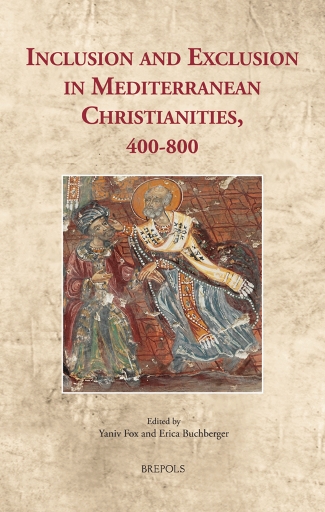
Inclusion and Exclusion in Mediterranean Christianities, 400–800
show More to view fulltext, buy and share links for:Inclusion and Exclusion in Mediterranean Christianities, 400–800 show Less to hide fulltext, buy and share links for: Inclusion and Exclusion in Mediterranean Christianities, 400–800The fifth to the ninth centuries were a formative period around the Mediterranean, in which new forces were redefining traditional social divisions. This volume will look at these centuries through the lens of inclusion and exclusion as social forces at work on the self, the community, and society as a whole. For late antique and early medieval societies, inclusion and exclusion were the means of redrawing the boundaries of cultural and political discourse, and ultimately, of deciding how resources - material, spiritual, and intellectual - were allocated.
This is the first of two volumes to explore inclusion and exclusion as processes affecting Mediterranean communities. Contributions to the present volume look at how distinctions were fostered through both space and text, along ethnic and religious lines, and at the level of both ecumenical councils and individual friendships. By examining a wide range of social and cultural phenomena, from historiography and political partisanship to private religious worship and the performance of the feast, the chapters of this volume illustrate the exceptional range of ways that late antique and early medieval people negotiated their place in a changing world, and brought a new one into being.
-
-
-
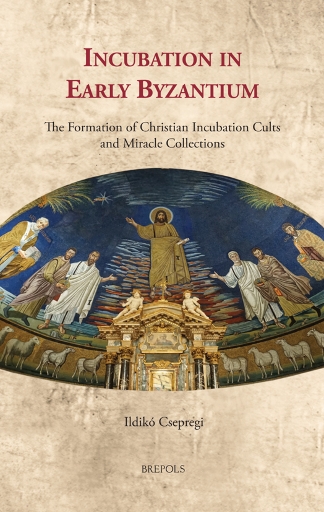
Incubation in Early Byzantium
The Formation of Christian Incubation Cults and Miracle Collections
show More to view fulltext, buy and share links for:Incubation in Early Byzantium show Less to hide fulltext, buy and share links for: Incubation in Early ByzantiumIncubation (temple sleep) was a well-known ritual in the Near East and became increasingly popular in Classical and Hellenistic Greece, becoming attached to Asclepius and other divinities. It flourished in the Eastern Mediterranean, where it was encountered by the emergent Christianity. Temple sleep was so widespread that it was impossible to ban. The Christianization of the incubation ritual was thus a detailed and lengthy (but successful) process that encompassed several aspects of the Church’s self-definition, including important social and theological issues of the era. The list of relevant issues is extensive: the fate of Greek temples and the reinterpretation of sacred space, confronting Hippocratic medicine, and the learned Greek intelligentsia. Since disease and a search for cure is a ubiquitous human need, the early Church embraced a healing ministry, in secular terms as well as in ritual healing. Incubation records show how the Church viewed dreams, conversion, or the notions of magic and divination. All these come within the framework of writing miracles: the transformation of the cult was thus incorporated into standard Church discourse, from ritual practice to proper literary genres.
This first comprehensive monograph on Christian incubation examines the rich material of all the relevant Greek miracle collections: those of Saint Thecla, Cyrus and John, the different versions of Saint Cosmas and Damian and saint Artemios, as well as the minor incubation saints, As a result, it unfolds the transformation of healing sites and practices related to dreams as they spread across Byzantium, from rural Asia Minor to Constantinople and Alexandria.
-
-
-
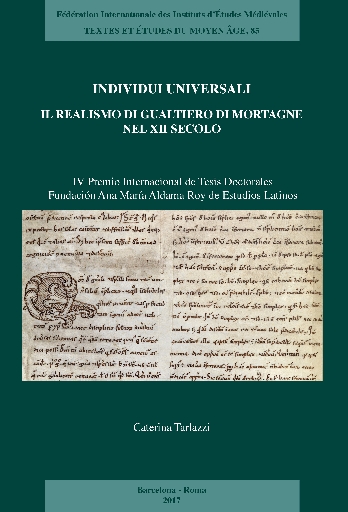
Individui universali. Il realismo di Gualtiero di Mortagne nel XII secolo
IV Premio Internacional de Tesis Doctorales, Fundación Ana María Aldama Roy de Estudios Latinos
show More to view fulltext, buy and share links for:Individui universali. Il realismo di Gualtiero di Mortagne nel XII secolo show Less to hide fulltext, buy and share links for: Individui universali. Il realismo di Gualtiero di Mortagne nel XII secoloIl realismo degli universali sostenuto nei primi decenni del XII secolo nelle scuole del Nord della Francia è stato studiato principalmente attraverso la critica di Pietro Abelardo, mentre materiale inedito a favore delle teorie realiste non sempre ha ricevuto adeguata considerazione. Questo libro analizza la teoria realista sugli universali variamente nota come ‘teoria dell’indifferenza’, ‘dell’identità’, ‘degli status’, etc., per la quale si propone qui la denominazione di ‘teoria dell’individuum’. Secondo tale posizione, infatti, l’universale è l’individuo stesso in alcuni dei suoi status.
Si tratta di una forma mitigata di realismo, sviluppatasi a partire dalla critica al più tradizionale realismo dell’essenza materiale. Elementi abelardiani sembrano incorporati nella teoria dell’individuum per un fine - la difesa del realismo - del tutto opposto a quello del maestro palatino. Lo studio considera sia fonti che criticano la teoria dell’individuum (Logica ‘Ingredientibus’, Logica ‘Nostrorum petitioni sociorum’, ‘De generibus et speciebus’), sia testi che la sostengono (il trattato ‘Quoniam de generali’ e il commento P17 all’Isagoge del ms. Paris, Bibliothèque nationale de France, lat. 3237, ff. 123ra-130rb), analizzando nel dettaglio i trentasette argomenti presenti nella discussione.
Oggetto di indagine è inoltre l’attribuzione della teoria al maestro Gualtiero di Mortagne, attivo a Reims e Laon nella prima metà del millecento. A questo scopo sono presi in esame dati sulla vita, le opere e l’insegnamento di Gualtiero, considerando in particolare la testimonianza di Giovanni di Salisbury in Metalogicon II, 17.
Caterina Tarlazzi è British Academy Postdoctoral Fellow alla Facoltà di Filosofia dell’Università di Cambridge e College Research Associate al St John’s College, Cambridge. Ha studiato filosofia medievale alla Scuola Galileiana di Studi Superiori dell’Università di Padova, l’École Pratique des Hautes Études, l’Université Paris IV Sorbonne e l’Università di Cambridge. Le sue ricerche vertono sul pensiero del XII secolo e sui manoscritti che trasmettono le opere e l’insegnamento dei maestri di quell’epoca.
-
-
-
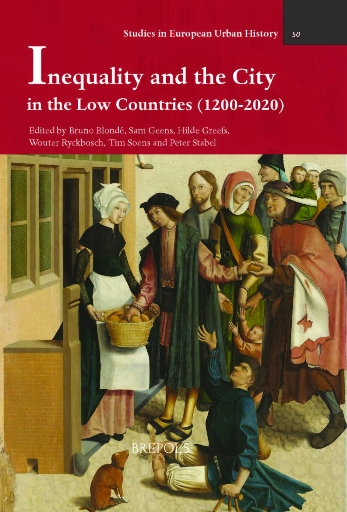
Inequality and the City in the Low Countries (1200-2020)
show More to view fulltext, buy and share links for:Inequality and the City in the Low Countries (1200-2020) show Less to hide fulltext, buy and share links for: Inequality and the City in the Low Countries (1200-2020)Social inequality is one of the most pressing global challenges at the start of the 21st century. Meanwhile, across the globe at least half of the world’s population lives in urban agglomerations, and urbanisation is still expanding. This book engages with the complex interplay between urbanisation and inequality. In doing so it concentrates on the Low Countries, one of the oldest and most urbanised societies of Europe. It questions whether the historic poly-nuclear and decentralised urban system of the Low Countries contributed to specific outcomes in social inequality. In doing so, the authors look beyond the most commonly used perspective of economic inequality. They instead expand our knowledge by exploring social inequality from a multidimensional perspective. This book includes essays and case-studies on cultural inequalities, the relationship between social and consumption inequality, the politics of (in)equality, the impact of shocks and crises, as well as the complex social relationships across the urban network and between town and countryside.
-
-
-
Inequality in rural Europe
(Late Middle Ages – 18th century)
show More to view fulltext, buy and share links for:Inequality in rural Europe show Less to hide fulltext, buy and share links for: Inequality in rural EuropeStudies dealing with inequality in European societies have multiplied in recent years. It has now become clear that pressing questions about the historical trends showing both income and wealth inequality as well as the factors leading to an increase or drop of inequality over time, could be answered only by taking into account preindustrial times. Therefore, this book deals with inequality in the long-run, covering and comparing a very long time span, starting its investigations in the later middle ages and ending before the nineteenth century, the period that marks the beginning of most available studies.
Hitherto, urban distribution of income and wealth is much better known than rural inequality. This book intends to reduce this gap in knowledge, bringing rural inequality to the fore of research. Since at least until the nineteenth century the majority of people were country men, looking at the rural areas is crucial when trying to identify the underlying causes of inequality trends in the long run of history.
The book consists of nine original papers and deals with a variety of topics about inequality covering no less than eight different countries in Europe. The majority of the studies published in this book are the result of teamwork between European universities where a range of research centres are currently exploring different aspects of income and wealth inequality in preindustrial times.
-
-
-
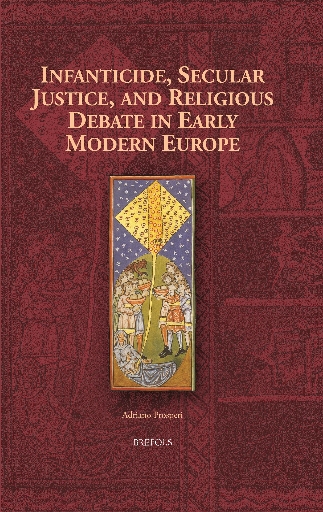
Infanticide, Secular Justice, and Religious Debate in Early Modern Europe
show More to view fulltext, buy and share links for:Infanticide, Secular Justice, and Religious Debate in Early Modern Europe show Less to hide fulltext, buy and share links for: Infanticide, Secular Justice, and Religious Debate in Early Modern EuropeOn 5 December 1709, in Bologna, Lucia Cremonini is accused of a terrible crime: the murder of her newborn son. This tragic episode, exhumed from the depths of time, is placed at the centre of an enthralling study by one of the leading scholars of modern history and the history of religious beliefs. During the course of a dramatic trial the crime is debated by representatives of religious, philosophical, moral, and scientific culture, all characteristic of the formative period of the modern world and all seeking a convincing answer to fundamental questions. When does life begin? When can a human being first be described as such, so that his or her killing is a crime punishable by the maximum penalty? What is the true role of baptism in the formation of the human person? These are all highly topical questions in an age like our own, where belief is subject to the powerful assaults of scientific research and new questions are being raised about the essence and the limits of human existence.
This is a translation from the original Italian publication 'Dare l'anima' (Einaudi, 2005).
Translation by Hilary Siddons.
-
-
-
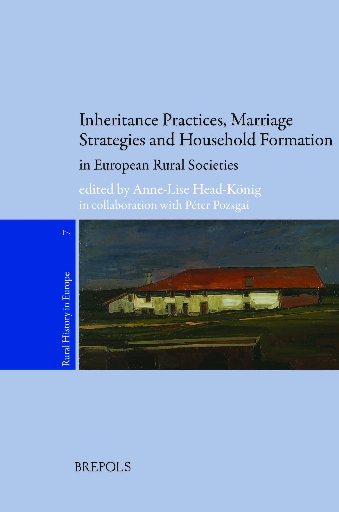
Inheritance Practices, Marriage Strategies and Household Formation in European Rural Societies
show More to view fulltext, buy and share links for:Inheritance Practices, Marriage Strategies and Household Formation in European Rural Societies show Less to hide fulltext, buy and share links for: Inheritance Practices, Marriage Strategies and Household Formation in European Rural SocietiesConventional wisdom holds that, over a long period of history, many women and men in the countryside were prevented from marrying because they lacked access to land. This volume offers an up-to-date discussion of the interaction between inheritance practices, marriage and household formation both for those who inherited and those who did not. It asks why and to what extent inheritance patterns and household structures differed between countries and regions in Europe right up to the present day.
Dealing with both impartible and partible inheritance, it examines how retirement practices and choices between ante-mortem or post-mortem property transfers gave rise to a wide range of specific strategies. The chapters cover rural Europe from the seventeenth to the twentieth century, ranging from semi-subsistence and seignorial societies to highly market-oriented economies. They offer case studies drawn from the Iberian Peninsula to Scandinavia and from the British Isles to Russia.
Anne-Lise Head-König is professor em. of social and economic history at the University of Geneva (Switzerland). Her main fields of research relate to the transformations in rural societies in Switzerland and in Europe with their social and demographic implications, including social mobility, migration and gender.
Péter Pozsgai is associate professor of social and economic history at the Corvinus University of Budapest (Hungary). His research interests in rural studies cover demography, agrarian social relations, property transfer and the land market in Hungary and in Europe from the eighteenth to the twentieth century.
-
-
-
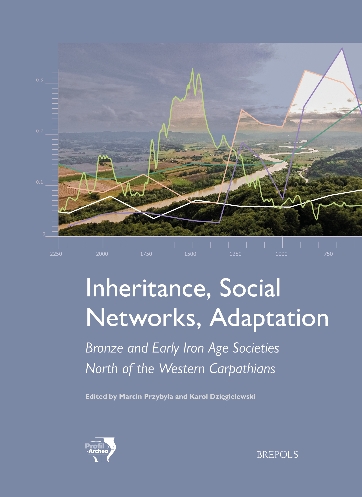
Inheritance, Social Networks, Adaptation
Bronze and Early Iron Age Societies North of the Western Carpathians
show More to view fulltext, buy and share links for:Inheritance, Social Networks, Adaptation show Less to hide fulltext, buy and share links for: Inheritance, Social Networks, AdaptationHow did societies change between the Early Bronze Age and the Early Iron Age? And what was the impetus that led to these changes — social contacts and innovation, intergenerational contacts, or perhaps simply adaptation? Taking these questions as its starting point, this richly detailed volume explores four different regions of southern Poland to compare and contrast the mechanisms that drove socio-cultural change in the region between the second and the first half of the first millennium BC. Drawing on standardized sets of archaeological data, the chapters gathered here examine the interplay of different factors influencing cultural change across five key parameters: environment; settlement patterns; settlement organization; economy; and material culture. The result is a beautifully illustrated volume that offers important insights into Central and Eastern European prehistory, made accessible for an English-speaking audience.
-
-
-
Initiation à la théorie ou partie speculative de la musique
show More to view fulltext, buy and share links for:Initiation à la théorie ou partie speculative de la musique show Less to hide fulltext, buy and share links for: Initiation à la théorie ou partie speculative de la musiqueComme les savants de son époque, Gassendi s'est intéressé à la théorie de la musique: on sait que cet art faisait partie, depuis l'Antiquité, du quadrivium, l'ensemble des disciplines "mathématiques", c'est-à-dire l'arithmétique, la géométrie, l'astronomie et la musique. Gassendi n'a pas non plus négligé la physique et la physiologie du son. L'Initiation à la théorie de la musique (Manuductio ad theoriam, sev partem speculativam musicae) de Gassendi a été publiée l'année de sa mort, c'est-à-dire 1655. Outre un bref chapitre préliminaire dans lequel le prévôt de Digne explique que le chant harmonieux, les consonances sont liés aux proportions entre nombres entiers, le traité contient quatre chapitres: le premier sur les proportions mathématiques, le second sur les consonances, le troisième sur les genres musicaux (diatonique, chromatique, enharmonique), le dernier sur la redoutable question des modes.
-
-
-
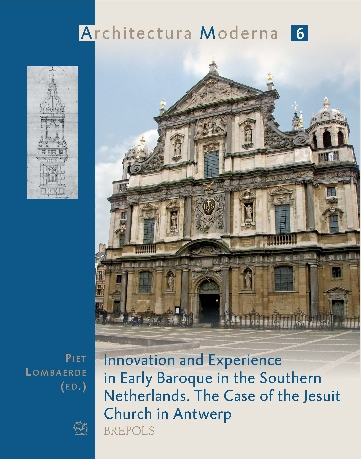
Innovation and Experience in Early Baroque in the Southern Netherlands. The Case of the Jesuit Church in Antwerp
show More to view fulltext, buy and share links for:Innovation and Experience in Early Baroque in the Southern Netherlands. The Case of the Jesuit Church in Antwerp show Less to hide fulltext, buy and share links for: Innovation and Experience in Early Baroque in the Southern Netherlands. The Case of the Jesuit Church in AntwerpDuring the sixteenth century Antwerp was at the forefront of the Renaissance north of the Alps. Not only a new architectural style flourished in the Antwerp metropolis, but at the end of the sixteenth century sciences such as mathematics, optics, geometry and perspective became more and more important. They helped to redefine architecture and the other fine arts on a more scientific base. Their introduction in the arts at the beginning of the seventeenth century lead to new experiences, applications and even innovations in architecture. The Jesuit Order played a very crucial rule in this process. The realization of their new church in the centre of the city of Antwerp became one of the first attempts to bring together the applications of all those new ideas in one total project. Paintings by Peter Paul Rubens and sculptures by Hieronymus Duquenoy, Artus Quellinus etc. were participating in one of the first Early Baroque architectural realizations in the Low Countries. The Jesuit Church of Antwerp, currently the St Carolus Borromeus Church, was designed by François d'Aguilón, a scientist and architect of the Jesuit Order. His publication Opticorum Libri sex on optics and on the reflection of light was edited by the Officina Plantiniana in 1613, the same year he started his project for the church. This scientific and theoretical work helps us to understand the new experiences with light and space he experimented with.
It is the aim of this publication to bring together researchers to confront the results of their studies about the interpretation of the façade of this Counter-Reformation church, the phenomenon of diffuse light created by reflection and refraction on marble statues, pillars and multiple ornaments, the combination of linear and parallel perspective applications, the sacral and social use of space, the signification of the façade and towers as parts of a perspective scene in the city landscape. Special attention is also devoted to the School of Mathematics, installed in Antwerp by the Jesuits at that time.
The central question will be whether we can conclude that at the beginning of the seventeenth century the innovative sense of creating a new architecture, so typical for the sixteenth century in Antwerp, still persisted in this city during the early seventeenth century, and even lead to a new interpretation of architectural space in European context.
-
-
-
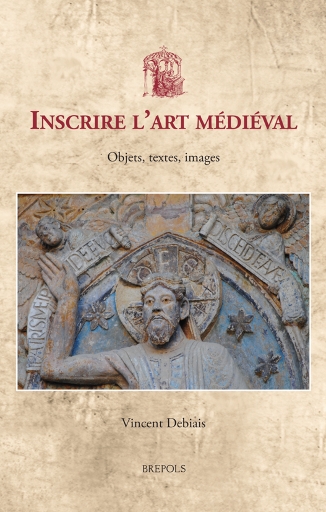
Inscrire l’art médiéval
Objets, textes, images
show More to view fulltext, buy and share links for:Inscrire l’art médiéval show Less to hide fulltext, buy and share links for: Inscrire l’art médiévalCe livre est consacré aux relations entre écriture épigraphique et art médiéval. Il se propose de placer les inscriptions tracées sur la pierre, le métal, le bois, la peinture ou la mosaïque dans le contexte des pratiques écrites et artistiques du Moyen Âge occidental, et de signaler quelques pistes de recherche originales pour appréhender le statut, la forme et la fonction de la rencontre entre l’écriture épigraphique et les oeuvres d’art médiévales.
Cet essai se situe à la confluence de l’histoire de l’écriture et de l’histoire des formes. Il est fondé sur l’analyse d’un certain nombre d’objets graphiques du Moyen Âge central produits en Europe occidentale. Il s’inscrit donc dans une pensée chrétienne de l’écriture et de l’image, et accorde une place importante à la théologie. Il est moins pensé comme un manuel épigraphique à l’attention des historiens de l’art que comme un répertoire de questions à explorer, à repenser ou encore à traiter, et s’adresse à quiconque aspire à la réunion des cultures écrite, visuelle et matérielle du Moyen Âge.
-
-
-
Insignis Sophiae Arcator
Medieval Latin Studies in Honour of Michael Herren on his 65th Birthday
show More to view fulltext, buy and share links for:Insignis Sophiae Arcator show Less to hide fulltext, buy and share links for: Insignis Sophiae ArcatorSome thirty years ago Michael Herren burst on the medieval Latin scene with his edition and translation of the notoriously difficult Hisperica Famina, and followed this a few years later with his translation of the prose works of Aldhelm. Notice was given that a junior scholar, unafraid to tackle some of the most obscure, complex, and arcane Latin, wished to make it accessible to non-Latinists as well as to those Latinists who lacked his particular skills. Not content with labouring alone in that field, Herren gathered scholars in Toronto to a conference on “Insular Latin Studies,” the proceedings of which he published two years later. Over the years he shed considerable light on such obscure texts and authors as Virgilius Maro Grammaticus, John Scottus Eriugena, and the Cosmographia by the pseudonymous Aethicus Ister. His research trail led him again and again to Ireland, and the Irish contribution to early medieval Latinity and to English, Carolingian, and even Italian culture. Recognizing the rich diversity of medieval Latin, Herren in 1990 founded The Journal of Medieval Latin and has, as its editor, provided a home for medieval Latinists of all stripes.
-
-
-
Institutions and Societies for Teaching, Research and Popularisation
Proceedings of the XXth International Congress of History of Science (Liège, 20-26 July 1997) Vol. XIX
show More to view fulltext, buy and share links for:Institutions and Societies for Teaching, Research and Popularisation show Less to hide fulltext, buy and share links for: Institutions and Societies for Teaching, Research and PopularisationThis volume is devoted to scientific institutions from the 17th to the 20th century. It consists of three parts: the first deals with teaching and research institutions (universities, technical schools, foundations); the second is about scholarly societies (academies, amateur societies, industrial societies); the last deals with scientific popularisation initiatives, notably those of newspapers. Several papers concern the role of women in scientific communities.
-
-
-
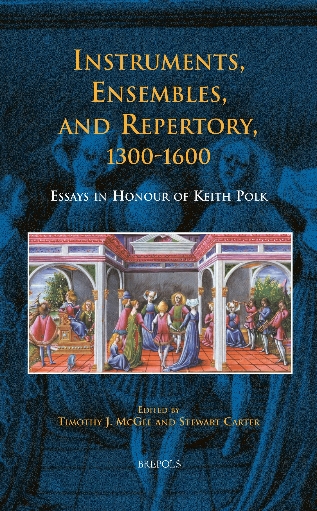
Instruments, Ensembles, and Repertory, 1300-1600
Essays in Honour of Keith Polk
show More to view fulltext, buy and share links for:Instruments, Ensembles, and Repertory, 1300-1600 show Less to hide fulltext, buy and share links for: Instruments, Ensembles, and Repertory, 1300-1600Over the past 45 years, Keith Polk has been one of the major scholars in the history of musical instruments and their repertories during the period 1300 - 1600. His publications have been extremely helpful in elucidating the development of the instruments, the repertory they performed, and the role played by instruments and instrumentalists in late medieval and Renaissance society. This collection of twelve essays on medieval and Renaissance music performance topics adds to the areas in which Keith Polk has made significant contributions, namely instruments, ensembles, and repertory. The scope of the individual essays varies in terms of geographical and temporal focus, with some involving an issue that was common to all areas of Europe, while others are specifically aimed at a single instrument, ensemble, composition, country, city, or occasion. Most of the essays are historical in nature, centring on how music was performed in particular circumstances, although some are quite practical and explain performance techniques involving voices and instruments. What unites the twelve essays is that they all shed new light on musical performance in Europe during the late Middle Ages and Renaissance. The writers chosen for this volume are all highly respected scholars whose writings are always of the highest calibre. Taken as a whole, the essays in this volume make an excellent contribution to the field of music history.
-
-
-
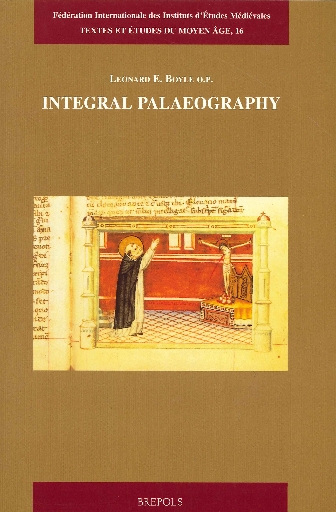
Integral Palaeography
show More to view fulltext, buy and share links for:Integral Palaeography show Less to hide fulltext, buy and share links for: Integral PalaeographyLes articles rassemblés dans ce volume ont tous trait aux manuscrits. On y retrouve la préoccupation constante du Père Boyle d'étudier le codex comme un ensemble et de l'analyser sous divers angles permettant de mieux reconstituer l'histoire du livre médiéval. Il utitlise toutes les ressources de la paléographie, de la codicologie, de l'histoire du texte et de sa décoration pour retrouver les traces du milieu d'origine et les indications nécessaires pour identifier l'auteur de(s) oeuvre(s) et pour situer les différentes étapes de composition du manuscrit. Le livre médiéval est considéré comme un objet archéologique qu'il faut étudier dans son ensemble pour retracer son histoire.
En lisant les études que le Père Boyle nous livre, on se rend compte que la recherche interdisciplinaire est indispensable pour aborder l'examen d'un codex. Tous les détails, même insignifiants à première vue, peuvent apporter un éclairage important. Si la paléographie et l'histoire de l'écriture latine sont au centre des préoccupations de l'auteur, il entend les resituer dans leur milieu d'origine. Et c'est ainsi qu'il en arrive au concept de "paléographie intégrale".
Tout chercheur engagé dans l'étude d'un manuscrit ou dans l'édition critique d'un texte devrait lire les réflexions méthodologiques faites par le Père Boyle, avant d'entreprendre son travail. Les divers exemples qu'il donne pourront servir de modèle à des recherches ultérieures. Tant les philologues que les paléographes, les codicologues que les historiens de l'art trouveront leur bien dans les articles qui ont été réunis. Après les avoir lus, ils ne regarderont plus de la même manière les manuscrits qu'ils étudient.
Puisse cette notion de "paléographie intégrale" ouvrir des horizons nouveaux aux recherches futures et faire entrevoir aux spécialistes des textes la richesse d'une telle approche. Ce serait certainement le voeu le plus cher de l'auteur de ces articles.
-
-
-
Integrated Peasant Economy in Central and Eastern Europe
A Comparative Approach
show More to view fulltext, buy and share links for:Integrated Peasant Economy in Central and Eastern Europe show Less to hide fulltext, buy and share links for: Integrated Peasant Economy in Central and Eastern EuropeIncome integration based on the peasants’ engagement in non-agrarian sectors is a prominent and widespread feature in the history of the European countryside. While listing a multitude of activities outside the narrow scope of farm management aimed at self-consumption, prevailing interpretations emphasize how survival was the goal of peasant economies and societies. The “integrated peasant economy” is a new concept that considers the peasant economy as a comprehensive system of agrarian and non-agrarian activities, disclosing how peasants demonstrate agency, aspirations and the ability to proactively change and improve their economic and social condition. After having been successfully applied to the Alpine and Scandinavian areas, the book tests this innovative concept through a range of case studies on central and eastern European regions comprising Poland, the Czech Republic, Slovenia, Serbia, Bosnia and Herzegovina and Ukraine. By enhancing our knowledge on central and eastern Europe and questioning the assumption that these regions were “different”, it helps overcome interpretive simplifications and common places, as well as the underrepresentation of the “eastern half” of Europe in scholarly literature on rural history. That’s why the book represents a refreshing methodological contribution and a new insight into European rural history.
-
-
-
Integration through Subordination
The politics of Agricultural Modernisation in Industrial Europe
show More to view fulltext, buy and share links for:Integration through Subordination show Less to hide fulltext, buy and share links for: Integration through SubordinationStarting from the hypothesis that states were crucial as agents of modernisation, this book explores why, how and with what results European states have striven to transform their agricultural sectors in the nineteenth and twentieth centuries. Modernising agriculture has increasingly meant emulating the new organisational models of manufacturing industry. But since agriculture continues to rely heavily on living resources (plants and animals), the results of modernising farming have often differed significantly from the manufacturing sector. Modernised agriculture, in other words, is something quite different than simply industrialised agriculture.
Ranging from the Iberian Peninsula to Hungary and from Greece to England, the chapters of this book deal with four principal questions: Why have state elites, and their civil society allies chosen to modernise agriculture? What have they understood by agricultural modernisation? What sort of power resources have they taken as necessary for effective modernisation? And what were the consequences of the pursuit of modernising policies for the farming population and for agriculture?
Peter Moser is director of the Archives of Rural History in Bern. His research interests centre on the interaction of industrial societies with their agricultural sectors.
Tony Varley lectures in political science and sociology at the National University of Ireland, Galway. His research interests centre mainly on agrarian politics and rural social movements.
-
-
-
Intellect et imagination dans la philosophie médiévale / Intellect and Imagination in Medieval Philosophy / Intelecto e imaginação na Filosofia Medieval
Actes du XIe Congrès International de Philosophie Médiévale de la Société Internationale pour l’Étude de la Philosophie Médiévale (S.I.E.P.M.). Porto, du 26 au 31 août 2002
show More to view fulltext, buy and share links for:Intellect et imagination dans la philosophie médiévale / Intellect and Imagination in Medieval Philosophy / Intelecto e imaginação na Filosofia Medieval show Less to hide fulltext, buy and share links for: Intellect et imagination dans la philosophie médiévale / Intellect and Imagination in Medieval Philosophy / Intelecto e imaginação na Filosofia MedievalLe XIème Congrès International de Philosophie Médiévale de la Société Internationale pour l’Étude de la Philosophie Médiévale (S.I.E.P.M..) s’est déroulé à Porto (Portugal), du 26 au 30 août 2002, sous le thème général: Intellect et Imagination dans la Philosophie Médiévale. A partir des héritages platonicien, aristotélicien, stoïcien, ou néo-platonicien (dans leurs variantes grecques, latines, arabes, juives), la conceptualisation et la problématisation de l’imagination et de l’intellect, ou même des facultés de l’âme en général, apparaissaient comme une ouverture possible pour aborder les principaux points de la pensée médiévale. Les Actes du congrès montrent que «imagination» et «intellect» sont porteurs d’une richesse philosophique extraordinaire dans l’économie de la philosophie médiévale et de la constitution de ses spécificités historiques. Dans sa signification la plus large, la théorisation de ces deux facultés de l’âme permet de dédoubler le débat en au moins six grands domaines: — la relation avec le sensible, où la fantaisie/l’imagination joue le rôle de médiation dans la perception du monde et dans la constitution de la connaissance; — la réflexion sur l’acte de connaître et la découverte de soi en tant que sujet de pensée; — la position dans la nature, dans le cosmos, et dans le temps de celui qui pense et qui connaît par les sens externes, internes et par l’intellect; — la recherche d’un fondement pour la connaissance et l’action, par la possibilité du dépassement de la distante proximité du transcendant, de l’absolu, de la vérité et du bien; — la réalisation de la félicité en tant qu’objectif ultime, de même que la découverte d’une tendance au dépassement actif ou mystique de toutes les limites naturelles et des facultés de l’âme; — la constitution de théories de l’image, sensible ou intellectuelle, et de ses fonctions.
-
-
-
Intellectual Culture in Medieval Scandinavia, c. 1100–1350
show More to view fulltext, buy and share links for:Intellectual Culture in Medieval Scandinavia, c. 1100–1350 show Less to hide fulltext, buy and share links for: Intellectual Culture in Medieval Scandinavia, c. 1100–1350This book investigates the nature of intellectual activity in the Middle Ages from the perspective of medieval Scandinavia by discussing how a multimodal and multilingual Scandinavian culture emerged through the dynamic interchange of foreign and local impulses in the minds of creative intellectuals. By deploying cognitive theory, this volume conceptualizes intellectual culture as the result of the individual’s cognition, which incorporates physical perceptions of the world, memory and creation, rationality, emotionality and spirituality, and decision making. In doing so, it elucidates the diversity of social roles that could be assumed by people engaged in the activity of thinking. Attention is paid in particular to the key intellectual activities of negotiating secular and religious authority and identity; to thinking and learning through verbal and visual means; and to ruminating on worldly existence and heavenly salvation. These processes are explored in a series of essays that focus on various visual and textual artefacts, among them Church art and sculptures, manuscript fragments, and texts of both different languages (Latin and Old Norse) and genres (sagas, poetry and grammatical treatises, laws, liturgical explanations and theological texts). The variety of intellectual and ideational processes connected to the textual and material culture of medieval Scandinavia forms the focal point of this study. As a result, this book actively seeks to transcend the traditional cultural dichotomies of written versus oral material, Latin versus vernacular, lay versus secular, or European versus Nordic by foregrounding the cognitive and creative agency of intellectuals in medieval Scandinavia.
-
-
-
Inter omnes Plato et Aristoteles. Gli appunti filosofici di Girolamo Savonarola
Introduzione, edizione critica e commento
show More to view fulltext, buy and share links for:Inter omnes Plato et Aristoteles. Gli appunti filosofici di Girolamo Savonarola show Less to hide fulltext, buy and share links for: Inter omnes Plato et Aristoteles. Gli appunti filosofici di Girolamo SavonarolaGirolamo Savonarola (1452-1498) è una delle figure più rappresentative della realtà italiana della fine del Quattrocento. Al contrario di quanto affermato a lungo dalla storiografia passata - che lo rappresentava come 'relitto' dell'età medievale contrapposto ai 'precursori' della modernità - in lui convissero le contraddizioni e le necessità proprie della cultura del tempo: l'esigenza di rinnovamento spirituale e le tendenze profetiche, l'interesse per la filosofia e la letteratura classica, il tentativo di ritrovare un assetto politico che garantisse al tempo stesso stabilità e indipendenza. Ferrarese di nascita e fiorentino di adozione, a Firenze Savonarola dedicò tutte le sue energie fisiche ed intellettuali e lì mise in pratica per breve tempo, l'ideale della città celeste, la 'nuova Gerusalemme', che spesso evocava nella sua predicazione.
Le due raccolte di appunti filosofici di Girolamo Savonarola pubblicate in questo volume, il De doctrina Aristotelis e il De doctrina Platonicorum, dimostrano la sua conoscenza dei testi aristotelici e platonici, nonché la capacità di utilizzarli a scopo didattico e retorico, in funzione del suo specifico interesse pastorale. Il lavoro sulle fonti filosofiche e la loro elaborazione permettono di conoscere uno dei momenti essenziali della predicazione savonaroliana, lo strumento principale attraverso cui si esplicava l'attività profetica, politica e teologica dell'autore. Conservati nel codice della Biblioteca Nazionale di Firenze, Conv. Soppr. D.VIII.985, gli appunti gettano luce sul passaggio che unisce la riflessione privata al discorso pubblico. L'introduzione e le appendici ai testi consentono al lettore di apprezzare la stratificazione del materiale filosofico, dagli appunti fino alle prediche e ai trattati, dove i brani annotati furono inseriti.
Prefazione di Gian Carlo Garfagnini.
Lorenza Tromboni ha conseguito il Dottorato di ricerca presso l'Università del Salento nel 2006 con una tesi sul De doctrina Platonicorum di Girolamo Savonarola; dal 2009 al 2011 ha beneficiato di una borsa di post-dottorato presso il Dipartimento di Filosofia dell'Università di Firenze, dove svolge attualmente la sua attività di ricerca. Dal 2002 collabora attivamente con la Società Internazionale per lo Studio del Medioevo Latino (S.I.S.M.E.L.), e con la Fondazione Ezio Franceschini, Firenze.
-
-
-
Inter-Ethnic Relations and the Functioning of Multi-Ethnic Societies
Cohesion in Multi-Ethnic Societies in Europe from c. 1000 to the Present, II
show More to view fulltext, buy and share links for:Inter-Ethnic Relations and the Functioning of Multi-Ethnic Societies show Less to hide fulltext, buy and share links for: Inter-Ethnic Relations and the Functioning of Multi-Ethnic SocietiesThe three-volume project Cohesion in Multi-Ethnic Societies in Europe from c.1000 to the Present explores and seeks to find solutions to a crucial problem facing contemporary Europe: in what circumstances can different ethnic groups co-operate for the common good? They apparently did so in the past, combining to form political societies, medieval and early modern duchies, kingdoms, and empires. But did they maintain their ethnic traditions in this process? Did they pass on elements of their cultural memory when they were not in a dominant position in a given polity?
The first volume of the project explored written sources about the past to show how communities shaped their collective memories in order to ensure the smooth functioning of multi-ethnic political communities. This second volume looks beyond texts and focuses on activities and events that were designed to build a sense of community within a political community made up of different ethnic groups. The coexistence of different ethnic groups is considered not through the prism of theoretical analyses by intellectual elites, but by following community members’ responses to current events as recorded in the sources.
-
-
-
Interacting with Saints in the Late Antique and Medieval Worlds
show More to view fulltext, buy and share links for:Interacting with Saints in the Late Antique and Medieval Worlds show Less to hide fulltext, buy and share links for: Interacting with Saints in the Late Antique and Medieval WorldsThe cult of saints is one of the most fascinating religious developments of Late Antiquity and the early Middle Ages. Christians admired martyrs already in the second century, but for a long time they perceived them only as examples to follow and believed they could pray directly to God, whom they addressed as ‘Our Father’. A new attitude toward saints, now considered above all as powerful friends of God and efficient intercessors, started to emerge in the third century. Once this process gained momentum in the Constantinian era, the cult of saints constantly changed and rapidly adapted to new conditions and demands. This evolution highlighted many factors: the popularity of specific saints and the different types of sanctity, the spread of cults and customs, and the ways in which the saints were described, visualised, and represented.
This volume seeks to capture the dynamic of these adaptations, showing both those aspects of cult which evolved quickly and those which remained stable for a long time. It studies the evolution of the cults in a broad period from the third to the seventh centuries and in various regions from Gaul to Georgia, with a particular interest in the two greatest centres of the cult of saints: Rome and Constantinople. In response to changing needs and different circumstances, new generations of believers repeatedly modified the cults of established saints, even as they introduced new saints.
-
-
-
Intercultural Encounters in Medieval Greece after 1204
The Evidence of Art and Material Culture
show More to view fulltext, buy and share links for:Intercultural Encounters in Medieval Greece after 1204 show Less to hide fulltext, buy and share links for: Intercultural Encounters in Medieval Greece after 1204Based on the evidence of artistic production and material culture this collective volume aims at exploring cross-cultural relations and interaction between Greeks and Latins in late medieval Greece in the aftermath of the Fourth Crusade. Fourteen essays discuss mostly new and unpublished archaeological and artistic material, including architecture, sculpture, wall-paintings and icons, pottery and other small finds, but also the evidence of music and poetry. Through the surviving material of these artistic activities this volume explores the way Byzantines and Latins lived side by side on the Greek mainland and the Aegean islands from the thirteenth to the fifteenth centuries and traces the mechanisms that led to the emergence of the new, composite world of the Latin East. Issues of identity, patronage, papal policy, the missionary activities of the Latin religious orders and the reactions and responses of the Byzantines are also re-considered, offering fresh insights into and a better understanding of the various manifestations of the interrelationship between the two ethnicities, confessions and cultures.
-
-
-
Interdisciplinary Research on the Bronze Age Diyala
Proceedings of the Conference Held at the Paris Institute for Advanced Study, 25–26 June, 2018
show More to view fulltext, buy and share links for:Interdisciplinary Research on the Bronze Age Diyala show Less to hide fulltext, buy and share links for: Interdisciplinary Research on the Bronze Age DiyalaThe Diyala region in eastern Iraq has long been a focal area of study for scholars of the Bronze Age, thanks both to its long history of human occupation, and its position as a site of strategic importance. Drawing on this strong tradition of scholarship and the results of numerous excavations and collections in the area, the seven contributions gathered in this volume aim to offer new insights into the cultures and societies of the Bronze Age Diyala by proposing new questions, problems, and approaches. Exploring subjects as widespread as architecture and iconography, cultural and economic history, the study of social networks, historiography, and the identification of ancient cities, these chapters explore the richness of the Bronze Age Diyala from a range of perspectives, and together offer important new insights into our understanding of the area.
-
-
-
Interpretation of Scripture: Practice
A Selection of Works of Hugh, Andrew, Richard, and Leonius of St Victor, and of Robert of Melun, Peter Comestor and Maurice of Sully
show More to view fulltext, buy and share links for:Interpretation of Scripture: Practice show Less to hide fulltext, buy and share links for: Interpretation of Scripture: PracticeThanks to the pathbreaking work of Beryl Smalley more than a half century ago, today we recognize the central place of the so-called School of Saint Victor in the history of biblical exegesis. By the mid-twelfth century, the abbey had gained a reputation for solid Christian teaching, with an emphasis on biblical studies and history. This volume contains commentaries and examples of biblical exegesis by Hugh and Andrew of Saint Victor, Sermons by Richard of Saint Victor and Maurice of Sully, the Quaestiones in divina pagina by Robert of Melun, Richard's invective against judaizers, De Emmanuele, and a poetic paraphrase of Ruth by Leontius of Saint Victor, encompassing the broad range of biblical exegetical practice at the abbey.
The editors of this volume are Frans van Liere (PhD, Groningen; Calvin College), editor of Andrew of St Victor’s commentaries on Samuel and Kings (1996; ET 2010) and on the Twelve Prophets (2007, with Mark Zier) (Corpus Christianorum, Continuatio Mediaeualis), and author of An Introduction to the Medieval Bible (2014); and Franklin T. Harkins (PhD, Notre Dame; Boston College), author of Reading and the Work of Restoration: History and Scripture in the Theology of Hugh of St Victor (2009).
-
-
-
Interpretation of Scripture: Theory
A Selection of Works of Hugh, Andrew, Godfrey and Richard of St Victor, and Robert of Melun
show More to view fulltext, buy and share links for:Interpretation of Scripture: Theory show Less to hide fulltext, buy and share links for: Interpretation of Scripture: TheoryStarting from the theory of scriptural interpretation elaborated by Hugh of St Victor, the Augustinian Canons of twelfth-century St Victor in Paris were leading theorists and practitioners of scriptural exegesis. This volume contains translations of the exegetical theories elaborated in Hugh of St Victor's (d. 1141) Didascalicon, On Sacred Scripture and its Authors, The Diligent Examiner, and On the Sacraments (prologues); Andrew of St Victor's (d. 1175) prologues to select commentaries; Richard of St Victor's (d. 1173) Book of Notes and Apocalypse commentary; Godfrey of St Victor's Fountain of Philosophy; Robert of Melun's Sentences; and the anonymous Speculum on the Mysteries of the Church.
The editors of this volume are Franklin T. Harkins (PhD, Notre Dame; Theology Dept. Fordham University), author of Reading and the Work of Restoration: History and Scripture in the Theology of Hugh of St Victor (2009) and Frans van Liere (PhD, Groningen; Dept. of History, Calvin College), editor of Andrew of St Victor’s commentaries on Samuel and Kings (1996 ; ET 2010) and on the Twelve Prophets (2007, with Mark Zier) (Corpus Christianorum, Continuatio Mediaevalis), and author of a forthcoming book on the Bible in the Middle Ages.
-
-
-
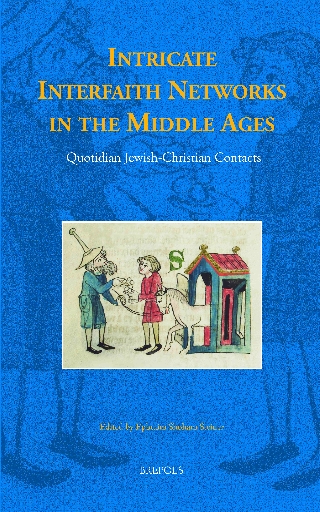
Intricate Interfaith Networks in the Middle Ages
Quotidian Jewish-Christian Contacts
show More to view fulltext, buy and share links for:Intricate Interfaith Networks in the Middle Ages show Less to hide fulltext, buy and share links for: Intricate Interfaith Networks in the Middle AgesRecent scholarship has suggested that the religious divide between Jews and Christians in the Middle Ages, although ever-present (and at times even violently so), did not stop individuals and groups from forming ties and expanding them in more intricate ways than previously thought. Moreover, these networks appear to have functioned with an apparent disregard towards any confessional and religious differences. Nevertheless, this was by no means a straightforward or simple situation; both the theological background to how each faith viewed ‘other’ beliefs, as well as the strong social, religious, and authoritative circles that at the least critiqued, even if they did not entirely discourage such contacts, created a formidable opposition to these networks. The articles in this book were presented as papers during an international workshop at the Central European University in Budapest in February 2010. In these presentations and discussions, the premise of interfaith relations and networks was thoroughly explored across Europe from the Iberian Peninsula to the eastern Hungarian frontier, and from England to Italy throughout the high and later medieval period. In this volume, the contributors explore a number of phenomena through different disciplinary approaches. Ties of an economic and cultural nature are examined, and attention is paid to social contacts and networks in the fields of art and the sciences, and matters of daily life. The picture that emerges is altogether more nuanced and diverse than the bipolar paradigm that has dominated previous scholarship.
-
-
-

Introduction générale à la philosophie chez les commentateurs néoplatoniciens
show More to view fulltext, buy and share links for:Introduction générale à la philosophie chez les commentateurs néoplatoniciens show Less to hide fulltext, buy and share links for: Introduction générale à la philosophie chez les commentateurs néoplatoniciensLes prolégomènes à la philosophie a été le tout premier ouvrage abordé par les étudiants en philosophie dans l’Antiquité tardive. Cette œuvre, à caractère propédeutique et déclinée en plusieurs versions au fil des générations, nous donne un bon aperçu du raffinement pédagogique qui était alors en usage dans l’école néoplatonicienne. Les définitions et les divisions de la philosophie qu’on y lisait avaient pour but de donner un avant-goût du cursus philosophique et de l’orientation exégétique adoptée par l’enseignant. Cette littérature isagogique dont l’influence s’est étendue jusqu’aux sphères culturelles de langue arabe et syriaque, reste encore le « parent pauvre » des études néoplatoniciennes, alors qu’elle renferme encore des aspects méconnus qui demandent à être élucidées et approfondis. Ce volume, qui réunit cinq contributions, vise donc à clarifier certaines questions clés susceptibles d’apporter un éclairage nouveau sur la naissance, l’évolution et la diffusion de cette œuvre représentative du savoir-faire pédagogique de l’Antiquité tardive.
-
-
-
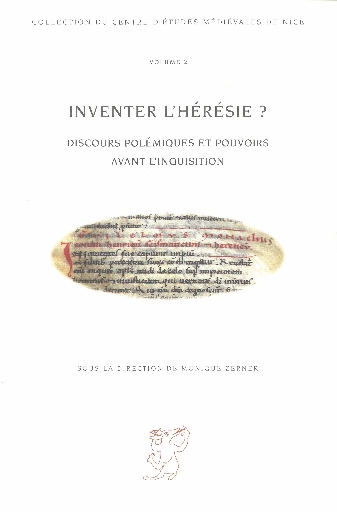
Inventer l'hérésie ?
Discours polémiques et pouvoirs avant l'Inquisition
show More to view fulltext, buy and share links for:Inventer l'hérésie ? show Less to hide fulltext, buy and share links for: Inventer l'hérésie ?Les dix articles réunis dans ce volume sont l'aboutissement d'une série de rencontres sur l'hérésie et les stratégies de l'Eglise. Inventer l'hérésie? Aux sens de créer, découvrir quelque chose de nouveau, trouver, imaginer, imaginer de façon arbitraire, la question se pose dans tous les sens du terme. A partir de l'hypothèse que les discours anti-hérétiques sont construits pour défendre la progression de l'institution ecclésiale et prévenir ou affronter des résistances, tour à tour les auteurs (deux spécialistes de l'Antiquité et huit médiévistes) examinent dans une succession logique les dossiers rencontrés dans leurs propres recherches: saint Augustin contre Fauste, les premiers Pères de l'Eglise contre les chrétiens gnostiques, l'évêque de Cambrai contre les hérétiques d'Arras, l'abbé de Cluny Pierre le Vénérable contre Pierre de Bruis et ses disciples, un certain moine contre l'hérétique Henri et des anonymes contre "l'Hérésie", la défense des prières pour les morts et des dons à l'Eglise pour le salut de l'âme, les rapports du chapitre cathédral de Lyon avec Valdès, le rôle des cisterciens dans la dénomination des "Albigeois".
-
-
-
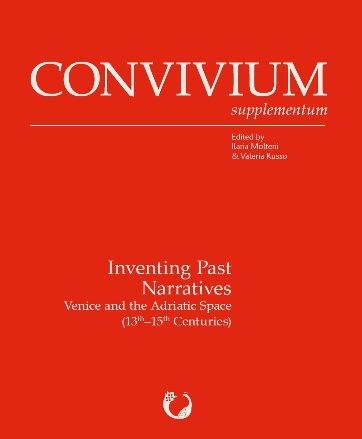
Inventing Past Narratives. Venice and the Adriatic Space (13th–15th Centuries)
show More to view fulltext, buy and share links for:Inventing Past Narratives. Venice and the Adriatic Space (13th–15th Centuries) show Less to hide fulltext, buy and share links for: Inventing Past Narratives. Venice and the Adriatic Space (13th–15th Centuries)During the Middle Ages, new past narratives emerged, but several of these narratives are not based on the archaeological rediscovery of a lost history. On the contrary, in many cases that impression of a unique, grandiose, and ancient past is partly the result of accurate dissimulation. Yet, it would not be exact to consider the myth of Venice as a fiction or, somehow, as a fabricated invention – an apocryphal creation that does not include any historical component. Instead, the myth of Venice has been generated through an intricate operation of composing unconnected pieces, through a process of attributing new meanings to previously unconnected pieces of different histories or objects from other pasts. The result is a patchwork that, through the longue durée, has been articulated around both new and ancient stories, local and foreign myths, reconstructed or rediscovered objects and narratives. By the late Middle Ages Venice becomes the main stage of a national and international myth: while enhancing its historical role in the past, the city demonstrates the legitimacy of its role in the present. In light of such phenomenon, this volume will try to demonstrate that Venetian past narratives bring together heterogeneous materials to achieve a common result: that of celebrating Venice’s triumph and erasing its weaknesses and defeats.
-