Brepols
Brepols is an international academic publisher of works in the humanities, with a particular focus in history, archaeology, history of the arts, language and literature, and critical editions of source works.2701 - 2800 of 3194 results
-
-
The Community, the Family and the Saint
Patterns of Power in Early Medieval Europe
show More to view fulltext, buy and share links for:The Community, the Family and the Saint show Less to hide fulltext, buy and share links for: The Community, the Family and the SaintThis collection of twenty-two original essays investigates the organising forces of social identity and power in early Medieval Europe. The essays take as their starting-points primary literary and historical texts, artefacts and archaeological evidence from a wide geographical area, ranging from the early Celtic world to the emerging city states of twelfth-century Italy. The essays are arranged in four sections which reflect the nexus of power in this period: Community and Family; Saints; Power; Death, Burial and Commemoration. Contributors to the volume are Mary Alberi, Stefan Brink, Edward Coleman, Mayke de Jong, Philippe Depreux, Matthew Ellis, Guy Halsall, Mark Handley, Karl Heidecker, Dominic Janes, Sarah Larratt Keefer, Harald Kleinschmidt, Rob Meens, Bertil Nilsson, David Pelteret, Joaquin Martinez Pizarro, Mark Redknap, Hedwig Röckelein, Patricia Skinner, Pauline Stafford, Martina Stein-Wilkeshuis and Lisa Weston. Joyce Hill is Professor of Old and Middle English Language and Literature, and a former Director of the Centre for Medieval Studies at the University of Leeds. Mary Swan is Director of Studies of the Centre for Medieval Studies at the University of Leeds. Both are specialists in the early Middle Ages, focussing on the language, literature and history of Anglo-Saxon England.
-
-
-

The Concept of Space in the Book of Judith
A Contribution to the Narrative Analysis of Old Testament Texts
show More to view fulltext, buy and share links for:The Concept of Space in the Book of Judith show Less to hide fulltext, buy and share links for: The Concept of Space in the Book of JudithIn the last decade, biblical exegesis has gradually taken into consideration the so-called “spatial turn.” However, the literary concept of space and its narrative analysis have found less interest than the study of space as a social and cultural phenomenon. This obvious gap in biblical research has become the impulse for the present work, dedicated to the book of Judith. Its aim is, on the one hand, to present the narrative analysis of space as a still-developing field in non-biblical literature and, on the other, to show how this promising approach can be developed in biblical studies.
In particular, this monograph provides the narrative analysis and interpretation of space in the book of Judith in response. The first part of the study offers a synthetic overview of perceptions, concepts and theories of space from antiquity to contemporary research, and of the theoretical approaches to space in the Old Testament. The main part is dedicated to the analysis of space on the micro and macro levels of the Judith story through the application of Katrin Dennerlein’s narratological theory of space. Thus, it can be demonstrated to what extent an in-depth analysis of the notion of space can contribute to better understand its thematic and symbolic dimension in the narrative, its function of characterising persons and actions, its role as a structuring element in the story and, last but not least, as a vehicle for an ideological and theological message.
-
-
-
The Controversy over Integralism in Germany, Italy and France during the Pontificate of Pius X (1903-1914)
show More to view fulltext, buy and share links for:The Controversy over Integralism in Germany, Italy and France during the Pontificate of Pius X (1903-1914) show Less to hide fulltext, buy and share links for: The Controversy over Integralism in Germany, Italy and France during the Pontificate of Pius X (1903-1914)In the years after 1900 the autonomous activity of the Catholic laity in politics, culture and society was opposed by ‘integralists’ in theological circles, in the laity as well as in the clergy, and last but not least in the Roman Curia. The integralists favoured a strict confessionalism and hierarchical control over all fields of Catholic life. Pope Pius X enforced this position in Italy and in France by solemnly condemning the autonomist Christian Democracy of Romolo Murri and the ‘Sillon’ movement of Marc Sangnier. In Germany, however, compromises with the Roman authorities were possible on all fields of contention: concerning the interdenominational character of the Christian trade unions, the independence of the Centre Party from the hierarchy and also during the controversy over the ‘Catholic belles-lettres’. Finally, in the papal encyclical ‘Singulari quadam’ (1912) the interconfessional Christian trade unions were at least ‘tolerated’. The present volume analyses these struggles in a comparative perspective and, by evaluating the entire accessible archival documentation, it reconstructs for the first time the respective internal decision-making processes of the Roman Curia. The result of this entire research is a profiling of three important European Catholicisms in the controversy over integralism. This conflict had a decisive bearing on the long-term positioning of French, German and Italian Catholicism within their respective national societies.
-
-
-

The Courtly and Commercial Art of the Wycliffite Bible
show More to view fulltext, buy and share links for:The Courtly and Commercial Art of the Wycliffite Bible show Less to hide fulltext, buy and share links for: The Courtly and Commercial Art of the Wycliffite BibleIn 1409, Archbishop Thomas Arundel banned the Wycliffite Bible, along with the heresy attributed to Oxford theologian John Wyclif for which it was named. Containing the first complete translation of the Bible into English, the Wycliffite Bible is nonetheless the most numerous extant work in Middle English by a wide margin.
Nearly half the existing copies of the Wycliffite Bible are illuminated. This book offers the first sustained, critical examination of the decoration of Wycliffite Bibles. This study has found that many copies were decorated by the most prominent border and initial artists of their eras. Many more were modeled on these styles. Such highly regarded artists had little to gain from producing volumes that might lead them to trial as heretics and ultimately to the stake.
This unprecedented study contributes to recent revisionist criticism and troubles long-standing assumptions about Wycliffism and the Wycliffite Bible. It contends that the manuscript record simply does not support a stark interpretation of the Wycliffite Bible as a marginalized text. Rather, this study reveals a prolific and vibrant textual exchange within the book culture of late medieval England.
-
-
-
The Craft of History
Turning History into a Discipline in the Twelfth and Thirteenth Centuries
show More to view fulltext, buy and share links for:The Craft of History show Less to hide fulltext, buy and share links for: The Craft of HistoryHistory is today an established academic discipline, characterized by the use of footnotes and references to support claims. However, attempts to codify history and impose disciplinary rigour were made in the Middle Ages, even before the introduction of the modern apparatus. One such attempt was the use of the source mark, a precursor of the modern footnote. Initially used in the works of lawyers and theologians, the source mark indicated that a text and its ideas belonged to a named authority. The application of the source mark to historical writings marked a change in the way history was perceived.
This volume explores how history was transformed into a discipline by focusing on four key twelfth-and thirteenth-century sources: the anonymous Status Imperii Iudaici, the Chronicle of Hélinand of Froidmont, the Chronicle of Alberic of Trois-Fontaines, and Vincent of Beauvais’s Speculum Historiale. By focusing on these four texts and examining the influences of surrounding disciplines such as law and theology, the author explores how these historical writers drew on a wide range of different sources of information to provide a truthful account of the past. Furthermore, the aim of producing a reliable narrative was combined with an awareness of the status of the author. Through these case studies, this volume offers a fascinating reassessment of our modern understanding of the origins of the study of history.
-
-
-
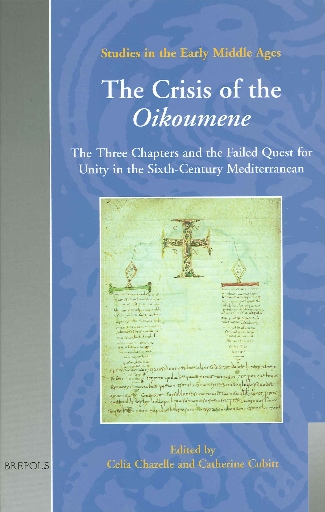
The Crisis of the Oikoumene
The Three Chapters and the Failed Quest for Unity in the Sixth-Century Mediterranean
show More to view fulltext, buy and share links for:The Crisis of the Oikoumene show Less to hide fulltext, buy and share links for: The Crisis of the OikoumeneThe sixth-century theological controversy over the ‘Three Chapters’, which centred on the nature of Christ, provoked one of the most serious and long-lived religious schisms of the early Middle Ages. The fault lines ran not only between the Byzantine imperial court and the papacy, but between Rome and the churches in the former western empire’s successor states. In Italy, the schism endured into the seventh century, and the repercussions were felt long thereafter. Though rooted in the complexities of christological debate, the tensions reveal the growing political as well as cultural divide between Byzantium, Rome, and the West. Thus the controversy is critical for our understanding of the late-antique and early-medieval Mediterranean world, and of the inheritance of empire in western Europe and North Africa. This book presents ten chapters by an international group of scholars who examine different facets of the Three Chapters Controversy and its profound impact on these regions.
-
-
-

The Crown and the Cross
Burgundy, France, and the Crusades (1095–1223)
show More to view fulltext, buy and share links for:The Crown and the Cross show Less to hide fulltext, buy and share links for: The Crown and the CrossThe Crown and the Cross examines the heretofore-unstudied role of the French province of Burgundy in the ‘traditional’ era of the crusades, from 1095-c.1220. Covering the First, Second, Third, Fourth, and Albigensian Crusades in detail, it focuses primarily on the Capetian dukes, a cadet branch of the French royal family, but uncovers substantial lay participation and some crusading traditions among Burgundian noble families as well. The book additionally uses the crusading institution to explore the development of the medieval French monarchy, and makes accessible a corpus of scholarship and documents that until now have mostly existed in French or Latin. It concludes that while piety and religion did play a central role in the experience of many everyday Burgundian crusaders, the greater political ramifications of the crusading project functioned in subtle and long-lasting ways, and had consequences for the entire institution, not just Burgundy or France. Of interest to scholars of the crusades, French history, and the formation of medieval Europe, The Crown and the Cross nuances, challenges, and expands our understanding of the intellectual genealogy of the crusades and their real-world consequences, fills a critical gap in the historiography, and poses a set of important conclusions and questions for continued study.
-
-
-
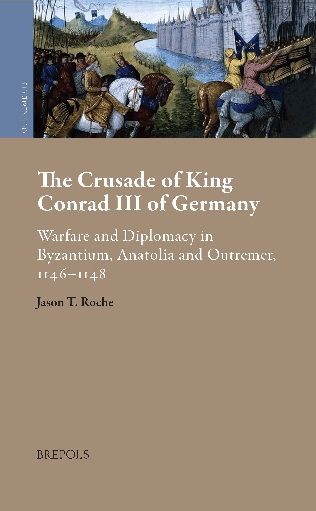
The Crusade of King Conrad III of Germany
Warfare and Diplomacy in Byzantium, Anatolia and Outremer, 1146–48
show More to view fulltext, buy and share links for:The Crusade of King Conrad III of Germany show Less to hide fulltext, buy and share links for: The Crusade of King Conrad III of GermanyThis book represents the first work of history dedicated to the crusade of King Conrad III of Germany (1146-48), emperor-elect of the Western Roman Empire and the most powerful man yet to assume the Cross. Even so, many of the people following the king on the Second Crusade were dead before they reached Constantinople and their ranks were devastated in Anatolia. Yet he went on to join with his fellow kings, Louis VII of France and Baldwin III of Jerusalem, in an attempt to capture the city of Damascus, the most powerful Muslim stronghold in southern Syria. Their unsuccessful attack lasted just five days. The recriminations for the many privations and problems the Germans suffered and encountered in Byzantium, Anatolia and Outremer were long and loud and have echoed down the ages: German indiscipline and poor leadership, Byzantine deceit and duplicity, and the self-serving interests of a Latin Jerusalemite nobility were and still are blamed for the various failings of the expedition. Scrutinising the original source evidence to an unparalleled degree and employing a range of innovative, multi-disciplinary approaches, this work challenges the traditional and more recent historiography at every turn leading to a significantly clearer and appreciably different understanding of the expedition’s complex and much maligned history.
-
-
-

The Crusades: History and Memory
Proceedings of the Ninth Conference of the Society for the Study of the Crusades and the Latin East, Odense, 27 June – 1 July 2016. Volume 2
show More to view fulltext, buy and share links for:The Crusades: History and Memory show Less to hide fulltext, buy and share links for: The Crusades: History and MemoryThe crusades have been remembered and commemorated in many ways, from the late eleventh century until today. Soon after the conquest of Jerusalem in 1099, the fate of the First Crusade inspired literary, historiographical and artistic traditions. Participants in the subsequent crusades would look to the first Crusade for inspiration and spiritual guidance, while playing out their own ideas of crusading. Since then the crusades have been put to use in very divers ways and for different purposes. This volume explores how the crusades have been remembered, revered and ridiculed by those who participated in them and by those who in later periods made use of the crusades as an historical phenomenon. The volume thus traces the memory and legacy of the crusades by putting together essays that focus on the specific ways in which the crusades have been memorized, evoked and exploited from the eleventh century until today.
-
-
-
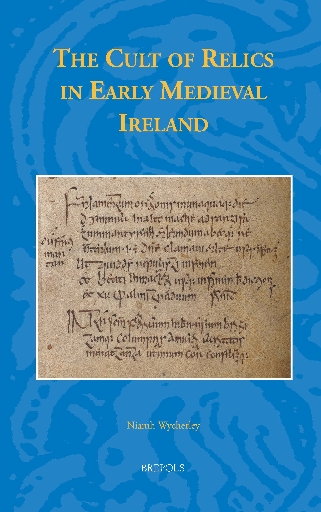
The Cult of Relics in Early Medieval Ireland
show More to view fulltext, buy and share links for:The Cult of Relics in Early Medieval Ireland show Less to hide fulltext, buy and share links for: The Cult of Relics in Early Medieval IrelandAs the cult of saints became increasingly important to the Christian religion during the latter centuries of the Roman Empire, so too the veneration of relics became a central element of Christian piety. The relics of holy men and women - the very tangibility of which ensured their lasting appeal - could be used to heal the sick, improve the weather, ensure victory in battle, and represent power and authority. Even today, in an era of declining church attendance, famous relics such as the head of St Catherine of Siena or the tongue of St Anthony of Padua continue to draw hundreds of thousands of pilgrims; the need to preserve and venerate objects associated with the important and the famous is a well-established human trait.
This book is the first to explore the historical roots of the cult of relics in early medieval Ireland, deepening our understanding of how the pagan Irish adapted to the new religion. Examining the cult of relics from the earliest Irish sources up to the ninth century, it provides insights into the role of relics and the culture and people to whom they were so significant. The volume investigates how the Christian phenomenon of relic veneration developed in early Ireland and it evaluates the continuity between Irish practice and that on the continent. By offering a new model of how the cult of relics evolved and by exploring the extent to which it helped forge early Irish Christianity, the arguments presented here have the potential to reshape views of the entire period.
-
-
-

The Cult of Saints and Legitimization of Elite Power in East Central and Northern Europe up to 1300
show More to view fulltext, buy and share links for:The Cult of Saints and Legitimization of Elite Power in East Central and Northern Europe up to 1300 show Less to hide fulltext, buy and share links for: The Cult of Saints and Legitimization of Elite Power in East Central and Northern Europe up to 1300While Northern and East Central Europe are often considered to have been peripheral parts of medieval Latin Christendom, they nevertheless embraced many of the same cultural impulses found in more central areas. Key among these was the way in which social elites, in the first centuries after the introduction of Christianity, recognized the potential to exploit the cult of saints as a way of legitimizing their own social standing. Taking this thematic focus as its starting point, this volume explores the intersection of religion, power, and the reception and development of new impulses from abroad within Northern and East Central Europe. It does so by comparing and contrasting cults that emerged locally with cults that were imported to the region. Through this comparative overview, the chapters of this volume not only contribute to a more nuanced understanding of these outlying regions, but also shed new light on Latin Christian Europe as a whole.
-
-
-

The Cult of Saints in Nidaros Archbishopric
Manuscripts, Miracles, Objects
show More to view fulltext, buy and share links for:The Cult of Saints in Nidaros Archbishopric show Less to hide fulltext, buy and share links for: The Cult of Saints in Nidaros ArchbishopricScandinavia has often been considered as a peripheral part of the Christian world, with its archbishopric in Nidaros an isolated outpost of the Catholic Church. This volume, however, offers a reassessment of such preconceptions by exploring the way in which the Nidaros see celebrated the cult of saints and followed traditions that were both part of, and distinct from, elsewhere in Christian Europe. The contributions gathered here come from specialists across different disciplines, among them historians, philologists, art historians, and epigraphists, to offer a multifaceted insight into how texts and objects, sculpture, runes, and relics all drove the cult of saints in this northern corner of Europe. In doing so, the volume offers a nuanced understanding of the development of cults, the saints themselves, and their miracles, not only in the Norse world, but also more widely.
-
-
-
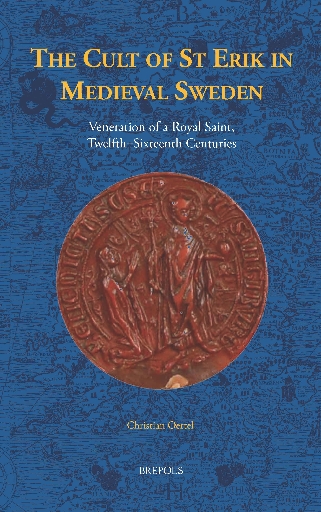
The Cult of St Erik in Medieval Sweden
Veneration of a Royal Saint, Twelfth–Sixteenth Centuries
show More to view fulltext, buy and share links for:The Cult of St Erik in Medieval Sweden show Less to hide fulltext, buy and share links for: The Cult of St Erik in Medieval SwedenIn this first comprehensive monograph on St Erik, the author follows the cult of the Swedish royal saint from its obscure beginnings in the twelfth century up to its climax in the time of the Kalmar Union (1397-1523). The focus of the book lies on the interaction of the cult with different groups within medieval Swedish society and these group’s attempts to utilize the prestige of the saint to further their political aims. From the middle of the thirteenth century, the cult was particularly connected to the archbishopric of Uppsala and the royal dynasty of Bjalbo. During the fifteenth century the Swedish royal saint symbolized (together with St Olaf of Norway and St Knut of Denmark) the three kingdoms of the Kalmar Union. At the same time, his prestige was successfully employed in the propaganda of King Karl Knutsson (Bonde) and the three Sture-riksförestandare to legitimate their anti-Union politics. In order to gain a broader perspective, the author uses a wide variety of sources. These include a number of texts which contain information about the cult of the saint (legend, miracle collection, offices, sermons, chronicles, charters). In addition, different sorts of depictions showing St Erik on wall paintings, altarpieces, seals, and coins are used in order to give a comprehensive account of the multifaceted veneration of this saint.
-
-
-
The Cultural Parameters of the Graeco-Roman War Discourse
show More to view fulltext, buy and share links for:The Cultural Parameters of the Graeco-Roman War Discourse show Less to hide fulltext, buy and share links for: The Cultural Parameters of the Graeco-Roman War DiscourseWhat were the ideas that the ancient Greeks and Romans held about warfare? What do contemporary sources tell us about this? Is it possible to trace a development in the way of thinking about war in antiquity? These are the questions that are discussed (and answered) in this study. It combines a close reading of all the sources that we have - mostly written, like literary and historiographical, but also non-written, like art, monuments and coinage. The analysis of the discourse is accompanied by and contrasted with arguments raised by today’s specialists in the field of warfare and culture of ancient Greece and Rome.
The study treats recurrent cultural themes like courage, fatherland, or victory within a chronological framework, for discourse features cannot be isolated from the context of their time. For each specific period - Greek, Hellenistic and the six parts of the long and diverse Roman time - conclusions are drawn. The remarkable developments in time that can be observed, especially in Rome, are brought together in the final chapter.
-
-
-
The Daughters of Henry II and Eleanor of Aquitaine
show More to view fulltext, buy and share links for:The Daughters of Henry II and Eleanor of Aquitaine show Less to hide fulltext, buy and share links for: The Daughters of Henry II and Eleanor of AquitaineThe three daughters of Henry II and Eleanor of Aquitaine all undertook exogamous marriages which cemented dynastic alliances and furthered the political and diplomatic ambitions of their parents and their spouses. It might be expected that the choices made by Matilda, Leonor, and Joanna with regard to religious patronage and dynastic commemoration would follow the customs and patterns of their marital families, yet in many cases these choices appear to have been strongly influenced by ties to their natal family. Their involvement in the burgeoning cult of Thomas Becket, their patronage of Fontevrault Abbey, the names they gave to their children, and the ways in which they were buried, suggests that all three women were able, to varying degrees, to transplant Angevin family customs to their marital lands.
By examining the childhoods, marriages, and programmes of patronage and commemoration of Matilda, Leonor and Joanna, this monograph compares and contrasts the experiences of three high-profile twelfth-century royal women, and advances the hypothesis that there may have been stronger emotional ties within the Angevin dynasty than has previously been allowed for.
-
-
-

The Death Ritual at Cluny in the Central Middle Ages
Le rituel de la mort à Cluny au Moyen Âge central
show More to view fulltext, buy and share links for:The Death Ritual at Cluny in the Central Middle Ages show Less to hide fulltext, buy and share links for: The Death Ritual at Cluny in the Central Middle AgesThis volume presents a complete reconstruction of the ritual response to terminal illness and death at the monastic community of Cluny at the height of its development in the later eleventh and early twelfth centuries. Based on the best manuscript of the customary of Bernard, the only account of the abbey's customs written at and for Cluny itself, the reconstruction contains not just Bernard's Latin description of the ritual process, but also the full texts of the prayers and chants that accompanied it, gathered, in the absence of surviving ritual books from Cluny itself, from contemporary sources with clear ties to the Cluniac customs. Facing-page English and French translations make the results available to readers with little or no facility in Latin. The author places the Cluniac death ritual in the context of religious responses to death, dying and the care of the dead in medieval Latin Christianity as a whole. He also explicates the origins, development and meaning of the Cluniac death ritual's myriad elements as they were spoken, sung and performed within the sacred spaces of the monastic complex-cloister, chapter house, infirmary, church and cemetery.
Frederick S. Paxton is Brigida Pacchiani Ardenghi Professor of History at Connecticut College, in New London, CT, USA. He is the author of Christianizing Death: The Making of a Ritual Process in Early Medieval Europe (1990), Anchoress and Abbess in Ninth-Century Saxony: the Lives of Liutbirga of Wendhausen and Hathumoda of Gandersheim (2009) and numerous articles and essays on sickness, death, dying and the dead in medieval Europe.
-
-
-
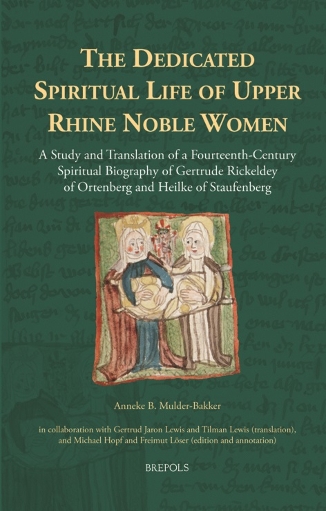
The Dedicated Spiritual Life of Upper Rhine Noble Women
A Study and Translation of a Fourteenth-Century Spiritual Biography of Gertrude Rickeldey of Ortenberg and Heilke of Staufenberg
show More to view fulltext, buy and share links for:The Dedicated Spiritual Life of Upper Rhine Noble Women show Less to hide fulltext, buy and share links for: The Dedicated Spiritual Life of Upper Rhine Noble WomenLady Gertrude Rickeldey of Ortenberg (d. 1335) was a noble widow who lived a spiritual, but secular life in her own household, first in Offenburg and later in Strasbourg, the economic and cultural heart of southern Germany. Her life story was written by a lay woman from Gertrude’s entourage and was based on numerous stories told by Gertrude’s lifelong companion, Heilke of Staufenberg (d. after 1335). The biographer gives us a view of the aristocratic household, reports the many conversations that the women held with fellow believers and learned mendicants, and shows how they led a life of devotion in their own home while also being full citizens of the city, taking part in both the civic and religious politics of Strasbourg. The details of her account reveal that the women did not take vows or renounce their possessions. They did not abandon their own decision-making power. Instead, they were mistresses of their own lives and developed into ethicae of stature.
Following historical investigations into Gertrude’s and Heilke’s life (Part I) is a translation of the fourteenth-century text on which these studies are based (Part II).
-
-
-

The Defence of the Faith
Crusading on the Frontiers of Latin Christendom in the Late Middle Ages
show More to view fulltext, buy and share links for:The Defence of the Faith show Less to hide fulltext, buy and share links for: The Defence of the FaithThis volume focuses on the complex and often overlooked topic of crusading activities and the crusade movement on the fringes of Latin Christendom in the time frame from approximately 1300 to the beginning of the sixteenth century. It covers a period widely considered as a time of significant political, cultural and religious changes in Europe. A period in which Western Christianity was on the one hand still expanding (vide Lithuania and the western Rus and later the Spanish, Portuguese, French and English expansion in the Americas, Africa and South-East Asia) and on the other hand facing two mighty opponents: the Ottoman Empire and Muscovy. On its eastern and southeastern frontiers, Latin Christian expansion came to a gradual halt — here, the West was now largely under siege! Alone the political, logistical and ultimately also military feasibility of a large-scale crusade to liberate Jerusalem had now receded into a purely theoretical and practically almost unenforceable far distance. Ranging in scope from the Baltic Sea region to the Balkans and Iberia, this book’s nineteen papers explore how these developments influenced the continuation and adaptation of crusading ideas and activities during this later period of crusades.
-
-
-
The Depiction of Character in the Chronographia of Michael Psellos
show More to view fulltext, buy and share links for:The Depiction of Character in the Chronographia of Michael Psellos show Less to hide fulltext, buy and share links for: The Depiction of Character in the Chronographia of Michael PsellosCharacter is the single most important feature of the Chronographia written by Michael Psellos (1018-1081?). It is an historical account of the events at court from the time of Basil II (986-1025) to Michael VII Doukas (1071-1078) with the insight of someone whose career developed within the imperial court and his unsurpassed eye for details of personality was enlightened by his intellectual interests. During his lifetime, Psellos was considered the forefront of philosophical studies in the capital and therefore was named consul of philosophers (ὕπατος τῶν φιλοσόφων) in 1047 and he credited himself with reintroducing Plato on the cultural scene of Constantinople. It was his attractive manner of speech which led him to remain in the emperor’s presence and his rhetorical ability also plays an important role in the Chronographia, especially when he emphasizes or fabricates events to justify his understanding of a person’s mind. Many have employed Psellos’ Chronographia for its value in shedding light on historic events, itself important, though it often neglects the fact that Psellos’ historiography is not based on factual details to explain multiple causes for events, but seeks to attribute blame or merit to the personality of the ruling emperor.
Frederick Lauritzen studied classics at New College, Oxford and Columbia University. He has published articles on eleventh century literature as well as the reception of neoplatonism. He is a post-doctoral fellow at the Fondazione per le Scienze Religiose, Bologna.
-
-
-
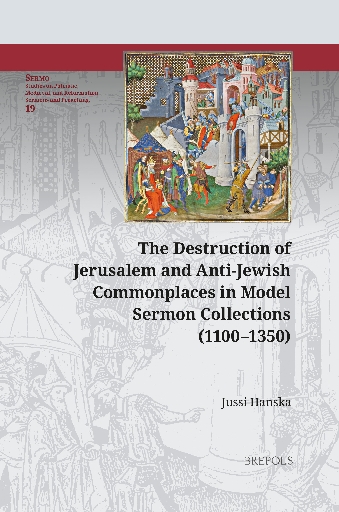
The Destruction of Jerusalem and Anti-Jewish Commonplaces in Model Sermon Collections (1100–1350)
show More to view fulltext, buy and share links for:The Destruction of Jerusalem and Anti-Jewish Commonplaces in Model Sermon Collections (1100–1350) show Less to hide fulltext, buy and share links for: The Destruction of Jerusalem and Anti-Jewish Commonplaces in Model Sermon Collections (1100–1350)This book analyses the diffusion of anti-Judaic stereotypes and topoi in thirteenth- and early fourteenth-century model sermon collections. It concentrates on the sermons on Luke 19.41-48 where Jesus foretells the Destruction of Jerusalem. The preachers took the view that the Destruction of Jerusalem was divine vengeance for the Jews because they killed Jesus. Thus, these sermons were a good venue for those preachers who wanted to preach against the Jews.
Model sermon collections were the closest thing to modern mass media. Consequently, their role in the diffusion of anti-Judaic attitudes was significant. The anti-Judaic writings of the early Church Fathers were only read by few literate church men, whereas model sermons reached the illiterate masses all over Christianity. Therefore, they played a major role in diffusing anti-Judaic attitudes amongst the population at large and thus contributed to the marginalization of the Jews, to various libels, expulsions, violence, and eventually to large-scale pogroms.
-
-
-
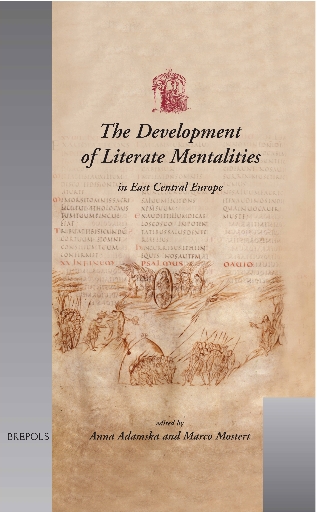
The Development of Literate Mentalities in East Central Europe
show More to view fulltext, buy and share links for:The Development of Literate Mentalities in East Central Europe show Less to hide fulltext, buy and share links for: The Development of Literate Mentalities in East Central EuropeCompared with most of mainland Europe north of the Alps, the introduction of writing in East Central Europe (Bohemia, Poland and Hungary) took place with a considerable delay. Much is known about East Central European uses of writing, although only a fragment of this knowledge is known outside the region. Gathered by historians, palaeographers and codicologists, diplomatists, art historians, literary historians and others, this knowledge has hardly ever been studied in the light of recent discussions on medieval literacy and communication. Work done in the Czech, Polish and Hungarian traditions of scholarship has never been subjected to a comparative analysis. Furthermore, the question of the relation between writing and other forms of communication in the region remains largely unexplored. The volume serves a double purpose. For the first time, a collection of contributions on medieval literacy in East Central Europe is put before the forum of international scholarship. It is also hoped to further discussions of modes of communication, literate behaviour and mentalities among scholars working in the region.
-
-
-
The Didascalia apostolorum: An English version with introduction and annotation
show More to view fulltext, buy and share links for:The Didascalia apostolorum: An English version with introduction and annotation show Less to hide fulltext, buy and share links for: The Didascalia apostolorum: An English version with introduction and annotationThe Didascalia apostolorum is one of the ancient church orders, setting out the duties and responsibilities of laypeople, bishops and widows, regulating the keeping of Pascha and engaging in polemic with Judaism. It is a work of extraordinary interest for the history of the church in Syria, as a document of social and liturgical history and as a document bearing witness to relations between Christians and Jews.
Alistair Stewart-Sykes presents the text in a readable English version which takes full account of the various textual witnesses. Of particular importance is the introduction. The Didascalia is conventionally ascribed to a single hand in third-century Syria, but here an entirely new compositional hypothesis is proposed in which the work is shown to be composite and to include sources of much greater antiquity than the period of final redaction. In the light of the compositional hypothesis there are radically new discussions of ministry (including the ministry of widows), relationships with Judaism, and liturgy (including the penitential process). Beyond this the introduction engages with the social context in which these developments emerged.
The work is suitable for a wide audience. The translation will be useful to undergraduate and graduate students whereas the introduction and commentary will be of interest to scholars in ecclesiastical history, historical liturgy, forming Judaism and Jewish-Christian relations as well as Syriac studies.
The author, Alistair Stewart-Sykes, is well-known in the field having produced the first critical text for over a century of the Apostolic church order and the first full-length commentary on the Apostolic tradition.
-
-
-
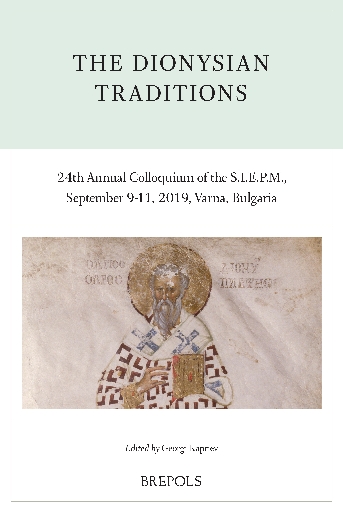
The Dionysian Traditions
24th Annual Colloquium of the S.I.E.P.M., September 9-11, 2019, Varna, Bulgaria
show More to view fulltext, buy and share links for:The Dionysian Traditions show Less to hide fulltext, buy and share links for: The Dionysian TraditionsThe volume contains the contributions of the 24th Annual Colloquium of S.I.E.P.M. "The Dionysian Traditions", which took place in Varna, Bulgaria from September 9 to 11, 2019. The theme of the colloquium is not coincidentally related to the topic of the 9th Annual Colloquium "The Dionysius Reception" (1999 in Sofia, Bulgaria). The aim was to consider the continuity of research and to ensure its new dimensions. The colloquium demonstrated the multifaceted, advanced development of Dionysius research over the past twenty years. The Corpus Dionysiacum exerted an enormous influence on the Christian cultures of the European Middle Ages, which also had and still has an impact on modern times. Focal points of the medieval - Latin and Byzantine - Dionysius traditions are discussed in detail, previously undiscussed topics and perspectives are presented. A large part of the analyses develop a new approach to post-medieval culture and a clearly defined commitment to the current problems of thought and social life. The profoundly analyzed questions and topics convincingly open new horizons for today's science.
-
-
-

The Discoveries of Manuscripts from Late Antiquity
Their Impact on Patristic Studies and the Contemporary World (Conference Proceedings 2nd International Conference on Patristic Studies)
show More to view fulltext, buy and share links for:The Discoveries of Manuscripts from Late Antiquity show Less to hide fulltext, buy and share links for: The Discoveries of Manuscripts from Late AntiquityThis book offers an anthology from the proceedings of the Second International Conference on Patristic Studies, “The Discoveries of Manuscripts from Late Antiquity: Their Impact on Patristic Studies and the Contemporary World”, which took place in San Juan, Argentina, in March 2017. The aim of this event was to analyze and assess 20th- and 21st-century discoveries of manuscripts from Late Antiquity. Indeed, complete libraries of manuscripts, as well as individual documents of great importance for our understanding of historical authors and situations, have come to light after having been buried for millennia. Just some examples are the incredible discoveries of the Nag Hammadi Gnostic library, the Dead Sea Scrolls, Origen of Alexandria’s homilies, and Augustine’s sermons, among others. Rather than being passive documents, these manuscripts pose numerous questions to specialists from a diverse array of fields, demanding new evaluations of a past that was already thought to be understood and judged.
-
-
-
The Donatist Compendium of 427 and Related Texts
Exegetical Materials from a Dissident Communion
show More to view fulltext, buy and share links for:The Donatist Compendium of 427 and Related Texts show Less to hide fulltext, buy and share links for: The Donatist Compendium of 427 and Related TextsThis volume contains the first translation into English of a number of documents associated with the Donatist movement in North Africa, a dissident church which flourished during the fourth and fifth centuries before the Vandal invasion obscures our view of it. Donatists are often remembered for their fanatical opposition to traditores—those who had “handed over” the sacred scriptures during the Diocletianic Persecution—and their belief that those baptized by such people were not part of the true church. The writings contained in this volume add critical nuance to this portrait. At its centerpiece is the Donatist Compendium of 427, a collection of eleven exegetical texts compiled c. 427 CE by an unknown Donatist editor; other translated writings include a chronograph revised on the eve of the Vandal conquest of Carthage known as the Genealogy Book, a set of section-headings for the Major Prophets and the book of Acts, and a Donatist homily on the Epiphany, one of the few sermons by a Donatist preacher that still survives. All of these texts were produced within a Donatist milieu, and taken together, they offer us a unique window into the inner life of the dissident communion as well as valuable insight into the exegetical tools that late antique bishops had at their disposal as they sought to illuminate the biblical text for their congregations.
-
-
-
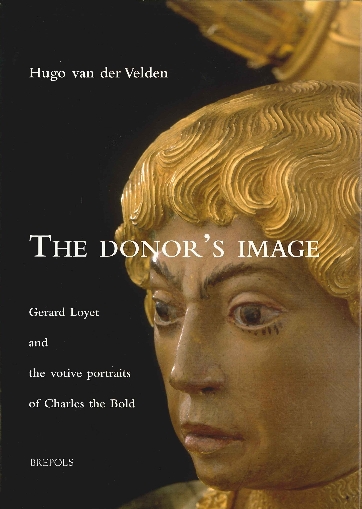
The Donor's Image
Gerard Loyet and the Votive Portraits of Charles the Bold
show More to view fulltext, buy and share links for:The Donor's Image show Less to hide fulltext, buy and share links for: The Donor's ImageThe references to Charles the Bold´s work, which are largely drawn from the accounts of the chambres des comptes at Lille and Brussels, amply illustrate the aesthetic preferences of the Burgundian nobility. All the relevant documents, most of which have not been published before, appear in appendix I. The second part of the book reviews the votive portraits of Charles the Bold. The circumstances surrounding the commission of the Liège statuette - Loyet´s sole surviving work - are discussed in detail, and all documents relating to the statuette are included in appendix II. In the second chapter of part II, the focus is on the statuette´s iconography, which is unique for a votive gift. Charles´s motives are further investigated in the final chapter of part II, which discusses the votive portraits that he donated to other shrines. In the third and final part, the attention shifts to votive gifts, and more specifically to the genre of votive portraits.
-
-
-
The Dormition and Assumption of the Virgin Mary
show More to view fulltext, buy and share links for:The Dormition and Assumption of the Virgin Mary show Less to hide fulltext, buy and share links for: The Dormition and Assumption of the Virgin MaryThis volume includes eight new translations of early Christian narratives about the end of the Virgin Mary’s life, that is, her Dormition and Assumption. Translated from Greek, Latin, Syriac, Ethiopic, Georgian, and Christian Palestinian Aramaic, each of these texts is either translated into a modern language for the first time, or appears in a version that has not previously been published. The texts represent a broad range of the highly diverse early Christian memories of Mary's departure from this world. Likewise, the texts themselves often disclose a range of theological diversity within the early Christian tradition even beyond what scholars have thus far recognized.
-
-
-
The Drama of Reform
Theology and Theatricality, 1461-1553
show More to view fulltext, buy and share links for:The Drama of Reform show Less to hide fulltext, buy and share links for: The Drama of ReformThe Drama of Reform establishes the impact of late medieval and early modern religious reform on dramaturgy. Taking an interdisciplinary approach, it examines the interactions between theatricality and theology across a range of different plays including the Croxton Play of the Sacrament, Jacke Jugeler, John Bale’s Three Laws, and Lewis Wager’s Life and Repentaunce of Mary Magdalene. Tracing the development of arguments concerning the interpretation of the sacraments, the relationship between priests and players, and the use and abuse of imagery and drama in religious worship, The Drama of Reform draws on a rich variety of contextual materials including liturgical texts, heresy trial accounts, dramatic treatises, polemical tracts, and religious laws.
Focussed on the period between Archbishop Arundel’s Constitutions in the fifteenth century and Archbishop Cranmer’s second Book of Common Prayer in the sixteenth, The Drama of Reform explores the phenomenological similarities between drama and certain religious rites, notably the eucharist, and proposes that religious reform prompted attempts to reform dramaturgy. In presenting this analysis, the author argues that while drama continued to function as dramatic propaganda, efforts to initiate new modes of playing were only partially successful.
-
-
-
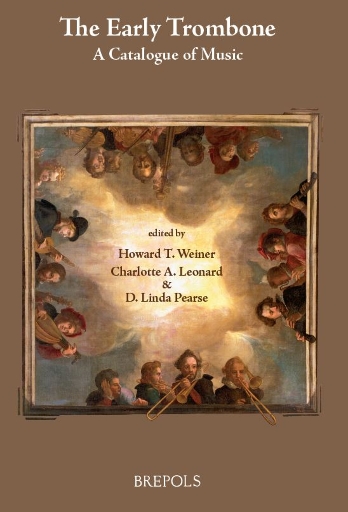
The Early Trombone: A Catalogue of Music
show More to view fulltext, buy and share links for:The Early Trombone: A Catalogue of Music show Less to hide fulltext, buy and share links for: The Early Trombone: A Catalogue of MusicThis catalogue documents nearly 9000 musical works specifying the trombone, from anonymous pieces mentioned in early sixteenth-century writings up to Haydn’s iconic oratorios The Creation and The Seasons on the cusp of the nineteenth century. As such, the catalogue provides a single resource for scholars, trombonists, chamber musicians, and conductors to access instrumental solo and ensemble, as well as choral works specifying trombone from the sixteenth through to the end of the eighteenth century. In compiling this inventory, the authors have personally examined as many of the sources as possible, either the original prints and manuscripts in libraries and archives or copies thereof (microfilm, microfiche, scans, facsimile editions, photocopies, and photos). Relevant text passages from title pages, prefaces, and composer’s performance instructions are given in the original language and in English translation. Annotations discuss attributions, the situation and peculiarities of sources, and relationships to parallel transmissions. Extensive bibliographical information is provided to guide the readers to relevant secondary literature.
The catalogue is divided into three sections: concerted instrumental music (with solo trombone), instrumental music with trombones, and vocal music specifying trombones, with the vocal works representing the largest portion of the repertoire. The compositions range in size from pieces for a single voice with trombone and basso continuo to large-scale sacred and secular polychoral works with multiple trombones.
-
-
-
The Easter Controversy of Late Antiquity and the Early Middle Ages. Its Manuscripts, Texts, and Tables
Proceedings of the 2nd International Conference on the Science of Computus in Ireland and Europe, Galway, 18-20 July, 2008
show More to view fulltext, buy and share links for:The Easter Controversy of Late Antiquity and the Early Middle Ages. Its Manuscripts, Texts, and Tables show Less to hide fulltext, buy and share links for: The Easter Controversy of Late Antiquity and the Early Middle Ages. Its Manuscripts, Texts, and Tables2010 saw the publication of the Proceedings of the 1st International Conference on the Science of Computus in Ireland and Europe, which took place in Galway, 14–16 July, 2006. That first collection, which had the sub-title Computus and its Cultural Context in the Latin West, AD 300–1200, brought together papers by ten of the leading scholars in the field, on subjects ranging from the origins of the Annus Domini to the study of computus in Ireland c. 1100. All those who participated in the Conference were unanimous that a second, follow-up event should be organized, and that duly took place (also in Galway), 18–20 July, 2008. The proceedings of that Conference are published in this current volume. The topics covered in the 2nd Galway Conference ranged from the general – but vitally important – vocabulary of computus (i.e., the technical terminology developed by computists to describe what they were doing) to the origins of the different systems used to calculate the date of Easter in Antiquity and the Early Middle Ages. In addition, there was discussion also of the great debates about Easter, epitomized by the famous Synod of Whitby in AD 664, and the role of well-known individuals in the evolution of computistical knowledge (e.g., Anatolius of Laodicea, the African Augustalis, Sulpicius Severus, Victorius of Aquitaine, Cassiodorus, Dionysius Exiguus, Willibrord, the ninth-century Irish scholar-exile, Dicuil, as well as the late-tenth century Abbo of Fleury). Immo Warntjes is lecturer in Medieval History at the University of Greifswald (Germany). Besides computistics, his main areas of research include the use of languages in Early Medieval Europe, succession to high offices, high and late medieval burial practices, and German, English, and Irish political history and culture. Dáibhí Ó Cróinín lectures in history at NUI, Galway, where he is the Director of The Foundations of Irish Culture project. His research interests are Ireland, Britain and Europe during the Early Middle Ages, computistics, Medieval Latin Palaeography and Irish traditional music and song.
-
-
-
The Emblem Tradition and the Low Countries
Selected Papers of the Leuven International Emblem Conference, 18-23 August, 1996
show More to view fulltext, buy and share links for:The Emblem Tradition and the Low Countries show Less to hide fulltext, buy and share links for: The Emblem Tradition and the Low CountriesAntwerp and Amsterdam were among the most active publishing centres for emblematic forms in Europe during the sixteenth and seventeenth centuries. Nowhere else was the emblematic mode more integrated into the literary and artistic culture than in the Low Countries. The essays are revised versions of papers presented at the Fourth International Emblem Conference held at Leuven in 1996. The table of contents provides an overview of the variety of topics and approaches represented in the volume.
-
-
-
The Emblem and Architecture: Studies in Applied Emblematics from the Sixteenth to the Eighteenth Centuries
show More to view fulltext, buy and share links for:The Emblem and Architecture: Studies in Applied Emblematics from the Sixteenth to the Eighteenth Centuries show Less to hide fulltext, buy and share links for: The Emblem and Architecture: Studies in Applied Emblematics from the Sixteenth to the Eighteenth CenturiesThis publication is a collection of essays on the function and significance of emblematic decoration of buildings in Europe from the sixteenth to the eighteenth century, dealing with general issues involved in architectural emblematics, while a number of the essays are case studies of specific types of building.
The emblematic decoration of buildings, both secular and ecclesiastical, was widespread in Europe from the sixteenth to the nineteenth centuries. The function and significance of such decoration is, however, frequently overlooked. The two introductory essays seek to come to grips with the general issues involved in architectural emblematics. The remaining essays are case studies of specific types of building while the final two consider the relation of architecture to the book. The essays are revised versions of selected papers presented at an international conference on the subject held at the Canadian centre for Architecture in November 1994.
-
-
-
The European Contexts of Ramism
show More to view fulltext, buy and share links for:The European Contexts of Ramism show Less to hide fulltext, buy and share links for: The European Contexts of RamismPierre de la Ramée or Petrus Ramus (1515-1572) has long been a controversial figure in educational reform and innovation, from the moment of his first public academic statements in the 1530s, to his reception among scholars in the twentieth and twenty-first centuries. What is beyond dispute, however, is the vast reach of his influence throughout Europe. Ramus’s ideas were disseminated through copious editions and translations of his own textbooks, and in wave after wave of adaptations and re-imaginings of his ideas that swept across the continent.
This volume embarks on a European tour of Ramism, using a wide range of previously unpublished or untranslated archival evidence from throughout the continent to examine the dissemination of Ramus’s works and his intellectual influence in geographic and in disciplinary terms. The ten chapters explore the spread of Ramism from his home country of France to Protestant strongholds in Germany, Holland, and Britain, and in the Catholic context of the Iberian peninsula. The book also examines Ramism in the less familiar territories (to most Anglophone readers) of Scandinavia and Hungary, and considers the preceding and contemporary Dutch and German educational reform movements from which Ramus borrowed to forge his own distinctive intellectual method.
-
-
-
The Ever-New Tongue – In Tenga Bithnúa
The Text in the Book of Lismore
show More to view fulltext, buy and share links for:The Ever-New Tongue – In Tenga Bithnúa show Less to hide fulltext, buy and share links for: The Ever-New Tongue – In Tenga BithnúaThe Ever-New Tongue (In Tenga Bithnúa) is a medieval Irish account of the mysteries of the universe, remarkable for its exotic background and for the fiery exuberance of its style. This translation, based on the definitive edition of the text, renders this extraordinary work available to a wider readership.
Composed in Ireland in the ninth or tenth century, The Ever-New Tongue purports to reveal the mysteries of the creation, of the cosmos, and of the end of the world, as related by the soul of the apostle Philip speaking in the language of the angels. Drawing on a multitude of sources, both mainstream and heterodox, it reflects the richness of early Irish learning as well as the vitality of its author’s imagination. Two apocryphal texts appear to have inspired its original composition: a lost Egyptian apocalyptic discourse, and one of the segments of the Acts of Philip (a work otherwise unknown in Latin Christendom).
Based on the critical edition of The Ever-New Tongue in the Corpus Christianorum, Series Apocryphorum, this book presents an English translation of the oldest (and most conservative) version of the text, preserved in the Book of Lismore, together with a fully updated introduction.
-
-
-
The Expansion of the Faith
Crusading on the Frontiers of Latin Christendom in the High Middle Ages
show More to view fulltext, buy and share links for:The Expansion of the Faith show Less to hide fulltext, buy and share links for: The Expansion of the FaithThis volume offers a comparative approach to the crusade movement on the frontiers of Latin Christendom in the high Middle Ages, bringing a regional focus to research on these peripheral phenomena. It features several key questions: Which military campaigns were propagated as crusades on the peripheries of the Christian West? What efforts were made to gain recognition for them as crusades and what effects did these have? What value did the crusade movement have for societies at the fines christianitatis? What role did the cruciatae have in strengthening pan-Western sense of togetherness and solidarity, and what role did they have for creation of a crusader and frontier identity? The eighteen papers, ranging in scope from the southern and eastern Baltic regions to Iberia, Egypt and the Balkans, provide new insights into the ways in which crusade rhetoric was reflected in the culture and literature of countries involved in crusading beyond the Holy Land.
-
-
-
The Fabric of the City
A Social History of Cloth Manufacture in Medieval Ypres
show More to view fulltext, buy and share links for:The Fabric of the City show Less to hide fulltext, buy and share links for: The Fabric of the CityTextile industries were one of the driving forces of the urbanisation process in medieval Northwest Europe, and nowhere was their impact so profound as in Flanders, where almost all larger and smaller cities were involved in manufacturing woollens from the 12th to the 16th century. Ypres, the third city in the county, was perhaps the most important concentration of industrial labour and capital in this period. In their heyday in the 13th and 14th centuries Ypres woollens were exported all over Europe and Ypres entrepreneurs and textile workers were able to adapt in very flexible ways to changes in demand. This book investigates not only what the impact of cloth manufacture was on urban society, it also tries to unravel the social mechanisms of industrial development in late medieval cities. It focuses on social inequalities and on the often difficult relationship between the various stakeholders in the urban cloth industry: merchants, entrepreneurs, guild masters and skilled and unskilled workers. Through the analysis work practices, wage levels, investment strategies, gender issues and political aspirations, it unravels how urban industries in the pre-industrial era shaped social relations in the city, how they moulded the urban fabric.
-
-
-
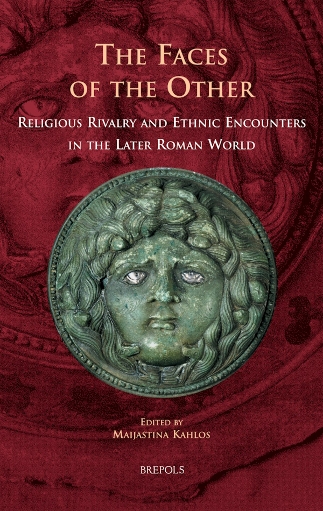
The Faces of the Other
Religious Rivalry and Ethnic Encounters in the Later Roman World
show More to view fulltext, buy and share links for:The Faces of the Other show Less to hide fulltext, buy and share links for: The Faces of the OtherThe foundations of European civilization as we know it today were laid in Late Antiquity and the early Middle Ages. The Faces of the Other: Religious Rivalry and Ethnic Encounters in the Later Roman World traces the roots of the attitudes and argumentation about religious or ethnic otherness in modern western culture. It aims at deepening the historical understanding of attitudes towards otherness as well as cultural and religious conflicts in world history. The Faces of the Other discusses the conceptions, depictions, and attitudes towards the other in Graeco-Roman antiquity. The book focuses on the perception of otherness, whether other peoples or religions, in the Later Roman Empire as understood broadly, from the first until the fifth century CE. These others are ethnic others such as the Persians, Huns, and the Germanic peoples were to Romans, or religious others such as Jews were to Christians or Christians to Jews, Christians to pagans or pagans to Christians, or different cults to the ‘mainstream’ Romans, or different Christian sects to each other.
-
-
-
The Forge of Doctrine. The Academic Year 1330-31 and the Rise of Scotism at the University of Paris
show More to view fulltext, buy and share links for:The Forge of Doctrine. The Academic Year 1330-31 and the Rise of Scotism at the University of Paris show Less to hide fulltext, buy and share links for: The Forge of Doctrine. The Academic Year 1330-31 and the Rise of Scotism at the University of ParisA rare survival provides unmatched access to the the medieval classroom. In the academic year 1330-31, the Franciscan theologian, William of Brienne, lectured on Peter Lombard’s Sentences and disputed with the other theologians at the University of Paris. The original, official notes of these lectures and disputes survives in a manuscript codex at the National Library of the Czech Republic, and they constitute the oldest known original record of an entire university course. An analysis of this manuscript reconstructs the daily reality of the University of Paris in the fourteenth century, delineating the pace and organization of instruction within the school and the debates between the schools. The transcription made during William’s lectures and the later modifications and additions reveal how the major vehicle for Scholastic thought, the written Sentences commentary, relates to fourteenth-century teaching. As a teacher and a scholar, William of Brienne was a dedicated follower of the philosophy and theology of John Duns Scotus (+1308). He constructed Scotist doctrine for his students and defended it from his peers. This book shows concretely how scholastic thinkers made, communicated, and debated ideas at the medieval universities. Appendices document the entire process with critical editions of William’s academic debates (principia), his promotion speech, and a selection of his lectures and sources.
-
-
-
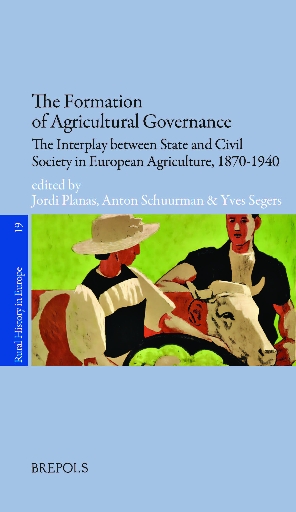
The Formation of Agricultural Governance
The Interplay between State and Civil Society in European Agriculture, 1870-1940
show More to view fulltext, buy and share links for:The Formation of Agricultural Governance show Less to hide fulltext, buy and share links for: The Formation of Agricultural GovernanceThis book unravels how the agricultural sector and the rural world in Europe became more and more organised within capitalism in the years 1870-1940, and this with the aim of tackling the important challenges of the time. The focus is not so much on the myriad of individual farmers’ actions, but on the collective efforts undertaken through the interplay between the state and the agricultural civil society.
A wide variety of actors, from landowners associations, farmers’ unions, cooperatives, scientific institutions and researchers to farmers themselves (or civil society) played a critical role in the process of drafting a policy agenda, developing agricultural policies and were instrumental in implementing them in close relationship with the state. The result was a metamorphosis from mobilisation and representation of agrarian interests to a form of self-government or co-government of the agricultural sector at the national level, which would only reach its highest point after the Second World War.
These issues are explored by established rural historians, covering a period of seven decades (1870-1940). The papers provide a wide geographical perspective, from the north of Europe to the Mediterranean.
-
-
-
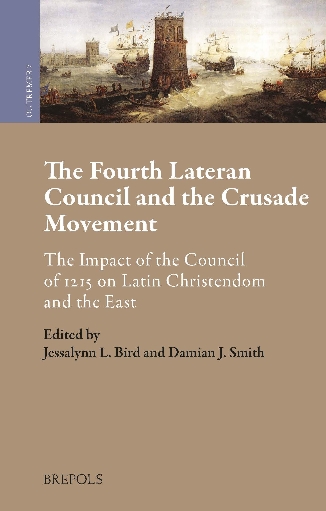
The Fourth Lateran Council and the Crusade Movement
The Impact of the Council of 1215 on Latin Christendom and the East
show More to view fulltext, buy and share links for:The Fourth Lateran Council and the Crusade Movement show Less to hide fulltext, buy and share links for: The Fourth Lateran Council and the Crusade MovementThe Fourth Lateran Council of 1215 is often considered as the high water-mark for the medieval church with its decisions affecting the cultural, social, religious and intellectual history of the later medieval world. The council was also a major event in the history of the crusades not only because the reform of the church and the recovery of the Holy Land were the central concerns of Pope Innocent III (1198-1216) but also because at the time of the council political decisions were made which affected all theatres of crusading and the canons of the council dealt with issues concerning piety and economics which had very long-term implications for the crusading movement. This book, bringing together an international team of scholars, is the first to deal with Fourth Lateran and the crusades in entirety and argues for the centrality of the council in the history of the crusades. It will be of interest not only to scholars of the history of the crusades but also to those interested in the history of the religious life of the Middle Ages as well to students of the particular areas and themes under discussion.
-
-
-
The Fourth Lateran Council and the Development of Canon Law and the ius commune
show More to view fulltext, buy and share links for:The Fourth Lateran Council and the Development of Canon Law and the ius commune show Less to hide fulltext, buy and share links for: The Fourth Lateran Council and the Development of Canon Law and the ius communeThis volume collects essays from an international group of scholars who treat various aspects of the Fourth Lateran Council's placement within the development of the ius commune. Topics include the canon law about armsbearing clergy, episcopal elections, heresy, degrees of affinity within marriage, the oversight of relic veneration; two essays highlight the council's reaction to the Fourth Crusade's sack of Constantinople in trying to incorporate the eastern church into the ecclesiastical structure and liturgical norms of the Roman Church; several essays concentrate on the usage of Roman or civil law in some of Lateran IV's constitutions and emphasize issues of private and procedural law. Collectively, and headed by an essay by Anne J. Duggan on the relationship of Pope Alexander III's pontificate to the Lateran IV constitutions, the essays create a fuller picture of Innocent III and his curia's reliance on developments within the jurisprudence of the preceding half century, but they also reveal the ways in which they forged new paths and made significant contributions to guide canon law in the years following the council.
-
-
-
The French Works of Jofroi de Waterford
show More to view fulltext, buy and share links for:The French Works of Jofroi de Waterford show Less to hide fulltext, buy and share links for: The French Works of Jofroi de WaterfordAt the beginning of the fourteenth century, Jofroi, a brother of the Dominican house of St Saviour’s in Waterford, Ireland, translated into French and adapted from the Latin three texts: the De excidio Troiae of the so-called ‘Dares Phrygius’, the Breviarium historiae romanae of Eutropius, and Pseudo-Aristotelian Secretum secretorum. While the first two, La gerre de Troi and Le regne des Romains are generally close translations, Le secré de secrés is much modified by omissions and interpolations of exempla and scientific material. In his enterprise, Jofroi was aided and abetted by his scribe, the Walloon merchant and custos, Servais Copale. This book is the first critical edition of Jofroi’s œuvre. The texts are accompanied by a general introduction, individual introductions to each of the three texts, extensive notes, a substantial glossary, and an index of proper names. Jofroi and Servais collaborated in Waterford, not Paris, as has long been assumed, and these texts are therefore witness to the importance of French as a literary language in southeastern Ireland.
-
-
-
The Future of the Middle Ages and the Renaissance
Problems, Trends, and Opportunities for Research
show More to view fulltext, buy and share links for:The Future of the Middle Ages and the Renaissance show Less to hide fulltext, buy and share links for: The Future of the Middle Ages and the RenaissanceThis volume, containing a selection of essays from ACMRS's 1996 Conference, reflects a broad range of interests in medieval and Renaissance studies. Although most of the eleven essays address western European topics, one essay deals with Byzantine political and theological histroy, and one touches on Arabic poetry in medieval Sicily. The chronological range is also broad, extending from the seventh to the twentieth century and including topics from an early Byzantine polemicist to the recent growing interest in medievalism, and from critical readings of early texts to implications of computer technology for future manuscript study. In some significant ways the volume continues earlier discussions of the state of the profession, such as those in William D. Paden (ed.), The Future of the Middle Ages, and John Van Engen (ed.), The Past and Future of Medieval Studies. More generally, this second volume in the Arizona series extends the theme of the first, Reinventing the Past, and makes fresh contributions to the scholarship on a number of problems. If the current volume provides a reliable gauge for the future of medieval and Renaissance studies, we are on the verge of new beginnings, increasingly outward-looking, reexamining and redefining old boundaries to reach a new and sharpened understanding of the past.
-
-
-
The Genesis of Books
Studies in the Scribal Culture of Medieval England in Honour of A.N. Doane
show More to view fulltext, buy and share links for:The Genesis of Books show Less to hide fulltext, buy and share links for: The Genesis of BooksThis volume is about the book itself, as shaped and made by medieval scribes and as conditioned by the cultural understandings that were present in the world where those scribes lived. Questions relating to the provenance, compilation, script, function, and use — both medieval and modern — of manuscripts are raised and are resolved in a fresh manner. The focal point of the volume is Anglo-Saxon England, approached as a cultural crossroads east and west, with attention given to English manuscripts produced both before and after the Conquest. The book thus contributes to a reassessment of early English culture as complex, emergent, and multi-stranded.
A number of different literary genres and types are explored, ranging from devotional materials (e.g. psalters, sermons, and illustrated gospel books) to texts of a more worldly orientation. A number of plates illustrate the work of particular scribes. While some beautiful codices are showcased, the emphasis falls on plain books written in English, including the Vercelli Book, the Exeter Book, and the Blickling Homilies. Analyses of the history of palaeography and the theory of editing raise the point that whatever we know from old books is conditioned by the tools used to study them.
-
-
-
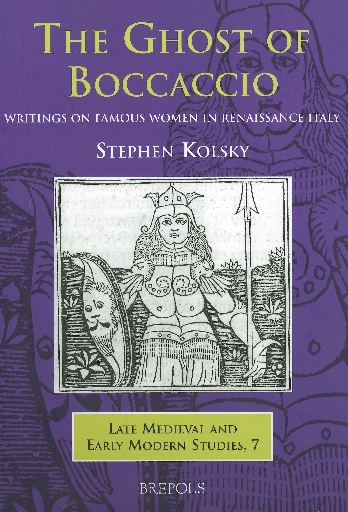
The Ghost of Boccaccio
Writings on Famous Women in Renaissance Italy
show More to view fulltext, buy and share links for:The Ghost of Boccaccio show Less to hide fulltext, buy and share links for: The Ghost of BoccaccioThis major study looks at the heritage and literary transformation of Giovanni Boccaccio’s De mulieribus claris in late-fifteenth and early-sixteenth-century Italy.The monograph is the first full-length study of the new elaborations of women’s role and potential that were being developed in the north Italian courts in this period. The Ghost of Boccaccio presents a sustained textual analysis of a selection of male-authored texts. It treats these texts as highly specific events in the development of the querelle des femmes, or ‘the woman question’, providing an important and often neglected Italian context for this question. By analysing these texts together in one volume, this study places them firmly on the scholarly map. They represent an extraordinary variety of voices seeking to be heard about the status of women in Renaissance Italy, ranging from the most conservative to the truly radical. They provide vital perspectives on constructions of women in the Renaissance. A number of these texts also represent a crucial moment in the development of intellectual strategies to challenge the dominant gender ideologies of Renaissance and early modern Europe. The book will be of interest to scholars and students of Renaissance history and culture, Italian studies, neo-Latin studies, and gender studies.
-
-
-
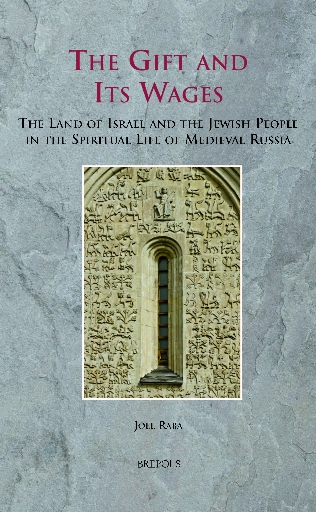
The Gift and Its Wages
The Land of Israel and the Jewish People in the Spiritual Life of Medieval Russia
show More to view fulltext, buy and share links for:The Gift and Its Wages show Less to hide fulltext, buy and share links for: The Gift and Its WagesRespect for the Old Testament and its heritage was an integral feature of Russian medieval culture and played a major role in determining Old Russia’s value system and its attitude toward past and contemporary events. Jerusalem and the Holy Land were ideals, and the Chosen People and Old Testament heroes were role models and standards for both the past and the present. Yet, in its ongoing effort to be recognized as the ‘New Chosen People’ within the family of nations, Old Russia rejected ‘the Other’, that is the descendants of the ‘Old Chosen People’. The almost total absence of Jews in Russia throughout the ancient period, along with the central role played by Jewish tradition in the development of its culture, are a contradiction. This book presents the story of this dichotomy during the Old Russian millennium, from its inception to the late seventeenth century. The material is organized chronologically, beginning with the creation of the Kievan state in the far reaches of the Khazar polity in the ninth century, and ending with the great transformation, the reforms of Peter the Great. This is preceded by a survey of two sources that shaped the image of the land and people of Israel in the erudite world of ancient Russia: a description of the Holy Land by Abbot Daniel in the early twelfth century, and the ancient Slavic translation of Josephus’s Wars of the Jews.
-
-
-
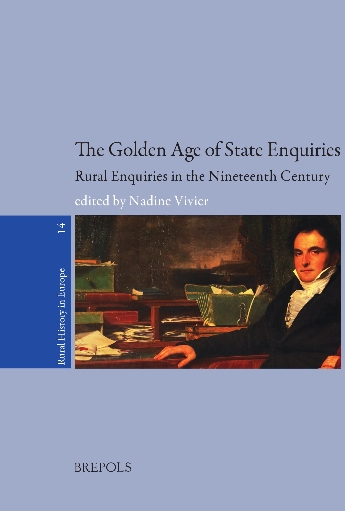
The Golden Age of State Enquiries
Rural Enquiries in the Nineteenth Century. From Fact Gathering to Political Instrument
show More to view fulltext, buy and share links for:The Golden Age of State Enquiries show Less to hide fulltext, buy and share links for: The Golden Age of State EnquiriesAny state intervention in society requires a high degree of knowledge. This is usually given by a state-sponsored enquiry. Some of these surveys can be traced back to Antiquity, but by the nineteenth century enquiries proved to be different because the nature of the state and the distribution of political influence had changed, and the scientific and financial means to investigate had progressed. This new context prompted states to launch large enquiries to assess transformations in the rural world: new techniques, opening to long distance trade. The heart of the nineteenth century was the golden age of state enquiries. Inspired by the nascent sociology, they fulfilled the desire for scientific knowledge accessible to everyone and the search for innovative solutions for the improvement of agriculture and rural life.
The present volume does not focus on the content of the enquiries; it examines their origins and functioning as new and important objects of historical research, with fourteen studies gathered from twelve countries. The main focus is on Western Europe, with broadening perspectives to the East (Ottoman Empire) and West (Canada and Mexico). The international comparative perspectives highlight the importance of transnational cultural transfers in the nineteenth century. French and British methods were considered models of progress and of a civilised state. Statistical methods and the needs of the administration were discussed and adapted in each state according to their conception of state power, in a context of the construction of the nation state.
-
-
-
The Gospel According to Thomas
Introduction, Translation and Commentary
show More to view fulltext, buy and share links for:The Gospel According to Thomas show Less to hide fulltext, buy and share links for: The Gospel According to ThomasThe Gospel According to Thomas is a collection of 114 sayings of Jesus attributed to a certain Didymus Judas Thomas. For scholars, the text has much to offer for the study of early Christian literature, history, and theology. This enigmatic collection of sayings is part of a series of tractates in the Nag Hammadi Codices, which were found in Egypt in 1945. Since the discovery of the Gospel According to Thomas, scholars have endeavoured to uncover the place of writing and the sources of these sayings, which in some cases are similar to those found in the synoptic gospels and other New Testament writings, as well as in several early Christian texts. Without neglecting nor negating this important historical research on the Gospel According to Thomas, this new translation accompanied by a commentary focuses on another aspect that has been given less attention in scholarship, namely that of a synchronic reading and interpretation of the text. The main question this book attempts to answer is: What does the Gospel According to Thomas actually mean?
-
-
-
The Gothic Missal
show More to view fulltext, buy and share links for:The Gothic Missal show Less to hide fulltext, buy and share links for: The Gothic MissalThe Missale Gothicum provides unique evidence relating to the liturgy of early medieval Gaul around 700 ad and offers insight into the development of the Latin language in this key period of Latinity. Its significance may therefore not be underestimated. The codex in which the text is transmitted, now preserved in the Vatican Library (Vat. reg. lat. 317), comprises the prayers for Mass for the entire liturgical year as recited by the celebrant, most probably the bishop of Autun. The Gothic Missal is the only surviving source of many rites and commemorations that characterise the specific liturgical tradition of late antique and early medieval (Merovingian) Gaul. At the same time, the codex is the earliest known source of a number of liturgical texts still in use in the liturgy of the Western Church, such as the Easter hymn Exultet and prayers featuring in Baptismal rites. This first integral English translation of the text is intended to make its sometimes rather obscure Latin more accessible to scholars of medieval liturgy (musicologists, religious and social historians) and of medieval Latin, as well as to new generations of students interested in the history and religious culture of the Middle Ages. Moreover, it is the hope of the author of the present volume to address a broad audience of interested readers, academic and otherwise, by opening up to them the unique and colourful world of late antique and early medieval liturgical life and its significance until the present day.
The source text of this volume appeared in the series Corpus Christianorum Series Latina as Missale Gothicum (CCSL 159D). References to the corresponding pages of the edition are provided in the margins of the present translation.
-
-
-
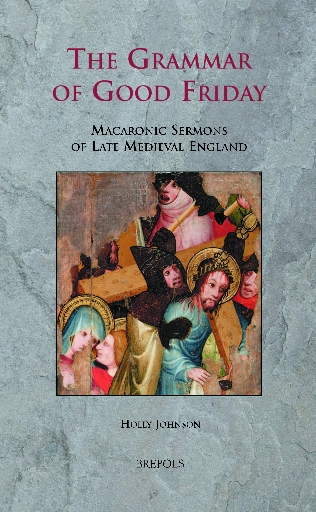
The Grammar of Good Friday
Macaronic Sermons of Late Medieval England
show More to view fulltext, buy and share links for:The Grammar of Good Friday show Less to hide fulltext, buy and share links for: The Grammar of Good FridayThis volume offers a study of Good Friday preaching and an edition (with modern translation) of five highly imaginative, rhetorically sophisticated macaronic (mixed Latin and Middle English) Good Friday sermons preached in late medieval England (c. 1350-1450). The study investigates the way medieval preachers made use of popular topoi and popular categorizations, reworking and recombining well-known material to create new sets of associations and images. The features that these sermons share with other genres, such as Passion plays, meditative treatises, and Middle English lyrics, reveal the rich cross-fertilization of this material and the cultural pervasiveness of topoi and images we often associate with literary works such as Piers Plowman. The sermons in this edition, all but one previously unavailable, increase our understanding of the medieval art of memory, the relationship between verbal and visual images, affective piety, and medieval rhetoric. Finally, all five of the sermons edited are macaronic, two of them switching between Latin and Middle English within almost every sentence; they thus offer a significant witness to this curious linguistic phenomenon. This volume presents new and rich source material and places this material into its wider cultural contexts with a detailed investigation of the rhetorical dimensions and intended effects of late medieval Good Friday preaching.
-
-
-
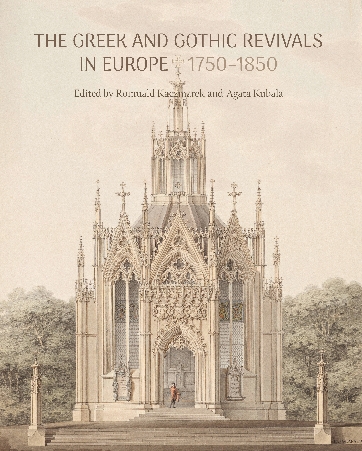
The Greek and Gothic Revivals in Europe 1750–1850
show More to view fulltext, buy and share links for:The Greek and Gothic Revivals in Europe 1750–1850 show Less to hide fulltext, buy and share links for: The Greek and Gothic Revivals in Europe 1750–1850This book combines the Greek and Gothic Revival phenomena in the period between 1750 and 1850, showing the common cultural background of these artistic trends referring to the past. It presents examples from almost all over Europe. In addition to the introductory text problematizing the idea, there are studies of more detailed issues - topographic shots presenting the aforementioned phenomena within artistic regions, presentations of projects undertaken by outstanding personalities of the era, as well as analyses of individual assumptions or works.
-
-
-
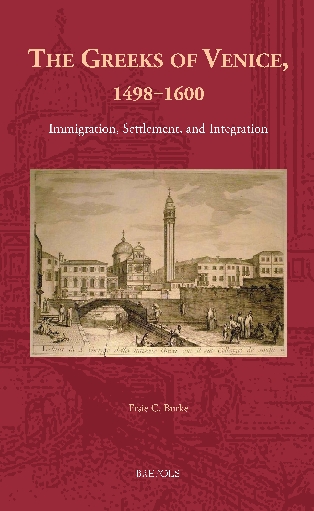
The Greeks of Venice, 1498–1600
Immigration, Settlement, and Integration
show More to view fulltext, buy and share links for:The Greeks of Venice, 1498–1600 show Less to hide fulltext, buy and share links for: The Greeks of Venice, 1498–1600People have always immigrated in search of better working and living conditions, to escape persecution, reconnect with family, or simply for the experience. This volume traces the history of Venice’s Greek population during the formative years between 1498 and 1600 when thousands left their homelands for Venice. It describes how Greeks established new communal and social networks, and follows their transition from outsiders to insiders (though not quite Venetians) through an approach that offers a comparative perspective between the ‘native’ and the immigrant. It places Greeks within the context of multi-cultural, multi-ethnic, and multi-lingual Venice. Personal stories are interwoven throughout for a more intimate account of how people lived, worked, prayed, and formed new social networks. These accounts have been drawn from a variety of sources collected from the Venetian state archives, the archives of the Venetian church, and documentation held by the Hellenic Institute of Venice. Notarial documents, petitions, government and church records, registries of marriages and deaths, and census data form part of the collected material discussed here. Above all, this study aims to reconstruct the lives of the largest ethnic and Christian minority in early modern Venice, and to trace the journey of all immigrants, from foreigner to local.
-
-
-

The Heresy of the Brothers, a Heterodox Community in Sixteenth-Century Italy
show More to view fulltext, buy and share links for:The Heresy of the Brothers, a Heterodox Community in Sixteenth-Century Italy show Less to hide fulltext, buy and share links for: The Heresy of the Brothers, a Heterodox Community in Sixteenth-Century ItalyAround the mid-sixteenth century, one of the largest Italian heterodox communities developed in Modena: the community of ‘Brothers’. At the beginning of the century, a flourishing humanistic tradition had inspired protests against the authority of the Church and had led many of the city’s prominent figures to sympathize with Luther and the Reformation. Over the following decades, such positions became more extreme: most of the ‘Brothers’ held radical convictions, ranging from belief in predestination to contestation of the Antichrist pope. In some cases, the ‘Brothers’ even went so far as to deny the value of baptism.
This heterodox community in Modena created a hidden network for the free expression of its reformed faith. Within twenty years, however, the election of Pope Pius V (1566-1572) and the consolidation of the Holy Office led to a harsh campaign to disperse dissenters in the city. Despite the protection of illustrious members of the Roman Catholic hierarchy, the bishops of Modena, and the dukes of Ferrara, the Holy Office succeeded in repressing the community. The history of the ‘Brothers’ of Modena therefore provides a case study for understanding how the Inquisition influenced the balance of religious Italy, changing the face of the Peninsula forever.
-
-
-
The Hermeneutical Jew
Essays on Inter-Religious Encounters in Honour of Jeremy Cohen
show More to view fulltext, buy and share links for:The Hermeneutical Jew show Less to hide fulltext, buy and share links for: The Hermeneutical JewThe interconnected histories of Judaism and Christianity are explored in this compelling volume honouring the influential work of Jeremy Cohen. Cohen’s pioneering studies have reshaped our understanding of these religious traditions, emphasizing the crucial role of cross-religious engagements in forming their self-perceptions and identities.
Comprising fifteen chapters, the book is organized into four thematic sections. The first section, Literary Mirrors and Inter-Religious Representations, explores patterns of internalizations, (mis)representations, and appropriations between competing religious traditions. The second section, Physical and Figurative Encounters, addresses the roles played by visible and physical markers in setting interreligious boundaries and exchanges. The third section, Agents of Anti-Jewish Discourse, focuses on Christian thinkers of the late Middle Ages who propagated anti-Jewish measures or prejudices across different genres and causes. The final section, The Transformability of the Jews and the Hermeneutics of Inter-Religious Conversion, examines the cultural and intellectual impact of different efforts to convert Jews and Jewishness.
This collection of new studies by leading medievalists serves as a fitting tribute to Jeremy Cohen’s groundbreaking contributions and offers readers an insightful look into the complex world of medieval and early modern religious identity.
-
-
-
The Hidden Life of Textiles in the Medieval and Early Modern Mediterranean
Contexts and Cross-Cultural Encounters in the Islamic, Latinate and Eastern Christian Worlds
show More to view fulltext, buy and share links for:The Hidden Life of Textiles in the Medieval and Early Modern Mediterranean show Less to hide fulltext, buy and share links for: The Hidden Life of Textiles in the Medieval and Early Modern MediterraneanThe book contains published papers of the conference 'Textiles & Identity in the Medieval and Early Modern Mediterranean: Paradigms of Contexts and Cross-Cultural Exchanges' of the British School at Athens held at the (Benaki) Museum of Islamic Art in 2016, as well as some new contributions.
The focus in this wide-ranging collection of studies by key scholars in the field is on textiles and their functions in various Mediterranean contexts (and beyond) during medieval and post-medieval times (ca. 10th-19th c.). The scope of the contributions encompasses archaeological, anthropological and art historical perspectives on a great variety of subjects, such as textiles from the Byzantine Empire and the Medieval Islamic World (e.g. Spain, Mamluk Egypt, Seljuk Anatolia), as well as the production and use of textiles in Italy, the Ottoman Empire, Armenia and Ethiopia. The volume offers a state-of-the-art of an often still hardly known area of study of textiles as historical and cultural sources of information, which makes it essential reading for scholars and a larger audience alike.
The book includes contributions by Laura Rodríguez Peinado, Ana Cabrera-Lafuente, Avinoam Shalem, Scott Redford, Maria Sardi, Vera-Simone Schulz, Nikolaos Vryzidis, Marielle Martiniani-Reber, Elena Papastavrou, Jacopo Gnisci and Dickran Kouymjian.
-
-
-
The Historic Landscape of Catalonia
Landscape History of a Mediterranean Country in the Middle Ages
show More to view fulltext, buy and share links for:The Historic Landscape of Catalonia show Less to hide fulltext, buy and share links for: The Historic Landscape of CataloniaThe landscape around us is largely the result of man-made transformations. It consists of villages, farmsteads, cities, fields, ditches, and roads. This book examines how the landscape of the Mediterranean country of Catalonia was created and transformed. Although Catalonia’s history goes back before the Middle Ages, it was during the medieval period that it saw significant development, which has continued ever since. Understanding the landscape helps us understand political, social, economic, and cultural changes. In this book we discover how the settlements built around a castle or a church were created, and what the open villages and new towns were like, both in Catalonia and in neighbouring territories. The book also explores the formation of cities and towns as well as the significance of hamlets and farmsteads, based on data provided by written documents and archaeological excavations. It also explores the formation of fields, ditches, and irrigated areas, and shows the importance of understanding the boundaries and demarcations that enclose valleys, villages, castles, and parishes. Finally, special attention is devoted to place names and cartography, as these shed light on numerous historical realities.
-
-
-
The Historical and Cultural Memory of the Babylonian World
Collecting Fragments from the 'Centre of the World'
show More to view fulltext, buy and share links for:The Historical and Cultural Memory of the Babylonian World show Less to hide fulltext, buy and share links for: The Historical and Cultural Memory of the Babylonian WorldIn the study of the ancient world, Babylon can be considered as the most impressive representation, historically, archaeologically, and in literature, of urbanism in the Near East. This first example of an urban centre and its cultural heritage - both tangible and intangible - provides a focal point for discussions of historical and cultural memory in the region. The eleven contributions gathered here draw together multidisciplinary research into Babylonian culture, exploring the epistemic foundations, contacts, resilience, and cultural transmission of the city and its milieu from ancient times up until the modern day. Through this approach, this volume is able to support conversations concerning the historical and cultural memory of Babylon and promote a dialogue that cuts across, and unites, both cultures and academic disciplines.
-
-
-
The History and Pottery of a Middle Islamic Settlement in the Northwest Quarter of Jerash
Final Publications from the Danish-German Jerash Northwest Quarter Project V
show More to view fulltext, buy and share links for:The History and Pottery of a Middle Islamic Settlement in the Northwest Quarter of Jerash show Less to hide fulltext, buy and share links for: The History and Pottery of a Middle Islamic Settlement in the Northwest Quarter of JerashIn 2015, the Danish-German Northwest Quarter Project working in Jerash uncovered a Middle Islamic farmstead. Subsequent excavations revealed that this settlement, far from marking a decline at the site, is in fact indicative of a broader active and dynamic rural community living within the ancient urban landscape of Jerash.This volume offers an in-depth focus on this Islamic settlement, with a particular focus on the ceramic material yielded by the site, which is here fully quantified and contextually analysed alongside historical sources. Through this approach, the author has reconstructed a new synthesis of Middle Islamic settlement history, shedding new light on the economic and social structures of a rural community in northern Jordan, as well as establishing a typology that can be used to refine the chronologies of Middle Islamic Jerash.
-
-
-
The History of the Physiologus in Early Medieval England
show More to view fulltext, buy and share links for:The History of the Physiologus in Early Medieval England show Less to hide fulltext, buy and share links for: The History of the Physiologus in Early Medieval EnglandThe Physiologus is the ancestor of the bestiary, a collection of chapters describing animal qualities and behaviours, usually with an allegorical meaning, which proliferated especially in England in the late Middle Ages. While much scholarly attention has been directed to the bestiary, the history of the transmission of the Physiologus has hardly been investigated. Evidence of the circulation of this treatise in the early medieval period is certainly scanty, since only two brief versions dating from this period have been preserved, one in Old English and another one in Latin. However, this monograph shows further proof of the knowledge of the Physiologus in Anglo-Saxon England. It also reveals the relationship of the only two surviving texts and their connection to the main Continental recension of the time. This study therefore demonstrates that the popularity of bestiaries in the later Middle Ages was largely due to the prominence that its predecessor, the Physiologus, enjoyed in the preceding period.
-
-
-
The Homiliary of Paul the Deacon
Religious and Cultural Reform in Carolingian Europe
show More to view fulltext, buy and share links for:The Homiliary of Paul the Deacon show Less to hide fulltext, buy and share links for: The Homiliary of Paul the DeaconAs one of the most widely used products of Charlemagne’s religious and cultural reforms, the homiliary of Paul the Deacon is a unique monument in the history of Western Europe. Completed around AD 797, this collection of patristic homilies and sermons shaped the religious faith and liturgical practices of the churches in Carolingian Europe and those of countless other churches over the course of a millennium of use.
Until now, scholarly study of the homiliary has rested on seven partial witnesses to the collection. This study, however, draws on over 80 newly identified witnesses from the Carolingian period, while providing a brief guide and handlist to hundreds of later manuscripts. It replaces the current scholarly reconstruction of the homiliary, discusses the significance of the collection’s liturgical structure and provisions, and considers the composition of the homiliary in the context of Charlemagne’s reforms and Paul’s patron-client relationships. The study also brings together evidence for the production and use of this text in thirty-three Carolingian monasteries, cathedrals, and churches.
The book then addresses the homiliary’s theological character: the contents of the homiliary reflected a concern for expressing and defending orthodox doctrine at Charlemagne’s court against Trinitarian and Christological heresies, as well as an urgent attention to moral reform in the light of a belief in the imminence of divine judgement. Finally, the study demonstrates the varied uses of Paul’s collection and its historical legacy.
-
-
-

The Idea of the Gothic Cathedral
Interdisciplinary Perspectives on the Meanings of the Medieval Edifice in the Modern Period
show More to view fulltext, buy and share links for:The Idea of the Gothic Cathedral show Less to hide fulltext, buy and share links for: The Idea of the Gothic CathedralCentral to many medieval ritual traditions both sacred and secular, the Gothic cathedral holds a privileged place within the European cultural imagination and experience. Due to the burgeoning historical interest in the medieval past, in connection with the medieval revival in literature, visual arts, and architecture that began in the late seventeenth century and culminated in the nineteenth, the Gothic cathedral took centre stage in numerous ideological discourses. These discourses imposed contemporary political and aesthetic connotations upon the cathedral that were often far removed from its original meaning and ritual use.
This volume presents interdisciplinary perspectives on the resignification of the Gothic cathedral in the post-medieval period. Its contributors, literary scholars and historians of art and architecture, investigate the dynamics of national and cultural movements that turned Gothic cathedrals into symbols of the modern nation-state, highlight the political uses of the edifice in literature and the arts, and underscore the importance of subjectivity in literary and visual representations of Gothic architecture. Contributing to scholarship in historiography, cultural history, intermedial and interdisciplinary studies, as well as traditional disciplines, the volume resonates with wider perspectives, especially relating to the reuse of artefacts to serve particular ideological ends.
-
-
-
The Ideological Foundations of Early Irish Law and Their Reception in Anglo-Saxon England, c. 600–c. 900
show More to view fulltext, buy and share links for:The Ideological Foundations of Early Irish Law and Their Reception in Anglo-Saxon England, c. 600–c. 900 show Less to hide fulltext, buy and share links for: The Ideological Foundations of Early Irish Law and Their Reception in Anglo-Saxon England, c. 600–c. 900Old Testament Levites who considered the Law of Moses to be the living law: this has long been the established view among many scholars for how early Irish jurists perceived themselves, as well as how they saw the broader theoretical and religious bases of their jurisprudence. In this volume, however, Kristen Carella offers a timely reassessment of scholarly opinion, exploring Irish legal texts within the broader context of both vernacular Irish and Hiberno-Latin literature to argue that early Irish Christian intellectuals in fact saw themselves as gentile converts, subscribing to an orthodox Christian faith that was deeply infused with Pelagian theology.
Certain aspects of Irish legal ideology, particularly Irish views of divine history and pseudo-historical ideas about their own ethnogenesis, moreover, extended out of Ireland and into Anglo-Saxon England; their impact can be seen on lawmakers such as Alcuin, when he helped draft the Anglo-Latin Legatine Capitulary of 786, and King Alfred of Wessex, when he composed the Old English prologue to his law code in the late-ninth century. Through this approach, this volume not only challenges long-held scholarly views on Irish legal ideology and its influences beyond Ireland, but also provides a new paradigm for intellectual relations between early medieval Ireland and England.
-
-
-
The Image of the City in Early Netherlandish Painting (1400-1550)
show More to view fulltext, buy and share links for:The Image of the City in Early Netherlandish Painting (1400-1550) show Less to hide fulltext, buy and share links for: The Image of the City in Early Netherlandish Painting (1400-1550)Painted cityscapes have always captivated the viewers of medieval works of art. To this day scholars are mesmerised by their capacity to mirror the urban context from which they sprang, combined with their ability to symbolize a more abstract world view, religious idea or social ideal. Especially oil painting, which thrived in the fifteenth-century Low Countries among a heterogeneous elite and the well-off urban middling groups, succeeded as no other medium in capturing the urban landscape in its finest details. In order to gain an insight into how late medieval citizens, clerics and noblemen conceived of urban society and space, this book combines a serial analysis of a large corpus of painted city views with a critical discussion of some well-documented and revealing works of art. Throughout the book a variety of questions are addressed, ranging from the religious conception of the city, the theatrical dimension of urban space, the extent to which Early Netherlandish painting depicted the city as an economic space, how images of city and countryside functioned as identity markers of the donor, and how technical advances in the field of cartography impacted the portrayal of towns in the sixteenth century. In doing so, this study explores the duality of some of the major interpretive schemes that have determined the last few decades of historiography on late medieval Netherlandish culture, oscillating between bourgeois and courtly, realistic and symbolic, profane and religious, and innovative versus traditional.
-
-
-
The Imagery and Aesthetics of Late Antique Cities
show More to view fulltext, buy and share links for:The Imagery and Aesthetics of Late Antique Cities show Less to hide fulltext, buy and share links for: The Imagery and Aesthetics of Late Antique CitiesWhile the role of the city in Late Antiquity has often been discussed by archaeologists and historians alike, it is only in recent years that scholarship has begun to offer a more nuanced approach in our understanding to how such cities functioned, stepping away from the traditional paradigm of their decline and fall with the collapse of the Roman Empire. In line with this approach, this deliberately interdisciplinary volume seeks to provide a more multifaceted understanding of urban history by drawing together scholars of literary and material culture to discuss the concepts of imagery and aesthetics of late antique cities.
Gathering together contributions by historians, philologists, archaeologists, literature specialists, and art historians, the volume aims to explore the imagery and aesthetics of cities in Late Antiquity within a strong theoretical framework. The different chapters explore the aesthetics of cityscape representations in literature and art, asking in particular whether literary representations of late antique urban landscapes mirror the urban reality of eclectic ensembles of pre-existing architecture and new buildings, as well as questioning both how the ideal of the city evolved in the imagination of the period and if imperial ideology was reflected in literary depictions of cities.
-
-
-

The Indies and the Medieval West
Thought, Report, Imagination
show More to view fulltext, buy and share links for:The Indies and the Medieval West show Less to hide fulltext, buy and share links for: The Indies and the Medieval WestWinner of The European Society for the Study of English - Book Award 2014 (Cultural Studies in English - Junior scholars)
This volume offers a wide-ranging and interdisciplinary treatment of European representations of the Indies between the twelfth and the fifteenth centuries. Drawing on encyclopaedias, cosmographies and cartography, romance, hagiography, and legend, it traces the influence of classical, late antique, and early medieval ideas on the later medieval geographical imagination, including the imagined and experienced Indies of European travellers. Addressing the evidence of Latin and vernacular manuscripts, the book explores readers’ encounters with the most widely read travellers’ accounts, in particular, those of Marco Polo, Odorico da Pordenone, and Niccolò Conti. Chapters on The Book of Sir John Mandeville, medieval Europe’s most idiosyncratic yet popular work of geography, alongside world maps produced across Europe, point to the ways in which representations of the Indies were inflected by temporal concerns, specifically, their relationship to Latin Christendom’s past, present, and future. The Indies relates the texts, documents, maps, and manuscripts it discusses closely to the changing ideological concerns of their times, notably those of mission and conversion, crusade, conquest, and economics. Nonetheless, the relationships that the work delineates between spatial representations and notions of dominance, whether religious, political, economic, or epistemic, have implications for the post-medieval world.
-
-
-
The Ingholt Archive
The Palmyrene Material, Transcribed with Commentary and Bibliography
show More to view fulltext, buy and share links for:The Ingholt Archive show Less to hide fulltext, buy and share links for: The Ingholt ArchiveFor a period of over 50 years, from his first visit to Palmyra in the 1920s until the late 1970s, Danish archaeologist Harald Ingholt carefully collected and curated a detailed archive of Palmyrene sculpture, architecture, and epigraphy. Containing approximately 2000 images, each archive sheet contains handwritten annotations on Palmyrene funerary art, transcribes and translates inscriptions, includes detailed observations on object style and dating, and provides bibliographical information for each sculpture. As such, this archive is a treasure trove of information on Palmyrene sculpture, architecture, and epigraphy. Moreover, Ingholt’s notes go beyond shedding light on the creation of these sculptures, and also provide rich information about their more recent histories: object biographies offer details on provenance, collection history, and excavation photography. In doing so, they offer unique insights into twentieth-century excavation, conservation, and collection practices. Since 1983, Ingholt’s archive has been housed at the Ny Carlsberg Glyptotek in Copenhagen, Denmark, and then, from 2012 onwards, the archive took digital shape within the framework of the Palmyra Portrait Project at Aarhus University. Now available in print for the first time, the Ingholt Archive is here presented in its entirety as a lavishly illustrated four-volume set. The authors have transcribed and commented upon each sheet in the archive, provided new translations of the inscriptions that accompany the sculptures, and compiled an updated bibliography for each item. This unique set is published together with a detailed introduction, thirteen concordances, and a bibliography, making it an invaluable resource for researchers in the field.
-
-
-
The Introduction of Christianity into the Early Medieval Insular World
Converting the Isles I
show More to view fulltext, buy and share links for:The Introduction of Christianity into the Early Medieval Insular World show Less to hide fulltext, buy and share links for: The Introduction of Christianity into the Early Medieval Insular WorldConversion to Christianity is arguably the most revolutionary social and cultural change that Europe experienced throughout Late Antiquity and the early Middle Ages. Christianisation affected all strata of society and transformed not only religious beliefs and practices, but also the nature of government, the priorities of the economy, the character of kinship, and gender relations. It is against this backdrop that an international array of leading medievalists gathered under the auspices of the Converting the Isles Research Network (funded by the Leverhulme Trust) to investigate social, economic, and cultural aspects of conversion in the early medieval Insular world, covering different parts of Britain, Ireland, Scandinavia, and Iceland.
This is is the first of two volumes showcasing research generated through the ‘Converting the Isles’ Network. This volume focuses on specific aspects of the introduction of Christianity into the early medieval Insular world, including the nature and degree of missionary activity involved, socio-economic stimulants for conversion, as well as the depiction and presentation of a Christian saint. Its companion volume has the transformation of landscape as its main theme. By adopting a broad comparative and crossdisciplinary approach that transcends national boundaries, the material presented here and in volume II offers novel perspectives on conversion that challenge existing historiographical narratives and draw on up-to-date archaeological and written evidence in order to shed light on central issues pertaining to the conversion of the Isles.
-
-
-
The Invention of Middle English
An Anthology of Sources, 1700-1864
show More to view fulltext, buy and share links for:The Invention of Middle English show Less to hide fulltext, buy and share links for: The Invention of Middle EnglishIn accounts of the emergence of medieval studies in the post-medieval period, the growth of the discipline of Middle English has so far not been fully charted. This study provides the principal source materials for the study of the formation of Middle English, most of which are rare and difficult to obtain. It enables the detailed study of the key documents in the growth of Middle English - gathered together for the first time. It will also enable the setting of courses in this field. Each extract is preceded by a full histroical and critical introduction and bibliography; any passages in late Latin and German are translated.
-
-
-
The Jagiellon Dynasty, 1386‑1596
Politics, Culture, Diplomacy
show More to view fulltext, buy and share links for:The Jagiellon Dynasty, 1386‑1596 show Less to hide fulltext, buy and share links for: The Jagiellon Dynasty, 1386‑1596The volume offers a re-examination of the rise of the Jagiellon dynasty in medieval and early modern Central Europe. Originating in Lithuania and extending its dominion to Poland, Hungary, and Bohemia, the Jagiellon dynasty has left an enduring legacy in European history. This collection of studies presents the Jagiellons as rulers with dynamic and negotiated authority. It begins with the dynasty’s origins and its dynastic union with Poland, milestones that have shaped the political and cultural trajectory of the dynasty’s reign. The volume places significant emphasis on the role of royal consorts, thereby broadening traditional gender-focused perspectives. Far from being mere accessories, queens had a considerable influence on governance, economic matters, and diplomacy. The cultural impact of Jagiellon rule is analysed through interactions with humanists and the intellectual milieu of the court. The performative aspects of Jagiellon power, including the use of words, gestures, and even intentional silences, are examined as powerful tools of articulation. Emotional factors that influence governance and intricate dynastic relationships are explored, revealing how political decisions, especially constitutional reforms, are made more rapidly when faced with perceived dynastic vulnerabilities. In Poland, the rise of parliamentary institutions under the earlier Jagiellon monarchs epitomises the concept of negotiated authority, underscoring the growing political role of the nobility. This volume thus provides a multi-faceted and nuanced understanding of the Jagiellon dynasty’s legacy in political, cultural, and gender-related spheres, enhancing understanding of European history.
-
-
-
The Jesuits and the Emblem Tradition
Selected Papers of the Leuven International Emblem Conference, 18-23 August, 1996
show More to view fulltext, buy and share links for:The Jesuits and the Emblem Tradition show Less to hide fulltext, buy and share links for: The Jesuits and the Emblem TraditionThe publication incorporated selected papers concerning the emblematic books published by the Jesuits during the sixteenth and seventeenth centuries in the Spanish Netherlands where they were more active than anywhere else.
Jesuits published more emblematic books than any other group during the sixteenth and seventeenth centuries. And they were probably more active in both the print and material culture in the Spanish Netherlands than anywhere else. The essays are revised versions of papers presented at the Fourth International Emblem Conference held at Leuven in 1996. The table of contents provides an overview of the variety of topics and approaches represented in the volume.
-
-
-
The Jews of Europe in the Middle Ages (Tenth to Fifteenth Centuries)
Proceedings of the International Symposium held at Speyer, 20-25 October 2002
show More to view fulltext, buy and share links for:The Jews of Europe in the Middle Ages (Tenth to Fifteenth Centuries) show Less to hide fulltext, buy and share links for: The Jews of Europe in the Middle Ages (Tenth to Fifteenth Centuries)The Jews of Europe in the Middle Ages presents the proceedings of an international symposium held at Speyer (Germany) in October, 2002. The collection aims at a comprehensive (and comprehensible) overview describing the variety of historical experience for European Jewries from c. 1000 to c. 1500. Leading European historians firmly based in regional, archival research have here been brought together with a number of Israeli and American scholars who concentrate on legal and constitutional aspects of the Jewish community. Historians working on medieval Mediterranean Jewries (Sicily, Spain, Provence, etc.) and those studying the northern communities (England, Northern France, and Ashkenaz) present their findings in a single, one-language collection. Regional overviews are supplemented by studies on cultural, economic, social, and linguistic aspects as well as by portraits of individual (northern) Jewish communities. The collection highlights the similarities and differences among the various European Jewish cultures, demonstrating that these cultures were no less European than they were Jewish. At the same time, the Jewish heritage has deeply influenced medieval and modern European majority cultures. This cultural symbiosis was epitomized in the European Jewish community (kahal, aljama).
-
-
-
The Johannine Tradition in Late Antique and Medieval Poetry
show More to view fulltext, buy and share links for:The Johannine Tradition in Late Antique and Medieval Poetry show Less to hide fulltext, buy and share links for: The Johannine Tradition in Late Antique and Medieval PoetryThe Johannine Tradition in Late Antique and Medieval Poetry proposes to examine the impact of the Gospel of John, which is fundamental from the point of view of the history of Christian doctrines, on ancient poetic production, with some forays into the Middle Ages. The critical literature on these aspects is particularly abundant, but hitherto an overall view of the presence and importance of the Johannine tradition in the evolution of Christian poetry was lacking. Based on the Strasbourg colloquium that took place on 16-17 September 2021, the present volume aims to fill this gap, with contributions highlighting not an episodic presence of Johannine texts in poetic compositions, but a structuring function in the definition of the poetic choices of the various authors. The focus of attention could therefore only be on the genre of biblical rewritings, which derive their particular significance from their organic attempt to “remake” the biblical text in accordance with very precise cultural objectives and the expectations of a select audience.
-
-
-
The Karaite Mourners of Zion and the Qumran Scrolls
On the History of an Alternative to Rabbinic Judaism
show More to view fulltext, buy and share links for:The Karaite Mourners of Zion and the Qumran Scrolls show Less to hide fulltext, buy and share links for: The Karaite Mourners of Zion and the Qumran ScrollsThis book is dedicated to studying the Karaite Mourners of Zion - the leading faction within the Karaite movement during its formative period (9th - 11th century). Like all Karaites, the Mourners claimed that the Rabbinic Oral Law was not given by God but is rather the ‘commandment of man’ (Isaiah 29.13). Therefore they called for a return to the Hebrew Bible.
According to the Karaite Mourners, neglecting the Bible caused also the neglect of the Land of Israel. For them the Oral Law was a tool of the Jewish people to strike roots in the exile. Therefore they developed a Messianic doctrine which encouraged the Jewish people not only to return to the Bible, but also to immigrate to the Land of Israel in order to accelerate the redemption.
The Karaite Mourners’ leadership practiced what they preached. From their cradle in the exile of Babylonia and Persia they came to Jerusalem, where they created a community that was called Shoshanim (lilies). This community became the most important community that ever flourished in the history of Karaism. They left behind prolific work, most of it written in Judaeo-Arabic.
Coming to Palestine, and maybe before that, the Karaite Mourners were exposed to some of the Qumran scrolls that were discovered at their time. They did not hesitate to adopt some of the Qumran doctrine and halakha, despite the fact that main Qumran beliefs were not acceptable to the Karaites.
Studying the Qumranic influence on the Karaite Mourners sheds light simultaneously on early Karaism and the Jewish sects of the Second Temple period.
-
-
-
The Knowing of Woman's Kind in Childing
A Middle English Version of Material Derived from the Trotula and other Sources
show More to view fulltext, buy and share links for:The Knowing of Woman's Kind in Childing show Less to hide fulltext, buy and share links for: The Knowing of Woman's Kind in ChildingThis study comprises a critical edition, using all the five extant manuscripts of the most popular of the Middle English gynaecological texts deriving from the Latin Trotula-text. The Knowing of Women's Kind in Childing is a short fifteenth-century prose treatise which claims to be translated from Latin texts (or Latin and French) that derive ultimately from the Greek. It has a unique importance as it was written by a woman, for a female audience, and on the subject of women. The text considers women's physical constitution, what makes them different from men (primarily the possession of a womb) and, in particular, the three types of problem that the womb causes. That it was written for a female audience is made explicit in the Prologue where the writer explains that he has translated this text because literate women are more likely to read English than any other language and can then pass on the information it contains to illiterate women.The text is a translation, no doubt by a man rather than a woman, but one of his ultimate sources was a text attributed to 'Trotula', in the Middle Ages believed to be the name of a midwife or gynaecologist from Salerno, who wrote extensively on women's ailments, childbirth and beauty care. Recent work shows that such a woman, probably named Trota, did exist and that she did write a gynaecological treatise, the Trotula or 'little Trota', which became closely associated with two other texts not by her. All three however became very popular and were widely disseminated under her name. Large sections of The Knowing of Woman's Kind come, via an Old French translation, from a version of one of these texts, Liber de sinthomatibus mulierum.
-
-
-
The Lands of Saint Ambrose
Monks and Society in Early Medieval Milan
show More to view fulltext, buy and share links for:The Lands of Saint Ambrose show Less to hide fulltext, buy and share links for: The Lands of Saint AmbroseThis book is a history of Milan in the early medieval period. It investigates the political, social, and economic aspects of the transformation of the Roman world in one of its major centres. Its main theme is the role of monastic communities in this transformation. In the case of Milan a single monastery can be studied in great detail: the Benedictine community founded by Charlemagne, c. 789, next to the basilica in which St Ambrose himself was buried. Surprisingly, the impact which this important Carolingian foundation had upon the existing society of Milan has been underestimated by historians, partly because the history of the monastery has been studied apart from the history of the city.
The book shows how successive generations of monks helped to change the social organisation of the city and much of its hinterland, largely through their substantial dealings in property as recorded in one of the most important surviving collections of early medieval charters. This thesis challenges the views of earlier generations of scholars who downplayed the role of the monastery in the mechanisms of social change, in favour of a ‘new’ mercantile class.
-
-
-
The Language of Byzantine Learned Literature
show More to view fulltext, buy and share links for:The Language of Byzantine Learned Literature show Less to hide fulltext, buy and share links for: The Language of Byzantine Learned LiteratureBuilt on a highly traditional educational system, the language of Byzantine literature was for the most part written in an idiom deeply influenced by ancient Greek texts and grammatical handbooks. The resulting overall archaizing impression of Byzantine Greek is largely why the language of learned literature - as compared with the relatively well researched vernacular literature - has seldom been taken seriously as an object of linguistic study. This volume combines the expertise of linguists and scholars of Byzantine literature to challenge the assumption that learned mediaeval Greek is merely the weary continuation of ancient Greek or, worse still, a poor imitation of it, while proposing that it needs to be treated as a literary idiom in its own right.
The contribution that texts of this kind can offer to sub-fields of Greek historical linguistics is explored using specific examples. Sociolinguistic theory provides a particularly useful framework for a more accurate analysis of the relationship between the vernacular and classicizing varieties of Greek literary language. In addition, the impact of the educational system on the production of texts is examined. In another chapter it is shown that a number of far-reaching assumptions, which originated in the 15th century, about accentuation and the middle voice still tend to colour our understanding of Byzantine, as well as ancient, Greek. Other chapters focusing on particles, the dative and the synthetic perfect reveal that Byzantine authors, while of course influenced by the living spoken language, used their classical linguistic heritage in a creative and innovative way.
-
-
-
The Last Judgement in Medieval Preaching
show More to view fulltext, buy and share links for:The Last Judgement in Medieval Preaching show Less to hide fulltext, buy and share links for: The Last Judgement in Medieval PreachingIn the Middle Ages, the sermon was a powerful and versatile means of bringing the Word of God to the people. In fact, in the oral culture of that period, it was the primary medium for Christian clergy to convey religious education to lay audiences. Moreover, the sermon played an important role in the liturgy and life of the religious orders. With the growth of lay literacy the sermon collection also developed into a vernacular literary genre of its own.
Two aspects of Christian piety, hopeful expectation on the one hand, and fearful anticipation on the other, were decisive factors for the shaping of religious life and practical pastoral care. Both these aspects were often brought to the fore in sermons on the Last Judgement as part of a recurrent argument against a life too much oriented towards the world. The preachers dwell on both the Particular Judgement occurring immediately after death and the General Judgement over the whole of creation at the end of times.
This volume brings together scholars from several European countries with the purpose to present their research on the theme of the Last Judgement in medieval sermons. The scope of scholars is broadened to incorporate not only specialists in sermon studies, but also historians, theologians, and literary historians to encourage research along new, multi-perspectival lines.
-
-
-
The Late Medieval Cistercian Monastery of Fountains Abbey, Yorkshire
Monastic Administration, Economy, and Archival Memory
show More to view fulltext, buy and share links for:The Late Medieval Cistercian Monastery of Fountains Abbey, Yorkshire show Less to hide fulltext, buy and share links for: The Late Medieval Cistercian Monastery of Fountains Abbey, YorkshireFounded in 1132, Fountains Abbey became the wealthiest English Cistercian monastery - yet relatively little analysis has been made of its surviving records to investigate how its wealth was controlled and sustained. This book deals with this secular aspect of the religious community at Fountains, investigating in particular the way in which prosaic business records were compiled and redacted. It traces the transmission of data from original charters through successive versions of cartularies, and in the process establishes the existence of a previously unknown manuscript. It also reveals how abbots in the fifteenth century interacted with and adapted the records in their care.
In this process, two quite different aspects of monastic life are uncovered. First, it sheds new light on the history of Fountains Abbey through the fourteenth and fifteenth centuries, amongst other things how it responded to the turmoil of the Black Death, and discloses for the first time the allegiance of one abbot to the Lancastrian cause during the Wars of the Roses. Second, it reveals the worldly skills shown by the community of Fountains that were successfully applied to exploit the monastery’s large landholdings across Yorkshire, mainly through wool and agricultural production, but also through fisheries, tanning, mining, and metalworking. The economic success of these activities enabled the abbey to become a prosperous institution which rivalled the wealth of the aristocracy.
-
-
-
The Late Middle English 'Lucydarye'
show More to view fulltext, buy and share links for:The Late Middle English 'Lucydarye' show Less to hide fulltext, buy and share links for: The Late Middle English 'Lucydarye'The Lucydarye is a late Middle English manual of popular instruction, largely religious in its orientation, though including lengthy discussions of witchcraft, demonology, and meteorological phenomena. There is a strong interest in pastoral instruction. Set in the form of a dialogue between a magister and his discipulus, it is an over-literal translation of a fourteenth-century French text known as the Second Lucidaire, itself a free adaptation of the Latin Elucidarium, traditionally attributed to Honorius Augustodunensis (Honorius of Autun). The translation is the work of one Andrew Chertsey. The Middle English text, edited here for the first time (from a Wynkyn de Worde print), bears striking similarities to other, popular works of an encyclopaedic nature, notably Sydrak and Bokkus and the Pricke of Conscience. Equally, there are many points in common with the sermon literature of the time. The Lucydarye is printed alongside the French source so as to allow the reader both to appreciate points of obscurity in the text and to observe Chertsey's translation technique. A discussion of the relationship between the Lucydarye and the various versions of the Second Lucidaire throws some light on the complicated textual tradition of the French prints.
-
-
-

The Latin Religious Orders in Medieval Greece, 1204-1500
show More to view fulltext, buy and share links for:The Latin Religious Orders in Medieval Greece, 1204-1500 show Less to hide fulltext, buy and share links for: The Latin Religious Orders in Medieval Greece, 1204-1500The monastic and mendicant orders that were so central in the evolution of western religion and spirituality also played a pivotal role in the expansion of Latin Christendom after the eleventh century. In the thirteenth century, following thecapture of Constantinople by the armies of the Fourth Crusade, Cistercians, Benedictines, Franciscans, and Dominicans installed themselves in the former territories of the Byzantine Empire. Here, they had to adapt and compromise in order to survive, whilst Latins, Turks, and Greeks struggled to gain supremacy in the Aegean. They were also, however, faced with the challenge of attracting the devotion of the Greek Orthodox population, advancing the cause of church union, and promoting the interests of their Frankish, Venetian, and Genoese patrons. This volume follows the orders’ fortunes in medieval Greece, examines their involvement in the ecclesiastical and secular politics of the age, and looks at how the monks and friars pursued their spiritual, missionary, and Unionist goals in the frontier societies of Latin Romania.
-
-
-
The Legacy of Bernard de Montfaucon: Three Hunderd Years of Studies on Greek Handwriting
Proceedings of the Seventh International Colloquium of Greek Palaeography (Madrid-Salamanca, 15-20 September 2008)
show More to view fulltext, buy and share links for:The Legacy of Bernard de Montfaucon: Three Hunderd Years of Studies on Greek Handwriting show Less to hide fulltext, buy and share links for: The Legacy of Bernard de Montfaucon: Three Hunderd Years of Studies on Greek HandwritingIn September 2008, the seventh edition of the International Colloquium of Greek Palaeography (Madrid-Salamanca, 15-20 September 2008) celebrated the 300th anniversary of the Palaeographia Graeca, the pioneer work of the Benedictine Bernard de Montfaucon that established the fundamentals of the discipline. Papers by renowned specialists in the field contributed to the methodology of study and to our knowledge of Greek manuscripts, and opened new perspectives for the study of the Greek manuscripts preserved mostly in European libraries, taking into account new methodological approaches, the possibilities of online resources and the results of ongoing research projects.
The Proceedings published here include contributions by specialists from over ten different countries, dealing with palaeographical issues such as ancient capital and lower-case lettering, writing and books in the Macedonian, Comnenian and Palaeologan periods, and Greek scribes and ateliers in the Renaissance (especially in manuscripts from the Iberian Peninsula). Many contributors also take a codicological approach and consider the material aspects of the codex, as well as other new research techniques. Finally, some papers deal with the book as object and how this relates to its content, as well as with the history of texts.
The International Colloquia of Greek Palaeography are organized by the International Committee of Greek Palaeography, presided by Prof. Dieter Harlfinger. The seventh edition payed tribute to the memory of the late Jean Irigoin, who died in 2006.
-
-
-
The Legacy of Medieval Scandinavian Encounters with England and the Insular World
show More to view fulltext, buy and share links for:The Legacy of Medieval Scandinavian Encounters with England and the Insular World show Less to hide fulltext, buy and share links for: The Legacy of Medieval Scandinavian Encounters with England and the Insular WorldThe Vikings had a major and lasting impact on the English language. This volume is a unique companion to the study of Anglo-Scandinavian language contact, providing expert discussions of its contexts, backgrounds, and the considerable afterlife of its effects through the Middle Ages and down to the present day. It contains thirteen new articles by leading specialists in the fields of early medieval languages, literature, and history, specially commissioned in order to explore as wide a range as possible of the historical and cultural contexts for Anglo-Scandinavian encounters in the Viking Age and the evidence for them. These essays analyse in detail the Old Norse influence on English, offering studies of words and their meanings in their textual and literary contexts, and including lexicography, dialectology, and syntactic research; they explore findings from archaeology, inscriptions, and place-names; and they situate Anglo-Scandinavian contacts in the larger multilingual, multicultural contexts of the North Sea and Irish Sea worlds.
-
-
-
The Letter Collections of Anselm of Canterbury
show More to view fulltext, buy and share links for:The Letter Collections of Anselm of Canterbury show Less to hide fulltext, buy and share links for: The Letter Collections of Anselm of CanterburyThe letters of Anselm of Canterbury († 1109) provide the clearest insight into his mind and action, and they also constitute one of our finest vantage points to observe the formation of those profound forces moulding Europe in the late eleventh- and early twelfth centuries. The focus of the present study is the transmission of Anselm’s correspondence. It argues that many of the conclusions of earlier scholarship have been constructed on flawed foundations. Using evidence from all known manuscripts and printed editions, the study seeks to demonstrate precisely how Anselm’s letters have survived and how the surviving witnesses relate to one another. The study also aims to define the historical contexts within which our key manuscripts were copied and edited. Only when equipped with this store of information can we begin to understand the editorial processes that shaped the textual tradition of Anselm’s letter collections before and after his death.
Dr Samu Niskanen is Newton Fellow at Jesus College, Oxford.
-
-
-
The Letters of Gelasius I (492-496)
Pastor and Micro-Manager of the Church of Rome
show More to view fulltext, buy and share links for:The Letters of Gelasius I (492-496) show Less to hide fulltext, buy and share links for: The Letters of Gelasius I (492-496)While not completely neglected as a late-antique epistolographer, Gelasius has mainly been considered as a theologian prominent in the Acacian schism and as a forerunner of the mediaeval papacy. This imbalance will be redressed by considering his letters on various problems of his time, such as displaced persons, persecution, ransoming captives, papal property management, social and clerical abuses involving servants, orphans, slaves and slave-owners, the ordination of lower classes, preferential treatment of upper classes, the role of the papal scrinium, violent deaths of bishops, and the celebration of the pagan festival of the Lupercalia. This approach will round out the existing portrait of Gelasius, and make a contribution to a new history of the late-antique papacy, which will revise the view that Gregory the Great was a stand-alone micro-manager without precedent. Comparisons with earlier fifth-century popes like Innocent I and Leo I, and with later popes like Hormisdas and Pelagius I, show the trajectory from Gelasius to Gregory I.
-
-
-
The Lexical Effects of Anglo-Scandinavian Linguistic Contact on Old English
show More to view fulltext, buy and share links for:The Lexical Effects of Anglo-Scandinavian Linguistic Contact on Old English show Less to hide fulltext, buy and share links for: The Lexical Effects of Anglo-Scandinavian Linguistic Contact on Old EnglishAnglo-Saxon England experienced a process of multicultural assimilation similar to that of contemporary England. At the end of the ninth century, speakers of Old Norse from present-day Denmark, Norway, and Sweden started to settle down in the so-called Danelaw amongst the Anglo-Saxon inhabitants, and brought with them cultural traditions and linguistic elements that are still a very significant part of the English speaking world in the twenty-first century.
This book analyses the first Norse terms to be recorded in English. After revising the list of terms recorded in Old English texts which can be considered to have derived from Norse, the author explores their dialectal and chronological distribution, as well as the semantic and stylistic relationships which the Norse-derived terms established with their native equivalents (when they existed). This approach helps to clarify questions such as these: Why were the terms borrowed? At what point did the terms stop being identified as ‘foreign’? Why is a particular term used in a particular context? What can the terms tell us about the Anglo-Scandinavian sociolinguistic relations?
-
-
-
The Library of the Abbey of La Trappe
A Study of its History from the Twelfth Century to the French Revolution, with an Annotated Edition of the 1752 Catalogue
show More to view fulltext, buy and share links for:The Library of the Abbey of La Trappe show Less to hide fulltext, buy and share links for: The Library of the Abbey of La TrappeThis volume presents a study of the library of the Cistercian abbey of La Trappe in Normandy from the twelfth century to the French Revolution, together with an annotated edition of the library catalogue of 1752. The abbey was founded as a Savigniac house, became Cistercian in 1147, and is inseparably linked with the name of Armand-Jean de Rancé, the great monastic reformer and founder of the Order of Cistercians of the Strict Observance. When he became abbot of La Trappe in 1664, he brought with him many of his own books and had a new library built to house the monastic collection. Rancé died in 1700. Other books were then added over time until, in 1752, the abbey possessed about 4,300 volumes. The detailed catalogue is divided into two parts. The first part lists the books by subject, beginning, as might be expected, with bibles; the second part lists the same books by author. The information presented in this study of the abbey and its library is of first importance not only for understanding the nature and development of Cistercian intellectual and spiritual life, but also for the history of early modern libraries and the development of library cataloguing.
-
-
-
The Life and Works of Potamius of Lisbon
show More to view fulltext, buy and share links for:The Life and Works of Potamius of Lisbon show Less to hide fulltext, buy and share links for: The Life and Works of Potamius of LisbonThe main purpose of this book is to revalue Potamius of Lisbon as a historical figure of a certain importance, as a theologian of some originality and especially as a writer of great power. The first part of the research is a historical study on the life of Potamius and on his role in the development of the Arian crisis in the Western part of the empire. Particular attention is given to the problem of the different phases of his doctrinal career, which began in the orthodox party, then had a short Arian phase and finally ended with a return to Nicenism. The second part is a general study on Potamius as a writer. The topics discussed are the establishment of the author's literary corpus, the content of his works, his language and style, and his importance as a cultural figure in the age of the Arian crisis. Part three is composed by five complete commentaries on each work of Potamius: Epistula ad Athanasium, De Lazaro, De martyrio Isaiae prophetae, Epistula de substantia Patris et Filii et Spiritus Sancti, Epistula Potamii (fragment quoted in Phoebadius' Contra Arianos). Part four is an appendix constituted by the Latin text of each work with English translation. This complete translation is the first ever made for this author.
-
-
-
The Life and Works of Tolomeo Fiadoni (Ptolemy of Lucca)
show More to view fulltext, buy and share links for:The Life and Works of Tolomeo Fiadoni (Ptolemy of Lucca) show Less to hide fulltext, buy and share links for: The Life and Works of Tolomeo Fiadoni (Ptolemy of Lucca)Tolomeo Fiadoni (1236-1327) was one of the most remarkable of medieval writers. Living to almost one hundred years of age, Tolomeo bore witness to some of the most important events of the period. He studied and travelled with Thomas Aquinas and was elected Dominican prior in Lucca and Florence. He attended the saintly Pope Celestine V during Celestine’s doomed reign, lived at the papal court in Avignon, served in the households of two cardinals, and associated with the infamous Pope John XXII. At the age of eighty, Tolomeo was appointed bishop of Torcello in the Venetian Lagoon, where his superior, the Patriarch of Grado, subsequently excommunicated and jailed him.
Tolomeo is known today for his major contribution to republican political thought, most notably his continuation of Thomas Aquinas’s only political treatise. However, he also wrote treatises on imperial and ecclesiastical power, a commentary on the six days of creation, a massive Church history, and a European history from 1063 onward. Drawn from all known surviving sources, The Life and Works of Tolomeo Fiadoni is the first full-length study of Tolomeo’s life. It discusses each of his works, and addresses numerous problems of authorship and dating. Its companion volume, The Worldview and Thought of Tolomeo Fiadoni (Ptolemy of Lucca), provides an in-depth analysis of Tolomeo’s beliefs and thought.
-
-
-
The Life of Count Charles of Flanders and The Life of Lord John, Bishop of Thérouanne
show More to view fulltext, buy and share links for:The Life of Count Charles of Flanders and The Life of Lord John, Bishop of Thérouanne show Less to hide fulltext, buy and share links for: The Life of Count Charles of Flanders and The Life of Lord John, Bishop of ThérouanneThis volume revolves around three men who knew each other well, oversaw the political and spiritual life of much of northern France and Flanders during the first third of the twelfth century, and died within five years of one another: Charles the Good, count of Flanders from 1119 to 1127; John of Warneton, archdeacon of Arras from 1096 to 1099 and bishop of Thérouanne from 1099 to 1130; and their common biographer, Walter, archdeacon of Thérouanne from 1116 to 1132. The volume includes a detailed historical introduction and offers the first English translations of Walter's biographies of Charles and John and of several other texts: Lambert of Saint-Omer’s Genealogy of the Counts of Flanders and its continuation, poems on the death of Charles the Good, the inquest into his murder, and selections from Galbert of Marchiennes’ The Transferal of Saint Jonatus to the Village of Sailly-en-Ostrevant, Simon of Saint Bertin’s continuation of the Deeds of the Abbots of Saint ertin’s, Andreas of Marchiennes’ The Miracles of Saint Rictrude, and the third Genealogy of the Flemish Counts (Flandria generosa). The works translated in this volume are the principal sources for the reign and assassination of Charles the Good and the bishopric of John of Warneton that have not yet been translated into English. This volume will be of particular interest to scholars of medieval Flanders and to medieval legal, ecclesiastical, political and social historians in general.
Most of the source texts of this volume were edited in 2006 by Jeff Rider (Corpus Christianorum, Continuatio Mediaevalis, vol. 217). References to the corresponding pages of the Corpus Christianorum edition are provided in the margins of this translation.
-
-
-
The Lion, the Lily, and the Leopard
The Crown and Nobility of Scotland, France, and England and the Struggle for Power (1100-1204)
show More to view fulltext, buy and share links for:The Lion, the Lily, and the Leopard show Less to hide fulltext, buy and share links for: The Lion, the Lily, and the LeopardThis book examines the relationship between and identities within the three kingdoms of Scotland, France, and England from c. 1100 until the crown of England lost Normandy, Anjou, Maine, and Touraine in 1204. Diplomatic and political relations were unique in the twelfth century because the three kingdoms were united by a ruling class that spanned the Channel. This aristocratic, Anglo-French structure beginning with the Norman invasion in 1066 disrupted and delayed the development of a unitary national identity within each of the three kingdoms. Men and women identified themselves with more than one royal overlord as long as they held fees of multiple kings and, as such, national identity was a moveable feast. This situation created a complex political web that often damaged consistent loyalty to any one king or overlord, as each member of a kin group changed alliances based on territorial threats and on the interests of their familial networks. Furthermore, alliances formed between families in the Anglo-French realm had a significant impact on political decision-making in Scotland because the Anglo-French Scots were intimately bound to this structure through their own kin networks and land bases. Significantly, this work dispels the prevailing myth that the Anglo-French who settled in Scotland did not see themselves as part of the cross-Channel world but as ‘Scots’ by the end of the twelfth century.
-
-
-
The Litany in Arts and Cultures
show More to view fulltext, buy and share links for:The Litany in Arts and Cultures show Less to hide fulltext, buy and share links for: The Litany in Arts and CulturesThe articles in this book encompass a broad historical panorama and consider the presence of litanic prayers and songs in different religions, beginning with written records in the Egyptian, Sumerian and Hebrew languages and finishing with Christian works from diverse denominations. The research presents the litany as an exceptionally long-lasting genre which for several thousand years existed in the Middle-Eastern and European traditions, easily conforming to changes in religious or historical circumstances. An interdisciplinary approach by scholars representing different fields of study, including the history of liturgy, Egyptology, Assyriology, literary studies, musicology and ethnosemiotics, allows the eclectic character of litanies to be revealed, litanies which not only were a form of church prayer but also had an impact on the organization of social rituals as well as being appropriated by all the major fields of art, oetry, the fine arts and music. The musicological articles in the book address the performance of Sumerian prayers, the liturgical songs of the Middle Ages, litanies in Tudor England and polyphonic works of the great composers, such as Wolfgang Amadeus Mozart.
-
-
-
The Literary Legacy of Byzantium
Editions, Translations, and Studies in Honour of Joseph A. Munitiz SJ
show More to view fulltext, buy and share links for:The Literary Legacy of Byzantium show Less to hide fulltext, buy and share links for: The Literary Legacy of ByzantiumNineteen scholars join forces to pay tribute to one of the leading scholars in Byzantine studies, Father Joseph A. Munitiz. As one of the founders of the Series Graeca of the Corpus Christianorum and because of his own exemplary work, Joe Munitiz had and has a lasting impact on the development of Byzantine studies. There is no better way to honour him and his work than to offer him a Festschrift with contributions that mimic his quality, passion, and curiosity.
The Festschrift contains several "firsts": the first English translation of Eustathius' Letter concerning the Two Natures against Severus, and the first critical editions (and studies) of an anonymous iambic canon on St John Chrysostom, of letter Z of the Etymologicum Symeonis, of some additions to letter A in the Florilegium Coislinianum, of a possible credo of Metrophanes of Smyrna, of a letter by Nicolas Pepagomenos to Gregory Palamas, and of Maximus Confessor's Tomos to Stephen of Dor against the Ekthesis.
The innovative studies in this volume deal with the Slavonic and Greek catenae on the Song of Songs, with Athanasius Letter to Marcelinus, with an ascetic miscellany in a thirteenth-century Atheniensis, with the so-called 'First Chapter Titles' in the second recension of the Florilegium Coislinianum, with the date of composition of the Maximia Corpus, with Raimundus Lullus' knowledge of Byzantium, with the reception of the Catalogue of Inventors in Gregory of Nazianzus' fourth oratio, and with Titus of Bostra's polemic against the Manicheans.
-
-
-
The Lord's Prayer. Origins and Early Interpretations
show More to view fulltext, buy and share links for:The Lord's Prayer. Origins and Early Interpretations show Less to hide fulltext, buy and share links for: The Lord's Prayer. Origins and Early InterpretationsIn first-century Palestine, a revival was taking place. Many Jews were looking for a more personal encounter with their God. They believed that the glory of YHWH was not confined to the Jerusalem sanctuary, and that in the ‘temples’ of their homes and synagogues they could be like the priests. They would offer sacrifices not of animals, but of prayer. It was in this setting that Jesus taught his followers to say, “Our Father in heaven ...”
Over the course of two centuries, this Jewish prayer became a central feature of Christian ritual. The process of transformation is discerned in various texts: the Gospels of Matthew and Luke, the Didache, and Tertullian’s De oratione. To a significant degree, each of these interpreters built upon the foundation which Jesus had established. Yet they also created innovatory significance, forms and functions for this simple prayer.
This work presents the early interpretive history of the Lord’s Prayer. It not only surveys what it meant to Jesus and the early Christians, but also seeks to address the question of why the understanding of the Lord’s Prayer changes. Biblical texts invite - even urge - new interpretations. The meaning of the Lord’s Prayer is to be found not just in its ‘original sense,’ but in the history of its meaning. This work traces the beginning chapters of a two-thousand-year-story which we ourselves continue to shape.
-
-
-
The Low Countries at the Crossroads
Netherlandish Architecture as an Export Product in Early Modern Europe (1480-1680)
show More to view fulltext, buy and share links for:The Low Countries at the Crossroads show Less to hide fulltext, buy and share links for: The Low Countries at the CrossroadsThis book focuses on the diffusion of architectural inventions from the Low Countries to other parts of Europe from the late fifteenth until the end of the seventeenth century. Multiple pathways connected the architecture of the Low Countries with the world, but a coherent analysis of the phenomenon is still missing. Written by an international team of specialists, the book offers case-studies illustrating various mechanisms of transmission, such as the migration of building masters and sculptors who worked as architects abroad, networks of foreign patrons inviting Netherlandish artists, printed models and the role of foreign architects who visited the Low Countries for professional reasons. Its geographical scope is as broad as the period under review and includes all European regions where Netherlandish elements were found: from Spain to Scandinavia and from Scotland to Transylvania.
Konrad Ottenheym is professor of architectural history at Utrecht University, The Netherlands. He is specialised in the architecture of the Northern Low Countries and its international relationships.
Krista De Jonge is professor of architectural history at Leuven University, Belgium. She is well known for her publications on the architecture of the Southern Low Countries of the fifteenth and sixteenth centuries in a European perspective.
-
-
-
The Making of Christianities in History
A Processing Approach
show More to view fulltext, buy and share links for:The Making of Christianities in History show Less to hide fulltext, buy and share links for: The Making of Christianities in HistoryThere has been a major trend among social scientists and historians to assume that the history of modernity can be studied without taking into consideration religion as an important factor. This in contrast to premodern societies in which religion would have played such a predominant and all-embracing role that a total symbiosis between religion and society would have existed. Both of these views are challenged by the authors of this volume. They claim that neither of them does justice to the complexity of the relationship between society and religion. They propose a theoretical framework that fully addresses this complexity by focussing on the variegated active ways in which religious agents (groups and individuals) process(ed) their societal and religious contexts in the modern era as well as in the premodern period. Viewed from this perspective, the history of Christianity appears as the heterogeneous result of an ongoing and unceasing selective processing by all Christians - and non-Christians - of their environment. The application of this new theoretical and methodological framework sheds light - often in a surprising and unexpected way - on various processes in the history of Christianity: the conflict-ridden parting of the ways between Jews and Christians; the emergence and development of early Christian rituals; the formation of a Cathar Counter- Church; the emergence of new forms of Christianity in North America; the complicated and ambiguous evolution of Roman Catholicism in modernity.
-
-
-
The Making of Poetry
Late-Medieval French Poetic Anthologies
show More to view fulltext, buy and share links for:The Making of Poetry show Less to hide fulltext, buy and share links for: The Making of PoetryIn this ground-breaking book, the author explores some late-medieval lyric anthologies. Taking a cue from the French sociologist, Pierre Bourdieu, she sets poetic creation in the context of an understanding of the structures of court society, and sketches the range of social, intellectual and aesthetic positions available to the poet and the patron. Her primary focus is on a series of manuscripts which, she argues, reveal much about the socioliterary dynamics of particular poems, and about the way in which they are vessels for the participation by individuals in a common culture of literary exchange: Charles d'Orléans's personal manuscript, bnf français 25458, in which, she argues, the poets leave implicit or explicit traces of their social interactions; his duchess Marie's album, Carpentras 375, which is interestingly different from the Duke's; bnf fr. 9223 and n.a.f. 15771, 'coterie' manuscripts which allow us to see how social milieu determines shared literary forms and conventions; Marguerite d'Autriche's Album poétique, Brussels br 10572, an anthology which is a cultural commodity allowing a princely court to recognise stylistic expertise and control of form. She finishes by examining the first great French poetic anthology, Antoine Vérard's Jardin de Plaisance (1501), which seeks to recreate, knowingly and imaginatively, via rubrics, illustrations, and choice of texts, the elite sociability for which the other anthologies are evidence.
-
-
-
The Making of Technique in the Arts
Theories and Practice from the Sixteenth to the Twentieth Century
show More to view fulltext, buy and share links for:The Making of Technique in the Arts show Less to hide fulltext, buy and share links for: The Making of Technique in the ArtsWhat is technique in the arts? Now widely used to refer to the practical aspects of art making, ‘technique’ was a neologism in the vernacular, and started to appear in treatises on arts and sciences from around 1750. Rooted in the Greek technè, which was translated routinely as ‘art’ until the mid-eighteenth century, technique referred to processes of making or doing and their products. Described previously as ‘art’, ‘methods’, ‘manners’ or ‘mechanics’, techniques were recorded in text with the intention of documenting or transmitting practical skills and knowledge. This book bridges the gap between the changing concept of technique and the practices currently described by it. It explores the linguistic, philosophical, and pedagogic history of technique in the arts, answering the question why the term ‘technique’ first emerged around 1750, and exploring how its meaning to artists, art theorists, and natural philosophers changed until the twentieth century
-
-
-
The Making of the Eastern Vikings
Rus’ and Varangians in the Middle Ages
show More to view fulltext, buy and share links for:The Making of the Eastern Vikings show Less to hide fulltext, buy and share links for: The Making of the Eastern VikingsHistoriography on the Vikings of the East — the Rus' and the Varangians — has been both multiform and varied, but it has been invariably focused on actual historical events, and the extent to which these are accurately reflected in written sources. In contrast, very little attention has been paid up to now to the narrators behind these medieval accounts, to their motives in writing, or to the context in which they were working.
This volume aims to redress the balance by offering a re-examination of medieval sources on the Eastern Vikings and by highlighting ongoing ‘debates’ concerning the identities of the Rus' and the Varangians in the medieval period. The chapters gathered here compare and contrast sources emanating from different cultures — Byzantium, the Abbasid Caliphate and its successor states, the early kingdoms of the Rus', and the high medieval Scandinavian kingdoms — and examine what significance these sources have attached to the Rus' and the Varangians in different contexts. The result is a new understanding of how different cultures chose to define themselves in relation to one another, and a new perspective on the history of the Scandinavian peoples in the East.
-
-
-
The Manere of Good Lyvyng
A Middle English Translation of Pseudo-Bernard’s 'Liber de modo bene vivendi ad sororem'
show More to view fulltext, buy and share links for:The Manere of Good Lyvyng show Less to hide fulltext, buy and share links for: The Manere of Good LyvyngIn recent years, much critical attention has been devoted to medieval texts written for recluses, such as the Life of Christina of Markyate, Aelred’s Institutio reclusarum, and the Ancrene Wisse. The Manere of Good Lyvyng, in contrast, brings the focus back to the conventual life and to the needs of a nun rather than an anchoress.
The Manere of Good Lyvyng is a late Middle English translation of an earlier Latin text, the Liber de modo bene vivendi ad sororem, long attributed to St Bernard of Clairvaux. Whether in its Latin form or its Middle English rendering, this work is a fascinating text and one with considerable artistic merit. It is neither a flamboyant text nor one strewn with images such as one encounters in the Ancrene Wisse. It is a quiet text, with the beauty and simplicity of a manuscript perfectly written in an elegant script, where no illustration distracts the reader from its reading.
-