Brepols
Brepols is an international academic publisher of works in the humanities, with a particular focus in history, archaeology, history of the arts, language and literature, and critical editions of source works.2401 - 2450 of 3194 results
-
-

Romance Philology
show More to view fulltext, buy and share links for:Romance Philology show Less to hide fulltext, buy and share links for: Romance PhilologyDefining philology in its broadest sense, Romance Philology is broad and deep in its coverage. Fields of enquiry include late Latin, the medieval literatures of the Romance languages, historical and general linguistics, and textual criticism. In recent years, the journal has been particularly focused on the development of the Romance languages in the Americas. Two issues are published each year, one in autumn and one in spring. Since the start of its publication half a century ago, Romance Philology has earned an international reputation as one of the most prestigious journals dedicated to the linguistic history and medieval literature of the Romance languages.
More information about this journal on Brepols.net
-
-
-
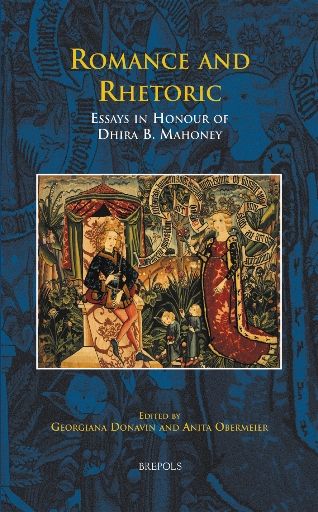
Romance and Rhetoric
Essays in Honour of Dhira B. Mahoney
show More to view fulltext, buy and share links for:Romance and Rhetoric show Less to hide fulltext, buy and share links for: Romance and RhetoricThis volume honours the academic career of Professor Dhira B. Mahoney, recently retired from the Department of English at Arizona State University, who is well known for her rhetorical readings of medieval literature. Professor Mahoney’s scholarship employs rhetorical theory in readings of late medieval literature, particularly prologues and epilogues, women’s writings, and Arthuriana. As a response to her work, Romance and Rhetoric offers rhetorical readings of a variety of literary pieces from the late Middle Ages, especially for those authors and genres on which Professor Mahoney has published. Its collected essays provide interdisciplinary studies of art, social and literary history, manuscript transmission, and women’s studies in relation to texts in Middle English, Latin, German, and French. In particular, the essays in this volume focus on the writings of courtly authors such as Chaucer, Lydgate, Malory, Guillaume de Machaut, Christine de Pizan, Chrétien de Troyes, and others. In keeping with the ancient tradition of analysing rhetorical principles in the structure of an art work, they also examine the rhetoric of the manuscript art connected to these authors and the genres in which they wrote. This volume thus fills a gap in medieval literary scholarship, as it evaluates with scrutiny how rhetorical teachings or medieval poetic strategies inform the writing of romances.
-
-
-
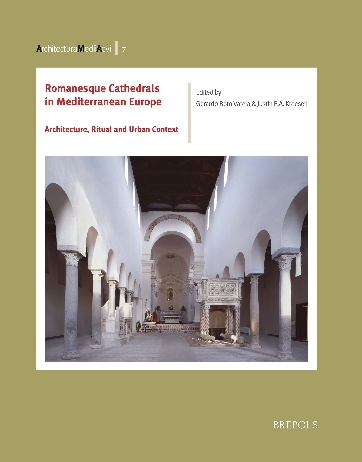
Romanesque Cathedrals in Mediterranean Europe
Architecture, Ritual and Urban Context
show More to view fulltext, buy and share links for:Romanesque Cathedrals in Mediterranean Europe show Less to hide fulltext, buy and share links for: Romanesque Cathedrals in Mediterranean EuropeThis volume explores the architecture and configuration of Romanesque cathedrals in Europe, especially around the Mediterranean, paying special attention to liturgical ritual, furnishings, iconography, and urban context. From the tenth to the twelfth centuries, cultural and artistic interchange around the Mediterranean gave rise to the first truly European art period in Medieval Western Europe, commonly referred to as ‘Romanesque’. A crucial aspect of this integrative process was the mobility of artists, architects and patrons, as well as the capacity to adopt new formulas and integrate them into existing patterns. Some particularly creative centers exported successful models, while others became genuine melting pots. All this took shape over the substrate of Roman Antiquity, which remained in high esteem and was frequently reused.
In these studies, Romanesque cathedrals are employed as a lens with which to analyze the complexity and dynamics of the cultural landscape of southern and central Europe from the tenth to the twelfth centuries. The architecture of every cathedral is the result of a long and complicated process of morphogenesis, defined by spatial conditions and the availability of building materials. Their interior arrangements and imagery largely reflected ritual practice and the desire to express local identities. The various contributions to this volume discuss the architecture, interior, and urban setting of Romanesque cathedrals and analyze the factors which helped to shape them. In so doing, the focus is both on the influence of patrons and on more bottom-up factors, including community practices.
-
-
-
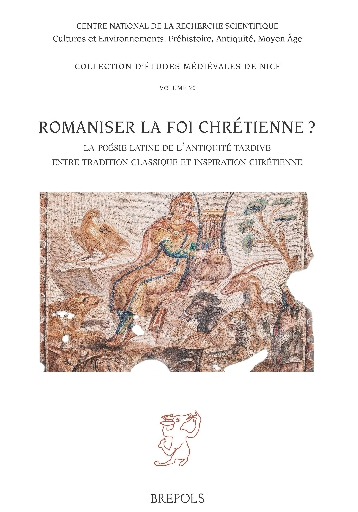
Romaniser la foi chrétienne ?
La poésie latine de l’Antiquité tardive entre tradition classique et inspiration chrétienne
show More to view fulltext, buy and share links for:Romaniser la foi chrétienne ? show Less to hide fulltext, buy and share links for: Romaniser la foi chrétienne ?Le présent ouvrage participe aux recherches sur la poésie latine tardo-antique qui s’efforcent de situer et de décrire l’émergence, puis le développement de cette poésie dans le cadre de la christianisation de l’Empire. Tout en situant les auteurs et les œuvres par rapport aux grands changements et aux convulsions idéologiques qui ont traversé la société romaine du iii e au vi e siècle, les dix contributions de ce volume, réunies par Giampiero Scafoglio et Fabrice Wendling, tentent d’appréhender par le biais de la littérature un phénomène désormais bien étudié par les historiens, celui de la transformation du christianisme dans le contexte constantinien et théodosien d’une religion devenue romaine. Si l’on observe dans la sacralisation des bâtiments et des lieux un processus qui opère une rupture avec la religion spirituelle des premiers siècles, ne peut-on trouver trace d’une telle mutation dans la poésie des iv e et v e siècles ? Une expression désignant le Christ comme Saluator generis Romulei (Prudence), l’effacement des thématiques chrétiennes dans certains poèmes d’Ausone, l’apparition dans les hymnes de Prudence d’une topographie sacrée, l’éloge hyperbolique de l’art oratoire chez un Ennode de Pavie ou, encore, la stigmatisation de la virginité dans tel Épithalame du même Ennode ne témoignent-ils pas d’une forme de « romanisation » ou - plus exactement peut-être - d’interpretatio romana de la foi chrétienne, d’origine hébraïque ? Autrement dit, symétriquement à la « conversion » de la culture classique dont témoigne la littérature chrétienne, ne peut-on mettre au jour dans les textes poétiques un processus sans doute déconcertant, mais réel, de transformation de la foi, de transmutation de ses contenus originels, sous l’effet d’une poésie chrétienne qui garde des attaches profondes, non seulement avec la poésie classique, mais encore avec tout le « passé » de la civilisation romaine antique, jusque dans ses aspects religieux ?
-
-
-
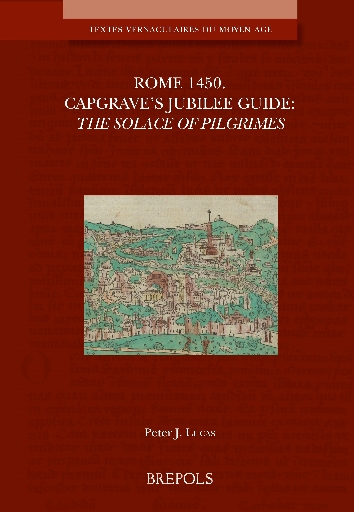
Rome 1450. Capgrave's Jubilee Guide
The Solace of Pilgrimes
show More to view fulltext, buy and share links for:Rome 1450. Capgrave's Jubilee Guide show Less to hide fulltext, buy and share links for: Rome 1450. Capgrave's Jubilee GuideThe scene is Rome in the fi fteenth century, Golden Rome, a magnet drawing pilgrims by its architectural attractions and the magnitude of its religious importance as the mother of faith. The Austin friar John Capgrave attended Rome for the Jubilee in 1450, including the Lenten stations, and his Solace of Pilgrimes, intended as a guide for subsequent pilgrims, was written up following the author’s own pilgrimage. In three parts it covers the ancient monuments, the seven principal churches and the Lenten stations, and other churches of note, especially those dedicated to the Blessed Virgin Mary. The work has been described as the most ambitious description of Rome in Middle English. The present edition offers a new Text based on a transcription of the author’s holograph manuscript. Parallel with the Text there is a modern English Translation. The illustrations, mostly from a period slightly later than the 1450 Jubilee, aim to give some visual clue as to what Capgrave saw. There is a full account of the multiple sources that he used, most of which is the product of new research. Following the Text there is a Commentary that aims to provide some background information about the buildings and monuments that Capgrave focuses on, and to explain and illuminate any diffi culties or points of interest in the Text. Capgrave is an omni-present guide leading us towards what he considered an appropriate interpretation of the classical past as a foundation for the Christian present, which built on it and surpassed it.
-
-
-
Rome on the Borders. Visual Cultures During the Carolingian Transition
show More to view fulltext, buy and share links for:Rome on the Borders. Visual Cultures During the Carolingian Transition show Less to hide fulltext, buy and share links for: Rome on the Borders. Visual Cultures During the Carolingian TransitionBased upon the conference Rome in a Global World: Visual Cultures During the Carolingian Transition (Brno, 14th-15th October 2019), this Supplementum volume of Convivium collects eleven articles that look at Rome’s artistic production in the Carolingian era across historiographical, disciplinary, methodological and geopolitical borders.
-
-
-
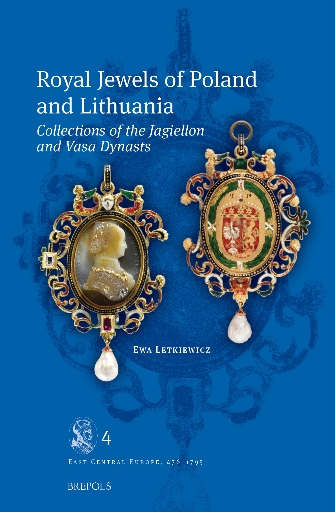
Royal Jewels of Poland and Lithuania
Collections of the Jagiellon and Vasa Dynasts
show More to view fulltext, buy and share links for:Royal Jewels of Poland and Lithuania show Less to hide fulltext, buy and share links for: Royal Jewels of Poland and LithuaniaThis volume delves into the rich histories of the Jagiellon and Vasa dynasties, shedding light on the profound interplay between jewellery and socio-political forces. Readers are invited into an era where jewellery bore multifaceted significance, from symbolising power and piety to facilitating economic engagements. The royal perception of value extended beyond traditional treasures, with a keen interest in animal-derived artefacts. These unconventional items, such as elk hooves or eagle stones, were highly esteemed, reflecting both luxury’s diverse nature and the era’s cultural and mystical beliefs. Rather than merely cataloguing these artefacts, this study animates them, intertwining narratives of monarchs, nobles, craftsmen, and the lands from which these treasures emerged. It delves into a world where a gem’s glint signifies might, gold hints at empires’ expanse, and a narwhal’s horn could determine kingdoms’ destinies. Jewellery has long held a central position in history, particularly among the elite. These pieces were not simply decorative; they conveyed prestige, societal position, and authority. They symbolised both worldly and spiritual prominence, enriched with a complex symbolism. Beyond showcasing wealth, jewellery played crucial roles in diplomacy and politics. What meanings did these unique gems carry for their initial owners? This book uncovers the tales, magnetism, and mystery surrounding these jewellery collections. It paints a picture where jewellery transcends mere ornamentation, serving as a powerful testament to influence, devotion, and grandeur.
-
-
-
Royal Nunneries at the Center of Medieval Europe
Art, Architecture, Aesthetics (13th-14th Centuries)
show More to view fulltext, buy and share links for:Royal Nunneries at the Center of Medieval Europe show Less to hide fulltext, buy and share links for: Royal Nunneries at the Center of Medieval EuropeThe contributions of this special issue - proceedings of the conference on royal nunneries that took place in Prague in July 2020 - focus on the monasteries connected to the ruling houses, which were endowed with special privileges and enriched by royal and aristocratic donations, often serving as instrumenta regni. They are introduced as active cultural hubs, stages for royal and courtly promotion, and places of personal and dynastic self-representation. This includes female monasteries, the agency of female élites in medieval society and their role as patrons and addressees of works of art.
-
-
-
Royautés imaginaires
Actes du colloque organisé par le Centre de recherche d’histoire sociale et culturelle (CHSCO) de l’université de Paris X-Nanterre sous la direction de Colette Beaune et Henri Bresc (26 et 27 septembre 2003)
show More to view fulltext, buy and share links for:Royautés imaginaires show Less to hide fulltext, buy and share links for: Royautés imaginairesL’imaginaire ne se réduit pas au chimérique, au non-être. Depuis l’Antiquité, artistes, poètes et philosophes pressentent qu’il procède du désir et appartient en premier lieu au registre de l’individuel: forces pulsionnelles, messages de soi à soi, le rêve et bientôt la création n’ont pas attendu le discours de la psychanalyse ou des diverses sciences de la culture pour forger leurs mondes autour de la réalité partagée. Les sociétés à leur tour se sont lancées par cette voie dans la quête de leur identité et ont assigné à leurs mythes le soin d’exprimer leur structure. Pour autant, le lecteur s’apercevra au fil des douze communications assemblées ci-après que les royautés évoquées ressortissent rarement du pur imaginaire et conservent jalousement un lien organique avec leur référent concret. Il conviendrait davantage de parler de la royauté comme objet d’imagination, en ce qu’elle représente le point de fixation suprême du désir.
-
-
-
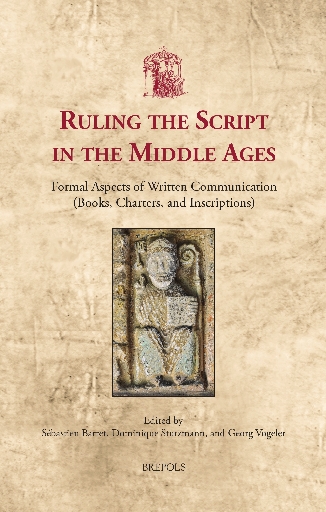
Ruling the Script in the Middle Ages
Formal Aspects of Written Communication (Books, Charters, and Inscriptions)
show More to view fulltext, buy and share links for:Ruling the Script in the Middle Ages show Less to hide fulltext, buy and share links for: Ruling the Script in the Middle AgesThe textuality and materiality of documents are an essential part of their communicative role. Medieval writing, as part of the interpersonal communication process, had to follow rules to ensure the legibility and understanding of a text and its connotations. This volume provides new insights into how different kinds of rules were designed, established, and followed in the shaping of medieval documents, as a means of enabling complex and subtle communicational phenomena. Because they provide a perspective for approaching the material they are supposed to organize, these rules (or the postulation of their use) provide powerful analytical tools for structural studies into given corpora of documents.
Originating in talks given at the International Medieval Congress in Leeds between 2010 and 2012, the twenty papers in this collection offer a precise, in-depth analysis of a variety of medieval scripts, including books, charters, accounts, and epigraphic documents. In doing so, they integrate current developments in palaeography, diplomatics, and codicology in their traditional methodological set, as well as aspects of the digital humanities, and they bridge the gap between the so-called ‘auxiliary sciences of history’ and the field of communication studies. They illustrate different possibilities for exploring how the formal aspects of scripts took their place in the construction of effective communication structures.
-
-
-
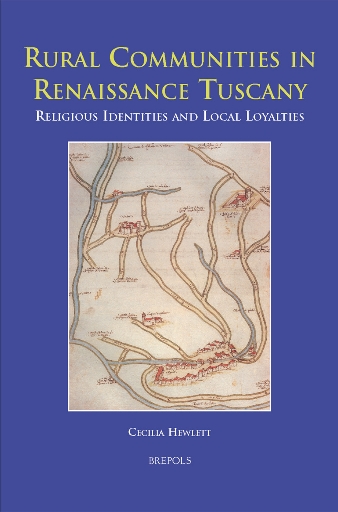
Rural Communities in Renaissance Tuscany
Religious Identities and Local Loyalties
show More to view fulltext, buy and share links for:Rural Communities in Renaissance Tuscany show Less to hide fulltext, buy and share links for: Rural Communities in Renaissance TuscanyAt the conclusion of the fifteenth century and well into the first half of the sixteenth, Florence underwent radical political and social transformations. The republic, which had nurtured the cultural phenomenon of the Renaissance, was finally overthrown and the Medici returned triumphant as outright rulers of the once-free commune. Throughout this period, the administration of the Florentine territory continued to be one of the single most important issues faced by successive Florentine governments, and yet very little is known about the people they governed. This study explores the nature of these communities and the relationships they forged with the central authorities; it provides an overview of the extraordinary diversity of rural communes, and looks in detail at three areas of the Florentine territory. The communes of Gangalandi, Scarperia, and the communities located in the Pistoian mountains provide the vivid contexts in which the fluid natures of local religious, social, and political ties are examined. The character of each of these rural communities was unique, challenging not only the Florentine government’s mechanisms of control, but our own understanding of the ‘peasant’ as a social category. Hewlett demonstrates that these communes were not one-dimentional social organizations, but rather vibrant communities of individuals who pursued a vast range of different activities within a series of complex cultural networks. Rural Communities in Renaissance Tuscany also addresses the importance of religion to these communities; an exciting addition to a field that has been until now dominated by the study of urban religious practice.
-
-
-
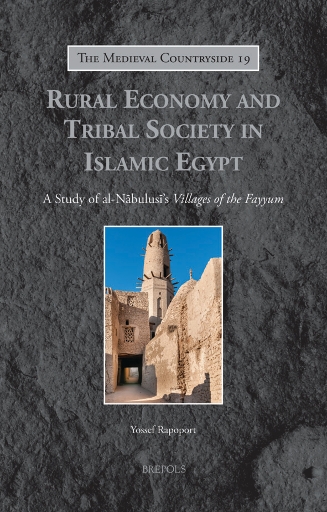
Rural Economy and Tribal Society in Islamic Egypt
A Study of al-Nābulusī’s Villages of the Fayyum
show More to view fulltext, buy and share links for:Rural Economy and Tribal Society in Islamic Egypt show Less to hide fulltext, buy and share links for: Rural Economy and Tribal Society in Islamic EgyptThe Villages of the Fayyum is a unique and unparalleled thirteenth-century Arabic tax register of the province of the Fayyum in Middle Egypt. Based on this tax-register, this book utilises quantitative research methods and spatial GIS analysis to provide a rich account of the rural economy of the medieval Fayyum, the tribal organization of the village communities, and their rights and duties in relation to the military landholders. It also draws on the rich documentary evidence of the Fayyum, which stretches back to the Greco-Roman and early Islamic periods, to trace the transformation of the Fayyum into a Muslim-majority and Arab province.
This volume thus offers a radically new perspective on the social and economic history of the medieval Islamic countryside. It makes a major contribution to the history of Islamic Egypt, its rural economy, and to our understanding of taxation and administration under the Ayyubids. Most importantly, its argument for the metamorphosis of the Coptic peasantry into Muslim and tribal Arab society has profound implications for Middle Eastern history in general, and challenges our modern concept of Arab identity.
-
-
-

Rural history in the North Sea area. An overview of recent research (Middle Ages - beginning twentieth century)
show More to view fulltext, buy and share links for:Rural history in the North Sea area. An overview of recent research (Middle Ages - beginning twentieth century) show Less to hide fulltext, buy and share links for: Rural history in the North Sea area. An overview of recent research (Middle Ages - beginning twentieth century)This volume describes the outlines of the 'state of the art' in the field of rural history for countries such as England, the Netherlands, Belgium, Germany and Northern France. The contributing authors, all outstanding specialists in the field, present an overview of the most important publications regarding the areas covered. They also point to the most important research topics as well as indicating the most important lacunae in the field of rural history during the last decades. The original texts of this book formed the basis of the international research group CORN, which studies the economic development of the Northern European countryside in a comparative way. The regional monographs are preceded by a short methodological introduction concerning the comparative methods used by this network as well as the possible pitfalls and problems.
-
-
-
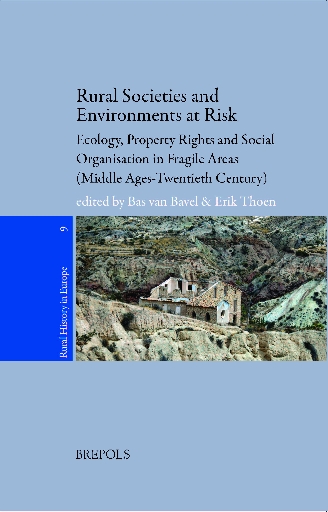
Rural societies and environments at risk
Ecology, property rights and social organisation in fragile areas (Middle Ages-Twentieth century)
show More to view fulltext, buy and share links for:Rural societies and environments at risk show Less to hide fulltext, buy and share links for: Rural societies and environments at riskThis book discusses the relationship between ecology and rural society in fragile environments of the past. Rural land use in these areas entailed an inherent vulnerability, for instance because of their poor soils, aridity or their location in mountain areas, near the sea or in severe climatic conditions. The various chapters analyse how societies coped with this vulnerability by way of the organization of property rights to land. These rights formed the framework which shaped the use of the land and were a main constituent of the relationship between mankind and ecology in these fragile areas. To a large extent, therefore, they determined - and still determine - the success or failure of rural societies to cope with the challenges posed by their environment. In their turn, however, these property rights were shaped within a wider social and political context, in which political and ideological considerations, and special interests, also played their part. As a result, the organization of these rights was not always geared towards sustainability, as demonstrated in these chapters, which discuss and analyse long-term developments in several parts of Northwestern, Central and Southern Europe.
Bas van Bavel is professor of economic and social history of the Middle Ages, head of the section of Economic and Social History, and coordinator of the knowledge centre Institutions of the Open Society at Utrecht University (the Netherlands).
Erik Thoen is ordinary professor at Ghent University (Belgium) specialised in rural and environmental history. He is co-ordinator of the CORN history network (Comparative Rural History of the North Sea Area).
-
-
-
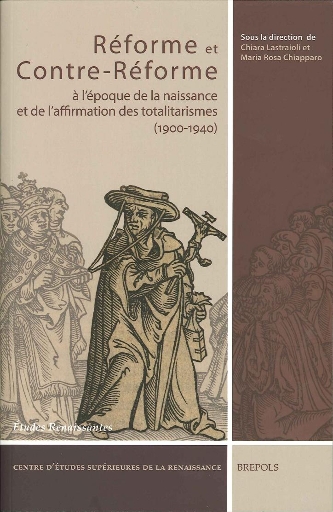
Réforme et Contre-Réforme
A l'époque de la naissance et de l'affirmation des totalitarismes (1900-1940)
show More to view fulltext, buy and share links for:Réforme et Contre-Réforme show Less to hide fulltext, buy and share links for: Réforme et Contre-RéformeLa parution de L'éthique protestante et l'esprit du capitalisme (1904-1905) de Max Weber marque un moment essentiel dans la recrudescence du débat sur la Réforme et la Contre-Réforme au début du xxe siècle. En Italie, en Allemagne, en France - comme ailleurs en Europe -, l'identité confessionnelle devient l'un des caractères constitutifs de l'idéologie nationale et/ou nationaliste, ainsi qu'un élément fort de la réflexion sur le concept de modernité. De même, des phénomènes de résistance à la formation et à l'établissement des totalitarismes émergent au sein de certains groupes d'intellectuels qui rejettent l'appropriation du discours religieux par les futurs idéologues du régime. On assiste alors à un foisonnement d'études concernant l'histoire des églises et des confessions, s'interrogeant sur le développement social et étatique des nations. Les échos des ces débats auront des retombées majeures dans l'affrontement idéologique entre Europe du Nord et Europe du Sud, civilisation germanique et civilisation méditerranéenne à l'aube du dernier grand conflit mondial.
Cet ouvrage ne prétend pas apporter un regard exhaustif sur toutes les conséquences que les discussion autour de la Réforme et la Contre-Réforme ont produites dans les années 1900-1940, mais fait état des premières réflexions menées par des spécialistes de différentes disciplines sur un sujet encore peu exploré et pourtant fondamental pour l'interprétation de l'une des périodes les plus cruciales du siècle dernier.
-
-
-

Résistance sans frontières
À propos de moines espions, de lignes d'évasions et du 'Hannibalspiel', 1940-1943
show More to view fulltext, buy and share links for:Résistance sans frontières show Less to hide fulltext, buy and share links for: Résistance sans frontièresLe 9 octobre 1943, neuf membres de la résistance belge et néerlandaise étaient exécutés à Rhijnauwen (près d’Utrecht). Parmi eux, deux moines de l’abbaye du Val-Dieu. En suivant le parcours de ces deux ecclésiastiques, le livre retrace de façon précise l’histoire des groupes d’espionnage et des lignes d’évasion. Ces lignes de secours étaient utilisées par des prisonniers de guerre évadés, par des pilotes alliés abattus, par des personnes d’origine juive et des ressortissants néerlandais en fuite vers l’Angleterre. La ligne d’évasion partait d’Allemagne et des Pays-Bas pour rejoindre Eijsden, puis Mouland et Visé. Une fois arrivés au pays de Herve ou de Liège, les réfugiés étaient conduits à Givet ou à Bruxelles, où d’autres groupes de résistance les prenaient en charge. En 1942 le contre-espionnage allemand infiltre les groupes au départ de Groningue et de Liège : l’Hannibalspiel. L’issue sera dramatique.
En cherchant à comprendre pourquoi, dans la région de Liège, ces deux moines se décident à entrer en résistance, l’enquête met en lumière le rôle joué par l’Église et par l’abbaye du Val-Dieu, mais aussi par leurs familles.
Résistance sans frontières est la première recension ayant trait à la résistance de chaque côté de la frontière belgo-néerlandaise pendant la deuxième guerre mondiale.
-
-
-
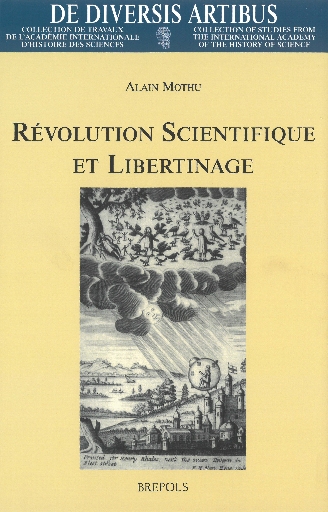
Révolution scientifique et libertinage
show More to view fulltext, buy and share links for:Révolution scientifique et libertinage show Less to hide fulltext, buy and share links for: Révolution scientifique et libertinagePeut-on mettre en relation - et de quelle façon ? - l'émergence et le déploiement de la science moderne, au xvii e siècle, avec ceux du "libertinage" ou "libertinisme" pendant la même période ? C'est à cette question complexe et quelque peu redoutable, car elle concerne les origines de notre modernité, que se sont efforcés de répondre treize historiens des idées scientifiques, philosophiques ou littéraires. Il n'était pas à l'ordre du jour - il parut même présomptueux ou prématuré - d'affronter le problème dans son abstraite généralité : il s'agissait bien plutôt de mettre en lumière, aussi précisément et concrètement que possible, le cheminement intellectuel de certains hommes de science, de certains libertins avérés, ou la fortune d'une idée apparemment "transversale". Ce recueil permet le repérage des nombreuses voies de rencontre qui parfois favorisèrent le dialogue entre hommes de science et esprits "déniaisés" au xvii e siècle, mais aussi des obstacles qui parfois l'empêchèrent. Il fait peut-être entrevoir la lente émergence d'un régime univoque de la "raison", à mesure que le siècle avance. Enfin, sa polyphonie interdisciplinaire apporte un éclairage varié sur certaines théories et notions philosophiques, comme l'atomisme et l'infini, qui jouent un rôle capital au xvii e siècle.
Auteurs : Armand Beaulieu, Michel Blay, François de Graux, Antonella Del Prete, Dominique Descotes, Vincent Jullien, Didier Kahn, Alain Mothu, Alain Niderst, Isabelle Pantin, Richard H. Popkin, Giovanni Ruocco, Bertram E. Schwarzbach, Ann Thomson.
-
-
-
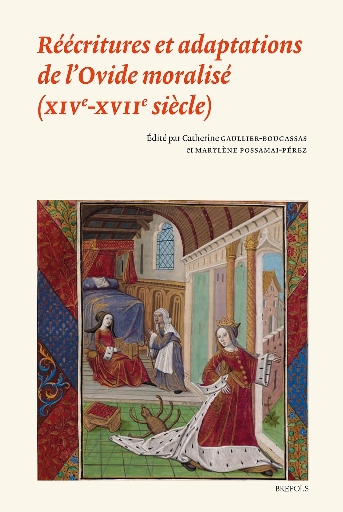
Réécritures et adaptations de l’Ovide moralisé (xiv e-xvii e siècle)
show More to view fulltext, buy and share links for:Réécritures et adaptations de l’Ovide moralisé (xiv e-xvii e siècle) show Less to hide fulltext, buy and share links for: Réécritures et adaptations de l’Ovide moralisé (xiv e-xvii e siècle)L’Ovide moralisé a joué un rôle significatif pour la connaissance des mythes antiques et la création de nouvelles œuvres littéraires qui se les approprient au moins jusque dans la première moitié du xvi e siècle, avant qu’il ne soit moqué et condamné. Dès son écriture au xiv e siècle, cette traduction en langue française des Métamorphoses d’Ovide accompagnée d’interprétations chrétiennes a rapidement connu le succès et une diffusion large auprès de publics divers qui la lisaient souvent, elle et ses gloses, plutôt que l’œuvre latine d’Ovide. De nombreux auteurs en français, en latin ou en anglais se sont inspirés de son texte pour créer leurs propres représentations littéraires de héros et héroïnes antiques, dans des œuvres poétiques, didactiques et historiographiques, ou pour élaborer leurs écritures de la moralisation. Les deux mises en prose de l’Ovide moralisé à la cour d’Anjou et à la cour de Bourgogne, les réécritures et remaniements qui sont ensuite imprimés, la traduction anglaise imprimée par William Caxton ont aussi contribué à prolonger l’influence qu’il a exercée. Cette dernière se lit aussi sans nul doute dans certaines des nouvelles traductions des Métamorphoses qui sont composées au xvi e siècle. Si cette influence a souvent été notée, si des emprunts de poètes du xiv e et du xv e siècles - Guillaume de Machaut, Jean Froissart, Eustache Deschamps, Christine de Pizan, Chaucer, Gower - ont été étudiés, la postérité de l’Ovide moralisé reste encore pour une large part à explorer. C’est l’objet de ce volume collectif, le premier qui soit consacré à la réception du texte du xive au xviie siècle.
-
-
-
Sacramentaires de Bergame et d'Ariberto
Tables des matières. Index des formules
-
-
-

Sacred Authority and Temporal Power in the Writings of Bernard of Clairvaux
show More to view fulltext, buy and share links for:Sacred Authority and Temporal Power in the Writings of Bernard of Clairvaux show Less to hide fulltext, buy and share links for: Sacred Authority and Temporal Power in the Writings of Bernard of ClairvauxThe aftermath of the Investiture Controversy left the relationship between the Church and imperial power in ruins. In reaction to these developments, the Concordat of Worms in 1122 sought a compromise to restore the association between the two sides. The Concordat was only the beginning, and a spirit of cooperation between the Church and temporal powers began to emerge. This collaborative relationship is exemplified in the writings of Bernard of Clairvaux (1091-1153).
Bernard of Clairvaux was both a Cistercian abbot and a major political figure in the twelfth century. He inherited the Latin vocabulary of earlier Christian writers, but needed a more nuanced language to express the complex political relationship between church and state during the settlement of episcopal investiture. In his writings Bernard distinguished between the authority (auctoritas) of the Church and the power (potestas) of temporal rulers. The language of separation was designed to delineate spheres of influence rather than to reflect opposition - a vocabulary that ultimately presents the relationship between the two powers as less of a fencing match and more of a dance.
Sacred Authority and Temporal Power emphasises and enhances our understanding of the significance of Bernard’s writings for the mediation of power and authority in the twelfth century.
-
-
-
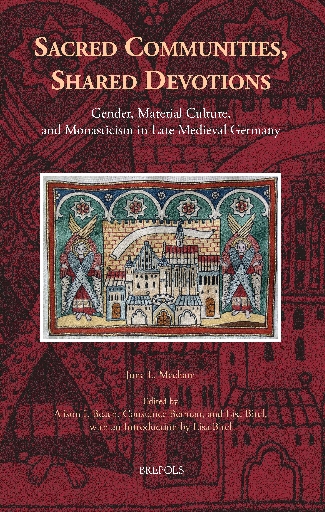
Sacred Communities, Shared Devotions
Gender, Material Culture, and Monasticism in Late Medieval Germany
show More to view fulltext, buy and share links for:Sacred Communities, Shared Devotions show Less to hide fulltext, buy and share links for: Sacred Communities, Shared DevotionsSacred Communities, Shared Devotions takes us behind the gates of six medieval convents in Lower Saxony and into the lives of rich and noble nuns going about their daily labour of religion just before the Lutheran Reformation. Drawing on writings by and about the nuns, as well as an analysis of the costly art and architecture of their monasteries, June Mecham reveals how monastic women wielded their wealth to create a ritual environment dense with Christian images and meanings. Mecham argues that nuns chose devotions and rituals within the framework of a distinct material culture, influenced by local religious customs, gender structures, and social protocols. She questions perceived differences between monastic and lay piety, emphasizing instead the shared religious culture in which monastic and laywomen actively participated, and the continuity that shaped female devotion. Looking through lenses of art, history, and spirituality, Mecham describes the spiritual and social tensions caused by women who vowed poverty but lived a seemingly lavish life funded by private income. Medieval reformers, as well as modern scholars, suggested that profligate nuns hastened the decline of medieval convents, but Sacred Communities, Shared Devotions proves that these women did not oppose reform. They simply fought to maintain their traditional devotions and religious environments even as they adapted to new religious sensibilities.
-
-
-
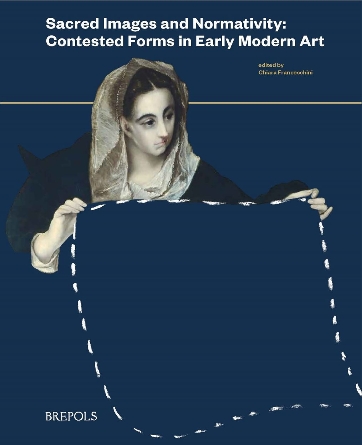
Sacred Images and Normativity: Contested Forms in Early Modern Art
show More to view fulltext, buy and share links for:Sacred Images and Normativity: Contested Forms in Early Modern Art show Less to hide fulltext, buy and share links for: Sacred Images and Normativity: Contested Forms in Early Modern ArtEarly modern objects, images and artworks often served as nodes of discussion and contestation. If images were sometimes contested by external and often competing agencies (religious and secular authorities, image theoreticians, inquisitions, or single individuals), artists and objects were often just as likely to impose their own rules and standards through the continuation or contestation of established visual traditions, styles, iconographies, materialities, reproductions and reframings.
Centering on the capacity of the image as agent - either in actual legal processes or, more generally, in the creation of new visual standards - this volume provides a first exploration of image normativity by means of a series of case studies that focus in different ways on the intersections between the limits of the sacred image and the power of art between 1450 and 1650.
The fourteen contributors to this volume discuss the status of images and objects in trials; contested portraits, objects and iconographies; the limits to representations of ering; the tensions between theology and art; and the significance of copies and adaptations that establish as well as contest visual norms from Europe and beyond.
-
-
-
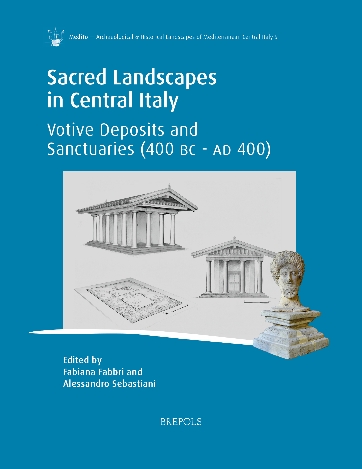
Sacred Landscapes in Central Italy
Votive Deposits and Sanctuaries (400 bc – ad 400)
show More to view fulltext, buy and share links for:Sacred Landscapes in Central Italy show Less to hide fulltext, buy and share links for: Sacred Landscapes in Central ItalyVeneration of the supernatural was, in ancient times, interwoven into the fabric of the surrounding landscape. Caves, rivers, lakes, mountains, and water springs all formed conduits for a relationship between divinity and nature, and sanctuaries were established as dedicated sites of worship. Taking Central Italy as its main focus, this volume unravels layers of history and archaeology in order to shed light on the religious practices, sacred sites, and profound connections that have long existed between landscapes and religious places in this region. Through a synthesis of archaeological evidence and scholarly analysis, the chapters gathered here unveil the significance of temples, sanctuaries, ex-votos, religious productions, and ritual spaces, and provide a comprehensive understanding of how Etruscan and Roman societies engaged with their sacred surroundings. The result is an important reassessment of the religious dimensions that helped to shape the antique landscape of Central Italy.
-
-
-
Sacred Places
Devotional Practices and Space Organization in Early Medieval Monasteries (5th-10th centuries)
show More to view fulltext, buy and share links for:Sacred Places show Less to hide fulltext, buy and share links for: Sacred PlacesThe body or relics of a saint could attract divine protection on the community and the place where they were kept. If, in some cases, the monasteries were structures of assistance to sanctuaries of certain notoriety, starting from the 7th century, they increasingly played the role of protagonists, autonomously managing the devotional activities derived from the acquisition or translation of relics. The need to preserve the isolation of the 'clausura' and to manage, at the same time, an increasing flow of pilgrims led these monasteries to build new spaces for prayer, communion and assistance.
This book includes the Proceedings of the International Conference held in Naples (Italy) on November 28-29, 2022. The Conference - organized, as part of a Marie-Curie research project, by the Fondazione San Bonaventura with the contribution of the Italian Ministry of Culture - brought together historians, archaeologists, and art historians to discuss the theme of spatial articulation of monasteries chosen as places of pilgrimage during the Early Middle Ages in Western Europe. From this interdisciplinary discussion, exciting insights have emerged on aspects of particular relevance, such as the organization of the funerary space and interaction between monks and laypeople, the elements of balance or clash between 'clausura' and hospitality and the comparison between male and female monasteries as devotional centers.
-
-
-
Sacred Sites and Holy Places
Exploring the Sacralization of Landscape through Time and Space
show More to view fulltext, buy and share links for:Sacred Sites and Holy Places show Less to hide fulltext, buy and share links for: Sacred Sites and Holy PlacesIn this volume two important veins of interdisciplinary research into the medieval period in Scandinavia and the Baltic region are merged, namely the Christianization process and landscape studies. The volume authors approach the common theme of sacrality in landscape from such various viewpoints as archaeology, philology, history of religion, theology, history, classical studies, and art history. A common theme in all articles is a theoretical approach, complemented by illustrative case studies from the Scandinavian, Baltic, or Classical worlds. Aspects of pagan religion, as well as Christianity and the establishment of the early Church, are considered within both geographical setting and social landscape, while the study of maps, place names, and settlement patterns introduces new methodologies and perspectives to expose and define the sacral landscape of these regions. The contributions are put into perspective by a comparison with research into the sacral landscapes of Central Europe and the Classical world.
New interdisciplinary research methods and new models have been developed by the contributors to present new vistas of sacrality in the Scandinavian and the Baltic landscape. To open up these case studies, a selection of over sixty images and maps accompanies this cutting-edge research, allowing the reader to explore sacralization and the Christianization process within its medieval setting.
-
-
-
Sacred Texts & Sacred Figures: The Reception and Use of Inherited Traditions in Early Christian Literature
A Festschrift in Honor of Edmondo F. Lupieri
show More to view fulltext, buy and share links for:Sacred Texts & Sacred Figures: The Reception and Use of Inherited Traditions in Early Christian Literature show Less to hide fulltext, buy and share links for: Sacred Texts & Sacred Figures: The Reception and Use of Inherited Traditions in Early Christian LiteratureIn tribute to the scholarly legacy of Edmondo F. Lupieri, in Sacred Texts & Sacred Figures an international group of esteemed biblical scholars offer essays on the ways religious traditions, texts, and even the legacies of notable figures were received, re-interpreted, and used by the authors of gospels, epistles, and apocalypses to address the ever-evolving circumstances of emerging Christianity. In the first and second centuries ce, oral and written traditions about the life of Jesus proliferated and formed the basis for written narratives. The authors of the gospels received and redacted those traditions to make distinctive theological claims about Jesus and to address their specific milieu and the wider movement of Jesus-followers. Among some groups of Jesus-followers the sacred texts of Judaism remained paramount. Authors like that of the Epistle to the Hebrews re-examined their inheritance of Jewish scriptures in order to demonstrate the continuity of their novel claims about Jesus with the sacred texts and traditions of Judaism. Similarly, the authors of first- and second-century apocalypses drew on the heritage of Jewish apocalypticism to write and record new revelations of and about Jesus. In addition to traditions and texts, authors in the first and second centuries re-examined the legacy of significant Jewish figures and followers of Jesus and wrote about them in the context of their own contemporary circumstances. Using innovative strategies and written in an engaging style, the essays assembled here explore the reception and reinterpretation of sacred traditions, texts, and figures in the writings of early Christianity.
-
-
-
Sacrifice and Sacred Violence
History, Comparisons, and the Early Modern World
show More to view fulltext, buy and share links for:Sacrifice and Sacred Violence show Less to hide fulltext, buy and share links for: Sacrifice and Sacred ViolenceSacrifice has long been a central topic in scholarly debate. Since the publication of Marcel Mauss and Henri Hubert's groundbreaking work in 1898-99, the concept has gained prominence as a distinct theme in comparative religion, anthropology, and the history of religions. Throughout the twentieth century, many distinguished scholars and intellectuals examined the meaning and function of sacrifice to better understand various aspects of human cognition and social interactions. While some explored its connections to violence—particularly forms of self-inflicted violence, such as martyrdom—others sought to disentangle the concept from violent practices altogether.
Building on this rich tradition, this collection of articles gathers contributions from leading scholars who explore the theme of sacrifice, examining its diverse meanings and roles across various religious traditions. While the book places particular emphasis on the history of Christianity and the early modern period, it also provides valuable insights into a broad spectrum of religious traditions, including Judaism, Islam, Greek and ancient religions, as well as Japanese religions. Its geographical scope spans regions such as India, China, Africa, and Brazil, offering a truly global perspective.By mapping the varied interpretations and transformations of sacrifice in the early modern period, this book seeks to illuminate its evolving significance. It also strives to offer a comparative framework that highlights the concept's complexity and adaptability across cultural and historical contexts.
-
-
-
Sacrifices humains. Dossiers, discours, comparaisons
Actes du colloque tenu à l'Université de Genève, 19-20 mai 2011
show More to view fulltext, buy and share links for:Sacrifices humains. Dossiers, discours, comparaisons show Less to hide fulltext, buy and share links for: Sacrifices humains. Dossiers, discours, comparaisonsLes auteurs de ce volume, historiens des religions, anthropologues et archéologues, étudient des rituels traditionnellement appelés « sacrifices humains », choisis dans leurs domaines respectifs de recherche - des tombeaux royaux d’Ur aux rites anthropoctoniques égyptiens, grecs, romains ou indiens, et des mises à mort rituelles des Gaulois et anciens Mochica aux crimes d’honneur des rapports onusiens. Leur questionnement tourne autour de problèmes méthodologiques fondamentaux pour l’histoire des religions : quand et pourquoi ces rites ont-ils été décrits comme des « sacrifices humains » ? Est-il possible, souhaitable, voire nécessaire d’interpréter autrement de telles mises à mort ? Au fil des diverses interventions, on se rendra compte combien ces « sacrifices barbares » hantent notre imaginaire scientifique, aujourd’hui comme par le passé. Il s’agit en fait d’un concept opératoire, hérité de l’Antiquité classique et consolidé par la culture judéo-chrétienne, qui sert indifféremment de grille de lecture pour expliquer les rites les plus variés.
-
-
-
Sacris Erudiri
Journal of Late Antique and Medieval Christianity
show More to view fulltext, buy and share links for:Sacris Erudiri show Less to hide fulltext, buy and share links for: Sacris ErudiriSacris Erudiri is an international journal dedicated to religious science in its broadest sense. The studies published primarily focus on the history of the Church, the history of liturgy, and patristics. Whilst excluding nothing, the topics addressed refer more to factual and institutional history than to doctrinal history. These articles often provide preliminary analyses for later critical editions of patristic and medieval texts that are to be published in various series of the Corpus Christianorum. Articles are published in English, French, German, Italian, and Spanish.
More information about this journal onBrepols.net
-
-
-

Saint-Bénigne de Dijon en l'an mil, 'totius Galliae basilicis mirabilior'
Interprétation politique, liturgique et théologique
show More to view fulltext, buy and share links for:Saint-Bénigne de Dijon en l'an mil, 'totius Galliae basilicis mirabilior' show Less to hide fulltext, buy and share links for: Saint-Bénigne de Dijon en l'an mil, 'totius Galliae basilicis mirabilior'Dans son histoire du monde, écrite vers 1030, Raoul Glaber dépeint l’église préromane de Saint Bénigne de Dijon comme “plus admirable que les basiliques de toute la Gaule” (totius Galliae basilicis mirabiliorem). Commencée autour de 1001 et consacrée en 1016 (l’église) et 1018 (la rotonde), cette abbatiale bénédictine, dont seule la crypte de la rotonde subsiste, relevait des traditions architecturales romaine, carolingienne et ottonienne. Elle fut construite à un moment-clé de l’histoire politique de la France et de la Bourgogne et peut être interprétée en fonction de l’idéologie de ses bâtisseurs, l’abbé Guillaume et l’évêque Brun de Langres. Il faut également la lire comme un cadre exceptionnellement bien conçu pour la dévotion monastique et la liturgie de Cluny telle qu’interprétée par Guillaume. Cet ouvrage se veut une interprétation visuelle, politique, liturgique et théologique de cette église étonnante de l’an mil.
Carolyn Marino Malone est professeur dans le département d’Histoire de l’art, University of Southern California, Los Angeles (USA). Elle est spécialiste d’architecture romane française et gothique anglaise. Son dernier livre s’intitule Façade as Spectacle: Ritual and Ideology at Wells Cathedral, Studies in Medieval and Reformation Traditions, vol. 102 (Leiden-Boston, 2004).
-
-
-
Saint-Pierre d’Orbais
Social Space and Gothic Architecture at a Benedictine Monastery
show More to view fulltext, buy and share links for:Saint-Pierre d’Orbais show Less to hide fulltext, buy and share links for: Saint-Pierre d’OrbaisThe fragmentary remains of the Benedictine monastery of Saint-Pierre d'Orbais in northwest Champagne preserves a particular iteration of Gothic style and technological achievement as well as the built environment of a community deeply embedded in the world around them. Through their architecture, successive generations of monks of Orbais, whose institutional life stretched from the end of the seventh century to end of the eighteenth century, were constantly seeking to clarify their position in the changing physical and social landscapes they inhabited. Although connected by a shared site, the architectural evidence from Orbais preserves remnants from several episodes of use and reuse. The site is treated thematically, starting with the boundaries that define the site, then the resources that shaped monastic life in this particular location, followed by the monastic landscapes that shaped the community as an institution. These categories reflect both the nature of our evidence for the contexts of building construction and the types of landscapes that were most active for the monastic community at Orbais over the long life of the site. The final chapter resituates the architectural history of the monastic church in light of these interrelated landscapes, contextualizing existing scholarship that treats it as a specifically Gothic monument, and providing lines of connection to medieval built environments more broadly.
-
-
-
Saint-Victor de Marseille. Études archéologiques et historiques
Actes du colloque Saint-Victor, Marseille, 18-20 novembre 2004
show More to view fulltext, buy and share links for:Saint-Victor de Marseille. Études archéologiques et historiques show Less to hide fulltext, buy and share links for: Saint-Victor de Marseille. Études archéologiques et historiques[À l’origine de l’étude d’un monument qui reste emblématique de Marseille se présenta l’opportunité de programmes de restauration et de fouille. Un premier volume a répondu à la nécessité de rendre publics les résultats. La conjonction récente avec un moment historiographique paradoxalement sensible à l’histoire religieuse, en particulier à celle du monachisme, fut l’occasion de réunir des chercheurs, scrutateurs de sources diverses, afin de réaliser la confrontation si souvent invoquée de l’archéologie et de l’histoire. Ce fut l’objet du colloque réuni en novembre 2004 à Marseille, dans les locaux de l’ancien Alcazar transformé en bibliothèque. On se plaira à rappeler que ce fut la première grande manifestation scientifique qu’abrita le bâtiment qui venait d’être inauguré.
Pour paraphraser une formule restée célèbre dans l’esprit des médiévistes, existerait-t-il un Saint-Victor des archéologues et un Saint-Victor des historiens? C’est au lecteur de se forger sa propre idée. Sans doute l’écart existe-t-il, et, avant même d’aborder la phase interprétative des recherches, permet-il aussi de mesurer les lacunes de chacune des documentations disponibles. Au-delà du constat, les participants ont eu quand même conscience d’œuvrer pour une même histoire.
,At the origin of the study of a monument which remains very emblematic of Marseille, there was a programme of restoration and excavations. The outcome of the work was made public in a first volume. The recent conjunction with a trend in historiography surprisingly aware of religious history, in particular the history of monachism, enabled us to bring together scholars dealing with various sources in order to achieve the often called on conjunction between archaeology and history. That was the point of the conference held in November 2004 in Marseille. The venue was the old Alcazar music hall theatre transformed into the municipal library. It is gratifying to think that this was the first scientific seminar to be held in the new library, which had just been opened.
Paraphrasing a famous expression among medievalists: are there two Saint-Victor, one for archaeologists one for historians. It is up to the reader to make up his own mind. There is undoubtedly a discrepancy which even before adressing the interpretative conclusions of the research underlines the shortcomings of the respective documentation avalaible. Given this realization, the scholars present intimately felt they were writing the same history.
]
-
-
-
Sainthood, Scriptoria, and Secular Erudition in Medieval and Early Modern Scandinavia
Essays in Honour of Kirsten Wolf
show More to view fulltext, buy and share links for:Sainthood, Scriptoria, and Secular Erudition in Medieval and Early Modern Scandinavia show Less to hide fulltext, buy and share links for: Sainthood, Scriptoria, and Secular Erudition in Medieval and Early Modern ScandinaviaWhile medieval Iceland has long been celebrated and studied for its rich tradition of vernacular literature, in recent years attention has increasingly been paid to other areas of Old Norse-Icelandic scholarship, in particular the production of hagiographical and religious literature. At the same time, a similar renaissance has arisen in other fields, in particular Old Norse-Icelandic paleography, philology, and manuscript studies, thanks to the development of the so-called ‘new philology’, and its impact on our understanding of manuscripts. Central to these developments has been the scholarship of Kristen Wolf, one of the foremost authorities in the fields of Old Norse-Icelandic hagiography, biblical literature, paleography, codicology, textual criticism, and lexicography, who is the honorand of this volume.
Taking Prof. Wolf’s own research interests as its inspiration, this volume takes an unprecedented interdisciplinary approach to the theme of Sainthood, Scriptoria, and Secular Erudition in Medieval and Early Modern Scandinavia in order both to celebrate Wolf’s profound career, and to illustrate the many ways in which these seemingly different fields overlap and converse with each other in important and productive ways. From sculpture to sagas, and from skaldic verse to textual editions and the translation of hitherto unpublished works, the contributions gathered here offer new and important insights into our knowledge of medieval and early modern Scandinavian literature, history, and culture.
-
-
-
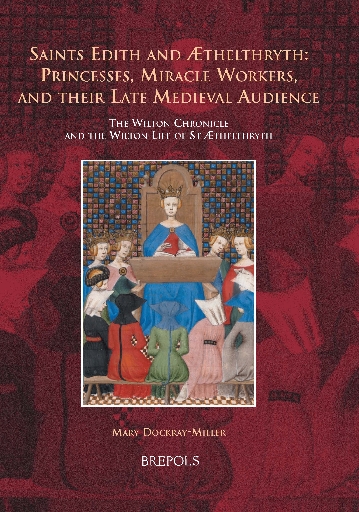
Saints Edith and Æthelthryth: Princesses, Miracle Workers, and their Late Medieval Audience
The Wilton Chronicle and the Wilton Life of St Æthelthryth
show More to view fulltext, buy and share links for:Saints Edith and Æthelthryth: Princesses, Miracle Workers, and their Late Medieval Audience show Less to hide fulltext, buy and share links for: Saints Edith and Æthelthryth: Princesses, Miracle Workers, and their Late Medieval AudienceSaints Edith and Æthelthryth: Princesses, Miracle Workers, and their Late Medieval Audience narrates the lives of two Anglo-Saxon princesses who were venerated as saints long after their deaths. St Edith, the daughter of King Edgar, was renowned as a patron of the arts and the church during her lifetime; her posthumous miracles included protection of Wilton Abbey and the English royal family. St Æthelthryth, who retained her virginity through not one but two royal marriages, also worked numerous miracles at her tomb at the Abbey of Ely. The poems, composed at Wilton Abbey in the early fifteenth century, allow us to see how late medieval religious women practised their devotion to early medieval women saints. The Middle English verse texts are presented here in the original and in translation with explanatory notes and glossary. A thorough introduction provides extensive contextualization and analysis of the two poems as well as description of the manuscript and its language and prosody. These primary source texts are important contributions to the study of English history, language, literature, religion, and women's studies.
-
-
-
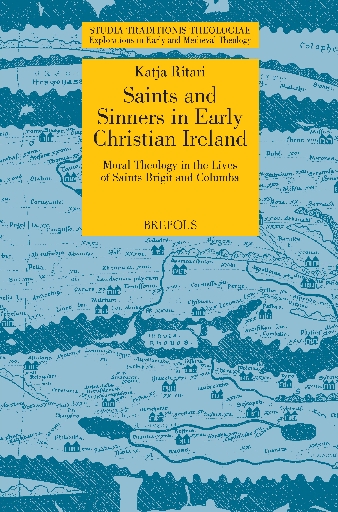
Saints and Sinners in Early Christian Ireland: Moral Theology in the Lives of Saints Brigit and Columba
show More to view fulltext, buy and share links for:Saints and Sinners in Early Christian Ireland: Moral Theology in the Lives of Saints Brigit and Columba show Less to hide fulltext, buy and share links for: Saints and Sinners in Early Christian Ireland: Moral Theology in the Lives of Saints Brigit and ColumbaIn this volume Katja Ritari shows how a theological reading of hagiography works towards gaining a fuller understanding of the complexity of issues that can be addressed in a hagiographical narrative and of the aims of the medieval authors. The three texts examined in this study belong to the earliest stratum of hagiographical writing in Ireland and thus provide evidence of the formation of an Irish Christian society. This work presents a fresh look at the earliest Lives of saints Brigit and Columba concentrating on moral theology through the image of an ideal Christian and his or her antithesis. In hagiography, the saint is presented as the paragon of perfect Christian behaviour, but the moral message concerning ideal Christian living can also be conveyed through the minor characters which populate the Lives as companions of the saint, and as witnesses and receivers of the effects of his or her miracles. This study is groundbreaking because it turns attention towards the portrayal of these characters, especially towards the lay people whose role in hagiography has thus far been neglected in scholarly studies. The topic of this study - a good Christian life - is a fundamental spiritual and theological question that has relevance to all Christians. It is a central question to the formation of a Christian identity and its soteriological significance makes it a focal theological issue.
Katja Ritari is a postdoctoral researcher at the department of World Cultures, Study of Religions, University of Helsinki. She holds a PhD from University College Cork, Ireland.
-
-
-
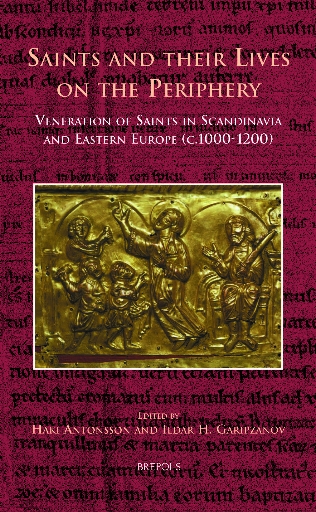
Saints and their Lives on the Periphery
Veneration of Saints in Scandinavia and Eastern Europe (c.1000-1200)
show More to view fulltext, buy and share links for:Saints and their Lives on the Periphery show Less to hide fulltext, buy and share links for: Saints and their Lives on the PeripheryThis volume examines the cult of the saints and their associated literature in two peripheral regions of Christendom that were converted to Christianity around the turn of the first millennium, namely, Scandinavia and Eastern Europe. The thirteen authors focus on how cultures of sanctity were transmitted across the two regions and on the role that neighbouring Christian countries like England, Germany, and Byzantium played in that process. The authors also ask to what extent the division between Latin Christianity and Eastern Orthodoxy affected the early development of the cult of saints on the two peripheries. The first part of the book offers for the first time a comprehensive overview of the veneration of local and universal saints in Scandinavia and northern Rus’ from c. 1000 to c. 1200, with a particular emphasis on saints who were venerated in both regions. The second part presents examples of how some early hagiographic works produced on the northern and eastern peripheries borrowed, adapted, and transformed — i.e. contextualized — literary traditions from the Latin West and Byzantium.
-
-
-
Saints ermites en Limousin au XIIe siècle
show More to view fulltext, buy and share links for:Saints ermites en Limousin au XIIe siècle show Less to hide fulltext, buy and share links for: Saints ermites en Limousin au XIIe siècleLes biographies de saints ermites sont souvent négligées car ces textes comportent des longueurs qui lassent, voire des futilités qui irritent: autant de raisons qui en écartent le lecteur qui se dit sérieux. L’école positiviste qui voulut, avec raison souvent, réagir contre cette littérature trop facilement apologiste l'écarta parce qu'elle la croyait inutile et même dangereuse. Les érudits de cette école -souvent des clercs- qui, malgré tout, s'y intéressèrent, n'en retinrent que les cadres institutionnels et une échelle chronologique, résultats aussi indispensables qu'insuffisants puisqu'ils en négligeaient l'apport psychologique. Il est donc indispensable de relire ces œuvres hagiographiques afin de ne négliger aucun de leurs aspects.
Vécurent, à la fin du XIe et au début du XIIe siècle en terre limousine, quatre ermites dont la biographie de bon aloi fut écrite à la génération qui suivit leur mort. Ces documents permettent de connaître à la fois l'originalité de chacun d'eux et de préciser les traits communs de ce vaste mouvement.
Le premier arrivé fut Etienne de Muret dont les idéaux érémitiques sont de toute évidence à situer dans la mouvance de saint Nil de Rossano dont il connut les disciples lors d'un séjour qu'il fit en Calabre. C'est après une halte dans l'entourage de Milon, archevêque de Bénévent, et un court passage à la Curie romaine que ce fils du vicomte de Thiers en Auvergne s'installa vers 1076-1078 à Muret où il mourut en 1124. Il est le fondateur de l’Ordre de Grandmont.
Un peu plus tard, le Normand Gaucher choisit la solitude des environs d'Aureil près de Limoges. Il s’était placé très tôt sous la houlette bienveillante des chanoines de la cathédrale et fit par la suite une sorte de stage dans la congrégation des chanoines de Saint-Ruf, près d'Avignon. Il mourut en 1125.
Dans les mêmes années, un limousin "creusois" nommé Geoffroy, après des études à Tours, puis sans doute à Chartres, interrompit une carrière enseignante à Limoges pour se fixer au Chalard, sur les bords de l'Isle. Geoffroy mourut en 1140.
L'installation à Obazine du "corrézien" Etienne date des environs de 1120. A la différence des trois premiers, il n'avait pas reçu une instruction autre que celle exigée alors pour un prêtre de paroisse qu'il fut en ses débuts. Il fut ensuite apprenti-ermite, prit conseil de l’évêque de Clermont, un ancien abbé de La Chaise-Dieu et partit aussi consulter le prieur de La Chartreuse qui lui suggéra de s'affilier à l'Ordre de Cîteaux, ce qu'il fit en 1147. Il mourut en 1159.
-
-
-
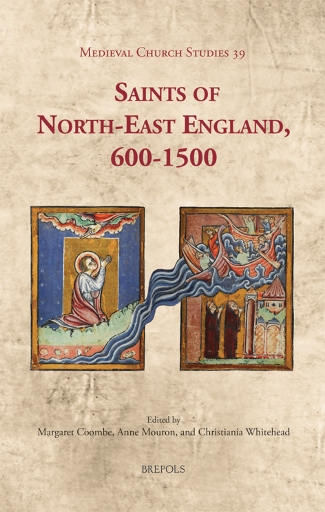
Saints of North-East England, 600-1500
show More to view fulltext, buy and share links for:Saints of North-East England, 600-1500 show Less to hide fulltext, buy and share links for: Saints of North-East England, 600-1500During the seventh and early eighth centuries a number of influential saints’ cults were established within the Anglo-Saxon kingdom of Northumbria, most notably the cult of St Cuthbert served by the monks of Lindisfarne. Reacting to the Danish incursions of the ninth century, the Lindisfarne community gradually migrated south to Durham, where, in the early eleventh century, the relics of further Northumbrian saints were collected to join those of Cuthbert. Following the re-foundation of the Durham church as a Benedictine house in 1083, the community sought to legitimise itself by stressing its links with an ancient, saintly past. A century later, the cults of new hermit saints such as Godric of Finchale and Bartholomew of Farne, extensively modelled on St Cuthbert’s example, were added to the north-eastern Durham familia.
This volume takes an interdisciplinary approach to these north-eastern saints, offering a comprehensive snapshot of new scholarship within the field. The first section focuses on the most eminent saints and hagiographers of Anglo-Saxon Northumbria: Cuthbert, Wilfrid and Bede. The second section examines their utility for the twelfth-century, Anglo-Norman community at Durham, and surveys the cults which emerged alongside, including the early saint-bishops of Hexham Augustinian priory. The third section reviews the material culture which developed around these saints in the fourteenth and fifteenth centuries: their depiction in stained glass, their pilgrimages and processions, and the use of their banners in the Anglo-Scottish wars. A concluding essay re-evaluates the north-eastern cult of saints from post-Reformation perspectives.
-
-
-
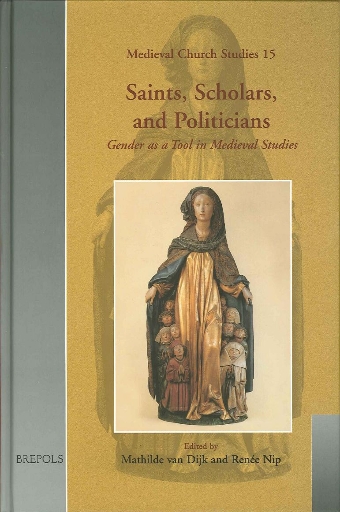
Saints, Scholars, and Politicians
Gender as a Tool in Medieval Studies
show More to view fulltext, buy and share links for:Saints, Scholars, and Politicians show Less to hide fulltext, buy and share links for: Saints, Scholars, and PoliticiansOver the past eighteen years, gender has become a major analytical tool in medieval studies. The purpose of this volume is to evaluate its use and to search for ways in which to improve and enhance its value. The authors address the question of how gender relates to other tools of medieval research. Several articles criticize the way in which an exclusive focus on gender tends to obscure the impact of other factors, for instance class, politics, economy, or the genre in which a source is written. Other articles address ‘wrong’ ways of using gender, for instance monolithic or anachronistic views of what constitutes differences between men and women. The intention is that this selection of case studies further establishes and enhances the indispensability of gender as an analytical tool within medieval studies.
The volume has been produced in recognition of the work of the Groningen medievalist, Anneke B. Mulder-Bakker, on the occasion of her sixty-fifth birthday. She is the person primarily responsible for introducing to the Netherlands gender as a legitimate and useful tool in medieval studies. The contributors are medievalists from a range of countries and different backgrounds. They were selected in order to test Dr Mulder-Bakker’s ideas on methodology and interdisciplinarity through a series of case-studies.
-
-
-

Saints’ Lives for Medieval English Nuns, I
A Study of the ‘Lyves and Dethes’ in Cambridge University Library, MS Additional 2604
show More to view fulltext, buy and share links for:Saints’ Lives for Medieval English Nuns, I show Less to hide fulltext, buy and share links for: Saints’ Lives for Medieval English Nuns, ICambridge University Library, MS Additional 2604 contains a unique prose legendary almost entirely of female saints, all of whom are virgins, martyrs, or nuns. The manuscript, which also has varied post-medieval items, is written in one hand probably dating from c. 1480 to c. 1510. This previously unstudied Middle English collection features twenty-two universal and native saints, both common (like John the Baptist and Æthelthryth) and rare (such as Wihtburh and Domitilla). These texts are dependent on a complex mixture of Latin sources and analogues. Specific linguistic and art-historical features, as well as attention to the predominant female saints of Ely and post-medieval provenance, suggest an East Anglian convent for the original readership. Through an exploration of the manuscript and its later ownership (both recusant and antiquarian), a discussion of its linguistic attributes, a consideration of local female monastic and book history, a comparison of hagiographical texts, and a wide-ranging source and analogue study, this Study fully contextualises these Middle English lives. The book concludes with a survey of the structural and stylistic aspects of the texts, followed by three appendices, and an extensive bibliography. The texts are edited for the first time in its companion volume, Saints’ Lives for Medieval English Nuns, II: An Edition of the ‘Lyves and Dethes’ in Cambridge University Library, MS Additional 2604.
-
-
-

Saints’ Lives for Medieval English Nuns, II
An Edition of the ‘Lyves and Dethes’ in Cambridge University Library, MS Additional 2604
show More to view fulltext, buy and share links for:Saints’ Lives for Medieval English Nuns, II show Less to hide fulltext, buy and share links for: Saints’ Lives for Medieval English Nuns, IICambridge University Library, MS Additional 2604 contains a unique collection of prose saints’ lives evenly divided into eleven universal and eleven native saints (predominantly culted at Ely). Clearly intended for the devotional life of nuns, presumably in an East Anglian convent, the volume comprises nineteen female figures, all of whom are virgins, martyrs, or nuns, and three male saints (two apostles and a hermit). These late Middle English lives are translated from a variety of Latin sources and analogues including material by Jacobus de Voragine, John of Tynemouth, and others. The collection demonstrates an interest in showcasing native saints alongside their universal sisters. Luminaries of the English Church, such as Æthelthryth of Ely and her sister Seaxburh, are found in the company of notable virgin martyrs like Agatha and Cecilia. Famous saints like John the Evangelist and Hild of Whitby feature alongside others such as Columba of Sens and Eorcengota. Fully analysed and contextualised in its companion volume Saints’ Lives for Medieval English Nuns, I: A Study of the ‘Lyves and Dethes’ in Cambridge University Library, MS Additional 2604, these texts are edited here for the first time. Alongside the edition of the twenty-two saints’ lives and full textual apparatus, there are extensive overviews and commentaries providing details of the sources and analogues as well as explanatory historical and literary notes. The edition concludes with three appendices, a detailed select glossary, and a bibliography of works cited.
-
-
-
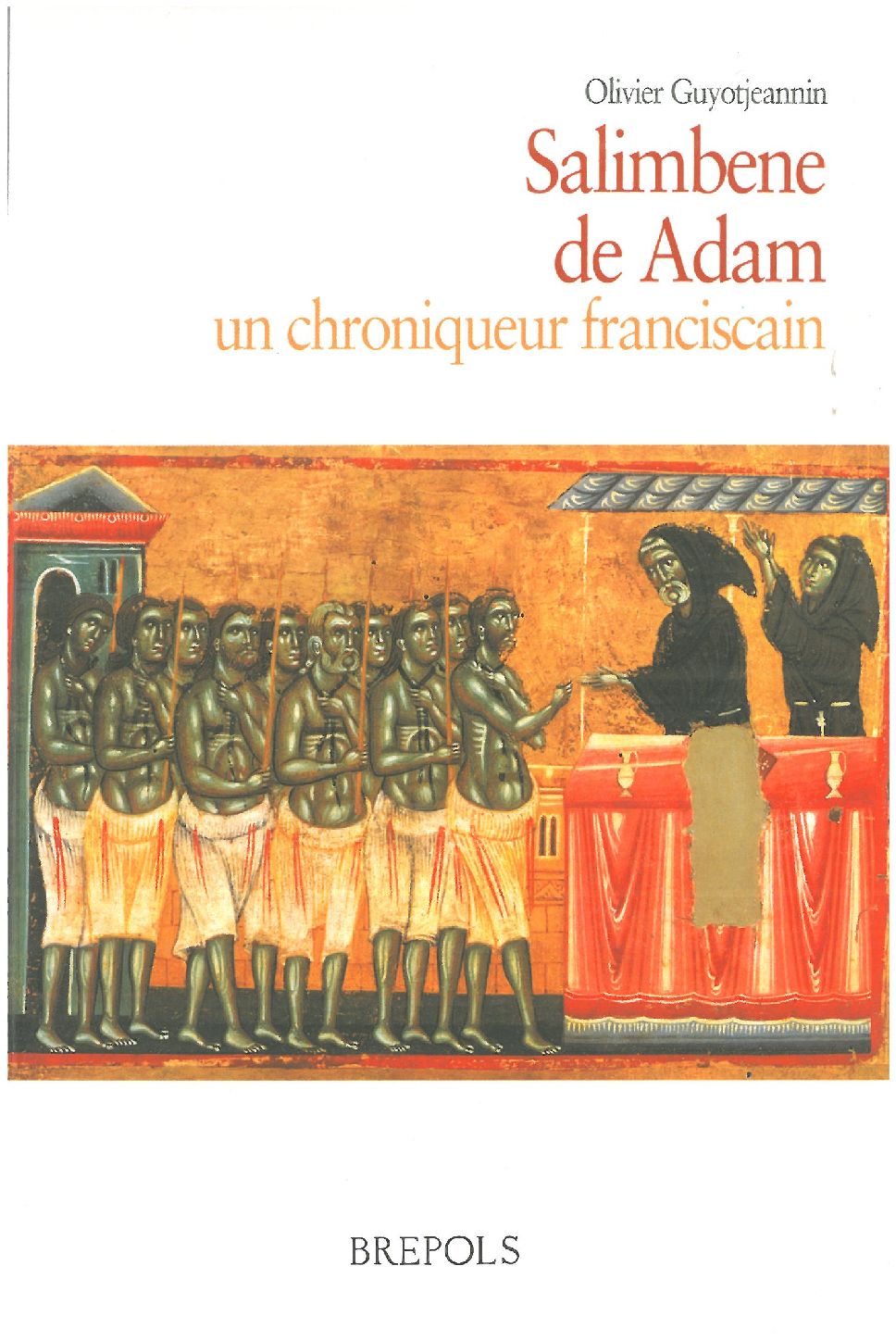
Salimbene de Adam, un chroniqueur franciscain
show More to view fulltext, buy and share links for:Salimbene de Adam, un chroniqueur franciscain show Less to hide fulltext, buy and share links for: Salimbene de Adam, un chroniqueur franciscainÀ la fin des années 1280, Salimbene de Adam, enfant de Parme et franciscain de la province de Bologne, compose une Chronique, dernière et seule conservée de ses oeuvres. Le projet, plutôt banal, est métamorphosé par la volonté de transmettre toute l'expérience d'une vie. L'auditoire restreint, qui contient en germe une faible diffusion, autorise une liberté de ton et une pratique débridée des digressions, qui font de l'oeuvre un prodigieux réservoir de choses vues. Prédicateur, Salimbene a le sens du récit et du détail croqué sur le vif. Jadis marqué par le joachimisme, il traque les signes, consigne et commente les prophéties. Ce qu'il a vu d'espoirs et de déchirements dans l'ordre franciscain, où il a vécu un demi-siècle, de drames et d'ambitions dans la vie communale, dont il connait les ressorts et les protagonistes, de dévotions et de curiosités dans les villes et les campagnes qu'il a parcourues, il veut le transmettre. Hommes et miracles, sanctuaires et prêches, chants et bons mots, joutes oratoires et travaux publics, guerres et éclipses sont évoquées avec l'art du conteur et la science du clerc, nourri de grammaire et d'Écriture: histoires vraies, histoires vues, histoires édifiantes, insérées au fil des années et le plus souvent dans la trame de démonstrations savantes, donnent ainsi naissance à une oeuvre foisonnante et inclassable, qui tient du recueil d'autorités et du répertoire d'histoires exemplaires, du martyrologe et du traité théologico-moral, de la chronique urbaine et du recueil de mirabilia. Salimbene arrive à s'y perdre et les seuls fils que l'on suive de bout en bout sont l'apologie de l'ordre franciscain et les préceptes éthiques. Sa mauvaise foi éclate quand il veut noircir les adversaires et concurrents de l'Ordre, ses préjugés aristocratiques affleurent partout. Sententieux dans ses portraits et partial dans ses préférences, toujours curieux et passionné, il livre sans détour, mais non sans apprêt, un témoignage profondément humain.
-
-
-
Salomon et Saturne
Quatre dialogues en vieil-anglais
show More to view fulltext, buy and share links for:Salomon et Saturne show Less to hide fulltext, buy and share links for: Salomon et SaturneLes dialogues de Salomon et Saturne emmènent le lecteur dans un monde religieux chrétien où se côtoient, s'entrecroisent et s'amalgament des idées, des croyances parfaitement orthodoxes, canoniques, et d'autres apocryphes et légendaires, qui se sont tissés autour des premiers. Ensuite, ces textes sont le fruit de ce que l'on pourrait appeler "le mode de pensée apocryphe", qui n'est pas le propre des premiers siècles seulement, et qui n'a jamais cessé de fonctionner.
Ainsi, les moines des monastères irlandais et anglais du haut moyen âge, du VIIe au XIe siècle, nourris autant par la Bible, les Pères de l'Église, les grands théologiens de l'époque, que par les apocryphes, même les plus fantastiques, ont continué à créer des mondes foisonnant de "fables apocryphes". Ici, ils leur ont donné comme cadre des dialogues entre le roi sage Salomon et le mystérieux Saturne.
Par ces deux dialogues en prose et ses deux poèmes, le lecteur est invité à goûter la saveur d'un ancien monde où les thèmes du christianisme s'expriment sur l'arrière fond culturel germanique.
Robert Faerber a enseigné, à la Faculté des Lettres et Sciences humaines de Strasbourg, la linguistique historique et la poésie médiévale anglaises. Il a déjà fait connaître des thèmes et des textes apocryphes en vieil-anglais, notamment l'Apocalypse de Thomas.
-