


Brepols Online Books Medieval Miscellanea Collection 2012 - bob2012mime

Collection Contents
3 results
-
-
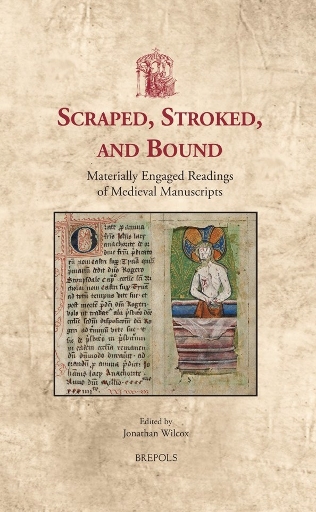
Scraped, Stroked, and Bound
show More to view fulltext, buy and share links for:Scraped, Stroked, and Bound show Less to hide fulltext, buy and share links for: Scraped, Stroked, and BoundThis collection of essays makes an original contribution to medieval manuscript studies through its deep engagement with the material side of book creation, anchored by bringing together major scholars of medieval manuscripts with leading contemporary book artists. The result is a ground-breaking collection that will be of interest both for its methodological implications and for the insights that the case studies provide.
In a sequence of interconnected essays, experts in the field of literature, history, art, and manuscript studies enact readings of medieval manuscripts that incorporate extreme attention to the materiality of the object of their study. While the digital revolution has provided unparalleled access to medieval manuscripts, these essays are attentive to what has got left behind - not just the aura of the original, but also the engagement of the senses, such as the feel of the binding, the heft of the volume, the smell of the parchment, or the sound of the pages. By bringing together experienced medievalist scholars with practicing book artists of today, the present collection brings back an artisanal sense of the complete book to an understanding of medieval manuscripts.
-
-
-
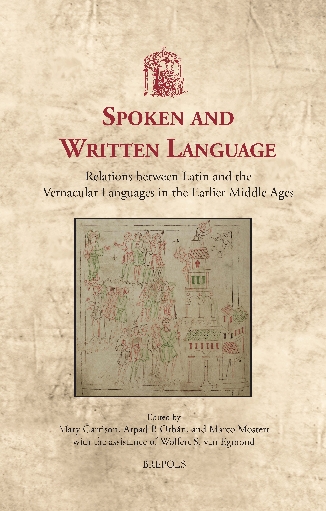
Spoken and Written Language
show More to view fulltext, buy and share links for:Spoken and Written Language show Less to hide fulltext, buy and share links for: Spoken and Written LanguageThe linguistic situation of medieval Europe has sometimes been characterized as one of diglossia: one learned language, Latin, was used for religion, law, and documents, while the various vernaculars were used in other linguistic registers. Informing the relationship between Latin and the vernaculars was the choice of Latin as the language of the Western Roman Empire and the Roman Church. This choice entailed the possibility of a shared literary culture and heritage across Europe, but also had consequences for access to that heritage. Scholarship on the Romance languages has contested the relevance of the term diglossia, and the divergence between written or spoken Latin and Romance is a subject of energetic debate. In other linguistic areas, too, questions have been voiced. How can one characterize the interaction between Latin and the various vernaculars, and between the various vernaculars themselves? To what extent could speakers from separate linguistic worlds communicate? These questions are fundamental for anyone concerned with communication, the transmission of learning, literary history, and cultural interaction in the Middle Ages. This volume contains contributions by historians, cultural historians, and students of texts, language, and linguistics, addressing the subject from their various perspectives but at the same time trying to overcome familiar disciplinary divisions.
-
-
-

Synesios von Kyrene: Politik - Literatur - Philosophie
show More to view fulltext, buy and share links for:Synesios von Kyrene: Politik - Literatur - Philosophie show Less to hide fulltext, buy and share links for: Synesios von Kyrene: Politik - Literatur - PhilosophiePhilosopher and man of letters, Lybian magnate, political writer in Constantinople, pupil of Hypatia the neoplatonist, and eventually metropolitan bishop of Ptolemais - Synesius of Cyrene is among the most interesting figures of Late Antiquity.
The present volume brings together the papers presented at the conference “Synesios von Kyrene: Politik - Literatur - Philosophie”, held at the University of Constance in November 2008. They offer a broad approach to selected aspects concerning Synesius’ works as well as to the historical background, philosophical contexts, and reception in scholarship and literature, from Late Antiquity to the present.
Helmut Seng is Associate Professor at the University of Constance and Lecturer at the Institute of Classical Philology at the University of Frankfurt. Main research interests include Synesius and the Chaldaean Oracles as well as aspects of form and of intertextuality in Greek and Latin literature.
Lars Hoffmann was a researcher at the University of Mainz, where he taught in all fields of Byzantine studies. Since 2010 he has been a researcher at the Max-Planck-Institute for European Legal History at Frankfurt and in collaboration with other scholars, he is responsible for a new edition of a collection of Byzantine legal sources. Main research interests include the cultural history of Byzantium as well as the tradition and reception of ancient and Byzantine Greek texts.
-