


Brepols Online Books Medieval Miscellanea Collection 2012 - bob2012mime

Collection Contents
1 - 20 of 46 results
-
-
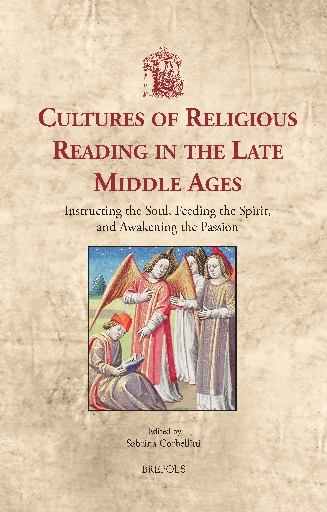
Cultures of Religious Reading in the Late Middle Ages
show More to view fulltext, buy and share links for:Cultures of Religious Reading in the Late Middle Ages show Less to hide fulltext, buy and share links for: Cultures of Religious Reading in the Late Middle AgesRead often, learn all that you can. Let sleep overcome you, the roll still in your hands; when your head falls, let it be on the sacred page.
- St Jerome, 384 AD
With these words, the Church Father Jerome exhorted the young Eustochium to find on the sacred page the spiritual nourishment that would give her the strength to live a life of chastity and to keep her monastic vows. His call to read does not stand alone. Books and reading have always played a pivotal role in early and medieval Christianity, often defined as ‘a religion of the book’.
A second important stage in the development of the ‘religion of the book’ can be attested in the late Middle Ages, when religious reading was no longer the exclusive right of men and women living in solitude and concentrating on prayer and meditation. Changes in the religious landscape and the birth of new religious movements transformed the medieval town into a privileged area of religious activity. Increasing literacy opened the door to a new and wider public of lay readers. This seminal transformation in the late medieval cultural horizon saw the growing importance of the vernacular, the cultural and religious emancipation of the laity, and the increasing participation of lay people in religious life and activities.
This volume presents a new, interdisciplinary approach to religious reading and reading techniques in a lay environment within late medieval textual, social, and cultural transformations.
-
-
-
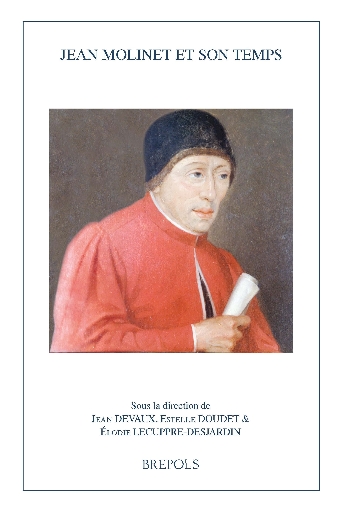
Jean Molinet et son temps
show More to view fulltext, buy and share links for:Jean Molinet et son temps show Less to hide fulltext, buy and share links for: Jean Molinet et son tempsReprésentant majeur de la littérature bourguignonne, poète et chroniqueur, proche des milieux artistiques et notamment musicaux de son époque, Jean Molinet (1435-1507) apparaît comme un auteur fédérateur des études portant sur l’histoire politique et littéraire au tournant des XVe et XVIe siècles. Organisé du 8 au 10 novembre 2007, à l’occasion du cinquième centenaire de la mort de l’écrivain, le colloque dont les actes paraissent aujourd’hui a été le fruit d’une collaboration régionale et transfrontalière entre l’Université de Gand, l’Université Charles-de-Gaulle - Lille 3 et l’Université du Littoral - Côte d’Opale (Dunkerque). Par le croisement des disciplines et des approches, il a contribué de manière décisive à mettre en lumière toute la richesse de cette œuvre foisonnante et sa situation au croisement des espaces et des cultures, reflet de la réalité complexe des principautés bourguignonnes à l’époque où le Moyen Âge s’apprête à épouser la Renaissance.
Jean Devaux est professeur à l’Université du Littoral - Côte d’Opale (Dunkerque et Boulogne-sur-Mer HLLI), où il enseigne la langue et la littérature françaises du Moyen Âge. Spécialiste de littérature bourguignonne, il s’intéresse plus particulièrement à l’historiographie du Bas Moyen Âge français.
Estelle Doudet est maître de conférences en littérature médiévale à l’Université de Lille Nord de France (UDL3- IRHiS). Elle est spécialiste des Grands Rhétoriqueurs et travaille actuellement sur les moralités politiques de la fin du Moyen Âge et de la première modernité.
Élodie Lecuppre-Desjardin est maître de conférences à l’Université de Lille Nord de France (UDL3- IRHiS). Spécialiste d’histoire urbaine et des Pays-Bas bourguignons, elle y enseigne l’histoire médiévale.
-
-
-
La littérature des questions et réponses dans l’Antiquité profane et chrétienne: de l’enseignement à l’exégèse
show More to view fulltext, buy and share links for:La littérature des questions et réponses dans l’Antiquité profane et chrétienne: de l’enseignement à l’exégèse show Less to hide fulltext, buy and share links for: La littérature des questions et réponses dans l’Antiquité profane et chrétienne: de l’enseignement à l’exégèse[Nous associons surtout le genre littéraire des questions et réponses dans l’Antiquité au commentaire sur les écritures saintes. Ce procédé discursif fut pourtant mis à profit dans d’autres genres littéraires et ces perspectives restent largement inexplorées.
Longtemps considérée comme l’héritière du dialogue philosophique, générateur de pensée innovatrice, la littérature par questions et réponses est ici envisagée sous l’angle de l’instruction dans un univers christianisé. Les textes formulés en questions et réponses dans un but pédagogique ont en effet connu une grande popularité et se sont développés au point de ne plus être ni un révélateur de pensée, comme le fut le dialogue philosophique, ni un instrument de mémorisation, comme l’étaient les questions sur les œuvres d’Homère, mais plutôt en vue de rassembler des collections de mini-traités ou de commentaires sur l’Écriture ou des enseignements sur la vie du fidèle.
Les textes réunis dans ce volume explorent la portée didactique du genre des questions et réponses exégétiques, du dialogue dans la littérature initiatique chrétienne gnostique, valentinienne, ou dans la littérature pédagogique tardive, afin de cerner les procédés didactiques, mais aussi le ton et le public auquel s’adressent ces enseignements.
,Question and Answer Literature in Late Antiquity and Early Christianity: From Teaching to Commenting
The question and answer literary genre in Antiquity is most often associated with commentaries on the Scriptures. In ways that remain largely unexplored by scholarship, this discursive technique was also put to good use in other genres as well.
In this volume, question and answer literature, long thought to be inherited from the dialogic method in philosophy, is studied in terms of its educational scope, in a Christianized world. Texts shaped in a question and answer format for a pedagogical purpose were certainly extremely popular in Antiquity and eventually evolved to the point that they no longer served as brewers of thought - as was the case in philosophy - nor as instruments of memorisation - as the grammatical questions on Homeric poems -, but rather for the purpose of gathering short treatises or commentaries on the Scriptures or on teachings for the use of the Christian, layman or cleric.
The texts gathered here explore the didactic perspective of the erotapocritic genre in exegetical texts, of the dialogue technique in initiation gnostic and Valentinian literature, and in Late Antique pedagogical literature, in the hope of outlining not only their mechanism, but also their tone and intended public.
]
-
-
-
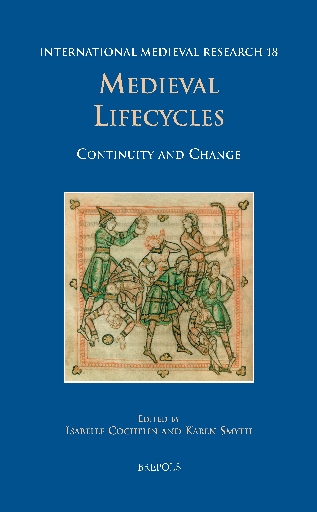
Medieval Life Cycles
show More to view fulltext, buy and share links for:Medieval Life Cycles show Less to hide fulltext, buy and share links for: Medieval Life CyclesThe essays in this collection present new research into a variety of questions on birth, childhood, adolescence, adulthood, middle age, and old age, ordered in a more or less chronological manner according to the life cycle. The volume exposes attitudes and representations of the life cycle from the Anglo-Saxon period to the end of the Middle Ages as being full of inconsistencies as well as definitive categories, and of variation and stasis. This attests to the fact that medieval conceptions and representations of the stages of life and their interrelationships are much more nuanced and less idealized than is usually credited. Medieval conceptual, mental, artistic, cultural, and sociological processes are scrutinized using various approaches and methods that cross disciplinary boundaries. What is emphasized across the volume is that there were varying, context-dependent rhythms of continuity and change in every stage of life in the medieval period. The volume’s selection of authors is international in scope and represents some of the leading current scholarship in the field.
-
-
-
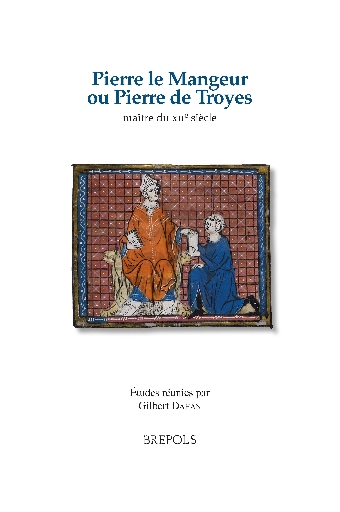
Pierre le Mangeur ou Pierre de Troyes, maître du XIIe siècle
show More to view fulltext, buy and share links for:Pierre le Mangeur ou Pierre de Troyes, maître du XIIe siècle show Less to hide fulltext, buy and share links for: Pierre le Mangeur ou Pierre de Troyes, maître du XIIe sièclePierre le Mangeur, connu également sous le nom de Pierre Comestor, est souvent appelé par ses contemporains Pierre de Troyes. Il est né probablement dans cette ville et y a été doyen du chapitre cathédral. Mais, s’il reste fidèle à cette cité, c’est en tant que maître à Paris qu’il jouit d’une réputation considérable: successeur de son maître Pierre Lombard, il a parmi ses élèves des auteurs aussi prestigieux que Pierre de Poitiers ou Étienne Langton. À la fin de sa vie (il meurt en 1178), il se retire à Saint-Victor de Paris. Son œuvre la plus célèbre est l’Historia scholastica, sorte de manuel d’études bibliques, fondé sur une réécriture des parties narratives de la Bible (jusqu’aux évangiles) et intégrant de nombreux éléments d’exégèse. Commentée pendant une ou deux générations (fin du xii e siècle, début du xiii e), elle fait l’objet d’une adaptation extrêmement bien diffusée en latin, l’Aurora de Pierre Riga, puis de traductions-adaptations en diverses langues vernaculaires, notamment la Bible historiale de Guyart des Moulins (à la fin du xiii e siècle), qui constituera la traduction française la plus répandue de la Bible jusqu’au xvi e siècle. Pierre le Mangeur est aussi l’auteur d’un corpus de 189 sermons, qui laissent percevoir une évolution vers le sermon «moderne» plus tardif, et de commentaires des évangiles très passionnants, en ce qu’ils nous font véritablement entrer dans la classe du maître. Son œuvre théologique, encore mal connue, comprend un nombre important de quaestiones, un traité sur les sacrements et, peut-être, un commentaire des Sentences de Pierre Lombard, dont seuls des fragments nous sont parvenus.
Le présent volume examine ces différents aspects de l’œuvre de Pierre le Mangeur et situe cet auteur dans l’histoire culturelle de son temps: très marqué par les conceptions herméneutiques de Hugues de Saint-Victor (et lié à cette école majeure du xii e siècle), il est aussi l’un des représentants principaux de ce que l’on a pu appeler l’«école biblique-morale» parisienne du dernier tiers du xii e siècle. Le retentissement de son œuvre fait l’objet de plusieurs études et rappelle que l’Historia scholastica a été imprimée dès le dernier quart du xv e siècle.
-
-
-
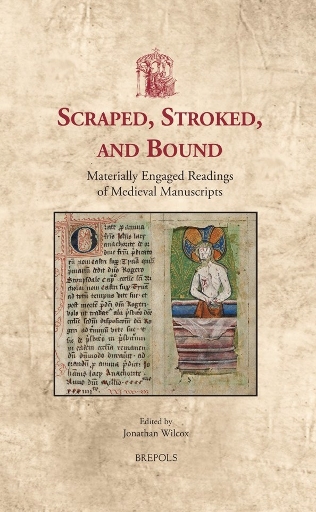
Scraped, Stroked, and Bound
show More to view fulltext, buy and share links for:Scraped, Stroked, and Bound show Less to hide fulltext, buy and share links for: Scraped, Stroked, and BoundThis collection of essays makes an original contribution to medieval manuscript studies through its deep engagement with the material side of book creation, anchored by bringing together major scholars of medieval manuscripts with leading contemporary book artists. The result is a ground-breaking collection that will be of interest both for its methodological implications and for the insights that the case studies provide.
In a sequence of interconnected essays, experts in the field of literature, history, art, and manuscript studies enact readings of medieval manuscripts that incorporate extreme attention to the materiality of the object of their study. While the digital revolution has provided unparalleled access to medieval manuscripts, these essays are attentive to what has got left behind - not just the aura of the original, but also the engagement of the senses, such as the feel of the binding, the heft of the volume, the smell of the parchment, or the sound of the pages. By bringing together experienced medievalist scholars with practicing book artists of today, the present collection brings back an artisanal sense of the complete book to an understanding of medieval manuscripts.
-
-
-
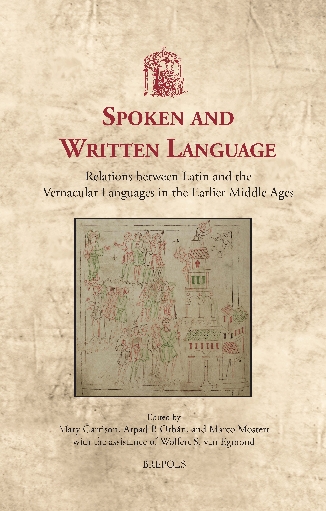
Spoken and Written Language
show More to view fulltext, buy and share links for:Spoken and Written Language show Less to hide fulltext, buy and share links for: Spoken and Written LanguageThe linguistic situation of medieval Europe has sometimes been characterized as one of diglossia: one learned language, Latin, was used for religion, law, and documents, while the various vernaculars were used in other linguistic registers. Informing the relationship between Latin and the vernaculars was the choice of Latin as the language of the Western Roman Empire and the Roman Church. This choice entailed the possibility of a shared literary culture and heritage across Europe, but also had consequences for access to that heritage. Scholarship on the Romance languages has contested the relevance of the term diglossia, and the divergence between written or spoken Latin and Romance is a subject of energetic debate. In other linguistic areas, too, questions have been voiced. How can one characterize the interaction between Latin and the various vernaculars, and between the various vernaculars themselves? To what extent could speakers from separate linguistic worlds communicate? These questions are fundamental for anyone concerned with communication, the transmission of learning, literary history, and cultural interaction in the Middle Ages. This volume contains contributions by historians, cultural historians, and students of texts, language, and linguistics, addressing the subject from their various perspectives but at the same time trying to overcome familiar disciplinary divisions.
-
-
-
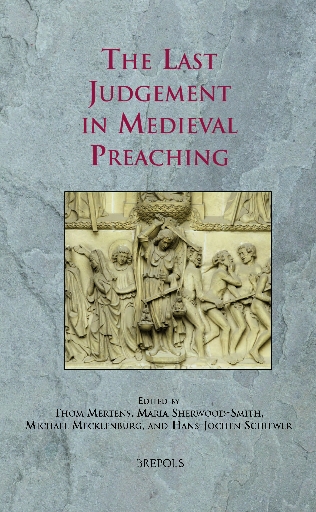
The Last Judgement in Medieval Preaching
show More to view fulltext, buy and share links for:The Last Judgement in Medieval Preaching show Less to hide fulltext, buy and share links for: The Last Judgement in Medieval PreachingIn the Middle Ages, the sermon was a powerful and versatile means of bringing the Word of God to the people. In fact, in the oral culture of that period, it was the primary medium for Christian clergy to convey religious education to lay audiences. Moreover, the sermon played an important role in the liturgy and life of the religious orders. With the growth of lay literacy the sermon collection also developed into a vernacular literary genre of its own.
Two aspects of Christian piety, hopeful expectation on the one hand, and fearful anticipation on the other, were decisive factors for the shaping of religious life and practical pastoral care. Both these aspects were often brought to the fore in sermons on the Last Judgement as part of a recurrent argument against a life too much oriented towards the world. The preachers dwell on both the Particular Judgement occurring immediately after death and the General Judgement over the whole of creation at the end of times.
This volume brings together scholars from several European countries with the purpose to present their research on the theme of the Last Judgement in medieval sermons. The scope of scholars is broadened to incorporate not only specialists in sermon studies, but also historians, theologians, and literary historians to encourage research along new, multi-perspectival lines.
-
-
-
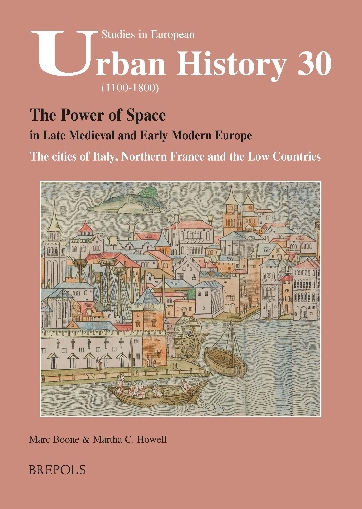
The Power of Space in Late Medieval and Early Modern Europe
show More to view fulltext, buy and share links for:The Power of Space in Late Medieval and Early Modern Europe show Less to hide fulltext, buy and share links for: The Power of Space in Late Medieval and Early Modern EuropeThis volume examines the politics of space in the most densely urbanized areas of Europe during the late Middle Ages and Renaissance. It ranges from Italy to the Parisian region and then to the greater Low Countries, home of Europe’s most powerful commercial cities of the period. Hardly inert sites on which political action took place, the spaces these authors investigate conferred power on those who possessed them. At the same time they were themselves transformed by the struggles, thus acquiring new powers that invited future contest. Thus implicitly responding to Georges Lefebvre’s claim that space is “produced”, the authors ask how space was perceived and used in everyday life, giving specific spaces cultural, social, and political coherence (“le perçu”); how it was represented or theorized, thus encoded in symbols, maps and laws (“le conçu”); and how it was lived, in effect the result of the dialectical relation between the perceived and the represented (“le vécu”).
Marc Boone is full professor of medieval social and political history of the (late) Middle Ages at Ghent University. He has been president of the European Association of Urban History and has published mainly in the field of urban history.
Martha C. Howell is Miriam Champion professor of History at Columbia University (New York). She has published on late medieval and early-modern European gender history and social history.
-
-
-
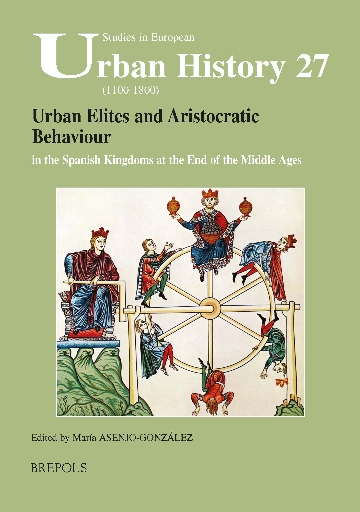
Urban Elites and Aristocratic Behaviour in the Spanish Kingdoms at the End of the Middle Ages
show More to view fulltext, buy and share links for:Urban Elites and Aristocratic Behaviour in the Spanish Kingdoms at the End of the Middle Ages show Less to hide fulltext, buy and share links for: Urban Elites and Aristocratic Behaviour in the Spanish Kingdoms at the End of the Middle AgesThis collection of studies presents the results of research to discover the scope of aristocratic ambitions of the urban elites in the Hispanic kingdoms in the Late Middle Ages. The goal is to gain a greater knowledge of the urban elites in order to discover the social and political motivations of the privileged, those who were able to profit from the mechanisms of social ascension. Aristocratisation is also related to the adoption of values which determined the behavior and mentality under the mark of the dominant feudal culture. The strategies, the resources to move up the social ladder and the ambition of the urban social elite and the occasions used to ensure successful promotion and the results obtained should be brought to light. The variety in the urban elites within the Iberian Peninsula offers comparative possibilities and supposes an important advancement in the knowledge of aspects related to social promotion.
María Asenjo-González, is professor of Medieval History at the Complutense University of Madrid. Her research interest covers Castilian cities from 1250 to 1520 in social, political, economic and cultural aspects.
-
-
-
Agôn. La compétition, Ve-XIIe siècle
show More to view fulltext, buy and share links for:Agôn. La compétition, Ve-XIIe siècle show Less to hide fulltext, buy and share links for: Agôn. La compétition, Ve-XIIe siècleAlors que le monde antique vit au rythme de la compétition individuelle et collective, celle-ci paraît perdre beaucoup de son importance dans l’Occident du haut Moyen Âge. Entre les dernières manifestations des jeux du cirque dans l’Occident latin au VIe siècle et la naissance des tournois chevaleresques à la fi n du XIe siècle, la dimension compétitive s’y efface, sauf exception comme l’Irlande, alors qu’elle garde une importance notable dans le monde byzantin et dans l’Islam. Les concours étaient depuis longtemps en butte aux critiques des penseurs chrétiens, en ce qu’ils ressortissent de la catégorie honnie des spectacles. À partir du milieu du Ve siècle, le coût économique de telles entreprises devint diffi cilement supportable, à un moment où la dépense somptuaire prenait d’autres cibles et où les systèmes de valeurs des royaumes barbares se détournaient des jeux au profi t de l’émulation entre pairs et de l’entraînement. Cependant, la compétition reste largement présente dans d’autres domaines. Les jeux de société intègrent cette dimension. La tradition de la joute oratoire se poursuit, d’Ennode aux tensos et aux jeux partis en passant par les rivalités poétiques de la cour carolingienne. Le vocabulaire de l’agôn est réinvesti par les auteurs chrétiens, sur la base de l’héritage patristique, spécialement à l’époque carolingienne ; avec des hauts et des bas, il s’adapte au martyre et plus généralement au combat de la vie chrétienne. La recherche des femmes, la quête de la gloire aux frontières peuvent aussi être lues au filtre de la compétition. Ces divers aspects sont traités dans le présent volume, qui inaugure une série dédiée à « la compétition dans les sociétés du haut Moyen Âge ».
-
-
-
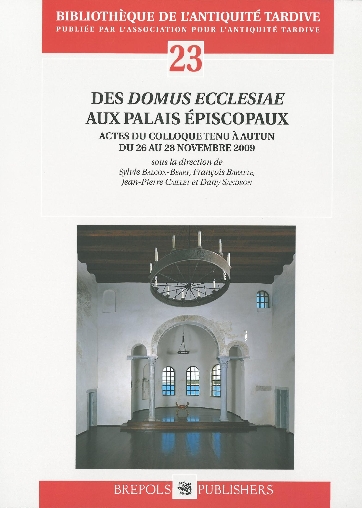
Des 'domus ecclesiae' aux palais épiscopaux
show More to view fulltext, buy and share links for:Des 'domus ecclesiae' aux palais épiscopaux show Less to hide fulltext, buy and share links for: Des 'domus ecclesiae' aux palais épiscopaux[La découverte sur le site archéologique de l’ancien groupe cathédral d’Autun des vestiges probables de la domus ecclesiae mentionnée au VIIe siècle a conduit à examiner la question de ces structures aux fonctions multiples et à étudier leur devenir, puisque bien souvent elles sont à l’origine des palais épiscopaux, comme c’est clairement le cas à Autun.
C’est d’ailleurs à Autun même, dans l’évêché, que s’est tenu ce colloque les 26-28 novembre 2009. Les quatorze présentations ici réunies, qui concernent des cas européens et de l’ensemble du monde méditerranéen, tendent à mieux cerner la configuration des résidences épiscopales primitives par rapport aux édifices de culte, d’en saisir l’organisation et de suivre leur évolution. Elles soulignent également la difficulté de l’interprétation des données textuelles et archéologiques, quand elles existent.
,The discovery on the archeological site of the former cathedral group of Autun of the probable remains of the domus ecclesiae mentioned in the VIIth century led to an examination of the question of these structures with multiple functions and a study of their development, as they are very often at the origin of episcopal palaces, as it is clearly the case in Autun.
It is moreover at Autun itself, in the bishop’s palace, that this conference was held from November 26 to 28, 2009. The fourteen presentations joined together here, which concern European cases as well as those from the whole of the Mediterranean world, tend to define more fully the character of early episcopal residences in respect to buildings for worship, to comprehend their design and to follow their evolution. They also underline the difficulty of the interpretation of the textual and archaeological data, when they exist.
]
-
-
-
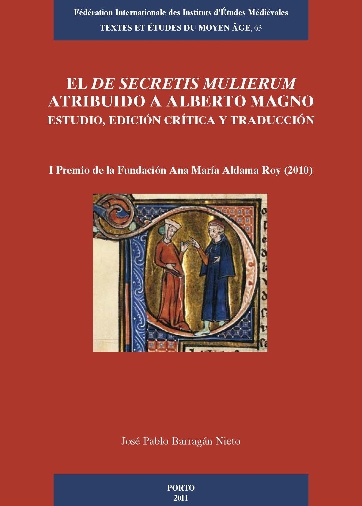
El 'De secretis mulierum' atribuido a Alberto Magno: estudio, edición crítica y traducción
show More to view fulltext, buy and share links for:El 'De secretis mulierum' atribuido a Alberto Magno: estudio, edición crítica y traducción show Less to hide fulltext, buy and share links for: El 'De secretis mulierum' atribuido a Alberto Magno: estudio, edición crítica y traducciónDesde los comienzos de la Baja Edad Media y hasta el siglo XVII circularon por Europa una enorme cantidad de libros que prometían revelar a sus lectores los misterios de la naturaleza y de las artes. Estos «libros de secretos» constituyen un tipo muy particular de literatura técnica, situado a medio camino entre los recetarios y los textos herméticos, y abierto a gran cantidad de temáticas, desde la fisiognomía hasta la magia, aunque las más extendidas fueron la alquimia y la medicina.
En este volumen se presenta la primera edición crítica del De secretis mulierum, un tratado bajomedieval de origen alemán que se inserta dentro de esa tradición de los libros de secretos y que constituye el primer representante de los secreta mulierum o «secretos de las mujeres», un subgénero muy particular, relacionado tanto con la filosofía natural como con la medicina y dedicado a desvelar los misterios del proceso de la generación humana. El De secretis mulierum, que conoció una amplísima difusión durante varios siglos, hecho al que no fue ajena su adscripción, errónea, a Alberto Magno, es un documento de gran importancia no sólo para los investigadores interesados en la filosofía natural y la medicina de las épocas medieval y renacentista, sino también para los que trabajen en campos como la astrología, la fisiognomía o la historia de las mujeres. Todos ellos encontrarán en la edición crítica del tratado una base textual sólida y segura sobre la que llevar a cabo sus investigaciones. El volumen incluye además una traducción del texto latino al castellano, así como un estudio introductorio en el que se realiza un acercamiento general a los libros de secretos medievales, prestando especial atención a los de contenido médico y, dentro de estos, a los secreta mulierum.
José Pablo Barragán Nieto es Doctor en Filología Clásica y licenciado en Teoría de la Literatura y Literatura Comparada por la Universidad de Valladolid. Forma parte del equipo de investigación Speculum medicinae del Departamento de Filología Clásica de la citada Universidad. Ha publicado diversos trabajos sobre lexicografía, textos médicos medievales y medicina antigua y medieval.
-
-
-
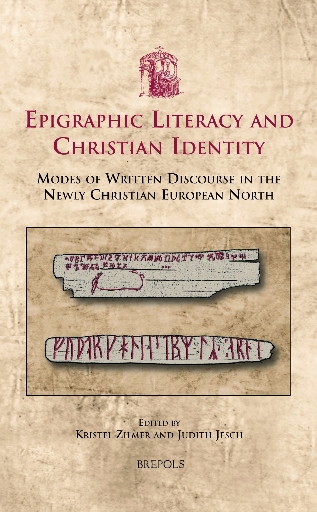
Epigraphic Literacy and Christian Identity
show More to view fulltext, buy and share links for:Epigraphic Literacy and Christian Identity show Less to hide fulltext, buy and share links for: Epigraphic Literacy and Christian IdentityThis volume examines the role of epigraphic literacy within the newly introduced Christian culture and the developing tradition of literacy in Northern Europe during the Viking Age and the High Middle Ages. The epigraphic material under scrutiny here originates from Scandinavia and North-West Russia - two regions that were converted to Christianity around the turn of the first millennium. Besides traditional categories of epigraphic sources, such as monumental inscriptions on durable materials, the volume is concerned with more casual inscriptions on less permanent materials. The first part of the book discusses a form of monumental epigraphic literacy manifested on Scandinavian rune stones, with a particular focus on their Christian connections. The second part examines exchanges between Christian culture and ephemeral products of epigraphic literacy, as expressed through Scandinavian rune sticks, East Slavonic birchbark documents and church graffiti. The essays look beyond the traditional sphere of parchment literacy and the Christian discourse of manuscript sources in order to explore the role of epigraphic literacy in the written vernacular cultures of Scandinavia and North-West Russia.
-
-
-
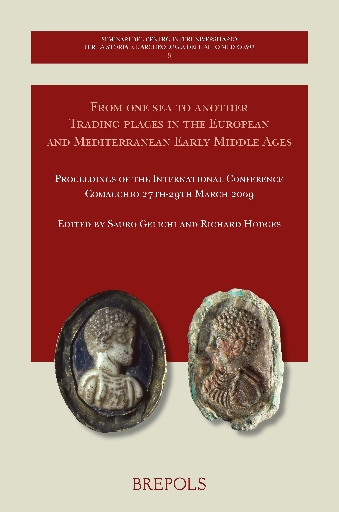
From one sea to another. Trading places in the European and Mediterranean Early Middle ages
show More to view fulltext, buy and share links for:From one sea to another. Trading places in the European and Mediterranean Early Middle ages show Less to hide fulltext, buy and share links for: From one sea to another. Trading places in the European and Mediterranean Early Middle agesRecent excavations at Comacchio as well as archaeological research in the Venetian lagoon are defining the northern Adriatic region as an especially dynamic area in demographic rather than economic terms during the early Middle Ages. This dynamism is best expressed in the form of new centres of settlement with specific characteristics, principally associated with short- and long-distance trade. This phenomenon possesses a strong resemblance to the emergence of similar places along the North Sea coastline from more or less the same period. This phenomenon has been much debated by historians and archaeologists, who have ascribed the source of these new specialized centres (defined as emporia or wics) as prototypes for future mercantile cities and the rebirth of the medieval economy.
The scope of the congress at Comacchio was to evaluate the most recent evidence, in a historical and archaeological context, addressingthe importance of these new Adriatic centres as well as considering comparisons for the first time with the more familiar northern European trading centres.
-
-
-
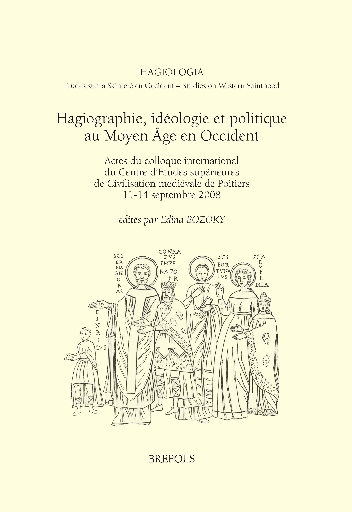
Hagiographie, idéologie et politique au Moyen Âge en Occident
show More to view fulltext, buy and share links for:Hagiographie, idéologie et politique au Moyen Âge en Occident show Less to hide fulltext, buy and share links for: Hagiographie, idéologie et politique au Moyen Âge en OccidentLa reconnaissance de la sainteté et sa propagation par l’écrit et l’image dépendent étroitement de la conjoncture sociale et politique : les saints ont du pouvoir et le pouvoir a ses saints. Issues du congrès international organisé à Poitiers en 2008, les contributions de ce volume analysent les enjeux du culte des saints dans les stratégies du pouvoir ecclésiastique et laïc en Occident du VII e au XV e siècle. La représentation de la sainteté et ses usages sont abordés selon plusieurs axes : la légitimation du pouvoir par le prestige des saints du passé ; l’hagiographie instrumentalisée dans les luttes idéologiques et politiques ; le rapport entre l’iconographie, la mise en valeur des reliques et le contexte historique. Ce bilan des recherches récentes jette un nouvel éclairage sur la question fondamentale de l’imbrication du religieux et du politique à l’époque médiévale
L’auteur
Edina Bozóky est maître de conférences à l’Université de Poitiers, membre du Centre d’Études Supérieures de Civilisation Médiévale. Elle a publié La politique des reliques de Constantin à Saint Louis (Paris) et Le Moyen Âge miraculeux (Paris, 2010) et a édité avec A.-M. Helvétius Les reliques : objets, cultes, symboles (Turnhout, 1999). Elle dirige la collection Culture et société médiévales aux Éditions Brepols
-
-
-
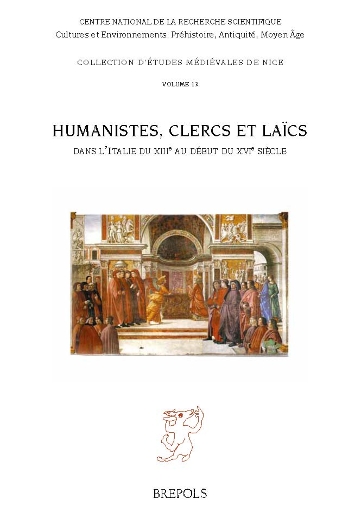
Humanistes, clercs et laïcs dans l’Italie du XIIIe au début du XVIe siècle
show More to view fulltext, buy and share links for:Humanistes, clercs et laïcs dans l’Italie du XIIIe au début du XVIe siècle show Less to hide fulltext, buy and share links for: Humanistes, clercs et laïcs dans l’Italie du XIIIe au début du XVIe sièclePourquoi associer, dans le titre de cet ouvrage, les catégories, usuelles au Moyen Âge, de clercs et de laïcs aux « humanistes », un mot qui n’apparaît dans les documents qu’à l’extrême fin du XVe siècle ? La juxtaposition des trois termes nous rappelle que ces admirateurs et imitateurs des auteurs antiques que nous nommons humanistes appartenaient tant à l’un qu’à l’autre des deux « genres de chrétiens » définis depuis la réforme grégorienne. Ce sont bien des laïcs, en effet, qui ont lancé le mouvement humaniste à Padoue au XIIIe siècle, mais par la suite, des clercs, des frères et des moines y participèrent également.
À la différence d’une historiographie qui a bien souvent privilégié les ruptures et les oppositions entre clercs et laïcs, entre scolastiques et humanistes, les auteurs de ce livre s’intéressent aux continuités, tout en s’affranchissant d’une approche exclusivement littéraire ou philosophique qui est dominante en particulier pour les “grands” humanistes. En prenant en compte les personnages “mineurs” ou les oeuvres “mineures” de grands auteurs, il s’agit également de “démonumentaliser” les oeuvres littéraires et de les examiner du point de vue des échanges féconds entre clercs et laïcs qui ne cessèrent, entre le XIIIe et le début du XVIe siècle, de nourrir la culture urbaine italienne. Les prises de position des humanistes sont ici systématiquement replacées dans le cadre de dynamiques sociales et de réseaux construits.
Les quinze contributions de ce volume ont été regroupées en quatre sections : les deux premières privilégient une analyse des modèles discursifs - c’est le cas pour l’art de la parole, ainsi que pour les champs de l’hagiographie et de la philologie biblique et patristique -, tandis que les deux autres sections privilégient plutôt une approche en termes de réseaux d’appartenance et de posture vis-à-vis des pouvoirs institutionnalisés.
-
-
-
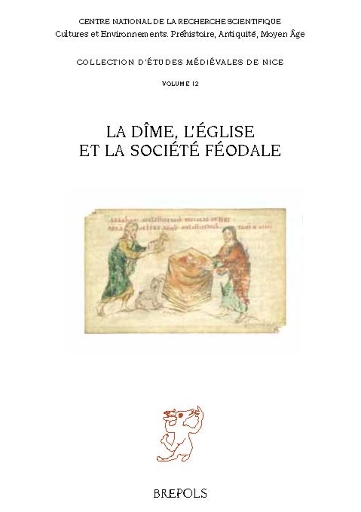
La dîme, l’Église et la société féodale
show More to view fulltext, buy and share links for:La dîme, l’Église et la société féodale show Less to hide fulltext, buy and share links for: La dîme, l’Église et la société féodaleLes auteurs de ce livre s’interrogent sur le rôle historique de la dîme dans le développement des sociétés occidentales. Prélèvement d’un dixième, imposé à tous, en principe sur toute forme de production et en particulier sur les fruits de la terre, destiné à l’entretien des clercs et des pauvres, la dîme fut au Moyen Âge à l’origine de pratiques substantielles de redistribution des biens, en même temps qu’un élément essentiel de structuration des rapports sociaux.
Dans l’histoire variée des dîmes, dont ils s’efforcent de restituer les différentes facettes, des représentations et des normes aux usages sociaux, les historiens qui ont participé à ce volume saisissent les formes d’échanges et de domination caractéristiques de la société féodale, ainsi que la part prise par l’Église dans cette société.
L’ouvrage met en évidence la diversité, tout à la fois chronologique et spatiale, de l’histoire des dîmes. Les contributions relatives aux pratiques du prélèvement concernent la Francie du Nord-Est, de l’Ouest et du Midi, la Bourgogne, ainsi que l’Italie centrale et septentrionale, entre le VIIIe et le XVe siècle ; les chapitres consacrés aux discours sur la dîme évoquent les écrits des Pères de l’Église, les principes élaborés à l’époque carolingienne et les productions (théologiques, juridiques) émanant des intellectuels des XIIe et XIIIe siècles.
Dans un chapitre préliminaire (« Pour une histoire de la dîme et du dominium ecclésial »), Michel Lauwers expose les hypothèse et les résultats du programme de recherche qui a donné lieu à plusieurs rencontres scientifiques depuis 2007 et abouti à ce livre, tandis que, dans une postface (« Des fruits et des hommes »), Mathieu Arnoux propose un certain nombre de perspectives, parfois volontairement décalées par rapport aux travaux ici réunis.
-
-
-
La nature et le vide dans la physique médiévale
show More to view fulltext, buy and share links for:La nature et le vide dans la physique médiévale show Less to hide fulltext, buy and share links for: La nature et le vide dans la physique médiévaleLoin d’être simplement écarté par principe, loin même d’être un thème marginal ou une difficulté à éviter, le vide est tout au long du Moyen Âge l’objet de nombreuses analyses. Les contributions rassemblées dans cet ouvrage examinent quelques-uns des principaux développements qui prennent le vide comme objet ou comme moyen, dans le monde arabe comme dans le monde médiéval latin. Ils traitent du vide en dehors du monde comme du vide à l’intérieur du monde, des différentes définitions du vide, de son rapport au lieu ou bien au mouvement. Ils concernent la physique ou la cosmologie, mais aussi la biologie. Nous avons souhaité dédier ces études à Edward Grant qui, le premier, a mis en lumière l’étendue des problèmes scientifiques traités par les Médiévaux à l’aide du concept de vide.
-
-
-
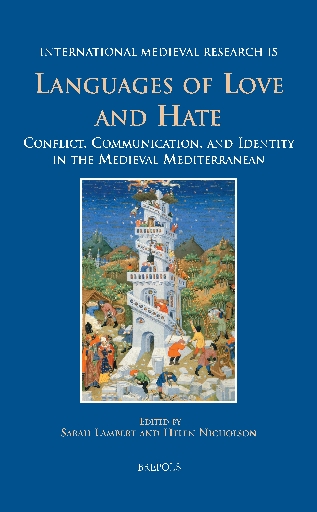
Languages of Love and Hate
show More to view fulltext, buy and share links for:Languages of Love and Hate show Less to hide fulltext, buy and share links for: Languages of Love and HateThis book probes the nature of the clash of cultures as a process of identification and classification of the unknown. ‘There is no world of thought that is not a world of language and one sees of the world only what is provided for by language’ (Walter Benjamin, 1936). In the medieval Mediterranean, cultural groups were frequently labelled, fixed, and identified by language, and these linguistic groupings were consistently in states of conflict and/or exchange. This collection explores various expressions of cultural clash and exchange, and examines some of the ways in which language was used to express difference, to mark out cultural difference, and to further label those cultures – often as alien and inferior, but sometimes as different and worthy of respect. This theme unites papers coming from a range of perspectives and engaging with a whole series of cultural interchanges and conflicts. It brings together work on a wide range of peoples – Latins, Byzantines, Muslims, and Jews – commenting on and writing about each other, as well as a wide variety of different genres, from theology to farce. This volume seeks to offer a broad and wide-ranging approach to understanding the world at the time of the crusades through the words of participants and observers.
-