


Brepols Online Books Medieval Miscellanea Collection 2012 - bob2012mime

Collection Contents
41 - 46 of 46 results
-
-
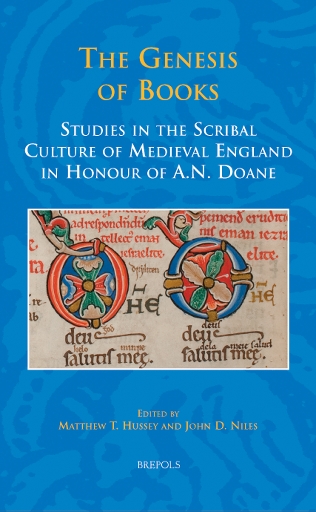
The Genesis of Books
show More to view fulltext, buy and share links for:The Genesis of Books show Less to hide fulltext, buy and share links for: The Genesis of BooksThis volume is about the book itself, as shaped and made by medieval scribes and as conditioned by the cultural understandings that were present in the world where those scribes lived. Questions relating to the provenance, compilation, script, function, and use — both medieval and modern — of manuscripts are raised and are resolved in a fresh manner. The focal point of the volume is Anglo-Saxon England, approached as a cultural crossroads east and west, with attention given to English manuscripts produced both before and after the Conquest. The book thus contributes to a reassessment of early English culture as complex, emergent, and multi-stranded.
A number of different literary genres and types are explored, ranging from devotional materials (e.g. psalters, sermons, and illustrated gospel books) to texts of a more worldly orientation. A number of plates illustrate the work of particular scribes. While some beautiful codices are showcased, the emphasis falls on plain books written in English, including the Vercelli Book, the Exeter Book, and the Blickling Homilies. Analyses of the history of palaeography and the theory of editing raise the point that whatever we know from old books is conditioned by the tools used to study them.
-
-
-
Théorie et pratiques des élites au Haut Moyen Âge. Conception, perception et réalisation sociale
show More to view fulltext, buy and share links for:Théorie et pratiques des élites au Haut Moyen Âge. Conception, perception et réalisation sociale show Less to hide fulltext, buy and share links for: Théorie et pratiques des élites au Haut Moyen Âge. Conception, perception et réalisation socialeLe programme de recherche international sur «Les élites dans le haut Moyen Âge occidental. Formation, identité, reproduction» (2002-2009) s’est donné pour objectif d’examiner dans une perspective comparative, à l’échelle européenne, les catégories sociales dominantes aussi bien laïques qu’ecclésiastiques, celles de la cour autant que celles des régions. Le sixième et dernier volume issu de ce projet fournit d’abord un bilan et une synthèse des travaux. Il associe par ailleurs à ces premiers acquis une analyse des concepts, de la perception et de la façon dont les élites se concevaient elles-mêmes. Il tente enfin de vérifier, sur la base de dossiers régionaux ou d’enquêtes sur des catégories particulières, dans quelle mesure la perception médiévale était en conformité avec les pratiques.L’étude du vocabulaire et des concepts relatifs aux élites du haut Moyen Âge s’est orientée autour du questionnement suivant: qu’est-ce qui, du point de vue moderne, relève des élites? Qui, du point de vue des contemporains, appartenait à ce(s) groupe(s) dominant(s)? Selon quels critères lexicaux et conceptuels définissait-on les élites? Par quels moyens se démarquaient-elles dans la perspective des contemporains et à leurs propres yeux? Établissait-on une hiérarchie entre les critères de distinction? Selon quels modèles théoriques étaient-ils distingués (et quel contenu donnait-on à ces modèles)? Dans quelle mesure les concepts actuels d’élites sont-ils applicables au haut Moyen Âge? Au registre des pratiques sociales, plusieurs études de cas permettent de saisir ce qui démarquait concrètement les élites par rapport au reste de la population, tout en se demandant dans quelle mesure cette réalité sociale correspondait aux représentations mentales des élites et si les concepts s’adaptaient à une réalité changeante, ou l’inverse. Plusieurs types d’élites sont envisagés, avec leurs particularités, leurs hiérarchies internes et leurs évolutions, enfin l’imbrication des groupes dominants entre eux.
-
-
-
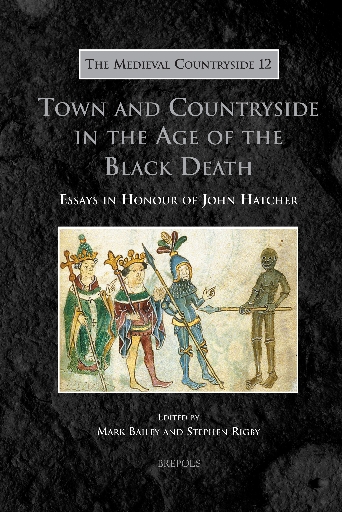
Town and Countryside in the Age of the Black Death
show More to view fulltext, buy and share links for:Town and Countryside in the Age of the Black Death show Less to hide fulltext, buy and share links for: Town and Countryside in the Age of the Black DeathThe arrival of the Black Death in England, which killed around a half of the national population, marks the beginning of one of the most fascinating, controversial and important periods of English social and economic history. This collection of essays on English society and economy in the later Middle Ages provides a worthy tribute to the pioneering work of John Hatcher in this field. With contributions from many of the most eminent historians of the English economy in the later Middle Ages, the volume includes discussions of population, agriculture, the manor, village society, trade, and industry. The book’s chapters offer original reassessments of key topics such as the impact of the Black Death on population and its effects on agricultural productivity and estate management. A number of its studies open up new areas of research, including the demography of coastal communities and the role of fairs in the late medieval economy, whilst others explore the problems of evidence for mortality rates or for change within the village community. Bringing together broad surveys of change and local case studies based on detailed archival research, the chapters offer an assessment of previous work in the field and suggest a number of new directions for scholarship in this area.
-
-
-

Vehicles of Transmission, Translation, and Transformation in Medieval Textual Culture
show More to view fulltext, buy and share links for:Vehicles of Transmission, Translation, and Transformation in Medieval Textual Culture show Less to hide fulltext, buy and share links for: Vehicles of Transmission, Translation, and Transformation in Medieval Textual CultureIn this volume the McGill University Research Group on Transmission, Translation, and Transformation in Medieval Cultures and their collaborators initiate a new reflection on the dynamics involved in receiving texts and ideas from the antiquity or from other contemporary cultures. For all their historic specificity, the western European, Arab/Islamic and Jewish civilizations of the Middle Ages were nonetheless co-participants in a complex web of cultural transmission that operated via translation and inevitably involved the transformation of what had been received. This threefold process is what defines medieval intellectual history. Every act of transmission presumes the existence of some ‘efficient cause’ – a translation, a commentary, a book, a library etc. Such vehicles of transmission, however, are not passive containers in which cultural products are transported. On the contrary: the vehicles themselves select, shape, and transform the material transmitted, making ancient or alien cultural products usable and attractive in another milieu. The case studies contained in this volume attempt to bring these larger processes into the foreground. They lay the groundwork for a new intellectual history of medieval civilizations in all their variety, based on the core premise that these shared not only a cultural heritage from antiquity but, more importantly, a broadly comparable ‘operating system’ for engaging with that heritage. Each was a culture of transmission, claiming ownership over the prestigious knowledge inherited from the past. Each depended on translation. Finally, each transformed what it appropriated.
-
-
-

Wycliffite Controversies
show More to view fulltext, buy and share links for:Wycliffite Controversies show Less to hide fulltext, buy and share links for: Wycliffite ControversiesThe philosophical and theological ideas of John Wyclif, their dissemination among clerical and lay audiences, and the movement of religious dissent associated with his name all provoked sharp controversies in late medieval England. This volume brings together the very latest scholarship on Wyclif and Wycliffism, with its contributors exploring in interdisciplinary fashion the historical, literary, and theological resonances of the Wycliffite controversies. Far from adhering to the traditional binary divide between ‘orthodoxy’ and ‘heresy’ as a tool for explaining the religious turmoil of the late fourteenth, fifteenth, and early sixteenth centuries, essays here explore the construction and rhetorical use of those terms, collectively producing a more nuanced account of the religious history of pre-Reformation England. Topics include the use of religious lyrics and tables of lessons as indirect rebuttals of Wycliffite claims; the social networks through which dissenters transmitted their ideas; dissenting and mainstream readings of Scripture; the ‘survival’ of Wycliffism in the run-up to Henry VIII’s reformation; and the fate of Wyclif and Wycliffism in later historiography. Leading contributors include Anne Hudson, Alastair Minnis, and Peter Marshall.
-
-
-
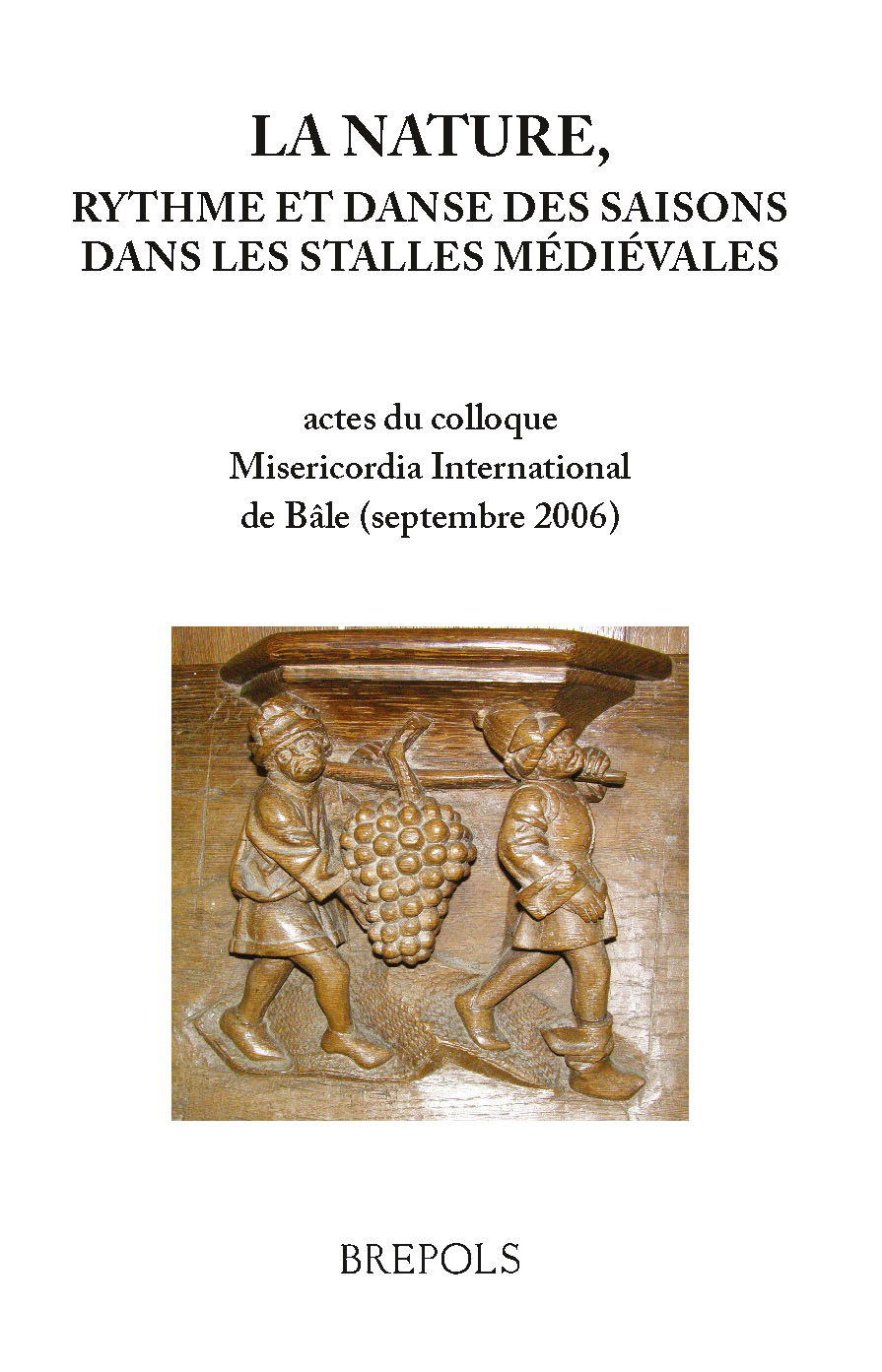
La nature, rythme et danse des saisons dans les stalles médiévales
show More to view fulltext, buy and share links for:La nature, rythme et danse des saisons dans les stalles médiévales show Less to hide fulltext, buy and share links for: La nature, rythme et danse des saisons dans les stalles médiévales
-