Brepols Online Books Medieval Miscellanea Collection 2012 - bob2012mime

Collection Contents
21 - 40 of 46 results
-
-
Le cheval dans les sociétés antiques et médiévales
show More to view fulltext, buy and share links for:Le cheval dans les sociétés antiques et médiévales show Less to hide fulltext, buy and share links for: Le cheval dans les sociétés antiques et médiévales[Ces Actes des Journées d’étude internationales (Strasbourg, 6-7 novembre 2009) sont l’aboutissement d’un programme de recherche (2007-2009), mené au sein de l’UMR 7044 (Étude des civilisations de l’Antiquité : de la Préhistoire à Byzance), sur la place du cheval dans l’empire byzantin. Les 14 contributions qu’ils réunissent sont consacrées au cheval de guerre et de loisir dans l’Antiquité et au Moyen Âge.
L’ouvrage est divisé en trois sections. Dans la première, les contributeurs analysent la naissance du corps de cavalerie dans l’armée romaine et ses emplois. Sont également étudiés les différences régionales du pourtour méditerranéen dans l’élevage du cheval, les prix pratiqués ou encore les connaissances hippologiques des Anciens. Les travaux qui composent la deuxième partie proposent des synthèses sur le cheval médiéval, byzantin et occidental. Ils abordent le sujet à travers les textes, les sources archéologiques, les représentations et les us et coutumes des civilisations étudiées. Enfin, la dernière partie s’intéresse aux instruments hippiques, aux armes et à l’hippiatrie. Y sont ainsi réexaminées les innovations, adoptions et adaptations, dans l’Antiquité tardive, des pièces de l’équipement équin essentielles pour le combat, telles que l’étrier et le mors. Les armes des cavaliers sont réévaluées, ainsi que les changements dans leurs techniques de combat suite à la diffusion de l’étrier. On trouvera aussi l’analyse du vocabulaire employé pour l’anatomie du cheval dans la littérature hippiatrique grecque, qui connaît à cette période un essor sans précédent, lié au développement de la cavalerie romaine et protobyzantine.
,These Actes des Journées d’étude internationales (Strasbourg, 6-7 November 2009) are the end result of a 2007-2009 research programme held at the UMR 7044 (Étude des civilisations de l’Antiquité: de la Préhistoire à Byzance) on the role of the horse in the Byzantine Empire. These fourteen contributions focus on the role of the horse in both war and leisure from Antiquity to the Middle Ages.
The book is divided into three sections. In the first, the contributors analyze the origins and use of cavalry in the Roman army. Additionally, this section explores the regional differences in the breeding of horses throughout the Mediterranean, their monetary value, as well as the hippological knowledge of Antiquity. The chapters constituting the second part discuss the medieval, Byzantine, and western horse. They approach this subject via texts, archaeological sources, illustrations, and an examination of the customs and traditions of these civilizations. The final part focuses on hippological instruments, weapons, and the care of horses. Here the contributors examine the innovations, adoptions, and adaptations during late Antiquity of pieces of equestrian equipment essential for war, such as stirrups and bits. Horsemen’s weapons are re-evaluated, as well as the changes in their tactics brought about by the widespread adoption of stirrups. Also present is an analysis of the vocabulary used for the anatomy of the horse in Greek hippological literature, which saw an unprecedented increase at this time thanks to the development of the Roman and Proto-Byzantine cavalry.
]
-
-
-
Le châtiment des villes dans les espaces méditerranéens (Antiquité, Moyen Âge, Époque moderne)
show More to view fulltext, buy and share links for:Le châtiment des villes dans les espaces méditerranéens (Antiquité, Moyen Âge, Époque moderne) show Less to hide fulltext, buy and share links for: Le châtiment des villes dans les espaces méditerranéens (Antiquité, Moyen Âge, Époque moderne)Les villes comme organismes politiques ont souvent été l’objet d’une répression spécifique de la part de leurs ennemis ou d’une autorité souveraine. Des mesures les plus symboliques, comme l’abattis des murailles, aux plus radicales, comme la réduction en esclavage des populations ou l’éradication a fundamento du bâti, le châtiment des cités reflète la place que ces dernières occupaient dans l’économie des pouvoirs. L’approche comparatiste ici privilégiée permet de voir, sur la très longue durée, de la haute Antiquité à la Révolution française, les modalités de la punition, la réflexion sur la licéité ou la pertinence de la sanction, les discours et les représentations que ces dispositifs déployaient. C’est donc un regard singulier sur l’histoire urbaine qu’apportent ces études, comblant de fait une étonnante lacune historiographique.
-
-
-

Multilingualism in Medieval Britain (c. 1066-1520)
show More to view fulltext, buy and share links for:Multilingualism in Medieval Britain (c. 1066-1520) show Less to hide fulltext, buy and share links for: Multilingualism in Medieval Britain (c. 1066-1520)This book is devoted to the study of multilingual Britain in the later medieval period, from the Norman Conquest to John Skelton. It brings together experts from different disciplines — history, linguistics, and literature - in a joint effort to recover the complexities of spoken and written communication in the Middle Ages. Each author focuses on one specific text or text type, and demonstrates by example what careful analysis can reveal about the nature of medieval multilingualism and about medieval attitudes to the different living languages of later medieval Britain. There are chapters on charters, sermons, religious prose, glossaries, manorial records, biblical translations, chronicles, and the macaronic poetry of William Langland and John Skelton. By addressing the full range of languages spoken and written in later medieval Britain (Latin, French, Old Norse, Welsh, Cornish, English, Dutch, and Hebrew), this collection reveals the linguistic situation of the period in its true diversity and shows the resourcefulness of medieval people when faced with the need to communicate. For medieval writers and readers, the ability to move between languages opened up a wealth of possibilities: possibilities for subtle changes of register, for counterpoint, for linguistic playfulness, and, perhaps most importantly, for texts which extend a particular challenge to the reader to engage with them.
-
-
-

Philosophy and Theology in the 'Studia' of the Religious Orders and at Papal and Royal Courts
show More to view fulltext, buy and share links for:Philosophy and Theology in the 'Studia' of the Religious Orders and at Papal and Royal Courts show Less to hide fulltext, buy and share links for: Philosophy and Theology in the 'Studia' of the Religious Orders and at Papal and Royal CourtsMost scholars know that the great universities were the institutional setting of Scholastic philosophical and theological activity in the later Middle Ages. Fewer realize, however, that perhaps far more Scholastic learning in the liberal arts and theology took place in the studia or study-houses of the religious orders, which out-numbered the universities and were more widely distributed across Europe. Indeed, most members of the mendicant orders received most or all of their learning in the liberal arts and theology in the studia of their order, and the most famous members of the orders (e.g., Albert the Great, Thomas Aquinas and John Duns Scotus) spent more time teaching in the studia than they did serving as Regent Masters in the university proper. As a consequence, the greater part of later medieval Scholastic literature was produced in the institutional context of the studia of the religious orders. Moreover, there were other significant institutional loci for Scholastic learning and discourse in the later Middle Ages besides the universities and the study-houses, namely the Papal Court—notably the Sacred Palace at Avignon—and several royal courts, for example, the courts of Robert the Wise in Naples and of the Emperor Lewis IV in Munich. It is not surprising, therefore, that many of the greatest Scholastic masters at different times taught in, or were associated with, all of these venues. This volume, which originated at the XVth annual Colloquium of the Société Internationale pour l’Étude de la Philosophie Médiévale held at the University of Notre Dame (USA) in October 2008, contains essays concerning the study and teaching of philosophy and theology in the studia of the Dominicans, Franciscans, Augustinian Hermits, Carmelites, Benedictines and Cistercians, as well as the intellectual activity at the Papal Court in Rome and Avignon and at various royal courts (London, Naples, Munich).Contributions by: Fabrizio Amerini, Luca Bianchi, Alain Boureau, Stephen F. Brown, Amos Corbini, William O. Duba, Russell L. Friedman, Hester G. Gelber, Joseph Goering, Wouter Goris, Guy Guldentops, Jacqueline Hamesse, Maarten J.F.M. Hoenen, Roberto Lambertini, Alfonso Maierù, Michèle Mulchahey, Patrick Nold, Adriano Oliva, OP, Alessandro Palazzo, Giorgio Pini, Sylvain Piron, François-Xavier Putallaz, Christopher D. Schabel and Garrett R. Smith, Neslihan ?enocak, Thomas Sullivan, OSB, Christian Trottmann, with an introduction by Kent Emery, Jr. and an epilogue by William J. Courtenay.
-
-
-

Synesios von Kyrene: Politik - Literatur - Philosophie
show More to view fulltext, buy and share links for:Synesios von Kyrene: Politik - Literatur - Philosophie show Less to hide fulltext, buy and share links for: Synesios von Kyrene: Politik - Literatur - PhilosophiePhilosopher and man of letters, Lybian magnate, political writer in Constantinople, pupil of Hypatia the neoplatonist, and eventually metropolitan bishop of Ptolemais - Synesius of Cyrene is among the most interesting figures of Late Antiquity.
The present volume brings together the papers presented at the conference “Synesios von Kyrene: Politik - Literatur - Philosophie”, held at the University of Constance in November 2008. They offer a broad approach to selected aspects concerning Synesius’ works as well as to the historical background, philosophical contexts, and reception in scholarship and literature, from Late Antiquity to the present.
Helmut Seng is Associate Professor at the University of Constance and Lecturer at the Institute of Classical Philology at the University of Frankfurt. Main research interests include Synesius and the Chaldaean Oracles as well as aspects of form and of intertextuality in Greek and Latin literature.
Lars Hoffmann was a researcher at the University of Mainz, where he taught in all fields of Byzantine studies. Since 2010 he has been a researcher at the Max-Planck-Institute for European Legal History at Frankfurt and in collaboration with other scholars, he is responsible for a new edition of a collection of Byzantine legal sources. Main research interests include the cultural history of Byzantium as well as the tradition and reception of ancient and Byzantine Greek texts.
-
-
-
Tolerancia: teoría y práctica en la Edad Media
show More to view fulltext, buy and share links for:Tolerancia: teoría y práctica en la Edad Media show Less to hide fulltext, buy and share links for: Tolerancia: teoría y práctica en la Edad MediaEl concepto de tolerancia no es simple y admite una multiplicidad de comprensiones y matices que se han ido desarrollando y perfeccionando a lo largo de los siglos. No se trata, por eso mismo, de un término totalmente unívoco que haya mantenido la integridad de sus notas esenciales de un modo inalterado a través del tiempo sino que ha sido justamente el tiempo, el pensamiento y la práctica de las sociedades humanas los que han modelado un valor que, en la actualidad, es indiscutido. Es precisamente por este motivo que cada época histórica ha conocido diversas conceptualizaciones y prácticas de la tolerancia.
El Coloquio Anual de la FIDEM 2011, realizado en la Universidad Nacional de Cuyo (Mendoza) discutió acerca de la teoría y la práctica de la tolerancia durante la Edad Media, y son sus resultados los que se exponen en este volumen. Esta temática puede ser abordada desde dos ángulos diversos. Por un lado, la teoría del concepto, y es por eso que varios capítulos del libro se aplican a analizarla desde el punto de vista filosófico a través de las obras de una serie de importantes autores que abarcan varios siglos de pensamiento, desde la Patrística hasta la Edad Media tardía, incluyendo también a los representantes de la denominada “escolástica colonial”. Por otro lado, la práctica de la tolerancia durante el largo periodo medieval es también tenida en cuenta a través de diversas disciplinas interesadas en el medioevo, tales como la historia y la literatura.
-
-
-

Études d'exégèse médiévale offertes à Gilbert Dahan par ses élèves
show More to view fulltext, buy and share links for:Études d'exégèse médiévale offertes à Gilbert Dahan par ses élèves show Less to hide fulltext, buy and share links for: Études d'exégèse médiévale offertes à Gilbert Dahan par ses élèvesAprès les ouvrages classiques de Beryl Smalley et Henri de Lubac, les travaux de Gilbert Dahan ont renouvelé les études sur l’exégèse de la Bible en Occident chrétien au moyen âge. Tout d’abord, l’attention qu’il a portée aux méthodes mêmes de l’exégèse a mis en valeur les questions de critique textuelle et le schématisme de la démarche des exégètes. Mais son souci de caractériser une « herméneutique médiévale » a permis aussi de montrer combien exégèse « confessante » et exégèse « scientifique » (pour employer les catégories de Paul Ricoeur) construisent harmonieusement le sens, notamment chez les auteurs du XIIIe siècle.
Ces recherches ont été l’objet de son enseignement à l’École pratique des hautes études (Section des sciences religieuses), dans la chaire « Histoire de l’exégèse chrétienne au moyen âge ». Plusieurs de ses « élèves » ou auditeurs lui offrent le présent recueil d’études, qui illustrent la fécondité de son enseignement, au point qu’on peut parler d’un renouveau des études bibliques médiévales chez les jeunes chercheurs en France. Ses travaux ont aussi donné des outils d’analyse aux historiens et sociologues du moyen âge et même de l’époque moderne.
Plusieurs des aspects de cette recherche sont ici illustrés : critique textuelle à l’époque carolingienne, étude de thèmes ou de versets particuliers, méthodes des commentateurs - mais aussi présence de la Bible en dehors même de l’exégèse, dans les traductions, dans la réfl exion politique ou dans la controverse avec les juifs.
Annie Noblesse-Rocher est professeur d’histoire du christianisme médiéval et moderne à la Faculté de théologie protestante, Université de Strasbourg. Elle poursuit des recherches sur les commentaires monastiques médiévaux (L’expérience de Dieu dans les sermons de Guerric, abbé d’Igny, xii e siècle, Paris, Cerf, 2005) et sur ceux de la première modernité (en particulier sur Martin Bucer, dont elle édite des oeuvres).
Contributeurs : Claire Angotti, Emmanuel Bain, Timothy Bellamah, Hedwige Boff y-de Bouteiller, Caroline Boucher, Adrien Candiard, Caroline Chevalier-Royet, Sophie Delmas, Maria Valeria Ingegno, Kristina Mitalaité, Brigitte Prévot, Anne-Zoé Rillon-Marne, Lydwine Scordia, Sumi Shimahara, Claire Soussen-Max.
-
-
-
Adorare caelestia, gubernare terrena. Atti del Colloquio Internazionale in onore di Paolo Lucentini (Napoli, 6-7 Novembre 2007), Arfé, Caiazzo, Sannino
show More to view fulltext, buy and share links for:Adorare caelestia, gubernare terrena. Atti del Colloquio Internazionale in onore di Paolo Lucentini (Napoli, 6-7 Novembre 2007), Arfé, Caiazzo, Sannino show Less to hide fulltext, buy and share links for: Adorare caelestia, gubernare terrena. Atti del Colloquio Internazionale in onore di Paolo Lucentini (Napoli, 6-7 Novembre 2007), Arfé, Caiazzo, SanninoAdorare caelestia, gubernare terrena indica una pericope dell’Asclepius che declina la natura essenziale e corporea dell’uomo in relazione alla duplice funzione del suo essere: «ammirare e adorare le realtà celesti, custodire e governare le realtà terrene» (Ascl. 8). Sotto questa epigrafe sono raccolti i contributi di venticinque studiosi che hanno inteso rendere omaggio a Paolo Lucentini (1937-2011), medievista di rilievo internazionale, fondatore e direttore di Hermes Latinus, il programma di ricerca per lo studio e per l’edizione dei testi ermetici, pubblicato nella collana del Corpus Christianorum. Continuatio Mediaeualis (Brepols, Turnhout). I saggi contenuti nel volume coprono un ampio arco cronologico, dalla tarda antichità all’epoca moderna, e sostanzialmente afferiscono ai tre filoni tematici perseguiti da Lucentini nella sua carriera scientifica: platonismo, ermetismo e eresia. Di filosofie dissidenti si sono occupate Alessandra Beccarisi e Antonella Straface. Allo studio della tradizione ermetica si sono dedicati Charles Burnett, Stefano Caroti, Chiara Crisciani, Peter Dronke, Michele Fatica, Françoise Hudry, Ilaria Parri e Pinella Travaglia; alle filosofie e alle tradizioni scientifiche medievali: Paul Kunitzsch, Fabrizio Lelli, Alfonso Maierù, Vittoria Perrone Compagni, Gregorio Piaia, Antonella Sannino, Valeria Sorge; agli influssi del platonismo: Pasquale Arfé, Carmela Baffioni, Irene Caiazzo, Luigi Catalani, Giulio d’Onofrio, Mark Delp, Michela Pereira e Pasquale Porro.
-
-
-
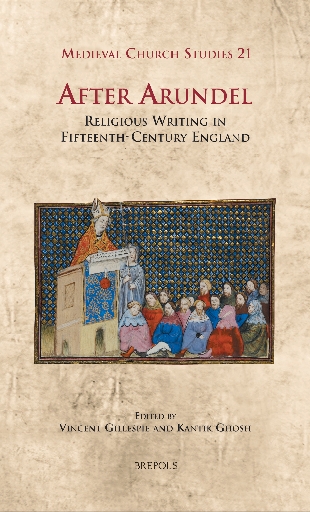
After Arundel
show More to view fulltext, buy and share links for:After Arundel show Less to hide fulltext, buy and share links for: After ArundelEngland’s religious life in the fifteenth century is worthy of sustained, nuanced, and meticulous analysis. This book offers a portrait of late medieval English religious theory and praxis that complicates any attempt to present the period as either quivering in the post-traumatic stress of Lollardy, or basking in the autumn sunshine of an uncritical and self-satisfied hierarchy’s failure to engage with undoubted European and domestic crises in ecclesiology, pastoral theology, anti-clericalism, and lay spiritual emancipation. After Arundel means not just because of or despite Archbishop Arundel (and the repressive legislation associated with him), for it also asks what models and taxonomies will be needed to move beyond Arundel as a fixed star in the firmament of (especially literary) scholarship in the period. It aims to supply the next phase of scholarly exploration of this still often dark continent of religious attitudes and writing with new tools and technical vocabularies, as well as to suggest new directions of travel.
-
-
-

Anselm of Canterbury (1033-1109). Philosophical Theology and Ethics
show More to view fulltext, buy and share links for:Anselm of Canterbury (1033-1109). Philosophical Theology and Ethics show Less to hide fulltext, buy and share links for: Anselm of Canterbury (1033-1109). Philosophical Theology and EthicsThis volume collects several studies on Anselm of Canterbury’s philosophical theology and ethics originally presented at the Third International Conference of Medieval Philosophy at the Pontifical Catholic University of Rio Grande do Sul (PUCRS), Porto Alegre / Brazil, 02-04 September 2009. In commemoration of the 900th anniversary of Anselm’s death, the conference facilitated a unique exchange of ideas among Latin American, North American and European scholars on current issues in Anselmian scholarship. The papers included in the volume concern diverse areas of interest: Anselm’s method in different phases of his career and his attitude towards philosophy; Anselm’s contribution to logic and semantics in De grammatico; the continuing challenge of interpreting his “proof” in Proslogion (revisited with an eye into contemporary accounts of his unum argumentum); the topic of guilt and punishment in Anselm’s works, as well as the understanding of his moral-theological project, in dialogue with contemporary discussions of deontology; the fundamental aspects of his view on human being; the reception of Anselm’s theory of perfections in Duns Scotus’s metaphysics; and the place of Anselm’s thought in Karl Barth’s understanding of theology. These contributions, through their engagement with Anselm’s works, seek to shed light on philosophical and theological issues of perennial interest.
The volume contain the contributions of R.H. Pich (Porto Alegre), C. Viola (Paris), S. Magnavacca (Buenos Aires) , J. Müller (Bochum), Th. S. Leite (Porto Alegre), G. Wyllie (Rio de Janeiro), J. M .C. Macedo (Porto), A. Culleton (São Leopoldo), M. Tracey (Lisle - IL), L.A. De Boni (Porto Alegre), G. K. Hasselhoff (Bochum).
-
-
-
Byzantine Theology and its Philosophical Background
show More to view fulltext, buy and share links for:Byzantine Theology and its Philosophical Background show Less to hide fulltext, buy and share links for: Byzantine Theology and its Philosophical BackgroundSince Byzantium never saw a consistent and definitive attempt at determining the status of philosophy and theology the way Western scholasticism did, the relationship between them in the Greek-speaking medieval world has always been regarded as a problematic issue. The essays contained in this volume work from the assumption that philosophy in Byzantium was not a monolithic doctrinal tradition, but related to a manifold set of intellectual phenomena, institutional frameworks, doctrines, and text traditions that influenced the theological literature in different ways according to the different manifestations and facets of philosophy itself.
Antonio Rigo is Professor of Byzantine Philology and Christianity at the University of Venice Ca' Foscari. His research focuses on religious life in Byzantium, with special emphasis on ascetical and mystical literature, heresiology, and theology during the Paleologan period.
-
-
-
Byzanz in Europa. Europas östliches Erbe
show More to view fulltext, buy and share links for:Byzanz in Europa. Europas östliches Erbe show Less to hide fulltext, buy and share links for: Byzanz in Europa. Europas östliches ErbeThe role of Byzantium in the Middle Ages is comparable to that of a modern political superpower such as the United States. The latter has a pervasive cultural impact on Europe and Asia, and similar cross-cultural relationships between East and West were also evident in medieval Europe, when Byzantine literature, music, art, and ritual were not only known but also studied and appropriated throughout the West. Scholarship on Byzantium and its relationship with Western Europe has yet to explore the full dynamics of this relationship or the extent to which the West was influenced by Byzantine culture. The papers presented in this volume offer a wide interdisciplinary perspective on the crucial importance of Byzantium for Western Europe, featuring articles on art and architectural history, social and religious history, musicology, literature, historiography, gender studies. The essays originate from an interdisciplinary conference, held in the Wissenschaftskolleg Greifswald in December 2007, which brought together an international group of scholars. The proceedings of this gathering give a new and compelling testimony to the exceptionally high status of Byzantine culture in Western Europe and invite further studies on the exceptional and unique role of the Byzantine Empire, positioned at the crux between Europe and Asia.
Michael Altripp received his PhD in Early Christian Archaeology and Byzantine Art from the University of Mainz, and currently holds an Associate Professorship at the University of Greifswald. His main fi elds of interests are at the crossroads of art and architecture with theology, and address in particular issues of exegesis, iconography and liturgy, as well as the dynamics of cross-cultural exchange between East and West.
-
-
-
Christian readings of Aristotle from the Middle Ages to the Renaissance
show More to view fulltext, buy and share links for:Christian readings of Aristotle from the Middle Ages to the Renaissance show Less to hide fulltext, buy and share links for: Christian readings of Aristotle from the Middle Ages to the RenaissanceWidely recognized as one of the main characteristics of Latin Aristotelianism, the ‘Christianisation’ of Aristotle from the thirteenth to the seventeenth century has received as yet little attention. Aiming to answer the need for a more systematic investigation, the articles here collected approach Christian readings of the Stagirite’s works from different perspectives. Setting aside abstract discussions about ‘degrees of orthodoxy’, they address a few specific questions: which ‘images’ of Aristotle were offered by Medieval and Renaissance interpreters, and in particular how did some of them argue that — far from being a pagan or even an impious thinker — he did not contradict the truths revealed by Holy Scripture? Which strategies did they adopt to harmonize Aristotelian philosophy with Christian religion, or at least to avoid their clash? How did they conceive the task of expounding Aristotle’s thought? How did they understand and apply the distinctions, developed since the mid-thirteenth century, between the point of view of the philosophers and that of the believers, between what is true ‘speaking naturally’ and what is true ‘according to faith’? Were these distinctions — and other disclaimers or cautionary statements — effective in protecting masters that taught Aristotle’s texts from accusations of heresy? To what extent were ideas issuing from Christian theology integrated within the Peripatetic worldview, or even treated within Aristotelian commentaries?
Discussing these and related questions, the ten contributors to this volume examine relevant doctrines of outstanding thinkers – Roger Bacon (Chiara Crisciani), Siger of Brabant and Henry of Ghent (Pasquale Porro), Dante Alighieri (Gianfranco Fioravanti); offer a fine analysis of some commentaries on the Nicomachean Ethics (Iacopo Costa), the Politics (Stefano Simonetta) and the libri naturales (Amos Corbini); suggest innovative interpretations of the genesis of the Liber de bona fortuna (Valérie Cordonier) and of the condemnation of 1277 (Dragos Calma); inspect minor but significant figures of the Italian Renaissance such as Ludovico Beccadelli (Pietro Rossi) and Cesare Crivellati (Luca Bianchi).
-
-
-
El florilegio : espacio de encuentro de los autores antiguos y medievales
show More to view fulltext, buy and share links for:El florilegio : espacio de encuentro de los autores antiguos y medievales show Less to hide fulltext, buy and share links for: El florilegio : espacio de encuentro de los autores antiguos y medievalesEn los florilegios se reúnen obras muy diferentes en su planteamiento, género y época formando una obra nueva con un plan y un tratamiento unitario, de manera que los escritores de la literatura latina clásica pueden convivir con los autores cristianos y medievales, contemporáneos en algunos casos al compilador del florilegio. Además, en ellos se realiza una lectura particular de los textos originales y una interpretación acorde con la finalidad buscada por el autor de la selección, perdiéndose características individuales de cada obra seleccionada y los rasgos del género literario en el que se escribieron, al sufrir un proceso de reescritura común.
En este volumen se presentan diversas formas de encuentro de los autores antiguos y medievales ofrecidas en los florilegios latinos, prestando especial atención a los manuscritos conservados en España, unos testimonios que han recibido, salvo raras excepciones, poca atención y que están siendo objeto de estudio de un Grupo de Investigación de la Universidad Complutense de Madrid. Las conclusiones alcanzadas bien pueden ser de aplicación general, puesto que entre los florilegios conservados en bibliotecas españolas se encuentran testimonios de obras con una amplia tradición, como el Florilegium Gallicum, al que se dedican dos colaboraciones sobre la presencia de Claudiano y de las epístolas literarias de Horacio; además, en otros dos capítulos se analiza la selección de Ovidio y de las Sátiras de Persio y Juvenal en el manuscrito 749-II de la Bibliothèque Municipale de Douai. Otras contribuciones analizan diversas formas de compilación confeccionadas en tierras hispanas.
Las autoras del libro forman el Grupo de Investigación de la Universidad Complutense de Madrid: La literatura latina en extractos: florilegios y antologías de la Edad Media y el Renacimiento. Desde el año 2000 han llevado a cabo cuatro Proyectos de I+D dedicados al estudio de «Los florilegios latinos conservados en España».
María Teresa Callejas, Patricia Cañizares, María Dolores Castro, Felisa del Barrio y María José Muñoz son profesoras del Departamento de Filología Latina de la UCM. Beatriz Fernández de la Cuesta, Montserrat Jiménez, Marta Cruz e Irene Villarroel son colaboradoras de los citados proyectos.
-
-
-
Heinrich Isaac and Polyphony for the Proper of the Mass in the Late Middle Ages and the Renaissance
show More to view fulltext, buy and share links for:Heinrich Isaac and Polyphony for the Proper of the Mass in the Late Middle Ages and the Renaissance show Less to hide fulltext, buy and share links for: Heinrich Isaac and Polyphony for the Proper of the Mass in the Late Middle Ages and the RenaissanceThe important contribution of Heinrich Isaac (ca. 1455–1517) to the genre of the proper of the mass has long been recognised. His work in this genre, collected in the monumental posthumously published Choralis Constantinus, was considered a landmark even in the sixteenth century. Yet Isaac’s magnum opus was by no means isolated. The mass proper played a much greater and more significant musical and symbolic role in the landscape of later-medieval and Renaissance music-making than is currently acknowledged. The present collection of fifteen essays offers new insights into both Isaac's mass propers themselves, which are still shrouded by many enigmas, and their context within broader later-fifteenth and sixteenth-century mass proper traditions. The circumstances under which Isaac's mass propers were composed, performed, and transmitted are discussed afresh, as is the striking late-sixteenth-century reception that the Choralis experienced. Studies of previously unknown or little-examined mass proper collections from countries as widely seperated as Portugal and Poland, as well as of the transformation of the genre in Lutheran territories and in the hands of William Byrd, show that Isaac's enterprise, though the largest of its kind, was built on and embedded in a strong and ongoing tradition of proper settings and cycles.
-
-
-
La moisson des lettres: L'invention littéraire autour de 1300
show More to view fulltext, buy and share links for:La moisson des lettres: L'invention littéraire autour de 1300 show Less to hide fulltext, buy and share links for: La moisson des lettres: L'invention littéraire autour de 1300Cet ouvrage rassemble les contributions de chercheurs en histoire de la littérature et en histoire de l’art sur les innovations qui ont marqué les lettres et la production manuscrite dans les dernières décennies du XIIIe siècle et les premières du XIVe siècle (1270-1340) en France. Cette période charnière de l’histoire de la littérature médiévale a souffert jusqu’à présent d’un certain désintérêt de la critique et reste de ce fait encore méconnue. Comblant cette lacune, les auteurs de cette étude collective ont évalué le poids du passé littéraire chez des écrivains et des artistes revendiquant leur statut d’héritier mais montrant aussi la faculté de s’approprier la tradition et d’imposer leur originalité. Ils ont mis en lumière les particularités et les innovations de la période tant au niveau des méthodes de traduction, qu’à celui des genres littéraires, des formes poétiques ou artistiques, ils ont étudié enfin les milieux politiques qui ont soutenu alors une production littéraire et manuscrite digne d’intérêt.
-
-
-
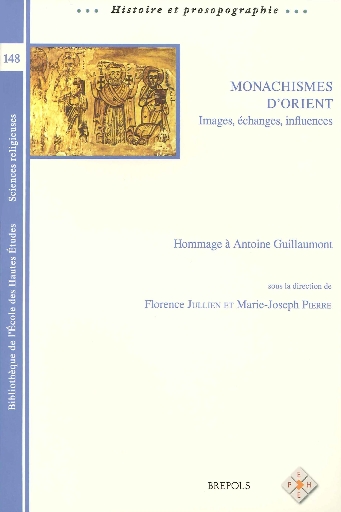
Monachismes d’Orient. Images, échanges, influences
show More to view fulltext, buy and share links for:Monachismes d’Orient. Images, échanges, influences show Less to hide fulltext, buy and share links for: Monachismes d’Orient. Images, échanges, influencesL’année 2007-2008 a marqué le cinquantenaire de la création de la chaire des « Christianismes orientaux » à la section des sciences religieuses de l’École pratique des Hautes Études (Paris, Sorbonne). La direction d’étude et le Collège de France ont voulu commémorer cet événement en organisant un colloque scientifique international sur la question des monachismes d’Orient. Ce sont les actes de cette manifestation qui sont ici réunis. Cet ouvrage s’inscrit dans l’hommage particulier qui fut rendu à cette occasion aux travaux de M. Antoine Guillaumont, premier titulaire de la chaire, grand spécialiste de l’Orient chrétien et des milieux monastiques de Syrie et d’Égypte. Ce volume, dans un souci de transversalité, met l’accent sur les jeux d’influences réciproques que cristallise le phénomène monastique dans les différentes aires culturelles de l’Orient chrétien : Sinaï, Liban et Palestine, Égypte, Éthiopie, Mésopotamie, Perse, golfe Persique... Il s’adresse à tous ceux qu’intéresse l’histoire du Proche et Moyen-Orient dans l’Antiquité tardive et à l’époque médiévale. M. Antoine Guillaumont entra au CNRS en 1946. Il fut ensuite directeur d’études à la section des sciences philologiques et historiques de l’École pratique des Hautes Études (« Hébreu et araméen ») de 1952 à 1974, et occupa la chaire des « Christianismes orientaux » à la section des sciences religieuses depuis sa création en 1957 jusqu’en 1981. Élu au Collège de France en 1977, il devint membre de l’Académie des Inscriptions et Belles Lettres en 1983.
-
-
-

Rethinking and Recontextualizing Glosses : New Perspectives in the Study of Late Anglo-Saxon Glossography
show More to view fulltext, buy and share links for:Rethinking and Recontextualizing Glosses : New Perspectives in the Study of Late Anglo-Saxon Glossography show Less to hide fulltext, buy and share links for: Rethinking and Recontextualizing Glosses : New Perspectives in the Study of Late Anglo-Saxon GlossographyGlossing was a scribal practice in use since antiquity, but it was in the Middle Ages that it acquired a wider meaning and a different role, becoming one of the most widespread forms of literacy in the Germanic West, including the British Isles.
Most of the essays collected in this volume focus on the late Anglo-Saxon period, that is a well-identified time-frame spanning from the Benedictine Reform to the eleventh century. As recent scholarship has convincingly established, the second half of the tenth century and the beginning of the eleventh saw the blooming of Anglo-Saxon scholarship and a remarkable advance in educational practices. Within this cultural resurgence, glossing undoubtedly played no small role and was particularly vital in centres such as Abingdon, Canterbury, and Winchester.
In the contributions to the present volume, the relationship between glosses and the text they accompany is always explored on the basis of their manuscript context. The essays are devoted to both Latin and Old English apparatuses of glosses as well as to specific items of the Old Norse and Old Saxon glossarial production.
Contributors: Filippa Alcamesi, Maria Amalia D’Aronco, Giuseppe D. De Bonis, Maria Caterina De Bonis, Maria Rita Digilio, Claudia Di Sciacca, Concetta Giliberto, Malcolm Godden, Antonette diPaolo Healey, Joyce Hill, Rohini Jayatilaka, Loredana Lazzari, Patrizia Lendinara, David Porter, Fabrizio D. Raschellà, Philip Rusche, Rebecca Rushforth, Mariken Teeuwen, Loredana Teresi, Paolo Vaciago, Alessandro Zironi.
-
-
-
The Calligraphy of Medieval Music
show More to view fulltext, buy and share links for:The Calligraphy of Medieval Music show Less to hide fulltext, buy and share links for: The Calligraphy of Medieval MusicThe Calligraphy of Medieval Music treats the practical aspects of the book making and music writing trades in the Middle Ages. It covers most major regions of music writing in medieval Europe, from Sicily to England and from Spain to the eastern Germanic regions. Specific issues raised by the contributors include the pricking and ruling of books; the writing habits of scribes and their reliance on memory; the cultural influence of monastic orders such as the Carthusians; graphic variants between regional styles of music notation ranging from tenth-century Saint-Gall to sixteenth-century Cambrai; and the impact of print on late medieval notation. The volume opens with a few essays dealing with general issues such as page layout and manuscript production both in and out of medieval Europe. The second part of the book covers early music notations from the tenth and eleventh centuries, and the third part, the twelfth to the sixteenth centuries.
-