


Brepols Online Books Medieval Monographs Collection 2012 - bob2012mome

Collection Contents
36 results
-
-
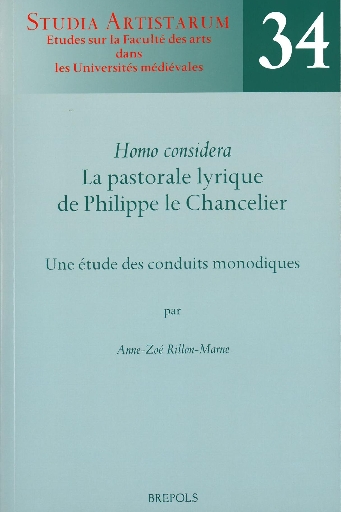
'Homo considera'. La pastorale lyrique de Philippe le Chancelier
show More to view fulltext, buy and share links for:'Homo considera'. La pastorale lyrique de Philippe le Chancelier show Less to hide fulltext, buy and share links for: 'Homo considera'. La pastorale lyrique de Philippe le ChancelierAu tournant du XII e et du XIIIe siècle, les thématiques moralisatrices tiennent une place importante dans les sources musicales parisiennes, particulièrement dans la pratique du conductus. L’analyse d’une sélection de conduits monodiques moraux attribués à Philippe le Chancelier révèle les qualités oratoires et rhétoriques de cette production tant par le texte que par la musique. Les deux entretiennent une relation complexe qui peut être de valoriser les sons des mots, d’en clarifier le sens ou encore de mettre en place une construction savante, à l’intention des esprits habitués aux subtilités de la poésie rythmique latine et des mélodies du plain-chant. Le désir de communication du message moral impose ses règles et ses figures, comme autant de techniques apprises au contact d’autres pratiques du discours, notamment celle du sermon. Les capacités du prédicateur à structurer son message et le fonder sur un substrat culturel scolaire et biblique se trouvent ainsi réinvesties dans l’élaboration de ces constructions lyriques. Ainsi, par la collaboration de tous ces moyens, la pastorale se loge là où le discours peut trouver une efficacité nouvelle, dans la musique des mots et la déclamation de la voix chantée.
-
-
-

A Bibliography of Works on Medieval Communication
show More to view fulltext, buy and share links for:A Bibliography of Works on Medieval Communication show Less to hide fulltext, buy and share links for: A Bibliography of Works on Medieval CommunicationThis bibliography of works on medieval communication offers a survey of work in a field of study which, from the 1960s onwards, has seen an ever-increasing number of monographs, collections of miscellanies and articles in learned journals being published every year. It provides a guide to this astonishing output by offering a list of more than 6.700 publications under sixteen headings. Because of the overlap of these headings, a comprehensive Index of subjects, place names and personal names is provided, which will allow the user to quickly find publications relevant to his research. A short Introduction precedes the bibliography. Progress in the field of study over the past two decades is outlined, with attention to those recent developments which have proved the most productive. At the same time, something is said about the growing insights which have led the bibliography’s organisation to be changed substantially since its previous edition in 1999, which already numbered 1.580 items. Not only the more than fourfold increase in the number of items made a new edition necessary therefore, but also new ideas about the best ways of organising the knowledge that is to be gained from the contents of studies of medieval communication.
-
-
-
A catalogue of works pertaining to the explanation of the creed in Carolingian manuscripts
show More to view fulltext, buy and share links for:A catalogue of works pertaining to the explanation of the creed in Carolingian manuscripts show Less to hide fulltext, buy and share links for: A catalogue of works pertaining to the explanation of the creed in Carolingian manuscriptsThe catalogue identifies works used to explain the creed in Carolingian collection volumes compiled for the instruction of the clergy. It includes both edited and unedited works and some recently edited in a companion volume to this one, Explanationes Symboli aeui Carolini (CC CM, 254). The catalogue shows that the teaching of the creedal faith was assembled from snippets of, or whole, patristic works, homilies, personal professions of faith, and works of many other genres. In the past, we have had little concept of the range of works known to those responsible for teaching the faith at the parish and missionary level of the Carolingian world. In this catalogue crucial attention is paid to the contents of the manuscripts as a whole in which the creed explanation is found and how these collection volumes may have functioned. It is hoped that the manuscript descriptions will be of benefit to students and specialists working on other kinds of texts for the education of the clergy.
Dr Susan Keefe is Associate Professor of Church History at Duke Divinity School, Durham, NC.
-
-
-
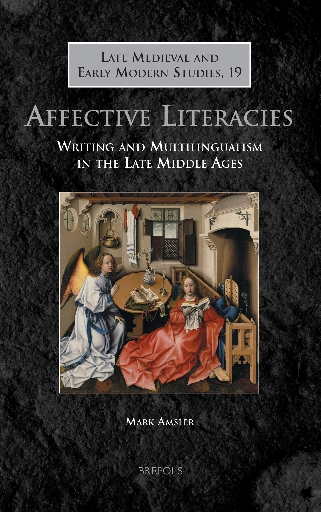
Affective Literacies
show More to view fulltext, buy and share links for:Affective Literacies show Less to hide fulltext, buy and share links for: Affective LiteraciesNew Literacy Studies, close reading, and historical sociolinguistics inform Amsler's analyses of late medieval writing and textual cultures. Amsler argues that medieval reading and writing make sense not as individual expressions with discrete texts but as multilingual, sociocultural, and intertextual practices that 'make people up' and that sustain or challenge dominant ideologies and reading formations. Rather than a single Literacy, we find socially situated literacies within manuscript matrices. Bringing new historical dimensions to literacy studies, Amsler explores the intertextualities, affective relations, and social contests in these multilingual formations. Individual chapters examine literacies as cultural practice in schooling and in elite and popular texts by Chaucer, Christine de Pizan, Dante, Margery Kempe, devotional writers, Erasmus, and the Jewish convert Hermann von Sheda, along with grammatical writing, mythography, charms, drama, and educational texts. This volume illustrates the diversity of late medieval multilingual writings,textual performances, and embodied readings.
-
-
-
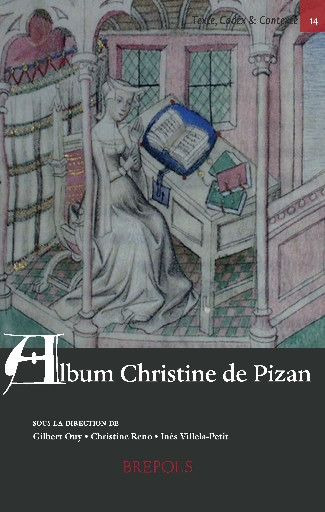
Album Christine de Pizan
show More to view fulltext, buy and share links for:Album Christine de Pizan show Less to hide fulltext, buy and share links for: Album Christine de PizanDe tous les écrivains du Moyen Âge, Christine de Pizan est celui dont le plus grand nombre de manuscrits originaux sont conservés, certains autographes, les autres réalisés sous sa direction. Ces cinquante-deux manuscrits forment donc un ensemble inestimable et représentent un objet d’étude d’une exceptionnelle richesse d’enseignements, tant pour les historiens du livre et les codicologues que pour les historiens de l’art ou de la littérature.
-
-
-
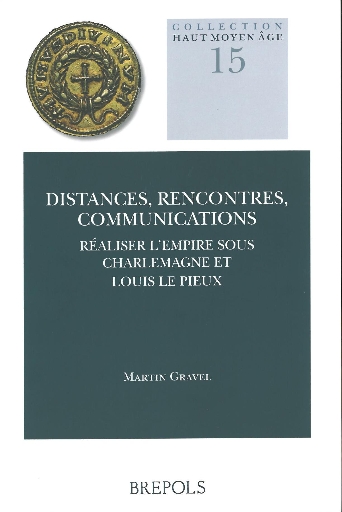
Distances, rencontres, communications : réaliser l’Empire sous Charlemagne et Louis le Pieux
show More to view fulltext, buy and share links for:Distances, rencontres, communications : réaliser l’Empire sous Charlemagne et Louis le Pieux show Less to hide fulltext, buy and share links for: Distances, rencontres, communications : réaliser l’Empire sous Charlemagne et Louis le PieuxImprégnés de leur rôle de vicaires du Christ, les empereurs carolingiens se voulaient protecteurs de leurs peuples, législateurs et juges, mais aussi recteurs de l’Église. Ils ont élaboré un idéal de gouvernement ambitieux, visant à corriger, étendre et guider la société chrétienne.
À l’échelle de la Gaule, de l’Italie, de leurs conquêtes en Germanie et en Espagne, Charlemagne et Louis le Pieux pouvaient-ils réaliser leur plan ? Confrontés au problème essentiel des distances, ils ont relevé le défi en misant sur la délégation hiérarchique et les communications. Leurs efforts ont déterminé la nature de leurs échanges, mais aussi leurs limites et le destin de leur empire.
L’enquête utilise un vaste éventail documentaire - actes diplomatiques, documents législatifs et correspondances. Elle tient compte des aspects matériels et techniques des déplacements et de la circulation des personnes. En considérant la rencontre et les communications à distance d’un point de vue anthropologique, l’auteur propose une étude des réseaux qui éclaire les modes de transmission de l’information et l’exercice du pouvoir.
Au-delà des considérations propres à l’histoire des VIIIe-IXe siècles, le livre démontre l’intérêt d’aborder les réalités politiques prémodernes du point de vue des défis à la fois technologiques et relationnels que présentent les distances géographiques, le mouvement des hommes, les rencontres et les communications.
-
-
-
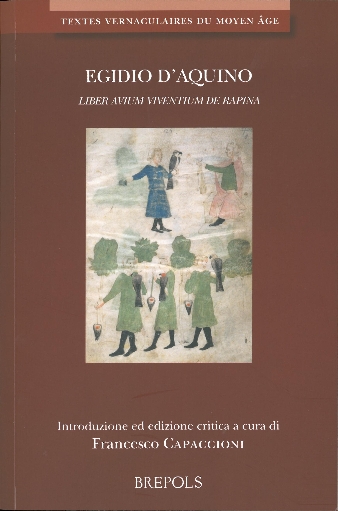
Egidio d'Aquino. Liber avium viventium de rapina
show More to view fulltext, buy and share links for:Egidio d'Aquino. Liber avium viventium de rapina show Less to hide fulltext, buy and share links for: Egidio d'Aquino. Liber avium viventium de rapinaDatabile tra la fine del Duecento e gli inizi del secolo successivo, attribuito a Egidius de Aquino è un trattato di falconeria scritto originariamente in latino e in seguito tradotto in italiano. La sua struttura è formata da cinque parti principali: un breve ricettario, posto all'inizio, seguito da quattro sezioni dedicate rispettivamente a falconi, astori, smerigli e sparvieri.
-
-
-
From Augustine to Anselm: The Influence of De trinitate on the Monologion
show More to view fulltext, buy and share links for:From Augustine to Anselm: The Influence of De trinitate on the Monologion show Less to hide fulltext, buy and share links for: From Augustine to Anselm: The Influence of De trinitate on the MonologionAnselm (1033-1109) described the Monologion, his first major theological work, as a model meditation on the divine essence; and he enjoined his potential critics to read Augustine’s De trinitate diligently and then judge the Monologion by it. In following Anselm’s admonition, I have paid particular attention to Anselm’s claims about the persuasiveness of his arguments, and probed the cogency of some of the many arguments that make up the Monologion. The result is something like a critical companion to the Monologion. It is not meant to replace an actual reading of the Monologion, which is an experience worth having, since no interpretation or paraphrase can capture the feeling of wading through Anselm’s analytic arguments. And I have resisted the common tendency of reading the Monologion merely as a prelude to its more evocative sequel, the Proslogion. Because Anselm’s arguments attend to fundamental themes in philosophical theology, this book also provides comment on the state of early medieval philosophical theology and Anselm’s unique contribution to it. The book has implications not only for our understanding of Anselm’s thought and its relation to ancient and early medieval Christian tradition, but also for the ways in which theologians and philosophers since Anselm have appropriated his ideas. Since a good deal of that appropriation often overlooks the Monologion, this study should help towards a re-orientation to Anselm and his relevance to contemporary debates about theological method in general and analytic theology in particular.
Dr. F. B. A. Asiedu is a visiting scholar at Emory University (Atlanta, GA). His research and teaching cover a wide area including ancient and medieval Christianity, intellectual history, philosophical hermeneutics, and social and political thought.
-
-
-
In Paciani episcopi Barcinonensis opera silva studiorum
show More to view fulltext, buy and share links for:In Paciani episcopi Barcinonensis opera silva studiorum show Less to hide fulltext, buy and share links for: In Paciani episcopi Barcinonensis opera silva studiorumThe study and the production of a critical edition of the works of Pacian, bishop of Barcelona (fourth century), have been the life’s work of Angel Anglada Anfruns. He has published many articles in miscellanies and high ranked journals since the 1960s, and also some in less-accessible periodicals. Updated versions of these contributions, most of which are written in Spanish, have now been gathered for the first time in a volume entitled Silva studiorum. They deal with the manuscript transmission and the history of the printed versions of Pacian’s opera, the syntactic structure (particularly the clausulae) and particular problematic passages in the bishop’s writings. The volume concludes with an index of the passages which have been discussed in detail. The articles offer a general view of the reception of Pacian’s works down the ages and list the author’s arguments behind specific editorial decisions. It is the perfect companion volume to the edition of Pacian’s complete works published in Corpus Christianorum, Series latina 69B (2012).
Angel Anglada Anfruns is professor of Latin Language and Literature at the Universidat de Valencia.
-
-
-
Interpretation of Scripture: Theory
show More to view fulltext, buy and share links for:Interpretation of Scripture: Theory show Less to hide fulltext, buy and share links for: Interpretation of Scripture: TheoryStarting from the theory of scriptural interpretation elaborated by Hugh of St Victor, the Augustinian Canons of twelfth-century St Victor in Paris were leading theorists and practitioners of scriptural exegesis. This volume contains translations of the exegetical theories elaborated in Hugh of St Victor's (d. 1141) Didascalicon, On Sacred Scripture and its Authors, The Diligent Examiner, and On the Sacraments (prologues); Andrew of St Victor's (d. 1175) prologues to select commentaries; Richard of St Victor's (d. 1173) Book of Notes and Apocalypse commentary; Godfrey of St Victor's Fountain of Philosophy; Robert of Melun's Sentences; and the anonymous Speculum on the Mysteries of the Church.
The editors of this volume are Franklin T. Harkins (PhD, Notre Dame; Theology Dept. Fordham University), author of Reading and the Work of Restoration: History and Scripture in the Theology of Hugh of St Victor (2009) and Frans van Liere (PhD, Groningen; Dept. of History, Calvin College), editor of Andrew of St Victor’s commentaries on Samuel and Kings (1996 ; ET 2010) and on the Twelve Prophets (2007, with Mark Zier) (Corpus Christianorum, Continuatio Mediaevalis), and author of a forthcoming book on the Bible in the Middle Ages.
-
-
-
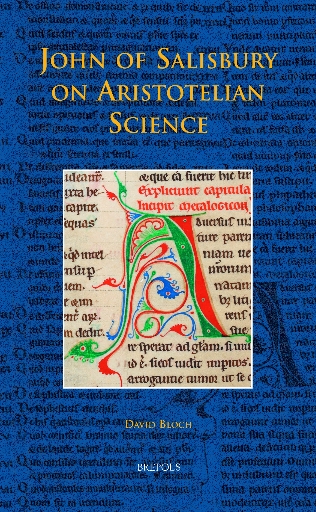
John of Salisbury on Aristotelian Science
show More to view fulltext, buy and share links for:John of Salisbury on Aristotelian Science show Less to hide fulltext, buy and share links for: John of Salisbury on Aristotelian ScienceThis is the first substantial treatment of John of Salisbury’s views on Aristotelian science. In his great work on logic and education, John of Salisbury proposes an Aristotelian foundation for education, research, and science. Theories and methods of science and scholarship were central topics in twelfth-century discourse, and John is apparently the first to propose use of the entire Organon, the texts of which were to become very influential and important in the thirteenth century. However, his precise knowledge and understanding of Aristotle has never been thoroughly examined. The present book challenges the view that John read, understood, and used the entire Organon. It pays particular attention to the Metalogicon, but it draws upon a variety of other sources as well in arguing that John did not in fact study the Ars nova with any care, and that he probably never read the most important text, the Posterior Analytics, in its entirety. The conclusions of the book have important consequences not only for our conception of John of Salisbury, but also for our views and understanding of twelfth-century Aristotelianism and science in general.
-
-
-
La Chambre des comptes de Lille de 1386 à 1419
show More to view fulltext, buy and share links for:La Chambre des comptes de Lille de 1386 à 1419 show Less to hide fulltext, buy and share links for: La Chambre des comptes de Lille de 1386 à 1419La fondation d’une Chambre des comptes à Lille par Philippe le Hardi en 1386 fut l’un des outils principaux d’intégration des Pays-Bas méridionaux à l’Etat bourguignon naissant. Dans le cadre d’un Etat princier bipolaire largement tourné vers le royaume l’institution s’inspira des usages flamands, artésiens et monarchiques, et s’inséra dans un réseau de Chambres regroupant Paris, Dijon, Lille et bientôt Bruxelles. Tout en contrôlant plus de 200 comptes, elle traitait une information puisée dans son réseau de correspondants et ses archives, parvenant à élargir son périmètre d’intervention jusqu’au contrôle des comptes des officiers centraux des finances ducales. La Chambre sut également établir son autorité sur le domaine et les monnaies, et gagna le statut de cour de justice reconnue par le Parlement. Gardienne de l’autorité des ducs, elle ne cessa de rappeler le droit tout en exaltant la puissance de la grâce princière, même si elle ne put cependant jamais s’assurer le contrôle réel de l’administration financière.
Jean-Baptiste Santamaria est un ancien élève de l’Ecole Normale Supérieure LSH, agrégé d’histoire, docteur en histoire médiévale. Il enseigne en lycée, classe préparatoire et à l’université Lille-III.
-
-
-

La femme ravie
show More to view fulltext, buy and share links for:La femme ravie show Less to hide fulltext, buy and share links for: La femme ravieEnlever une femme pour l’épouser n’a pas toujours été un crime. C’est à partir du IVe siècle que le rapt est condamné par la loi. Le livre analyse la pratique, la perception et la répression du rapt depuis la fin de l’Antiquité jusqu’au Xe siècle. Pratique constante, les enlèvements sont le fruit des tensions générées par le mariage dans une société où la compétition, les stratégies d’alliance, les impératifs de la vengeance laissent peu de place aux choix individuels. Mais, à partir de l’époque carolingienne, l’Église renforce sa pression sur la société et pèse avec force sur le mariage, considéré comme la base et le ciment de la société chrétienne : le rapt, véritable antithèse du mariage carolingien, de crime devient alors un sacrilège, remettant en cause l’ordre du monde. Paradoxalement, alors même que le rapt est condamné avec sévérité par les lois civiles et religieuses, il continue d’être une pratique génératrice de prestige et de richesse et, surtout, il commence à apparaître sous un jour flatteur dans les chroniques : le ravisseur devient progressivement un héros fondateur de lignée.
-
-
-
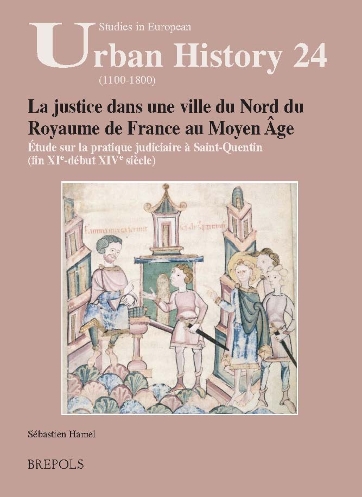
La justice dans une ville du Nord du Royaume de France au Moyen Âge
show More to view fulltext, buy and share links for:La justice dans une ville du Nord du Royaume de France au Moyen Âge show Less to hide fulltext, buy and share links for: La justice dans une ville du Nord du Royaume de France au Moyen ÂgeMalgré l’abondante production des cinquante dernières années en histoire urbaine, il est un pouvoir qu’exerçaient certaines villes à la fin du Moyen Âge qui demeure encore mal connu, celui de rendre justice. L’exercice de la justice fut une des principales prérogatives des villes de commune, si bien que rendre justice devint un outil d’affirmation de l’identité et du pouvoir bourgeois. La ville de Saint-Quentin constitue le milieu d’étude principale envisagé pour mener cette étude. Ce livre aborde la mise en place et le développement de la justice municipale sous l’angle de l’acculturation face aux pouvoirs judiciaires concurrents (seigneurs, roi, Église). Il examine ensuite le rôle dominant des bourgeois dans l’exercice de la justice dans la ville. Enfin, la pratique judiciaire a envisagé la justice civile et criminelle en portant principalement sur les différentes techniques de résolution des conflits.
Sébastien Hamel, docteur en histoire de l’Université de Paris 1 – Panthéon-Sorbonne, enseigne l’histoire du Moyen Âge à l’Université de Montréal. Ses recherches actuelles portent sur l’usage du chirographe en France et en Angleterre.
-
-
-
Le Breviari d’amor de Matfre Ermengaud
show More to view fulltext, buy and share links for:Le Breviari d’amor de Matfre Ermengaud show Less to hide fulltext, buy and share links for: Le Breviari d’amor de Matfre ErmengaudLa première édition du Breviari d’amor, due à Gabriel Azaïs, a paru entre 1862 et 1881. En 1976, avec le but de donner au public d’abord la partie la plus intéressante de cette oeuvre, la partie courtoise, contenant un débat sur la fin’amor, fut publiée. Ces 7.500 vers présentent des citations tirées des poèmes des troubadours. Or, ce tome de 1976 étant épuisé, il était évident qu’il fallait donner une deuxième édition de cette partie du Breviari à cause de son intérêt auprès d’un public plus large de médiévistes et d’amateurs éclairés. Cette ré-édition entièrement refondue à partir des manuscrits contient aussi la mise à jour de la bibliographie et des notes, et donne aussi la lettre de Matfre à sa soeur. Le projet d’ajouter une traduction française de cette partie du Breviari va se réaliser bientot.
-
-
-
Le gracial d’Adgar. Miracles de la vierge
show More to view fulltext, buy and share links for:Le gracial d’Adgar. Miracles de la vierge show Less to hide fulltext, buy and share links for: Le gracial d’Adgar. Miracles de la viergeLe Gracial d'Adgar est la première oeuvre représentative du genre des miracles de Notre-Dame en français. Écrite en anglo-normand, vers 1165, elle témoigne de l'influence de l'Angleterre dans le développement du culte marial et l'éclosion de la littérature française. Ce genre littéraire connaîtra un succès considérable dans toute l'Europe.
Il s'agit de montrer que si Adgar condamne la littérature profane pour ses mensonges et son immoralité, il sait tout de même en retirer une leçon de «sagesse et de courtoisie». Son oeuvre s'adresse à un public «frivole», mais exigeant. Il faut que cette littérature pieuse puisse rivaliser, par son agrément, avec la littérature courtoise de son temps et dépasser les Vies de saints par son homogénéité et sa variété.Le texte latin est traduit en français moderne, afin que le lecteur puisse constater les enjeux d'une impossible fidélité. Quelques miracles d'Adgar sont enfin comparés à ceux de ses confrères romans, notamment le plus brillant d'entre eux, Gautier de Coinci.
-
-
-
Le mécénat bibliophilique de Jean sans Peur et de Marguerite de Bavière (1404-1424)
show More to view fulltext, buy and share links for:Le mécénat bibliophilique de Jean sans Peur et de Marguerite de Bavière (1404-1424) show Less to hide fulltext, buy and share links for: Le mécénat bibliophilique de Jean sans Peur et de Marguerite de Bavière (1404-1424)C’est dans la France des XIVe et XVe siècles, en particulier chez les Valois, que le mécénat princier connut son âge d’or. Jean de Berry, frère du roi Charles V, fut certainement un de ceux qui illustra ce phénomène avec le plus de faste. L’historiographie brossa en revanche un tout autre portrait de son neveu, Jean sans Peur, le réduisant à un fin politique, parfois manipulateur, loin du prince cultivé amateur d’art. Et pourtant, nous devons au mécénat du duc de Bourgogne quelques unes des plus belles réalisations artistiques de l’époque, à l’image du Livre des merveilles du monde qu’il fit réaliser pour offrir à Jean de Berry. La qualité des sources conservées a permis de reconstituer les collections de manuscrits en possession de Jean sans Peur et de Marguerite de Bavière, son épouse, donnant ainsi la mesure de la qualité de leur mécénat artistique jusqu’alors méconnu. Delphine Jeannot est docteure en Histoire de l’art de l’Université de Lille 3. Ses recherches pluridisciplinaires portent sur le mécénat princier et féminin au XVe siècle à la Cour de Bourgogne.
-
-
-
Le travail intellectuel à la Faculté des arts de Paris: textes et maîtres (ca. 1200-1500)
show More to view fulltext, buy and share links for:Le travail intellectuel à la Faculté des arts de Paris: textes et maîtres (ca. 1200-1500) show Less to hide fulltext, buy and share links for: Le travail intellectuel à la Faculté des arts de Paris: textes et maîtres (ca. 1200-1500)Ce dernier fascicule du répertoire des maîtres et de leurs lectures à la Faculté des arts de Paris comprend aussi bien des maîtres moins connus, comme Simon de Castello, Thomas de Cleve et Zacharias Parmensis, que des personnalités qui ont marqué leur époque, tels Siger de Brabant et Thomas d’Aquin. Ils forment une communauté internationale venant de toute l’Europe. La diversité des enseignants et de l’enseignement à la Faculté des arts de Paris a été ainsi mise en lumière tout au long des 9 fascicules.
Comme dans les fascicules précédents, un certain nombre de maîtres exclus du répertoire proprement dit, pour diverses raisons, sont mentionnés brièvement dans l’introduction. Parmi eux, Etienne Tempier, évêque de Paris et chancelier de l’université, célèbre à cause des fameuses condamnations de 1270 et 1277, a bénéficié d’une notice plus complète.L’achèvement du répertoire sous forme imprimée n’implique pas la fin définitive ; nous envisageons sa mise en ligne, avec une révision finale, dans un avenir proche. Ainsi, ce projet qui a été porté depuis ses débuts par un réseau international de spécialistes, apportant de très nombreuses additions et corrections, s’achèvera finalement sous une forme toujours perfectible mais accessible à tous ceux qui s’intéressent au milieu fascinant de la Faculté des arts.
-
-
-
Les lignages nobiliaires dans la Morée latine (XIIIe-XVe siècle)
show More to view fulltext, buy and share links for:Les lignages nobiliaires dans la Morée latine (XIIIe-XVe siècle) show Less to hide fulltext, buy and share links for: Les lignages nobiliaires dans la Morée latine (XIIIe-XVe siècle)La noblesse de la principauté de Morée est l’objet de cette étude qui, au-delà de l’approche historique et des liens biologiques, essaie d’envisager la représentation sociale de ce milieu. Le domaine concerné par l’anthropologie historique n’est donc pas déterminé, il s’agit de mettre une distance entre le groupe étudié et l’observation de l’historien afin d’envisager les répercussions sociales engendrées. L’histoire de la parenté permet d’analyser les comportements biologiques, les formations sociales et les représentations mentales du groupe nobiliaire.
Dans quelle mesure les lignages latins reflètent-ils un mode de fonctionnement venu d’Occident et comment celui-ci évolue-t-il en étant influencé par les conditions politiques et culturelles du lieu dans lequel ils s’implantent ?
Les principes importés qui concernent la filiation, les stratégies matrimoniales ou encore les biens patrimoniaux, peuvent servir de fil directeur tout en tenant compte des nuances chronologiques et géographiques au sein de la principauté. À travers ces groupes sociaux et familiaux nobles qui se reconnaissent un ancêtre commun, l'ouvrage s'attache à étudier les origines et les modalités de renouvellement des lignages latins passant d’une prédominance franque à des influences angevines et ibériques, leur solidarité croissante et leur volonté de conservation du patrimoine. L'auteur évalue également les relations qu’entretiennent ces lignages avec le pouvoir princier, et quelles peuvent être les conséquences des changements de domination sur les lignages nobiliaires. Le tout s’organise autour de quatre parties rendant compte de la fierté des origines, de la volonté de perpétuer le lignage, de maintenir son prestige ou encore de transmettre la patrimoine.
-
-
-
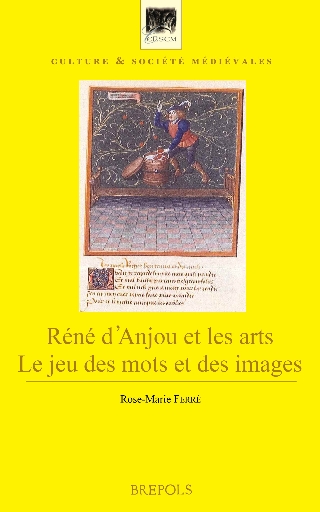
René d’Anjou et les arts
show More to view fulltext, buy and share links for:René d’Anjou et les arts show Less to hide fulltext, buy and share links for: René d’Anjou et les artsCommanditaire cultivé et original, René d’Anjou montre un intérêt pour toutes les formes de l’art. Non seulement auteur, mais aussi lecteur, spectateur, concepteur ou metteur en scène et jouant même son propre rôle dans le cadre de ses funérailles et de ses tombeaux, le prince apparaît comme le personnage central de la création artistique à sa cour. Dans cette perspective, il s’agissait d’étudier ici la relation des arts figurés et de l’art dramatique, et plus largement le dialogue entre les arts. Cependant, il convenait de dépasser les réflexions d’Émile Mâle sur l’influence des Mystères sur les arts visuels et d’abandonner une vision de la production artistique en terme d’ascendance et de hiérarchie. Les interrogations ont donc porté principalement sur les processus de création des images, leur fonctionnement et leurs significations et sur une problématique de transmission culturelle. Les arts figurés, la littérature ou l’art dramatique participent en effet de références communes, traitent les mêmes sujets et soulèvent parfois des questions identiques, mais selon des modalités d’expression différentes. Souvent, des interférences se créent entre plusieurs langages - écrit, visuel ou oral -, jouant ainsi sur les sens possibles de l’œuvre et mobilisant la culture du lecteur et/ou du spectateur. Les exemples retenus ont dès lors contribué à préciser la pluralité de ces intéractions qui questionnent en permanence sur le statut, le rôle de l’image et sa relation à d’autres media. Cela a aussi permis de mettre en valeur la personnalité de certains grands artistes de la fin du Moyen Âge dont la polyvalence et la culture ont séduit le prince.
Rose-Marie Ferré est maître de Conférences en histoire de l'art du Moyen Âge à l'université Paris-Sorbonne (Paris IV). Ses recherches portent sur les paramètres de la commande artistique et les questions d'iconographie. À cet égard, elle interroge plus particulièrement le dialogue entre les arts et les problèmes de transmission culturelle.
-
-
-
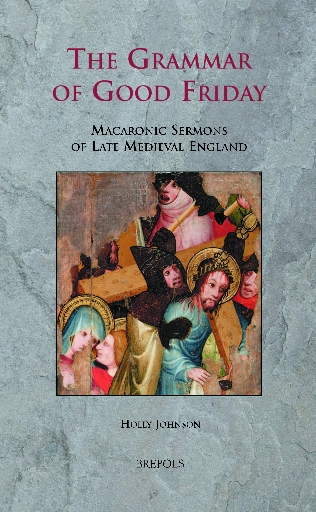
The Grammar of Good Friday
show More to view fulltext, buy and share links for:The Grammar of Good Friday show Less to hide fulltext, buy and share links for: The Grammar of Good FridayThis volume offers a study of Good Friday preaching and an edition (with modern translation) of five highly imaginative, rhetorically sophisticated macaronic (mixed Latin and Middle English) Good Friday sermons preached in late medieval England (c. 1350-1450). The study investigates the way medieval preachers made use of popular topoi and popular categorizations, reworking and recombining well-known material to create new sets of associations and images. The features that these sermons share with other genres, such as Passion plays, meditative treatises, and Middle English lyrics, reveal the rich cross-fertilization of this material and the cultural pervasiveness of topoi and images we often associate with literary works such as Piers Plowman. The sermons in this edition, all but one previously unavailable, increase our understanding of the medieval art of memory, the relationship between verbal and visual images, affective piety, and medieval rhetoric. Finally, all five of the sermons edited are macaronic, two of them switching between Latin and Middle English within almost every sentence; they thus offer a significant witness to this curious linguistic phenomenon. This volume presents new and rich source material and places this material into its wider cultural contexts with a detailed investigation of the rhetorical dimensions and intended effects of late medieval Good Friday preaching.
-
-
-

The Latin Religious Orders in Medieval Greece, 1204-1500
show More to view fulltext, buy and share links for:The Latin Religious Orders in Medieval Greece, 1204-1500 show Less to hide fulltext, buy and share links for: The Latin Religious Orders in Medieval Greece, 1204-1500The monastic and mendicant orders that were so central in the evolution of western religion and spirituality also played a pivotal role in the expansion of Latin Christendom after the eleventh century. In the thirteenth century, following thecapture of Constantinople by the armies of the Fourth Crusade, Cistercians, Benedictines, Franciscans, and Dominicans installed themselves in the former territories of the Byzantine Empire. Here, they had to adapt and compromise in order to survive, whilst Latins, Turks, and Greeks struggled to gain supremacy in the Aegean. They were also, however, faced with the challenge of attracting the devotion of the Greek Orthodox population, advancing the cause of church union, and promoting the interests of their Frankish, Venetian, and Genoese patrons. This volume follows the orders’ fortunes in medieval Greece, examines their involvement in the ecclesiastical and secular politics of the age, and looks at how the monks and friars pursued their spiritual, missionary, and Unionist goals in the frontier societies of Latin Romania.
-
-
-
The Letter Collections of Anselm of Canterbury
show More to view fulltext, buy and share links for:The Letter Collections of Anselm of Canterbury show Less to hide fulltext, buy and share links for: The Letter Collections of Anselm of CanterburyThe letters of Anselm of Canterbury († 1109) provide the clearest insight into his mind and action, and they also constitute one of our finest vantage points to observe the formation of those profound forces moulding Europe in the late eleventh- and early twelfth centuries. The focus of the present study is the transmission of Anselm’s correspondence. It argues that many of the conclusions of earlier scholarship have been constructed on flawed foundations. Using evidence from all known manuscripts and printed editions, the study seeks to demonstrate precisely how Anselm’s letters have survived and how the surviving witnesses relate to one another. The study also aims to define the historical contexts within which our key manuscripts were copied and edited. Only when equipped with this store of information can we begin to understand the editorial processes that shaped the textual tradition of Anselm’s letter collections before and after his death.
Dr Samu Niskanen is Newton Fellow at Jesus College, Oxford.
-
-
-
The Politics of Memory and Identity in Carolingian Royal Diplomas
show More to view fulltext, buy and share links for:The Politics of Memory and Identity in Carolingian Royal Diplomas show Less to hide fulltext, buy and share links for: The Politics of Memory and Identity in Carolingian Royal DiplomasBased upon a ‘performative’ interpretation of royal charters, The Politics of Memory and Identity offers a new and surprising narrative of West Frankish history from the death of Louis the Pious in 840 to the demise of the Carolingian dynasty in 987. The key is a carefully contextualised analysis of the circumstances in which kings issued charters and an alert examination of the charters’ verbal and visual semiotics. For which monasteries and cathedrals did kings issue diplomas and under what conditions? Who were the patrons who interceded for the recipients of diplomas and what titles were they given? Which kings were named as predecessors and which were omitted? Such clues allow us to recover the meaning of events whose significance was concealed by chroniclers, and to find unsuspected continuities in 150 years of West Frankish politics. They allow us to see a ruthless exercise of power in the use of forgeries and a commitment to political reform in the reform of monasteries. They reveal the long shadow cast by the reign of Charles the Bald in West Frankish history and the importance of a handful of monasteries as ‘sites of memory’. Above all, an intertextual reading of diplomas shows that political leaders in the kingdom made decisions based on policy, where the policy was articulated in terms of lessons drawn from their understanding of the past, and diplomas were the records that conveyed the lessons.
-
-
-
The Presence of Medieval English Literature
show More to view fulltext, buy and share links for:The Presence of Medieval English Literature show Less to hide fulltext, buy and share links for: The Presence of Medieval English LiteratureThe modern period has read its own contingent values into Middle English literature, and a modern canon of vernacular medieval literary texts has evolved as a result. While this book works with a selection of texts that have achieved such canonical status, it brings to light some of the ways in which they nevertheless resist the flattening domestications and expectations of modern taste. It illustrates how they formerly existed as constituents of a past world richer, stranger, and less familiar than much modern opinion has supposed. Thus the book aims to recuperate lost senses in which the age in which these texts were conceived and written was present within them, as well as ways in which they may have been present to their age. This twin idea of ‘presence’ is the thread that binds a series of chapters on English verse and prose written between the thirteenth and fifteenth centuries together. While they may be read as discrete studies of individual literary land- marks, the chapters also entail an implicit and ramifying demonstration of the short- comings of some modern views of what makes certain currently prized Middle English texts worth reading, and of how the vernacular literature of medieval England is retrospectively to be defined and periodized.
-
-
-
The Valley of the Six Mosques
show More to view fulltext, buy and share links for:The Valley of the Six Mosques show Less to hide fulltext, buy and share links for: The Valley of the Six MosquesThis is a detailed and fascinating account of a Muslim valley in Christian-ruled Spain at the end of the Middle Ages. Valldigna is located south of the city of Valencia and was part of a region conquered by the king of Aragon-Catalonia in the thirteenth century. Unlike much of Spain where the Muslim inhabitants were expelled or eventually departed after the Christian conquests, the Valencia countryside remained predominantly Muslim in the fourteenth and fifteenth centuries, the period on which this book is focused.
A bestseller in its Catalan edition, The Valley of the Six Mosques recreates in vivid and memorable terms the lives of the villagers, describing both what held them together (families, the agricultural economy) and what divided them (crime, violence). Garcia-Oliver shows the often tense relations between the peasants and their landlord (the monastery of Valldigna), but he is especially concerned to show the autonomy and inner life of the communities - the extent to which women held power within families, what the rhythms of everyday life were like, and how money, land, and labour inflected the struggle for survival. The result is a tour de force that evokes a particular place and time, but one that tells us about the complicated formation of modern European and Mediterranean cultures and societies.
-
-
-
The Viking Age as a Period of Religious Transformation
show More to view fulltext, buy and share links for:The Viking Age as a Period of Religious Transformation show Less to hide fulltext, buy and share links for: The Viking Age as a Period of Religious TransformationThis volume is the first to delve into Norway’s history of Christianization since 1973 when Fridtjov Birkeli published his book on the topic. For the first time in over thirty years, Dr Nordeide illuminates the change from non-Christian to Christian rituals by analysing archaeological resources from c. AD 560 to c. 1150/1200. This book both asserts and challenges previous hypotheses of the chronology of Christianization, as well as offering fascinating new versions of the Norway’s eventual conversion. As well as asserting that local history leads Norway along chronological lines typical of its peripheral location, the author argues that in some ways, Norway’s history of Christianity is best located within the history of central European regions even more than has ever been suggested before.
-
-
-
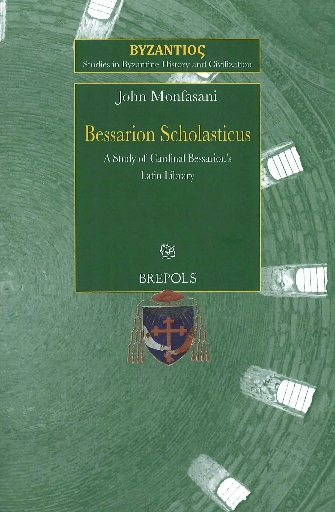
Bessarion Scholasticus: A Study of Cardinal Bessarion’s Latin Library
show More to view fulltext, buy and share links for:Bessarion Scholasticus: A Study of Cardinal Bessarion’s Latin Library show Less to hide fulltext, buy and share links for: Bessarion Scholasticus: A Study of Cardinal Bessarion’s Latin LibraryBessarion (d. 18 November 1472) first made a name for himself as one of the Greek spokesmen at the Council of Ferrara-Florence in 1438-39. After becoming a cardinal, he several times entered conclaves as a serious candidate for the papacy. The library he bequeathed to the Republic of Venice, destined to become the historic core of the modern Biblioteca Marciana, is justly famous for its extraordinary collection of Greek manuscripts. Celebrated in his own time for his patronage of humanists, he was also Italy’s leading Platonist before the emergence of Marsilio Ficino. He always held in reverence his teacher in Greece, the Neoplatonist philosopher George Gemistus Pletho, and his In Calumniatorem Platonis, printed in Rome in 1469, was a pivotal text in the Plato-Aristotle controversy of the Renaissance. Nonetheless, Bessarion was a great admirer of medieval scholasticism and especially of Thomas Aquinas.
'Bessarion Scholasticus' examines Bessarion’s relationship with Latin culture as evidenced by his library, personal relations, and writings. It examines his humanist collection, his scholastic collection, his Thomism, and the circle of scholars associated with his household, called Bessarionea Academia by contemporaries. Half of Bessarion Scholasticus is a catalogue raisonné of scholastic texts and manuscripts in Bessarion’s library. The volume offers the first edition of Bessarion’s autograph listing of the differences between Scotists and Thomists as well as first editions of prefaces by various authors addressed to Bessarion. In addition, the appendices include statistical tables of Bessarion’s holdings of Latin classical authors and of texts in civil and canonical law and a register of the members of his cardinalitial famiglia before he became cardinal legate in Bologna in 1450.
John Monfasani is Professor at the Department of History, University at Albany - State University of New York. His field of interest is European intellectual history, with a special interest in Renaissance intellectual and religious history. He has published mainly on Greek and Latin humanists in fifteenth-century Italy.
-
-
-
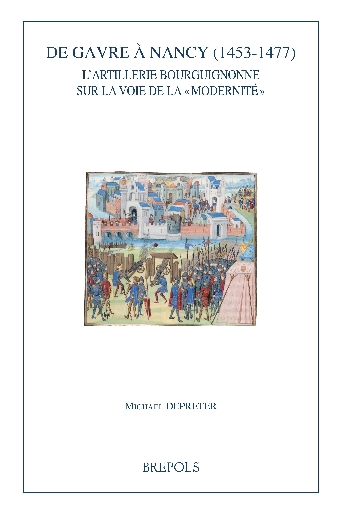
De Gavre à Nancy (1453-1477)
show More to view fulltext, buy and share links for:De Gavre à Nancy (1453-1477) show Less to hide fulltext, buy and share links for: De Gavre à Nancy (1453-1477)Dans la veine de la « nouvelle histoire militaire », cette étude consacrée à l’artillerie « bourguignonne », de la guerre menée par Philippe le Bon contre les Gantois (1451-1453) à la mort de Charles le Hardi devant Nancy (5 janvier 1477), vise à cerner l’organisation d’un instrument militaire alors en plein essor, engendrant d’importantes dépenses - relevant également des domaines du génie et de la logistique - qu’une administration compétente devait encadrer au mieux. Au centre de l’objectif se trouve un personnel sans cesse croissant d’artisans-soldats dont la professionnalisation et la spécialisation reflètent les changements technologiques auxquels l’artillerie fut alors soumise sous l’impulsion des politiques des ducs de Bourgogne, et, en particulier, de Charles le Hardi, prince désirant disposer d’une artillerie puissante, efficace et à la pointe du progrès pour réaliser ses ambitions.
Michael Depreter , aspirant du F.R.S.-FNRS, étudie actuellement, à l’Université libre de Bruxelles, l’impact des relations entre l’artillerie, ses artisans et les pouvoirs, sur la construction de « l’Etat moderne ».
-
-
-
Glosa Victorina super partem Prisciani De Constructione (ms. Paris, Bibliothèque de l'Arsenal 910)
show More to view fulltext, buy and share links for:Glosa Victorina super partem Prisciani De Constructione (ms. Paris, Bibliothèque de l'Arsenal 910) show Less to hide fulltext, buy and share links for: Glosa Victorina super partem Prisciani De Constructione (ms. Paris, Bibliothèque de l'Arsenal 910)From the twelfth century onwards, notable advances in the theoretical development occur in independent treatises on syntax, which on their side are intimately linked with medieval commentaries on the last two books, the so-called Priscian Minor, of the Institutiones Grammaticae I-XVIII, where Priscian deals with syntax. A number of the independent treatises on syntax are now available. But of the many commentaries on Priscian Minor known, only a few have been edited, so let me start by editing an interesting 12th c. gloss on Priscian Minor, called the Glosa Victorina. Priscian Minor itself begins with introducing the notion of what is a perfect sentence, what is a well-formed utterance and which parts of speech are indispensable or the most important, stating their order of importance : noun, verb, participle, pronoun, and the indeclinable word classes. As the argumentation unfolds, comparisons between letters, syllables and words are introduced providing a continuity and refinement on what was taught earlier in the so-called Priscian Maior, and how this concerns grammar on the level of syntax. Very quickly, this leads to an interdisciplinary discussion of what constitutes a perfect sentence (according to the grammarians and the dialecticians), involving the commentators in redefinitions of the principal parts of speech and explaining their distinguishing features. In this process, notions of substance, of person, of deixis, of reference - signification, and many other important grammatical issues are discussed. So in principle, the beginning of any commentary on Priscian Minor provides its author with scope for developing his particular doctrines and ideas of prime importance in linguistics.
Here the Glosa Victorina deserves a closer look, because it provides us with insights into discussions normally only hinted at by Abelard, or a use of terminology which then becomes refined and partially rejected by William of Conches and Petrus Helias.
-
-
-
Hugues Falcand. Le livre du royaume de Sicile
show More to view fulltext, buy and share links for:Hugues Falcand. Le livre du royaume de Sicile show Less to hide fulltext, buy and share links for: Hugues Falcand. Le livre du royaume de SicileSi l’on ne sait toujours pas qui se cache sous le pseudonyme de l’auteur du Livre du royaume de Sicile, son texte nous trace un tableau saisissant des soubresauts qu’a connus le royaume après la mort de Roger II (1154).
La personnalité éminente du premier roi de Sicile disparue, on voit les forces centrifuges affronter les forces centripètes dans une lutte acharnée, entre rébellions, complots, assassinats et répression. Représentées d’abord par l’aristocratie des différentes provinces, les forces centrifuges subissent finalement un cuisant échec dans leur combat contre Guillaume Ier (1154-1166), ce qui consolide le pouvoir central et permet au roi d’exclure de la gestion des affaires les membres de la noblesse.
Par des décisions malhabiles, la régente, Marguerite de Navarre, ranime cependant l’opposition et les rancœurs des grands écartés par le roi défunt et se tourne alors vers les Transalpins, Français ou Normands, membres de sa famille. C’est l’expulsion systématique de ces étrangers, au moyen d’intrigues, de complots et de révoltes, que l’auteur, souvent témoin oculaire, nous fait vivre dans la deuxième partie de son ouvrage, avec la victoire finale des forces centripètes : le règne de Guillaume II (1166-1189) pourra se dérouler sous le signe de la stabilité politique dans un royaume dirigé, à partir de Palerme, par un cercle étroit de natifs du royaume fidèles au monarque. Quinze années de troubles politiques ont favorisé l’émergence d’une prise de conscience identitaire susceptible de transformer les régions hétéroclites de l’Italie du sud, conquises ou héritées par Roger II, en un tout au destin commun.
-
-
-
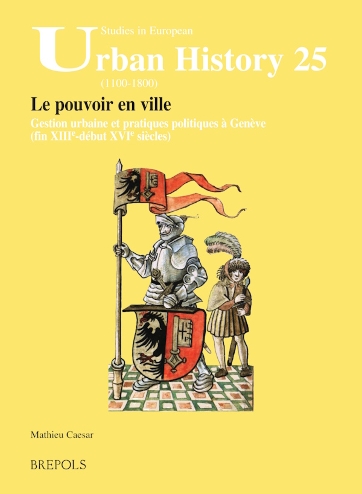
Le pouvoir en ville
show More to view fulltext, buy and share links for:Le pouvoir en ville show Less to hide fulltext, buy and share links for: Le pouvoir en villeGenève demeure jusqu’aux années troublées qui précédent l’adoption de la Réforme une ville aux équilibres politiques complexes, où plusieurs pouvoirs se côtoient et administrent le territoire urbain : l’évêque et son Chapitre, la Communauté d’habitants et les princes de la Maison de Savoie. Mettant à profit de nombreuses sources manuscrites conservées dans les Archives de Genève et Turin, cette étude analyse dans les détails les politiques d’administration de la Communauté ainsi que ses relations aux autres institutions. La gestion de la ville se révèle comme un atout important dans la légitimation de l’élite dirigeante et dans le renforcement du pouvoir de la Communauté. L’action des notables urbains et les idéaux qui fondent leurs actions permettent ainsi de saisir dans le vif le jeu politique dans une ville à la fin du Moyen Âge.
Mathieu Caesar , docteur en histoire médiévale, enseigne à l’Université de Genève. Ses recherches portent principalement sur l’histoire des villes dans le duché de Savoie à la fin du Moyen Âge.
-
-
-
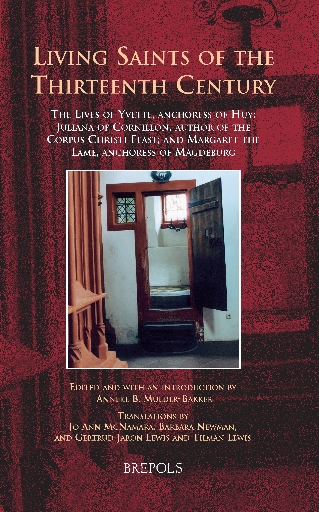
Living Saints of the Thirteenth Century
show More to view fulltext, buy and share links for:Living Saints of the Thirteenth Century show Less to hide fulltext, buy and share links for: Living Saints of the Thirteenth CenturyThis volume presents the Lives of three women of the thirteenth century, all written by contemporaries. In the late Middle Ages, almost every town in Northern Europe had its own anchoress, who would keep in touch with the citizens through a window looking onto the churchyard or through a door and window looking into the church (as shown in the cover illustration). Such women, along with the beguines, Cistercian nuns and monks, reform-minded clergy, and devout laywomen, formed what Barbara Newman has termed ‘close-knit networks of spiritual friendship that easily crossed the boundaries of gender, religious status, and even language’. This volume presents the lives of two recluses, Yvette of Huy, whose life was recorded by her spiritual friend, the Premonstratensian Hugh of Floreffe, and Margaret the Lame of Magdeburg, whose lessons were recorded by her confessor, the Dominican John of Magdeburg (introduced and translated by Jo Ann McNamara and Gertrud Jaron Lewis and Tilman Lewis respectively). The anchoress Eve of Saint-Martin was an author herself. Her memoir in French on her friend Juliana’s and her own labour for the new Feast of Corpus Christi forms the basis of the Latin Life of Juliana of Cornillon (introduced and translated by Barbara Newman).
-
-
-
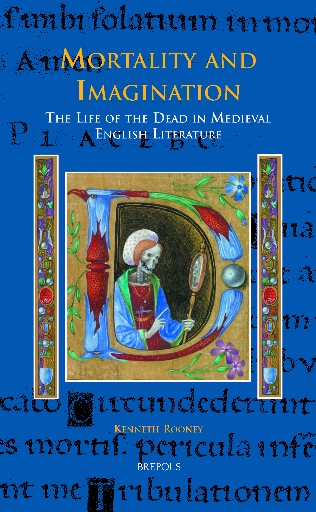
Mortality and Imagination
show More to view fulltext, buy and share links for:Mortality and Imagination show Less to hide fulltext, buy and share links for: Mortality and ImaginationThere have been many books on the medieval culture of death, but this book is the first devoted to the use and representation of the dead in English medieval writing. Mortality and Imagination is a history of the literary ‘life’ of the dead - in their narrative, aesthetic, and ideological formulation - a theme which up to now has been explored only fragmentarily, available only in studies of particular genres. Kenneth Rooney’s book explores a wider range of texts and genres than has been attempted before, and reads the vernacular representation of the dead against the impact of one of the most intriguing cultural phenomena of the Middle Ages - the macabre - a rhetorical and artistic idiom designed to evoke the dead at their most horrifying. Tracing the models for the representation of the dead available to English writers, the author offers fresh readings of texts both familiar and neglected, including sermons, tale collections, romances, drama, lyrics, and other genres in the period c.1100-1550. This book is a stimulating appraisal of the impact, in medieval insular contexts, of an international idea of great longevity and significance, and makes an important contribution to the study of death, belief, and society in pre-modern Europe.
Dr Kenneth Rooney is lecturer in medieval and renaissance literature in the School of English, University College Cork, Ireland. He has published widely on Middle English poetry and medieval romance.
-
-
-
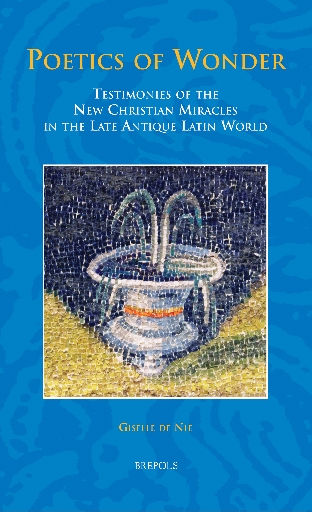
Poetics of Wonder
show More to view fulltext, buy and share links for:Poetics of Wonder show Less to hide fulltext, buy and share links for: Poetics of WonderThe unexpected return of contemporary public Christian miracles in the late antique Latin west, after a centuries-long assumption that these had ceased after apostolic times, helped to create a religious mentality there that would continue to characterize the western European Middle Ages. While the social and political functions of the new miracles have been gaining greater scholarly attention, this study is the first in-depth treatment of their experiential dimension. It examines this dimension in the first reactions to the new phenomenon - enthusiasm, puzzlement, deep suspicion, and outright rejection - as they are reflected and, especially, imagined in the earliest contemporary narrative and poetic sources that describe them. And it traces how the new imaginative representations transformed, for many, the up to then precept-centered way of thinking about religion into one that immersed itself in the supralogical dynamics of symbolic images. The tendency of these image-clusters to precipitate transformations, not only in perception but also in physical condition, is examined for the period from 386, when a first public miracle caught everyone’s attention in the ostensibly flourishing Christian Roman Empire, to c. 460, when this empire was crumbling under the onslaught of Germanic tribes.
-
-
-
Tractatuli, excerpta et fragmenta de musica s. XI et XII
show More to view fulltext, buy and share links for:Tractatuli, excerpta et fragmenta de musica s. XI et XII show Less to hide fulltext, buy and share links for: Tractatuli, excerpta et fragmenta de musica s. XI et XIICet ouvrage est le fruit d’un travail entrepris au début de l’année 2007, soutenu par l’idée de mettre à la disposition des chercheurs un ensemble de petits traités et extraits sur la musique conservés dans les sources manuscrites des XIe et XIIe siècles susceptible de préciser l’histoire des théories de la musique au cours de ces deux siècles et leurs implications pour la pratique du chant liturgique. A ce titre, tous ces textes sont indissociables des “grands” traités de musique de l’ère carolingienne jusqu’au XIIe siècle - la Musica enchiriadis, le Dialogus de musica, les écrits de Guy d’Arezzo, la préface à l’antiphonaire de Bernon ou encore la Musica de Jean d’Afflighem - dont la diffusion fut considérable et qui ont largement contribué à façonner la théorie du chant liturgique du Moyen Age.L’établissement des textes a été réalisé en étroite collaboration entre les deux éditeurs de ce volume et les leçons retenues ont souvent fait l’objet de longues discussions. Cet ensemble composite de textes doit être lu et restitué dans la perspective des événements majeurs qui s’opèrent au tournant des XIe et XIIe siècle et qui affectent la codification et la normalisation des répertoires du chant liturgique. Pour l’histoire du chant liturgique, l’événement majeur fut incontestablement celui du mouvement de réforme qui se déploie dans l’église depuis le milieu du XIe siècle. Pour l’histoire du répertoire, cet événement est indissociable de la diffusion progressive de la technique de notation sur lignes qui soumet désormais la codification des mélodies à l’échelle des sons hérité de l’enseignement du De institutione musica de Boèce. La rencontre de ces événements explique en grande partie l’ampleur des discussions théoriques autour des questions de la modalité dont bon nombre de ces textes se font l’écho.
-