


Brepols Online Books Medieval Miscellanea Collection 2016 - bob2016mime

Collection Contents
3 results
-
-
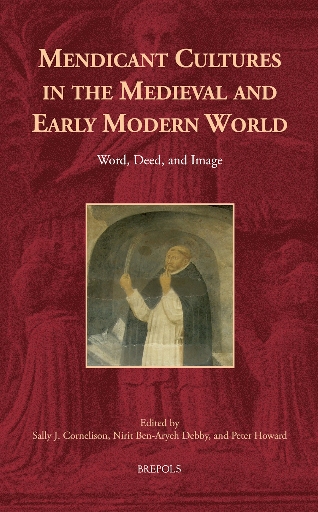
Mendicant Cultures in the Medieval and Early Modern World
show More to view fulltext, buy and share links for:Mendicant Cultures in the Medieval and Early Modern World show Less to hide fulltext, buy and share links for: Mendicant Cultures in the Medieval and Early Modern WorldThe eleven interdisciplinary essays that comprise this book complement and expand upon a significant body of literature on the history of the Franciscan and Dominican orders during the later Middle Ages and the early modern period. They elucidate and examine the ways in which mendicant friars established, sustained, and transformed their institutional identities and shaped the devotional experiences of the faithful to whom they ministered via verbal and visual culture. Taking primary texts and images as their point of departure, these essays break new scholarly ground by revising previous assumptions regarding mendicant life and actions and analysing sites, works of art, and texts that either have been neglected in the existing literature or that have not been examined through the lens of current methodologies such as sermon studies, ritual, gender, and cross-cultural interactions. Indeed, the varied methods and subjects of these essays demonstrate there is still much to be learned about the mendicant orders and the ways and spaces in which they operated and presented themselves on the local, regional, and global stages.
-
-
-
The Medieval South Caucasus. Artistic Cultures of Albania, Armenia and Georgia
show More to view fulltext, buy and share links for:The Medieval South Caucasus. Artistic Cultures of Albania, Armenia and Georgia show Less to hide fulltext, buy and share links for: The Medieval South Caucasus. Artistic Cultures of Albania, Armenia and GeorgiaThe volume serves as an introduction to what its editors have chosen to call the “artistic cultures” prevalent during the Middle Ages in the region of the South Caucasus. Although far from comprehensive in terms of material, chronology and geography, the volume intends to raise awareness of a region whose artistic wealth and cultural diversity has remained relatively unknown to most medievalists. Stretching from Eastern Anatolia and the Black Sea in the West to the Caspian Sea in the East, and from the snow-capped Great Caucasus mountain range in the north to the Armenian highlands in the south, medieval southern Caucasia was originally divided into the kingdom of Caucasian Albania, Greater and Lesser Armenia, and western and eastern Georgia, that is, the kingdoms of Lazica (Egrisi) and Iberia (Kartli) respectively. Together, these entities made the South Caucasus a true frontier region between Europe and Asia and a place of transcultural exchange. Its official Christianization began as early as in the fourth century, even before Constantine the Great founded Constantinople or had himself been converted to Christianity. During the subsequent centuries, the region became a well-connected and strategic buffer zone for its neighboring and occupant Byzantine, Persian, Islamic, Seljuk and Mongol powers. And although subject to constantly shifting borders, the medieval kingdoms of the South Caucasus remained an internally diverse yet shared and distinct geographical and historical unity. Far from being isolated, these cultures were part of a much wider medieval universe. Because of the transcultural nature and elevated artistic quality of their objects and monuments, they have much to offer the field of art history, which has recently been challenged to think more globally in terms of transculturation, movement and appropriation among medieval cultures.
-
-
-
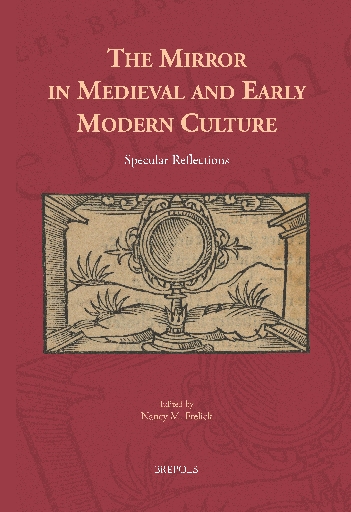
The Mirror in Medieval and Early Modern Culture
show More to view fulltext, buy and share links for:The Mirror in Medieval and Early Modern Culture show Less to hide fulltext, buy and share links for: The Mirror in Medieval and Early Modern CultureMirrors have always fascinated humankind. They collapse ordinary distinctions, making visible what is normally invisible, and promising access to hidden realities. Yet, these liminal objects also point to the limitations of human perception, knowledge, and wisdom. In this interdisciplinary volume, specialists in medieval and early modern science, cultural and political history, as well as art history, philosophy, and literature come together to explore the intersections between material and metaphysical mirrors in Europe and the Islamic world. During the time periods studied here, various technologies were transforming the looking glass as an optical device, scientific instrument, and aesthetic object, making it clearer and more readily available, though it remained a rare and precious commodity. While technical innovations spawned new discoveries and ways of seeing, belief systems were slower to change, as expressed in the natural sciences, mystical writings, literature, and visual culture. Mirror metaphors based on analogies established in the ancient world still retained significant power and authority, perhaps especially when related to Aristotelian science, the medieval speculum tradition, religious iconography, secular imagery, Renaissance Neoplatonism, or spectacular Baroque engineering, artistry, and self-fashioning. Mirror effects created through myths, metaphors, rhetorical strategies, or other devices could invite self-contemplation and evoke abstract or paradoxical concepts. Whether faithful or deforming, specular reflections often turn out to be ambivalent and contradictory: sometimes sources of illusion, sometimes reflections of divine truth, mirrors compel us to question the very nature of representation.
-