


Brepols Online Books Medieval Miscellanea Collection 2016 - bob2016mime

Collection Contents
1 - 20 of 42 results
-
-
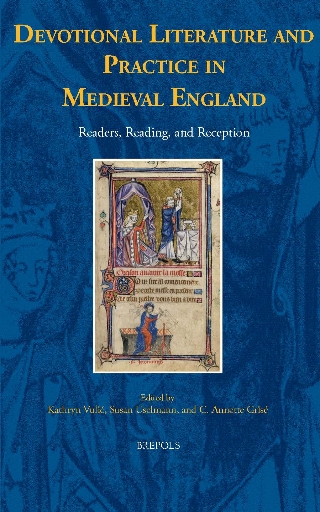
Devotional Literature and Practice in Medieval England
show More to view fulltext, buy and share links for:Devotional Literature and Practice in Medieval England show Less to hide fulltext, buy and share links for: Devotional Literature and Practice in Medieval EnglandThis volume recognises that religious writings care deeply about how devotional reading takes place, providing models for improving reading as a way of improving one’s ability to worship. The abundant evidence from medieval England suggests a deep interest among devotional writers in documenting, teaching, and circumscribing devotional reading, given the importance of careful reading practices for salvation. This volume therefore draws together a wide range of interests in and approaches to studying the reading and reception of devotional texts in medieval England, from representations of readers and reading in devotional texts, to literary production and reception of devotional texts and images, to manuscripts and early books as devotional objects, to individual readers and patrons of devotional texts.
Prefaced by a substantial introduction by the editors - setting the community in its wider religious and cultural environment and against the backdrop of broad historiographical trends - this volume brings together substantial essays based on original research by new and leading scholars in the field of medieval English studies. This collection (and indeed, many of the individual articles) brings into dialogue a number of traditional disciplinary approaches - early and late medieval English literary studies, gender studies, manuscript studies, and religious studies. It strives to reflect trends in current scholarship of breaking down disciplinary boundaries and exploring the relationships between and among not only analytical and critical perspectives, but also the kinds of evidence examined.
-
-
-
Felici curiositate. Studies in Latin Literature and Textual Criticism from Antiquity to the Twentieth Century. In Honour of Rita Beyers
show More to view fulltext, buy and share links for:Felici curiositate. Studies in Latin Literature and Textual Criticism from Antiquity to the Twentieth Century. In Honour of Rita Beyers show Less to hide fulltext, buy and share links for: Felici curiositate. Studies in Latin Literature and Textual Criticism from Antiquity to the Twentieth Century. In Honour of Rita BeyersThe papers collected in this Festschrift in honour of Rita Beyers, Professor Emerita of Latin at the University of Antwerp and Director of the Corpus Christianorum, Series Latina and Continuatio Mediaevalis, focus on ancient (especially Christian) Latin literature and its influence in the Middle Ages and beyond.
In the first section, new light is shed on some important apocryphal texts from the second to the tenth century. The second part is devoted to literary and doctrinal aspects of works produced in the patristic era. The third part brings together a number of micro-historical studies on medieval (Latin, Byzantine, and vernacular) literature. The papers of the fourth section present some little-known Neo-Latin texts and offer a fresh analysis of the reception of ancient Christian texts in modern French and English literature. The volume, which contains several critical editions of previously unedited texts, concludes with two essays musing on the art of textual editing and the quintessence of philology.
-
-
-
L'icône dans la pensée et dans l'art
show More to view fulltext, buy and share links for:L'icône dans la pensée et dans l'art show Less to hide fulltext, buy and share links for: L'icône dans la pensée et dans l'artLa synonymie icône − image divine − objet de culte a toujours posé problème. Évidente pour les Byzantins vainqueurs dans la crise qui a opposé les adorateurs des icônes au parti des iconoclastes, elle est cependant contestée aussi bien par les Latins, malgré les vertus pédagogiques qu’ils ont assignées aux images, que par nombre de communautés chrétiennes orientales habituées à accorder un pouvoir divin aux objets de culte et aux reliques. Cette synonymie repose toutefois sur l’un des principes fondateurs du christianisme : le rapport entre la connaissance de Dieu et le statut de l’homme « image de Dieu ».
Les études ici réunies ne sont pas focalisées sur le seul dossier des crises iconoclastes byzantines et des ripostes latines, mais se déploient sur trois moments historiques du christianisme. Dans ses deux premières parties, le volume propose un croisement des perspectives grecque, puis byzantine, et latine romaine, puis carolingienne sur le monde visible et l’image. La troisième partie réfléchit sur les modalités par lesquelles le monde slave, héritier de Byzance, prend à son compte les fonctions religieuses et politiques assignées à l’image sous l’appellation d’icône, en en faisant l’un de ses principaux repères identitaires.
Chacun des articles étudie les implications de l’image dans la réflexion sur le divin et, en retour, l’impact de cette réflexion sur la configuration de l’image elle-même. La relation mutuelle entre théologie et image, que celle-ci soit visuelle ou purement noétique, est au cœur de cet ouvrage.
-
-
-
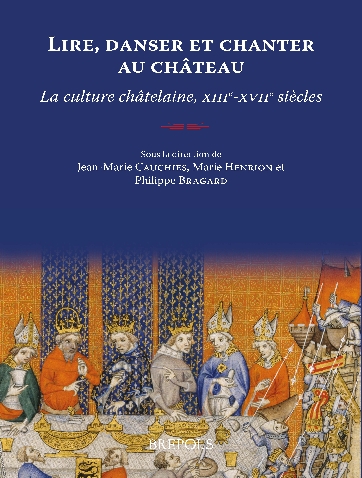
Lire, danser et chanter au château. La culture châtelaine, XIII-XVIIe siècles
show More to view fulltext, buy and share links for:Lire, danser et chanter au château. La culture châtelaine, XIII-XVIIe siècles show Less to hide fulltext, buy and share links for: Lire, danser et chanter au château. La culture châtelaine, XIII-XVIIe sièclesLieu de défense, de résidence, d’exercice et de représentation du pouvoir, d’exploitation et d’administration, le château du moyen âge et du premier âge moderne est aussi lieu de culture, de fête et de divertissement. Il peut être aussi objet de regards culturels. Ce lieu se prête à la danse, aux concerts, aux réjouissances en tout genre. Trouvères et ménestrels, bateleurs et jongleurs y proposent leurs récits, leurs chants, leurs spectacles. Tout y concourt à la « théâtralisation constante du mode de vie noble ». Mais la demeure seigneuriale est aussi lieu de création, quand le maître et seigneur y accueille pour qu’ils y résident et s’y adonnent à la production écrivains, musiciens ou artistes. Une poésie de cour y a d’ailleurs pris naissance, en France, en Italie, en Allemagne. Plus tard, des troupes de comédiens y seront entretenues. Poètes et artistes venus au château l’ont ensuite célébré de leur plume ou de leur pinceau. Entre ses murs, un espace privilégié peut être celui d’une bibliothèque, éventuelle héritière d’un « cabinet de manuscrits ». Certains seigneurs sont eux-mêmes écrivains. Et si des livres reposent dans le château, le château trouvera en retour sa place dans les livres, par le texte, l’image, la description et la figuration, réalistes ou idéalisées.
Après le château lui-même, ses abords, sa gestion, voici venu le temps de « Lire, danser et chanter au château. La culture châtelaine, XIII e-XVII e siècles », thème du quatrième colloque de la Fondation van der Burch au château-fort d’Écaussinnes-Lalaing en mai 2013.
-
-
-
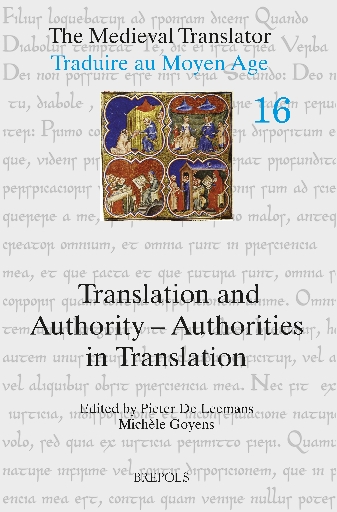
Translation and Authority - Authorities in Translation
show More to view fulltext, buy and share links for:Translation and Authority - Authorities in Translation show Less to hide fulltext, buy and share links for: Translation and Authority - Authorities in TranslationThe question about the relation between medieval translation practices and authority is a complex and multifaceted one. Depending on one’s decision to focus on the authority of the source-text or of the translated text itself, on the author of the original text, on the translator, or on the user of the translation, it falls apart in several topics to be tackled, such as, just to name a few: To what extent does the authority of the text to be translated affect translational choices? How do translators impose authority on their text? By lending their name to a translation, do they contribute to its authoritative status?
After two introductory essays that set the scene for the volume, addressing the above questions from the perspective of translations of authoritative texts into Dutch and French, the focus of the volume shifts to the translators themselves as authorities. A next section deals with the choices of texts to be translated, and the impact these choices have on the translation method. A third part is dedicated to papers that examine the role of the users of the translations.
The selection of papers in the present volume gives a good indication of the issues mentioned above, embedded in a field of tension between translations made from a learned language to a vernacular language, translations from one vernacular to another, or even from a vernacular to the Latin language.
-
-
-
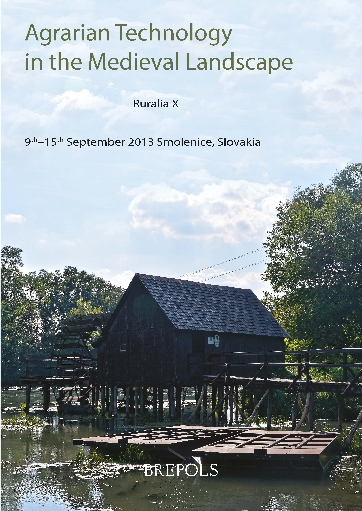
Agrarian Technology in the Medieval Landscape
show More to view fulltext, buy and share links for:Agrarian Technology in the Medieval Landscape show Less to hide fulltext, buy and share links for: Agrarian Technology in the Medieval LandscapeRuralia X includes 27 papers dealing with agrarian technologies in the medieval landscape as seen in different European countries. The subject areas include cultivation, livestock husbandry, gardening, viticulture and woodland management – interpreting the concept of agrarian production in a broad sense – studied mainly on the basis of archaeology, but also using iconography, documentary evidence and archaeo-environmental approaches.
Ruralia X, marks an important step on the way towards interpreting innovation, as well as understanding the varieties of agrarian activity from a Europe-wide perspective.
Authors from 14 countries provide a broad overview of the current issues, complemented by extensive bibliographies. Ruralia X represents one of the current fields of European archaeological research and offers a solid foundation for further comparative studies.
-
-
-
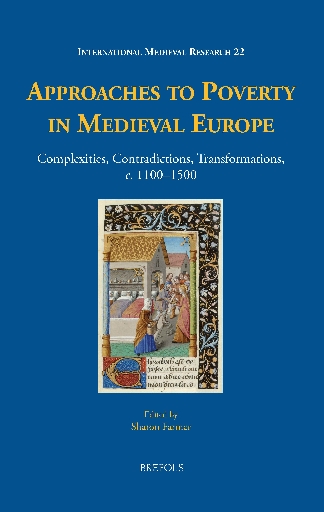
Approaches to Poverty in Medieval Europe
show More to view fulltext, buy and share links for:Approaches to Poverty in Medieval Europe show Less to hide fulltext, buy and share links for: Approaches to Poverty in Medieval EuropeThe essays in this volume re-examine two major medieval turning points in the relationship between rich and poor: the revolution in charity of the twelfth and thirteenth centuries, and the era of late medieval crises when the vulnerability of the poor increased dramatically and charitable generosity often declined. Drawing on a variety of sources from England, France, the Low Countries, Italy, and Iberia, the contributors to this volume add new perspectives on the agency of the poor, the influence of gendered forms of devotion, parallels in Christian and Jewish representations of the deserving and undeserving poor, and the effect of mendicant piety on the status of the involuntary poor. A broader implication of the volume as a whole is that medieval studies of poverty and wealth need to pay more attention to the role of rulers, ruling elites, and public policy in shaping the experiences of the poor.
-
-
-

Aspetti del meraviglioso nelle letterature medievali. Aspects du merveilleux dans les littératures médiévales
show More to view fulltext, buy and share links for:Aspetti del meraviglioso nelle letterature medievali. Aspects du merveilleux dans les littératures médiévales show Less to hide fulltext, buy and share links for: Aspetti del meraviglioso nelle letterature medievali. Aspects du merveilleux dans les littératures médiévalesThis book provides a fresh insight into European medieval culture by focusing on the concept of the marvellous as it was depicted in medieval writings. Drawing together papers that were presented at the Aspects of the Marvellous in Medieval Literature conference, held at the University of L’Aquila in November 2012, the volume takes a broad multicultural and multilingual approach that offers new perspectives onto the various kinds of mirabile and their common themes in texts from across Europe. Contributions to this volume pay equal attention to both Latin and vernacular writings, and cover aspects of the marvellous in fields as diverse as medieval Latin literature, Romance, Germanic, and Celtic philology, miracles and mirabilia, monsters and fairies, strange creatures and fantastic worlds. Above all, by expanding analysis through different literatures, languages, and literary genres, the volume not only provides an opportunity to compare and contrast key themes and features of these texts, but also casts new light onto the making of our own cultural identity.
-
-
-
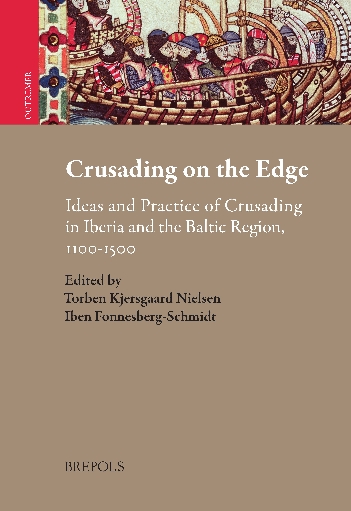
Crusading on the Edge
show More to view fulltext, buy and share links for:Crusading on the Edge show Less to hide fulltext, buy and share links for: Crusading on the EdgeThis volume brings together contributions from fifteen historians and art historians working on the history of the crusades, focusing on Iberia and the Baltic region. The subjects treated include the historiography of the Iberian and Baltic crusades; the transfer of crusading ideas from the Holy Land to Iberia and the Baltic region and the use of such ideas in local rhetoric and propaganda; the papal attitudes towards the Iberian and Baltic campaigns; the papal attitudes towards Muslims living in Christian Spain; the interaction between conquered and conquerors as reflected in art and architecture; and the exchange of information about the crusades in Iberia and the wider Baltic Region. The collection thus throws further light not only onto events in the Iberian Peninsula and the Baltic region but also onto the development of the crusade movement in general. It constitutes a valuable resource for both undergraduates and postgraduates studying the crusade movement in the Middle Ages.
Torben Kjersgaard Nielsen is Associate Professor in Medieval History at Aalborg University, Denmark. His main research interests cover the history of the Baltic Crusades, the medieval papacy, and Denmark in the Middle Ages.
Iben Fonnesberg-Schmidt is Professor (MSO) of Medieval History at Aalborg University, Denmark. Her research interests focus on papal communication and papal involvement in mission and crusades in the central Middle Ages.
-
-
-
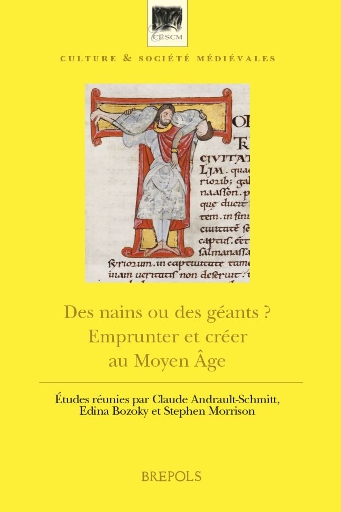
Des nains ou des géants ?
show More to view fulltext, buy and share links for:Des nains ou des géants ? show Less to hide fulltext, buy and share links for: Des nains ou des géants ?« Bernard de Chartres disait que nous sommes comme des nains assis sur les épaules de géants de sorte que nous pouvons voir davantage [de choses] qu’eux et plus loin non certes à cause de l’acuité de notre propre vue ou de la hauteur de notre corps, mais parce que nous sommes soulevés en hauteur et élevés à une hauteur gigantesque » (Jean de Salisbury, Metalogicon, III, 4).
Les géants de l’adage sont l’incarnation de l’autorité du passé, si prégnante dans la culture du Moyen Âge. Mais la tradition, qui est à la fois contrainte et force, porte en elle les germes d’une véritable inventivité. La nouveauté se nourrit de l’ancien, pour le transformer et le dépasser.
Issues d'un colloque interdisciplinaire organisé à Poitiers en 2011, les études de ce volume se proposent d'analyser la nature, le contenu, les modalités ou la finalité des emprunts pour appréhender des phénomènes plus complexes tels que la recomposition ou le déplacement, fondés plutôt sur la notion de référence, d’allusion, d’influence, de choix. Passifs ou délibérés, individuels ou collectifs, éphémères ou durables, ces réaménagements peuvent être considérés comme autant de créations nouvelles témoignant de la vitalité du Moyen Âge et de sa capacité à façonner un paysage culturel en perpétuel mouvement. Les éditeurs du volume - Claude Andrault-Schmitt, Edina Bozoky et Stephen Morrison -, sont professeurs à l'Université de Poitiers et membres du Centre d'études supérieures de Civilisation médiévale.
-
-
-
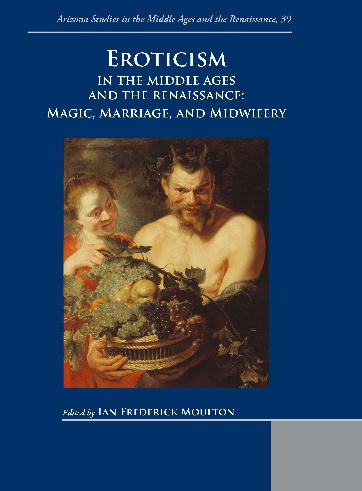
Eroticism in the Middle Ages and the Renaissance
show More to view fulltext, buy and share links for:Eroticism in the Middle Ages and the Renaissance show Less to hide fulltext, buy and share links for: Eroticism in the Middle Ages and the RenaissanceMagic rings; seductive she-devils; satyrs bound and whipped on stage; a woman sexually coerced in the confessional; a boy caught masturbating over a midwifery manual; a marriage of true minds between two men; a prince led to repentance at the sight of a naked girl prepared to give her life for his. These varied manifestations of medieval and early modern sexuality - each at the center of one of the essays in this volume - suggest the ubiquity and diversity of eroticism in the period. The erotic is the stuff of legend, but also of daily life. It is inextricable from relations of power and subordination and is plays a fundamental role in the heirarchical social structures of the period. The erotic is also very much a part of the spiritual realm, often in morally ambiguous ways. The seven essays collected in this volume explore the role the erotic played in early modern notions of happiness or fulfillment, in clerical life, in Jewish legend, heretical magic and Christian marriage, in poetry, on the public stage, and in medical manuals.
-
-
-
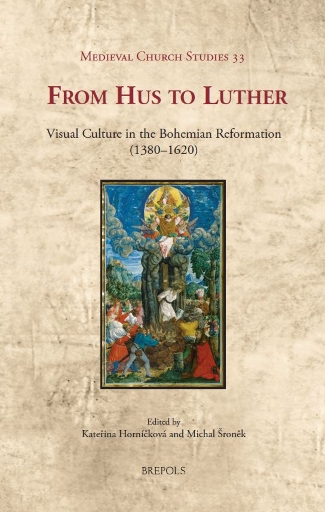
From Hus to Luther
show More to view fulltext, buy and share links for:From Hus to Luther show Less to hide fulltext, buy and share links for: From Hus to LutherThis book portrays a little-known phenomenon in Bohemian cultural and political history - the visual culture that grew up in the environment of Reformation churches in Bohemia from the time of the Hussites until the defeat of the Estates by the Habsburg coalition at White Mountain in 1620. It provides the first comprehensive overview of a forgotten era of artistic production over a period of approximately two hundred years, when most of the population of Bohemia professed non-Catholic faiths.
During the fifteenth and sixteenth centuries a unique situation arose in Bohemia, with five main Christian denominations (Utraquists, Lutherans, the Unity of Brethren, Calvinists, and Catholics) gradually coming to function alongside each other, with a number of other religious groups also active. The main churches, which had a fundamental influence on political stability in the state, were the majority Utraquists and the minority Catholics. Yet the essays of this book establish that despite the particularities of the Bohemian situation, the religious trends of Bohemia were an integral part of the process of Reformation across Europe.
Featuring over fifty illustrations including manuscript illumination, panel painting, and architecture, the book also presents the surviving cultural products of the four non-Catholic Christian denominations, ranging from the more moderate to radical Reformation cultures. The book also analyses the attitudes of these denominations to religious representations, and illuminates their uses of visual media in religious and confessional communication. The book thus opens up both the Reformation culture of Bohemia and its artistic heritage to an international audience.
-
-
-
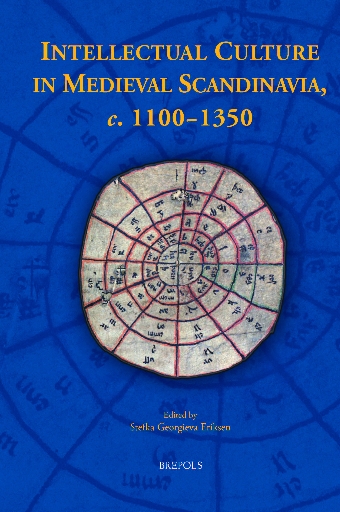
Intellectual Culture in Medieval Scandinavia, c. 1100–1350
show More to view fulltext, buy and share links for:Intellectual Culture in Medieval Scandinavia, c. 1100–1350 show Less to hide fulltext, buy and share links for: Intellectual Culture in Medieval Scandinavia, c. 1100–1350This book investigates the nature of intellectual activity in the Middle Ages from the perspective of medieval Scandinavia by discussing how a multimodal and multilingual Scandinavian culture emerged through the dynamic interchange of foreign and local impulses in the minds of creative intellectuals. By deploying cognitive theory, this volume conceptualizes intellectual culture as the result of the individual’s cognition, which incorporates physical perceptions of the world, memory and creation, rationality, emotionality and spirituality, and decision making. In doing so, it elucidates the diversity of social roles that could be assumed by people engaged in the activity of thinking. Attention is paid in particular to the key intellectual activities of negotiating secular and religious authority and identity; to thinking and learning through verbal and visual means; and to ruminating on worldly existence and heavenly salvation. These processes are explored in a series of essays that focus on various visual and textual artefacts, among them Church art and sculptures, manuscript fragments, and texts of both different languages (Latin and Old Norse) and genres (sagas, poetry and grammatical treatises, laws, liturgical explanations and theological texts). The variety of intellectual and ideational processes connected to the textual and material culture of medieval Scandinavia forms the focal point of this study. As a result, this book actively seeks to transcend the traditional cultural dichotomies of written versus oral material, Latin versus vernacular, lay versus secular, or European versus Nordic by foregrounding the cognitive and creative agency of intellectuals in medieval Scandinavia.
-
-
-
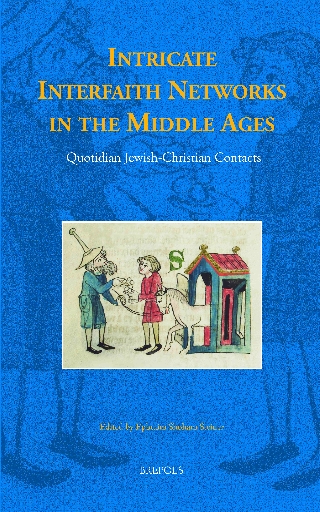
Intricate Interfaith Networks in the Middle Ages
show More to view fulltext, buy and share links for:Intricate Interfaith Networks in the Middle Ages show Less to hide fulltext, buy and share links for: Intricate Interfaith Networks in the Middle AgesRecent scholarship has suggested that the religious divide between Jews and Christians in the Middle Ages, although ever-present (and at times even violently so), did not stop individuals and groups from forming ties and expanding them in more intricate ways than previously thought. Moreover, these networks appear to have functioned with an apparent disregard towards any confessional and religious differences. Nevertheless, this was by no means a straightforward or simple situation; both the theological background to how each faith viewed ‘other’ beliefs, as well as the strong social, religious, and authoritative circles that at the least critiqued, even if they did not entirely discourage such contacts, created a formidable opposition to these networks. The articles in this book were presented as papers during an international workshop at the Central European University in Budapest in February 2010. In these presentations and discussions, the premise of interfaith relations and networks was thoroughly explored across Europe from the Iberian Peninsula to the eastern Hungarian frontier, and from England to Italy throughout the high and later medieval period. In this volume, the contributors explore a number of phenomena through different disciplinary approaches. Ties of an economic and cultural nature are examined, and attention is paid to social contacts and networks in the fields of art and the sciences, and matters of daily life. The picture that emerges is altogether more nuanced and diverse than the bipolar paradigm that has dominated previous scholarship.
-
-
-

Jews and Christians in Medieval Europe
show More to view fulltext, buy and share links for:Jews and Christians in Medieval Europe show Less to hide fulltext, buy and share links for: Jews and Christians in Medieval EuropeThe name of Bernhard Blumenkranz is well known to all those who study the history of European Jews in the Middle Ages and in particular the history of Jewish-Christian relations. Blumenkranz was born in Vienna in 1913; he left for Switzerland during the war and obtained a doctorate at the University of Basel on the portrayal of Jews in the works of Augustine. He subsequently moved to France where his numerous publications revived and renovated the field of Jewish studies. The international group of scholars who wrote the fifteen essays in this volume, beyond paying homage to Blumenkranz’s work, trace the trajectories of various lines of inquiry that he initiated: Christian theology of Judaism, problems of conversion and proselytism, geography and topography of Medieval Jewish communities, the representation of Jews in Christian art. These essays provide both an assessment of Blumenkranz’s intellectual legacy and a snapshot of the evolution of the field over the last sixty years.
-
-
-
Journeying along Medieval Routes in Europe and the Middle East
show More to view fulltext, buy and share links for:Journeying along Medieval Routes in Europe and the Middle East show Less to hide fulltext, buy and share links for: Journeying along Medieval Routes in Europe and the Middle EastFocusing on routes and journeys throughout medieval Europe and the Middle East in the period between Late Antiquity and the thirteenth century, this multi-disciplinary book draws on travel narratives, chronicles, maps, charters, geographies, and material remains in order to shed new light on the experience of travelling in the Middle Ages.
The contributions gathered here explore the experiences of travellers moving between Latin Europe and the Holy Land, between southern Italy and Sicily, and across Germany and England, from a range of disciplinary perspectives. In doing so, they offer unique insights into the experience, conditions, conceptualization, and impact of human movement in medieval Europe. Many essays place a strong emphasis on the methodological problems associated with the study of travel and its traces, and the collection is enhanced by the juxtaposition of scholarly work taking different approaches to this challenge. The papers included here engage in cross-disciplinary and interdisciplinary dialogue and are supported by a discursive, contextualizing introduction by the editors.
-
-
-
L'Ésotérisme shi'ite, ses racines et ses prolongements
show More to view fulltext, buy and share links for:L'Ésotérisme shi'ite, ses racines et ses prolongements show Less to hide fulltext, buy and share links for: L'Ésotérisme shi'ite, ses racines et ses prolongementsTogether with the notion of secrecy, the core of Shi'i esotericism gravitates around the ẓāhir/bāṭin dualism. This dialectical relationship between the visible and the hidden, which has been inherited from Late Antiquity, buttresses the main doctrines of esoteric Shi'ism which include a dualistic worldview, doctrines of emanation, the contrast between the people of knowledge and of ignorance, the soterial nature of knowledge and of the Guide who possesses it, the two levels of the Scriptures, the need for hermeneutics, and initiatory knowledge and practices. It is true that the birthplace of Shi'ism was Iraq, which had been the central province of the Sassanid Persian Empire until the advent of Islam. This region and its main cities were home to the many intellectual and spiritual traditions of Late Antiquity, including various Jewish, Christian, Judeo-Christian, Mazdean, Manichean, Neoplatonic and Gnostic movements, with these traditions living on for several centuries after the advent of the religion of the Arabs. The articles in this collection, written by recognised scholars in the field, are divided into three sections covering a very wide period of time: the "prehistory" of these doctrines before Islam, early esoteric Shi'ism and its developments in both Shi'i and non-Shi'i Sufism, occult sciences and philosophy.
-
-
-
La fabrique de la traduction
show More to view fulltext, buy and share links for:La fabrique de la traduction show Less to hide fulltext, buy and share links for: La fabrique de la traductionAprès un premier volume consacré à la traduction intralinguale de l’ancien français au français moderne, ce deuxième ouvrage d’un projet en trois volets, portant sur des aspects peu étudiés de la translatio studii médiévale, se propose d’aborder dans une même réflexion les questions de la traduction empêchée et de la traduction manipulée. Les chapitres qui le composent étudient selon des approches complémentaires aussi bien des sources manipulées que des sources non traduites. Ils permettent de révéler des différences typologiques et génériques et de distinguer plus clairement ces deux frontières de la traduction médiévale.
Se dégage ainsi de la diversité des approches et des sujets un enseignement majeur : l’activité de sélection, de philtre, de mystification, de dissimulation est à la fois le résultat d’un acte individuel et d’une stratégie plurielle. Celle-ci n’est pas seulement le fruit d’un oubli plus ou moins volontaire, plus ou moins conscient, de pans entiers de la culture, des sciences, des lettres exprimées dans d’autres langues et qui ne franchissent pas le seuil de leur idiome d’origine. Elle est aussi à la source d’un certain nombre d’ouvrages revendiquant une filiation littérale qui apparaît aujourd’hui comme fantaisiste ou fictive, comme c’est le cas avec le « topos du livre source ». Comment interpréter cette disposition à la falsification propre à des clercs nourris de morale chrétienne ? Comment expliquer que ces auteurs ne manifestent aucune réserve critique devant les supercheries qu’ils accumulent avec une évidente délectation ou une peur inquiète du vide ? Comment analyser le recours évident au stéréotype propre à l’art littéraire de leur temps : la « nostalgie du passé » ?
Au terme de ce parcours critique, on constate que la traduction empêchée et la traduction manipulée font apparaître plus clairement les confins et les différences structurelles entre une translatio studii identitaire et une traduction en français savante.
Claudio Galderisi est professeur de langues et littératures de la France médiévale à l’Université de Poitiers (CESCM). Il a dirigé les trois volumes des Translations médiévales. Cinq siècles de traductions en français au Moyen Âge (xi e-xv e s.) (Brepols, 2011). Il a codirigé avec Jean-Jacques Vincensini le volume sur la traduction intralinguale (Brepols 2015).
Jean-Jacques Vincensini est professeur de langue et littératures médiévales à l’Université de Tours (CESR). Il a édité et traduit notamment les Romans de Mélusine de Jean d’Arras et de Couldrette et prépare l’édition et la traduction de l’Escoufle de Jean Renart. Il a codirigé avec Claudio Galderisi le volume sur la traduction intralinguale.
-
-
-
La rigueur et la passion. Mélanges en l’honneur de Pascale Bourgain
show More to view fulltext, buy and share links for:La rigueur et la passion. Mélanges en l’honneur de Pascale Bourgain show Less to hide fulltext, buy and share links for: La rigueur et la passion. Mélanges en l’honneur de Pascale BourgainCe volume qui renferme 57 contributions portant sur la littérature médiolatine rend hommage à Pascale Bourgain, Professeur émérite d’Histoire et tradition manuscrite des textes littéraires à l’École nationale des chartes. Ces Mélanges peuvent se lire comme une histoire littéraire du Moyen Âge latin. Toute la période médiévale est en effet couverte largement, du v e siècle à la Renaissance et, au-delà, jusqu’aux entreprises du xix e siècle pour redonner vie aux anciens textes. Les œuvres relevant de ces divers champs et temps sont analysées en faisant converger sur elles l’éclairage d’une ou, souvent, de plusieurs disciplines parmi celles qui portent sur le manuscrit : codicologie, histoire de l’enluminure, histoire des bibliothèques ; ou sur les textes qu’il transmet : édition critique, histoire littéraire et critique d’attribution ; sur leurs relations d’influence, de la Quellenforschung à l’analyse des inflexions que subit un même passage repris d’une œuvre à l’autre ; sur la langue de ces textes : lexicographie, grammaire, art de la traduction, étude des interactions entre langues latine et romanes ; sur leur forme littéraire, d’une poésie de facture classique à la prose d’art en passant par la poésie rythmique ; sur enfin ce qu’il y a de plus subtil à décrire dans les textes, leur style, et la manière dont style et sens, loin de s’opposer, s’épousent.
-
-
-
Law and Religious Minorities in Medieval Societies: Between Theory and Praxis
show More to view fulltext, buy and share links for:Law and Religious Minorities in Medieval Societies: Between Theory and Praxis show Less to hide fulltext, buy and share links for: Law and Religious Minorities in Medieval Societies: Between Theory and PraxisMuslim law developed a clear legal cadre for dhimmīs, inferior but protected non-Muslim communities (in particular Jews and Christians) and Roman Canon law decreed a similar status for Jewish and Muslim communities in Europe. Yet the theoretical hierarchies between faithful and infidel were constantly brought into question in the daily interactions between men and women of different faiths in streets, markets, bath-houses, law courts, etc. The twelve essays in this volume explore these tensions and attempts to resolve them. These contributions show that law was used to try to erect boundaries between communities in order to regulate or restrict interaction between the faithful and the non-faithful-and at the same time how these boundaries were repeatedly transgressed and negotiated. These essays explore also the possibilities and the limits of the use of legal sources for the social historian.
-