


Brepols Online Books Medieval Monographs Collection 2017 - bob2017mome

Collection Contents
2 results
-
-
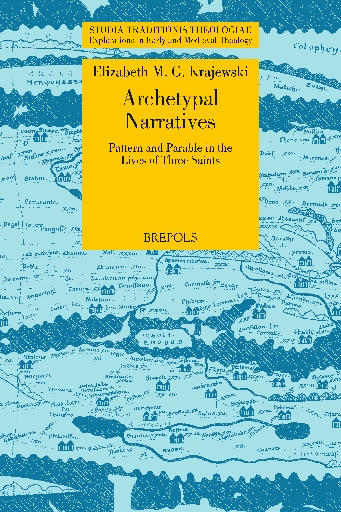
Archetypal Narratives. Pattern and Parable in the Lives of Three Saints
show More to view fulltext, buy and share links for:Archetypal Narratives. Pattern and Parable in the Lives of Three Saints show Less to hide fulltext, buy and share links for: Archetypal Narratives. Pattern and Parable in the Lives of Three SaintsSaints’ Lives have been read as documentary evidence for their particular historical periods, biographies of their heroic protagonists, folklore for the entertainment of monks, or propaganda in defense of a cult. None of these readings, however, address the problem of theologically interpreting narratives that were conceived and dispersed within a Christian monastic environment. Concentrating on the earliest extant Lives of Sts Brigit, Samson, and Cuthbert, the author adopts an interpretive approach that combines close textual analysis with a theological hermeneutic to uncover the deep biblical influences within the narratives, and poses the possibility that many of the stories within them are actually parables - stories intended to be both metaphorical and illustrative, but hardly factual. Building on this foundation, each narrative is then explored for its internal structural logic, a step which is seen to identify each hagiographer’s unique skills, as well as literary and theological concerns. A theological interpretation of the narratives opens up a fresh appreciation of their religious impact, and the possibility of a widened ‘horizon of meaning’ for readers.
-
-
-

Alchemy, Medicine, and Commercial Book Production
show More to view fulltext, buy and share links for:Alchemy, Medicine, and Commercial Book Production show Less to hide fulltext, buy and share links for: Alchemy, Medicine, and Commercial Book ProductionThe Voigts-Sloane group of Middle English manuscripts, first described by Professor Emerita Linda Voigts in 1990, has attracted much curiosity and scholarly attention. The manuscripts exhibit a degree of uniformity that may originate from systematic copying of medical and alchemical manuscripts (possibly for speculative sale) in London or its metropolitan area in 1450s and 1460s — only decades before William Caxton established his printing press in Westminster. Some of the manuscripts share a strikingly similar mise-en-page, others present a standard anthology of medical treatises in a standard order.
This book provides a thorough re-examination of these manuscripts through a combination of codicological and linguistic methodologies. It examines different procedures which may have facilitated the production of the manuscripts, including speculative production and copying of separate booklets. The study also addresses the dialect of the manuscripts, and code-switching between Latin and Middle English. By showing that the manuscripts sharing a similar layout are also written in the same dialect, the book thus provides important new information on the dialects of medical writing, and shows that dialect is a further defining feature for this manuscript group. The book also highlights late medieval concerns over alchemy and medicine, explaining the apparent contradiction of the inclusion of alchemy (which was illegal) in commercially copied manuscripts.
This study thus provides both a comprehensive new description of these manuscripts, and sheds new light on the commercial and cultural contexts of book production in late medieval England.
-