


Brepols Online Books Medieval Monographs Collection 2019 - bob2019mome

Collection Contents
1 - 20 of 24 results
-
-
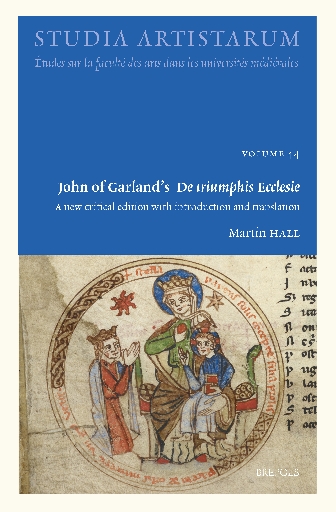
John of Garland’s De triumphis Ecclesie
show More to view fulltext, buy and share links for:John of Garland’s De triumphis Ecclesie show Less to hide fulltext, buy and share links for: John of Garland’s De triumphis EcclesieThis is the first translation in any language of John of Garland’s poem about the historical events of his lifetime (c. 1195- c. 1258), together with revised Latin text, introduction and notes. This work gives a vivid picture of Anglo-French relations, of studies in Toulouse after the Albigensian Crusade, and of the need for faith following Louis’ catastrophic defeat in the Seventh Crusade. John gives us insights into his own life, and a stream of stories, holy and profane. The translation and notes bring to life for a wide range of medievalists this eye-witness account by an Englishman in France of major events of the age, especially 1242-52. They make clear John’s debts to classical authors and to contemporaries, especially Alan of Lille and Matthew Paris. Through re-ordering the lines, this edition now generates clarity from the single manuscript. It also offers fresh insights and a new perspective on John of Garland himself.
-
-
-
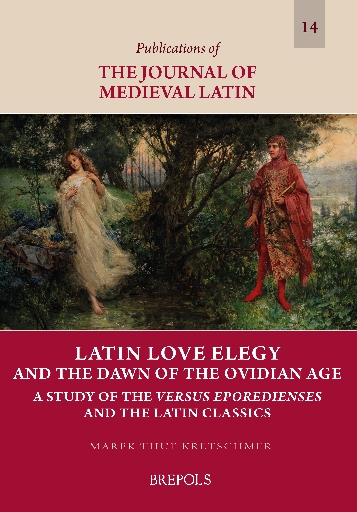
Latin Love Elegy and the Dawn of the Ovidian Age
show More to view fulltext, buy and share links for:Latin Love Elegy and the Dawn of the Ovidian Age show Less to hide fulltext, buy and share links for: Latin Love Elegy and the Dawn of the Ovidian AgeThe Versus Eporedienses (Verses from Ivrea), written around the year 1080 and attributed to a certain Wido, is a highly fascinating elegiac love poem celebrating worldly pleasures in an age usually associated with contemptus mundi. One of the poem’s intriguing features, its extensive use of the Latin classics, especially of Ovid, makes it a precursor of the poetry of the so-called twelfth-century renaissance. In this first book-length study of the poem, the author provides a historical contextualisation, an edition and translation, a verse-by-verse commentary, a detailed analysis of the classical sources and a discussion of its similarities with contemporary and later medieval poetry.
-
-
-
On the Sacraments
show More to view fulltext, buy and share links for:On the Sacraments show Less to hide fulltext, buy and share links for: On the SacramentsThe Canons Regular of St Victor were important contributors to the theology of the sacraments in the twelfth century. This volume introduces and translates much of Hugh’s treatment on the Christian Sacraments, as contained in De sacramentis 1.9 and 2.5-9, 11-12 and 14, as well as his treatise on the Virginity of the Blessed Virgin, two treatises on penance by Richard of St Victor, and the penitential of Peter of Poitiers. The historical introductions and annotated translations make this volume suitable for courses on the development of the theology of the sacraments through the twelfth century.
-
-
-
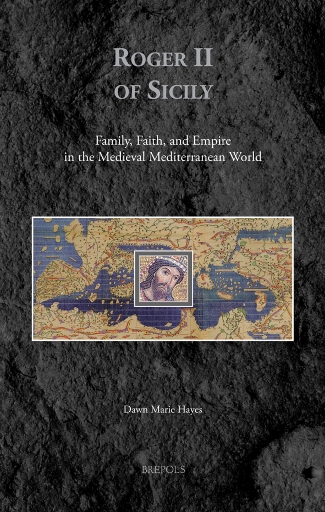
Roger II of Sicily: Family, Faith and Empire in the Medieval Mediterranean World
show More to view fulltext, buy and share links for:Roger II of Sicily: Family, Faith and Empire in the Medieval Mediterranean World show Less to hide fulltext, buy and share links for: Roger II of Sicily: Family, Faith and Empire in the Medieval Mediterranean WorldRoger II (c. 1095-1154), Sicily’s first king, was an anomaly for his time. An ambitious new ruler who lacked the distinguished lineage so prized by the nobility, and a leader of an extraordinarily diverse population on the fringes of Europe, he occupied a Roger II (c. 1095-1154), Sicily’s first king, was an anomaly for his time. An ambitious new ruler who lacked the distinguished lineage so prized by the nobility, and a leader of an extraordinarily diverse population on the fringes of Europe, he occupied a unique space in the continent’s charged political landscape. This interdisciplinary study examines the strategies that Roger used to legitimize his authority, including his relationships with contemporary rulers, the familial connections that he established through no less than three marriages, and his devotion to the Church and Saint Nicholas of Myra/Bari. Yet while Roger and his family made the most of their geographic and cultural contexts, it is convincingly argued here that they nonetheless retained a strong western focus, and that behind the diverse mélange of Norman Sicily were very occidental interests.
Drawing together sources of political, social, and religious history from locations as disparate as Spain and the Byzantine Empire, as well as evidence from the magnificent churches and elaborate mosaics constructed during his reign, this volume offers a fascinating portrait of a figure whose rule was characterized both by great potential and devastating tragedy. Indeed, had Roger been able to accomplish his ambitious agenda, the history of the medieval Mediterranean world would have unfolded very
-
-
-
Settlements and Strongholds in Early Medieval England
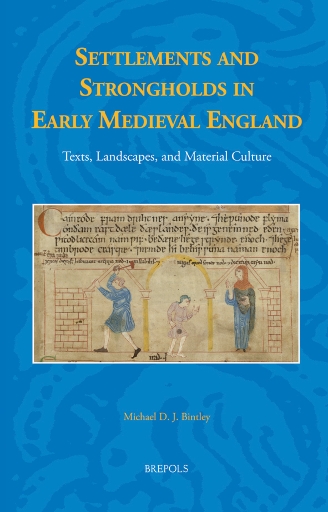
show More to view fulltext, buy and share links for:Settlements and Strongholds in Early Medieval England show Less to hide fulltext, buy and share links for: Settlements and Strongholds in Early Medieval EnglandIn recent years numerous advances in archaeological and historical studies have enhanced our understanding of the form and function of settlements and strongholds in the landscapes of early medieval England. Until now, this groundbreaking work has not been matched in studies of early English literature, where no concerted effort has been made to investigate how these findings can inform our understanding of their representation in texts - and vice versa.
This study shows that literary works offer considerable insight into the ways their authors, readers, and other audiences thought and felt about the constructed places and spaces in which they lived their lives. Covering a broad range of evidence from the end of Roman rule to the Conquest, it is the first study of its kind to offer an interdisciplinary account of the relationship between the built environment as it appears in the material record, and in a range of textual productions.
Settlements and Strongholds interrogates correlations and disjunctions between the stories found in the soil and in written works of various kinds, focusing on vernacular texts and Latin works that informed their development. It argues for a deeper appreciation of the relationship between imaginative works and the material contexts in which they were created, revealing the parallel development of ideas and concepts that were fundamental in shaping early medieval England.
-
-
-
A Late Fiteenth-Century Commonplace Book
show More to view fulltext, buy and share links for:A Late Fiteenth-Century Commonplace Book show Less to hide fulltext, buy and share links for: A Late Fiteenth-Century Commonplace BookThis edition presents the full text of a personal collection of temporale Middle-English sermons, compiled by a parish priest for his own use (preserved in Cambridge University Library MS Cg.6.16). It also includes the notes and fragments of sermons or exempla found at the beginning of the manuscript with a purpose of giving insight into the way a parish priest would compile materials. This manuscript has attracted attention because it perserves versions of these sermons' early stages. The current edition is therefore complementary to editions of later versions of the same sermons. The introduction provides a discussion of these sermons' textual history and the circumstances in which they were possibly preached. Explanatory notes, a glossary, and indexes complete the edition.
-
-
-
Assassins des pauvres
show More to view fulltext, buy and share links for:Assassins des pauvres show Less to hide fulltext, buy and share links for: Assassins des pauvresDonnés à Dieu, les biens fonciers des églises sont réputés inaliénables et les personnes qui tenteraient de s’en emparer sacrilèges et excommuniées. Cependant, derrière un discours parfois très dur à l’encontre des spoliateurs, se cache une réalité des échanges beaucoup plus complexe. Le livre analyse la littérature de combat des clercs carolingiens à la lumière des pratiques foncières de l’époque. Entre les années 820 et 880, les traités visant à définir les biens ecclésiaux se multiplient, au moment même où le système des bénéfices mis en place un siècle plus tôt se voit bouleversé par les rapides mutations que connaît l’empire des Francs. La compétition pour les terres d’église révèle alors tout le jeu de hiérarchisation et de distinction d’une élite mise sous pression.
-
-
-
Cartulaire de l’abbaye de Saint-Pierremont (1095-1297)
show More to view fulltext, buy and share links for:Cartulaire de l’abbaye de Saint-Pierremont (1095-1297) show Less to hide fulltext, buy and share links for: Cartulaire de l’abbaye de Saint-Pierremont (1095-1297)L’abbaye de chanoines réguliers de Saint-Pierremont a été fondée en 1095 dans le nord de la Lorraine. Grâce aux nombreuses donations de l’aristocratie locale, elle étend rapidement son temporel à travers le Pays-Haut lorrain, jusqu’en Belgique, tout au long des XII e et XIII e siècles. Elle a laissé de nombreuses archives qui éclairent l’histoire de cette région au Moyen Âge. Le cartulaire édité ici est donc une source privilégiée pour la connaissance des possessions de cette abbaye et des structures foncières de cette région. Il complète utilement un livre foncier (auquel il est associé dans le manuscrit) qui a été édité en 2013 par Yoric Schleef.
-
-
-

Documenting the Everyday in Medieval Europe
show More to view fulltext, buy and share links for:Documenting the Everyday in Medieval Europe show Less to hide fulltext, buy and share links for: Documenting the Everyday in Medieval EuropeThis book explores the complex relations between the written word and medieval society by focusing on the proliferation of administrative and business documents during the so-called 'long thirteenth century'. It deals with northern France and the area covered by the historic Low Countries, but places these regions in a broader European context and in the general history of literacy.
Based on an exhaustive first-hand analysis of numerous archives and many document types, and featuring over a hundred illustrations, this book presents the reader with a large sample of documentary sources. But it also presents important hypotheses regarding literacy and the sociological dimensions of writing in the Middle Ages. Using codicology, palaeography, and diplomatics, it offers a general outline of a key period in the history of literacy which, with hindsight, can be shown to have transformed the Middle Ages.
Further, as the documents that are discussed were used in everyday life, they also have a significant social dimension. At first, these documents were not backed by a clear legal authority; there were no extant rules, formulas, or structural frameworks to which they needed to conform. Thus they shed new light on the men and women who had to learn to make, keep, and use them.
-
-
-
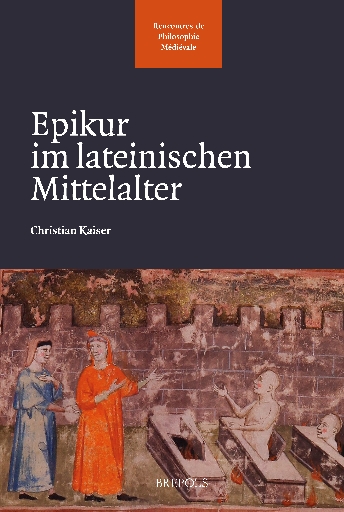
Epikur im lateinischen Mittelalter
show More to view fulltext, buy and share links for:Epikur im lateinischen Mittelalter show Less to hide fulltext, buy and share links for: Epikur im lateinischen MittelalterDie Studie liefert im ersten Teil erstmalig eine umfassende historisch-systematische, monographische Aufarbeitung der Rolle Epikurs in der Philosophie-, Kultur- und Ideengeschichte des lateinischen Mittelalters (von Isidor von Sevilla bis zum Ende des 15. Jahrhunderts). Quellennah werden viele mittelalterliche Denker von Rang und Namen besprochen. Neben der Philosophie im engeren Sinne wird auch die Bedeutung, die Epikurs Denken im theologischen, medizinischen und poetologischen Diskurs innehatte, eingehend beleuchtet. Durch diese Fülle wird es jetzt erstmals möglich, ein fundiertes Bild über das mittelalterliche Wissen zur epikureischen Philosophie - das sehr viel detaillierter und facettenreicher war als bisher allgemein angenommen - und vor allem zu deren systematischer Funktion innerhalb der mittelalterlichen Denkgebäude zu gewinnen. Der zweite Teil bietet die kritische und kommentierte Edition der ersten lateinischen Übersetzung des X. Buches des Diogenes Laertios, die Ambrogio Traversari 1433 fertiggestellt hatte. Diese Übersetzung bildete den Grundlagentext für die Epikur-Rezeption der Renaissance und Frühen Neuzeit. Für die Edition wurden neben Traversaris Autograph 16 weitere Handschriften aus dem 15. Jahrhundert sowie die Editio princeps von Marchese (ohne Epigramme; ca. 1472) und die zweite Edition von Brugnoli (erstmals mit lat. Übersetzung der Epigramme; 1. Auflage 1475) herangezogen.
-
-
-
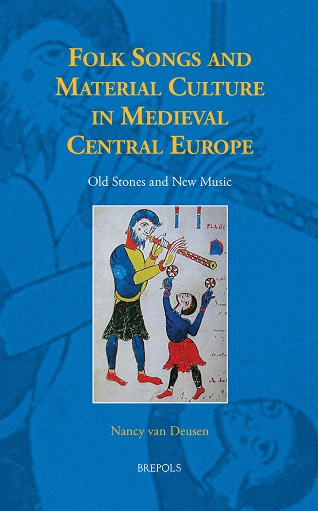
Folk Songs and Material Culture in Medieval Central Europe
show More to view fulltext, buy and share links for:Folk Songs and Material Culture in Medieval Central Europe show Less to hide fulltext, buy and share links for: Folk Songs and Material Culture in Medieval Central EuropeThis book takes a unique approach to the study of folk music in Central Europe. Through an analysis of this cultural tradition, and of how words and ideas that were first introduced in Latin Antiquity became increasingly cultivated, refined, and established in the centuries that followed, the volume also questions present-day studies of sound and its organization into the field of so-called ‘folk music’. In so doing, it breaks down boundaries that separate historical studies from ethnomusicology, and sheds light on what music continues to mean in daily life.
While the focus is primarily on Central European folk music, and in particular on material found in the Hungarian archives, the approach taken here also points to a fruitful comparative methodology that could be employed on a larger scale, enabling scholars to consider broader chronological and geographical contexts.
-
-
-

Hope Allen’s Writings Ascribed to Richard Rolle: A Corrected List of Copies
show More to view fulltext, buy and share links for:Hope Allen’s Writings Ascribed to Richard Rolle: A Corrected List of Copies show Less to hide fulltext, buy and share links for: Hope Allen’s Writings Ascribed to Richard Rolle: A Corrected List of CopiesRichard Rolle was perhaps the most influential English spiritual writer of the late Middle Ages. This volume provides references to the more than 600 surviving medieval books that offer the primary evidence for his works and their transmission.
Hope Allen's Writings Ascribed to Richard Rolle, now nearly a century old, is a foundational work of English palaeography. This volume extends Allen's most basic contribution, her catalogue of manuscripts conveying Rolle's works.
-
-
-
Il calamo dell'esistenza
show More to view fulltext, buy and share links for:Il calamo dell'esistenza show Less to hide fulltext, buy and share links for: Il calamo dell'esistenzaUno degli esempi più significativi dei frutti prodotti dal confronto aperto tra un sufi ed un filosofo è la corrispondenza tenutasi nel XIII secolo tra Ṣadr al-Dīn al-Qūnawī (m. 1274) e Nasīr al-Dīn al-Ṭūsī (m. 1274), il primo discepolo diretto e figlio adottivo dello šayḫ al-akbar Ibn al-‘Arabī, il secondo seguace e commentatore di Avicenna. Soggetto centrale del dibattito è l’analisi dell’essere in tutte le sue molteplici determinazioni e manifestazioni: la realtà di Dio, l’essere generale e comune, la sostanza e la materia, l’unità e la molteplicità, la natura dell’anima, del corpo, delle forze celesti, il dolore e la gioia spirituale, l’emanazione, il finito e l’infinito. Tutti i quesiti si sviluppano su uno scenario in cui si prendono in considerazione gli estremi limiti del pensiero teoretico che guarda e si interroga sulla sfera contemplativa della luce rivelativa; una dialettica serrata nel tentativo di armonizzare due dimensioni all’apparenza inconciliabili ma in realtà complementari.
-
-
-
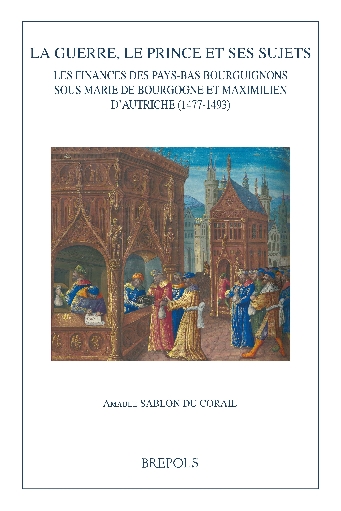
La guerre, le prince et ses sujets
show More to view fulltext, buy and share links for:La guerre, le prince et ses sujets show Less to hide fulltext, buy and share links for: La guerre, le prince et ses sujetsEn 1477, l’onde de choc née de la défaite et de la mort de Charles le Téméraire se propagea à l’ensemble des possessions bourguignonnes. Face à Louis XI, Marie de Bourgogne et Maximilien d’Autriche durent d’abord défendre l’intégrité territoriale de leur « grand héritage », amputé d’emblée de la plus grande partie des fiefs français. Retranchés aux Pays-Bas, ils furent confrontés aux revendications des villes de Flandre et de Brabant, porteuses d’un projet politique fondé sur l’autonomie des communautés et sur une stricte limitation des prérogatives du prince. La fiscalité et les finances furent au cœur de ce conflit, dont elles ont été à la fois l’une des principales causes, et l’enjeu primordial. Elles firent l’objet d’âpres débats dans les assemblées représentatives et aux États généraux. Qui du prince ou de ses sujets aurait le contrôle de la levée des impôts et de leur emploi ? Quel système militaire adopter, qui fût à la fois efficace, le moins coûteux possible, dans un contexte économique marqué par le haut niveau des salaires, et conforme aux idéaux politiques des acteurs en présence ? Les sources financières et comptables, très abondantes, permettent de saisir la réalité des enjeux politiques et ce qu’était le pouvoir d’achat de l’impôt. À ce titre, la présente étude entend apporter un éclairage nouveau sur la nature et les limites de l’État princier en Occident à l’aube de la Renaissance.
-
-
-
La ragione e la norma
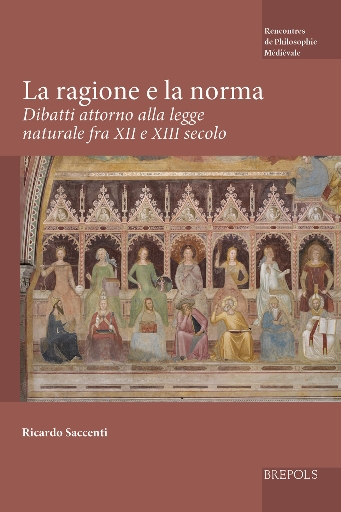
show More to view fulltext, buy and share links for:La ragione e la norma show Less to hide fulltext, buy and share links for: La ragione e la normaLa legge naturale rappresenta un elemento centrale nello sviluppo della cultura del medioevo latino. Frutto della rilettura di un'antica tradizione stoica e del diritto romano alla luce di alcuni passi della Scrittura, in particolare del capitolo secondo dell'Epistola ai Romani di Paolo, questa idea diviene uno dei pilastri del discorso giuridico, politico e teologico a partire dal XII secolo. Il volume ricostruisce le forme molteplici nelle quali la legge di natura viene affrontata da canonisti e civilisti, esegeti e teologi in un contesto nel quale prende forma la grande cultura scolastica e inizia a muovere i primi passi l'istituzione universitaria. Lo studio mostra come questi molteplici orientamenti dialogano fra loro e al tempo stesso rispondono ad un quadro storico e religioso particolarmente vivace e magmatico, segnato dalla costruzione della monarchia papale, dal tentativo di definire una ideologia imperiale di portata universale e dall'emergere delle monarchie europee, a partire da quella francese. Un panorama variegato nel quale gli scritti di Abelardo, dei maestri di Laon, dei Vittorini e dei maestri di Chartres, assieme a quelli di Graziano e dei canonisti, e successivamente di maestri parigini come Langton, Giovanni de La Rochelle e Alberto Magno fissano i termini di un lessico, il perimetro di una discussione destinata ad essere ripresa e ridefinita nei decenni successivi e declinata in forme molteplici non solo lungo i secoli del Medioevo ma anche lungo tutta l'età moderna.
-
-
-
La volonté de croire au Moyen Âge
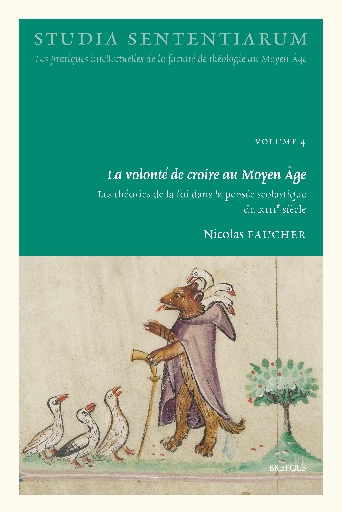
show More to view fulltext, buy and share links for:La volonté de croire au Moyen Âge show Less to hide fulltext, buy and share links for: La volonté de croire au Moyen ÂgePar quels mécanismes notre volonté, nos désirs, nos affects, influencent-ils nos croyances ? Sommes-nous libres de croire ce que nous voulons, même ce dont nous n'avons aucune preuve ? Et si nous le sommes, comment garantir que nous ne croyions pas au hasard, au gré de notre fantaisie ? Y a-t-il des raisons morales objectives de croire ce que nous ne pouvons savoir ? Le présent ouvrage a pour ambition de trouver réponse à ces questions dans les œuvres académiques, notamment les commentaires des Sentences, de certains des penseurs les plus importants de l'âge d'or de la scolastique médiévale : Alexandre de Halès, Bonaventure, Thomas d'Aquin, Henri de Gand, Godefroid de Fontaines, Pierre de Jean Olivi et Jean Duns Scot. Si les questions posées ne sont pas toujours celles que les médiévaux ont affrontées, leur traitement de la notion de foi et des problèmes philosophiques et théologiques qui lui sont associés leur donne l'occasion d'y apporter des éléments de réponse significatifs pour l'histoire de la pensée occidentale. C'est à la mise au jour de ces éléments que ce livre est consacré. Il démontre l'existence de deux grands mouvements de pensée qui convergent vers un volontarisme doxastique de plus en plus marqué, accompagné d'un retrait croissant des ressorts surnaturels dans l'explication des croyances humaines.
Ce livre a été distingué par la mention honorable du Prix international Thomas Ricklin. Il constitue une version enrichie et approfondie de la thèse de doctorat de l'auteur, qui a été récompensée par le prix solennel Aguirre-Basualdo de la Chancellerie des Universités de Paris.
-
-
-
Medicine at Monte Cassino
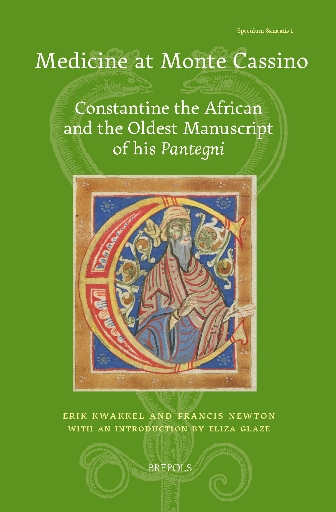
show More to view fulltext, buy and share links for:Medicine at Monte Cassino show Less to hide fulltext, buy and share links for: Medicine at Monte CassinoFleeing his North-African homeland for Italy, Constantine the African arrived in Salerno and then joined the abbey of Monte Cassino south of Rome in c. 1077. He dedicated his life to the translation of more than two dozen medical texts from Arabic into Latin. These great efforts produced the first substantial written body of medical theory and practice in medieval Europe. His most important contribution, an encyclopedia he called the Pantegni (The Complete Art), was translated and adapted from the Complete Book of the Medical Art by the Persian physician ‘Ali ibn al-‘Abbās al-Mağūsī (d. 982). This monograph focuses on the oldest manuscript of the Pantegni,Theorica, which represents a work-in-progress with numerous unusual features.
This study, for the first time, identifies Monte Cassino as the origin of this oldest Pantegni manuscript, and asserts that it was made during Constantine’s lifetime. It further demonstrates how a skilled team of scribes and scholars assisted the translator in the complex process of producing this Latin version of the Arabic text. Several members of this production team are identified, both in the Pantegni manuscript and in other copies of Cassinese manuscripts.
The book breaks new ground by identifying a range of manuscripts produced at Monte Cassino under Constantine’s direct supervision, as evidenced by their material features, script, and contents. In rare detail, this study explores some of the challenges met by ‘Team Constantine’ as they sought to reveal new knowledge to the West, which in turn revolutionized medical understanding throughout medieval Europe.
-
-
-

Norse-Gaelic Contacts in a Viking World
show More to view fulltext, buy and share links for:Norse-Gaelic Contacts in a Viking World show Less to hide fulltext, buy and share links for: Norse-Gaelic Contacts in a Viking WorldThis multi-disciplinary volume draws on the combined expertise of specialists in the history and literature of medieval Ireland, Iceland, Norway, and Scotland to shed new light on the interplay of Norse and Gaelic literary traditions. Through four detailed case-studies, which examine the Norwegian Konungs skuggsjá, the Icelandic Njáls saga and Landnámabók, and the Gaelic text Baile Suthach Sith Emhna, the volume explores the linguistic, cultural, and political contacts that existed between Norse and Gaelic speakers in the High Middle Ages, and examines the impetus behind these texts, including oral tradition, transfer of written sources, and authorial adaption and invention. Crucially, these texts are not only examined as literary products of the thirteenth century, but also as repositories of older historical traditions, and the authors seek to explore these wider historical contexts, as well as analyse how and why historical and literary material was transmitted. The volume contains English translations of key extracts and also provides a detailed discussion of sources and methodologies to ensure that this milestone of scholarship is accessible to both students and subject-specialists.
‘This is a brilliant and genuinely ground-breaking book, representing a significant step forward in literary and historical analysis of the Norse-Gaelic interface’. (Professor Ralph O’Connor, University of Aberdeen).
-
-
-
Prosper D’Aquitaine contre Jean Cassien
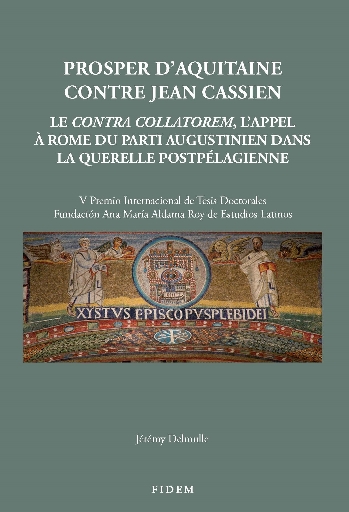
show More to view fulltext, buy and share links for:Prosper D’Aquitaine contre Jean Cassien show Less to hide fulltext, buy and share links for: Prosper D’Aquitaine contre Jean CassienComposé en 432-433, le Liber contra collatorem de Prosper d’Aquitaine entend réfuter les positions d’un certain « conférencier » - comprendre : l’auteur des Conférences, Jean Cassien. C’est dans cette oeuvre que Prosper, défenseur autoproclamé de saint Augustin et de sa doctrine sur la grâce, a pu fournir la première critique, et la plus complète, des théories propagées à Marseille et dans le sud-est de la Gaule par les adversaires provençaux de l’évêque d’Hippone, en s’appuyant exclusivement sur des extraits tirés de la Conlatio XIII « Sur la protection de Dieu », publiée quelques années plus tôt.
En s’attachant, par une approche philologique, historique, stylistique et doctrinale, à étudier les diff érentes spécifi cités de l’oeuvre de l’Aquitain (la fi nalité du traité, le modus operandi de l’auteur, le genre littéraire adopté, les stratégies du polémiste et les enjeux théologiques du traité), le présent livre cherche à défendre l’hypothèse qu’en composant son Liber, Prosper a voulu constituer un dossier à charge suffi samment étayé pour obtenir de l’évêque de Rome nouvellement élu, Xyste III (432-440), une condamnation offi cielle de ce que l’on a nommé le « semipélagianisme » et, par là, la reconnaissance de l’autorité de la doctrine augustinienne en matière de grâce.
-
-
-
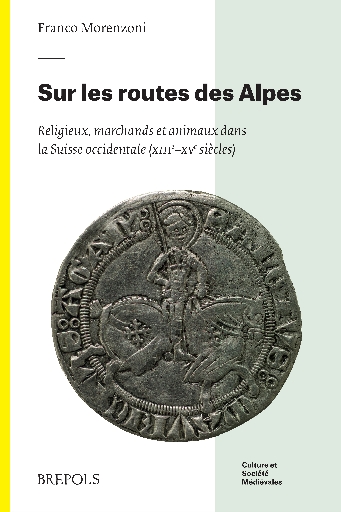
Sur les routes des Alpes
show More to view fulltext, buy and share links for:Sur les routes des Alpes show Less to hide fulltext, buy and share links for: Sur les routes des AlpesÀ l’occasion du départ à la retraite du Professeur Franco Morenzoni (Université de Genève), le présent ouvrage réunit un certain nombre de ses travaux les plus marquants consacrés à l’actuelle Suisse occidentale au Moyen Âge. Ce recueil d’articles, divisé en quatre parties thématiques - chacune préfacée par des spécialistes et d’anciens collègues - vise à rendre compte de la richesse de recherches menées sur plus de vingt-cinq ans, dans l’histoire économique et sociale aussi bien que dans l’histoire religieuse. Ces domaines, a priori bien distincts, constituent différents points d’entrée qui dévoilent un même intérêt pour l’homme médiéval dans ses interactions avec le monde qui l’entoure. Pionniers par bien des aspects, les travaux de Franco Morenzoni ont renouvelé l’histoire de la Savoie et des Alpes aux derniers siècles du Moyen Âge: ce recueil en est le témoignage.
-