


BOB2020MOME

Collection Contents
4 results
-
-
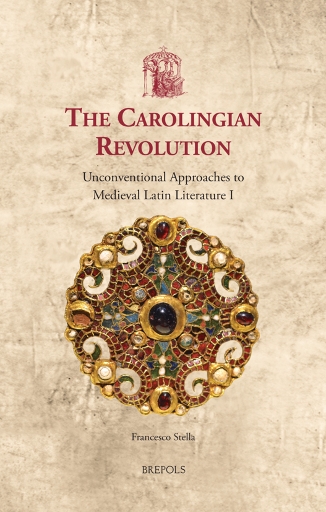
The Carolingian Revolution
show More to view fulltext, buy and share links for:The Carolingian Revolution show Less to hide fulltext, buy and share links for: The Carolingian RevolutionThis book presents samples of experimental methods for reading medieval Latin texts that have scarcely been adopted, if at all, by mainstream research in the field. It contributes to the discovery of some underestimated aspects of early medieval (especially Carolingian) Latin literature: intertextuality as intercultural relationship (in Biblical epic), intermediality (text-image-sound connections), interdisciplinarity (science, religion, and poetry), hermeneutics (Biblical exegesis as poetry-engine), post-colonial reading (medieval Latin as a second language), socio-literary approaches (monastic epigraphs as witnesses of everyday life, writing as a status symbol of an intellectual class and a whole civilization). It also discusses quantitative methods, which are explored in more detail in a second volume, Digital Philology and Quantitative Criticism of Medieval Literature: Unconventional Approaches to Medieval Latin Literature II): http://www.brepols.net/Pages/ShowProduct.aspx?prod_id=IS-9782503588018-1.
The book thus seeks to encourage scholarly interest in obscure or less familiar elements of the Carolingian literary renewal, interpreted here as more a laboratory of innovations than a revival of traditional patterns.
-
-
-
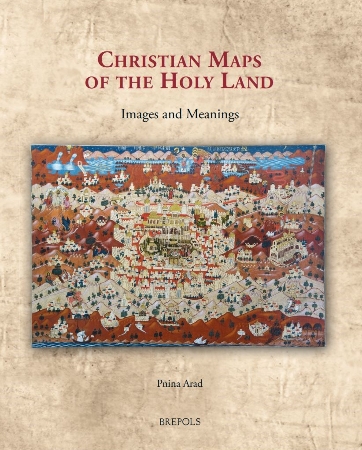
Christian Maps of the Holy Land
show More to view fulltext, buy and share links for:Christian Maps of the Holy Land show Less to hide fulltext, buy and share links for: Christian Maps of the Holy LandThis book offers a way of reading maps of the Holy Land as visual imagery with religious connotations. Through a corpus of representative examples created between the sixth and the nineteenth centuries, it studies the maps as iconic imagery of an iconic landscape and analyses their strategies to manifest the spiritual quality of the biblical topography, to support religious tenets, and to construct and preserve cultural memory.
Maps of the Holy Land have thus far been studied with methodologies such as cartography and historical geography, while the main question addressed was the reliability of the maps as cartographic documents. Through another perspective and using the methodology of visual studies, this book reveals that maps of the Holy Land constructed religious messages and were significant instruments through which different Christian cultures (Byzantine, Catholic, Protestant, and Greek Orthodox) shaped their religious identities. It does not seek to ascertain how the maps delivered geographical information, but rather how they utilized the geographical information in formulating religious and cultural values.
Through its examination of maps of the Holy Land, this book thus explores both Christian visual culture and Christian spirituality throughout the centuries.
-
-
-

Contest, Translation, and the Chaucerian Text
show More to view fulltext, buy and share links for:Contest, Translation, and the Chaucerian Text show Less to hide fulltext, buy and share links for: Contest, Translation, and the Chaucerian TextThis sophisticated volume sheds new light on the transmission of texts in the medieval period by drawing into dialogue a study of medieval translation between English and French with questions concerning the Chaucerian canon and its reception. The author takes as a focus point three Middle English translations of French-language works - The Romaunt of the Rose, the Belle Dame Sans Mercy, and An ABC to the Virgin - and assesses the way in which these works respond to and reconfigure their source material, while at the same time questioning how the connection of these translations with Chaucer has influenced our critical understanding of them. In this book, these three translations are therefore removed from their habitual place on the fringes of the English Chaucer canon, and are instead analysed in the context of late-medieval literary and cultural hybridity. The result is a fascinating reconceptualization of these works as creative, cross-channel participations in late- medieval debates, and simultaneously a call for the reappraisal of ‘the Chaucerian’ as a critical category.
-
-
-

The Crown and the Cross
show More to view fulltext, buy and share links for:The Crown and the Cross show Less to hide fulltext, buy and share links for: The Crown and the CrossThe Crown and the Cross examines the heretofore-unstudied role of the French province of Burgundy in the ‘traditional’ era of the crusades, from 1095-c.1220. Covering the First, Second, Third, Fourth, and Albigensian Crusades in detail, it focuses primarily on the Capetian dukes, a cadet branch of the French royal family, but uncovers substantial lay participation and some crusading traditions among Burgundian noble families as well. The book additionally uses the crusading institution to explore the development of the medieval French monarchy, and makes accessible a corpus of scholarship and documents that until now have mostly existed in French or Latin. It concludes that while piety and religion did play a central role in the experience of many everyday Burgundian crusaders, the greater political ramifications of the crusading project functioned in subtle and long-lasting ways, and had consequences for the entire institution, not just Burgundy or France. Of interest to scholars of the crusades, French history, and the formation of medieval Europe, The Crown and the Cross nuances, challenges, and expands our understanding of the intellectual genealogy of the crusades and their real-world consequences, fills a critical gap in the historiography, and poses a set of important conclusions and questions for continued study.
-