


BOB2023MOME

Collection Contents
2 results
-
-
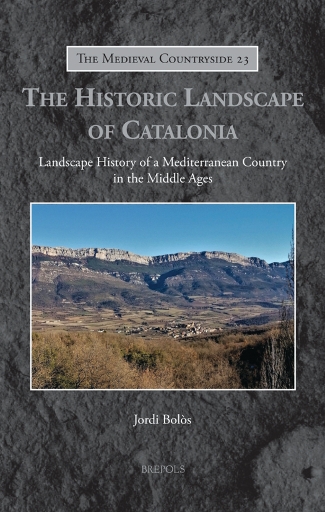
The Historic Landscape of Catalonia
show More to view fulltext, buy and share links for:The Historic Landscape of Catalonia show Less to hide fulltext, buy and share links for: The Historic Landscape of CataloniaThe landscape around us is largely the result of man-made transformations. It consists of villages, farmsteads, cities, fields, ditches, and roads. This book examines how the landscape of the Mediterranean country of Catalonia was created and transformed. Although Catalonia’s history goes back before the Middle Ages, it was during the medieval period that it saw significant development, which has continued ever since. Understanding the landscape helps us understand political, social, economic, and cultural changes. In this book we discover how the settlements built around a castle or a church were created, and what the open villages and new towns were like, both in Catalonia and in neighbouring territories. The book also explores the formation of cities and towns as well as the significance of hamlets and farmsteads, based on data provided by written documents and archaeological excavations. It also explores the formation of fields, ditches, and irrigated areas, and shows the importance of understanding the boundaries and demarcations that enclose valleys, villages, castles, and parishes. Finally, special attention is devoted to place names and cartography, as these shed light on numerous historical realities.
-
-
-
Homo Interior and Vita Socialis
show More to view fulltext, buy and share links for:Homo Interior and Vita Socialis show Less to hide fulltext, buy and share links for: Homo Interior and Vita SocialisJust as apparently universal ideas of inwardness are different over time, so the idea of the self in relation to others is subject to historical change and dependent on different contexts. Against a shared background of late antique and early medieval Christianity the thinkers who are the subject of this book develop their thoughts of a relational self within their wider concerns. Augustine is the thinker of interiority, but also of the social life. For Augustine, the opacity of others, even of oneself, and how to overcome it, is a main concern. Cassian writes about the ideal of solitude, yet neither the abbas who are the subject of his Conversations, nor his readers can avoid the company of others. For Cassian, human fellowship is instrumental in reaching the desired virtues of detachment, which then enables love for others. Gregory the Great searches for the right balance of the contemplative and the active life, but even the contemplative is not a separate individual. Gregory’s instruction of the leaders of the Church emphasises the need to widen in compassion, against the constant danger for the preachers of hypocrisy and the swollenness of pride and arrogance. These three authors were among the most influential sources in later ages. Their echoes resonated in the twelfth century, when a renewed interest in interiority raises the question how the twelfth-century ‘inner man’ relates to others. Hugh of Saint-Victor, Abelard, and Heloise, are among the writers in whose thoughts we see patristic thought reflected and changed in various ways.
-