


BOB2023MOME

Collection Contents
2 results
-
-
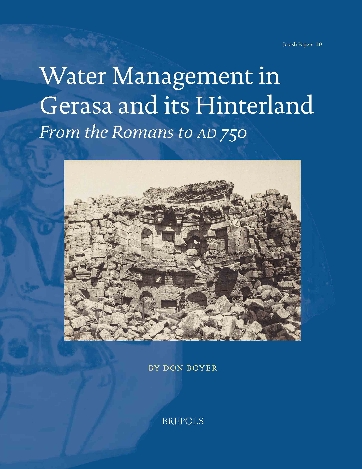
Water Management in Gerasa and its Hinterland
show More to view fulltext, buy and share links for:Water Management in Gerasa and its Hinterland show Less to hide fulltext, buy and share links for: Water Management in Gerasa and its HinterlandThe Decapolis city of Gerasa has seen occupation since the Bronze Age but reached its zenith in the Roman to early Islamic period as a population centre and trading hub. Located in a fertile valley in the limestone foothills of the Ajlun mountains, the city benefitted from a benign climate and an excellent local water supply from karstic springs and perennial streams. By the Roman-Early Byzantine period, these water sources were harnessed and managed by extensive aqueduct and distribution networks that satisfied the broad range of water needs of both urban and rural dwellers.
This volume offers an up-to-date, comprehensive, and multidisciplinary analysis of the water management system employed in both Gerasa and its hinterland from the time of Roman occupation to the devastating earthquakes that struck the city at the end of the Umayyad period. Drawing on archaeological evidence from the author’s field research, together with a critical and detailed analysis of the evidence of water installations and the results of a radiocarbon dating study, this insightful book offers the first diachronic interpretation of Gerasa’s water distribution, setting the city in its geoarchaeological, historical, and landscape contexts, and contributing to the broader understanding of its archaeological history.
-
-
-
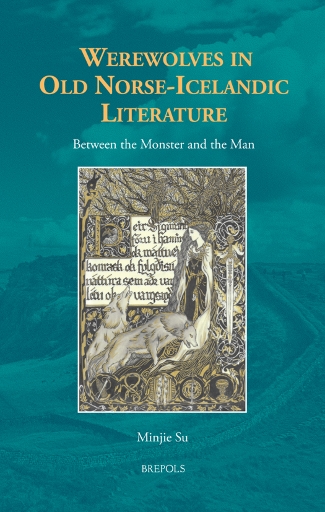
Werewolves in Old Norse-Icelandic Literature
show More to view fulltext, buy and share links for:Werewolves in Old Norse-Icelandic Literature show Less to hide fulltext, buy and share links for: Werewolves in Old Norse-Icelandic LiteratureAt the heart of any story of metamorphosis lies the issue of identity, and the tales of the werwulf (lit. ‘man-wolf’) are just as much about the wolf as about the man. What are the constituents of the human in general? What symbolic significance do they hold? How do they differ for different types of human? How would it affect the individual if one or more of these elements were to be subtracted?
Focusing on a group of Old Norse-Icelandic werewolf narratives, many of which have hitherto been little studied, this insightful book sets out to answer these questions by exploring how these texts understood and conceptualized what it means to be human. At the heart of this investigation are five factors key to the werewolf existence - skin, clothing, food, landscape, and purpose - and these are innovatively examined through a cross-disciplinary approach that carefully teases apart the interaction between two polarizations: the external and social, and the interior and psychological. Through this approach, the volume presents a comprehensive new look at the werewolf not only as a supernatural creature and a literary motif, but also as a metaphor that bears on the relationship between human and non-human, between Self and Other, and that is able to situate the Old-Norse texts into a broader intellectual discourse that extends beyond medieval Iceland and Norway.
-