


BOB2024MIOT

Collection Contents
6 results
-
-
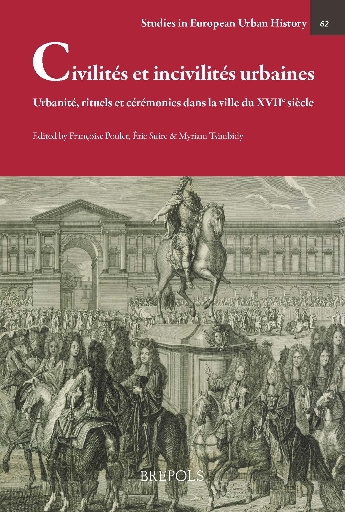
Civilités et incivilités urbaines
show More to view fulltext, buy and share links for:Civilités et incivilités urbaines show Less to hide fulltext, buy and share links for: Civilités et incivilités urbainesLes notions d’urbanité, de politesse et de savoir-vivre connaissent depuis une dizaine d’années un intérêt renouvelé à la fois dans leurs dimensions politique, sociale et culturelle.
Cet ouvrage souhaite envisager le milieu urbain en tant qu’espace de civilité en croisant les regards des historiens et des spécialistes de la littérature de l’âge classique. Il s’agit aussi d’examiner les cérémonies et rituels du XVIIe siècle comme un ensemble de réseaux de pratiques codifiées, dans lequel interagissent notamment des usages collectifs et des préséances individuelles. Ces usages organisent l’espace urbain comme l’espace curial en se déployant en leur sein. La confrontation des archives et des documents littéraires, mais aussi des outils et des méthodologies utilisés par ces différents champs disciplinaires, permet d’étudier à nouveaux frais les relations entre des concepts trop rapidement perçus comme antonymiques : l’incivilité n’est jamais le contraire de la civilité, et il n’existe pas de civilisation, ni de société civilisée, qui puisse se revendiquer comme statique ou achevée. En revenant, dans le sillage des travaux de Norbert Elias, aux origines de la civilité moderne, envisagée à l’échelle européenne, cet ouvrage entreprend d’examiner ce processus, non pas de manière linéaire et téléologique, mais dans la complexité de ses évolutions et mutations, afin de mieux contextualiser les débats contemporains autour de l’incivilité.
-
-
-
Colonial Congo
show More to view fulltext, buy and share links for:Colonial Congo show Less to hide fulltext, buy and share links for: Colonial CongoColonialism tends to arouse emotional debate, often based on incomplete knowledge of the facts and context. Colonial Congo fills this gap by introducing the general reader to the latest academic thinking and research. Answering concrete questions, pre-eminent historians offer a unique insight into the history of the Congo Free State and the Belgian Congo.
How did Leopold II’s autocratic government function and what do we know about the victims of his rule? How much profit was made in the Congo and who benefitted the most? What was life like for Congolese men and women during colonial rule and how did they feel about it? Did the Congolese offer resistance, and in what ways? What was colonialism’s impact on the Congo’s natural world? How did colonial policy affect infrastructure, education, healthcare and science? Did missionaries give colonialism a more human face? Colonial Congo’s explorations of these issues and more are revealed in this eye-opening, indispensable guide.
-
-
-
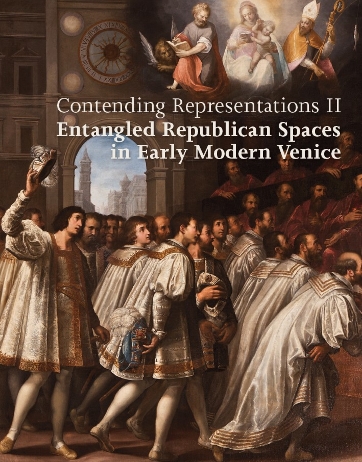
Contending Representations II: Entangled Republican Spaces in Early Modern Venice
show More to view fulltext, buy and share links for:Contending Representations II: Entangled Republican Spaces in Early Modern Venice show Less to hide fulltext, buy and share links for: Contending Representations II: Entangled Republican Spaces in Early Modern VeniceThis bookaddresses the issue of political celebration in early modern Venice. Dealing with processional orders and iconographic programs, historiographical narratives and urbanistic canons, stylistic features and diplomatic accounts, the interdisciplinary contributions gathered in these pages aim to question the performative effectiveness and the social consistency of the so called ‘myth’ of Venice: a system of symbols, beliefs and meanings offering a self-portrait of the ruling elite, the Venetian patriciate. In order to do so, the volume calls for a spatial turn in Venetian studies, blurring the boundaries between institutionalized and unofficial ceremonial spaces and considering their ongoing interaction in representing the rule of the Serenissima. The twelve chapters move from Ducal Palace to the Venetian streets and from the city of Venice to its dominions, thus widening considerably the range of social and political actors and audiences involved in the analysis. Such multifocal perspective allows us to challenge the very idea of a single ‘myth’ of Venice.
-
-
-
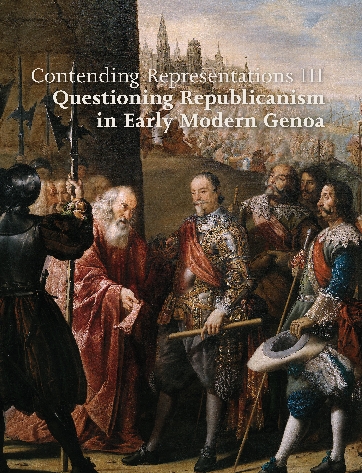
Contending Representations III: Questioning Republicanism in Early Modern Genoa
show More to view fulltext, buy and share links for:Contending Representations III: Questioning Republicanism in Early Modern Genoa show Less to hide fulltext, buy and share links for: Contending Representations III: Questioning Republicanism in Early Modern GenoaSeveral studies have been devoted to the flowering of the republic of Genoa during the so-called ‘siglo de los Genoveses’, when Genoa became the hub of European trade and an important center of artistic and literary production. Yet, little attention has been granted to the political and cultural crisis that followed, starting in 1559 and culminating in 1684, when the French bombed Genoa. Addressing this chronological gap, the volume explores how the image of the Genoese Republic was shaped, exploited, or contested in the long seventeenth century. How did Genoese politicians and men of letters represent their homeland? How was Genoa represented in Spain or in the Low Countries? How was its political system conceived by Italian and foreign political writers, and how did the prevailing absolutist model influence such ideas? In order to answer these questions, the volume gathers contributions from art historians, literary scholars, political and cultural historians, thus adopting a comparative, multidisciplinary approach.
-
-
-
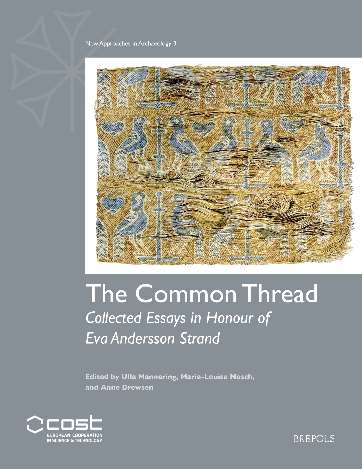
The Common Thread
show More to view fulltext, buy and share links for:The Common Thread show Less to hide fulltext, buy and share links for: The Common ThreadThe Ancient Egyptians used it for both the living and the dead, the Greeks and Romans used it to signal their status, and it aided the Vikings in reaching the far shores of Europe and Eurasia. Textiles have surrounded us, literally and figuratively for millennia, but this common thread has long been ignored in scholarly research. With the inception of the Centre for Textile Research at the University of Copenhagen in 2005, however, this approach changed fundamentally, and today, every type of research discipline comes together to begin unravelling the stories told by textiles. How do we understand textiles and how do we talk about them? Who produced textiles, where, and for what purposes? How do we conduct research into the origins of materials? How did cultivating flax or raising sheep change the ancient landscape? How have we researched textiles so far? What can we learn from textiles about society, gender, and production? This volume engages with these questions and explores how the fabric of society has changed through researching textiles in all its facets, from archaeology and history to natural sciences. Taking as its starting point the research interests and career of its honorand, Eva Andersson Strand, this meticulously researched volume consists of three parts, covering the tools and techniques that form the basis of all research explores; how craftspeople made use of tools and techniques; and how textiles have been used over millennia to signify identity and status.
-
-
-
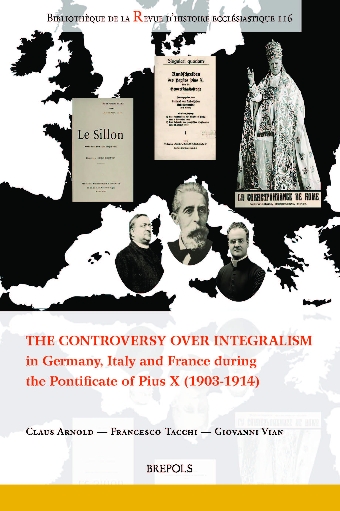
The Controversy over Integralism in Germany, Italy and France during the Pontificate of Pius X (1903-1914)
show More to view fulltext, buy and share links for:The Controversy over Integralism in Germany, Italy and France during the Pontificate of Pius X (1903-1914) show Less to hide fulltext, buy and share links for: The Controversy over Integralism in Germany, Italy and France during the Pontificate of Pius X (1903-1914)In the years after 1900 the autonomous activity of the Catholic laity in politics, culture and society was opposed by ‘integralists’ in theological circles, in the laity as well as in the clergy, and last but not least in the Roman Curia. The integralists favoured a strict confessionalism and hierarchical control over all fields of Catholic life. Pope Pius X enforced this position in Italy and in France by solemnly condemning the autonomist Christian Democracy of Romolo Murri and the ‘Sillon’ movement of Marc Sangnier. In Germany, however, compromises with the Roman authorities were possible on all fields of contention: concerning the interdenominational character of the Christian trade unions, the independence of the Centre Party from the hierarchy and also during the controversy over the ‘Catholic belles-lettres’. Finally, in the papal encyclical ‘Singulari quadam’ (1912) the interconfessional Christian trade unions were at least ‘tolerated’. The present volume analyses these struggles in a comparative perspective and, by evaluating the entire accessible archival documentation, it reconstructs for the first time the respective internal decision-making processes of the Roman Curia. The result of this entire research is a profiling of three important European Catholicisms in the controversy over integralism. This conflict had a decisive bearing on the long-term positioning of French, German and Italian Catholicism within their respective national societies.
-