


BOB2024MIOT

Collection Contents
1 - 20 of 47 results
-
-
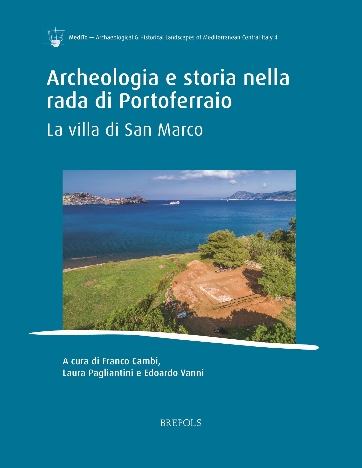
Archeologia e storia nella rada di Portoferraio
show More to view fulltext, buy and share links for:Archeologia e storia nella rada di Portoferraio show Less to hide fulltext, buy and share links for: Archeologia e storia nella rada di PortoferraioIl libro raccoglie una serie di contributi che scaturiscono dallo scavo e dallo studio della villa romana di San Marco sull’isola d’Elba, dei suoi reperti e del suo contesto storico ed ambientale. I ritrovamenti archeologici sono pertinenti un periodo molto ristretto di vita dell’insediamento, all’incirca tra il II secolo a.C e il II secolo d.C., quando la villa fu verosimilmente distrutta da un’incendio. Tale drammatico evento ha permesso la conservazione straordinaria di una serie di reperti organici (come la travatura di un solaio), attraverso i quali è stato possibile procedere ad una ricostruzione dettagliata della planimetria e degli elevati dell’edificio. Lo studio poi delle incredibili decorazioni pittoriche, insieme ad i ritrovamenti epigrafici, hanno permesso di attribuire la villa ad una delle proprietà dell’importante famiglia senatoria dei Valerii.
-
-
-
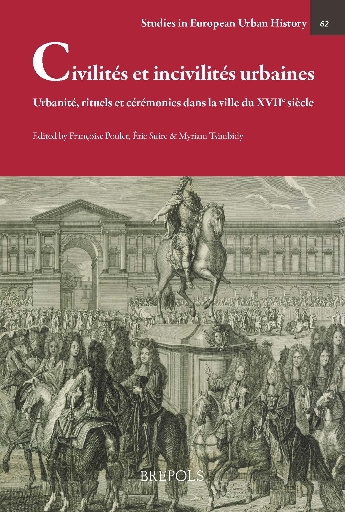
Civilités et incivilités urbaines
show More to view fulltext, buy and share links for:Civilités et incivilités urbaines show Less to hide fulltext, buy and share links for: Civilités et incivilités urbainesLes notions d’urbanité, de politesse et de savoir-vivre connaissent depuis une dizaine d’années un intérêt renouvelé à la fois dans leurs dimensions politique, sociale et culturelle.
Cet ouvrage souhaite envisager le milieu urbain en tant qu’espace de civilité en croisant les regards des historiens et des spécialistes de la littérature de l’âge classique. Il s’agit aussi d’examiner les cérémonies et rituels du XVIIe siècle comme un ensemble de réseaux de pratiques codifiées, dans lequel interagissent notamment des usages collectifs et des préséances individuelles. Ces usages organisent l’espace urbain comme l’espace curial en se déployant en leur sein. La confrontation des archives et des documents littéraires, mais aussi des outils et des méthodologies utilisés par ces différents champs disciplinaires, permet d’étudier à nouveaux frais les relations entre des concepts trop rapidement perçus comme antonymiques : l’incivilité n’est jamais le contraire de la civilité, et il n’existe pas de civilisation, ni de société civilisée, qui puisse se revendiquer comme statique ou achevée. En revenant, dans le sillage des travaux de Norbert Elias, aux origines de la civilité moderne, envisagée à l’échelle européenne, cet ouvrage entreprend d’examiner ce processus, non pas de manière linéaire et téléologique, mais dans la complexité de ses évolutions et mutations, afin de mieux contextualiser les débats contemporains autour de l’incivilité.
-
-
-
Colonial Congo
show More to view fulltext, buy and share links for:Colonial Congo show Less to hide fulltext, buy and share links for: Colonial CongoColonialism tends to arouse emotional debate, often based on incomplete knowledge of the facts and context. Colonial Congo fills this gap by introducing the general reader to the latest academic thinking and research. Answering concrete questions, pre-eminent historians offer a unique insight into the history of the Congo Free State and the Belgian Congo.
How did Leopold II’s autocratic government function and what do we know about the victims of his rule? How much profit was made in the Congo and who benefitted the most? What was life like for Congolese men and women during colonial rule and how did they feel about it? Did the Congolese offer resistance, and in what ways? What was colonialism’s impact on the Congo’s natural world? How did colonial policy affect infrastructure, education, healthcare and science? Did missionaries give colonialism a more human face? Colonial Congo’s explorations of these issues and more are revealed in this eye-opening, indispensable guide.
-
-
-
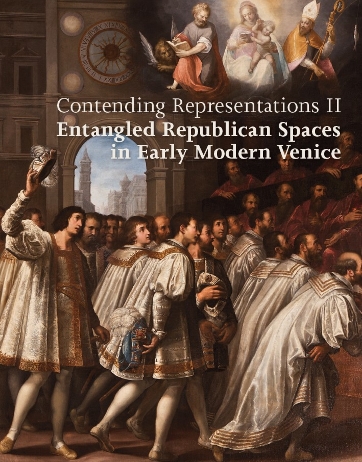
Contending Representations II: Entangled Republican Spaces in Early Modern Venice
show More to view fulltext, buy and share links for:Contending Representations II: Entangled Republican Spaces in Early Modern Venice show Less to hide fulltext, buy and share links for: Contending Representations II: Entangled Republican Spaces in Early Modern VeniceThis bookaddresses the issue of political celebration in early modern Venice. Dealing with processional orders and iconographic programs, historiographical narratives and urbanistic canons, stylistic features and diplomatic accounts, the interdisciplinary contributions gathered in these pages aim to question the performative effectiveness and the social consistency of the so called ‘myth’ of Venice: a system of symbols, beliefs and meanings offering a self-portrait of the ruling elite, the Venetian patriciate. In order to do so, the volume calls for a spatial turn in Venetian studies, blurring the boundaries between institutionalized and unofficial ceremonial spaces and considering their ongoing interaction in representing the rule of the Serenissima. The twelve chapters move from Ducal Palace to the Venetian streets and from the city of Venice to its dominions, thus widening considerably the range of social and political actors and audiences involved in the analysis. Such multifocal perspective allows us to challenge the very idea of a single ‘myth’ of Venice.
-
-
-
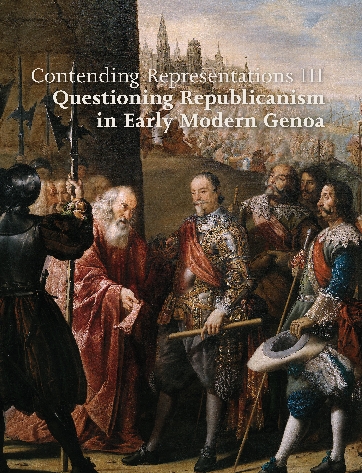
Contending Representations III: Questioning Republicanism in Early Modern Genoa
show More to view fulltext, buy and share links for:Contending Representations III: Questioning Republicanism in Early Modern Genoa show Less to hide fulltext, buy and share links for: Contending Representations III: Questioning Republicanism in Early Modern GenoaSeveral studies have been devoted to the flowering of the republic of Genoa during the so-called ‘siglo de los Genoveses’, when Genoa became the hub of European trade and an important center of artistic and literary production. Yet, little attention has been granted to the political and cultural crisis that followed, starting in 1559 and culminating in 1684, when the French bombed Genoa. Addressing this chronological gap, the volume explores how the image of the Genoese Republic was shaped, exploited, or contested in the long seventeenth century. How did Genoese politicians and men of letters represent their homeland? How was Genoa represented in Spain or in the Low Countries? How was its political system conceived by Italian and foreign political writers, and how did the prevailing absolutist model influence such ideas? In order to answer these questions, the volume gathers contributions from art historians, literary scholars, political and cultural historians, thus adopting a comparative, multidisciplinary approach.
-
-
-
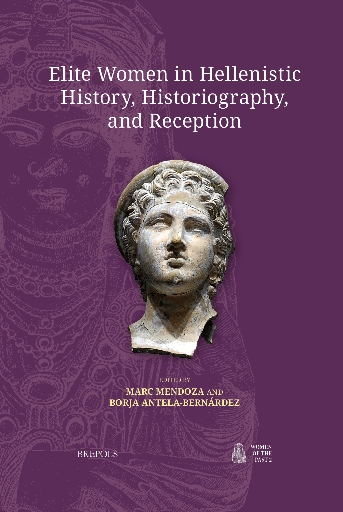
Elite Women in Hellenistic History, Historiography, and Reception
show More to view fulltext, buy and share links for:Elite Women in Hellenistic History, Historiography, and Reception show Less to hide fulltext, buy and share links for: Elite Women in Hellenistic History, Historiography, and ReceptionThe Hellenistic world, with its many new cultural trends and traditions, has often proved a challenging period for scholars. In the wake of changing political, religious, cultural, economic, and social conceptions and practices, gender roles and notions also underwent significant change, leading to the emergence of strong female figures. Up to now, however, no major encompassing research work on elite Hellenistic women has been published. This volume aims to fill this historiographical gap by gathering together contributions covering a wide range of geographical, chronological, and cultural backgrounds. While mostly focused on royal women, the chapters included here also seek to provide readers with an accurate and diverse description of the female experience in the Hellenistic period. The contributors to this book, both renowned scholars and new voices in the discipline, together advocate for a fresh approach that goes beyond the often problematic approaches of earlier historiography and provides a new understanding of elite women in the period.
-
-
-
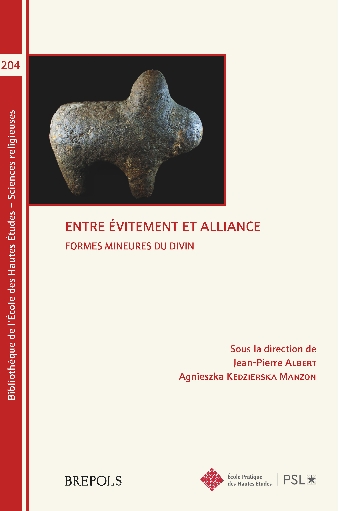
Entre évitement et alliance
show More to view fulltext, buy and share links for:Entre évitement et alliance show Less to hide fulltext, buy and share links for: Entre évitement et allianceSelon le mot de Pétrone, « notre pays est si plein de divinités que tu peux plus facilement y rencontrer un dieu qu’un homme. » La Rome antique est bien loin d’être la seule société à connaître pareille surpopulation divine. Par-delà la différence entre d’un côté ce que les sciences religieuses ont l’habitude de considérer comme des « religions traditionnelles » désignées par les termes de fétichisme, animisme, chamanisme et, de l’autre, des monothéismes et des polythéismes, la quasi-totalité des religions du monde réserve une place de choix à d’innombrables divinités mineures ou entités invisibles. Esprits, génies, êtres fantastiques, revenants, ancêtres ou saints font l’objet de relations intéressées, parfois aussi assez inquiétantes pour que l’on cherche à les éviter. La plupart de ces entités ambiguës ne donnent pas lieu à des cultes réguliers. Leur présence se manifeste le plus souvent dans des rencontres fortuites qui appellent un traitement rituel visant à normaliser les relations que les hommes ont avec elles. Créditées de pouvoirs qui se cantonnent à des champs d’intervention limités, elles sont liées à des lieux, des moments, des pratiques telles la chasse, l’agriculture, la guerre ou encore des épisodes biographiques saillants – naissance, maladies, conflits, etc. Cet ouvrage réunit les contributions d’anthropologues, historiens et philosophes qui, chacun à sa manière, se sont essayés à mieux comprendre le sens de cette prolifération d’entités mineures et à questionner sur cette base la notion même de religion comme impliquant – ou non – celle de dieux.
-
-
-
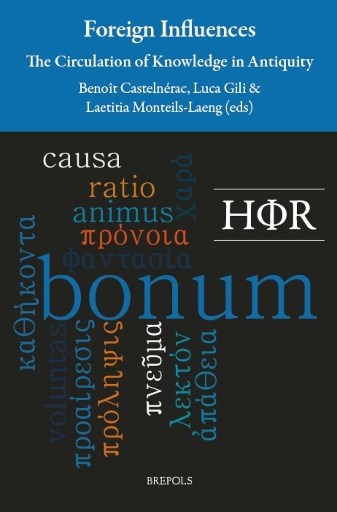
Foreign Influences: The Circulation of Knowledge in Antiquity
show More to view fulltext, buy and share links for:Foreign Influences: The Circulation of Knowledge in Antiquity show Less to hide fulltext, buy and share links for: Foreign Influences: The Circulation of Knowledge in AntiquityThe Greeks had a rich and varied relationship with foreign lands and people, which made possible a real circulation of knowledge throughout the Archaic, Classical, and Hellenistic times. The essays collected in this volume aim at exploring the hypothesis that the most adventurous intellectuals saw foreign lands and foreigners as repositories of knowledge that the Greeks σοφοί had to engage with, in the hope of bringing back home valuables in the form of new ideas. Each of the articles included in this collective work explores one aspect of the “stranger” as a potential source, with contributions mostly focused on Plato, Xenophon, Democritus, Aristotle, Diogenes, Cicero, and Galen.
-
-
-
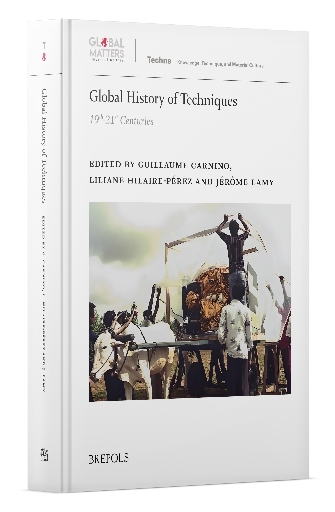
Global History of Techniques
show More to view fulltext, buy and share links for:Global History of Techniques show Less to hide fulltext, buy and share links for: Global History of TechniquesIt is impossible to understand societies without looking at their technological underpinnings. Technology constitutes the very fabric of societies' political, economic, cultural, and everyday realities. Building on recent historiography, this book offers the first overview of the global history of contemporary technology.
Gathering more than fifty specialists of the history of technology, the collection of essays presents an overview of technological evolutions on a global scale. The book challenges both teleological approaches on progress and eurocentric perspectives. It explores the complex socio-economic implications of ‘techniques’ (and not simply technology) as well as the systems of representation and power structures that led to the emergence of today’s world.
The purpose of the collected essays is to offer a new history of technology. In this perspective, a central question concerns the very category of the history of technology, i.e. the term ‘technology’ itself. Refusing both the limitations of ‘technology’ and of ‘useful knowledge’, the book stresses the necessity to study technology as embodying human activity as a whole. In that sense, history of technology, envisioned as techniques rather than purely technologies, is intrinsically linked to anthropology and ethnology.
This book is divided into three sections. The first section opens with a world tour of techniques, restoring the complexity of regional historiographies and of the meanings given to technological activities in different societies. The second part focuses on sectors of activity, processes, and products with a strong emphasis on means of production and communication, the exploitation of natural resources, major technological systems, infrastructures and networks. The final section provides access to major cross-related issues. It pays particular attention to the role played by technology/techniques in the process of globalization, particularly through colonization, imperialism, and the development of large technological systems.
-
-
-
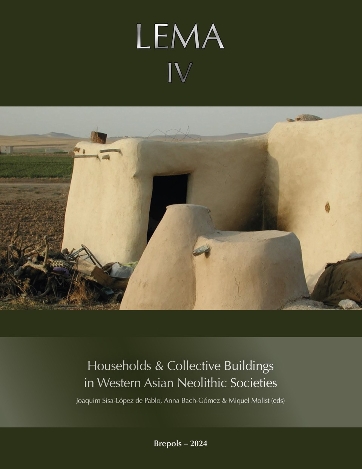
Households & Collective Buildings in Western Asian Neolithic Societies
show More to view fulltext, buy and share links for:Households & Collective Buildings in Western Asian Neolithic Societies show Less to hide fulltext, buy and share links for: Households & Collective Buildings in Western Asian Neolithic SocietiesArchitecture, and the layout of settlements, are key elements of archaeological research that enable an understanding of past societies. In studying the built environment and the articulation of social spaces, it is possible to shed light on the social relations of communities, and on the ideology, economy, and cultural and social practices that underpinned how people lived. Taking a study of the built environment as its starting point, this volume draws together contributions focusing on the Neolithic transition in south-western Asia. Covering a period that extends from the Early Pre-Pottery Neolithic through to the Late Neolithic (c. 10,000–5500 BCE), the chapters gathered here explore the built environment from different regions, perspectives, and methodologies, and draw on new theoretical and analytical approaches in order to expand our knowledge of the emergence of the Neolithic through the lens of architectural and settlement analysis.
-
-
-
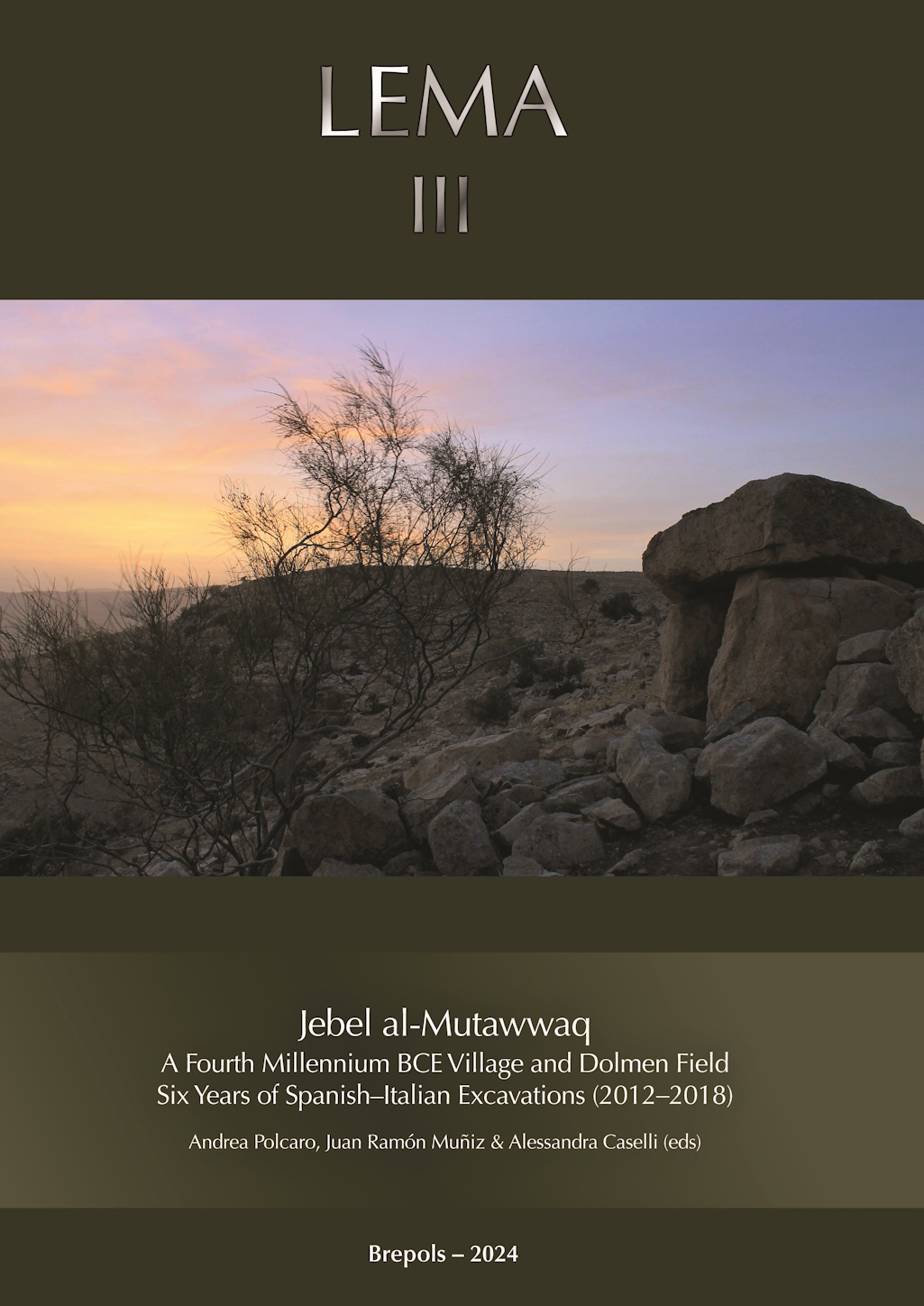
Jebel al-Mutawwaq
show More to view fulltext, buy and share links for:Jebel al-Mutawwaq show Less to hide fulltext, buy and share links for: Jebel al-MutawwaqThe Early Bronze Age site of Jebel al-Mutawwaq, located on a hill overlooking the Zarqa River in Jordan, was a thriving centre of population from the second half of the fourth millennium into the third millennium bce. During this time, the settlement developed both in population and social complexity, undergoing the beginnings of an urbanization process that fundamentally changed the relationship between this community of the Transjordanian Highlands with the surrounding landscape, until it was completely abandoned around 2900 bce. This volume offers a new assessment of the site by combining data from the first surveys of the site, under a Spanish team led by J. A. Fernandez-Tresguerres, with the new results from six seasons of excavations led by teams from Perugia in Italy, and San Esteban in Spain. In doing so, this work sheds new light on this walled settlement and its huge megalithic necropolises, and offers a fresh understanding of the site.
-
-
-
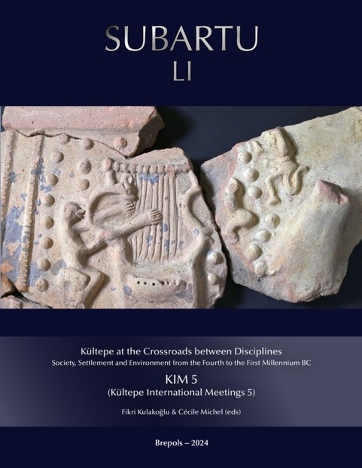
Kültepe at the Crossroads between Disciplines
show More to view fulltext, buy and share links for:Kültepe at the Crossroads between Disciplines show Less to hide fulltext, buy and share links for: Kültepe at the Crossroads between DisciplinesThis fifth volume of a collection devoted to the interdisciplinary meetings held one every two years at Kültepe, ancient Kaneš, brings together eighteen contributions dedicated to the archaeology and history of this Central Anatolian site and its surroundings. Each chapter within the volume presents the results of current research into Kültepe, thus continuing the holistic approach first demonstrated in earlier volumes of the Kültepe International Meetings sub-seriesof revitalizing one of the most important cultural centres of early Anatolia and of emphasising its importance as a pilot site for interdisciplinary studies. Drawing on Kültepe’s unique textual and archaeological data, the studies gathered here are organized into four key thematic sections devoted respectively to politics, law and religion; women, family and correspondence; human and animal skeletons; and to the most recent archaeological excavations in Kültepe covering a period from the Chalcolithic to Hellenistic times.
-
-
-
Les sermons du manuscrit de Vienne (ÖNB MS LAT. 4147)
show More to view fulltext, buy and share links for:Les sermons du manuscrit de Vienne (ÖNB MS LAT. 4147) show Less to hide fulltext, buy and share links for: Les sermons du manuscrit de Vienne (ÖNB MS LAT. 4147)En 1994, François-Joseph Leroy publiait vingt-deux sermons inédits, qu’il attribua à un contemporain d’Augustin et dans lesquels il vit une collection, non apologétique et non polémique, de textes donatistes. C’était là une découverte exceptionnelle. Pourtant, depuis l’édition provisoire de Leroy, la recherche ne s’est guère penchée sur ce corpus. C’est la raison pour laquelle le Groupe de Recherches sur l’Afrique Antique (GRAA) a entrepris une nouvelle édition critique de ces 22 sermons, accompagnée de la première traduction annotée, et rassemblé autour de ce corpus les contributions de différents spécialistes, historiens et littéraires, pour en analyser tant la langue, le style et les procédés homilétiques que la portée supposée donatiste, la spiritualité et la théologie.
-
-
-
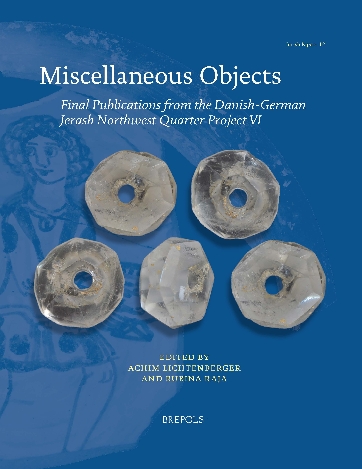
Miscellaneous Objects
show More to view fulltext, buy and share links for:Miscellaneous Objects show Less to hide fulltext, buy and share links for: Miscellaneous ObjectsThe Decapolis city of Jerash has long attracted attention from travellers and scholars, due both to the longevity of the site and the remarkable finds uncovered during successive phases of excavation that have taken place from 1902 onwards. Between 2011 and 2016, a Danish-German team, led by the universities of Aarhus and Münster, focused their attention on the Northwest Quarter of Jerash — the highest point within the walled city — and this volume is the sixth in a series of books presenting the team’s final results.
In this volume, a wide range of miscellaneous items discovered in the Northwest Quarter are presented, ranging from prehistoric lithics to Ottoman pipes. Material finds covered include stone sculpture, utensils, and inscriptions, as well as bone objects, spindle whorls, and bread stamps, while some scientific analyses of jewellery and terracotta figurines complement the studies. These chapters ensure that all finds from the Northwest Quarter — no matter how small — are made available to researchers, with the contributions gathered here offering unique new insights into the material groups from Gerasa, later Jerash, and into the lives of the population of the city from a longue durée perspective.
-
-
-

Noble Magnificence
show More to view fulltext, buy and share links for:Noble Magnificence show Less to hide fulltext, buy and share links for: Noble MagnificenceThe thirty chapters in this book are based on the work of an international, multidisciplinary team of researchers and archivists brought together for the PerformArt project, funded by the European Research Council from 2016 to 2022. This project investigated the artistic patronage of the great Roman aristocratic families of the seventeenth and eighteenth centuries through research in the extant archives.After the accession to the papal throne of Innocent X in 1644, and more so after the Peace of the Pyrenees in 1659 – which led to a greater loss of power for the pope in his relations with other European states – the Roman families stepped up their efforts to assert their social preeminence not only through architecture and the fine arts, but also through the ephemeral performing arts: music, theatre, and dance, which were omnipresent throughout the year and especially during the intense period of artistic production that was the Roman Carnival. The search for traces of these spectacles in the archives of these families reveals that their desire to display their magnificence – an ideal well documented in the literature of the period – gave rise to lavish expenditure on a scale that could only be justified by the benefits (if not tangible, then at least symbolic) they hoped to gain.The essays in this book, which draw on social economic history, the history of ideas, and the evolving artistic practices of the time, make a major contribution to our knowledge of courtly societies in Ancien Régime Europe by integrating the performing arts into their analyses in innovative ways.
-
-
-
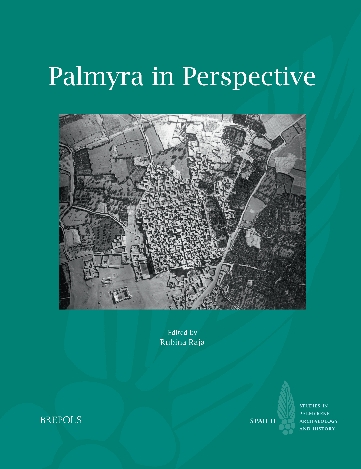
Palmyra in Perspective
show More to view fulltext, buy and share links for:Palmyra in Perspective show Less to hide fulltext, buy and share links for: Palmyra in PerspectiveThe famous oasis city of Palmyra, located in the Syrian Desert, has long been the subject of scholarly research; and over the last decade, it has been the focus of three key projects based at Aarhus University in Denmark. Together, these projects have yielded results that have shed new light on Palmyra and have profoundly changed what we know about both the city itself, and its place in the wider Roman Empire, through a focus on sculptural production and the sustainability and economy that underpinned this, urban development, excavation history, and legacy data. This volume, based on a conference organized under the auspices of the Palmyra research projects in Aarhus, draws together papers that reflect on our understanding of Palmyra up to now, and pave the way for new lines of enquiry. Experts in the field engage with discussions of best practice, offer new perspectives on the city, its society, and its environs, and outline approaches that will allow research to continue to break new ground in our understanding of Palmyra.
-
-
-
Petits dieux des Romains et leurs voisins
show More to view fulltext, buy and share links for:Petits dieux des Romains et leurs voisins show Less to hide fulltext, buy and share links for: Petits dieux des Romains et leurs voisinsLa formule « petites divinités », qui désigne dans ce volume toutes les puissances revêtant des pouvoirs limités ou une position inférieure dans une configuration divine donnée, est utilisée ici comme un concept exploratoire dont le caractère opérationnel est testé collectivement, en l’appliquant au monde romain et en le comparant aux cultures voisines, grecques et italiques. Si l’étiquette « petites divinités » peut étonner, elle repose cependant sur des catégories antiques. Dans quelques textes latins, en effet, les dieux se définissent eux-mêmes – ou sont définis – comme inférieurs aux autres. Le concept de petites divinités est donc éminemment relationnel mais également contextuel. Les articles réunis dans ce volume abordent ainsi la question des classifications et des hiérarchies divines à partir de sources et de contextes spécifiques, plus ou moins larges, mettant en jeu des panthéons, configurations ou réseaux divins, plus ou moins structurels ou conjoncturels. Si dans le contexte romain, la hiérarchie est une clé pour organiser les groupes des dieux, en se déplaçant vers d’autres contextes culturels, au contraire, les rapports entre divinités semblent plutôt fondés sur des liens de complémentarités entre les dieux.
-
-
-
Poetic Rewritings in Late Latin Antiquity and Beyond
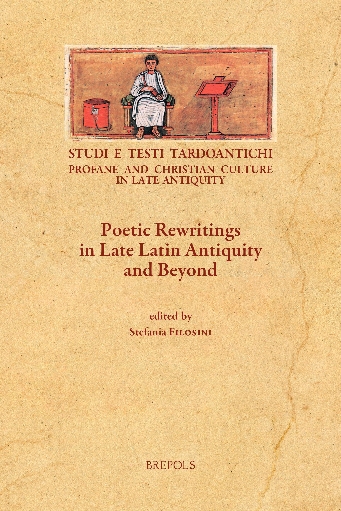
show More to view fulltext, buy and share links for:Poetic Rewritings in Late Latin Antiquity and Beyond show Less to hide fulltext, buy and share links for: Poetic Rewritings in Late Latin Antiquity and Beyond‘Rewriting’ as the reworking of narrative material based on conscious strategies of composition plays a significant role in much of the Latin poetry of Late Antiquity. This book, resulting from the conference Riscritture poetiche nell’Occidente latino tra tarda antichità e medioevo, which was held on 9-11 May 2022 at the Department of Human Sciences (DSU) of the University of L’Aquila, looks at the range of practices and purposes that inform this procedure, with particular regard to the processes of transcodification enacted – in different historical and cultural contexts – by the recasting of authoritative prose texts into a classicising poetic idiom. The contributions present a multifaceted approach to rewriting, cover a variety of authors, genres, and texts, and cast a glance also at medieval Latin literature. In short, the essays in this collection, by reflecting on the interpretative contribution of the critical category of ‘rewriting’, not only add further tesserae to the mosaic of literary studies on Late Latinity, they also invite to grasp the difference between secular and Christian rewritings.
-
-
-
Premodern Jewish Books, their Makers and Readers in an Era of Media Change
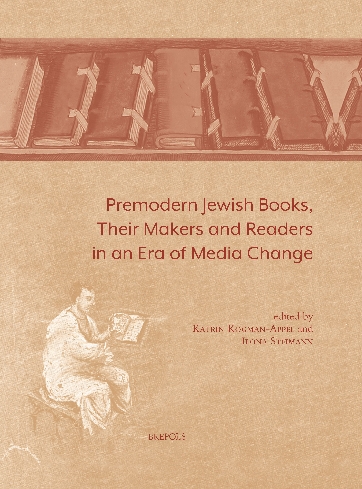
show More to view fulltext, buy and share links for:Premodern Jewish Books, their Makers and Readers in an Era of Media Change show Less to hide fulltext, buy and share links for: Premodern Jewish Books, their Makers and Readers in an Era of Media ChangeThis volume brings together studies about books as artefacts within transitional zones. The history of the book from the handwritten to the printed medium is understood as a process marked by innovation and social change, but also by disorientation and bewilderment. The journey of a book from production to use was determined by a complex set of factors: communication among authors, makers of books, patrons, and readership; the emergence of publishers; and decisions to be made concerning production and publication. These factors underwent tremendous changes during the fifteenth and sixteenth centuries owing to the spread of printing and the rise of Humanism in Europe. Particular focus is put on the physical evidence of books, both handwritten and printed, and what it can tell us about a book’s production and its reception.
-
-
-
Procopius the Christian Sophist
show More to view fulltext, buy and share links for:Procopius the Christian Sophist show Less to hide fulltext, buy and share links for: Procopius the Christian SophistThe rich literary production of Gaza in the fifth and sixth centuries AD has received quite some attention in recent scholarship. Yet, the figure and work of Procopius the Sophist, as author of catenae, compiler, and epitomist of patristic exegesis, have remained relatively unknown and under-explored. This collection of essays delves deeply into Procopius’ exegetical work. At the outset, a strong case is made that one should distinguish between the famous orator of Gaza and "the Christian sophist" Procopius. A first large section of the book deals with the Genesis Epitome that is studied from three different angles: the limited and as a rule critical use of Origen and his tradition; the importance given to Theodore of Mopsuestia’s exegesis of Gen 1–3; and the relations between Procopius’ Epitome and John Philoponus’ De opificio mundi. The section on the Exodus Epitome studies the specificity of Procopius’ work in comparison to the Catena on Exodus, the way the material is organised, and the literary genre of the work. The volume further contains contributions on the connections between the Scholia on Kings attributed to Procopius, the type B catena, and the so-called "Catena Lipsiensis"; the relations between Procopius’ Catena on Proverbs and other catenae on this book; the sources of the Isaiah Epitome that show a diligent and able compiler at work; and the comparison between the characteristic features of Procopius’ Epitomes and those of the Catena III on Obadiah. As a whole, it offers a wide perspective and significantly advances research on, and our knowledge of, Procopius the Christian sophist, a still somewhat mysterious early Byzantine author and scholar.
-