


BOB2024MIOT

Collection Contents
41 - 47 of 47 results
-
-
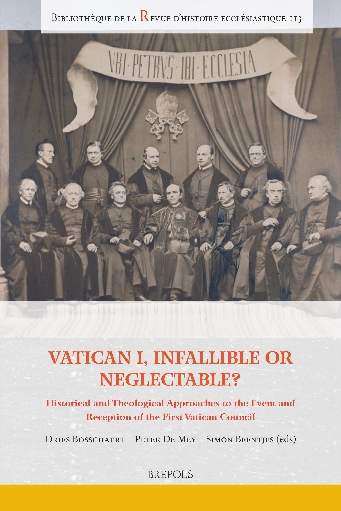
Vatican I, Infallible or Neglectable?
show More to view fulltext, buy and share links for:Vatican I, Infallible or Neglectable? show Less to hide fulltext, buy and share links for: Vatican I, Infallible or Neglectable?On 20 October 1870 pope Pius IX adjourned the First Vatican Council, because of the Italian Rissorgimento troops approaching the city of Rome. Given that the Council had only opened less than a year prior, on 8 December 1869, the act was emblematic. The council, as the Catholic Church’s protective response against all things new – rationalism, liberalism, naturalism, materialism, and pantheism – was overtaken by history. Given its premature end not all documents prepared were completed and those that were promulgated, became among the most controversial documents in the nineteenth and twentieth-century Catholic Church, strongly defining its relations to other Christian confessions and modernity. Similarly, around one hundred years after the suspension of the First Vatican Council its historical and theological study was overtaken by the event of the Second Vatican Council, known for its rapprochement to the modern world. The history and results of the First Vatican Council were either forgotten or reinterpreted in light of this subsequent council’s decisions. In light of the 150th anniversary of this council, the editors and authors of this volume set themselves the goal of re-examining this tradition of historical and theological reception (and forgetting) of the First Vatican Council.
-
-
-
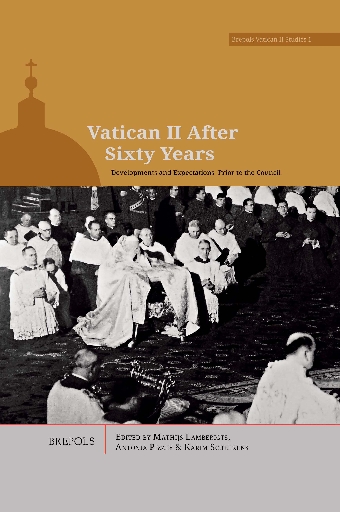
Vatican II After Sixty Years
show More to view fulltext, buy and share links for:Vatican II After Sixty Years show Less to hide fulltext, buy and share links for: Vatican II After Sixty YearsThis volume is the result of a workshop organized in Leuven within the context of the Australian Catholic University-KU Leuven-Tilburg University project on Vatican II (1962-1965). This volume focuses on the preparatory period of the Council and its broader context, for many renewal movements were underway decades before the Council's opening. The preparation of the Council was also a period of intense consultation of bishops and male superiors of religious orders and congregations. Indeed, John XXIII aimed at introducing an aggiornamento in the Roman Catholic Church, taking into account the wishes and the needs of bishops and superiors. The volume presented here offers new insights about this period on the basis of archives and other materials insufficiently consulted to date. The papers presented are the result of research by both senior scholars and junior researchers. They focus on the following issues: revelation, ecclesiology, ecumenism, and education.
-
-
-
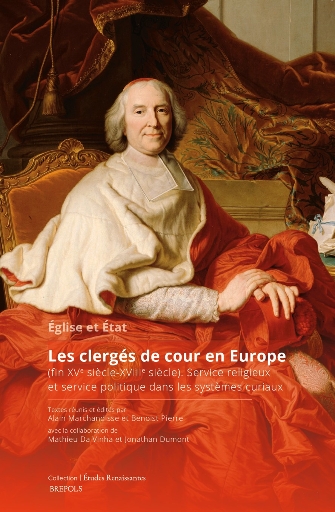
Église et État. Les clergés de cour en Europe (fin XVe siècle-XVIIIe siècle)
show More to view fulltext, buy and share links for:Église et État. Les clergés de cour en Europe (fin XVe siècle-XVIIIe siècle) show Less to hide fulltext, buy and share links for: Église et État. Les clergés de cour en Europe (fin XVe siècle-XVIIIe siècle)En 2017 paraissait, dirigé par Monique Maillard-Luypaert, Alain Marchandisse et Bertrand Schnerb, et avec pour sous-bassement un colloque organisé à Lille et Tournai par ces mêmes historiens, un volume qui, sous le titre Évêques et cardinaux princiers et curiaux (XIVe-début XVIe siècle). Des acteurs du pouvoir, apportait un ensemble de contributions, notamment biographiques, sur cette figure paradigmique de l’homme d’Église appelé à exercer une action politique d’envergure, parce qu’il est issu d’un milieu familial qui l’y prédestine ou parce qu’il sert, à la cour, un prince, un roi, un pape. Sous une bannière commune – Église et État –, un second colloque, cette fois organisé à Versailles, s’est voulu à la fois le prolongement et l’aménagement conceptuel du premier à une époque plus récente, la période moderne, voire le début des temps contemporains. Le présent volume en renferme les actes. Ils s’insèrent dans cinq volets spécifiques : Rome, son clergé de cour, et celui des autres États ; le conseil politique ; les chapelles princières ; les confesseurs princiers et les clergés de cour dans le monde chrétien, catholique ou non.
-
-
-
‘Madness’ in the Ancient World: Innate or Acquired?
show More to view fulltext, buy and share links for:‘Madness’ in the Ancient World: Innate or Acquired? show Less to hide fulltext, buy and share links for: ‘Madness’ in the Ancient World: Innate or Acquired?This is the first book volume ever to study the ‘difficult’ subject of congenital, intellectual disability in the ancient world. The contributions cover the Ancient Near East, Egypt and the Graeco-Roman world, up to the late ancient period, China, the rabbinic tradition, Byzantium, the Islamic world, and the Middle Ages in the Latin West. The engaging and thought-provoking chapters combine careful textual analysis with attention to the material evidence and comparative perspectives, not the least those offered by disability history for recent periods in history.
-
-
-
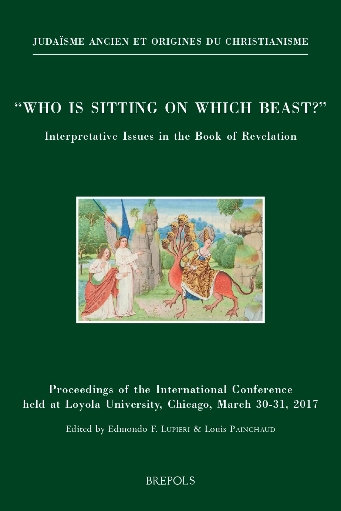
“Who is Sitting on Which Beast?” Interpretative Issues in the Book of Revelation
show More to view fulltext, buy and share links for:“Who is Sitting on Which Beast?” Interpretative Issues in the Book of Revelation show Less to hide fulltext, buy and share links for: “Who is Sitting on Which Beast?” Interpretative Issues in the Book of RevelationThe Revelation of Jesus Christ, better known as the Apocalypse of John, or simply the Book of Revelation, has always fascinated its readers, both religious and non-religious. Its transmission and reception in a Christian context have given rise to a wide variety of interpretations and controversies. At the heart of this revelation are the enigmatic figures of a pregnant woman appearing in heaven and then fleeing into the desert, a prostitute appearing in the desert and riding a beast, and then the bride of the Lamb, as well as a great city called Babylon, Sodom, and Egypt. Cities, beast, and prostitute are usually interpreted as thinly veiled references to Rome and its empire, and in particular to the emperor Nero.
However, this reading raises a number of interpretative problems concerning the relationship between these different female figures and their relation to the beast, which duplicates into a beast from the sea and a beast from the land, and concerning the city that lies beneath Babylon. Although they do not all share the exact same point of view on the Apocalypse of John and on the solutions to these interpretative problems, the contributions gathered in this volume all question the received ideas in one way or another. What they have in common is a regard for the Apocalypse of John as a text strongly rooted in the Judaism of its time, and they place great emphasis on interpreting the text through attention to its author’s use of the Jewish Scriptures.
-
-
-
La beauté de l’homme
show More to view fulltext, buy and share links for:La beauté de l’homme show Less to hide fulltext, buy and share links for: La beauté de l’hommeContrairement à la grandeur ou la dignité, la question de la beauté de l’homme n’a guère retenu l’attention des commentateurs. Trop souvent réduite à la seule beauté corporelle, elle est jugée secondaire, relevant de l’histoire sociale des apparences ou de l’esthétique. À l’inverse, le propos de cet ouvrage est de montrer que la beauté joue un rôle essentiel dans la dignification de l’homme, en s’appuyant sur les deux grandes traditions qui ont modelé l’idéal de perfection humaine jusqu’à l’âge classique : d’une part, le culte antique de la beauté, revivifié au Moyen Âge par la « Renaissance du xiie siècle » et magnifié à l’âge humaniste avec le développement des arts plastiques ; d’autre part, la tradition chrétienne dans laquelle l’homme, créé à l’image et selon la ressemblance de Dieu (Gn 1, 26), porte en lui une étincelle de la divine Beauté.
Ainsi entend-on réfléchir moins à la beauté elle-même qu’au sens de la beauté, par un dialogue entre théologie, philosophie, littérature et théorie de l’art. Se révèle alors toute la complexité de la question marquée par une tension constante entre recherche de l’idéal et paradoxes, beauté plastique et beauté vivante, beauté corporelle et beauté spirituelle, kalokagathie et théorie silénique de l’opposition entre extérieur et intérieur, beauté visuelle et beauté musicale, beauté de l’homme et beauté de Dieu.
-
-
-
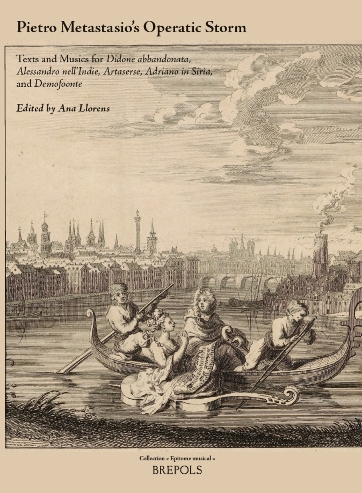
Pietro Metastasio’s Operatic Storm
show More to view fulltext, buy and share links for:Pietro Metastasio’s Operatic Storm show Less to hide fulltext, buy and share links for: Pietro Metastasio’s Operatic StormPietro Metastasio (1698–1782) can be considered as the most renowned operatic dramatist of eighteenth-century Europe. His drammi per musica travelled all around Europe – and beyond – throughout the eighteenth century and the early years of the nineteenth. Courts, palaces, and public theatres were eager to perform his dramas, and so hundreds of composers set them to music, sometimes on more than one occasion.
This volume lets the surviving textual and musical traces speak for themselves. As a catalogue of the sources of five of Metastasio’s most successful titles – Didone abbandonata, Alessandro nell’Indie, Artaserse, Adriano in Siria, and Demofoonte –, it offers their most complete chronology up to date, as well as a detailed presentation of the printers and the theatres in which these texts became alive. In the case of the majority of these works, thousands of manuscripts and copies attest to more than one hundred complete musical versions and over two hundred and fifty productions. They may thus rightly be considered witnesses to the operatic fever that took Europe by storm in the Enlightenment.
-