


BOB2024MIOT

Collection Contents
21 - 40 of 47 results
-
-
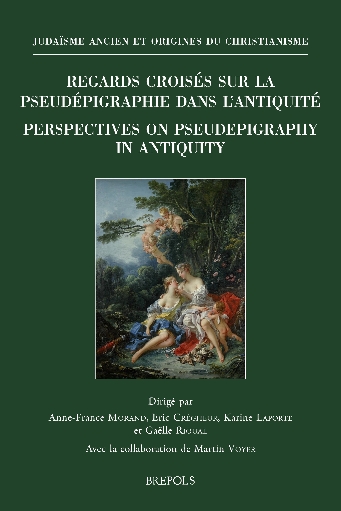
Regards croisés sur la pseudépigraphie dans l’Antiquité
show More to view fulltext, buy and share links for:Regards croisés sur la pseudépigraphie dans l’Antiquité show Less to hide fulltext, buy and share links for: Regards croisés sur la pseudépigraphie dans l’AntiquitéQu’il s’agisse d’écrire sous le nom de Pythagore, d’Orphée, de la Pythie, ou encore de Paul de Tarse ou d’Énoch, les Anciens usaient de noms d’emprunt célèbres pour s’exprimer. Phénomène fondamental de l’Antiquité, la pseudépigraphie n’a cependant fait l’objet d’aucune monographie avant les années 1970, avec le livre de Wolfgang Speyer, Die literarische Fälschung im heidnischen und christlichen Altertum (1971), et les Entretiens de la Fondation Hardt, Pseudepigrapha I. Pseudopythagorica – Lettres de Platon – Littérature pseudépigraphique juive (1972). Le sujet a alors suscité les critiques de plusieurs savants. Plus récemment, la somme que Bart Ehrman a consacrée à la question, Forgery and Counterforgery (2013), par les vives réactions qu’elle a provoquées – parfois critiques, parfois élogieuses – a contribué à relancer le débat. Le présent volume se propose de revenir sur ces importantes synthèses, en les abordant sous l’angle de figures précises, ainsi que d’époques, de langues et de régions diverses. Il vise aussi à élargir la recherche en mettant à l’épreuve les différentes théories énoncées dans la littérature savante. Il est désormais devenu essentiel d’étendre et de remodeler cette notion de pseudépigraphie qui touche également à celles d’« auctorialité », d’inspiration poétique, d’intention des auteurs antiques et de genres littéraires.
-
-
-
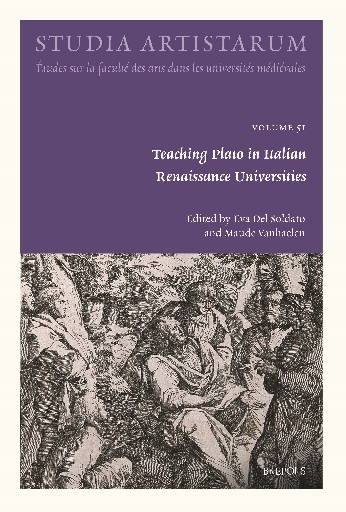
Teaching Plato in Italian Renaissance Universities
show More to view fulltext, buy and share links for:Teaching Plato in Italian Renaissance Universities show Less to hide fulltext, buy and share links for: Teaching Plato in Italian Renaissance UniversitiesDuring the Renaissance, the Arts curriculum in universities was based almost exclusively on the teaching of Aristotle. With the revival of Plato, however, professors of philosophy started to deviate from the official syllabus and teach Plato’s dialogues. This collection of essays offers the first comprehensive overview of Platonic teaching in Italian Renaissance universities, from the establishment of a Platonic professorship at the university of Florence-Pisa in the late 15th century to the introduction of Platonic teaching in the schools and universities of Bologna, Padua, Venice, Pavia and Milan in the 16th and 17th centuries. The essays draw from new evidence found in manuscripts and archival material to explore how university professors adapted the format of Plato’s dialogues to suit their audience and defended the idea that Plato could be accommodated to university teaching. They provide significant and fundamental insight into how Platonism spread during the 16th and 17th centuries and how a new interpretation of Plato emerged, distinct from the Neoplatonic tradition revived by Marsilio Ficino.
-
-
-
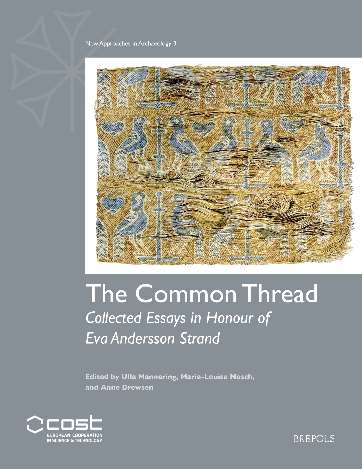
The Common Thread
show More to view fulltext, buy and share links for:The Common Thread show Less to hide fulltext, buy and share links for: The Common ThreadThe Ancient Egyptians used it for both the living and the dead, the Greeks and Romans used it to signal their status, and it aided the Vikings in reaching the far shores of Europe and Eurasia. Textiles have surrounded us, literally and figuratively for millennia, but this common thread has long been ignored in scholarly research. With the inception of the Centre for Textile Research at the University of Copenhagen in 2005, however, this approach changed fundamentally, and today, every type of research discipline comes together to begin unravelling the stories told by textiles. How do we understand textiles and how do we talk about them? Who produced textiles, where, and for what purposes? How do we conduct research into the origins of materials? How did cultivating flax or raising sheep change the ancient landscape? How have we researched textiles so far? What can we learn from textiles about society, gender, and production? This volume engages with these questions and explores how the fabric of society has changed through researching textiles in all its facets, from archaeology and history to natural sciences. Taking as its starting point the research interests and career of its honorand, Eva Andersson Strand, this meticulously researched volume consists of three parts, covering the tools and techniques that form the basis of all research explores; how craftspeople made use of tools and techniques; and how textiles have been used over millennia to signify identity and status.
-
-
-
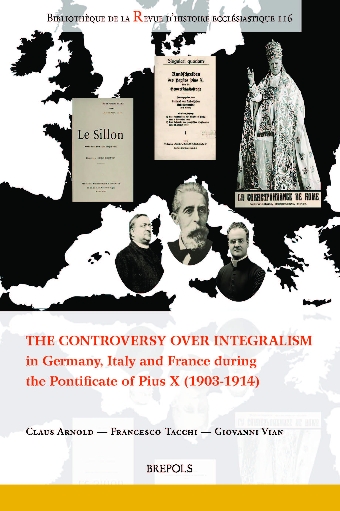
The Controversy over Integralism in Germany, Italy and France during the Pontificate of Pius X (1903-1914)
show More to view fulltext, buy and share links for:The Controversy over Integralism in Germany, Italy and France during the Pontificate of Pius X (1903-1914) show Less to hide fulltext, buy and share links for: The Controversy over Integralism in Germany, Italy and France during the Pontificate of Pius X (1903-1914)In the years after 1900 the autonomous activity of the Catholic laity in politics, culture and society was opposed by ‘integralists’ in theological circles, in the laity as well as in the clergy, and last but not least in the Roman Curia. The integralists favoured a strict confessionalism and hierarchical control over all fields of Catholic life. Pope Pius X enforced this position in Italy and in France by solemnly condemning the autonomist Christian Democracy of Romolo Murri and the ‘Sillon’ movement of Marc Sangnier. In Germany, however, compromises with the Roman authorities were possible on all fields of contention: concerning the interdenominational character of the Christian trade unions, the independence of the Centre Party from the hierarchy and also during the controversy over the ‘Catholic belles-lettres’. Finally, in the papal encyclical ‘Singulari quadam’ (1912) the interconfessional Christian trade unions were at least ‘tolerated’. The present volume analyses these struggles in a comparative perspective and, by evaluating the entire accessible archival documentation, it reconstructs for the first time the respective internal decision-making processes of the Roman Curia. The result of this entire research is a profiling of three important European Catholicisms in the controversy over integralism. This conflict had a decisive bearing on the long-term positioning of French, German and Italian Catholicism within their respective national societies.
-
-
-
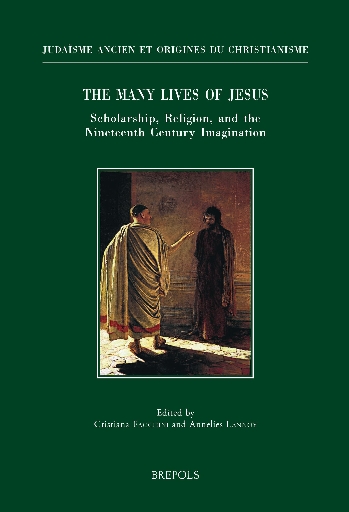
The Many Lives of Jesus
show More to view fulltext, buy and share links for:The Many Lives of Jesus show Less to hide fulltext, buy and share links for: The Many Lives of JesusThis collection of essays aims to offer a multi-disciplinary approach to nineteenth and early twentieth century scholarship on Jesus and early Christianity, which illustrates the width and depth of the questions that critical reflections on the historical Jesus raised in and beyond the field of liberal theology. More precisely, it focuses on Jesus scholarship as practiced in various disciplines and fields that engaged with the academic study of religion. On the other hand, this volume aims for a comprehensive, multi-perspectivist historicization of this scholarship, considering the full range of religious, cultural, racial, political, and national dynamics that hosted the many controversies over the historical Jesus.Divided into five sections, the eleven essays in this book are organized according to guiding themes and a loose chronological structure. The first section revisits the roots of the Forschung in Liberal-Protestant Germany, and especially focuses on the maturation of historical-critical consciousness in the work of Reimarus (and his predecessors), Schleiermacher and Strauss. The second section is concerned with the rise of the “oriental Jesus” against the background of the making of the academic, non-theological study of religion as a scientific discipline. The third section explores how themes related to the historical Jesus and the rise of Christianity were treated among different academic disciplines from the early second half of the nineteenth century onwards. The fourth section explores how the historical Jesus was at the same time further explored by the biblical scholars and theologians who integrated new comparative methods in their research. The fifth section, finally, highlights the cultural-political appropriations that were made of scholarly writings on Jesus, which not rarely constituted the bricks with which radical political movements built their houses.
-
-
-
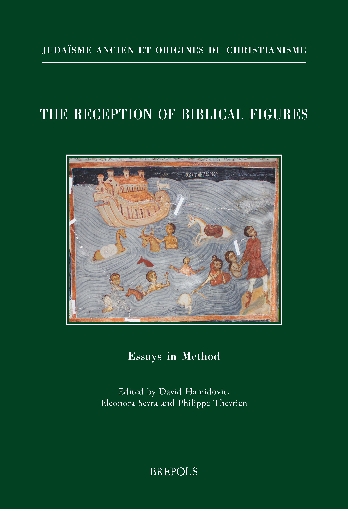
The Reception of Biblical Figures
show More to view fulltext, buy and share links for:The Reception of Biblical Figures show Less to hide fulltext, buy and share links for: The Reception of Biblical FiguresThis volume explores the reception of biblical figures in Judaism, Christianity and Islam, with a particular focus on Antiquity and incursions in the Middle Ages and modernity. The contributions included here offer a glimpse of the complexity of the mechanics of transmission to which these figures were subjected in extra-biblical texts, either concentrating on one author or corpus in particular, or broadening the scope across time and cultural contexts. The volume intends to shed light on how these biblical figures and their legacies appear as channels of collective memory and identity; how they became tools for authors to achieve specific goals; how they gained new and powerful authority for communities; and how they transcend traditions and cultural boundaries. As a result, the vitality and fluidity of the developments of traditions become clear and prompt caution when using modern categories.
-
-
-
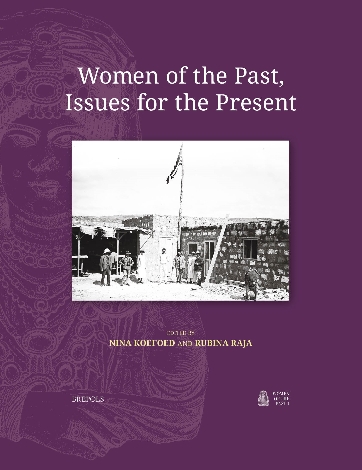
Women of the Past, Issues for the Present
show More to view fulltext, buy and share links for:Women of the Past, Issues for the Present show Less to hide fulltext, buy and share links for: Women of the Past, Issues for the PresentThe roles played by women in history, and even the very idea of what it is to be female, have always been in flux, changing over centuries, between cultures, and in response to diverse social and economic parameters. Even today, women’s roles and women’s rights continue to face changes and pressures. In establishing the series Women of the Past: Testimonies from Archaeology and History, the ambition is to build on the profound theoretical and empirical developments that have taken place over the last fifty years of gender-focused research and to explore them in a contemporary context.
The aim of this series is to shed light on not just the outstanding and extraordinary women who were trendsetters of their time, but also the not quite so outstanding women, often overshadowed by outstanding men, and the ordinary women, those who simply went about their everyday life and kept their world turning in their own quiet way. This edited volume, Women of the Past, Issues for the Present, is the inaugural volume of the series and shows the wide span of the series chronologically, geographically, and socially in terms of the research presented. From Roman slaves to Viking women, and from medieval wet-nurses to the nineteenth-century wives who supported their archaeologist husbands on excavation, this groundbreaking volume opens a new vista in our understanding of the past.
-
-
-
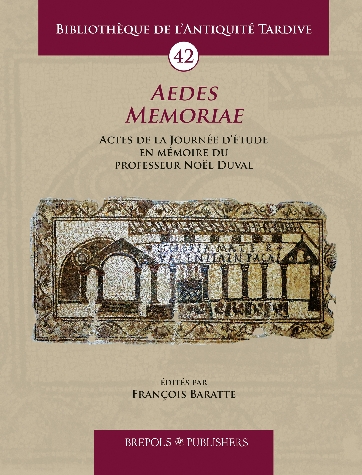
« Aedes Memoriae »
show More to view fulltext, buy and share links for:« Aedes Memoriae » show Less to hide fulltext, buy and share links for: « Aedes Memoriae »Le professeur Noël Duval, à la forte personnalité, a marqué le renouveau des études sur l’antiquité tardive. Se consacrant plus particulièrement à l’Afrique romaine et byzantine, il en a étudié l’histoire tardive et l’archéologie, en particulier celle des églises paléochrétiennes. Mais ses intérêts se sont portés aussi sur la Gaule à la fin de l’antiquité, et, plus largement, à l’ensemble du bassin méditerranéen. Sa disparition, en 2018, a été incontestablement une grande perte. Ses amis et ses élèves ont tenu à honorer sa mémoire en rassemblant un recueil de contributions scientifiques sur des sujets sur lesquels il avait travaillé, mais aussi en évoquant sa mémoire et sa personnalité.
-
-
-

Être bénédictin sous l’Ancien Régime
show More to view fulltext, buy and share links for:Être bénédictin sous l’Ancien Régime show Less to hide fulltext, buy and share links for: Être bénédictin sous l’Ancien RégimeLa congrégation bénédictine de Saint-Maur est l’ultime réforme bénédictine en France sous l’Ancien Régime. Elle toucha cent quatre-vingt-dix monastères d’héritage médiéval qui furent pour la plupart reconstruits. Entre réforme catholique et Lumières, les mauristes firent de l’érudition historique et patristique un domaine de prédilection et d’expression à la fois intellectuelle et religieuse qui marqua profondément la reconstruction monastique du XIXe siècle.
-
-
-
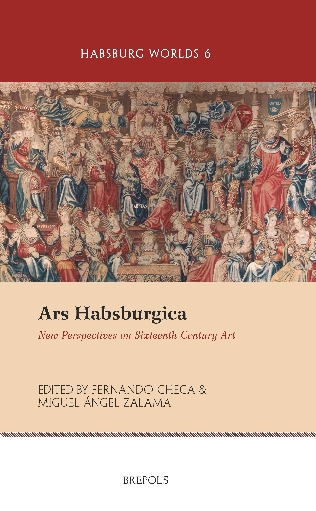
Ars Habsburgica
show More to view fulltext, buy and share links for:Ars Habsburgica show Less to hide fulltext, buy and share links for: Ars HabsburgicaStarting from a political reality, which is, at the same time, artistic and cultural, the book Ars Hasburgica aims to review the still so common historiographical conception of the Renaissance that conceives this period from a geographically Italocentric, artistically classicist and politically centered the idea of "national" arts and schools.
But Renaissance is a more global and complex phenomenon. What this book aims to offer is an idea of the art of that period that considers the role played by the Habsburg dynasty and its various courts in this period, trying to verify whether, by applying other historiographic models, and having the art of the Casa de Austria as a focus, traditional ideas can continue to be maintained well into the twenty-first century. We refer to the so-called "Vasari paradigm", on which art history of the sixteenth century has largely been built over the last centuries. It is also intended to structure concepts about the art of the period not so much around nationalist considerations and identities of the arts, but to raise these issues throughout ideas such as that of the court as a political, artistic and cultural sphere, in the wake of the classical studies by Norbert Elias, Amedeo Quondam or Carlo Ossola.
-
-
-
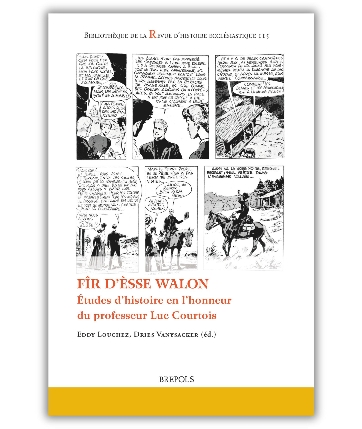
Fîr d’èsse walon
show More to view fulltext, buy and share links for:Fîr d’èsse walon show Less to hide fulltext, buy and share links for: Fîr d’èsse walonVingt-quatre contributions portant sur toutes les périodes historiques et sur des thématiques chères au jeune émérite: l’histoire de la théologie et du christianisme, l’histoire de la Wallonie, l’histoire de l’Université catholique de Louvain, la bande dessinée et la littérature de jeunesse en tant que sources historiques.
-
-
-
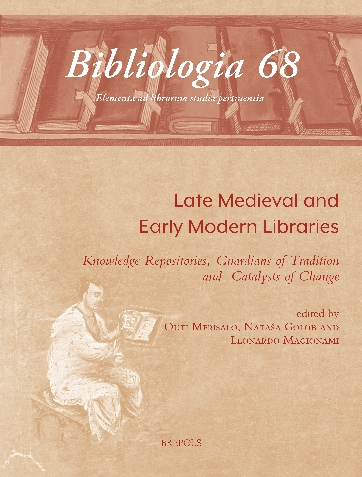
Late Medieval and Early Modern Libraries
show More to view fulltext, buy and share links for:Late Medieval and Early Modern Libraries show Less to hide fulltext, buy and share links for: Late Medieval and Early Modern LibrariesLibraries are an important factor in preserving and transmitting knowledge, thus contributing to historical continuity. The very concept of simultaneous availability of different texts transmitting possibly contradictory ideas, however, implies a great potential for engaging readers in new ways of thinking, thus promoting change. In addition to transmitting texts, historical libraries would often also be perceived as objects of material and spiritual value enhancing the prestige of their owner, e.g. contributing to the image-building of the political entities ruled by emperors, kings and princes. While the history of individual libraries of the Antiquity, the Middle Ages and the Renaissance have been treated in various detail, no large-scale study of the impact of Late Medieval and Early Modern libraries as knowledge repositories and guardians of tradition, on the one hand, and catalysts of change, on the other, seems to exist. This volume, which is inspired by the outcome of the final colloquium of the Lamemoli project held in Siena in March 2022, explores from the book historical point of view a series of both well-known and severely underexplored Late Medieval and Early Modern book collections in existence between c. 1250 and c. 1650, a period of intense mediatic, cultural, religious and political change in Western Europe. Covering an extensive geographical area from France and Italy to Central and Northern Europe, the collections are examined for both their material characteristics and contents, and their historical formation, in order to assess their roles in preserving and transmitting information as well as generating new ideas.
-
-
-
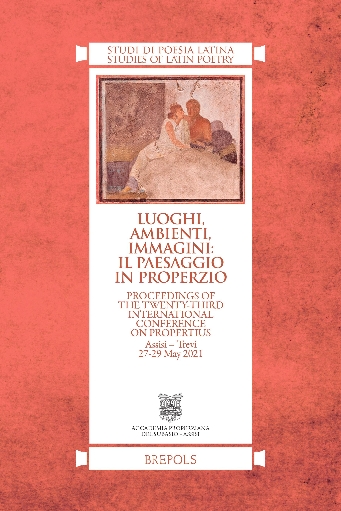
Luoghi, ambienti, immagini: il paesaggio in Properzio
show More to view fulltext, buy and share links for:Luoghi, ambienti, immagini: il paesaggio in Properzio show Less to hide fulltext, buy and share links for: Luoghi, ambienti, immagini: il paesaggio in ProperzioWith an investigation into the landscapes and environments – real, topical, imaginary, recalled and traversed by Propertius’ elegies – the contributors focus on the poet’s complex relationship not only with the images of the literary tradition and with those of artistic culture, but also with the images Rome, Italy and the Mediterranean offered him in his days. This results in the outlines of an original ‘imaginary’ in which the power of personal creation has given Assisi, Rome and the Empire a form going beyond the limits of time and space.
-
-
-
Magnification and Miniaturization in Religious Communication in Antiquity and Modernity
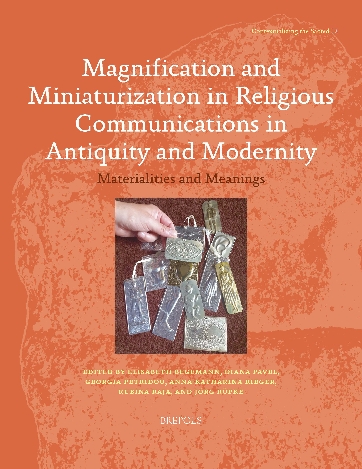
show More to view fulltext, buy and share links for:Magnification and Miniaturization in Religious Communication in Antiquity and Modernity show Less to hide fulltext, buy and share links for: Magnification and Miniaturization in Religious Communication in Antiquity and ModernityHuman agents might not be the measure of all things. Nonetheless, human bodies, and their bodily dimensions, often are, with size impacting on the ways in which we conceive of, interact with, and relate to the world around us. The scaling up or down of features - magnification and miniaturization - is particularly evident in the creation of anthropogenic items intended for use in religious ritual, and here sizing can be employed as a deliberate strategy to encourage shock and awe, admiration and deterrence, among spectators.
Taking as its starting point the concept of ‘materialities and meanings’, this volume explores how human perceptions and understanding of magnified and miniaturized forms and structures are shaped and changed, both synchronically and diachronically, by our understanding of the human body and its size, and the impact that this has in our relationship with the wider world in the context of ritual practices. The chapters collected here consider a range of questions, from a discussion on the essentials of magnification or miniaturization to an exploration of the impact of such strategies on humans and their wider socio-political ramifications. Together, these chapters contribute to a unique discussion that offers new insights into ‘materialities and meanings’, the creation of items for ritual, and the ways in which they influence human perception and understanding.
-
-
-
Maternal Materialities
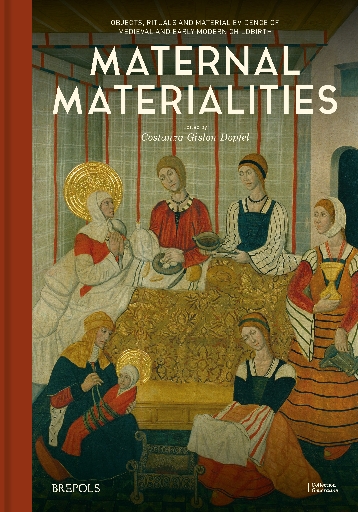
show More to view fulltext, buy and share links for:Maternal Materialities show Less to hide fulltext, buy and share links for: Maternal MaterialitiesAlthough little is known of the process surrounding early modern childbirth, the lack of written testimonials and technical descriptions does not preclude the possibility of reconstructing the reality of this elusive space: drawing on the evidence of clothing, food, rites and customs, this collection of essays seeks to give tangible form to the experience of childbirth through the analysis of physical objects and rituals.
An important addition to the literature of material culture and ‘wordly goods’, this collection of twenty-three essays from international scholars offers a novel approach to the study of pre- and early modern birth by extending its reach beyond the birthing event to include issues concerning the management of pregnancy and post-partum healing.
Grouped into five broad areas, the essays explore the material advantages and disadvantages of motherhood, the food and objects present in the birthing room, the evidence and memorialization of death in childbirth, attitudes towards the pregnant body, the material culture of healing and the ritual items used during childbirth.
-
-
-
Pre-Carolingian Latin Computus and its Regional Contexts
show More to view fulltext, buy and share links for:Pre-Carolingian Latin Computus and its Regional Contexts show Less to hide fulltext, buy and share links for: Pre-Carolingian Latin Computus and its Regional ContextsThe period between the Fall of Rome and the rise of the Carolingians saw a major shift in knowledge production. Learning became monopolised by a Christian intellectual elite in a rapidly developing monastic landscape. This transition and transformation was only fully achieved by the time of Charlemagne, whose reign saw a ‘Carolingian Renaissance’ that re-created links to Late Antiquity and its curriculum, the seven liberal arts. The centuries in between, from the fifth to the eighth, are generally considered a time of stagnation in terms of intellectual achievements, particularly in the quadruvial arts. From Boethius to Alcuin, not a single noteworthy text was produced in the Latin West in astronomy, geometry, arithmetic and music.
This traditional view has been challenged in recent years by highlighting that the artes liberales may not provide the appropriate lens for this time-period, and that it neglects the plentiful anonymous literature. By the seventh century, a decidedly Christian curriculum had developed principally comprising exegesis, grammar, and computus as its three key pillars. Computus (with the calculation of Easter and therewith the mathematical modelling of the course of the sun and the moon at its core) developed out of the Easter controvery into a discipline of monastic learning in its own right. This volume seeks to highlight the vibrancy and regional characteristics of the study of computus and its underlying controversy about the correct calculation of Easter in this transition period from the mid-fifth to the mid-eighth centuries.
-
-
-
Shaping Archaeological Archives
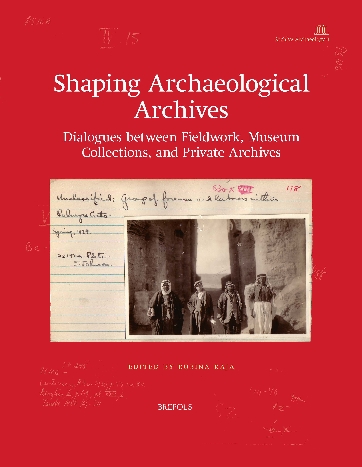
show More to view fulltext, buy and share links for:Shaping Archaeological Archives show Less to hide fulltext, buy and share links for: Shaping Archaeological ArchivesArchaeology as a discipline has undergone significant changes over the past decades, in particular concerning best practices for how to handle the vast quantities of data that the discipline generates. Much of this data has often ended up in physical - or, more recently, digital - archives and been left untouched for years, despite containing critical information. But as many recent research projects explore how best to unleash the potential of these archives through publication, digitization, and improved accessibility, attention is now turning to the best practices that should underpin this trend.
In this volume, scholars turn their attention to how best to work with and shape archaeological archives, and what this means for the field as a whole. The majority of case studies here explore archaeological sites in the eastern Mediterranean and the Middle East, some of which are conflict zones today. However, the contributions also showcase more broadly the depth of research on archaeological archives as a whole, and offer reflections upon the relationship between archaeological practices and archival forms. In so doing, the volume is able to offer a unique dialogue on best practices for the dissemination and synthetization of knowledge from archives more generally, whether physical or digital.
-
-
-
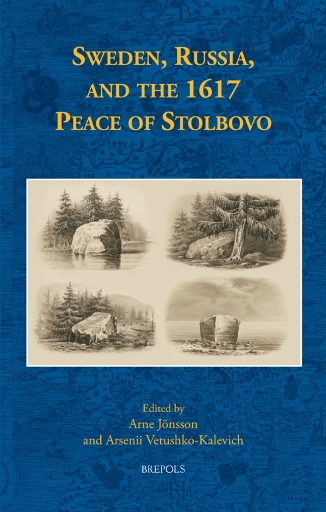
Sweden, Russia, and the 1617 Peace of Stolbovo
show More to view fulltext, buy and share links for:Sweden, Russia, and the 1617 Peace of Stolbovo show Less to hide fulltext, buy and share links for: Sweden, Russia, and the 1617 Peace of StolbovoIn 1617, after seven years of war between Sweden and Russia and talks facilitated by English and Dutch diplomats, the peace treaty of Stolbovo was signed. This important but little-studied document was to form the basis for relationships between Sweden and Russia for the next one hundred years, before it was replaced by the Peace of Nystad in 1721, and it had a huge influence on the lives of the people who lived in the region.
This wide-ranging volume draws together contributions by scholars from Britain, Sweden, Germany, Estonia, Russia, and Finland to offer new insights into, and analysis of this peace treaty and its impact on the wider region during the seventeenth century. Covering disciplines including political and economic history, church history, and Slavonic and Classical philology, the chapters gathered here shed new light on, and provide a new understanding of, the Early Modern period in the Baltic Sea area.
-
-
-

Sympozjum Egejskie, vol. 4
show More to view fulltext, buy and share links for:Sympozjum Egejskie, vol. 4 show Less to hide fulltext, buy and share links for: Sympozjum Egejskie, vol. 4Sympozjum Egejskie. Papers in Aegean Archaeology is a peer- reviewed series that has been designed to fulfil the role of a platform for presenting and introducing a wide range of new research approaches and themes within the broad area of Aegean Archaeology. This is primarily achieved through showcasing the work of newcomers to the discipline, in other words those scholars who are currently at the beginning of their research career in the field of Aegean Archaeology, as well as scholars working outside the traditional university structure such as independent scholars, professional field archaeologists, museum curators and conservators. It is our hope that this series will serve as a concise guide to the most recent research undertaken by early career scholars and the diverse and inspiring new trends in the archaeology of the Prehistoric Aegean, as well as shining a light on the future direction of the discipline.
-
-
-
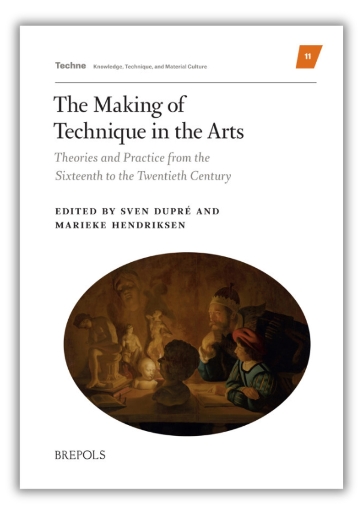
The Making of Technique in the Arts
show More to view fulltext, buy and share links for:The Making of Technique in the Arts show Less to hide fulltext, buy and share links for: The Making of Technique in the ArtsWhat is technique in the arts? Now widely used to refer to the practical aspects of art making, ‘technique’ was a neologism in the vernacular, and started to appear in treatises on arts and sciences from around 1750. Rooted in the Greek technè, which was translated routinely as ‘art’ until the mid-eighteenth century, technique referred to processes of making or doing and their products. Described previously as ‘art’, ‘methods’, ‘manners’ or ‘mechanics’, techniques were recorded in text with the intention of documenting or transmitting practical skills and knowledge. This book bridges the gap between the changing concept of technique and the practices currently described by it. It explores the linguistic, philosophical, and pedagogic history of technique in the arts, answering the question why the term ‘technique’ first emerged around 1750, and exploring how its meaning to artists, art theorists, and natural philosophers changed until the twentieth century
-