


EMISCS13

Collection Contents
21 - 40 of 43 results
-
-
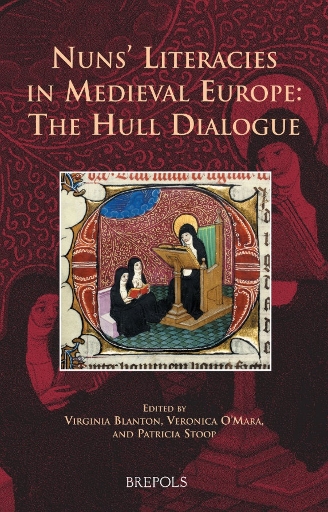
Nuns’ Literacies in Medieval Europe: The Hull Dialogue
show More to view fulltext, buy and share links for:Nuns’ Literacies in Medieval Europe: The Hull Dialogue show Less to hide fulltext, buy and share links for: Nuns’ Literacies in Medieval Europe: The Hull DialogueThis collection of essays, focused on the literacies of nuns in medieval Europe, brings together specialists working on diverse geographical areas to create a dialogue about the Latin and vernacular texts nuns read, wrote, and exchanged, primarily in northern Europe from the eighth to the mid-sixteenth centuries. To date, there has been some significant research in this field but little in the way of cross-cultural study. Drawing especially on the rich body of scholarship that currently exists about nuns and books in England, Germany, the Low Countries, and Sweden, these essays investigate the meaning of nuns’ literacies in terms of reading and writing, Latin and the vernaculars.
Contributors to this volume investigate the topic of literacy primarily from palaeographical and textual evidence and by discussing information about book ownership and book production in convents. In this first concentrated study that examines the literacy of nuns in a comparative fashion the essays pay close attention to the individual textual and cultural complexities of nuns’ literacies in the European Middle Ages.
-
-
-
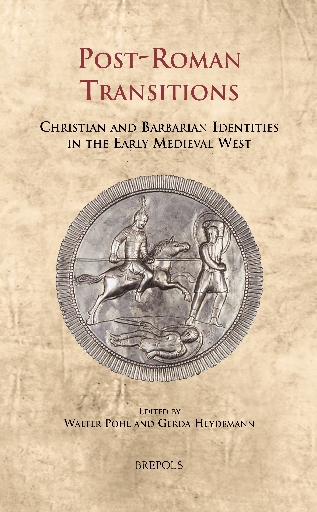
Post-Roman Transitions
show More to view fulltext, buy and share links for:Post-Roman Transitions show Less to hide fulltext, buy and share links for: Post-Roman TransitionsThis volume looks at changing identities during the transition from the Roman empire to a political world defined by a different kingdoms and peoples in western Europe. It addresses 'ethnicity' in the context of alternative modes of identification, mainly Christianity and Romanness. To widen the horizon of current debates, it shows that the ancient dichotomy between barbarians and Romans is hardly helpful in understanding the complex transitions to a post-imperial age in the West. In a broad sweep of regional examples, from Spain and North Africa to Dalmatia and the British Isles, the book follows the unfolding of Christian and barbarian identities: How were both the Roman and the barbarian past used for the formation and legitimation of new identities?
The ‘scripts of Romanness’ changed in the early Middle Ages, and so did the significance of othering pagans, heretics, or barbarians. The contributions trace the tenacity and the ambiguity of traditional narratives and signs of distinction: manuscripts and material remains, costume and epigraphy, historiography and hagiography were used in creative ways to shape civic, local, or religious communities. Many of the contributions show the fundamental importance of Christian 'strategies of identification' for creating a stronger political role for ethnicity in the post-Roman kingdoms. As such, they follow a line of argument that has also been explored in the book’s companion volume in this series, Strategies of Identification: Ethnicity and Religion in Early Medieval Europe (CELAMA 13).
-
-
-

Preaching and Political Society
show More to view fulltext, buy and share links for:Preaching and Political Society show Less to hide fulltext, buy and share links for: Preaching and Political Society[The connections between preaching, politics, and society have been manifold yet varied in the period from Late Antiquity to the end of the Middle Ages. In this multi-lingual volume, these associations are studied within their historical context over twelve new contributions, addressing a wide range of geographical areas and opening up a series of sources which have previously been neglected. Special attention is paid to the cultural and geographical circumstances in which the complex relationship between political thought and preaching should be explored. These contributions reveal the circumstances and the procedures that inspire various preachers to reflect upon political topics, which are often of a sensitive nature. In this way, the powerful and the general public of believers have access to an array of political ideas, allowing opinion-making and political discussion. Furthermore, the collection also shows news ways in which political thought and preaching can be explored, revealing new methods and lines of inquiry allowing insights into the complexities of medieval societies. The international cast of contributors provides a broad perspective on the subject, through six articles in French, and six in English.
,Depuis au moins l’Antiquité tardive, les relations entre prédication et société politique ont été nombreuses et variées. Dans le présent volume ont été réunies douze contributions qui, en mettant en œuvre une documentation le plus souvent encore inédite, étudient comment, dans des contextes historiques, culturels et géographiques différents, ces relations complexes se sont déployées. Les contributions permettent ainsi de mieux apprécier dans quelles circonstances et selon quelles modalités plusieurs prédicateurs ont été amenés à proposer dans leurs sermons une réflexion de nature politique censée contribuer à la formation de l’opinion des puissants et des fidèles en général. Elles montrent aussi quelques-unes des voies qui permettent d’explorer un domaine de recherche qui n’a suscité jusqu’ici qu’un nombre limités de travaux, mais dont la connaissance est sans aucun doute indispensable pour mieux comprendre la complexité des sociétés médiévales.
]
-
-
-
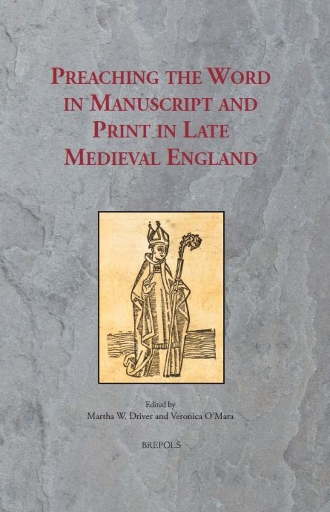
Preaching the Word in Manuscript and Print in Late Medieval England
show More to view fulltext, buy and share links for:Preaching the Word in Manuscript and Print in Late Medieval England show Less to hide fulltext, buy and share links for: Preaching the Word in Manuscript and Print in Late Medieval EnglandThe focus of this volume, on Middle English and Latin material in prose and verse, concerns the preaching of the word of God in an expansive sense in late medieval England. This collection of essays explores the multiple ways in which the sermon in England in the later Middle Ages both influenced and was influenced by other devotional and didactic material, both implicitly and explicitly. The essays pay special attention to examples of textual complexity in the sermon as manifested in the manuscript and early printed traditions. By examining sermon technique and methodology contributors present related material that either travels alongside sermons or shares the same preaching or teaching milieu. While analysing sermons and other homiletic material, the essays also explore areas, such as the dating and illustration of incunabula, which have an important bearing on the sermons and devotional literature of the period, but are normally studied in an isolated fashion. These fit in well with the particular emphasis in the collection on the sermon in the early printed period. In addition, attention is paid to some of the ways in which sermon-study was first brought to the fore by late nineteenth-century editors and early twentieth-century commentators. In this way various threads are brought together, new texts and ideas presented, and potential future avenues for research suggested that will continue to be important for an understanding of sermons and related religious literature in late medieval England.
-
-
-

Probable Truth
show More to view fulltext, buy and share links for:Probable Truth show Less to hide fulltext, buy and share links for: Probable TruthEditing as an academic mode of work has had a variable ‘press’ - it is often seen as just plumbing. But without editions no historian of whatever critical persuasion could operate. Texts that are not edited are effectively invisible.
The advent of electronic means of text production has also raised new possibilities and new problems that need to be openly considered rather than ignored. The papers in this volume reflect those concerns, and explore the ways forward. How do the best editorial procedures of the past get transmitted to the future? A distinguished line-up of experienced editors and younger scholars actively grappling with these issues reflect on their engagement with the challenges of textual theory and editorial practice.
No single solution emerges as applicable to all texts and for all editions; the individual characteristics of each text and its transmission, together with the intended audience of each edition, emerge as primary areas for consideration.
-
-
-
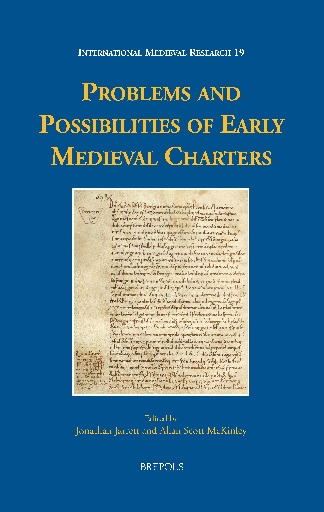
Problems and Possibilities of Early Medieval Charters
show More to view fulltext, buy and share links for:Problems and Possibilities of Early Medieval Charters show Less to hide fulltext, buy and share links for: Problems and Possibilities of Early Medieval ChartersAlthough historical work on the early Middle Ages relies to an enormous extent on the evidence provided by charters and other such documents, the paradigms within which such documents are interpreted have changed relatively slowly and unevenly. The critical turn, the increasing availability of digital tools and corpora for study, and the acceptance among charter specialists that their discipline can inform a wider field all encourage rethinking. From 2006 to 2011 a series of sessions at the Leeds International Medieval Congress addressed this by applying new critiques and technologies to early medieval diplomatic material from all over Europe. This volume collects some of the best of these papers by new and young scholars and adds related work from another session. The subjects range from reinterpretations of Carolingian or Anglo-Saxon political history, through the production and use of charters by all ranks of society and their subsequent preservation from Spain to Germany and England to Italy, to explorations of new media leading to new kinds of results from such evidence. The result is an array of new perspectives which makes an important contribution to recent reconsiderations of charter studies. It will inform a wide audience from all walks of medieval historical studies.
-
-
-
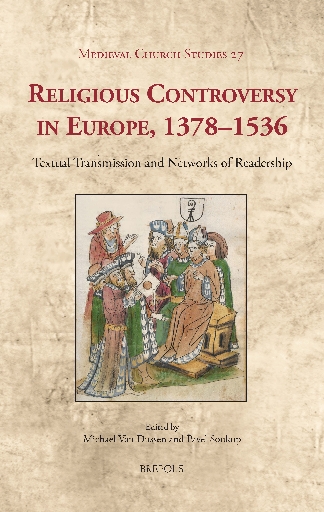
Religious Controversy in Europe, 1378–1536
show More to view fulltext, buy and share links for:Religious Controversy in Europe, 1378–1536 show Less to hide fulltext, buy and share links for: Religious Controversy in Europe, 1378–1536This book gathers new work by scholars who share a common interest not only in the controversial texts of the period between 1378 and 1536, but also in how the use, geographical movement, and manipulation of texts contributed materially to the formation of groups and group identities. The period covered spans the traditional medieval/early modern divide and the concomitant transition from manuscript to print. The years between the eruption of the Great Schism and the outbreak of European reformations witnessed unprecedented rifts in communities, institutions, and alliances. Yet while the crises of this period gave rise to division, they also prompted new groups to coalesce, resulting in realignments of communication networks, readership, and textual circulation in Europe. The Councils of Constance and Basel facilitated the production and dissemination of vast quantities of documents. Movements challenging the Roman Church and efforts to reform the Church from within provoked a torrent of persuasive and polemical writings which gained further momentum with the introduction of printing. These new situations also fostered the development and expression of group identities, defined by doctrine, opposition, vernacularity, and a burgeoning sense of national self-consciousness. Religious Controversy in Europe, 1378-1536 examines the textual and material circumstances of these developments.
-
-
-
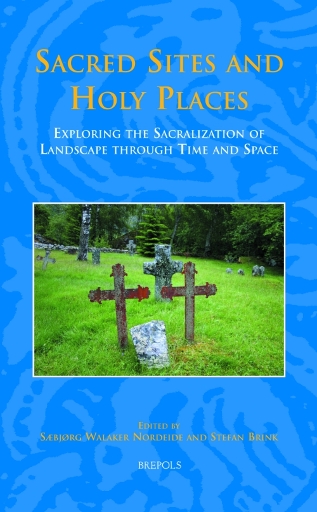
Sacred Sites and Holy Places
show More to view fulltext, buy and share links for:Sacred Sites and Holy Places show Less to hide fulltext, buy and share links for: Sacred Sites and Holy PlacesIn this volume two important veins of interdisciplinary research into the medieval period in Scandinavia and the Baltic region are merged, namely the Christianization process and landscape studies. The volume authors approach the common theme of sacrality in landscape from such various viewpoints as archaeology, philology, history of religion, theology, history, classical studies, and art history. A common theme in all articles is a theoretical approach, complemented by illustrative case studies from the Scandinavian, Baltic, or Classical worlds. Aspects of pagan religion, as well as Christianity and the establishment of the early Church, are considered within both geographical setting and social landscape, while the study of maps, place names, and settlement patterns introduces new methodologies and perspectives to expose and define the sacral landscape of these regions. The contributions are put into perspective by a comparison with research into the sacral landscapes of Central Europe and the Classical world.
New interdisciplinary research methods and new models have been developed by the contributors to present new vistas of sacrality in the Scandinavian and the Baltic landscape. To open up these case studies, a selection of over sixty images and maps accompanies this cutting-edge research, allowing the reader to explore sacralization and the Christianization process within its medieval setting.
-
-
-
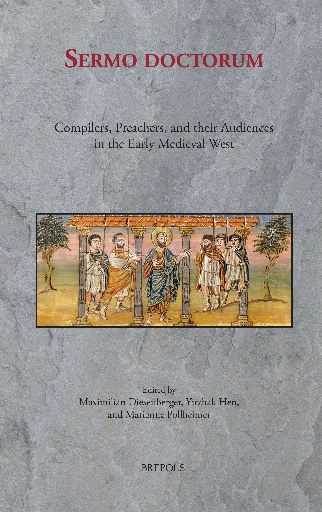
Sermo doctorum
show More to view fulltext, buy and share links for:Sermo doctorum show Less to hide fulltext, buy and share links for: Sermo doctorumDespite their large number and their potential significance for our understanding of the genesis of Christian thought and practice, early medieval sermons have been conspicuously neglected by modern scholarship. Taking their lead from recent studies that transformed our understanding of the post-Roman world, the various contributors to this collection of essays explore a wide range of topics related to the composition, transmission, and dissemination of sermons and homiliaries in the early medieval West. Some papers focus on individual sermons in an attempt to identify their authors and aims; others examine the manuscript evidence for the compilation and transmission of composite homiliaries; and a few question our concept of early medieval sermons as a peculiar genre that merits special attention. By bringing early medieval sermons into the centre of discussion this volume, which is the first book dedicated to early medieval sermons and homiliaries, makes an important contribution to our understanding of the religious culture of the early medieval West. This multi-lingual collection of papers examines a plethora of texts which, in the past, were pushed to the margins of historical research, and offers a fresh look at these works in their own cultural, religious, and social context.
-
-
-
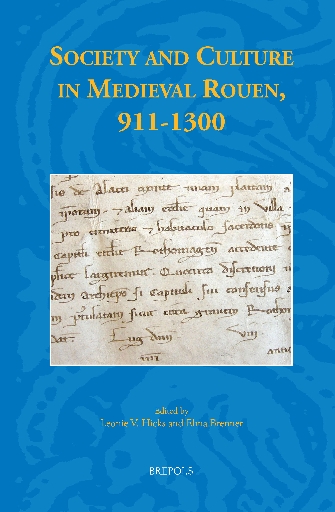
Society and Culture in Medieval Rouen, 911-1300
show More to view fulltext, buy and share links for:Society and Culture in Medieval Rouen, 911-1300 show Less to hide fulltext, buy and share links for: Society and Culture in Medieval Rouen, 911-1300Rouen, one of the leading cities of medieval Western Europe, has long awaited detailed consideration in English by modern scholars. This book presents exciting new research on the society and culture of medieval Rouen by British and Continental historians. Divided into three sections, addressing space and representation, religious culture, and social networks, the volume is both wide-ranging and tightly focused. The key themes include Rouen’s relationship with its environs, image and identity, social and political relationships, and Rouen’s status as the ‘capital’ of Normandy. The essays discuss topics ranging from urban development and charity, the city’s aristocratic and ecclesiastical elites, the Jewish community, and the relationship of the Angevin kings with Rouen. Comparisons and contextualization, as well as detailed maps, make the book valuable not only to readers interested in Rouen and Normandy, but also to those who wish to learn more about medieval cities, culture, and society.
-
-
-
Strategies of Identification
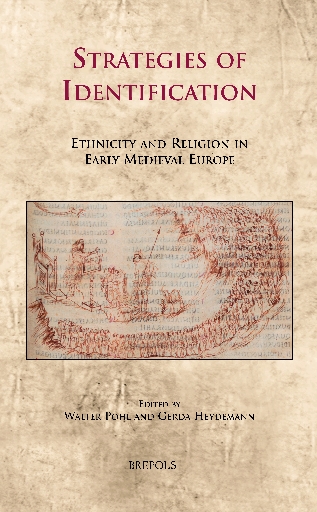
show More to view fulltext, buy and share links for:Strategies of Identification show Less to hide fulltext, buy and share links for: Strategies of IdentificationHow were identities created in the early Middle Ages and when did they matter? This book explores different types of sources to understand the ways in which they contributed to making ethnic and religious communities meaningful: historiography and hagiography, biblical exegesis and works of theology, sermons and letters. Thus, it sets out to widen the horizon of current debates on ethnicity and identity. The Christianization and dissolution of the Roman Empire had provoked a crisis of traditional identities and opened new spaces for identification. What were the textual resources on which new communities could rely, however precariously? Biblical models and Christian discourses could be used for a variety of aims and identifications, and the volume provides some exemplary analyses of these distinct voices. Barbarian polities developed in a rich and varied framework of textual ‘strategies of identification’. The contributions reconstruct some of this discursive matrix and its development from the age of Augustine to the Carolingians. In the course of this process, ethnicity and religion were amalgamated in a new way that became fundamental for European history, and acquired an important political role in the post-Roman kingdoms. The extensive introduction not only draws together the individual studies, but also addresses fundamental issues of the definition of ethnicity, and of the relationship between discourses and practices of identity. It offers a methodological basis that is valid for studies of identity in general.
-
-
-
Studies on Medieval Empathies
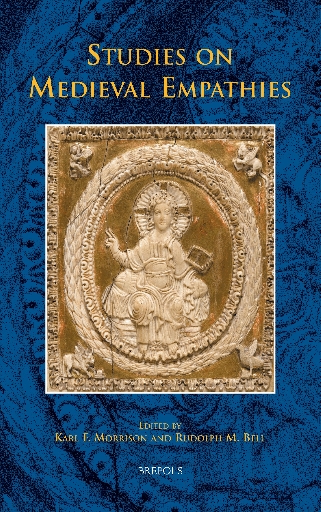
show More to view fulltext, buy and share links for:Studies on Medieval Empathies show Less to hide fulltext, buy and share links for: Studies on Medieval EmpathiesEmpathy is a deep feeling or intuition for kinship transcending self-preoccupied individuality. This book is about empathy in the Middle Ages, before it had a name.The authors begin by tracing the origins of empathy in pre-Christian Antiquity and early Christianity, especially in mysteries of divine justice, by which the good often suffered and the wicked prospered and, as with surgical healing, compassion was manifested by inflicting pain. The authors also explore many facets of empathy’s development in the Latin West, criss-crossing the artificial borders of academic departments to reveal interlocking connections that give emotional power to images, whether verbal, pictorial, or performative. In a powerful multi-disciplinary collaboration, they identify conditions and limits of empathy, and areas in which the dynamic between insiders and outsiders forced subversive explorations of what it meant to be human.
The doctrine of Christ as mediator of divine love dominated medieval thought about empathy as a human instinct. Taken together, like magnetic poles, two pictures in this book represent that mediation in action. The cover illustration, a mid-ninth-century ivory plaque from Carolingian Gaul, depicts Christ, the Divine Word, Love incarnate, glorified, enthroned, and adored by angels as creator, judge, and teacher. The second, Plate 1, from the same period and region, represents the act that sealed the mediation of divine love to humanity: Christ the man, tortured and dying for love.
-
-
-
The Book of Nature and Humanity in the Middle Ages and the Renaissance
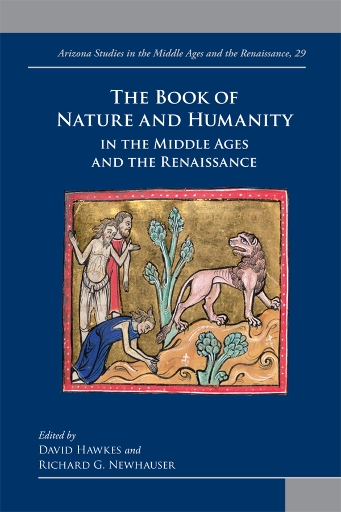
show More to view fulltext, buy and share links for:The Book of Nature and Humanity in the Middle Ages and the Renaissance show Less to hide fulltext, buy and share links for: The Book of Nature and Humanity in the Middle Ages and the RenaissanceSome modern commentators welcome the alleged approach of the “post-human” era as a liberation from the constraints of essentialist identity. Others lament it as a harbinger of the death of the soul. But both groups will find it instructive to consider that the nature of humanity has always been a contested topic. The chapters collected here suggest that the emergence of the modern idea of the human was at least as fraught a process as its putative demise.
David Hawkes and Richard G. Newhauser have selected a wide array of contributions for this volume. Renowned scholars from several disciplines have produced a series of fascinating essays, which concentrate on the relation between humanity and nature as it was understood in the Middle Ages and the Renaissance. The issues they examine range from poaching to flatulence, from Aztec animal symbolism to Jesus’s grandmother, from tulips to the Trinity.
Some chapters examine a wide variety of popular texts, from the bloody legend of Robert the Devil to the sinister magic of the Anglo-Saxon “wen charm”, from Lutheran Books of Nature to Emperor Maximillian’s wedding. The result is a book that raises intriguing implications for the modern struggle over the meaning of mankind.
-
-
-
The Classics in the Medieval and Renaissance Classroom
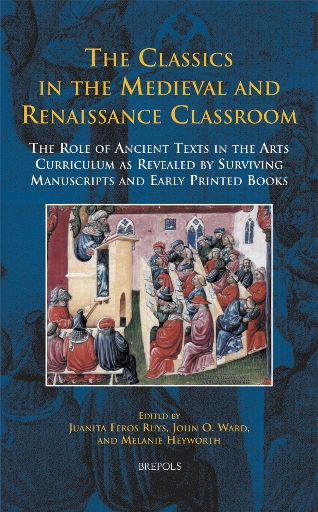
show More to view fulltext, buy and share links for:The Classics in the Medieval and Renaissance Classroom show Less to hide fulltext, buy and share links for: The Classics in the Medieval and Renaissance ClassroomMedievalists and Renaissance specialists contribute to this compelling volume examining how and why the classics of Greek and Latin culture were taught in various Western European curricula (including in England, Scotland, France,Germany, and Italy) from the tenth to the sixteenth centuries. By analysing some of the commentaries, glosses, and paraphrases of these classics that were deployed in medieval and Renaissance classrooms, and by offering greater insight into premodern pedagogic practice, the chapters here emphasize the ‘pragmatic’ aspects of humanist study. The volume proposes that the classics continued to be studied in the medieval and Renaissance periods not simply for their cultural or ‘ornamental’ value, but also for utilitarian reasons, for ‘life lessons’. Because the volume goes beyond analysing the educational manuals surviving from the premodern period and attempts to elucidate the teaching methodology of the premodern period, it provides a nuanced insight into the formation of the premodern individual. The volume will therefore be of great interest to scholars and students interested in medieval and Renaissance history in general, as well as those interested in the history of educational theory and practice, or in the premodern reception of classical literature.
-
-
-
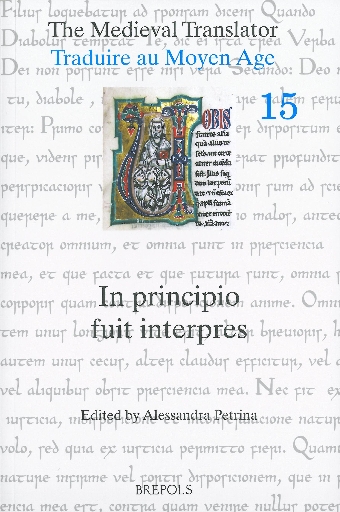
The Medieval Translator. Traduire au Moyen Age
show More to view fulltext, buy and share links for:The Medieval Translator. Traduire au Moyen Age show Less to hide fulltext, buy and share links for: The Medieval Translator. Traduire au Moyen AgeTranslation studies centering on medieval texts have prompted new ways to look at the texts themselves, but also at the exchange and transmission of culture in the European Middle Ages, inside and outside Europe. The present volume reflects, in the range and scope of its essays, the itinerant nature of the Medieval Translator Conference, at the same time inviting readers to reflect on the geography of medieval translation. By dividing the essays presented here into four groups, the volume highlights lines of communication and shifts in areas of interest, connecting the migrating nature of the translated texts to the cultural, political and linguistic factors underlying the translation process. Translation was, in each case under discussion, the result or the by-product of a transnational movement that prompted the circulation of ideas and texts within religious and/or political discussion and exchange.
Thus the volume opens with a group of contributions discussing the cultural exchange between Western Europe and the Middle East, identifying the pivotal role of Church councils, aristocratic courts, and monasteries in the production of translation. The following section concentrates on the literary exchanges between three close geographical and cultural areas, today identifiable with France, Italy and England, allowing us to re-think traditional hypotheses on sites of literary production, and to reflect on the triangulation of language and manuscript exchange. From this triangulation the book moves into a closer discussion of translations produced in England, showing in the variety and chronological span covered by the contributions the development of a rich cultural tradition in constant dialogue with Latin as well as contemporary vernaculars. The final essays offer a liminal view, considering texts translated into non-literary forms, or the role played by the onset of printing in the dissemination of translation, thus highlighting the continuity and closeness of medieval translation with the Renaissance.
Alessandra Petrina is Associate Professor of English Literature at the Università degli Studi di Padova, Italy. She has published extensively on late-medieval and Renaissance literature and intellectual history, as well as on modern children’s literature, and edited a number of volumes on early modern English culture.
-
-
-
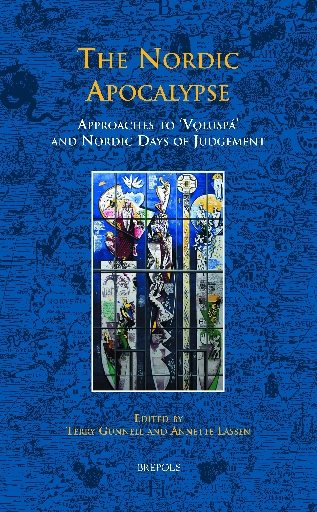
The Nordic Apocalypse
show More to view fulltext, buy and share links for:The Nordic Apocalypse show Less to hide fulltext, buy and share links for: The Nordic ApocalypseThis book, with roots in a conference held in Iceland in May 2008, contains a series of articles reflecting modern approaches to the text, context, and performance of the Old Norse poem Vǫluspá, perhaps the best known and most discussed of all the Eddic poems. Rather than attempting to cover Eddic or Skaldic poetry as a genre, the main aim of this book is to present an overview of the ‘state of the art’ with regard to one particular Eddic poem. It focuses especially on the poem’s possible context within the apocalyptic tradition of Northern Europe in the early medieval period. The approaches of the articles range from placing the poem within the pre-Christian oral tradition to placing it within the written and liturgical context of Christianity. Two other chapters offer a possible context for the poem by examining the nature and background of the early medieval image of the Apocalypse known to have been on display in the Cathedral of Hólar in northern Iceland. While the approaches are focused on one specific poem, they are nonetheless applicable to many other Eddic works.
-
-
-
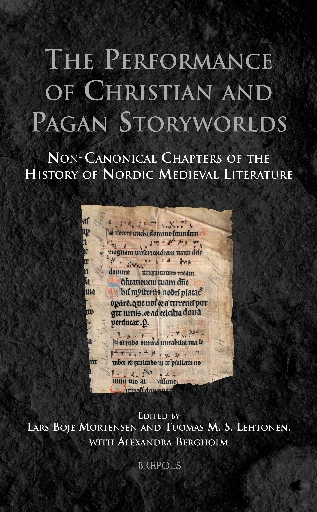
The Performance of Christian and Pagan Storyworlds
show More to view fulltext, buy and share links for:The Performance of Christian and Pagan Storyworlds show Less to hide fulltext, buy and share links for: The Performance of Christian and Pagan StoryworldsThe present collection explores a hitherto understudied body of Nordic medieval literature which, although overlooked in traditional, language-based narratives, was in fact crucial in shaping social and religious identities.
By drawing on the ‘performance turn’ in cultural studies, the volume identifies a number of minor and peripheral literary forms and texts that had a vital connection to ritual and ritualized speech. These neglected traditions therefore offer an alternative insight into Nordic literary life and the sets of cultural expression, or storyworlds, underlying Nordic culture.
The collected studies explore different aspects of verbal performances as a primary vehicle for the Nordic storyworlds, with a preference for the Christian over the pagan traditions. Emphasis is placed on Latin, Old Norse, and Finnish traditions that were retold and reproduced over time. These ‘living’ literary forms highlight the importance of non-canonical texts for the interpretation of contact between the peripheries and centres of Nordic culture. Through the focus on the interaction between Latin and the vernacular, between eastern Baltic and western Latin influences, and between ritual and speech in religious practice, this collection demonstrates the importance of ‘minor’ texts for the re-construction of medieval Nordic culture and history.
-
-
-
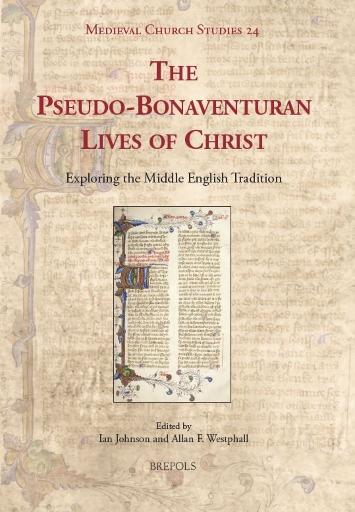
The Pseudo-Bonaventuran Lives of Christ
show More to view fulltext, buy and share links for:The Pseudo-Bonaventuran Lives of Christ show Less to hide fulltext, buy and share links for: The Pseudo-Bonaventuran Lives of ChristThis is a collection of pioneering studies by a distinguished transatlantic team of scholars on a neglected yet canonical tradition of medieval English literature. From the fourteenth to the sixteenth centuries and beyond, the remarkable ‘pseudo-Bonaventuran’ tradition, flowing from the Latin Meditationes vitae Christi (and thought, wrongly, to have been composed by St Bonaventure), gave Europe orthodox models for how to represent, know, and follow Jesus Christ. The Meditationes, in a huge variety of Latin and vernacular versions, invite their readers and listeners to imagine themselves present within the Gospel narrative. How to live, what to believe, how to feel, and how to be saved: this eloquent mainstream tradition had an impact on the public and private lives of English people more profound and lasting than any text save the Bible itself. For many, it even did the Bible’s work. The tradition of the Meditationes provides us with a gauge of lived religious sensibility without equal in the English later Middle Ages.
Deriving from the Queen’s Belfast-St Andrews AHRC-funded research project, Geographies of Orthodoxy: Mapping the English Pseudo-Bonaventuran Lives of Christ, c. 1350-1550, this volume questions and revises previous descriptions of the devotional, cultural, and political contexts in which pseudo-Bonaventuran Lives of Christ were produced, circulated, read, and understood. The period spanning the rise and repression of Lollardy, the ostensibly ‘orthodox’ fifeenth century, and the Tudor Reformations will never look quite the same again.
-
-
-
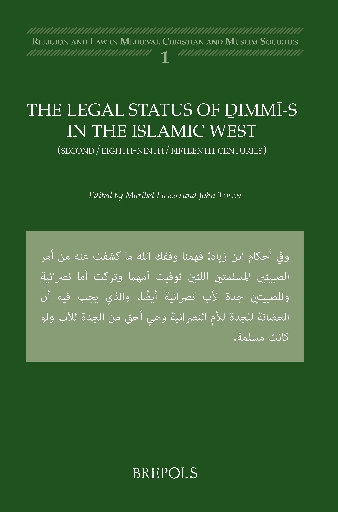
The legal status of ḏimmī-s in the Islamic West (second/eighth-ninth/fifteenth centuries)
show More to view fulltext, buy and share links for:The legal status of ḏimmī-s in the Islamic West (second/eighth-ninth/fifteenth centuries) show Less to hide fulltext, buy and share links for: The legal status of ḏimmī-s in the Islamic West (second/eighth-ninth/fifteenth centuries)The studies brought together in this volume provide an important contribution to the history of ḏimmī-s in the medieval dār al-islām, and more generally to the legal history of religious minorities in medieval societies. The central question addressed is the legal status accorded to ḏimmī-s (Jews and Christians) in the Muslim law in the medieval Muslim west (the Maghreb and Muslim Spain). The scholars whose work is brought together in these pages have dealt with a rich and complex variety of legal sources. Many of the texts are from the Mālikī legal tradition; they include fiqh, fatwā-s, ḥisba manuals. These texts function as the building blocks of the legal framework in which jurists and rulers of Maghrebi and Peninsular societies worked. The very richness and complexity of these texts, as well as the variety of responses that they solicited, refute the textbook idea of a monolithic ḏimmī system, supposedly based on the Pact of ‘Umar, applied throughout the Muslim world. In fact when one looks closely at the early legal texts or chronicles from both the Mashreq and the Maghreb, there is little evidence for a standard, uniform ḏimmī system, but rather a wide variety of local adaptations. The articles in this volume provide numerous examples of the richness and complexity of interreligious relations in Medieval Islam and the reactions of jurists to those relations.
-
-
-
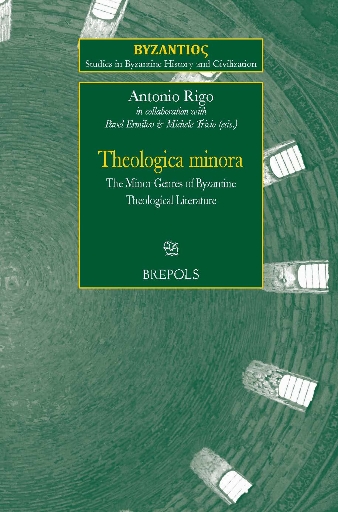
Theologica Minora
show More to view fulltext, buy and share links for:Theologica Minora show Less to hide fulltext, buy and share links for: Theologica MinoraThe title of this volume, “Theologica Minora”, may wrongly suggest that the essays contained herein purport an antiquarian interest in some minor theological quibbles within the vast ocean that is Byzantine theological literature. On the contrary, this volume illuminates texts and theological genres which have so far remained unexplored or underinvestigated by the vast majority of scholars. Whilst unlocking the as yet unknown troves of florilegia, religious poetry, and monastic kephalaia, this volume investigates the cultural background of these different endeavors and provides an image of Byzantine theological literature which repudiates the rigid narratives proposed to date.
Antonio Rigo is Professor of Byzantine Philology and Christianity at the University of Venice Ca’ Foscari. His research focuses on religious life in Byzantium, with special emphasis on ascetical and mystical literature, heresiology, and theology during the Paleologan period.
-