


The Medieval Low Countries
History, Archaeology, Art, and Literature
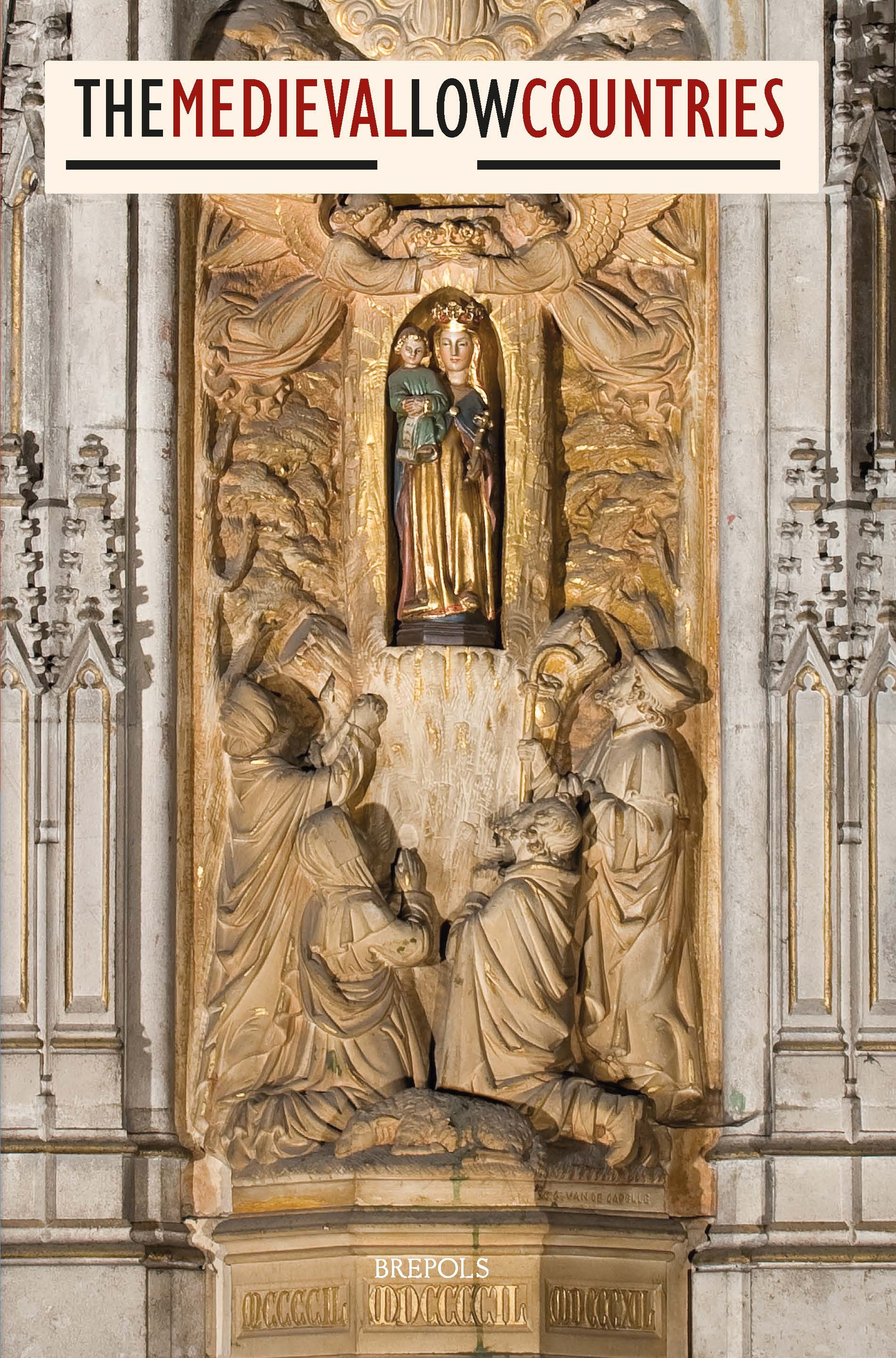
Volume 3, Issue 1, 2016
-
-
Utrecht, the Mother of Dorestat The Relations between Two Early Medieval Settlements and their Churches in the Frontier Region of Frisians and Franks
show More to view fulltext, buy and share links for:Utrecht, the Mother of Dorestat The Relations between Two Early Medieval Settlements and their Churches in the Frontier Region of Frisians and Franks show Less to hide fulltext, buy and share links for: Utrecht, the Mother of Dorestat The Relations between Two Early Medieval Settlements and their Churches in the Frontier Region of Frisians and FranksAbstractThe excavations at the Dome Square of Utrecht between 2011-2014 have brought spectacular results, which, however, have not been unambiguously interpreted. In this article it is argued that the strong building which pierces through all layers of the Roman castellum to the bare ground, must be classified as the coinage workshop of King Dagobert, where Madelinus and colleagues minted coins from 625 until 635 with the inscription TRIECTO FIT, a designation usually linked with Maastricht. The small church that King Dagobert also founded, and which Willibrord later on found in ruin, must have been the ecclesiastical stronghold that - together with the minting workshop as a secular stronghold - was the governmental seat at the northern frontier of the empire that this Merovingian king established against the heathen Frisians, enemies of the Christian Franks. However, the Frisians turned out to be so strong that the seat needed to be moved to the fortress Dorestat, upstream at the bifurcation of the rivers Rhine and Leck. It is not clear which Roman castellum had got the vernacular name Dorestat at that time, but it is argued that it was not Levefanum but Mannaricium, near Maurik. There Madelinus continued his minting activity till 650 and King Dagobert founded his Upkirica or Upperchurch, dedicated to Saint Martin. This being a daughter of the church at the current Utrecht Dome Square, the conclusion is that the mother church also was dedicated to Saint Martin from the beginning. It was located on the spot of the south transept of the later Holy Cross Chapel, not under the later Dome of bishop Adelbold and successors. Another conclusion concerns the development of Dorestat as a trade centre, which reached its summit only after 780, more than a century after Madelinus had stopped his activities. The coins of Madelinus served diplomatic goals, not economic ones. In his time Dorestat did not have any economic importance yet.
-
-
-
Context or Text? Towards a New Interpretation of Gerard I of Cambrai’s Oration on the Three Orders
show More to view fulltext, buy and share links for:Context or Text? Towards a New Interpretation of Gerard I of Cambrai’s Oration on the Three Orders show Less to hide fulltext, buy and share links for: Context or Text? Towards a New Interpretation of Gerard I of Cambrai’s Oration on the Three OrdersBy: Sam JanssensAbstractAfter Georges Duby published Les trois ordres ou l’imaginaire du féodalisme in 1978, the division of society into three orders - those who pray, those who work and those who fight - has become one of the most influential paradigms of medieval ideological history. Duby’s points of departure were two eleventh-century texts: the Carmen ad Rotbertum regem, a political text written in the form of a satirical poem by Bishop Adalbero of Laon (977-c. 1035) and the famous speech by Bishop Gerard I of Cambrai(c. 975-1051) delivered as a protest against the Peace of God movement and inserted in the anonymous Gesta episcoporum Cameracensium, or Deeds of the Bishops of Cambrai. Duby’s interpretation profoundly influenced subsequent historiographical discussions on the ideology behind the tripartite division of society and the key texts related to his study. Since then, the attention of scholars has focused almost entirely on reconstructing the ideological, political and societal context within which the Three Orders scheme originated. Despite many discussions on Gerard’s original intentions and the true significance of his speech, very little attention has been paid to the fact that it has been preserved only as part of a much larger text, namely the Deeds. Why the chronicler integrated the speech into the Deeds and whether or not its position in the text and its relationship with other factors are of any significance to its interpretation are questions that have eluded comprehensive study. These questions are crucial to our understanding of the original purpose of the speech, since the preserved text of the speech seems to have been conceived in reference to other parts of the Deeds, specifically those referring to the Peace of God movement. This reveals how the text cannot be interpreted adequately without taking into account other textual remains from Gerard’s tenure as bishop. These observations could possibly enable us to gain insight into the primary reason why Gerard’s Three Orders speech was embedded in the Deeds, and how its subsequent use was meant to function.
-
-
-
… nos gerentes ad instar canonicarum secularium … Das Problem der Verfassung religiöser Frauengemeinschaften im Mittelalter am Beispiel des ‘Stifts’ Thorn
show More to view fulltext, buy and share links for:… nos gerentes ad instar canonicarum secularium … Das Problem der Verfassung religiöser Frauengemeinschaften im Mittelalter am Beispiel des ‘Stifts’ Thorn show Less to hide fulltext, buy and share links for: … nos gerentes ad instar canonicarum secularium … Das Problem der Verfassung religiöser Frauengemeinschaften im Mittelalter am Beispiel des ‘Stifts’ ThornBy: Hartwig KerskenAbstractBased on a petition to Pope Clement V dating from 1310, this essay examines the specific way of religious life in the women’s community of Thorn Abbey (Dutch Limburg). Additionally, a recent scholar debate which questions the common distinction between ‘monastery’ and ‘secular Stift’ is taken into account: such an ideal type of distinction is not useful for the early and high medieval period. Until now Thorn Abbey, too, was considered to be a foundation under Benedictine observance which became a secular Stift during the high Middle Ages. In contrast to this assumption, this essay shows that presumably no particular ordo was defined when the community was founded. It was not until the beginning of the late medieval period when the community’s property was clearly divided into possessions of the Abbey and the convent’s goods. This differentiation shows an advanced dissolution of the vita communis. However, for a long period of time, a profound uncertainty of their own status seems to have affected the community’s life. Therefore the members of the community addressed themselves to the Pope aiming at a canonical approval of their status. This goal was not achieved until the end of the fifteenth century, but from that moment, the ideal of their community’s life, created in the petition of 1310, remained unchanged.
-
-
-
Vassalage and Authority. The Knightly Estate of Fourteenth-Century Brabant
show More to view fulltext, buy and share links for:Vassalage and Authority. The Knightly Estate of Fourteenth-Century Brabant show Less to hide fulltext, buy and share links for: Vassalage and Authority. The Knightly Estate of Fourteenth-Century BrabantAbstractThis article examines the knightly population of Brabant around the middle of the fourteenth century. Recent historiography on the nobility of the Burgundian Low Countries treats knighthood as simply one of the traits of the nobility. However, this article argues that in fourteenth-century Brabant, the knights can be considered a distinct estate, while the nobility as such was not similarly visible. A summons of the year 1356 provides the research population, and the focus is on two Brabantine districts: Antwerp and ’s-Hertogenbosch. Through a prosopography, the knights are compared on the basis of lordship, office-holding, and military activity. It thus becomes clear that none of these elements on their own were the decisive characteristic of the Brabantine knightly estate. Rather, juridical authority, both contained in lordship and in certain offices, was the most common denominator.
-
-
-
An Image for ‘All Truly Penitent’. Reconsidering the Function of the Madonna of Jan Vos by Jan van Eyck and His Workshop
show More to view fulltext, buy and share links for:An Image for ‘All Truly Penitent’. Reconsidering the Function of the Madonna of Jan Vos by Jan van Eyck and His Workshop show Less to hide fulltext, buy and share links for: An Image for ‘All Truly Penitent’. Reconsidering the Function of the Madonna of Jan Vos by Jan van Eyck and His WorkshopBy: Miyako SugiyamaAbstractA painting now kept in the Frick Collection, the so-called Madonna of Jan Vos, has been considered as one of the last works which were commissioned from Jan van Eyck in the final stages of his career. Most researchers agree that the painting was started by Van Eyck in the last year of his life and completed by one of his workshop members after Van Eyck’s death. The donor of the painting was Jan Vos, the Prior of the Carthusian monastery of Genadedal between 1441 and 1450. Evidence from the Order shows that the depicted image was to be venerated by ‘all truly penitent’, and that forty days of indulgence was granted for reciting the Ave Maria and the Pater Noster to the image. The aim of this article is to determine the original function, location, and audience of the Madonna of Jan Vos. In order to contextualize the painting in late-medieval devotional practice, emphasis is laid on the indulgence related to the Madonna of Jan Vos, as the indulgence is a decisive element to consider the raison d’être of the image.
-
-
-
The Late Medieval Manuscript Transmission of the Excellente Cronike van Vlaenderen in Urban Flanders
show More to view fulltext, buy and share links for:The Late Medieval Manuscript Transmission of the Excellente Cronike van Vlaenderen in Urban Flanders show Less to hide fulltext, buy and share links for: The Late Medieval Manuscript Transmission of the Excellente Cronike van Vlaenderen in Urban FlandersBy: Lisa DemetsAbstractThe Middle Dutch ‘Chronicle of Flanders’ is a complex chronicle group consisting of various distinct manuscript versions. This chronicle group is generally divided into three separate ‘traditions’: the Chronicle of Jan van Dixmude, the Kronijk van Vlaenderen, and the Excellente Cronike van Vlaenderen. The most important question dealt with in this contribution is whether this subdivision still makes sense today. Research strategies on medieval chronicles shifted from a focus on the authority of a chronicle’s ‘author’ towards an increasing attention to its readers and audience. Searching for this (intended) audience makes it possible to underline the connections among various manuscripts. However, lately, a countermovement has renewed the interest in chronicles’ (scribal) authorship; it focuses on the self-fashioning aspect in historiographical works. This article argues that these methodologies are not so conflicting as has been thought previously. The manuscripts of the Middle Dutch ‘Chronicle of Flanders’ provide an ideal opportunity to analyse the relationship among medieval manuscripts on the one hand as a fluid, interwoven web of connections and networks, and as the self-fashioning project of one person or family on the other hand.
-
-
-
Social Relations, Political Balances of Power, and Perceptions of Big Business. Contrasting Images of Merchants in Northern Italy, the Low Countries, and Southern Germany in the Fourteenth to Sixteenth Centuries
show More to view fulltext, buy and share links for:Social Relations, Political Balances of Power, and Perceptions of Big Business. Contrasting Images of Merchants in Northern Italy, the Low Countries, and Southern Germany in the Fourteenth to Sixteenth Centuries show Less to hide fulltext, buy and share links for: Social Relations, Political Balances of Power, and Perceptions of Big Business. Contrasting Images of Merchants in Northern Italy, the Low Countries, and Southern Germany in the Fourteenth to Sixteenth CenturiesBy: Hugo SolyAbstractIn this essay, the focus is on images of merchants from the upper echelons of the business world, who constituted an economic elite in large commercial and financial centres. A long-term perspective is preferred, because both fundamental changes in religious-moral values and economic transformations merit consideration. The area of research comprises Northern Italy, the Low Countries, and Southern Germany, because various cities there offered unprecedented opportunities for enrichment between the thirteenth and sixteenth centuries, while they also revealed striking social, political, and cultural differences. Printed sources have been consulted on the Low Countries and (somewhat less extensively) on the German situation, while the existing literature has served as the main source for Northern Italy. Comparing attitudes towards great merchants in three highly urbanized and economically dynamic areas reveals that the development was by no means linear: praise and disapproval of businessmen varied both chronologically and geographically. It is also clear that commercial or financial activities did not in themselves give rise to positive or negative comments. Non-economic factors always came into play, especially the ideological context, the nature of the social relations, and the political balance of power.
-
-
-
Book Reviews
show More to view fulltext, buy and share links for:Book Reviews show Less to hide fulltext, buy and share links for: Book ReviewsAbstractNicholas Schroeder, Les Hommes et la terre de saint Remacle: Histoire sociale et économique de l’abbaye de Stavelot-Malmedy, VIIe-XIVe siècle (Constance H. Berman), 219 - Richard C. Hoffmann, An Environmental History of Medieval Europe (Petra J. E. M. Van Dam), 221 - Michel Groothedde, Een vorstelijke palts te Zutphen? Macht en prestige op en rond het plein ’s-Gravenhof van de Karolingische tijd tot aan de stadsrechtverlening (Herbert Sarfatij), 224 - Cornelius Hopp, Die ehemalige Frauenstifstkirche St. Salvator zu Susteren und ihre Stellung in der Architektur des 11. Jahrhunderts (Elizabeth Den Hartog), 228 - Krijn Pansters (ed.), The Carthusians in the Low Countries: Studies in Monastic History and Heritage (Julian Luxford), 232 - R. van Schaïk (ed.), Economies, Public Finances, and the Impact of Institutional Changes in Interregional Perspective. The Low Countries and Neighbouring German Territories (14th-17th Centuries) (Jaap Ligthart), 240 - F. Mariage, Des hommes du cru au service du souverain. Répertoire prosopographique du personnel du bailliage de Tournai-Tournaisis (1383-1598) (Marie Van Eeckenrode), 244 - Rudolf Th. M. van Dijk, Salome Sticken (1369-1449) en de oorsprong van de Moderne Devotie (John Van Engen), 246 - S. S. H. Lie, M. Meuwese, M. Aussems and H. Joldersma, Christine de Pizan in Bruges. Le Livre de la Cité des Dames as Het Bouc van de Stede der Vrauwen (Andrea Bardyn), 253 - Het Gruuthuse-handschrift: Hs. Den Haag, Koninklijke Bibliotheek 79 K 10. Ingeleid en kritisch uitgegeven door Herman Brinkman (Lisanne Vroomen), 257 - In het water gevonden. Het Amersfoortse Mirakelboek naar het handschrift Brussel, Koninklijke Bibliotheek Albert I, 8179-8180. Edited and translated by Dick E. H. de Boer & Ludo Jongen, in cooperation with Juliette Duisterwinkel (Charles Caspers), 263 - Dirk J. de Vries, Met het oog op het Laatste Oordeel: de geboorte van het individu in de westerse kunst (Kees Van Der Ploeg), 267 - Bernhard Ridderbos, Schilderkunst in de Bourgondische Nederlanden (Jan Piet Filedt Kok), 270 - Louis Sicking, La naissance d’une thalassocratie. Les Pays-Bas et la mer à l’aube du siècle d’or (Michael W. Serruys), 276 - Christiaan Schrickx, Bethlehem in de Bangert. Een historische en archeologische studie naar de ontwikkeling van een vrouwenklooster onder de Orde van het Heilig Kruis in het buitengebied van Hoorn (1475-1572) (Koen De Groote), 280 - A. J. Rinzema (†) revised by L. van Beek in collaboration with D. E. H. de Boer and C. W. Zwart, Sicke Benninge en zijn kroniek. Een Groninger burger over opkomst en verval in zijn stad rond 1500 (Hans Cools), 285
-
Most Read This Month
